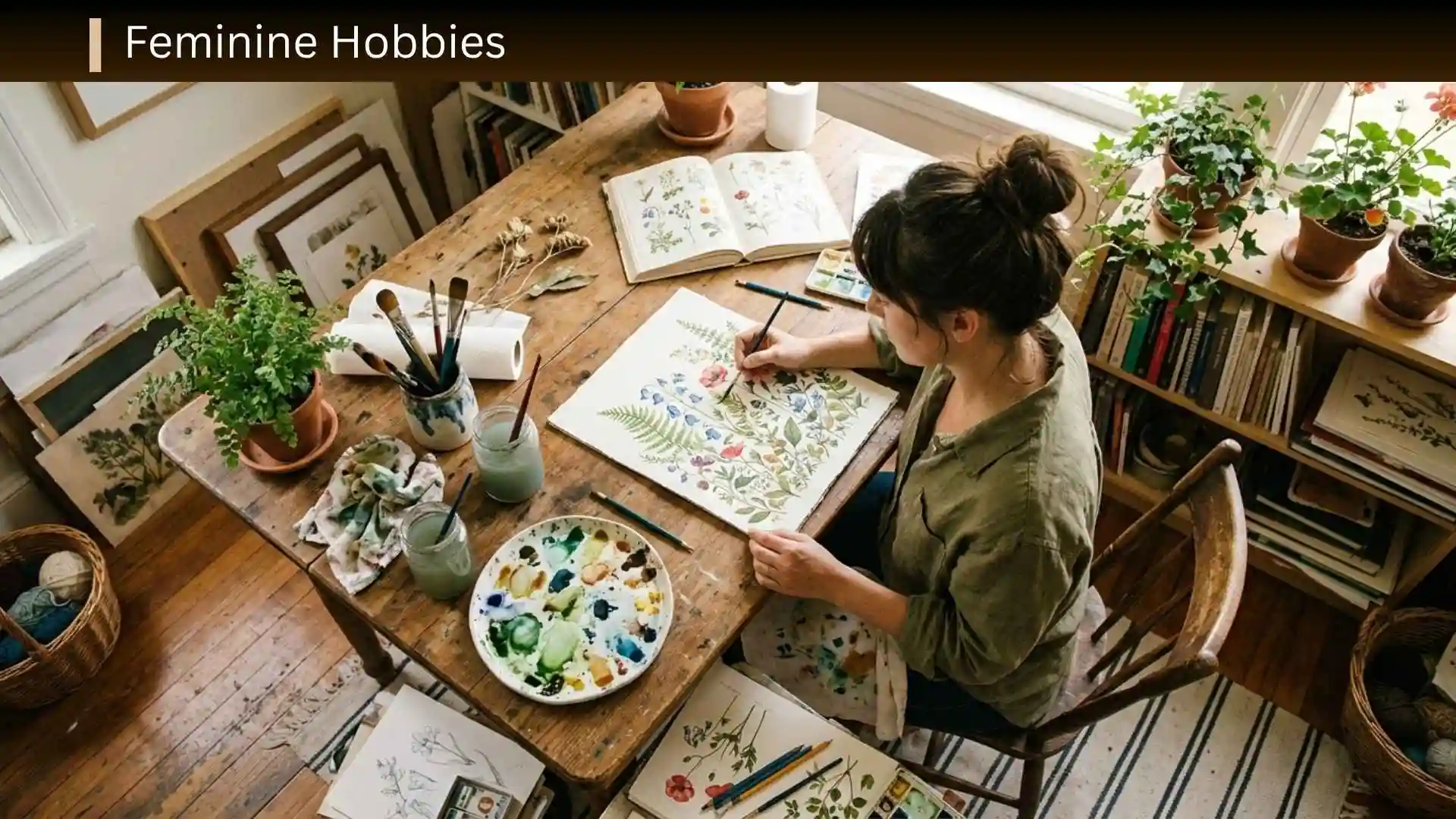
If you’re looking for feminine hobbies that feel creative, relaxing, and truly enjoyable, you’re in the right place. I believe a hobby should be more than just something to fill your free time—it should give you a chance to express yourself, learn something new, and enjoy a little “me time.”
Whether you love beauty, creativity, fashion, books, crafts, wellness, or simply trying something different, you can find a hobby that fits your personality and lifestyle. In this guide, I’ll help you discover feminine hobbies you can enjoy at home or anywhere, whether you’re a complete beginner or ready to explore a new passion.
What Are Feminine Hobbies?
“Feminine hobbies” is an informal term commonly used for hobbies that are traditionally or culturally associated with women and femininity. Examples include sewing, knitting, flower arranging, journaling, baking, painting, gardening, dancing, reading, and beauty-related activities.
The label is cultural rather than a rule. Anyone can enjoy any hobby, and there is no requirement for a hobby to fit a particular gender.
A useful way to think about feminine hobbies is by the experience you want:
- Creative: painting, drawing, pottery, photography, crafting
- Calming: reading, journaling, gardening, embroidery
- Practical: sewing, baking, cooking, home organization
- Social: book clubs, dancing, volunteering, crafting groups
- Expressive: fashion, makeup, writing, music, dance
- Active: yoga, hiking, swimming, dance, tennis
- Skill-building: calligraphy, floral design, photography, language learning
35 Feminine Hobbies to Try
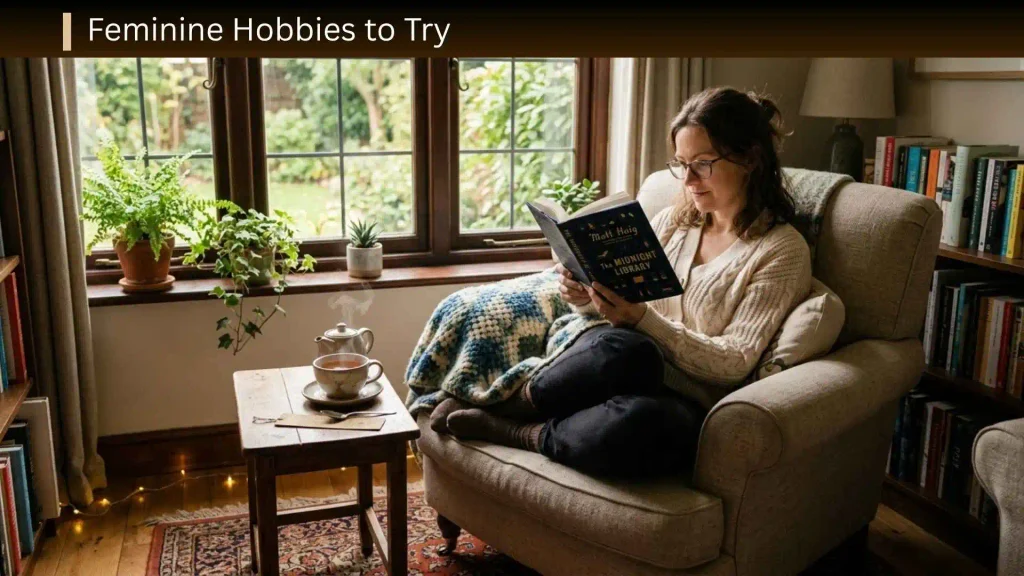
1. Reading
Reading is a flexible hobby that can fit almost any schedule. You can explore fiction, romance, mysteries, biographies, history, personal development, poetry, or nonfiction.
A major advantage is that you can start with books you already find interesting rather than choosing something simply because it is considered a “classic.”
Best for: Quiet evenings, solo time, and lifelong learning.
2. Journaling
Journaling gives you a simple way to record thoughts, ideas, plans, memories, or creative writing. You can keep a traditional diary or experiment with gratitude journals, reading journals, travel journals, or bullet journals.
You only need a notebook and pen to begin.
Best for: Reflection, writing, planning, and creative expression.
3. Scrapbooking
Scrapbooking combines photographs, paper, decorations, handwritten notes, and memorabilia into personalized pages.
It can be particularly meaningful when used to preserve family memories, travel experiences, birthdays, weddings, or everyday moments.
Best for: Creative people who enjoy working with photographs and physical materials.
4. Sewing
Sewing is both creative and practical. Beginners can start with simple projects such as tote bags, pillow covers, basic alterations, or small accessories before moving toward garments.
The initial setup can range from basic hand-sewing supplies to a sewing machine and specialized tools.
Best for: People who enjoy making useful physical objects.
5. Embroidery
Embroidery allows you to decorate fabric with stitched patterns, flowers, lettering, and illustrations.
It is portable and can be easier to start with than larger textile projects. A beginner can learn a handful of basic stitches and gradually create more detailed designs.
Best for: Patient, detail-oriented crafters.
6. Knitting
Knitting combines repetitive hand movements with practical creativity. Scarves, hats, blankets, sweaters, and small accessories are common projects.
The basics can take some practice, but beginners can start with simple patterns rather than complicated garments.
Best for: Relaxing, hands-on creative time.
7. Crochet
Crochet uses a hook and yarn to create items ranging from blankets and clothing to decorative pieces and small toys.
Because many projects can be made with relatively few tools, it can be an accessible craft for beginners.
Best for: People who enjoy repetitive crafting and handmade projects.
8. Painting
Painting offers a broad creative outlet because you can choose watercolor, acrylic, gouache, oil, or other approaches.
You do not need to begin by trying to create gallery-quality artwork. Simple flowers, landscapes, abstract designs, and color studies are approachable starting points.
Best for: Visual creativity and artistic experimentation.
9. Drawing
Drawing is one of the easiest creative hobbies to begin because the basic equipment is inexpensive and portable.
You can practice portraits, fashion sketches, botanical illustrations, cartoons, architecture, or observational drawing.
Best for: Anyone who wants to develop visual skills without a large setup.
10. Calligraphy
Calligraphy focuses on decorative handwriting and lettering. It can be practiced with traditional pens, brush pens, markers, or digital tools.
It is especially useful for people interested in creating cards, invitations, artwork, journal pages, or personalized gifts.
Best for: Detail-oriented creatives who enjoy lettering.
11. Pottery and Ceramics
Pottery turns clay into functional or decorative objects such as mugs, bowls, vases, and sculptures.
A local studio can be a practical starting point because pottery requires equipment such as a kiln for many finished projects.
Best for: People who enjoy tactile, three-dimensional creativity.
12. Flower Arranging
Flower arranging combines color, shape, texture, and composition. You can work with fresh flowers, dried flowers, or artificial materials.
You can begin with grocery-store flowers rather than investing immediately in professional floral supplies.
Best for: Nature lovers and people with an interest in interior aesthetics.
13. Gardening
Gardening can involve growing flowers, herbs, vegetables, houseplants, or container gardens.
You do not need a large yard. Containers, balconies, patios, and sunny indoor spaces can provide opportunities for small-scale gardening.
Best for: People who enjoy plants and hands-on outdoor or indoor activities.
14. Houseplant Care
Houseplant care can become a hobby of its own. You can learn about different plant varieties, lighting conditions, watering needs, propagation, potting, and indoor plant displays.
The key is to choose plants suited to your actual environment rather than buying plants based only on appearance.
Best for: Plant lovers with limited outdoor space.
15. Baking
Baking combines creativity with practical skill. You can learn bread, cookies, cakes, pastries, pies, or decorated desserts.
Beginners often benefit from mastering a few reliable recipes before experimenting with complex techniques.
Best for: People who enjoy food, precision, and sharing homemade creations.
16. Cooking
Cooking can be both a practical life skill and a creative hobby. You can explore cuisines from different regions, learn knife skills, develop sauces, experiment with vegetarian meals, or build your own collection of favorite recipes.
Unlike some hobbies, cooking can become part of your regular routine.
Best for: Practical learners and food enthusiasts.
17. Cake Decorating
Cake decorating takes baking into a more artistic direction. You can learn piping, frosting techniques, fondant work, color combinations, and decorative designs.
Start with basic piping rather than attempting highly elaborate cakes immediately.
Best for: Creative people who enjoy baking and visual design.
18. Photography
Photography allows you to turn ordinary moments into creative projects. You can photograph people, nature, architecture, food, fashion, pets, or everyday life.
A smartphone is enough to begin learning composition, lighting, framing, and visual storytelling.
Best for: Visual storytellers and people who enjoy exploring their surroundings.
19. Fashion Styling
Fashion styling can involve experimenting with outfits, colors, silhouettes, accessories, and personal presentation.
You can make the hobby more intentional by creating outfit combinations from clothes you already own rather than constantly purchasing new items.
Best for: People interested in clothing, aesthetics, and self-expression.
20. Makeup
Makeup can be approached as a creative skill rather than simply part of a beauty routine. You can experiment with everyday looks, color combinations, eye makeup, complexion techniques, or special-occasion styles.
Practice can help you discover which techniques and products actually suit your preferences.
Best for: Creative experimentation and beauty enthusiasts.
21. Skincare as a Hobby
Learning about skincare can be interesting for people who enjoy routines and product knowledge. A sensible approach is to focus on understanding basic skincare categories and avoiding unnecessarily complicated routines.
More products do not automatically mean better results.
Best for: People who enjoy structured self-care routines.
22. Perfume and Fragrance
Exploring fragrance can become a sensory hobby. You can learn about fragrance families, notes, concentration, and how different scents develop over time.
Keeping notes about fragrances you enjoy can help you identify patterns in your preferences.
Best for: People interested in scent and sensory experiences.
23. Dancing
Dancing combines movement, music, creativity, and learning. Options include ballet, ballroom, salsa, contemporary dance, jazz, hip-hop, and many other styles.
You can learn through classes, workshops, or structured online lessons depending on your preferences.
Best for: Active people who enjoy music and expressive movement.
24. Yoga
Yoga can be approached as a movement and mindfulness practice. Beginners can start with introductory classes or gentle routines and learn foundational poses gradually.
If you have physical limitations or concerns, choosing an appropriately qualified instructor and adapting movements can be important.
Best for: People who prefer mindful movement and structured practice.
25. Hiking
Hiking offers a way to combine outdoor exploration with physical activity. You can choose routes according to your experience, available time, and comfort level.
For beginners, shorter established trails can be easier to manage than remote or technically difficult routes.
Best for: Nature lovers who want an active outdoor hobby.
26. Swimming
Swimming can be both recreational and skill-based. You can swim casually, work on technique, join a class, or set personal practice goals.
Access to a suitable pool is usually the biggest practical consideration.
Best for: People who enjoy water-based activities.
27. Tennis
Tennis provides a combination of physical activity, coordination, skill development, and social interaction.
Beginners can start with introductory lessons before deciding whether they want casual games, regular practice, or more competitive play.
Best for: Active people who enjoy learning a sport.
28. Writing
Writing can take many forms, including poetry, short stories, personal essays, creative nonfiction, blogging, or fiction.
You can write privately without any intention of publishing. The hobby can simply be a way to explore ideas and develop storytelling skills.
Best for: People who enjoy words, imagination, and self-expression.
29. Playing a Musical Instrument
Learning an instrument provides a long-term skill-building hobby. Piano, guitar, ukulele, violin, flute, and other instruments offer different learning experiences.
Choose based on the type of music you actually want to play. Genuine interest can make regular practice much easier to sustain.
Best for: Music lovers who enjoy progressive skill development.
30. Singing
Singing can be practiced casually or developed through structured vocal lessons.
You can sing at home, join a choir, participate in community music groups, or study vocal technique.
Best for: People who enjoy music and expressive performance.
31. Candle Making
Candle making is a craft-oriented hobby involving wax, containers, fragrance choices, and design.
Because it involves heated materials and potentially irritating ingredients, beginners should follow appropriate equipment and handling guidance rather than improvising safety practices.
Best for: Hands-on crafters who enjoy home décor.
32. Soap Making
Soap making can be a creative craft, but some methods involve caustic ingredients and require careful handling.
Beginners should understand the process and safety requirements before attempting methods that involve hazardous materials. Simpler ready-made bases can provide a lower-complexity introduction to soap crafting.
Best for: Experienced crafters or beginners willing to learn proper safety procedures.
33. Interior Decorating
Interior decorating turns your living space into a creative project. You can experiment with furniture arrangements, textiles, artwork, lighting, color combinations, and storage.
A useful approach is to improve one area at a time instead of trying to redesign an entire home.
Best for: People interested in aesthetics and practical design.
34. Volunteering
Volunteering can function as a meaningful social hobby while supporting a cause or community organization.
Possible opportunities include animal shelters, libraries, environmental projects, community events, food programs, and nonprofit organizations.
Best for: People who want their free time to have a community-oriented purpose.
35. Learning a New Language
Language learning combines intellectual practice with cultural exploration. You can study through books, apps, classes, conversation groups, or media in the target language.
Setting a small recurring practice schedule is usually more manageable than relying on occasional long study sessions.
Best for: Curious learners who enjoy long-term skill development.
Feminine Hobbies by Personality and Lifestyle
The best hobby depends less on the label “feminine” and more on what you actually enjoy.
| If you want… | Hobbies to consider |
| Quiet solo time | Reading, journaling, embroidery, drawing |
| Creative expression | Painting, photography, writing, pottery |
| Something practical | Cooking, baking, sewing, gardening |
| A social activity | Dancing, volunteering, book clubs, tennis |
| Outdoor time | Gardening, hiking, photography |
| A beauty-focused interest | Makeup, fragrance, fashion styling |
| Low-equipment creativity | Drawing, writing, journaling, calligraphy |
| A long-term skill | Instrument, language learning, sewing |
| Relaxing repetitive work | Knitting, crochet, embroidery |
| Physical activity | Dancing, swimming, yoga, tennis |
Feminine Hobbies You Can Start at Home
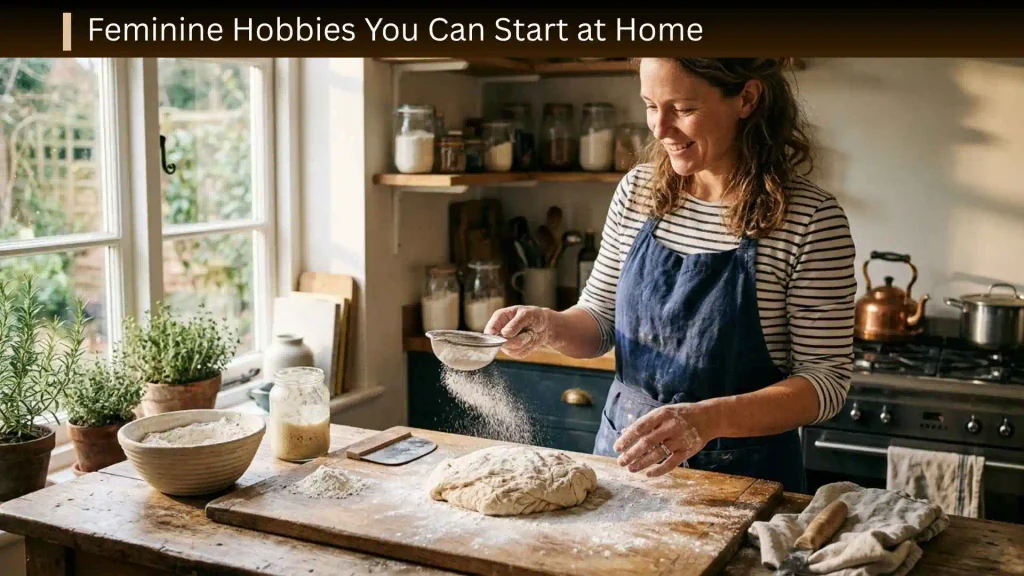
If you prefer hobbies that do not require commuting or joining a group, consider:
- Reading
- Journaling
- Drawing
- Painting
- Calligraphy
- Crochet
- Knitting
- Embroidery
- Baking
- Cooking
- Photography
- Writing
- Makeup practice
- Fashion styling
- Houseplant care
- Language learning
- Learning an instrument
- Scrapbooking
Home-based hobbies are particularly useful when you want flexibility. You can often practice them for 15–30 minutes rather than needing to dedicate an entire afternoon.
Feminine Hobbies That Are Good for Beginners
Some hobbies have a relatively gentle starting point:
Easiest to start with minimal equipment
Reading, journaling, writing, drawing, photography with a smartphone, and basic houseplant care can be started with things you may already have.
Better with a small starter kit
Embroidery, crochet, calligraphy, baking, painting, and scrapbooking usually require some basic materials but do not necessarily require a major investment.
Better with instruction or specialized equipment
Pottery, tennis, dance, swimming, musical instruments, and some forms of sewing may be easier when you have access to classes, equipment, or an instructor.
The “best” beginner hobby is not necessarily the easiest one. Choose an activity that you are genuinely curious about enough to practice repeatedly.
Feminine Hobbies That Can Be Social
If your main goal is meeting people, choose hobbies that naturally create opportunities for interaction.
Good possibilities include:
- Book clubs
- Dance classes
- Craft groups
- Pottery classes
- Volunteer organizations
- Community gardening
- Tennis
- Choirs
- Cooking classes
- Photography groups
- Hiking groups
- Language exchange groups
A useful distinction is that some hobbies are social by design, while others can become social if you join a group. Reading, for example, is usually solitary, but a book club turns it into a recurring social activity.
Feminine Hobbies That Encourage Creativity
For creative expression, consider:
- Painting
- Drawing
- Photography
- Writing
- Poetry
- Pottery
- Sewing
- Embroidery
- Crochet
- Calligraphy
- Flower arranging
- Cake decorating
- Scrapbooking
- Interior decorating
- Fashion styling
Creative hobbies do not require professional-level talent. The purpose can simply be to experiment, learn, and make something that reflects your own taste.
Feminine Hobbies on a Budget
You do not need an expensive hobby to have a rewarding hobby.
Some lower-cost starting points include:
- Reading through a library
- Journaling with an inexpensive notebook
- Drawing with basic pencils
- Writing
- Walking or hiking on suitable public trails
- Smartphone photography
- Gardening from seeds or cuttings
- Learning a language with free resources
- Cooking with ingredients you already use
- Practicing makeup techniques with your existing products
- Joining free community events or volunteer activities
Costs can increase as you become more committed. For example, someone interested in photography can begin with a phone and later decide whether dedicated camera equipment is worthwhile.
How to Choose the Right Feminine Hobby
Instead of choosing a hobby based only on what looks appealing online, consider five questions.
1. Do you want to make, learn, move, or connect?
If you want to make things, try crafts or art.
If you want to learn, consider languages, music, or photography.
If you want to move, consider dance, swimming, hiking, yoga, or tennis.
If you want to connect, try clubs, classes, volunteering, or group activities.
2. How much time can you realistically give it?
A hobby should fit your actual schedule.
If you have only short periods of free time, journaling, reading, embroidery, drawing, or crochet may be easier to maintain than activities requiring travel to a class.
3. What environment do you prefer?
Ask whether you want:
- Home-based activities
- Outdoor activities
- A studio or class
- A social environment
- Complete solitude
This can eliminate many unsuitable options quickly.
4. What kind of reward do you want?
Some hobbies give you a tangible result, such as sewing a garment or baking a cake.
Others provide an experience, such as hiking, dancing, reading, or playing music.
Neither is better. The right choice depends on what makes the activity satisfying for you.
5. Are you willing to tolerate the beginner stage?
Every worthwhile skill includes a period when you are not very good at it.
If you choose a hobby only because you expect immediate results, frustration can make you abandon it. Instead, choose something whose learning process interests you.
How to Turn a Hobby Into a Routine
You do not need to spend hours on a hobby for it to become meaningful.
A practical starting system is:
- Choose one hobby. Avoid starting five new hobbies simultaneously.
- Set a small goal. For example, read one chapter or practice for 20 minutes.
- Choose a regular time. A predictable schedule makes practice easier to remember.
- Keep supplies accessible. Reduce the effort required to begin.
- Track progress lightly. Record completed projects or skills rather than obsessing over performance.
- Increase difficulty gradually. Move to more challenging projects when the basics become comfortable.
- Give yourself permission to change hobbies. Not every interesting activity will become a long-term interest.
The goal is not to turn every hobby into a serious commitment. Sometimes an activity is valuable simply because you enjoy doing it.
Do Feminine Hobbies Have to Be Traditionally Feminine?
No. The phrase “feminine hobbies” describes cultural associations rather than a set of rules.
A woman can enjoy sewing, football, woodworking, coding, painting, gardening, gaming, hiking, mechanics, dance, or any combination of activities.
Likewise, hobbies traditionally associated with femininity are not exclusively for women.
If a hobby interests you, its usefulness and enjoyment matter more than whether it fits a gender stereotype.
Frequently Asked Questions
What are the most popular feminine hobbies?
Common examples include reading, journaling, baking, cooking, sewing, knitting, crochet, gardening, painting, photography, dancing, makeup, fashion, writing, and crafts. Preferences vary widely, so popularity should not determine your choice.
What are some feminine hobbies to do at home?
Reading, journaling, painting, drawing, embroidery, crochet, knitting, baking, cooking, writing, photography, houseplant care, calligraphy, scrapbooking, and language learning can all be practiced at home.
What are good feminine hobbies for adults?
Good options include hobbies that match your available time, budget, interests, and desired level of social interaction. Reading, creative arts, crafts, gardening, cooking, photography, dancing, fitness activities, writing, and learning an instrument are all possibilities.
What feminine hobbies are inexpensive?
Reading through a library, journaling, writing, drawing, walking, smartphone photography, basic gardening, language learning, and cooking can be started with little or no specialized equipment.
What feminine hobbies can help develop useful skills?
Sewing can develop practical clothing and textile skills; cooking and baking develop food preparation skills; photography develops visual skills; writing develops communication; gardening develops plant-care knowledge; and learning an instrument develops musical skills.
Can feminine hobbies become income-producing activities?
Some hobbies can potentially be monetized, including photography, sewing, baking, crafts, writing, art, floral design, and photography-related services. However, turning a hobby into income requires demand, suitable pricing, skill, consistency, and often additional business responsibilities. Income is not guaranteed.
Is it okay to choose a hobby that is not traditionally feminine?
Absolutely. A hobby does not need to fit a gender category. The most useful hobby is one that you genuinely enjoy and are willing to continue learning.
Conclusion
The best feminine hobby is ultimately the one that fits your interests, personality, schedule, and lifestyle. Traditional choices such as sewing, baking, gardening, reading, crafts, and beauty-related activities can be enjoyable, but there is no need to limit yourself to them.
If you are unsure where to begin, choose one activity that matches what you want right now: create something, learn a skill, relax, get active, spend time outdoors, or connect with other people. Start small, give yourself time to become a beginner, and let your interests determine where you go next.

I’m Ethan Mitchell, a curious writer who enjoys turning complex ideas into simple, useful information. At Cognivoora, I focus on creating clear and engaging content that readers can understand and apply in everyday life. I believe good writing should educate, answer real questions, and leave readers with something valuable to remember.
Books:
- The Everyday Mind
- Simple Ideas, Better Thinking