
Finding the right hobby can change the way you spend your free time, learn new skills, and connect with yourself and others. I believe a good hobby should be more than something you do when you are bored—it should give you a reason to look forward to your day. If you’re searching for something creative, relaxing, social, active, or simply different, this hobbies and interests list can help you discover ideas that match your personality and lifestyle. Whether you want to try something completely new or return to an old interest, you’ll find plenty of options here to inspire your next favorite activity.
What Are Some Good Hobbies and Interests(Quick Answer)

Some popular hobbies and interests include:
- Reading
- Writing
- Photography
- Drawing
- Painting
- Gardening
- Cooking
- Baking
- Hiking
- Camping
- Cycling
- Swimming
- Running
- Yoga
- Dancing
- Playing a musical instrument
- Singing
- Fishing
- Birdwatching
- Knitting
- Sewing
- Woodworking
- Pottery
- Chess
- Puzzles
- Journaling
- Volunteering
- Learning languages
- Travel
- Home improvement
- Collecting
- Coding
- Astronomy
- Genealogy
- Scrapbooking
- Calligraphy
The best hobby is not necessarily the most popular one. It is the activity you are likely to enjoy and continue doing.
What Is a Hobby?
A hobby is an activity a person regularly enjoys during their free time. Hobbies can be creative, physical, intellectual, social, practical, or simply relaxing.
An interest is broader. It can describe a subject or activity that attracts your attention even if you do not regularly participate in it. For example, someone may have an interest in astronomy before deciding to take up stargazing as a hobby.
Hobbies do not have to be expensive or complicated. Reading a library book, walking in a local park, keeping a journal, or learning to cook can all become meaningful hobbies.
Hobbies and Interests List by Category
The easiest way to find an activity you will enjoy is to start with a category that matches your personality and lifestyle.
Creative Hobbies
Creative hobbies are ideal for people who enjoy making, designing, decorating, or expressing ideas.
- Drawing
- Sketching
- Painting
- Watercolor painting
- Acrylic painting
- Oil painting
- Digital art
- Illustration
- Calligraphy
- Hand lettering
- Photography
- Videography
- Creative writing
- Poetry
- Short-story writing
- Scrapbooking
- Collage making
- Origami
- Paper crafting
- Greeting-card making
- Jewelry making
- Beading
- Pottery
- Ceramics
- Candle making
- Soap making
- Flower arranging
- Floral design
- Textile art
- Embroidery
Creative hobbies can be especially appealing when you want an activity that produces something you can display, use, give as a gift, or improve over time.
Indoor Hobbies
Indoor hobbies are convenient when you prefer activities you can enjoy at home.
- Reading
- Journaling
- Watching classic movies
- Board games
- Card games
- Chess
- Sudoku
- Crossword puzzles
- Jigsaw puzzles
- Model building
- Knitting
- Crocheting
- Sewing
- Cooking
- Baking
- Home decorating
- Houseplant care
- Aquarium keeping
- Learning a language
- Playing an instrument
- Singing
- Genealogy research
- Collecting
- Coding
- Blogging
- Digital photography
- Scrapbooking
- Meditation
- Origami
- DIY crafts
Indoor hobbies are particularly useful if you want something flexible that can fit around work, school, family responsibilities, or unpredictable weather.
Outdoor Hobbies
Outdoor hobbies provide opportunities to spend time outside while exploring places, developing skills, or staying active.
- Hiking
- Camping
- Backpacking
- Walking
- Running
- Cycling
- Mountain biking
- Fishing
- Birdwatching
- Gardening
- Kayaking
- Canoeing
- Paddleboarding
- Swimming
- Rock climbing
- Geocaching
- Nature photography
- Stargazing
- Gardening
- Outdoor cooking
- Archery
- Horseback riding
- Golf
- Tennis
- Pickleball
- Disc golf
- Beachcombing
- Nature journaling
- Wildlife observation
- Backpacking photography
Outdoor hobbies can range from simple activities such as walking to more equipment-intensive pursuits such as kayaking or camping.
Active and Fitness Hobbies
If you enjoy movement and want an active way to spend your free time, consider:
- Running
- Jogging
- Walking
- Hiking
- Cycling
- Swimming
- Yoga
- Pilates
- Dancing
- Tennis
- Pickleball
- Basketball
- Soccer
- Volleyball
- Golf
- Bowling
- Martial arts
- Rock climbing
- Roller skating
- Ice skating
- Jump rope
- Strength training
- Rowing
- Kayaking
- Cross-country skiing
You do not need to treat an active hobby as a formal fitness program. The goal can simply be to find movement you genuinely enjoy.
Relaxing Hobbies
Some people prefer hobbies that slow things down rather than add excitement to their schedules.
- Reading
- Journaling
- Coloring
- Gardening
- Knitting
- Crocheting
- Puzzles
- Drawing
- Painting
- Birdwatching
- Fishing
- Baking
- Cooking
- Listening to music
- Playing an instrument
- Meditation
- Nature walks
- Photography
- Scrapbooking
- Collecting
A relaxing hobby does not have to be completely passive. Gardening, knitting, fishing, and painting can require concentration while still providing a slower pace.
Intellectual Hobbies
Intellectual hobbies are useful for people who enjoy learning, solving problems, researching subjects, or developing knowledge.
- Reading nonfiction
- Learning history
- Philosophy
- Astronomy
- Psychology
- Language learning
- Chess
- Crossword puzzles
- Sudoku
- Logic puzzles
- Genealogy
- Creative writing
- Coding
- Public speaking
- Debate
- Researching local history
- Studying maps
- Learning about science
- Museum visits
- Documentary watching
The subject matters less than your curiosity. A hobby can turn an ordinary interest into an ongoing learning project.
Social Hobbies
If you enjoy meeting people and participating in group activities, consider:
- Board game nights
- Book clubs
- Community theater
- Dancing
- Choir
- Recreational sports
- Volunteering
- Photography clubs
- Hiking groups
- Cooking groups
- Gardening clubs
- Art classes
- Language exchange
- Trivia nights
- Local history groups
- Community events
- Makerspaces
- Music groups
- Craft groups
- Amateur astronomy clubs
Social hobbies can be a natural way to combine personal interests with opportunities to meet people who enjoy similar activities.
Hobbies for Adults
Adults often need hobbies that can fit into limited free time. A good choice is usually flexible enough to pause and resume without creating unnecessary pressure.
Good Hobby Ideas for Busy Adults
- Reading
- Walking
- Photography
- Cooking
- Baking
- Gardening
- Journaling
- Yoga
- Drawing
- Painting
- Learning a language
- Playing guitar
- Birdwatching
- Puzzles
- Home DIY
- Woodworking
- Knitting
- Running
- Cycling
- Volunteering
If your schedule is unpredictable, choose a hobby that does not require a fixed appointment every time you want to participate.
Hobbies for Teens
Teenagers can explore hobbies that help them develop skills, discover interests, and express creativity.
Some possibilities include:
- Drawing
- Digital art
- Photography
- Video editing
- Creative writing
- Reading
- Coding
- Robotics
- Playing music
- Singing
- Cooking
- Baking
- Skateboarding
- Cycling
- Hiking
- Chess
- Photography
- Gardening
- Volunteering
- Learning languages
- Crafts
- Theater
- Dance
The best choice depends on the teenager’s interests rather than whether a hobby is considered traditionally academic or productive.
Hobbies for Beginners
You do not need previous experience to start a hobby. Beginner-friendly options include:
- Walking
- Reading
- Journaling
- Cooking
- Baking
- Drawing
- Coloring
- Photography
- Gardening
- Birdwatching
- Puzzles
- Chess
- Yoga
- Swimming
- Cycling
- Knitting
- Origami
- Calligraphy
- Creative writing
- Houseplant care
Starting with a beginner-friendly activity can make it easier to build confidence before moving into more advanced projects.
Hobbies You Can Do at Home
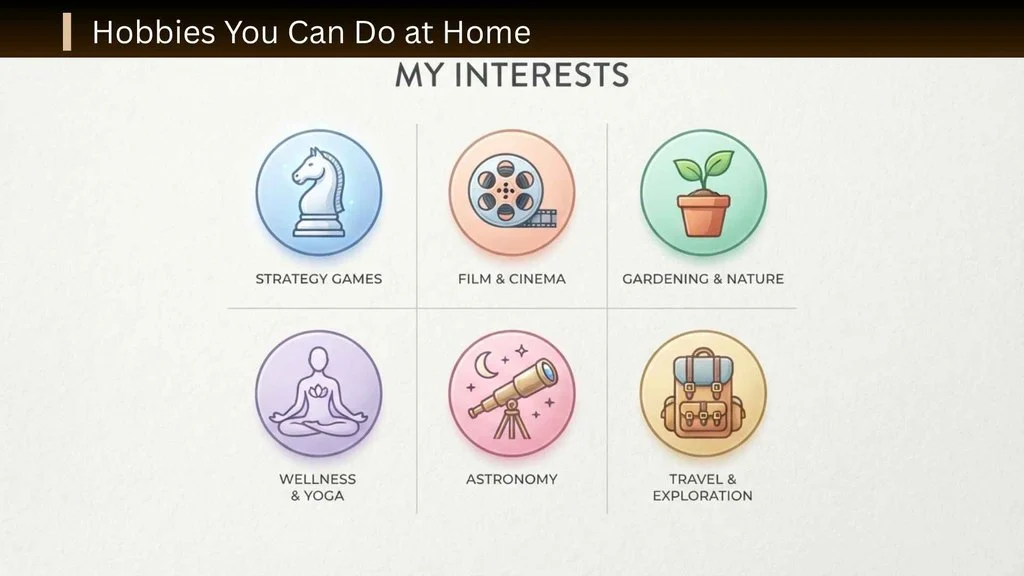
If you prefer not to travel for your hobbies, there are countless activities you can enjoy from home.
Creative
- Drawing
- Painting
- Writing
- Calligraphy
- Scrapbooking
- Knitting
- Crocheting
- Sewing
- Jewelry making
- Origami
Educational
- Reading
- Language learning
- Coding
- Genealogy
- Online research
- Astronomy
- History
- Music theory
Practical
- Cooking
- Baking
- Home organization
- DIY projects
- Woodworking
- Gardening
- Plant propagation
- Furniture restoration
Relaxing
- Puzzles
- Journaling
- Coloring
- Listening to music
- Meditation
- Reading
- Model building
Hobbies That Can Be Done on a Small Budget
You do not need to spend a lot of money to develop an interesting hobby.
Low-cost options include:
- Walking
- Running
- Reading from a library
- Writing
- Journaling
- Drawing
- Hiking
- Birdwatching
- Nature photography with an existing phone
- Origami
- Coloring
- Puzzles
- Gardening from seeds
- Learning a language
- Chess
- Volunteering
- Cooking
- Baking
- Stargazing
A useful approach is to start with equipment you already own. Once you know you enjoy the activity, you can decide whether additional equipment is worthwhile.
Hobbies That Help You Learn New Skills
A hobby can also become a practical way to develop a skill.
| Hobby | Skills You Can Develop |
| Photography | Composition, lighting, editing |
| Cooking | Food preparation, planning, technique |
| Gardening | Plant care, observation, planning |
| Writing | Communication, storytelling, editing |
| Coding | Programming, logic, problem-solving |
| Painting | Visual composition, color, technique |
| Sewing | Measurement, design, construction |
| Woodworking | Measurement, construction, tool use |
| Playing music | Rhythm, coordination, musical technique |
| Language learning | Communication, vocabulary, listening |
| Chess | Strategy, planning, pattern recognition |
| Public speaking | Communication, presentation, confidence |
The value of a hobby is not limited to the finished product. The process can gradually build knowledge and transferable skills.
Hobbies for Creative People
If you naturally enjoy making things or expressing ideas, consider:
- Painting
- Drawing
- Illustration
- Photography
- Creative writing
- Poetry
- Pottery
- Ceramics
- Jewelry design
- Sewing
- Embroidery
- Knitting
- Crocheting
- Calligraphy
- Graphic design
- Digital art
- Filmmaking
- Music
- Floral design
- Interior decorating
You can also combine hobbies. For example, photography and travel can become a travel photography hobby, while writing and history can become a local-history blog or personal research project.
Hobbies for People Who Like Working With Their Hands
Hands-on hobbies can be particularly satisfying because you can physically see your progress.
Consider:
- Woodworking
- Pottery
- Ceramics
- Gardening
- Sewing
- Knitting
- Crocheting
- Embroidery
- Jewelry making
- Model building
- Leathercraft
- Cooking
- Baking
- Home DIY
- Furniture restoration
- Paper crafts
- Candle making
- Soap making
These activities can range from simple beginner projects to highly detailed long-term pursuits.
Hobbies for People Who Love Nature
Nature-related hobbies can encourage you to explore your surroundings and pay closer attention to plants, animals, weather, and landscapes.
Popular options include:
- Hiking
- Camping
- Birdwatching
- Gardening
- Wildlife observation
- Nature photography
- Stargazing
- Fishing
- Kayaking
- Canoeing
- Geocaching
- Nature journaling
- Plant identification
- Landscape photography
- Backpacking
You can begin with something as simple as taking regular walks and keeping notes about what you see.
Hobbies for People Who Like Collecting
Collecting can turn a specific interest into an ongoing hobby.
Examples include:
- Books
- Coins
- Stamps
- Postcards
- Vintage toys
- Vinyl records
- Sports memorabilia
- Art prints
- Rocks and minerals
- Trading cards
- Antiques
- Maps
- Model cars
- Souvenirs
- Historical objects
A good collection usually benefits from a clear theme or personal reason for collecting. This makes it easier to decide what belongs in the collection and what does not.
Hobbies for Couples
A shared hobby can give couples a regular activity to enjoy together.
Ideas include:
- Cooking
- Baking
- Hiking
- Cycling
- Photography
- Gardening
- Traveling
- Board games
- Dancing
- Tennis
- Pickleball
- Camping
- Fishing
- Home DIY
- Volunteering
- Learning a language
- Pottery
- Painting
- Reading the same books
Couples do not necessarily need to share every hobby. Having separate interests can also provide individual time and something new to discuss with each other.
Hobbies for Families
Family-friendly hobbies can turn free time into shared experiences.
Consider:
- Board games
- Puzzles
- Cooking
- Baking
- Gardening
- Hiking
- Camping
- Cycling
- Fishing
- Photography
- Nature walks
- Birdwatching
- Crafts
- Painting
- Volunteering
- Gardening
- Museum visits
- Geocaching
For families, the best hobby is often one that can be adjusted for different ages and abilities.
Unique Hobbies to Try
If traditional activities do not appeal to you, explore something more unusual.
Some ideas include:
- Geocaching
- Amateur astronomy
- Historical reenactment
- Miniature painting
- Model building
- Lock-free puzzle solving
- Nature journaling
- Map collecting
- Genealogy
- Letter writing
- Urban sketching
- Bonsai
- Terrarium building
- Rock collecting
- Fossil collecting
- Whittling
- Bird identification
- Stargazing
- Soap making
- Leathercraft
A unique hobby does not have to be unusual simply for the sake of being different. It should give you a reason to remain curious and engaged.
Hobbies That Can Become Creative Projects
Some interests become more rewarding when you turn them into long-term projects.
For example:
- Photography → create a themed photo collection
- Gardening → design a seasonal garden
- Writing → complete a collection of short stories
- Genealogy → build a family history archive
- Cooking → develop a personal recipe collection
- Painting → create a series around one subject
- Hiking → document trails you visit
- Birdwatching → maintain a personal species journal
- Woodworking → build furniture for your home
- Collecting → organize and document your collection
Projects give a hobby a sense of direction without requiring it to become a job.
How to Choose the Right Hobby
With hundreds of possibilities, choosing one can seem harder than starting one. A simple way to narrow your choices is to consider five questions.
1. Do You Want to Relax or Stay Active?
If you want relaxation, consider reading, gardening, drawing, knitting, puzzles, or journaling.
If you want physical activity, consider hiking, cycling, swimming, running, dancing, or recreational sports.
2. Do You Prefer Being Alone or With Others?
Solo hobbies include reading, writing, painting, photography, puzzles, and gardening.
Social hobbies include team sports, book clubs, dancing, volunteering, theater, and group classes.
3. Do You Want to Make Something?
If you enjoy creating tangible results, try woodworking, pottery, sewing, baking, painting, crafts, or jewelry making.
4. Do You Want to Learn Something?
If learning motivates you, explore languages, coding, astronomy, history, music, chess, genealogy, or creative writing.
5. How Much Time Can You Realistically Give It?
A hobby that takes several hours every weekend may not work for someone with a busy schedule. In that case, choose something that can be enjoyed in 15–30 minute sessions.
The best hobby fits your actual life rather than an idealized version of your schedule.
How to Start a New Hobby
Starting does not need to be complicated.
Start Small
Do not buy every piece of equipment immediately. Begin with basic supplies and learn whether you actually enjoy the activity.
Give Yourself Time to Improve
Being a beginner is part of the process. Early attempts may not look or feel impressive, and that is normal.
Set a Simple Goal
Instead of saying, “I want to become good at photography,” try a smaller goal such as taking ten photographs around your neighborhood and reviewing what you like about them.
Make It Convenient
Keep your supplies accessible. A hobby is easier to maintain when starting requires very little preparation.
Focus on Enjoyment
A hobby does not need to become a side business, social-media project, or achievement. It can simply be something you enjoy doing.
Hobbies vs. Interests: What’s the Difference?
Although the terms are often used together, they are not exactly the same.
An interest is something you are curious about or enjoy learning about. A hobby generally involves regularly spending time doing an activity.
For example:
- Interest: astronomy
- Hobby: stargazing
Or:
- Interest: history
- Hobby: genealogy or researching local history
Or:
- Interest: cooking
- Hobby: regularly trying new recipes
An interest can therefore become a hobby when you begin actively participating in it.
How to List Hobbies and Interests on a Resume
If you are using hobbies and interests on a resume, choose them carefully. They should add useful context rather than simply fill space.
Good examples can include activities that demonstrate relevant qualities or skills, such as:
- Volunteer work
- Team sports
- Public speaking
- Coding
- Photography
- Writing
- Community activities
- Language learning
- Leadership-oriented clubs
- Creative projects
Avoid listing a long collection of generic hobbies unless they provide meaningful information about you.
The most useful approach is to choose a few genuine interests that are relevant to the opportunity or that can naturally support a conversation.
How Many Hobbies Should You Have?
There is no correct number of hobbies.
One person may enjoy having a single hobby they practice deeply, while another may prefer several activities throughout the year.
A balanced selection might include:
- One relaxing hobby
- One active hobby
- One creative or learning hobby
- One social hobby
But this is only a starting point. You should choose activities according to your interests, available time, budget, and energy.
How to Find a Hobby When You Have No Idea What You Like
If nothing immediately stands out, start by thinking about activities you enjoyed when you were younger or subjects that naturally catch your attention.
You can also use these prompts:
- What topics do I search for just because I am curious?
- What activities make me lose track of time?
- Do I prefer making things, learning things, moving, or socializing?
- Would I rather spend my free time indoors or outdoors?
- Do I enjoy working alone or with a group?
- Do I want a hobby with a finished product?
- Would I enjoy learning a skill gradually?
- What activities would I try if I did not worry about being a beginner?
Then choose two or three possibilities and try each one briefly.
You do not have to commit to the first hobby you try.
A Simple Hobbies and Interests Checklist
Use this checklist to narrow down your options:
| If you want… | Consider… |
| Something relaxing | Reading, gardening, knitting, puzzles |
| Physical activity | Hiking, cycling, swimming, dancing |
| Creativity | Drawing, painting, writing, photography |
| Social interaction | Sports, clubs, volunteering, dancing |
| Learning | Languages, astronomy, history, coding |
| Outdoor time | Camping, hiking, fishing, birdwatching |
| A hands-on activity | Woodworking, pottery, sewing, cooking |
| A low-cost hobby | Walking, reading, writing, drawing |
| A home-based hobby | Baking, puzzles, crafts, music |
| A long-term project | Genealogy, collecting, gardening, woodworking |
Frequently Asked Questions
What are the most popular hobbies?
Popular hobbies vary by age, lifestyle, and personal preference, but common choices include reading, cooking, gardening, photography, exercise, crafts, gaming, music, travel, and outdoor activities.
What are some good hobbies for adults?
Good hobbies for adults include reading, cooking, gardening, photography, hiking, cycling, writing, painting, woodworking, learning languages, playing music, volunteering, and many forms of crafting.
What are some hobbies I can do at home?
You can read, write, draw, paint, cook, bake, garden with houseplants, knit, crochet, sew, play an instrument, solve puzzles, learn a language, code, scrapbook, or work on DIY projects at home.
What are some inexpensive hobbies?
Walking, reading library books, writing, journaling, drawing, hiking, birdwatching, nature observation, basic gardening, puzzles, chess, and language learning can all be relatively inexpensive ways to spend your free time.
What hobbies are good for meeting people?
Team sports, recreational leagues, book clubs, volunteering, dance classes, hiking groups, craft groups, community theater, music groups, and language exchanges can provide opportunities to interact with people who share similar interests.
What are good hobbies for someone who is creative?
Painting, drawing, photography, writing, pottery, sewing, jewelry making, calligraphy, digital art, woodworking, music, and floral design are all creative possibilities.
How do I choose a hobby?
Start by identifying whether you want something relaxing, active, creative, social, educational, or hands-on. Then consider your available time, budget, location, and existing interests. Try a few options before deciding which one you want to pursue regularly.
Can an interest become a hobby?
Yes. An interest can become a hobby when you begin regularly participating in an activity connected to that interest. For example, an interest in astronomy can develop into stargazing, while an interest in history can develop into genealogy or historical research.
Do hobbies need to be productive?
No. A hobby does not need to produce money, qualifications, or measurable achievements. Enjoyment, curiosity, relaxation, creativity, and personal fulfillment are all valid reasons to have a hobby.
Can I have more than one hobby?
Absolutely. Many people enjoy several hobbies because different activities meet different needs. For example, you might read to relax, hike for outdoor activity, and cook as a creative pastime.
Conclusion
The best hobbies and interests list is not simply a collection of activities.it is a starting point for discovering what fits your personality, lifestyle, budget, and available time.
Whether you want something creative like painting, practical like cooking, active like hiking, social like volunteering, or relaxing like reading, there are plenty of possibilities to explore. You can start with something simple, give yourself permission to be a beginner, and change direction if an activity does not suit you.
A hobby does not have to be impressive or productive to be worthwhile. If it makes your free time more enjoyable and gives you something meaningful to look forward to, it can be a good hobby.

I’m Ethan Mitchell, a curious writer who enjoys turning complex ideas into simple, useful information. At Cognivoora, I focus on creating clear and engaging content that readers can understand and apply in everyday life. I believe good writing should educate, answer real questions, and leave readers with something valuable to remember.
Books:
- The Everyday Mind
- Simple Ideas, Better Thinking