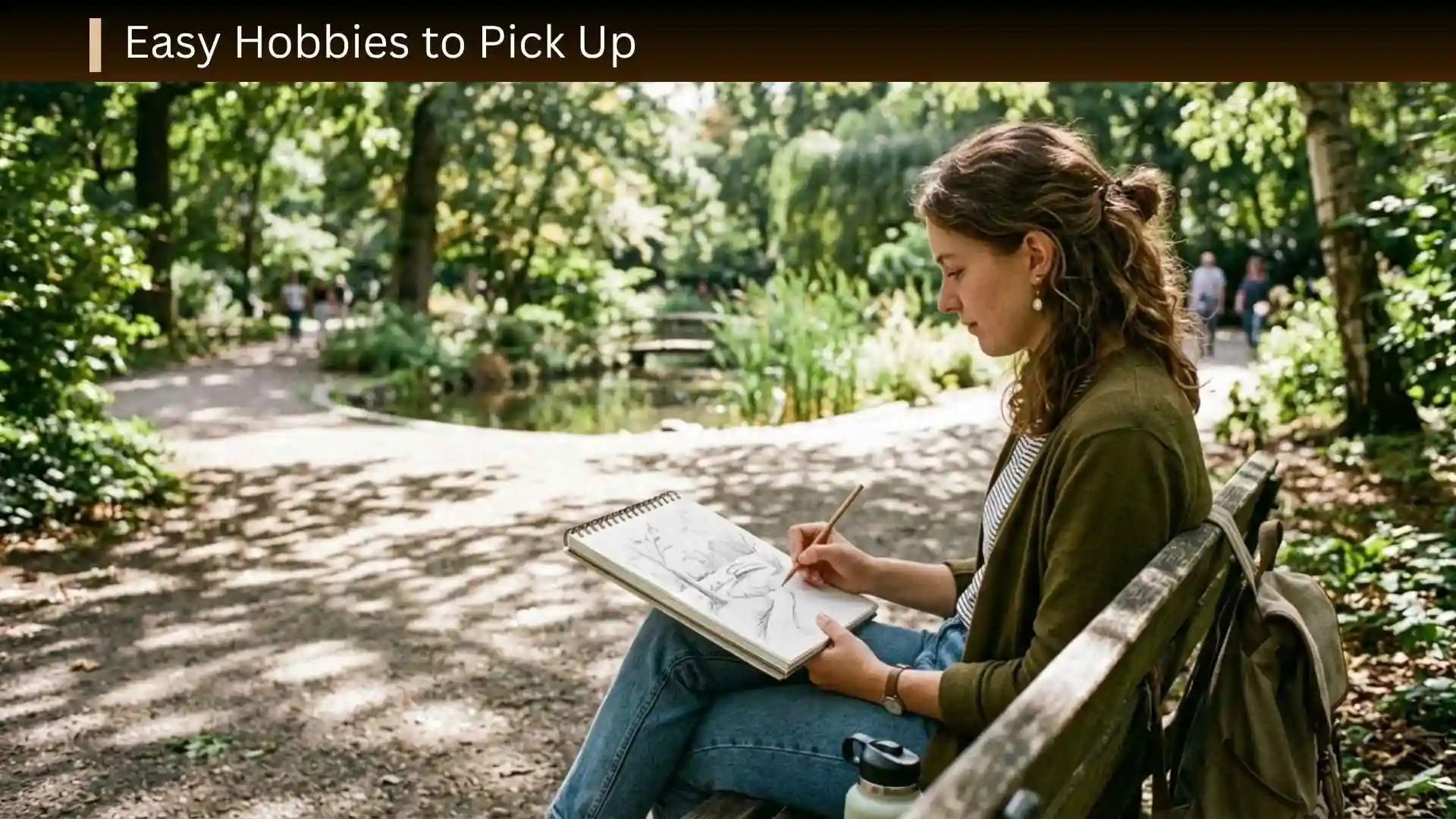
I know how easy it is to think you need lots of free time, money, or special skills to start a new hobby. The truth is, you don’t. There are plenty of easy hobbies to pick up that can fit into your daily routine, whether you want to relax after work, learn something creative, stay active, or simply try something different.
If you’re wondering where to start, you’re in the right place. I’ll walk you through simple hobbies that are beginner friendly, affordable, and easy to enjoy without feeling overwhelmed. You can start small, learn at your own pace, and discover an activity that genuinely feels like something you want to keep doing.
What Makes a Hobby Easy to Pick Up?
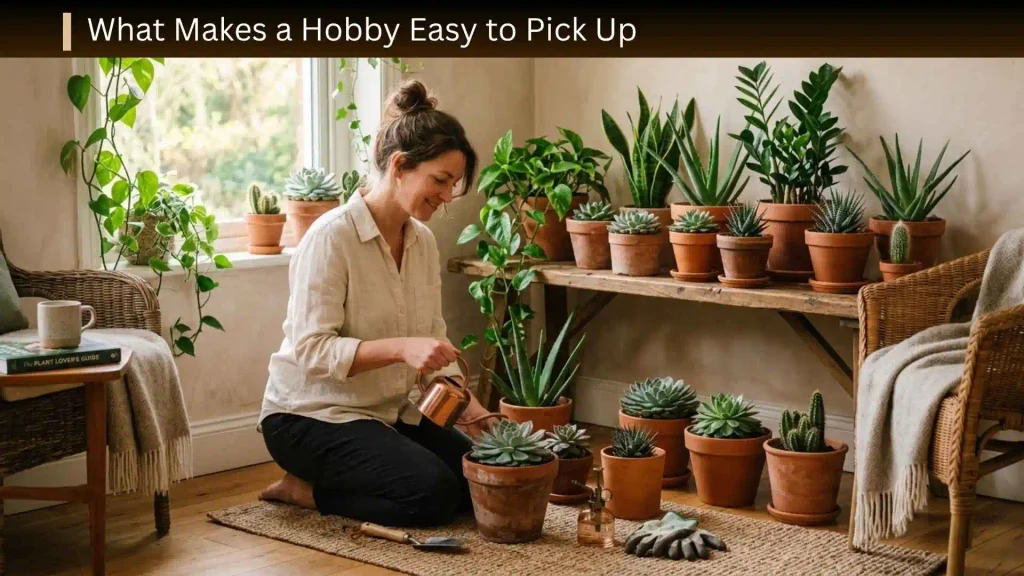
An easy hobby usually has a low barrier to entry. You can understand the basic idea quickly, start with inexpensive or existing equipment, and improve through regular practice rather than extensive formal training.
When choosing a beginner-friendly hobby, consider:
- Starting cost: Can you begin with things you already own?
- Learning curve: Can you understand the basics without taking a course?
- Time commitment: Can you enjoy it in 10 30 minutes?
- Space: Can you practice comfortably at home or in your available space?
- Social requirements: Can you do it alone if you prefer?
- Room to grow: Will it remain interesting as your skills improve?
With those factors in mind, here are 25 hobbies that are relatively easy to start.
25 Easy Hobbies to Pick Up
| Hobby | Difficulty | Starting Cost | Works Well For |
| Reading | Very easy | Low | Quiet downtime |
| Journaling | Very easy | Low | Writing and reflection |
| Drawing | Easy | Low | Creative beginners |
| Coloring | Very easy | Low | Relaxation |
| Photography | Easy | Low–Moderate | Visual creativity |
| Walking | Very easy | Low | Getting outdoors |
| Birdwatching | Easy | Low | Nature lovers |
| Gardening | Easy | Low–Moderate | Hands-on activities |
| Cooking | Easy | Low–Moderate | Practical creativity |
| Baking | Easy | Low–Moderate | Food-focused beginners |
| Origami | Easy | Very low | Crafts |
| Puzzles | Very easy | Low | Quiet concentration |
| Chess | Easy | Very low | Strategy |
| Learning an instrument | Moderate | Low–High | Music lovers |
| Singing | Easy | Very low | Music without equipment |
| Knitting | Easy | Low–Moderate | Repetitive crafts |
| Crochet | Easy | Low–Moderate | Creative projects |
| Hand lettering | Easy | Low | Artistic writing |
| Calligraphy | Easy | Low–Moderate | Detailed creative work |
| Scrapbooking | Easy | Low–Moderate | Memories and crafts |
| Creative writing | Easy | Very low | Storytelling |
| Hiking | Easy–Moderate | Low–Moderate | Outdoor exploration |
| Meditation | Very easy | Very low | Quiet routines |
| Learning a language | Easy | Low | Long-term learning |
| Stargazing | Easy | Low–Moderate | Outdoor observation |
1. Reading
Reading is one of the easiest hobbies to start because you can begin with almost any book that interests you. Fiction, biographies, history, science, mysteries, essays, and nonfiction all offer different experiences.
You do not need to set an ambitious reading goal. Start with 10 or 15 minutes before bed, during a lunch break, or whenever you have uninterrupted time.
Best for: People who enjoy quiet activities and want a hobby they can do almost anywhere.
Beginner tip: Choose a subject you already enjoy rather than forcing yourself to read something simply because it is considered important.
2. Journaling
Journaling requires little more than a notebook and pen, although a digital notes app works too. You can write about your day, record ideas, keep a gratitude journal, document goals, or simply describe whatever is on your mind.
There is no requirement to write several pages. Even a few sentences can make journaling sustainable.
Best for: People who enjoy writing, organizing thoughts, or documenting everyday life.
Beginner tip: Give yourself a simple prompt, such as “What was interesting today?” rather than worrying about producing polished writing.
3. Drawing
You do not need to be naturally artistic to begin drawing. Start with basic shapes, household objects, plants, animals, or simple sketches from photographs.
Drawing becomes more interesting when you focus on observation rather than trying to create perfect artwork immediately.
Best for: Creative people who want a hobby with virtually unlimited room for improvement.
Beginner tip: Use an ordinary pencil and inexpensive paper before investing in specialized art supplies.
4. Coloring
Adult coloring books offer a particularly accessible entry point into creative hobbies. Instead of having to invent an image from scratch, you work with an existing outline and concentrate on color choices and details.
It can also be an easy activity to pick up when you only have a short amount of free time.
Best for: Beginners who want a creative activity without having to learn drawing fundamentals first.
Beginner tip: Try colored pencils, markers, or gel pens and see which medium you enjoy handling most.
5. Photography
Photography can start with something you already carry: a smartphone. You can practice composition, lighting, perspective, architecture, nature, food photography, or everyday scenes without immediately buying a dedicated camera.
The hobby becomes more rewarding when you start asking why one photograph looks more interesting than another.
Best for: People who enjoy visual creativity and exploring their surroundings.
Beginner tip: Practice photographing the same subject from several angles rather than simply taking as many pictures as possible.
6. Walking
Walking is an exceptionally simple hobby because the basic equipment is minimal and you can adapt the activity to your surroundings and schedule.
You can turn an ordinary walk into a hobby by exploring different neighborhoods, parks, trails, waterfronts, or local landmarks.
Best for: People who want a low-barrier outdoor activity.
Beginner tip: Give each walk a small purpose, such as finding a new route or photographing interesting buildings.
7. Birdwatching
Birdwatching turns an ordinary outdoor environment into something to explore. You can start by observing birds in a backyard, neighborhood, park, or other suitable outdoor area.
A smartphone or simple field guide can help you identify species as you become more familiar with them. Binoculars can be added later but are not essential for beginning.
Best for: Nature lovers who enjoy observation and patience.
Beginner tip: Learn to recognize a handful of common local birds before trying to identify everything you see.
8. Gardening
Gardening can be as simple or elaborate as you want. You do not need a large backyard; herbs and some other plants can be grown in containers when the conditions are suitable.
The hobby offers a clear progression from choosing plants to caring for them and learning what works in your particular environment.
Best for: People who like hands-on projects and spending time around plants.
Beginner tip: Start with a small number of relatively manageable plants rather than creating a large garden immediately.
9. Cooking
Cooking is both a practical skill and a hobby. You can make the hobby more interesting by exploring cuisines, ingredients, techniques, or specific types of dishes.
Beginner cooking does not require elaborate recipes. Learning a few fundamental techniques can give you more flexibility than memorizing dozens of complicated recipes.
Best for: People who enjoy useful hobbies with a tangible result.
Beginner tip: Master a few basic meals before attempting complicated multi-step dishes.
10. Baking
Baking provides a structured form of creativity because recipes usually give you specific quantities and instructions to follow.
Cookies, simple breads, muffins, and basic cakes can provide accessible starting points. As you improve, you can experiment with decoration, flavors, and techniques.
Best for: People who enjoy following recipes and creating something they can share.
Beginner tip: Follow recipes carefully at first, particularly when learning how ingredients and measurements affect the final result.
11. Origami
Origami involves folding paper into recognizable forms and designs. It is inexpensive, portable, and easy to practice in short sessions.
Simple models can teach you basic folds before you progress toward more complex designs.
Best for: Craft beginners who want an inexpensive hobby requiring very little space.
Beginner tip: Start with simple models and focus on making clean, accurate folds rather than rushing through the instructions.
12. Puzzles
Jigsaw puzzles, crossword puzzles, logic puzzles, and other puzzle formats offer different types of mental challenges.
You can choose the format according to how much time and concentration you want to spend. A small puzzle can fit into a short break, while a larger jigsaw can become a longer project.
Best for: People who enjoy problem-solving and focused activities.
Beginner tip: Pick a difficulty that feels challenging without becoming frustrating.
13. Chess
Chess has straightforward basic rules but considerable depth, which makes it suitable for beginners who want a hobby that can continue developing for years.
You can learn the movements of the pieces first, then gradually study basic tactics, opening principles, and endgame ideas.
Best for: Strategy-minded people who enjoy games and intellectual challenges.
Beginner tip: Focus on understanding why pieces are moved rather than trying to memorize large amounts of opening theory.
14. Learning a Musical Instrument
Learning an instrument takes more commitment than some hobbies on this list, but you can begin with short practice sessions.
Ukulele, keyboard, guitar, harmonica, and other instruments can provide different entry points depending on your interests, budget, and available space.
Best for: People who want a hobby that combines practice with creative expression.
Beginner tip: Learn a few simple songs early. Having recognizable pieces to play can make regular practice more rewarding.
15. Singing
Singing requires no specialized equipment to begin. You can practice privately, sing along with music, learn songs, or explore vocal exercises.
As with any musical skill, improvement comes from regular practice rather than expecting immediate mastery.
Best for: People interested in music who do not want to purchase an instrument.
Beginner tip: Start with songs that fit comfortably within your current vocal range rather than forcing yourself to imitate difficult performances.
16. Knitting
Knitting uses yarn and needles to create fabric and objects such as scarves, hats, and other projects.
The first attempts can feel awkward because you have to coordinate several movements, but basic stitches provide a foundation for increasingly interesting projects.
Best for: People who enjoy hands-on, repetitive crafts.
Beginner tip: Learn one or two basic stitches before attempting complicated patterns.
17. Crochet
Crochet is another yarn-based craft, but it uses a crochet hook rather than knitting needles. Many beginners appreciate having a single primary tool to control.
You can progress from basic chains and stitches to projects such as scarves, blankets, accessories, and decorative items.
Best for: Craft enthusiasts who like making physical objects.
Beginner tip: Choose a simple beginner project instead of buying supplies for a large, complicated pattern.
18. Hand Lettering
Hand lettering focuses on creating attractive letters and words. Unlike ordinary handwriting, the goal is often visual design rather than speed.
You can practice with inexpensive pens and paper and gradually experiment with different lettering styles.
Best for: People who enjoy typography, stationery, cards, and small creative projects.
Beginner tip: Practice individual letterforms before trying to create elaborate quotes or layouts.
19. Calligraphy
Calligraphy is a more structured form of decorative writing. Different styles use different tools and techniques, so beginners can explore traditional or modern approaches.
It can be practiced in small sessions, making it suitable for people who enjoy detailed work.
Best for: Patient beginners who like lettering and precision.
Beginner tip: Spend time learning basic strokes before worrying about complete words and decorative compositions.
20. Scrapbooking
Scrapbooking combines photographs, paper, writing, layouts, and decorative elements to preserve memories or tell a visual story.
A digital version can also be created if you prefer working on a computer or tablet.
Best for: People who enjoy crafts, photography, and preserving personal memories.
Beginner tip: Start with a single event or collection of photographs rather than trying to organize years of memories at once.
21. Creative Writing
Creative writing can include short stories, poetry, personal essays, fictional scenes, or other forms of original writing.
One advantage is that you can begin immediately with paper or a basic word processor. You also have complete control over the length and subject of your projects.
Best for: People who enjoy storytelling, imagination, or experimenting with language.
Beginner tip: Start with short pieces. Finishing a 500-word story is often more manageable than planning a novel immediately.
22. Hiking
Hiking combines walking with exploration and can range from relatively easy local trails to more demanding routes.
The important consideration for beginners is choosing a route appropriate for their experience, fitness, weather conditions, and available equipment.
Best for: People who enjoy nature and want an outdoor hobby with room to become more adventurous.
Beginner tip: Begin with familiar, manageable trails and check route conditions before setting out.
23. Meditation
Meditation can be practiced without specialized equipment. Beginners can start with a short period of quiet attention and gradually develop a consistent routine.
There are different approaches, including focused-attention and guided practices, so you can experiment with formats that fit your preferences.
Best for: People who want a simple, quiet activity that can fit into a daily routine.
Beginner tip: Start with a few minutes rather than setting an unrealistic session length.
24. Learning a Language
Learning another language is a long-term hobby rather than something you need to master quickly. You can begin with basic vocabulary, pronunciation, common phrases, reading, listening, or conversation.
Apps, books, videos, podcasts, classes, and language-exchange opportunities can all support different parts of the learning process.
Best for: Curious learners who enjoy steady progress and discovering another culture’s language.
Beginner tip: Choose a specific reason for learning, such as understanding travel phrases or following simple conversations, to give your practice direction.
25. Stargazing
Stargazing can begin simply by spending time outside on a clear night and learning to recognize prominent celestial objects.
A phone app or basic astronomy guide can help you understand what you are looking at. A telescope is optional rather than a requirement for getting started.
Best for: People who enjoy nature, science, observation, and quiet outdoor activities.
Beginner tip: Learn a few easily recognizable constellations or bright objects before attempting to identify everything in the sky.
Easy Hobbies You Can Start for Little or No Money
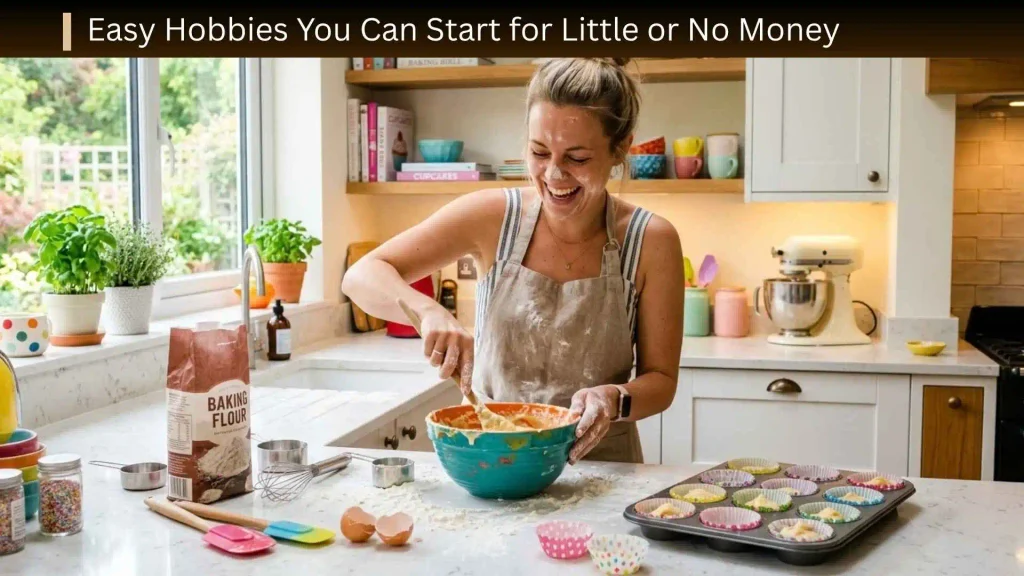
If your main concern is cost, several hobbies can be started with things you may already have.
Good low-cost choices include:
- Reading
- Journaling
- Drawing
- Creative writing
- Walking
- Meditation
- Singing
- Chess
- Origami
- Coloring
- Photography with a smartphone
The cheapest hobby is not necessarily the best hobby for you. A hobby is more useful when you actually want to return to it.
Easy Hobbies to Pick Up at Home
For people who prefer indoor activities, consider:
- Reading
- Drawing
- Coloring
- Journaling
- Origami
- Puzzles
- Chess
- Cooking
- Baking
- Knitting
- Crochet
- Hand lettering
- Calligraphy
- Creative writing
- Learning a language
- Singing
- Meditation
These hobbies vary considerably. Some are highly creative, while others are more analytical or repetitive.
Easy Hobbies for People Who Want to Get Outside
If you spend most of your free time indoors and want a reason to go outside, these are particularly accessible:
- Walking
- Birdwatching
- Gardening
- Hiking
- Photography
- Stargazing
You can also combine hobbies. For example, walking and photography can become one activity, while gardening and birdwatching can naturally overlap.
Easy Creative Hobbies
Creative hobbies are useful when you want to make, design, write, or visually express something.
Consider:
- Drawing
- Coloring
- Photography
- Origami
- Knitting
- Crochet
- Hand lettering
- Calligraphy
- Scrapbooking
- Creative writing
- Cooking
- Baking
- Playing an instrument
- Singing
The right choice depends on whether you prefer visual art, writing, crafts, food, or music.
Easy Hobbies for Introverted Beginners
If you prefer hobbies that do not require frequent social interaction, start with activities you can control independently.
Good choices include:
- Reading
- Journaling
- Drawing
- Photography
- Puzzles
- Chess
- Origami
- Gardening
- Creative writing
- Knitting
- Crochet
- Stargazing
- Learning a language
Some hobbies can become social later if you want. Chess, gardening, photography, language learning, and music all offer opportunities to connect with other people without requiring social interaction at the beginning.
How to Choose the Right Easy Hobby
Having 25 possibilities can create a different problem: too much choice.
Instead of asking which hobby is objectively best, ask what you want from your free time.
If you want something relaxing
Try reading, coloring, journaling, puzzles, knitting, crochet, meditation, or stargazing.
If you want to make things
Try drawing, origami, cooking, baking, woodworking, knitting, crochet, calligraphy, or scrapbooking.
If you want to learn something
Try chess, photography, a musical instrument, creative writing, or a new language.
If you want more time outdoors
Try walking, gardening, birdwatching, hiking, photography, or stargazing.
If you want almost no startup cost
Try reading, writing, walking, meditation, singing, drawing, or using a free chess or language-learning resource.
If you have very little free time
Choose something that can be enjoyed in short sessions, such as reading, drawing, journaling, puzzles, origami, meditation, or photography.
How to Start a New Hobby Without Getting Overwhelmed
The easiest way to abandon a new hobby is to make the beginning unnecessarily complicated.
Start with the smallest practical version of the activity.
If you want to learn photography, use your phone before buying a camera. If you want to garden, start with a small container rather than planning a large garden. If you want to write, finish a short story before planning an entire book.
A simple starting process is:
- Choose one hobby. Avoid starting five new hobbies simultaneously.
- Set a small first goal. Make it something you can complete within a few sessions.
- Use what you already have. Buy equipment only when you know you enjoy the activity.
- Practice consistently. Short, regular sessions are easier to maintain than occasional marathon sessions.
- Increase the challenge gradually. Move to more advanced projects once the basics become comfortable.
- Give yourself permission to change hobbies. Trying something and deciding it is not for you is useful information.
Should You Choose a Hobby Based on Its Difficulty?
Not necessarily.
An extremely easy hobby may be perfect if you want relaxation or something that fits into a busy schedule. A slightly harder hobby may be better if you want a skill you can develop for years.
The goal is to find the right balance between easy enough to start and interesting enough to continue.
For example, coloring may provide immediate creative satisfaction, while drawing offers a steeper learning curve but more room for skill development. Similarly, casual walking is easy to begin, while hiking can introduce progressively greater challenges.
What If You Start a Hobby and Lose Interest?
That is normal. A hobby does not need to become a lifelong commitment to have been worthwhile.
Before giving it up, consider whether you dislike the hobby itself or simply dislike your current approach. You may enjoy photography but not editing, cooking but not complicated recipes, or gardening but not maintaining a large number of plants.
You can modify the hobby instead of abandoning it completely.
If it still does not appeal to you, try something else. The purpose of exploring hobbies is to discover activities that fit your interests, schedule, personality, and available resources.
Frequently Asked Questions
What are the easiest hobbies to pick up?
Some of the easiest hobbies to start are reading, walking, journaling, coloring, drawing, meditation, puzzles, singing, photography with a smartphone, and creative writing. Most require little equipment and can be learned gradually.
What hobby can I start with almost no money?
Reading, walking, journaling, creative writing, meditation, singing, and drawing can often be started with items you already have. Free or existing resources can also make hobbies such as chess and language learning inexpensive to begin.
What is a good hobby for someone who gets bored easily?
Choose a hobby with multiple directions for exploration. Photography, cooking, drawing, learning a language, gardening, music, and hiking can all evolve as your interests change.
What are some easy hobbies to do at home?
Reading, drawing, coloring, journaling, puzzles, chess, cooking, baking, origami, knitting, crochet, creative writing, singing, and language learning are all suitable options for home-based hobby time.
What hobby is easiest to start as an adult?
Adults can start any hobby regardless of age, but activities such as reading, walking, photography, cooking, journaling, drawing, puzzles, and creative writing have particularly low barriers to entry.
How do I choose a hobby if I do not know what I like?
Start by identifying what you want more of in your free time: creativity, movement, learning, relaxation, nature, making things, or social connection. Pick one inexpensive activity from that category and give it a few sessions before deciding whether it fits.
Do I need to be talented to start a hobby?
No. Beginner-friendly hobbies are generally about learning and exploring rather than demonstrating existing talent. Skills develop through practice, and your first attempts do not need to be impressive to be worthwhile.
Conclusion
The easiest hobby to pick up is the one that fits naturally into your life and gives you a reason to return to it. If you want the simplest possible starting point, try reading, walking, journaling, drawing, photography, cooking, puzzles, or another activity that matches your interests.
Do not worry about finding the perfect hobby immediately. Pick one that requires little commitment, try it for a few sessions, and pay attention to what you enjoy. If it does not suit you, move on to another option. Exploring is part of finding a hobby that genuinely fits you.

I’m Ethan Mitchell, a curious writer who enjoys turning complex ideas into simple, useful information. At Cognivoora, I focus on creating clear and engaging content that readers can understand and apply in everyday life. I believe good writing should educate, answer real questions, and leave readers with something valuable to remember.
Books:
- The Everyday Mind
- Simple Ideas, Better Thinking