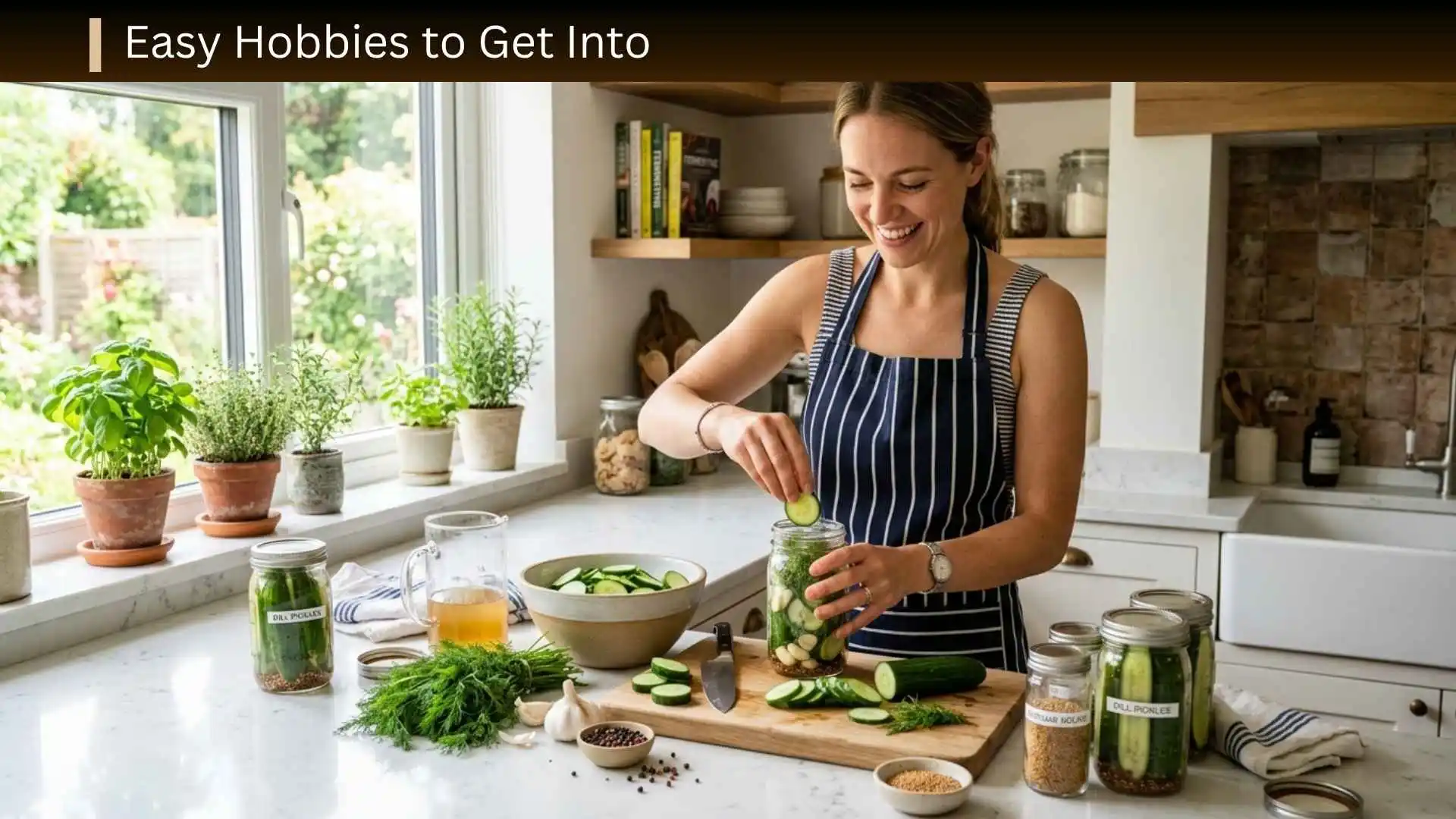
Finding a hobby doesn’t have to mean learning something complicated or spending a lot of money. I believe the best hobbies are often the ones that fit naturally into your everyday life and give you something enjoyable to look forward to. Whether you want to relax after a busy day, explore a new interest, or simply spend less time scrolling, there are plenty of easy hobbies to get into without feeling overwhelmed.
You don’t need to be highly skilled, creative, or experienced to start. In this guide, I’ll share simple hobby ideas that you can try at your own pace, including creative, relaxing, active, and low-cost options. You may discover a new passion or simply find an enjoyable way to make your free time more meaningful.
What Are the Easiest Hobbies to Get Into(Quick Answer)
Some of the easiest hobbies for beginners include:
- Reading
- Walking
- Journaling
- Drawing
- Photography
- Cooking
- Baking
- Gardening
- Puzzles
- Coloring
- Birdwatching
- Hiking
- Learning a language
- Playing an instrument
- Knitting or crocheting
- Origami
- Creative writing
- Geocaching
- Houseplant care
- Stargazing
- Fishing
- Scrapbooking
- Board games
- Calligraphy
- Digital art
The easiest choice depends on what you want from a hobby. If you want something inexpensive, reading, walking, journaling, and drawing are excellent starting points. If you want a creative outlet, try photography, cooking, coloring, or creative writing. For outdoor exploration, hiking, birdwatching, gardening, and geocaching are good options.
25 Easy Hobbies to Get Into

1. Reading
Reading is one of the simplest hobbies to start because you can choose almost any subject that interests you. Fiction, biographies, history, science, personal development, mysteries, and essays can all provide different experiences.
You do not need to set an ambitious reading goal. Starting with 10 or 15 minutes a day can be enough to establish the habit.
Best for: People who enjoy quiet, independent activities
Starting cost: Free to low
Space needed: Very little
Beginner tip: Choose a book based on a subject you already enjoy rather than forcing yourself through a famous book you do not find interesting.
2. Walking
Walking can become a hobby rather than simply a form of transportation or exercise. You can explore different neighborhoods, parks, trails, waterfronts, or local landmarks.
It is particularly easy to fit into an irregular schedule because you do not necessarily need a fixed class, club, or special facility.
Best for: People who want an outdoor hobby with minimal equipment
Starting cost: Free to low
Time commitment: Flexible
Beginner tip: Give your walks a purpose, such as discovering a new route, photographing interesting buildings, or listening to an audiobook.
3. Journaling
Journaling can take many forms. You might write about your day, record ideas, keep a gratitude journal, document goals, or simply write whatever comes to mind.
There is no special technique required. A notebook and pen are enough, although digital note-taking works just as well if that is more convenient.
Best for: People who enjoy writing and reflection
Starting cost: Free to low
Beginner tip: Start with five minutes rather than trying to fill several pages.
4. Drawing
You do not need to become an accomplished artist to enjoy drawing. Beginners can start with simple objects, shapes, landscapes, doodles, or observational sketches.
Drawing also offers a natural progression. You can begin with pencil and paper and eventually explore colored pencils, ink, charcoal, watercolor, or digital drawing.
Best for: Creative people who want a flexible solo hobby
Starting cost: Low
Space needed: Very little
Beginner tip: Draw ordinary objects around you instead of worrying about creating impressive artwork immediately.
5. Photography
Photography is easier to explore than many beginners assume because a smartphone can provide a capable starting point. You can experiment with composition, light, perspective, architecture, nature, food, pets, or everyday scenes.
The hobby can remain simple or become more technical as your interest grows.
Best for: People who enjoy visual creativity and exploration
Starting cost: Free to moderate
Beginner tip: Learn one concept at a time, such as composition or lighting, instead of trying to master every camera setting.
6. Cooking
Cooking turns an everyday necessity into a skill-based hobby. Beginners can start with simple meals and gradually experiment with different cuisines, ingredients, and techniques.
One advantage is that your practice produces something useful. You can learn while preparing meals you would otherwise need to make.
Best for: People who enjoy practical and creative activities
Starting cost: Low to moderate, depending on equipment and ingredients
Beginner tip: Learn a handful of basic techniques—such as sautéing, roasting, and making simple sauces—before collecting specialized equipment.
7. Baking
Baking can be particularly appealing if you enjoy following processes and creating something tangible. Cookies, muffins, quick breads, and simple cakes are approachable starting points.
Unlike some forms of cooking, baking often requires closer attention to measurements, which can appeal to people who enjoy structured activities.
Best for: Beginners who like food and step-by-step projects
Starting cost: Low to moderate
Beginner tip: Begin with recipes containing familiar ingredients and relatively few steps.
8. Gardening
Gardening does not necessarily require a large backyard. Herbs, flowers, vegetables, and many houseplants can be grown in containers.
It can also become as simple or involved as you want. A small herb pot might take very little space, while a vegetable garden can become a substantial seasonal project.
Best for: People who enjoy nature and hands-on activities
Starting cost: Low to moderate
Space needed: From a windowsill to a yard
Beginner tip: Start with a small number of plants so you can learn how watering, light, soil, and seasonal conditions affect them.
9. Puzzles
Jigsaw puzzles, crossword puzzles, logic puzzles, and number puzzles provide different kinds of challenges without requiring extensive preparation.
Puzzles are especially convenient when you want a hobby that you can pick up for a short session and return to later.
Best for: People who enjoy problem-solving and quiet activities
Starting cost: Low
Beginner tip: Choose a difficulty that feels challenging but manageable rather than starting with an extremely complex puzzle.
10. Coloring
Adult coloring is an accessible creative activity because you do not have to draw the underlying design yourself. Coloring books can range from simple patterns to highly detailed illustrations.
You can experiment with colored pencils, markers, or other suitable art materials.
Best for: People who want low-pressure creativity
Starting cost: Low
Beginner tip: Start with inexpensive supplies and discover which type of coloring you enjoy before buying specialized materials.
11. Birdwatching
Birdwatching combines observation, nature, and learning. You can begin in your own backyard, neighborhood, or local park.
You do not necessarily need binoculars immediately. A beginner can start by noticing different birds, learning their names, and keeping a simple observation list.
Best for: Nature lovers and curious observers
Starting cost: Free to moderate
Beginner tip: Learn to identify a few common local birds before attempting to recognize dozens of species.
12. Hiking
Hiking offers more variety than simply walking because you can explore established trails, parks, forests, and other natural areas.
Beginners should choose routes appropriate for their current abilities and conditions. As experience increases, longer or more challenging trails can provide a natural progression.
Best for: People who enjoy nature and exploration
Starting cost: Free to moderate
Beginner tip: Start with a well-established, relatively easy trail and bring appropriate water, footwear, clothing, and navigation resources.
13. Learning a New Language
Learning a language can be approached in small daily sessions rather than as an intensive project. You can practice vocabulary, pronunciation, listening, reading, and basic conversation separately.
Choosing a language connected to your interests can make continued practice easier. For example, someone interested in travel may enjoy learning phrases useful for a future destination.
Best for: Lifelong learners and people interested in other cultures
Starting cost: Free to moderate
Time commitment: Flexible but benefits from consistency
Beginner tip: Focus on useful everyday phrases before worrying about mastering complex grammar.
14. Playing an Instrument
Learning an instrument can initially seem difficult, but beginners can make the process manageable by focusing on basic skills.
Ukulele, keyboard, guitar, harmonica, and other instruments can provide different entry points. Your choice should consider budget, space, noise, and the kind of music you want to play.
Best for: Music lovers who enjoy skill development
Starting cost: Moderate
Beginner tip: Practice a small amount consistently instead of waiting for long periods of free time.
15. Knitting or Crocheting
Knitting and crocheting are portable crafts that can be learned through beginner projects. Once you understand a few basic techniques, you can gradually experiment with patterns and more complex creations.
The physical process is repetitive, which some people find particularly satisfying.
Best for: People who enjoy crafts and hands-on projects
Starting cost: Low
Space needed: Very little
Beginner tip: Choose a simple first project and learn the basic stitches before attempting an elaborate pattern.
16. Origami
Origami involves folding paper into shapes and figures. It is inexpensive, requires little space, and can provide increasingly difficult challenges as your skills improve.
Because paper is inexpensive, mistakes are part of the learning process rather than a major financial setback.
Best for: People who enjoy precise, creative projects
Starting cost: Very low
Space needed: Minimal
Beginner tip: Start with simple models and follow diagrams or beginner tutorials carefully.
17. Creative Writing
Creative writing can include short stories, poetry, fictional scenes, personal essays, or imaginative exercises.
You do not need to plan an entire novel. A 200-word scene or a short poem can be a complete creative project.
Best for: People who enjoy imagination and storytelling
Starting cost: Free to low
Beginner tip: Set a small writing target and treat early work as practice rather than something that needs to be perfect.
18. Geocaching
Geocaching turns outdoor exploration into a treasure-hunting activity. Participants use location information to find hidden containers or designated locations.
It can add a sense of purpose to walks and introduce you to places you might otherwise overlook.
Best for: People who like exploration, puzzles, and outdoor activities
Starting cost: Low
Beginner tip: Start with an easier location and become familiar with the activity’s etiquette before attempting difficult finds.
19. Houseplant Care
Houseplant care is a smaller-scale alternative to traditional gardening. You can learn about light, watering, soil, containers, and plant growth without needing outdoor space.
It is important to choose plants according to your home’s conditions rather than simply buying whatever looks attractive.
Best for: Apartment dwellers and people who enjoy caring for plants
Starting cost: Low to moderate
Space needed: Minimal
Beginner tip: Learn the light conditions in your home before selecting plants.
20. Stargazing
Stargazing can start with nothing more than a clear night and a place with a reasonably unobstructed view of the sky.
As your interest develops, you can learn about constellations, planets, lunar phases, and other celestial objects. A pair of binoculars can be useful before you decide whether you want to invest in a telescope.
Best for: Curious people who enjoy quiet outdoor activities
Starting cost: Free to moderate
Beginner tip: Start by learning a few easily recognizable objects rather than trying to identify everything visible in the sky.
21. Fishing
Fishing can be a relaxing outdoor hobby, but it involves more preparation than activities such as walking or reading. Depending on where you fish, you may need appropriate equipment and a fishing license or other local authorization.
The good news is that beginners can start with basic tackle and learn gradually.
Best for: People who enjoy being outdoors and patient, hands-on activities
Starting cost: Moderate
Beginner tip: Learn the local rules before fishing and ask an experienced angler or reputable local source for beginner equipment guidance.
22. Scrapbooking
Scrapbooking combines photographs, paper, writing, layouts, and decorative elements. It can be a creative way to preserve memories or organize photographs.
You can keep it simple with photographs and captions or make elaborate themed pages.
Best for: People who enjoy crafts and preserving memories
Starting cost: Low to moderate
Beginner tip: Begin with a small project instead of buying a large collection of supplies.
23. Board Games
Board games can turn casual social time into a regular hobby. The category includes strategy games, word games, cooperative games, card-based games, party games, and many other formats.
If you are new to the hobby, choose games based on the number of people you normally play with and the amount of time you want a session to take.
Best for: People who enjoy social or strategic activities
Starting cost: Low to moderate
Beginner tip: Start with accessible games that can be explained quickly rather than highly complex games.
24. Calligraphy
Calligraphy focuses on decorative and deliberate lettering. It can be practiced with relatively inexpensive supplies and does not require a large workspace.
Beginners can work on letterforms, spacing, consistency, and basic strokes before creating finished pieces.
Best for: People who enjoy lettering and detail-oriented crafts
Starting cost: Low
Space needed: Very little
Beginner tip: Practice basic strokes and individual letters before attempting elaborate compositions.
25. Digital Art
Digital art allows you to create illustrations, designs, sketches, and other visual work using a computer, tablet, or compatible device.
The potential equipment range is broad. You can experiment with existing hardware before deciding whether you need a dedicated drawing tablet or other specialized tools.
Best for: Creative people interested in technology and visual design
Starting cost: Free to moderate or higher depending on equipment
Beginner tip: Start with basic shapes, brushes, and simple studies rather than trying to create highly detailed artwork immediately.
The Best Easy Hobby Depends on What You Want
There is no universally best hobby for everyone. A useful way to narrow your choices is to start with the experience you want rather than the hobby itself.
| If you want… | Consider… |
| Almost no startup cost | Reading, walking, journaling, drawing |
| A creative outlet | Drawing, photography, coloring, writing |
| An outdoor activity | Hiking, birdwatching, fishing, geocaching |
| Something social | Board games, cooking, language learning |
| A quiet solo activity | Reading, puzzles, journaling, origami |
| A practical skill | Cooking, baking, gardening |
| Something you can do at home | Knitting, digital art, puzzles, houseplants |
| A hobby that can keep getting deeper | Photography, music, gardening, language learning |
| A very small-space hobby | Journaling, reading, calligraphy, origami |
| A hobby involving nature | Gardening, birdwatching, hiking, stargazing |
The important distinction is that easy to start does not necessarily mean easy to master. Photography, music, gardening, and language learning can all begin simply while offering years of room for improvement.
How to Choose an Easy Hobby You Will Actually Stick With
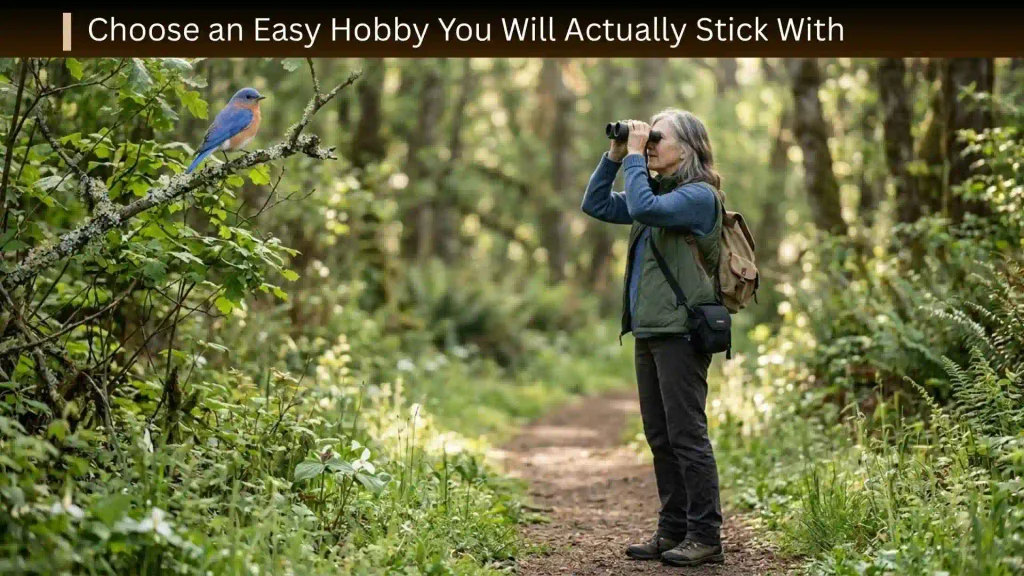
A hobby is more likely to become part of your routine when it fits your real circumstances.
Consider Your Available Time
If you only have 15 minutes available on most days, choose something that works in short sessions. Reading, drawing, journaling, language practice, and knitting can all be divided into small blocks of time.
If you have several uninterrupted hours on weekends, hiking, fishing, gardening, cooking projects, or photography outings may be more suitable.
Set a Realistic Starting Budget
Do not assume that an expensive hobby is a better hobby.
Try the simplest version first. For example, use a smartphone before buying a camera, borrow books before building a personal library, or start with basic art supplies before purchasing professional equipment.
This reduces the risk of spending heavily on an interest you may not continue.
Think About Your Personality
Your preferred social environment matters.
If you like independent activities, reading, writing, drawing, photography, puzzles, gardening, and stargazing may be good fits.
If you enjoy meeting people, consider board games, group cooking activities, language practice, community gardening, hiking groups, or other social versions of hobbies you already like.
Decide Whether You Want Relaxation or Challenge
Some people want a hobby that helps them disconnect from demanding routines. Others want something that continually challenges them.
For a low-pressure activity, try coloring, walking, reading, journaling, or simple crafts.
For a hobby with a stronger learning curve, consider an instrument, language, photography, cooking, drawing, or a strategy-based activity.
Consider the Space You Have
Someone living in a small apartment has different practical options from someone with a garage, workshop, or backyard.
For limited space, look at reading, drawing, digital art, puzzles, origami, calligraphy, knitting, journaling, and houseplants.
How to Start a New Hobby Without Overcomplicating It
The biggest beginner mistake is often turning a simple hobby into a major project before discovering whether you actually enjoy it.
Use a small starting process:
1. Pick one activity.
Do not buy supplies for five different hobbies at once.
2. Try the simplest version.
Use what you already own whenever practical.
3. Give yourself a small first project.
Read one chapter, sketch one object, cook one recipe, or take a short photo walk.
4. Practice consistently enough to evaluate it.
One attempt may not tell you whether the hobby suits you.
5. Notice what you enjoy.
Maybe you like taking photographs but dislike editing them. Perhaps you enjoy cooking but not baking. That distinction helps you refine your hobby.
6. Upgrade only when there is a reason.
Buy better equipment when it solves a problem or supports an interest you have already developed.
Easy Hobbies That Cost Little or Nothing
If your main concern is budget, you have plenty of choices.
Some particularly accessible options include:
- Walking
- Reading through a library
- Journaling
- Drawing with basic supplies
- Creative writing
- Birdwatching without specialized equipment
- Stargazing
- Origami
- Photography with a smartphone
- Free online language practice
- Puzzles you already own
- Exploring local parks
A low-cost hobby can still be deeply engaging. What matters is the activity itself and whether it gives you a reason to return to it.
Easy Hobbies for People Who Want to Learn Something
If you want your hobby to develop a useful or interesting skill, consider:
- Cooking
- Baking
- Photography
- Drawing
- Digital art
- Playing an instrument
- Learning a language
- Gardening
- Calligraphy
- Creative writing
These hobbies have accessible entry points but can become increasingly sophisticated as your skills improve.
Easy Hobbies You Can Do Alone
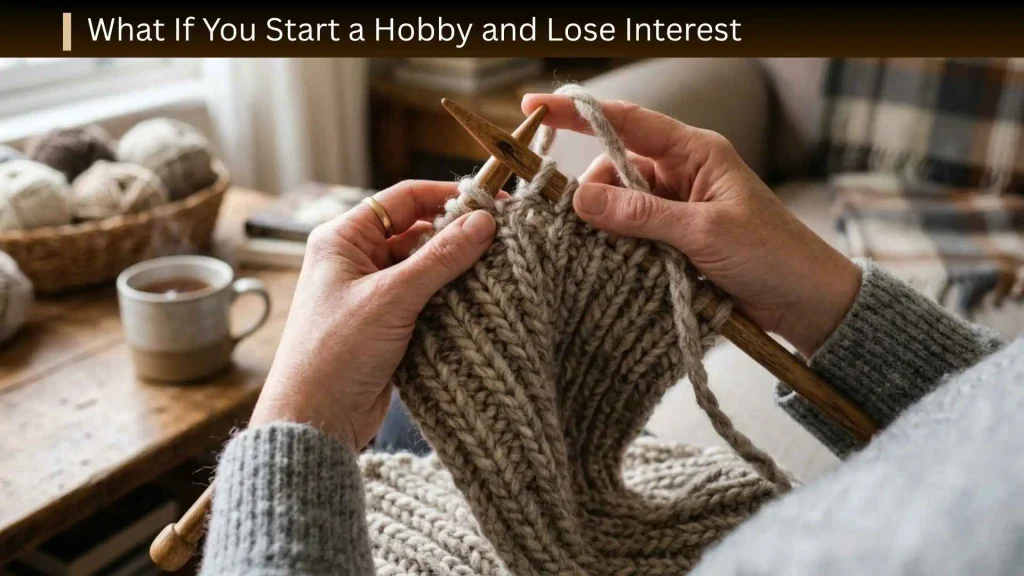
For people who prefer independent activities, some strong choices are:
- Reading
- Journaling
- Drawing
- Photography
- Coloring
- Puzzles
- Origami
- Knitting
- Creative writing
- Stargazing
- Houseplant care
- Digital art
Being a solo hobby does not mean you have to remain isolated. Many of these interests also have optional communities, clubs, classes, or online groups if you later want to share your work or meet people with similar interests.
Easy Hobbies You Can Do With Other People
If the social aspect is important, try hobbies that naturally create opportunities for interaction:
- Board games
- Cooking
- Baking
- Hiking
- Fishing
- Language learning
- Photography
- Gardening
- Group crafts
- Music
You can also take a hobby that is normally solitary and make it social. A book club, photography walk, writing group, or gardening club can turn an individual interest into a shared activity.
What Makes a Hobby Beginner-Friendly?
An easy hobby usually has a low barrier to entry, meaning you can begin without extensive training, specialized equipment, or a major financial commitment.
However, beginner-friendly does not mean effortless.
A hobby is particularly approachable when:
- The basic activity can be learned quickly.
- Mistakes are inexpensive or easy to correct.
- You can practice in short sessions.
- Equipment is readily available.
- You can start at a very basic level.
- Progress does not depend on having expert instruction immediately.
- The activity can become more challenging as your interest grows.
This is why activities such as drawing, reading, photography, cooking, and gardening work well for many beginners: they are simple to start but offer plenty of room for exploration.
Common Mistakes When Starting a New Hobby
Buying Too Much Equipment
A large collection of supplies does not automatically make learning easier. Start with the essentials and upgrade as you discover what you actually need.
Choosing a Hobby Because It Looks Impressive
A hobby does not need to sound impressive to be worthwhile. The best hobby is one you genuinely want to spend time doing.
Making the First Project Too Difficult
If your first attempt is far beyond your current skill level, frustration can make you abandon the hobby before discovering whether you enjoy it.
Expecting Immediate Skill
Beginners naturally make mistakes. Treat early attempts as part of learning rather than as a test of whether you have talent.
Starting Too Many Hobbies at Once
Trying several activities can be useful for exploration, but buying equipment for numerous hobbies at the same time can create unnecessary expense and clutter.
Frequently Asked Questions
What is the easiest hobby to start?
Reading, walking, journaling, drawing, and photography with a smartphone are among the easiest hobbies to begin because they require little preparation and can be practiced almost immediately.
What is a good hobby for someone with no hobbies?
Start with an activity connected to something you already enjoy. If you like stories, try reading. If you enjoy nature, try walking or birdwatching. If you like making things, experiment with drawing, cooking, crafts, or gardening.
What are some hobbies that are cheap to start?
Walking, reading through a library, journaling, drawing with basic supplies, creative writing, origami, and smartphone photography can all be started with little or no additional spending.
What hobby can I start at home?
Reading, drawing, journaling, cooking, baking, puzzles, knitting, origami, calligraphy, digital art, and houseplant care can all be done at home, although some require more space or equipment than others.
What is a good hobby for a busy person?
Choose something that works in short sessions. Reading, journaling, drawing, photography, puzzles, knitting, and language practice can often be divided into manageable periods instead of requiring an entire free afternoon.
Should I spend money on equipment when starting a hobby?
Usually, it is sensible to start with basic or existing equipment before making larger purchases. Once you know that you enjoy the hobby and understand what limits your current setup, upgrading becomes easier to justify.
How do I find a hobby I actually enjoy?
Try activities from different categories rather than judging yourself by what looks appealing online. Pay attention to which activities make you curious, keep you engaged, and leave you wanting to continue.
Can an easy hobby become a serious skill?
Yes. Many hobbies have simple entry points but substantial depth. Photography, cooking, gardening, music, drawing, writing, and language learning can all develop from casual interests into advanced skills over time.
Conclusion
The best easy hobbies to get into are not necessarily the easiest activities to master. They are activities that let you start simply, experiment without excessive cost or pressure, and become more interesting as your skills and curiosity grow.
If you want the simplest possible starting point, try reading, walking, journaling, drawing, or smartphone photography. If you want a practical skill, explore cooking, baking, or gardening. For creativity, consider writing, coloring, crafts, or digital art. And if you want exploration, hiking, birdwatching, geocaching, or stargazing can provide a different experience.
Start with one hobby, keep the first step small, and give yourself enough time to discover whether you genuinely enjoy it. The goal is not to find the most impressive hobby—it is to find an activity you will actually want to return to.

I’m James Anderson, a dedicated writer and lifelong learner who enjoys researching topics and explaining them in a practical way. Through my work at Cognivoora, I aim to give readers reliable, easy-to-follow information that helps them learn something new. I always try to keep my writing natural, useful, and focused on the questions readers actually have.
Books:
- A Practical Guide to Better Thinking
- Questions Worth Asking