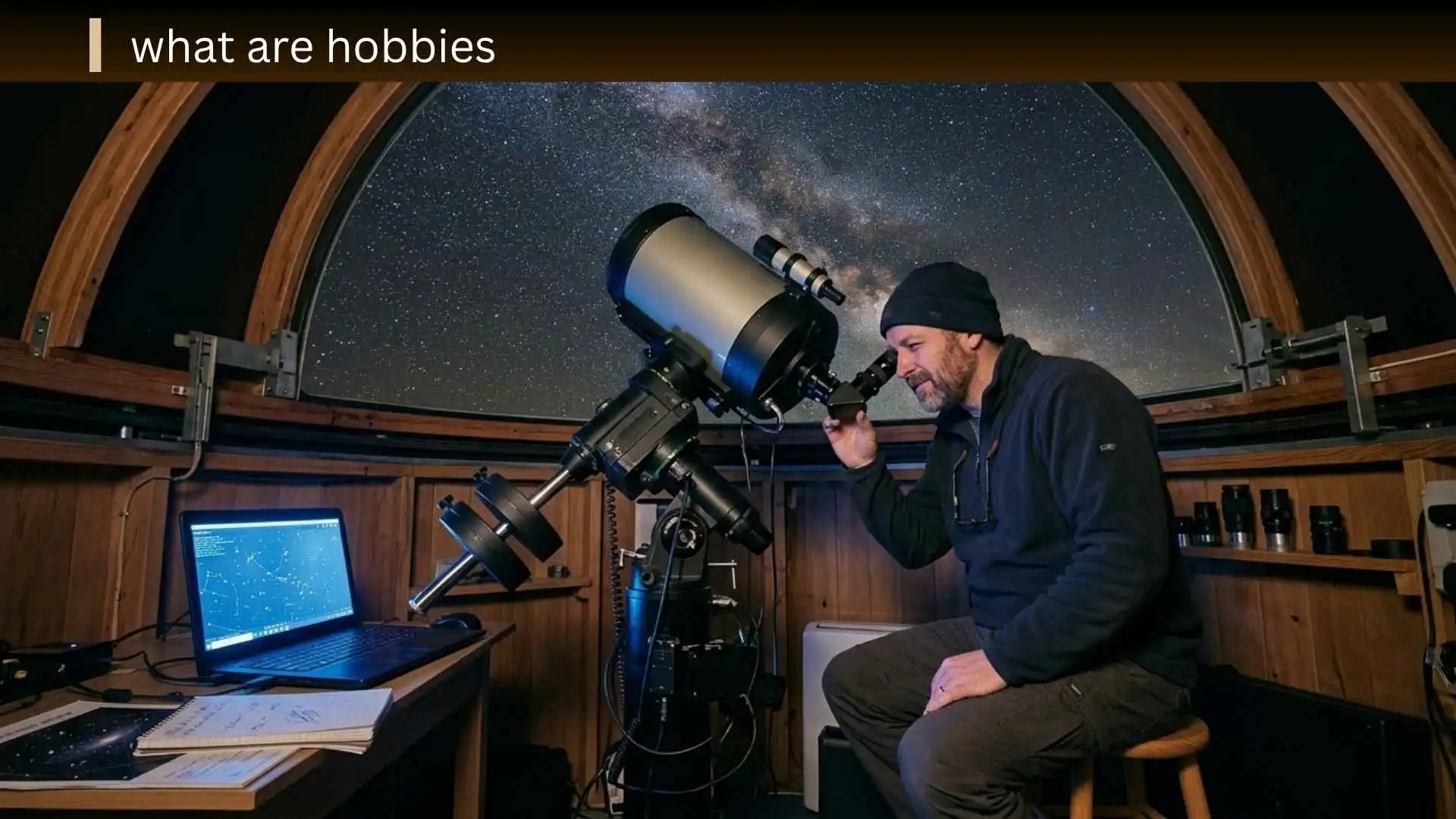
I believe a hobby can be much more than something you do in your spare time,it can give you a reason to unplug, learn something new, or simply enjoy a few moments for yourself. If you’re wondering what hobbies are, you might be looking for ideas that fit your personality, interests, schedule, or lifestyle.
You don’t need to be an expert or spend a lot of money to start. Whether you enjoy creating things, staying active, reading, cooking, collecting, playing games, or exploring new skills, there are countless hobbies you can try. In this guide, I’ll help you discover different hobby examples so you can find activities that feel interesting, meaningful, and enjoyable to you.
What Is a Hobby?
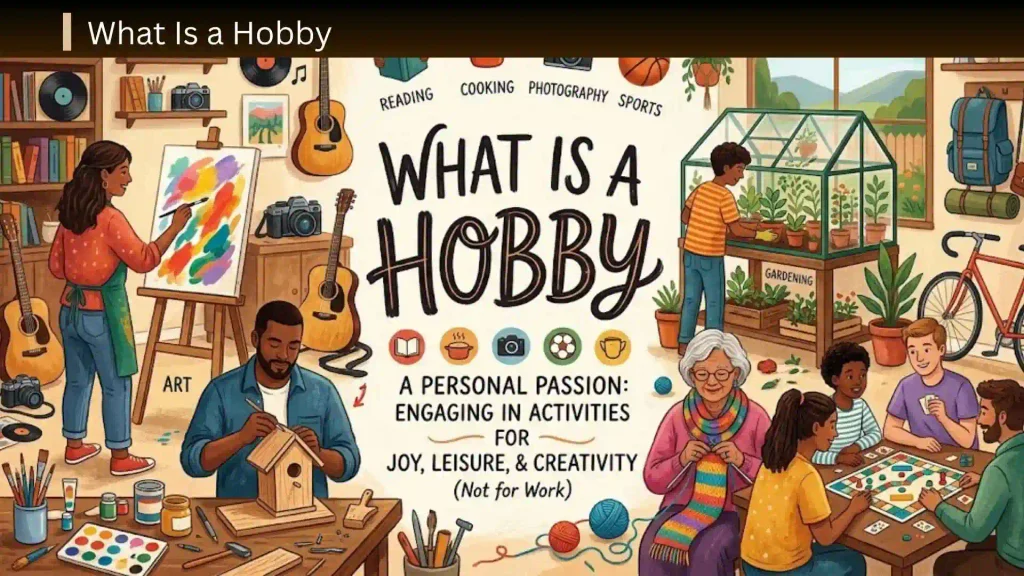
A hobby is a regular activity pursued during free time because you find it enjoyable or meaningful. A hobby does not have to be productive, expensive, difficult, or related to your career.
For example, someone might spend Saturday mornings gardening, practice guitar after work, read before bed, photograph local wildlife on weekends, or bake for friends. All of these can be hobbies.
A hobby can also develop into a serious skill. Someone who begins drawing for fun may eventually study illustration, while a casual baker may develop advanced pastry skills. However, an activity does not need to become a career to be a worthwhile hobby.
What Are Some Examples of Hobbies?

There are thousands of possible hobbies, ranging from simple activities that require almost no equipment to pursuits involving specialized skills or gear.
Here are examples across several categories:
| Hobby | Type | Typical Setting | Starting Cost | Difficulty |
| Reading | Intellectual, relaxing | Indoor | Low | Easy |
| Gardening | Creative, practical | Outdoor/indoor | Low–Moderate | Easy |
| Drawing | Creative | Indoor | Low | Easy |
| Photography | Creative | Indoor/outdoor | Low–High | Easy–Advanced |
| Cooking | Creative, practical | Indoor | Low–Moderate | Easy–Advanced |
| Hiking | Active, outdoor | Outdoor | Low–Moderate | Easy–Advanced |
| Writing | Creative | Indoor | Low | Easy |
| Knitting | Creative, craft | Indoor | Low–Moderate | Easy–Moderate |
| Playing an instrument | Creative, musical | Indoor | Moderate | Moderate |
| Birdwatching | Nature, observational | Outdoor | Low–Moderate | Easy |
| Swimming | Active | Indoor/outdoor | Low–Moderate | Easy–Advanced |
| Chess | Intellectual, social | Indoor | Low | Easy–Advanced |
| Baking | Creative, practical | Indoor | Low–Moderate | Easy–Advanced |
| Fishing | Outdoor, recreational | Outdoor | Moderate | Easy–Advanced |
| Woodworking | Creative, practical | Indoor/outdoor | Moderate–High | Moderate–Advanced |
| Painting | Creative | Indoor | Low–Moderate | Easy–Advanced |
| Cycling | Active, outdoor | Outdoor | Moderate | Easy–Advanced |
| Sewing | Creative, craft | Indoor | Low–Moderate | Easy–Advanced |
| Volunteering | Social, service | Indoor/outdoor | Low | Easy |
| Learning a language | Educational | Indoor/online | Low | Moderate |
These examples illustrate an important point: hobbies are not limited to traditionally “creative” activities. A hobby can involve movement, problem-solving, collecting, making things, spending time in nature, learning, socializing, or simply unwinding.
Types of Hobbies
Thinking about hobbies by category can make it easier to find an activity that matches your personality and goals.
Creative Hobbies
Creative hobbies involve making, designing, performing, or expressing ideas.
Examples include:
- Drawing
- Painting
- Photography
- Writing
- Creative journaling
- Pottery
- Knitting
- Crochet
- Sewing
- Woodworking
- Calligraphy
- Jewelry making
- Music
- Singing
- Baking
- Filmmaking
Creative hobbies are particularly appealing if you enjoy producing something tangible or experimenting with ideas. They can range from very accessible activities such as sketching with a pencil to equipment-heavy pursuits such as woodworking.
Active and Fitness Related Hobbies
Active hobbies incorporate physical movement into recreational time.
Examples include:
- Hiking
- Cycling
- Swimming
- Running
- Dancing
- Kayaking
- Tennis
- Golf
- Rock climbing
- Martial arts
- Recreational sports
- Walking
The physical demands vary considerably. A leisurely walk and recreational cycling require a different level of preparation than climbing or competitive sports, so beginners should choose an activity appropriate for their current abilities and learn relevant safety practices.
Intellectual Hobbies
Intellectual hobbies focus on learning, strategy, investigation, or mental challenge.
Examples include:
- Reading
- Chess
- Learning a language
- Puzzles
- History research
- Astronomy
- Coding
- Genealogy
- Studying philosophy
- Creative writing
- Learning mathematics
- Crossword puzzles
- Strategy games
These hobbies can be pursued independently and often allow you to increase the difficulty as your knowledge grows.
Relaxing Hobbies
Some hobbies are chosen primarily because they provide a quiet break from work or other responsibilities.
Examples include:
- Reading
- Coloring
- Gardening
- Knitting
- Fishing
- Birdwatching
- Journaling
- Puzzles
- Baking
- Listening to or making music
- Photography
- Model building
A relaxing hobby does not necessarily mean doing nothing. Gardening, for example, can involve physical work while still providing a slower-paced activity centered on plants and the outdoors.
Social Hobbies
Social hobbies create opportunities to interact with other people around a shared interest.
Examples include:
- Board games
- Recreational sports
- Dance classes
- Book clubs
- Community gardening
- Group hiking
- Photography clubs
- Choirs
- Amateur theater
- Volunteering
- Cooking groups
- Craft groups
Social hobbies can be especially useful when you want an activity that provides both a personal interest and a reason to meet regularly with other people.
Outdoor Hobbies
Outdoor hobbies take advantage of parks, trails, waterways, gardens, campsites, or other open spaces.
Examples include:
- Hiking
- Camping
- Fishing
- Gardening
- Birdwatching
- Cycling
- Kayaking
- Stargazing
- Nature photography
- Geocaching
- Golf
- Wildlife observation
Outdoor hobbies vary by climate and location, so the best option in one part of the United States may not be equally convenient elsewhere.
Indoor Hobbies
Indoor hobbies are useful when weather, space, mobility, or personal preference makes staying inside more convenient.
Examples include:
- Reading
- Drawing
- Painting
- Writing
- Cooking
- Baking
- Sewing
- Knitting
- Chess
- Gaming
- Playing music
- Model building
- Puzzles
- Learning a language
Many indoor hobbies can be started with materials you already have, which makes them practical choices for beginners.
Easy Hobbies for Beginners

If you have never had a regular hobby, start with something that has a low barrier to entry.
Good beginner-friendly examples include:
- Reading
- Walking
- Drawing
- Journaling
- Cooking
- Baking
- Gardening
- Photography with a smartphone
- Puzzles
- Birdwatching
- Chess
- Creative writing
- Learning a language
An easy hobby should not necessarily remain easy forever. A good beginner hobby gives you room to improve without requiring a major investment at the beginning.
For example, you can start photography with a phone before deciding whether you actually need a dedicated camera. Similarly, you can experiment with drawing using an inexpensive sketchbook rather than immediately buying professional art supplies.
Inexpensive Hobbies

You do not need a large budget to have a hobby. Many activities can be started for little or no additional cost.
Examples include:
- Walking
- Reading books from a library
- Writing
- Journaling
- Drawing with basic supplies
- Birdwatching
- Stargazing
- Bodyweight exercise
- Photography with a smartphone
- Cooking with existing ingredients
- Learning a language using free resources
- Hiking on accessible public trails
- Volunteering
The cost can increase as your interest develops. Photography, cycling, gaming, musical instruments, woodworking, and other equipment-based hobbies can become considerably more expensive at advanced levels.
A sensible approach is to establish whether you genuinely enjoy the activity before buying specialized equipment.
Hobbies You Can Do at Home
Home-based hobbies are convenient because they eliminate travel time and can often fit around a busy schedule.
Some possibilities are:
- Reading
- Writing
- Drawing
- Painting
- Cooking
- Baking
- Sewing
- Knitting
- Playing an instrument
- Chess
- Puzzles
- Model building
- Indoor gardening
- Learning a language
- Digital art
- Photography
- Home organization or DIY projects
Your available space matters. A small apartment may be well suited to reading, writing, drawing, knitting, or music practice with appropriate consideration for neighbors, while woodworking may require a dedicated workspace.
Hobbies That Help You Learn a Skill
Some hobbies are enjoyable partly because they give you a clear learning path.
Cooking and Baking
You can begin with basic recipes and gradually learn techniques such as knife skills, dough preparation, seasoning, temperature control, and food presentation.
Photography
Photography can teach composition, lighting, perspective, camera controls, image organization, and editing.
Playing Music
Learning guitar, piano, drums, violin, or another instrument combines practice with creative expression. Progress generally comes from consistent practice rather than simply owning an instrument.
Sewing
Sewing can progress from basic repairs to garment construction, pattern work, quilting, and other textile projects.
Gardening
Gardening teaches you about plant selection, soil, watering, seasonal changes, propagation, and the conditions different plants require.
Coding
Coding can be pursued as a hobby through small personal projects, games, websites, automation, or experiments with different programming languages.
Hobbies for People Who Like Making Things
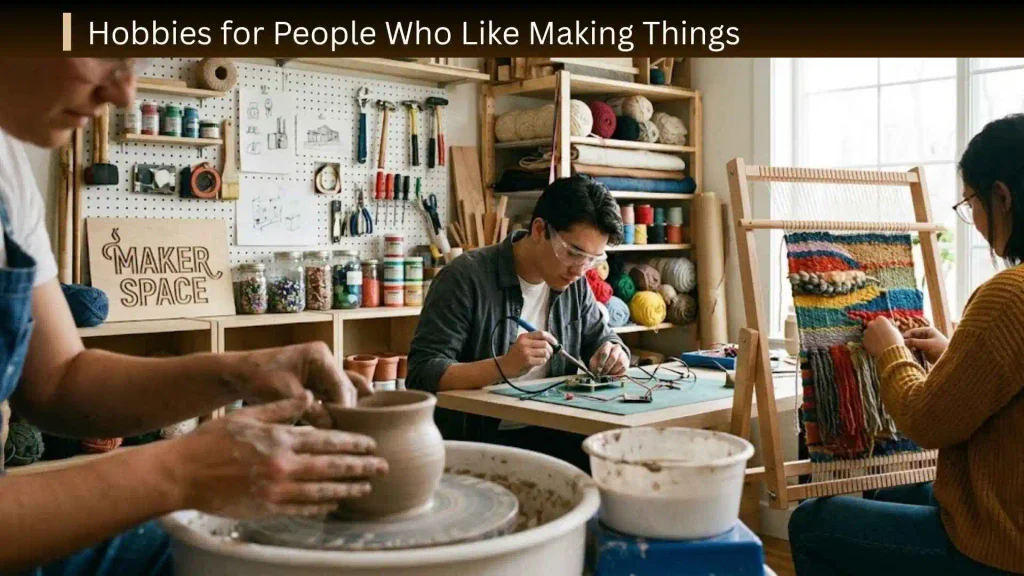
If you prefer a hobby that produces something tangible, consider:
- Woodworking
- Pottery
- Sewing
- Knitting
- Crochet
- Painting
- Drawing
- Jewelry making
- Model building
- Leathercraft
- Baking
- Cooking
- Candle making
- DIY projects
- Gardening
Making-based hobbies can be particularly satisfying because the activity has a visible result. They also provide natural opportunities to develop increasingly advanced techniques.
Hobbies for People Who Prefer Nature
Nature-oriented hobbies encourage observation and time outside.
Birdwatching
Birdwatching involves identifying and observing birds in parks, gardens, wetlands, forests, and other habitats. Beginners can start simply by learning to recognize common local species.
Gardening
Gardening gives you a hands-on way to work with plants. You can grow flowers, herbs, vegetables, houseplants, or container gardens depending on your space.
Hiking
Hiking combines exploration with physical activity. Beginners should select trails appropriate for their experience and conditions.
Stargazing
Stargazing involves observing the night sky and learning to identify stars, planets, constellations, and other celestial objects. A telescope is optional; many people begin by learning the sky with their unaided eyes.
Nature Photography
Nature photography combines observation with photography. It can focus on landscapes, plants, insects, birds, or other subjects.
Hobbies for People Who Like Animals
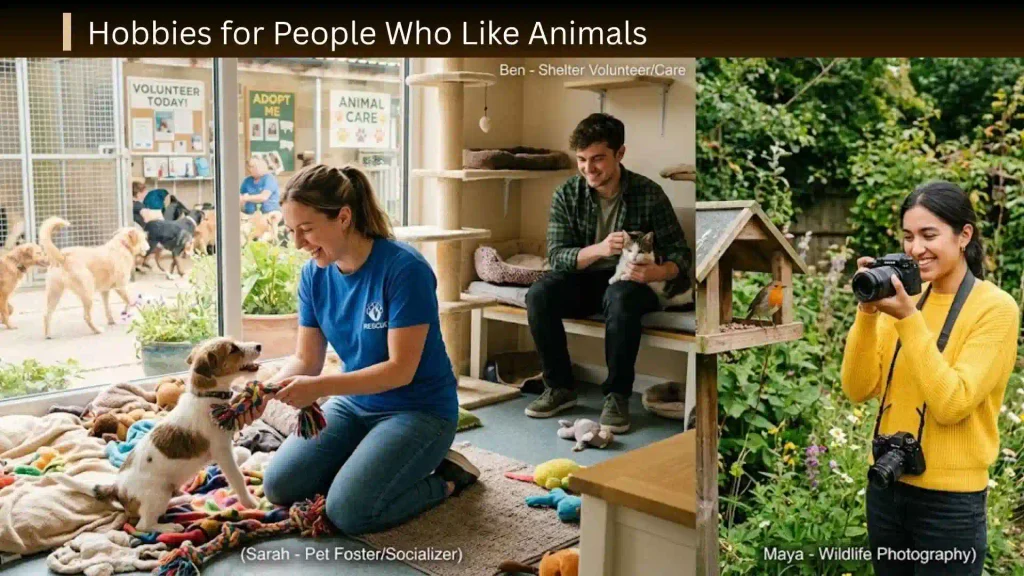
Animal-related hobbies can include:
- Birdwatching
- Dog walking
- Pet training
- Aquarium keeping
- Horse riding
- Wildlife observation
- Nature photography
- Volunteering at animal organizations
Animal-related activities come with responsibilities. If an activity involves caring for a living animal, consider the ongoing time, space, financial, and welfare requirements before starting.
Hobbies for People Who Like Games and Strategy
Games can be hobbies when they become a regular recreational activity.
Examples include:
- Chess
- Checkers
- Board games
- Card games
- Tabletop role-playing games
- Strategy video games
- Puzzle games
- Trivia
- Collectible games
Strategy-oriented hobbies can range from casual entertainment to highly competitive activities. You can choose based on whether you prefer playing alone, with friends, online, or in organized groups.
Hobbies for People Who Like Collecting
Collecting involves deliberately building and organizing a group of related objects.
Possible collections include:
- Coins
- Stamps
- Books
- Postcards
- Sports memorabilia
- Vinyl records
- Vintage toys
- Rocks and minerals
- Art prints
- Trading cards
- Antiques
A useful collecting hobby has a clear area of interest and a manageable way to organize the collection. Before buying valuable or rare items, learn how condition, authenticity, provenance, and market demand affect their value.
Hobbies for People Who Like Writing
Writing can be both a creative outlet and a structured learning hobby.
Examples include:
- Journaling
- Poetry
- Short stories
- Fiction
- Blogging
- Memoir writing
- Screenwriting
- Creative nonfiction
- Letter writing
- Personal essays
You can begin with nothing more than a notebook or a digital document. The flexibility of writing makes it suitable for short sessions as well as longer projects.
Hobbies for People Who Like Photography
Photography is a broad hobby rather than a single activity. You might specialize in:
- Street photography
- Landscape photography
- Portrait photography
- Wildlife photography
- Nature photography
- Architecture photography
- Food photography
- Sports photography
- Macro photography
- Travel photography
A smartphone is enough to learn fundamental concepts such as composition, framing, light, timing, and perspective. Dedicated cameras and lenses become useful when you want greater control or specialized capabilities.
How to Choose a Hobby
Choosing a hobby is easier when you start with your preferences rather than with a list of popular activities.
Ask yourself:
- Do I want to relax, learn, create, move, socialize, or explore?
- How much time can I realistically give it each week?
- Do I prefer being indoors or outdoors?
- Would I rather do it alone or with other people?
- How much money am I comfortable spending initially?
- Do I have enough space for the necessary equipment?
- Do I want quick results or a skill that develops over years?
- Would I enjoy a structured activity or something I can do spontaneously?
Your answers can narrow the choices quickly.
For example, someone who wants a quiet, inexpensive indoor activity might try reading, drawing, writing, puzzles, or knitting. Someone who wants movement and outdoor exploration might consider hiking or cycling. Someone who wants to meet people could look toward clubs, classes, recreational sports, volunteering, or group activities.
How to Start a New Hobby Without Overspending
You do not need to become fully equipped on your first day.
Start With the Basics
Buy or borrow only what is necessary to perform the beginner version of the activity.
Try Before Making a Large Investment
Libraries, community centers, clubs, classes, rental services, and local groups may provide ways to experience certain hobbies before buying specialized equipment.
Set a Small First Goal
Instead of deciding to “master photography,” try taking and reviewing ten intentional photographs. Instead of deciding to become a gardener immediately, start with a small container or a few plants suited to your conditions.
Give Yourself Time to Be a Beginner
Early mistakes are part of learning. A hobby should not feel like another job where every session has to produce a perfect result.
Upgrade Based on a Real Limitation
If you repeatedly encounter a problem that basic equipment cannot solve, then an upgrade may make sense. Buying advanced equipment before developing the skill can add cost without necessarily improving the experience.
How Much Time Does a Hobby Take?
There is no required amount of time for an activity to qualify as a hobby.
Some hobbies work well in short sessions:
- Reading
- Journaling
- Drawing
- Puzzles
- Language practice
Others naturally require longer blocks:
- Hiking
- Camping
- Fishing
- Woodworking
- Photography trips
- Gardening projects
- Recreational sports
The most sustainable hobby is often one that fits naturally into your existing schedule rather than one that requires a major lifestyle change.
Can a Hobby Become a Career?

Sometimes, a hobby can develop into professional work, but it does not have to.
Photography, writing, baking, crafting, music, coding, woodworking, gardening, and other hobbies can potentially lead to freelance work, products, services, teaching, or other income opportunities. However, turning a hobby into a business introduces additional responsibilities such as finding customers, pricing work, marketing, administration, and meeting professional standards.
It is perfectly valid to keep a hobby purely recreational. In fact, some people prefer having an activity that is not tied to income or career performance.
What Makes a Good Hobby?
A good hobby is one that you genuinely want to return to.
Useful characteristics can include:
- It fits your available time.
- The starting cost is manageable.
- You have reasonable access to the required space or equipment.
- The activity matches your interests.
- You can participate at your current skill level.
- It gives you a reason to keep learning or exploring.
- You enjoy the process rather than only the final result.
There is no universal “best hobby.” A hobby that is exciting to one person may be boring or impractical for another.
Frequently Asked Questions
What are hobbies examples?
Examples of hobbies include reading, gardening, cooking, baking, painting, drawing, photography, writing, hiking, cycling, swimming, fishing, playing music, knitting, sewing, gaming, collecting, birdwatching, woodworking, and learning languages.
What is considered a hobby?
A hobby is generally a regular leisure activity pursued for enjoyment, interest, learning, creativity, relaxation, social interaction, or personal fulfillment. It can be active or quiet, inexpensive or costly, individual or social.
What are the easiest hobbies to start?
Reading, walking, journaling, drawing, cooking, photography with a smartphone, puzzles, writing, and basic gardening are among the more accessible hobbies for beginners because they can be started without extensive specialized equipment.
What are some inexpensive hobbies?
Reading through a library, walking, writing, journaling, drawing with basic supplies, birdwatching, photography with a smartphone, learning a language, and many forms of exercise can be inexpensive to start.
What hobbies can I do at home?
Popular home-based hobbies include reading, writing, drawing, painting, cooking, baking, sewing, knitting, playing music, chess, puzzles, model building, indoor gardening, gaming, and learning new skills online.
Can watching TV be a hobby?
It can be a leisure activity and, for some people, a hobby when they regularly engage with particular shows, genres, films, or related interests. However, if you are specifically looking for a hobby that develops a skill, encourages creativity, physical activity, learning, or social interaction, there are more active options to consider.
How do I find a hobby I actually enjoy?
Think about activities you naturally become curious about, then choose a low-cost way to test them. Try several options rather than expecting the first activity to be the perfect fit. Pay attention to which activities make you want to continue without forcing yourself.
Is it okay to have more than one hobby?
Yes. Different hobbies can serve different purposes. You might have one active hobby for weekends, a creative hobby for evenings, and a quiet hobby for days when you want to stay home.
Conclusion
There are no fixed rules about what counts as a hobby. What are examples of hobbies examples? They include almost any regular leisure activity pursued because you find it interesting or enjoyable, from reading and gardening to photography, hiking, music, gaming, crafts, collecting, and learning new skills.
If you are choosing your first hobby, begin with your interests, available time, budget, space, and preferred level of social interaction. Start small, give yourself permission to be a beginner, and try different activities until you find something you genuinely look forward to doing.

I’m James Anderson, a dedicated writer and lifelong learner who enjoys researching topics and explaining them in a practical way. Through my work at Cognivoora, I aim to give readers reliable, easy-to-follow information that helps them learn something new. I always try to keep my writing natural, useful, and focused on the questions readers actually have.
Books:
- A Practical Guide to Better Thinking
- Questions Worth Asking