
Have you ever wondered, “What are some fun hobbies I can actually enjoy in my free time?” I think finding the right hobby can make ordinary days feel more exciting, creative, and meaningful. You don’t need to be an expert or spend a lot of money to get started,you simply need something that makes you want to come back to it.
Whether you want to relax after a busy day, learn a new skill, meet people, stay active, or simply have more fun, you have plenty of options to explore. In this guide, I’ll share some fun hobbies that can fit different personalities, interests, budgets, and lifestyles, so you can discover an activity that feels right for you.
What Are Some Fun Hobbies?
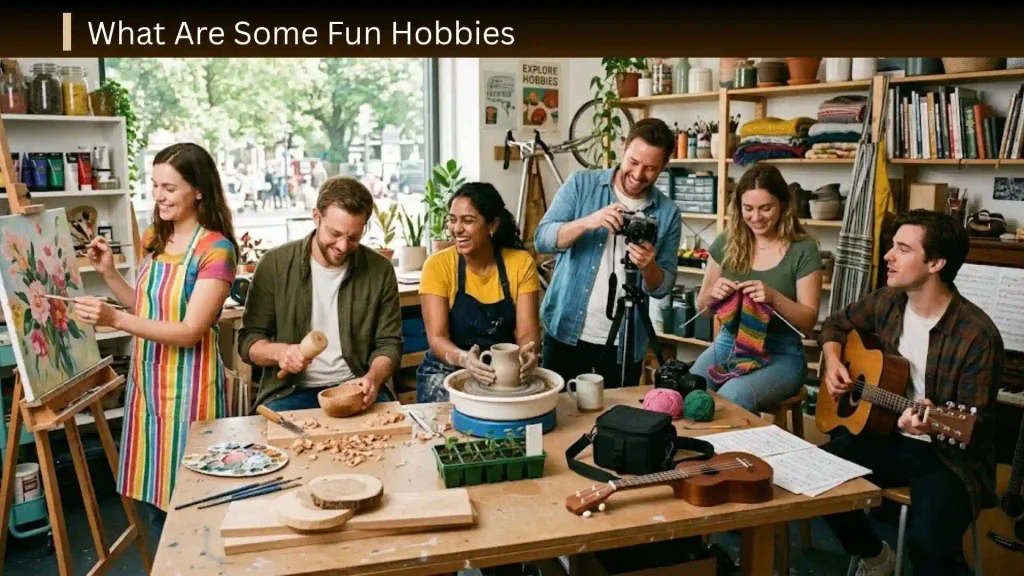
Some fun hobbies to try include:
- Photography
- Painting or drawing
- Gardening
- Hiking
- Cooking and baking
- Reading
- Writing
- Playing a musical instrument
- Birdwatching
- Fishing
- Cycling
- Dancing
- Pottery
- Woodworking
- Knitting or crocheting
- Sewing
- Geocaching
- Board games
- Puzzles
- Camping
- Stargazing
- Journaling
- Home brewing coffee
- Learning a language
- Chess
- Calligraphy
- Origami
- Volunteering
- Rock climbing
- Swimming
- Yoga
- Model building
- Collecting
- Scrapbooking
- Astronomy
- Creative coding
- Podcasting
- Drawing digitally
- Film photography
- Foraging
- Roller skating
- Playing tabletop games
- Making jewelry
- DIY home projects
- Meditation
- Stand-up paddleboarding
- Travel planning
The most suitable hobby is usually one that fits naturally into your lifestyle rather than one that simply sounds impressive.
Fun Creative Hobbies
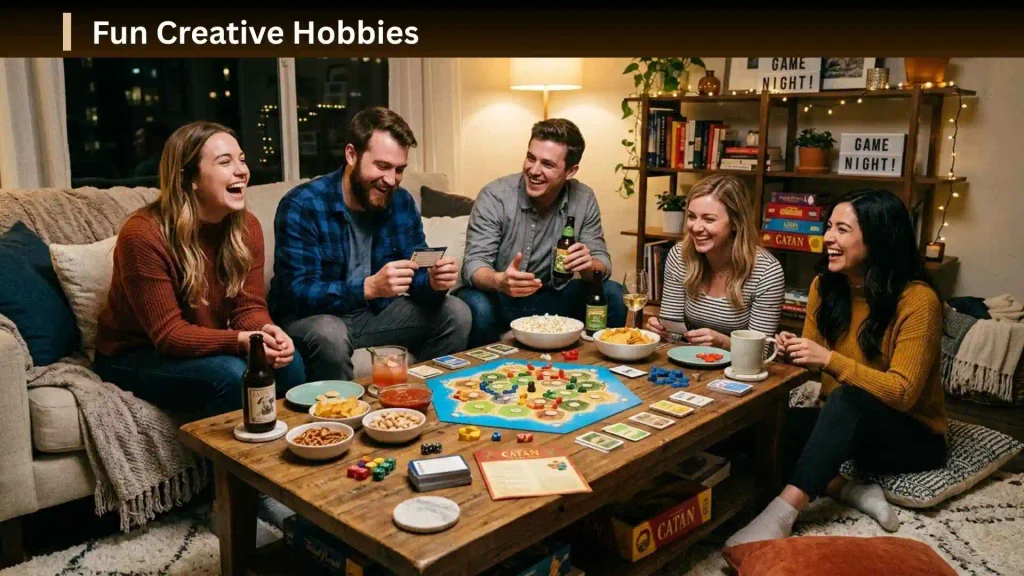
Creative hobbies are particularly appealing if you like making things, experimenting with ideas, or developing a personal style.
1. Painting
Painting gives you a flexible way to experiment with color, shapes, landscapes, portraits, or abstract ideas. You can work with acrylics, watercolor, oils, or other media.
Best for: People who enjoy visual creativity and experimentation
Difficulty: Beginner-friendly, with plenty of room for advanced skill
Cost: Low to moderate
Where: Indoors
Acrylic paint is often a practical starting point because it is versatile and relatively straightforward to work with. Beginners can start with inexpensive paper or a small canvas rather than buying a large collection of supplies.
2. Drawing
Drawing requires very little equipment, which makes it one of the easiest creative hobbies to begin.
A pencil, eraser, sketchbook, and a little regular practice are enough to get started. You can explore portraits, animals, architecture, cartoons, landscapes, or observational sketches.
A useful approach is to draw ordinary objects around you instead of waiting for inspiration. Everyday subjects provide endless practice.
3. Photography
Photography combines creativity with observation. You can photograph people, wildlife, architecture, food, landscapes, street scenes, or small details that others might overlook.
You do not necessarily need an expensive camera. A smartphone can provide a practical starting point for learning composition, lighting, perspective, and editing.
Beginner tip: Choose one photographic theme for a week, such as doors, shadows, flowers, or interesting buildings. A specific theme makes it easier to notice potential subjects.
4. Pottery
Pottery involves shaping clay into functional or decorative objects such as cups, bowls, vases, and sculptures.
It is a more hands-on hobby than drawing or photography and often involves learning techniques such as wedging, forming, trimming, glazing, and firing.
Because a kiln and other equipment can be expensive to own, beginners may find it easier to take a local pottery class or use a community studio.
5. Calligraphy and Hand Lettering
Calligraphy focuses on decorative writing, while hand lettering involves creating stylized letters and words.
These hobbies can be practiced with relatively inexpensive tools and can lead to greeting cards, artwork, invitations, journals, or decorative pieces.
6. Jewelry Making
Jewelry making can range from simple beadwork to more advanced metalworking.
A beginner might start with beads, wire, clasps, and basic tools before progressing into more specialized techniques.
The appeal is partly in the small scale: you can complete a project without needing a large workshop.
7. Origami
Origami is the art of creating forms by folding paper. It is inexpensive, portable, and accessible to beginners.
Simple models can be learned quickly, while complex designs can require considerable concentration and precision.
Best for: Quiet creative sessions, travel, and people who like step-by-step challenges.
8. Scrapbooking
Scrapbooking combines photographs, paper, writing, decorations, and layouts to create personal memory books.
It can be as simple or elaborate as you want. Digital scrapbooking is another option if you prefer working on a computer.
Fun Hobbies You Can Do at Home
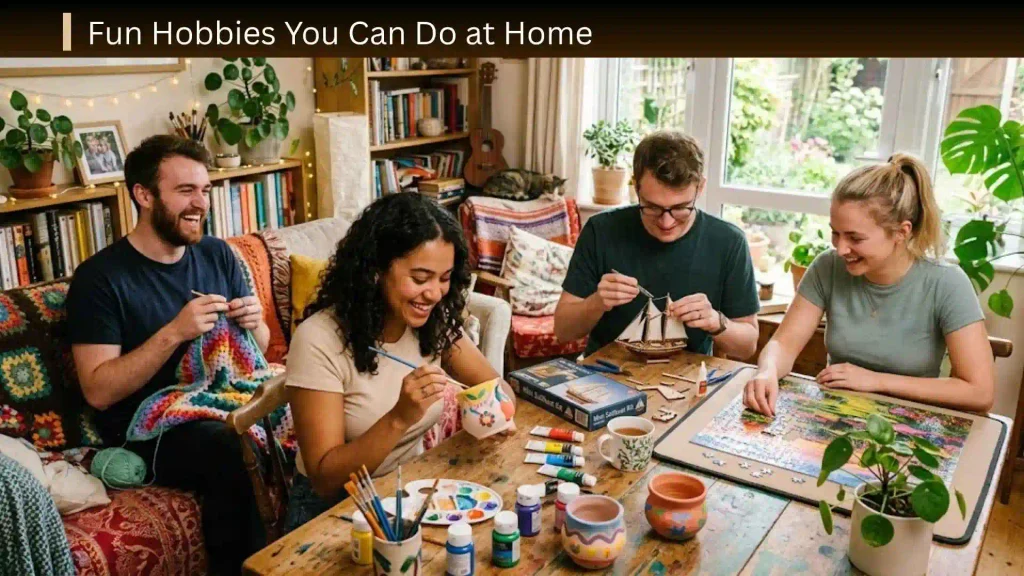
You do not need to leave the house to develop an interesting hobby. Home-based activities can be especially convenient when you have limited time or space.
9. Cooking
Cooking can become much more interesting when you treat it as a skill-building hobby rather than simply a daily chore.
You could focus on a particular cuisine, learn knife skills, recreate restaurant dishes, experiment with sauces, or challenge yourself to cook unfamiliar ingredients.
A useful way to make cooking more engaging is to choose a theme for each week.
10. Baking
Baking offers measurable projects and plenty of opportunities to improve.
You can explore bread, cookies, cakes, pies, pastries, or decorated desserts. Unlike some hobbies, baking also gives you something practical to share with family and friends.
11. Reading
Reading can be both entertainment and a way to explore subjects you would not normally encounter.
Instead of limiting yourself to one genre, create a varied reading list that might include novels, biographies, history, science, essays, travel writing, and short stories.
If you struggle to stay interested, try shorter books or collections of essays rather than committing immediately to a long series.
12. Journaling
Journaling can take many forms. You might keep a traditional diary, record observations, maintain a gratitude journal, document travel, track creative projects, or write short reflections.
There is no requirement to write several pages every day. A few sentences can be enough to make it a sustainable hobby.
13. Puzzles
Jigsaw puzzles, logic puzzles, crossword puzzles, Sudoku, and mechanical puzzles offer different types of challenges.
Jigsaw puzzles work well as a slower, visual activity, while logic and word puzzles provide more structured problem-solving.
14. Learning an Instrument
Learning guitar, piano, ukulele, drums, violin, or another instrument gives you a clear progression from basic techniques to more complicated pieces.
You do not need to aim for professional performance. Learning a few songs you genuinely enjoy can make practice considerably more motivating.
15. Creative Writing
Writing short stories, poetry, essays, personal reflections, or fictional scenes can turn spare time into a creative project.
One advantage is that you can practice almost anywhere with a notebook, computer, or phone.
A simple starting challenge is to write 300 words about an ordinary event from an unusual point of view.
16. Digital Art
Digital drawing and illustration combine traditional artistic concepts with software tools.
A tablet is useful but not always necessary; some beginners start with a computer and mouse or an existing touchscreen device.
Digital art can eventually branch into illustration, character design, animation, graphic design, or concept art.
Fun Outdoor Hobbies

If your idea of fun involves fresh air, exploration, or physical activity, outdoor hobbies provide plenty of possibilities.
17. Hiking
Hiking ranges from short local walks to demanding mountain routes.
One of its biggest advantages is scalability: you can choose routes based on your available time and experience.
Beginners should start with familiar, manageable trails and pay attention to weather, terrain, navigation, water, footwear, and local conditions.
18. Gardening
Gardening involves growing and caring for plants, whether in a large yard, a small patio, or containers.
You can grow flowers, herbs, vegetables, houseplants, or native plants. Container gardening is especially useful when outdoor space is limited.
The hobby combines planning with hands-on work and offers a visible result as plants develop over time.
19. Birdwatching
Birdwatching is a good option if you enjoy wildlife and observation.
You can begin by learning to identify common birds in your neighborhood or local parks. Binoculars can help, but they are not essential for getting started.
Keeping a simple bird list can turn casual walks into an ongoing identification challenge.
20. Fishing
Fishing combines patience, outdoor time, observation, and practical skills.
Requirements vary significantly depending on where and how you fish, including local regulations, permits, equipment, and species.
For beginners, learning local rules and starting with a basic setup is more sensible than immediately purchasing specialized equipment.
21. Cycling
Cycling can be a recreational hobby, a fitness activity, a way to explore your community, or all three.
You can ride paved paths, roads, gravel routes, or mountain trails depending on the bicycle and local terrain.
A properly fitted helmet and attention to traffic and trail conditions are important parts of responsible cycling.
22. Camping
Camping can range from a simple overnight stay at an established campground to more involved backcountry trips.
Beginners can make the experience easier by starting at an established campground rather than immediately attempting a remote trip.
Learning basic outdoor preparation, weather awareness, food storage, and campsite rules is more important than having the most expensive gear.
23. Geocaching
Geocaching turns outdoor exploration into a location-based treasure hunt. Participants use coordinates to find hidden containers or “caches” and record their discoveries according to the rules of the activity.
It can make familiar parks and neighborhoods feel surprisingly different because you’re exploring them with a specific objective.
24. Stargazing
Stargazing can be started with little more than a place with a reasonably clear view of the sky.
Learning to recognize prominent constellations and planets can make the night sky much more interesting. A beginner astronomy app or star chart can help with identification.
A telescope is optional rather than essential.
25. Kayaking or Stand-Up Paddleboarding
Water-based hobbies provide a different form of outdoor recreation and can be peaceful or physically demanding depending on how you participate.
Beginners should learn appropriate water safety, use suitable personal flotation equipment, and choose conditions appropriate to their experience.
Fun Social Hobbies
Some hobbies become more enjoyable when they give you a reason to regularly interact with other people.
26. Board Games
Modern board games cover far more than traditional family games. There are strategy, cooperative, deduction, word, trading, party, and storytelling games.
If your friends are new to the hobby, begin with games that can be explained quickly rather than choosing a complicated game simply because it has many rules.
27. Dancing
Dancing can be social, creative, and active.
You might try salsa, swing, ballroom, hip-hop, line dancing, or another style. Group classes can make the learning process more engaging because you are practicing alongside other beginners.
28. Volunteering
Volunteering can function as a meaningful hobby when you choose a cause or activity you genuinely care about.
Options may include community events, animal organizations, environmental projects, libraries, food programs, or other local initiatives.
The key is to choose a commitment that fits your schedule so the activity remains sustainable.
29. Trivia
Joining a trivia team is an entertaining way to combine social interaction with general knowledge.
You do not need to be an expert. Teams benefit from people with different interests and areas of knowledge.
30. Tabletop Role Playing Games
Tabletop role-playing games combine storytelling, improvisation, strategy, and social interaction.
Players typically create characters and participate in a shared fictional adventure guided by a game master or similar facilitator.
They can be particularly appealing if you enjoy collaborative storytelling rather than simply competing to win.
31. Community Classes
Local classes can turn almost any interest into a social hobby. Depending on your community, you may find classes in cooking, art, dance, crafts, gardening, languages, music, or other subjects.
Classes also solve one common hobby problem: not knowing where to meet people who share the same interest.
Fun Hobbies for People Who Like Learning

If you want your free time to involve discovery or skill development, consider a hobby with a built-in learning curve.
32. Learning a Language
Learning another language can become a long-term hobby rather than a short-term course.
You can combine structured lessons with movies, music, reading, conversation practice, cooking, or travel-related activities associated with the language.
Progress is easier to maintain when you have a specific reason to use the language rather than relying entirely on memorization exercises.
33. Chess
Chess offers a virtually endless supply of strategic challenges.
Beginners can start by learning the rules and basic checkmates before moving into tactics, openings, endgames, and analysis of their own games.
Playing against people at an appropriate skill level can make improvement more enjoyable than simply memorizing openings.
34. Astronomy
Astronomy goes beyond looking at stars. You can learn about planets, galaxies, stellar evolution, spacecraft, observational techniques, and the history of astronomical discoveries.
It works particularly well as a hobby because you can choose between casual observation and deeper study.
35. Coding
Coding can be a creative hobby as well as a technical one.
Instead of beginning with abstract exercises, consider building something you actually want: a simple game, personal website, calculator, automation, interactive story, or small data project.
This project-based approach gives you a reason to learn each new concept.
36. History Research
If you enjoy investigating the past, history can become a surprisingly hands-on hobby.
You might research a historical period, explore old maps, study architecture in your area, examine digitized archives, or investigate the history of a particular object or family story.
The hobby rewards curiosity and careful evaluation of sources.
Fun Active Hobbies

Not every hobby needs to involve sitting at a desk.
37. Swimming
Swimming can be recreational, skill-based, or training-oriented.
Beginners can focus on becoming comfortable in the water and improving basic technique before setting more ambitious goals.
Always choose an appropriate supervised environment when needed and follow local water-safety rules.
38. Yoga
Yoga combines movement, balance, flexibility, breathing, and concentration.
There are many styles and levels, so beginners can choose introductory instruction rather than assuming every class has the same physical demands.
If you have an injury or medical concern, appropriate professional guidance is preferable to treating yoga as a substitute for medical care.
39. Rock Climbing
Indoor climbing gyms provide a structured environment for people interested in climbing.
Bouldering generally involves shorter climbs without ropes, while other forms of indoor climbing use ropes and additional safety systems.
Because climbing involves falls and specialized equipment, beginners should learn facility-specific safety procedures before attempting harder routes.
40. Roller Skating
Roller skating combines movement, balance, and skill development.
You can practice basic skating, learn turns and stops, explore dance skating, or simply use it for recreation.
Protective equipment can be particularly valuable while learning.
Low Cost Fun Hobbies
If budget is your main concern, you can still find hobbies that provide substantial room for exploration.
41. Walking and Exploring
A simple walk can become a genuine hobby when you turn it into exploration.
Try discovering unfamiliar streets, parks, public art, architecture, historical sites, or natural areas in your community.
You can add photography, bird identification, or journaling if you want a more structured activity.
42. Sketching
A pencil and inexpensive notebook are enough to begin sketching.
Because there is little setup involved, you can practice during a lunch break, at a park, while traveling, or at home.
43. Reading
Libraries make reading particularly accessible because you can explore new subjects without purchasing every book you want to try.
44. Free Online Learning
Learning through free educational resources can become a hobby in its own right.
Choose a subject rather than endlessly browsing random lessons. For example, you could spend a month studying astronomy, art history, programming, creative writing, or another topic that genuinely interests you.
45. Photography With a Smartphone
A smartphone camera can provide enough equipment to explore composition, lighting, editing, and visual storytelling.
Rather than focusing on buying gear, challenge yourself to improve how you see and frame ordinary subjects.
Unusual and More Adventurous Hobbies
If conventional hobbies do not appeal to you, try something that gives you a stronger sense of discovery.
46. Foraging
Foraging involves identifying and collecting wild edible plants or other natural materials where permitted.
This is an area where accuracy matters: never consume a wild plant or mushroom unless its identity and edibility have been reliably established. Local laws and land-access rules also vary.
A responsible beginner should focus first on learning identification rather than collecting food.
47. Model Building
Model building can involve aircraft, vehicles, ships, buildings, miniatures, or other subjects.
It combines patience, precision, painting, assembly, and research. The finished model also gives you a tangible record of your progress.
48. Film Photography
Film photography adds a different workflow to photography because exposures are captured on film and typically require processing before you can review the final images.
The limited number of exposures can encourage more deliberate composition, while developing and scanning introduce additional technical skills.
49. Home Coffee Brewing
Coffee can become a hobby when you move beyond simply drinking it and begin exploring brewing methods, grind size, water, ratios, extraction, and different beans.
You can experiment gradually rather than buying every type of coffee equipment at once.
50. Collecting
Collecting can focus on almost anything: books, coins, postcards, stamps, records, sports memorabilia, vintage objects, or other items.
The most interesting collections usually have a clear theme or personal reason behind them rather than simply accumulating objects.
How to Choose a Fun Hobby
The “best” hobby is different for everyone. A useful way to narrow your choices is to start with the kind of experience you want.
| What You Want | Hobbies to Consider | Typical Starting Cost | Social Level |
| Create something | Painting, pottery, drawing, woodworking | Low–High | Low–Moderate |
| Get outside | Hiking, gardening, birdwatching, cycling | Low–Moderate | Low–Moderate |
| Meet people | Dancing, board games, volunteering, trivia | Low–Moderate | High |
| Learn a skill | Languages, chess, coding, music | Low–Moderate | Low–Moderate |
| Relax | Reading, journaling, puzzles, origami | Low | Low |
| Stay active | Swimming, climbing, cycling, dancing | Moderate | Moderate–High |
| Explore | Geocaching, photography, camping, stargazing | Low–High | Low–Moderate |
| Work with your hands | Pottery, woodworking, crafts, gardening | Low–High | Low–Moderate |
Consider Your Available Time
A hobby that requires a two-hour commute may be difficult to maintain if you only have a few free hours each week.
For limited schedules, choose something that can be started and stopped easily, such as reading, sketching, journaling, cooking, puzzles, or photography.
Consider Your Budget
Do not confuse expensive equipment with a serious hobby.
Many activities have inexpensive entry points but optional upgrades later. Start with the minimum equipment needed to discover whether you actually enjoy the activity.
Consider Your Space
Someone living in a small apartment may find photography, drawing, reading, chess, cooking, or language learning easier than woodworking or large-scale gardening.
Your physical environment should influence the choice rather than become an obstacle after you’ve bought supplies.
Consider Whether You Want Solitude or Company
Ask yourself whether you want your hobby to provide quiet personal time or more opportunities to interact with people.
Solo-friendly options include reading, drawing, photography, puzzles, writing, gardening, and stargazing. Social options include dancing, board games, volunteering, team sports, trivia, and group classes.
Consider Whether You Want a Finished Product
Some people enjoy hobbies because they produce something tangible.
If that sounds appealing, consider:
- Baking
- Painting
- Pottery
- Sewing
- Woodworking
- Writing
- Jewelry making
- Gardening
- Model building
Other people prefer hobbies where the activity itself is the reward, such as hiking, dancing, reading, swimming, or stargazing.
How to Start a New Hobby Without Overspending

You do not need to become fully equipped before you begin.
Start With the Simplest Version
Try the beginner version first.
For example, someone interested in photography can use an existing phone before buying a dedicated camera. Someone interested in gardening can grow a few plants in containers before planning a large garden.
Set a Small First Goal
A vague goal such as “learn photography” can feel overwhelming.
A concrete goal is easier:
- Take 20 intentional photographs.
- Bake one type of bread.
- Read one book.
- Complete one drawing.
- Grow three herbs.
- Learn one song.
- Attend one beginner class.
- Finish one puzzle.
Completing a small project helps you decide whether you actually enjoy the process.
Borrow or Rent Before Buying
For equipment-heavy hobbies, look for ways to try the activity before making a large purchase.
Depending on the hobby and your community, you may be able to borrow equipment, attend a class, use a community workshop, or rent specialized gear.
Let Your Interests Connect
You do not have to choose only one interest.
Photography and hiking work well together. Cooking can lead to gardening. Writing can connect with reading. Cycling can become a way to explore new places. Astronomy can connect with photography.
Combining interests can make a hobby feel more personally meaningful.
Common Mistakes When Choosing a Hobby
Choosing What Sounds Impressive
A hobby does not need to be unusual or intellectually demanding to be worthwhile.
If you genuinely enjoy reading, baking, walking, or playing games, there is no reason to replace it with something simply because it appears more sophisticated.
Buying Too Much Equipment
It is easy to spend more on equipment than you spend actually practicing.
Start with basic supplies and upgrade only when you understand what limitation you are trying to solve.
Expecting Immediate Skill
Most enjoyable hobbies become more rewarding as you improve.
Being bad at something during the first few attempts is normal. The more useful question is whether you enjoy learning it enough to continue.
Choosing Too Many Hobbies at Once
Having many interests is fine, but trying to actively pursue ten hobbies at the same time can make each one feel like another obligation.
Pick one or two activities and give them enough time to determine whether they suit you.
Treating a Hobby Like a Job
A hobby can involve goals and skill development, but it does not always need to be productive.
You do not have to monetize your hobby, post your progress online, compete, or turn every activity into a measurable achievement.
Frequently Asked Questions
What is a fun hobby for beginners?
Good beginner-friendly choices include drawing, photography, cooking, gardening, reading, puzzles, hiking, journaling, origami, and learning an instrument. The best choice depends on whether you prefer creative, active, intellectual, or social activities.
What are some fun hobbies to do at home?
Reading, cooking, baking, painting, drawing, writing, puzzles, chess, playing an instrument, digital art, knitting, crocheting, model building, and learning a language can all be done at home.
What are some fun hobbies that are inexpensive?
Walking, reading, sketching, journaling, smartphone photography, origami, puzzles, free online learning, and exploring local parks can be started with little money.
What are some fun hobbies for adults?
Adults can explore virtually any hobby, including hiking, photography, gardening, cooking, dancing, woodworking, pottery, cycling, gaming, music, writing, volunteering, astronomy, and language learning.
What are some fun hobbies for people who prefer to be alone?
Reading, drawing, photography, gardening, writing, puzzles, coding, model building, stargazing, cooking, and learning a language can all work well as primarily solo activities.
What are some fun social hobbies?
Dancing, board games, tabletop role-playing games, trivia, volunteering, group cycling, community classes, team sports, and hobby clubs provide natural opportunities to meet and interact with other people.
How do I find a hobby I actually enjoy?
Think about what you already enjoy doing, how much time and money you can realistically spend, and whether you want solitude, social interaction, creativity, learning, physical activity, or exploration. Then test one or two inexpensive options before making a major commitment.
Is it okay to have more than one hobby?
Absolutely. Different hobbies can serve different purposes. You might have one creative hobby, one active hobby, and one relaxing hobby rather than expecting a single activity to meet every need.
Conclusion
There is no universal answer to what are some fun hobbies because enjoyment depends on the person. If you want to make things, try painting, pottery, cooking, crafts, or writing. you want adventure, consider hiking, camping, cycling, geocaching, or kayaking.you want to learn, explore languages, chess, astronomy, coding, or history.
Start with something that fits your time, budget, space, personality, and genuine curiosity. You do not need expensive equipment or exceptional talent to begin. The right hobby is often the one you look forward to doing again.

I’m Ethan Mitchell, a curious writer who enjoys turning complex ideas into simple, useful information. At Cognivoora, I focus on creating clear and engaging content that readers can understand and apply in everyday life. I believe good writing should educate, answer real questions, and leave readers with something valuable to remember.
Books:
- The Everyday Mind
- Simple Ideas, Better Thinking