Have you ever wanted to tell someone about your hobbies in Spanish but didn’t know what to say? I think talking about the things you enjoy is one of the easiest ways to start a natural conversation.
Whether you love reading, cooking, traveling, sports, music, or creative activities, you can use a few simple Spanish phrases to explain what you enjoy. In this guide, you’ll learn how to say “What are your hobbies?” in Spanish, how to answer the question naturally, and how to talk about your interests with confidence.
What Does “What Are Your Hobbies?” Mean in Spanish?
The most direct translation is:
¿Cuáles son tus pasatiempos?
Pronunciation: KWAH-les son toos pah-sah-TYEM-pos
It literally means “What are your pastimes?” and is a natural way to ask someone about activities they enjoy doing in their free time.
Another common version is:
¿Cuáles son tus aficiones?
This means “What are your interests/hobbies?”
You may also hear:
¿Cuáles son tus hobbies?
This uses the English-derived word hobbies, which is understood in many Spanish-speaking communities.
Which Translation Should You Use?
| Spanish phrase | English meaning | Best use |
| ¿Cuáles son tus pasatiempos? | What are your hobbies? | General, clear Spanish |
| ¿Cuáles son tus aficiones? | What are your hobbies/interests? | Especially natural in Spain |
| ¿Cuáles son tus hobbies? | What are your hobbies? | Casual, modern conversation |
| ¿Qué haces en tu tiempo libre? | What do you do in your free time? | Very natural conversational alternative |
| ¿Qué te gusta hacer en tu tiempo libre? | What do you like to do in your free time? | Friendly and conversational |
For an American English speaker learning Spanish, ¿Qué te gusta hacer en tu tiempo libre? is particularly useful because it sounds natural and opens the conversation rather than simply asking for a list of hobbies.
How to Say “What Are Your Hobbies?” in Spanish
¿Cuáles son tus pasatiempos?
¿Cuáles son tus pasatiempos? is a straightforward translation of “What are your hobbies?”
- Cuáles = which ones / what
- son = are
- tus = your
- pasatiempos = hobbies / pastimes
Example:
¿Cuáles son tus pasatiempos?
Me gusta leer, cocinar y hacer senderismo.
In English:
“What are your hobbies?”
“I like reading, cooking, and hiking.”
¿Cuáles son tus aficiones?
¿Cuáles son tus aficiones? is another correct option.
The word afición can refer to an interest, pastime, or hobby. Its plural is aficiones.
For example:
¿Cuáles son tus aficiones?
Mis aficiones son la fotografía y la música.
This can sound especially natural when discussing someone’s interests more broadly.
¿Cuáles son tus hobbies?
Spanish speakers also use hobby as a borrowed word from English. The plural is commonly written hobbies.
For example:
¿Cuáles son tus hobbies?
This is easy for English speakers to recognize, but it is not necessary to use the English-derived term. Pasatiempos and aficiones are established Spanish alternatives.
A More Natural Way to Ask About Hobbies
Although ¿Cuáles son tus pasatiempos? is correct, Spanish conversation does not always translate “What are your hobbies?” word for word.
A very useful alternative is:
¿Qué te gusta hacer en tu tiempo libre?
This means:
“What do you like to do in your free time?”
It is useful when meeting someone, practicing Spanish, or having an informal conversation.
For example:
¿Qué te gusta hacer en tu tiempo libre?
Me gusta pintar y escuchar música.
This translates to:
“What do you like to do in your free time?”
“I like painting and listening to music.”
Another option is:
¿Qué haces en tu tiempo libre?
This means “What do you do in your free time?”
The difference is subtle:
- ¿Cuáles son tus pasatiempos? asks directly about hobbies.
- ¿Qué te gusta hacer en tu tiempo libre? asks about activities the person enjoys.
- ¿Qué haces en tu tiempo libre? asks what the person actually does during free time.
How to Ask “What Is Your Hobby?” in Spanish
If you are asking about one hobby rather than several, you can say:
¿Cuál es tu pasatiempo?
This means:
“What is your hobby?”
You could also say:
¿Cuál es tu afición?
However, in ordinary conversation, asking about someone’s hobbies in the plural is often more useful because people commonly have several interests.
For example:
¿Cuál es tu pasatiempo favorito?
means:
“What is your favorite hobby?”
This question specifically asks the person to choose one favorite pastime.
How to Say “My Hobbies Are…” in Spanish
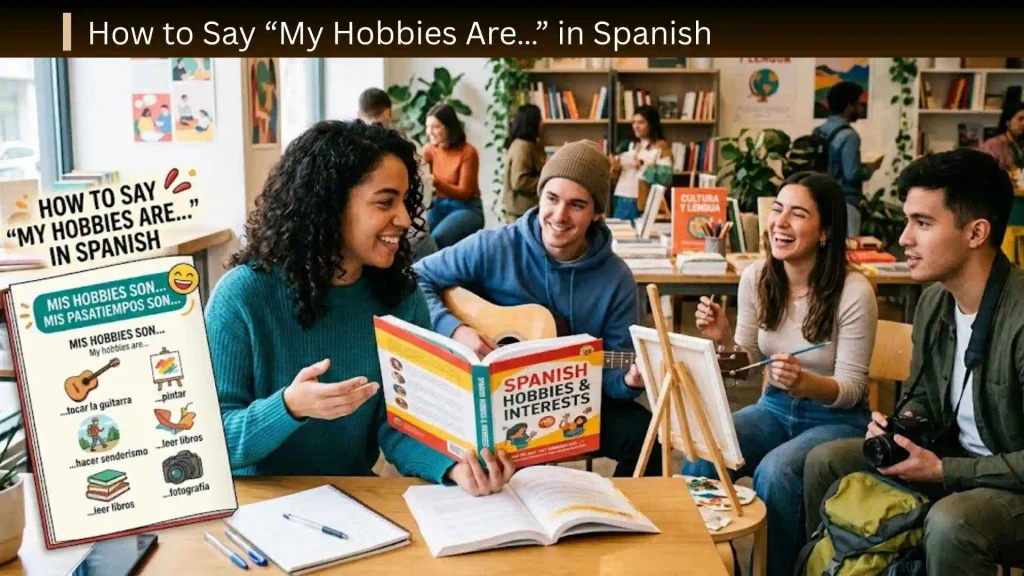
To answer the question, you can say:
Mis pasatiempos son…
= My hobbies are…
For example:
Mis pasatiempos son leer, cocinar y viajar.
That means:
My hobbies are reading, cooking, and traveling.
You can also use Me gusta… (“I like…”), which is often more natural in conversation:
Me gusta leer, cocinar y viajar.
= I like reading, cooking, and traveling.
Useful Hobby Examples in Spanish
Here are some common hobbies you might mention:
- leer — to read
- escribir — to write
- dibujar — to draw
- pintar — to paint
- cocinar — to cook
- hornear — to bake
- fotografiar — to photograph
- viajar — to travel
- hacer senderismo — to hike
- montar en bicicleta — to ride a bicycle
- jugar videojuegos — to play video games
- escuchar música — to listen to music
- tocar la guitarra — to play guitar
- bailar — to dance
- jardinería — gardening
- ver películas — watching movies
Common Spanish Questions About Hobbies

If you’re learning how to talk about hobbies in Spanish, you do not need to memorize only one question. These variations can make conversations sound more natural.
¿Qué te gusta hacer?
What do you like to do?
This is one of the simplest ways to start talking about interests.
¿Qué te gusta hacer en tu tiempo libre?
What do you like to do in your free time?
This specifically directs the conversation toward hobbies and leisure activities.
¿Qué haces en tu tiempo libre?
What do you do in your free time?
This focuses more on what someone actually does.
¿Tienes algún pasatiempo?
Do you have any hobbies?
The word algún means “any” or “some” in this context.
¿Tienes alguna afición?
Do you have any hobbies/interests?
This is another natural way to ask whether someone has a particular pastime or interest.
¿Cuál es tu pasatiempo favorito?
What is your favorite hobby?
Use this when you want the person to identify one favorite activity.
How to Talk About Hobbies in Spanish
Once someone asks ¿Cuáles son tus pasatiempos?, you can answer in several ways.
Using “Me gusta”
Me gusta leer.
= I like reading.
Me gusta cocinar.
= I like cooking.
Me gusta hacer senderismo.
= I like hiking.
For multiple activities:
Me gusta leer, cocinar y viajar.
= I like reading, cooking, and traveling.
Using “Me encanta”
Me encanta la fotografía.
= I love photography.
Me encanta tocar la guitarra.
= I love playing guitar.
Me encanta viajar.
= I love traveling.
Using “Mis pasatiempos son”
Mis pasatiempos son la fotografía, la lectura y la jardinería.
= My hobbies are photography, reading, and gardening.
This construction is particularly useful for a Spanish class, written assignment, introduction, or interview.
“Hobbies” vs. “Pasatiempos” vs. “Aficiones”
These three terms overlap, but they are not always interchangeable in exactly the same way.
Pasatiempos
Pasatiempos literally relates to activities used to pass the time. It is a clear Spanish equivalent of hobbies or pastimes.
Example:
Mis pasatiempos favoritos son leer y pintar.
Aficiones
Aficiones refers to interests, favorite activities, or hobbies. It can have a somewhat broader sense than simply activities you do to pass the time.
Example:
Una de mis aficiones es la fotografía.
= Photography is one of my hobbies/interests.
Hobbies
Hobbies is a borrowed English term used in Spanish as well.
Example:
Tengo varios hobbies, como cocinar y viajar.
It is understandable in many contexts, particularly informal ones, but learners who want traditional Spanish vocabulary can use pasatiempos or aficiones instead.
Is “¿Cuáles son tus hobbies?” Correct?
Yes. ¿Cuáles son tus hobbies? is understandable and used by Spanish speakers.
However, if you are learning Spanish and want a more distinctly Spanish expression, ¿Cuáles son tus pasatiempos? or ¿Cuáles son tus aficiones? are good choices.
For everyday conversation, ¿Qué te gusta hacer en tu tiempo libre? is often an even more conversational way to get the same information.
The best choice therefore depends on what you are trying to say rather than on finding one universally “correct” translation.
Formal vs. Informal Spanish
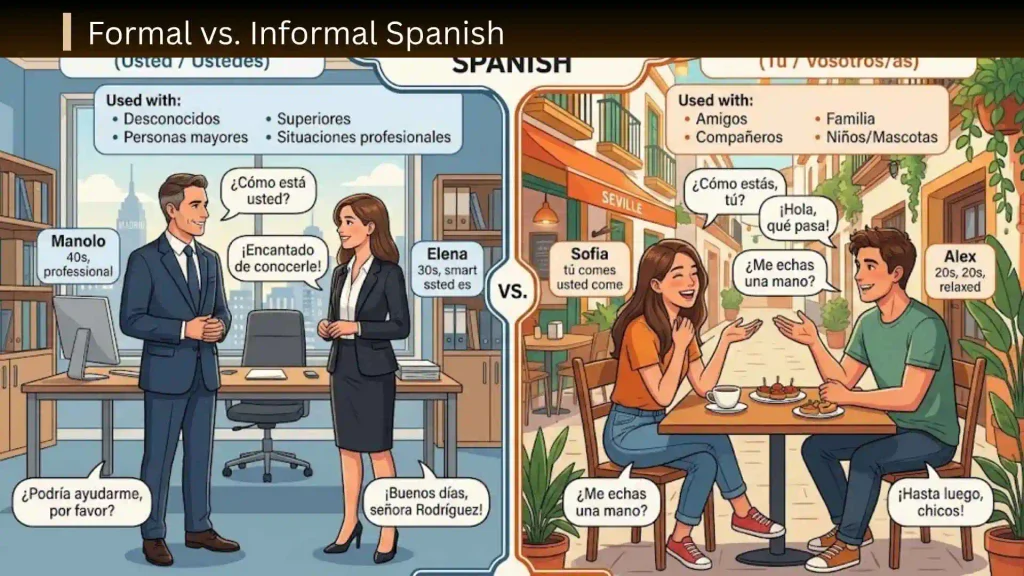
The possessive tus is used when speaking informally to one person.
Informal
¿Cuáles son tus pasatiempos?
= What are your hobbies?
Formal
When speaking formally to one person, you can use sus:
¿Cuáles son sus pasatiempos?
= What are your hobbies?
The formal version may be appropriate in certain professional, academic, or unfamiliar-person contexts.
The exact level of formality varies by country and situation, so conversational context matters.
How to Pronounce “¿Cuáles Son Tus Pasatiempos?”
A rough pronunciation guide for English speakers is:
¿Cuáles son tus pasatiempos?
KWAH-les son toos pah-sah-TYEM-pos
A few points can help:
- cuá sounds roughly like “kwah”
- son is pronounced approximately like “sohn”
- tus has a short “oo” sound
- pasatiempos has several syllables: pa-sa-TYEM-pos
- The ie in pasatiempos forms a combined sound rather than two separate syllables.
Pronunciation varies naturally among Spanish-speaking regions, so this guide is only an approximation.
Example Conversation About Hobbies

Here is a simple conversation for a Spanish learner:
Ana: ¿Qué te gusta hacer en tu tiempo libre?
Luis: Me gusta leer y jugar videojuegos. ¿Y a ti?
Ana: Me gusta cocinar y hacer senderismo.
Luis: ¡Qué interesante! ¿Cuál es tu pasatiempo favorito?
Ana: La fotografía.
English Translation
Ana: What do you like to do in your free time?
Luis: I like reading and playing video games. How about you?
Ana: I like cooking and hiking.
Luis: How interesting! What is your favorite hobby?
Ana: Photography.
This conversation demonstrates several useful ways to discuss hobbies without repeatedly using the word pasatiempo.
What Should You Use in American Spanish?
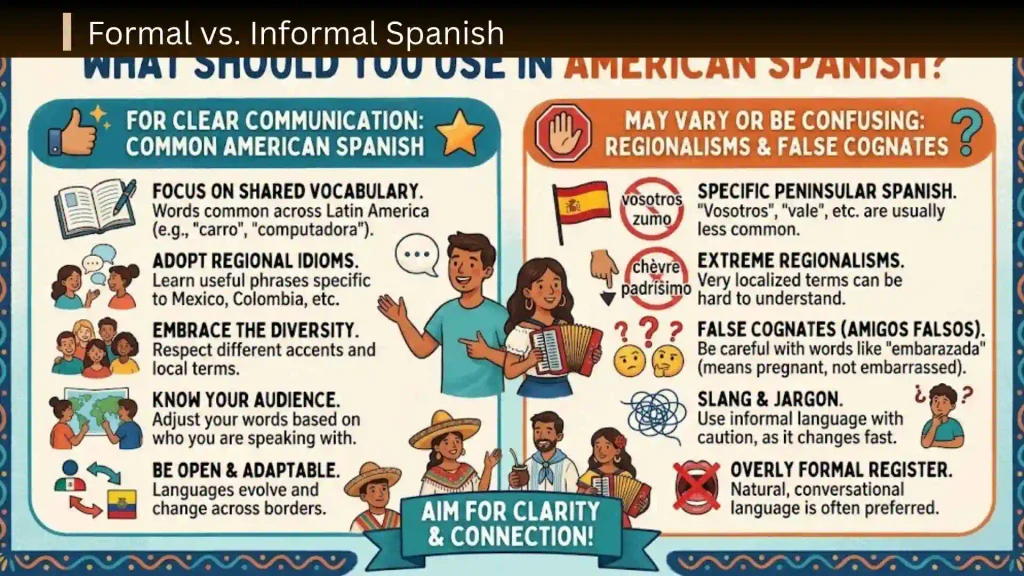
If you’re in the United States and learning Spanish, there is no need to limit yourself to a single phrase. Spanish in the U.S. reflects vocabulary from many Spanish-speaking communities, so you may encounter different choices depending on the speaker and their background.
For a straightforward translation, use:
¿Cuáles son tus pasatiempos?
For a natural conversational question, use:
¿Qué te gusta hacer en tu tiempo libre?
For a question about interests, use:
¿Cuáles son tus aficiones?
And in casual speech, you may hear:
¿Cuáles son tus hobbies?
The safest choice for a Spanish learner depends on the setting. If you’re completing a basic language exercise specifically asking for the translation of “What are your hobbies?”, ¿Cuáles son tus pasatiempos? is a clear and appropriate answer.
Frequently Asked Questions
What is “What are your hobbies?” in Spanish?
The direct translation is ¿Cuáles son tus pasatiempos? Other natural options include ¿Cuáles son tus aficiones? and ¿Qué te gusta hacer en tu tiempo libre?
How do you say “hobbies” in Spanish?
Hobbies can be translated as pasatiempos or aficiones. Spanish also uses the borrowed word hobbies in some informal contexts.
What is the most natural way to ask about hobbies in Spanish?
A very conversational option is ¿Qué te gusta hacer en tu tiempo libre?, meaning “What do you like to do in your free time?”
How do you say “my hobbies are” in Spanish?
You can say Mis pasatiempos son…, followed by the activities. For example, Mis pasatiempos son leer y cocinar means “My hobbies are reading and cooking.”
How do you ask “What is your favorite hobby?” in Spanish?
Say ¿Cuál es tu pasatiempo favorito?
Is “¿Cuáles son tus hobbies?” correct Spanish?
Yes. ¿Cuáles son tus hobbies? is understandable and used in Spanish, although pasatiempos and aficiones are Spanish alternatives.
What does “pasatiempos” mean?
Pasatiempos means hobbies, pastimes, or leisure activities. It refers to things people enjoy doing in their free time.
What is the difference between “pasatiempos” and “aficiones”?
Both can mean hobbies or interests. Pasatiempos emphasizes leisure activities, while aficiones can refer more broadly to interests or activities someone is particularly fond of.
Conclusion
The best direct translation of “What are your hobbies?” in Spanish is ¿Cuáles son tus pasatiempos? If you want a more conversational question, ¿Qué te gusta hacer en tu tiempo libre? is an excellent alternative. ¿Cuáles son tus aficiones? and ¿Cuáles son tus hobbies? are also useful expressions, depending on the context and regional usage.
Learning several versions is worthwhile because Spanish conversations about hobbies are usually more flexible than a single English-to-Spanish translation suggests.

I’m Sophia Carter, a writer who enjoys discovering interesting ideas and transforming them into helpful content. At Cognivoora, I write with a simple goal: to make information clearer, more accessible, and genuinely useful for readers. I value thoughtful research, easy explanations, and content that people can trust and return to whenever they need it.
Books:
- The Knowledge Journey
- Understanding the World Around Us