
Have you ever wondered what hobbies really mean and why people enjoy them so much? I think a hobby is more than simply something you do in your free time,it can be an activity that helps you relax, express yourself, learn new skills, or simply enjoy a break from your daily routine. You might love reading, painting, gardening, cooking, gaming, photography, or playing a sport; all of these can become hobbies when you choose to do them for enjoyment.
When I think about hobbies, I see them as personal activities that give you something to look forward to. Your hobby does not have to be expensive, difficult, or impressive. It just needs to be something you genuinely enjoy. In this guide, you’ll learn what the word hobbies means, how hobbies differ from everyday activities, and why finding the right hobby can add more enjoyment and purpose to your free time.
What Does “Hobbies” Mean?

Hobbies are activities people voluntarily spend time doing for enjoyment, personal interest, relaxation, creativity, learning, or recreation.
For example:
- Reading books can be a hobby.
- Gardening can be a hobby.
- Playing guitar can be a hobby.
- Photography can be a hobby.
- Hiking can be a hobby.
- Baking can be a hobby.
- Drawing can be a hobby.
- Collecting stamps, coins, or memorabilia can be a hobby.
- Playing chess can be a hobby.
- Sewing or knitting can be a hobby.
A hobby does not necessarily have to produce money or lead to a career. In fact, many people enjoy hobbies precisely because they provide a break from their usual responsibilities.
What Is the Difference Between “Hobby” and “Hobbies”?
The difference is simply singular versus plural.
- Hobby = one activity
- Hobbies = two or more activities
For example:
“Reading is my hobby.”
This means reading is one activity the person enjoys.
“Reading and gardening are my hobbies.”
This means the person enjoys two activities.
You can also use “hobbies” when talking about recreational activities in general:
“What are your hobbies?”
The question is asking which activities you enjoy doing in your free time.
What Makes Something a Hobby?
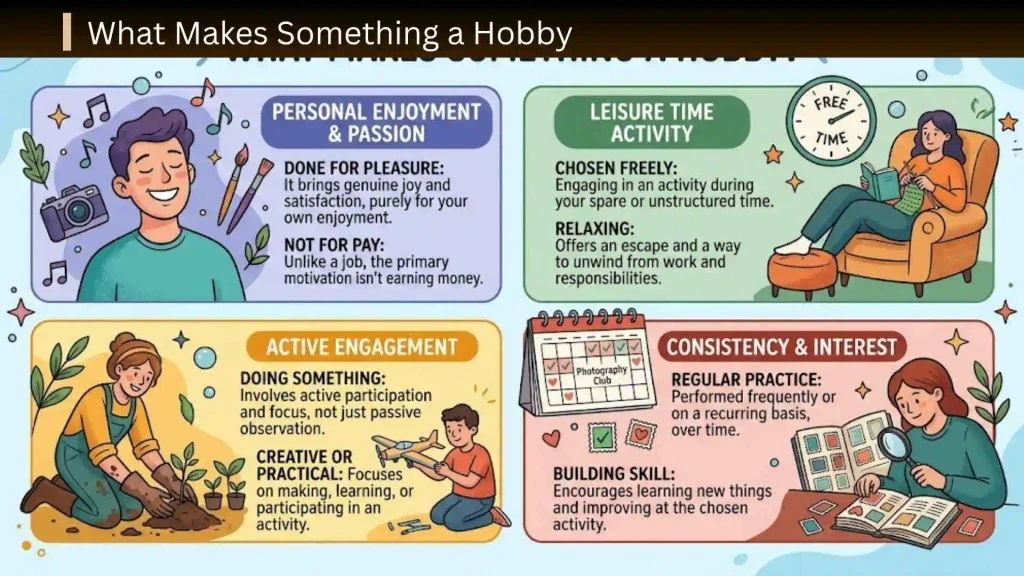
An activity can generally be considered a hobby when a person chooses to participate in it regularly or repeatedly because they find it enjoyable, interesting, satisfying, or meaningful.
A hobby often has several of these characteristics:
- Voluntary: You choose to do it rather than being required to do it.
- Enjoyable: The activity provides pleasure, satisfaction, curiosity, or relaxation.
- Personal: You pursue it because it interests you.
- Recreational: It is commonly done outside obligatory activities such as work or school.
- Repeatable: You return to it over time rather than doing it only once.
- Skill-building: Many hobbies involve learning or improving a skill, although this is not required.
There is no strict rule about how often someone must participate in an activity before it becomes a hobby. Someone might spend several hours every weekend painting, while another person might practice photography only occasionally.
Why Do People Have Hobbies?
People choose hobbies for many different reasons. The same activity can serve different purposes for different people.
Relaxation
Some hobbies provide a quiet way to spend free time. Reading, drawing, knitting, gardening, puzzles, and listening to or playing music may appeal to people who want activities that feel separate from work and daily responsibilities.
Creativity
Creative hobbies allow people to make, design, or express something. Examples include:
- Painting
- Drawing
- Photography
- Writing
- Pottery
- Sewing
- Woodworking
- Crafts
- Playing music
The goal does not have to be professional-quality work. For many hobbyists, the process itself is the enjoyable part.
Learning
A hobby can also be a way to learn something outside formal education. Someone might learn a language, study astronomy, explore history, cook unfamiliar cuisines, or learn how to play an instrument simply because the subject interests them.
Physical Activity
Some hobbies naturally involve movement. Hiking, cycling, swimming, dancing, gardening, recreational sports, and kayaking are examples. The physical demands vary considerably, so people can choose activities that fit their interests and abilities.
Social Connection
Not every hobby is a solitary activity. Clubs, classes, sports teams, volunteer groups, book clubs, gaming groups, and community organizations can turn hobbies into opportunities to meet people with similar interests.
Personal Achievement
Learning a difficult skill can give someone a sense of progress. Completing a challenging knitting project, improving at chess, growing a successful garden, or learning a new song on an instrument can make the hobby rewarding in its own right.
Common Types of Hobbies
There is no single official classification of hobbies, but grouping them by their main characteristics can make it easier to understand the wide range of possibilities.
| Type of hobby | Examples | Common appeal |
| Creative | Painting, drawing, writing, pottery | Making or expressing something |
| Intellectual | Chess, puzzles, astronomy, history | Learning and problem-solving |
| Physical | Hiking, cycling, swimming, dancing | Movement and recreation |
| Outdoor | Gardening, fishing, birdwatching, camping | Time outside and exploration |
| Indoor | Reading, baking, crafts, gaming | Convenient home-based recreation |
| Social | Book clubs, team sports, dance classes | Meeting and interacting with others |
| Collecting | Coins, stamps, books, memorabilia | Discovery and organization |
| Skill-based | Cooking, woodworking, photography, music | Learning and improving a practical skill |
Many hobbies fit into more than one category. For example, photography can be creative, technical, outdoor, and social depending on how someone practices it.
What Are Some Examples of Hobbies?

Hobbies can be almost any constructive or recreational activity that someone chooses to pursue for personal enjoyment.
Creative Hobbies
Creative hobbies include activities where you make or express something.
Examples include:
- Drawing
- Painting
- Calligraphy
- Creative writing
- Photography
- Pottery
- Sewing
- Knitting
- Crocheting
- Jewelry making
- Woodworking
- Playing music
These hobbies can range from very inexpensive activities using basic materials to more equipment-intensive pursuits.
Active Hobbies
Active hobbies involve physical movement or participation.
Examples include:
- Hiking
- Cycling
- Swimming
- Dancing
- Recreational sports
- Kayaking
- Rock climbing
- Running
- Gardening
The appropriate activity depends on a person’s experience, fitness, environment, and comfort level.
Intellectual Hobbies
These hobbies emphasize thinking, learning, research, or problem-solving.
Examples include:
- Reading
- Chess
- Crossword puzzles
- Learning a language
- Astronomy
- Genealogy
- Studying history
- Coding
- Strategy games
They can be especially appealing to people who enjoy exploring subjects in depth.
Relaxing Hobbies
Some hobbies are naturally suited to slower-paced free time.
Examples include:
- Reading
- Gardening
- Knitting
- Coloring
- Journaling
- Birdwatching
- Fishing
- Puzzles
- Baking
Whether a hobby feels relaxing depends on the individual. An activity that one person finds calming may feel challenging or demanding to someone else.
Is a Hobby the Same as a Job?
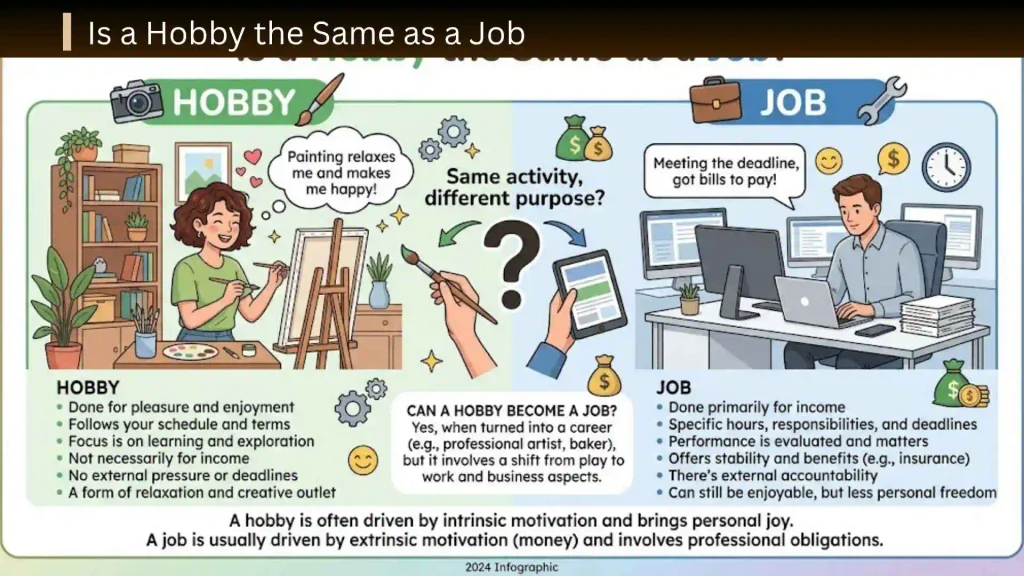
No. A hobby is normally pursued primarily for personal enjoyment or interest, while a job is generally performed as employment in exchange for compensation.
However, the two can overlap.
For example, someone might enjoy photography as a hobby and later decide to offer photography services professionally. At that point, photography can function both as a personal interest and as a source of income.
The difference often comes down to purpose and context. When you photograph landscapes because you enjoy it, it is a hobby. When you photograph a client’s wedding as paid work, it is professional work.
A person can also keep the same activity as a hobby even after developing professional skills in it.
Can a Hobby Make Money?
Yes, some hobbies can potentially be monetized, but earning money is not what makes an activity a hobby.
Depending on the activity and market, people may generate income from hobbies such as:
- Photography
- Writing
- Crafting
- Baking
- Art
- Woodworking
- Music
- Gardening
- Reselling or collecting
- Digital design
Possible income methods include selling products, offering services, teaching skills, licensing creative work, or creating content.
However, income is not guaranteed. Once an activity becomes focused primarily on meeting customers, deadlines, sales targets, or business obligations, it may begin functioning more like a business or occupation than a purely recreational hobby.
What Is the Difference Between a Hobby and an Interest?
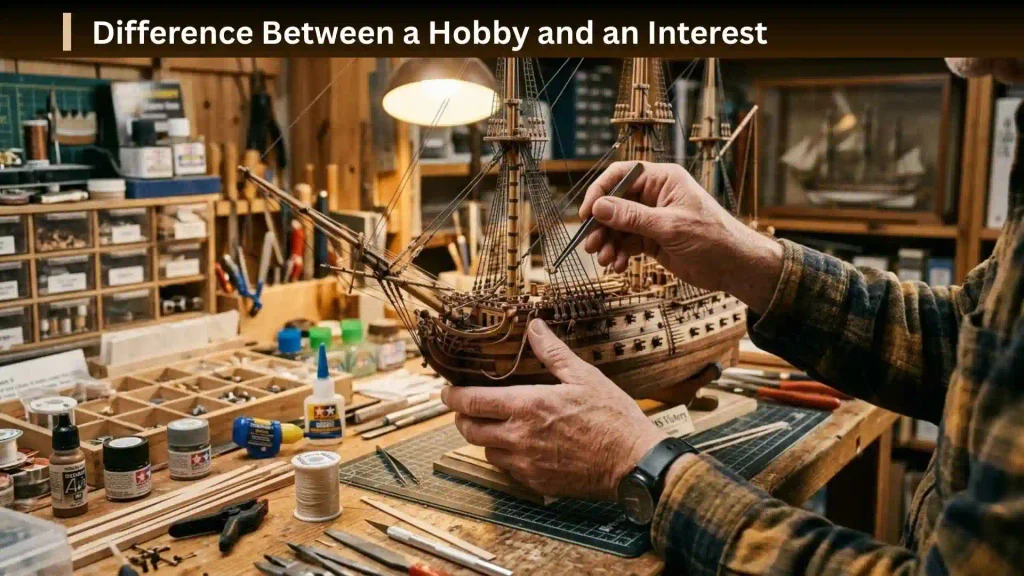
A hobby is usually an activity you actively spend time doing, while an interest can simply be something you like learning about or thinking about.
For example:
- You may have an interest in astronomy by enjoying astronomy documentaries and reading about space.
- Astronomy may become a hobby if you regularly observe the night sky, use a telescope, attend astronomy events, or study celestial objects.
The distinction is not absolute. An interest can develop into a hobby when you begin actively participating in it.
What Is the Difference Between a Hobby and a Pastime?
The terms hobby and pastime are closely related, but they are not always used in exactly the same way.
A pastime is generally something a person does to occupy free time or for entertainment. A hobby often suggests a more sustained personal interest or activity that someone chooses to pursue repeatedly.
For example, watching television can be a pastime, while collecting vintage records may be described as a hobby.
There is considerable overlap between the two terms, and everyday usage does not always make a strict distinction.
How Do You Choose a Hobby?
The best hobby depends on what you want to get from your free time. Instead of choosing an activity simply because it is popular, consider your circumstances and interests.
Start With Your Interests
Think about subjects or activities that naturally attract your attention.
If you enjoy making things, consider crafts, woodworking, cooking, or pottery. If you like being outdoors, hiking, gardening, fishing, or birdwatching may be worth exploring.
Consider Your Available Time
Some hobbies can be picked up for 15 or 20 minutes at a time, while others require longer sessions.
If your schedule is unpredictable, a flexible hobby such as reading, sketching, photography, or puzzles may be easier to maintain than an activity that requires fixed appointments.
Consider Your Budget
You do not need an expensive hobby to have a rewarding one.
Low-cost possibilities include:
- Walking
- Reading books from a library
- Drawing
- Writing
- Journaling
- Birdwatching
- Cooking with ingredients you already use
- Puzzles
- Learning through free educational resources
Other hobbies can become expensive because of specialized equipment, materials, classes, travel, or collecting.
Think About Your Space
A small apartment, suburban home, and rural property provide very different possibilities.
If space is limited, reading, drawing, digital photography, language learning, knitting, or music practice may be more practical than hobbies requiring large work areas or extensive equipment.
Decide Whether You Want a Solo or Social Activity
If you enjoy independent time, consider hobbies such as reading, writing, drawing, coding, gardening, or collecting.
If you want regular interaction with other people, look into recreational sports, clubs, classes, community groups, or organized hobby events.
Try Before Investing Heavily
You do not have to purchase advanced equipment immediately.
Start with basic supplies or borrow equipment when practical. Give yourself enough time to discover whether you actually enjoy the activity before making a large investment.
Can You Have More Than One Hobby?
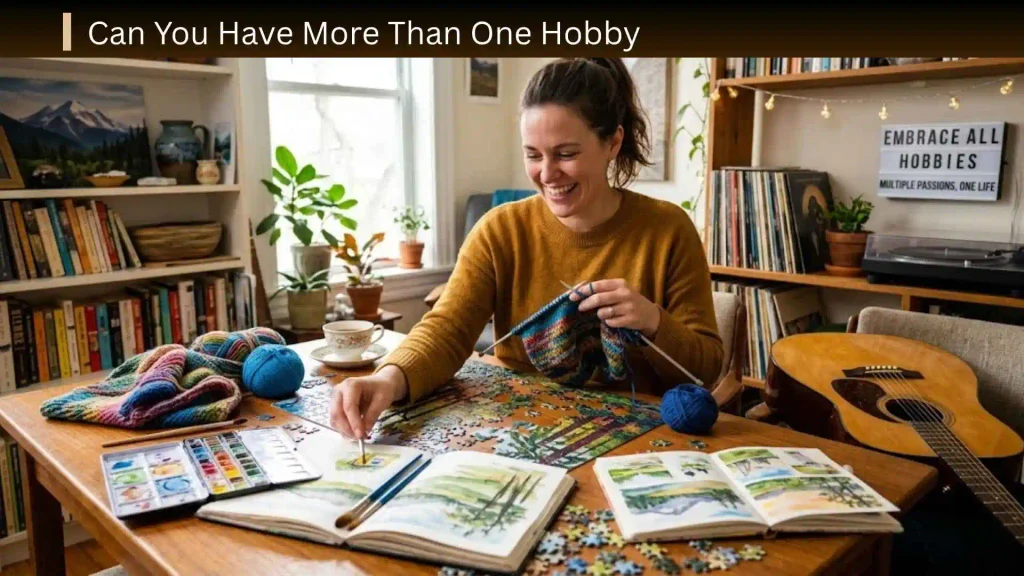
Absolutely. Many people have several hobbies that serve different purposes.
For example, someone might:
- Read in the evening.
- Garden on weekends.
- Hike when the weather is suitable.
- Play guitar for creative enjoyment.
Having different hobbies can also make it easier to match an activity to your available time, energy, location, or mood.
You do not need to be highly skilled at every hobby. A hobby exists for personal enjoyment and interest, not necessarily for achieving professional-level performance.
Do Hobbies Have to Be Productive?

No. A hobby does not have to improve your career, generate money, produce something useful, or teach a measurable skill.
Some people prefer hobbies that help them learn or create, while others simply want an enjoyable way to spend their free time.
For example, playing a casual game, collecting objects, reading fiction, or practicing a musical instrument purely for enjoyment can still be a perfectly valid hobby.
The value of a hobby is not determined solely by how productive it appears.
Frequently Asked Questions
What does hobbies mean in simple words?
Hobbies means activities that people enjoy doing in their free time. Reading, gardening, cooking, photography, sports, crafts, and playing music are common examples.
What is the meaning of hobby?
A hobby is an activity that a person regularly chooses to do for enjoyment, relaxation, learning, creativity, or personal interest, usually outside work or other required responsibilities.
Is “hobbies” plural?
Yes. Hobbies is the plural form of hobby.
- One hobby
- Two hobbies
- Several hobbies
The spelling changes from hobby to hobbies because the “y” changes to “ies” when forming the plural.
What are examples of hobbies?
Examples include reading, gardening, hiking, photography, cooking, baking, painting, drawing, writing, knitting, collecting, playing music, cycling, fishing, chess, and many other recreational activities.
What is the difference between a hobby and an interest?
An interest is something you are curious about or like learning about, while a hobby usually involves actively spending time doing an activity. An interest can develop into a hobby through regular participation.
Can your job also be your hobby?
Yes. Someone may enjoy an activity as a hobby and later turn it into a profession. However, once the activity becomes primarily paid work, it is also functioning as an occupation rather than simply a hobby.
Do hobbies have to cost money?
No. Many hobbies require little or no additional spending. Reading, walking, writing, drawing, observing nature, learning, and many forms of exercise can be inexpensive depending on how you participate.
How do I find a hobby I enjoy?
Start with your existing interests, then consider your available time, budget, space, and preference for solo or social activities. Trying several beginner-friendly activities is often more useful than trying to identify one “perfect” hobby immediately.
Conclusion
Hobbies are activities people choose to pursue for enjoyment, relaxation, creativity, learning, recreation, or personal interest, usually during their free time. The word “hobbies” simply refers to more than one hobby.
A hobby can be creative, intellectual, physical, social, outdoor, indoor, or a combination of these. It does not need to be productive, expensive, profitable, or professionally performed. The most suitable hobby is one that fits your interests, circumstances, available time, and the experience you want from your free time.

I’m Ethan Mitchell, a curious writer who enjoys turning complex ideas into simple, useful information. At Cognivoora, I focus on creating clear and engaging content that readers can understand and apply in everyday life. I believe good writing should educate, answer real questions, and leave readers with something valuable to remember.
Books:
- The Everyday Mind
- Simple Ideas, Better Thinking