I know how frustrating it can feel when you want a new hobby but have no idea where to start. You may scroll through endless ideas and still wonder, “What hobbies should I try?” The good news is that you don’t need to have a special talent or a perfect plan to get started. I believe the best hobby is one that fits your personality, interests, free time, and lifestyle.
In this guide, I’ll help you explore different types of hobbies so you can find something that genuinely interests you. Whether you want to be more creative, learn a useful skill, stay active, meet new people, relax after a busy day, or simply try something different, you’ll find plenty of ideas to consider. You might even discover a hobby you never thought you would enjoy.
What Hobbies Should I Try: (Quick Answer)
If you want a starting point, consider these options:
- Creative: Drawing, painting, photography, pottery, woodworking
- Relaxing: Gardening, reading, journaling, knitting, coloring
- Active: Hiking, cycling, swimming, running, yoga
- Social: Board games, recreational sports, dancing, volunteering, book clubs
- Learning-focused: Learning a language, astronomy, coding, cooking, chess
- Hands-on: Baking, woodworking, model building, gardening, DIY projects
- Outdoor: Hiking, birdwatching, fishing, gardening, photography
- Low-cost: Reading, writing, drawing, walking, journaling
- At-home: Cooking, gaming, crafts, music, puzzles, painting
If you genuinely don’t know where to begin, choose one hobby from a category you have never tried before and give it two or three sessions before deciding whether you like it.
How to Choose a Hobby That Actually Fits You
A hobby is easier to stick with when it fits your existing lifestyle. Before choosing one, think about six practical factors.
1. What do you want from your free time?
Ask yourself what you are missing.
Do you want to:
- Make something with your hands?
- Learn a useful skill?
- Spend more time outdoors?
- Meet people?
- Move your body?
- Slow down and relax?
- Have a personal project to work toward?
- Explore a subject you have always found interesting?
Your answer can eliminate dozens of unsuitable options immediately.
2. How much time can you realistically give it?
A hobby doesn’t need to consume your entire weekend.
If you have only 15–30 minutes at a time, reading, sketching, journaling, puzzles, language practice, or playing an instrument can work well.
If you regularly have several free hours, hobbies such as hiking, woodworking, photography, gardening, pottery, fishing, or cycling give you more room for longer sessions.
3. What is your budget?
Some hobbies can be started with things you already own. Others become significantly more expensive as you progress.
For example, writing can require little more than a notebook or computer, while photography can eventually involve cameras, lenses, lighting, storage, and editing software.
A useful rule for beginners is rent, borrow, use what you have, or buy basic equipment before investing heavily.
4. Do you prefer being alone or around people?
Some hobbies naturally create opportunities to socialize:
- Dancing
- Recreational sports
- Board games
- Volunteering
- Book clubs
- Community gardening
- Group classes
Others are naturally suited to independent time:
- Reading
- Drawing
- Writing
- Gardening
- Photography
- Puzzles
- Model building
You can also choose a hobby that works both ways. Photography, for example, can be a solitary activity or something you explore with a photography group.
5. Do you want an easy or challenging learning curve?
If you want immediate enjoyment, choose something with a low barrier to entry.
If you enjoy mastering difficult skills, don’t automatically avoid hobbies that take time to learn. Playing an instrument, chess, woodworking, programming, painting, and photography can all become progressively more challenging as your skills improve.
6. Where will you do it?
Think about your actual living situation.
If you live in an apartment with limited storage, a large woodworking setup may be impractical. If you have access to a yard, gardening becomes more convenient. If you have nearby trails, hiking may be an easy choice.
The best hobby is often the one that is easy to access repeatedly.
Best Hobbies to Try if You Want Something Creative
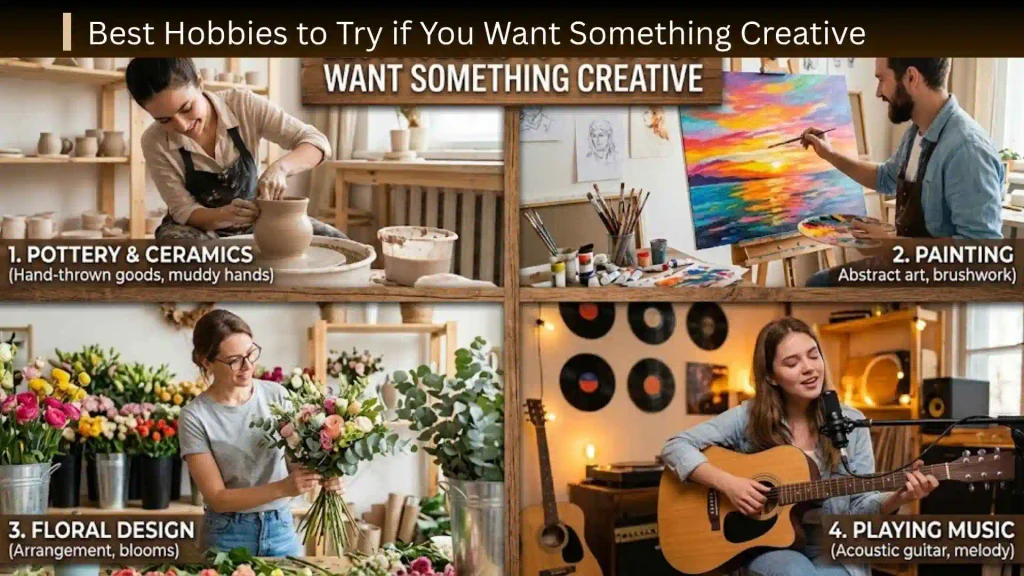
Creative hobbies are a good choice if you enjoy making, designing, experimenting, or expressing ideas.
1. Drawing
Drawing is one of the easiest creative hobbies to test because you can begin with a pencil and paper.
You can explore:
- Sketching
- Portraits
- Landscapes
- Urban sketching
- Character design
- Digital drawing
- Illustration
Best for: People who enjoy visual creativity and gradual skill development.
Beginner tip: Don’t start by trying to create perfect portraits. Practice basic shapes, lines, proportions, and shading first.
2. Painting
Painting offers considerably more room to experiment with color and technique.
Beginners can try watercolor, acrylic, or other accessible mediums before deciding whether they want to pursue a particular style.
Best for: People who enjoy color, visual expression, and longer creative sessions.
Beginner tip: Start with a small set of materials and simple subjects rather than buying a complete studio’s worth of supplies.
3. Photography
Photography turns ordinary surroundings into something worth observing closely.
You can begin with a smartphone rather than immediately purchasing a dedicated camera. As you improve, you can explore composition, lighting, portraits, landscapes, street photography, wildlife, or editing.
Best for: Curious observers who enjoy exploring places or noticing details.
Beginner tip: Learn composition and light before worrying about expensive equipment.
4. Pottery and Ceramics
Pottery combines creativity with a physical, hands-on process. Because kilns and specialized equipment are difficult to maintain at home, beginners often start through a local studio or class.
Best for: People who like tactile activities and making physical objects.
Beginner tip: Take an introductory class before purchasing equipment.
5. Creative Writing
Writing can take many forms:
- Short stories
- Poetry
- Personal essays
- Fiction
- Journaling
- Screenwriting
- Blogging
- Memoir-style writing
Best for: People who enjoy ideas, storytelling, observation, or putting thoughts into words.
Beginner tip: Write regularly without worrying about producing something publishable.
6. Crafts
Crafting is a broad category rather than one single activity. You could try paper crafts, embroidery, crochet, knitting, jewelry making, candle making, or other decorative projects.
The advantage is variety: if one technique doesn’t interest you, another may.
Best Hobbies to Try if You Want to Stay Active
You don’t need to become highly competitive to enjoy a physical hobby. The important consideration is whether the activity is enjoyable enough for you to keep doing.
7. Hiking
Hiking combines exploration with physical activity and can range from easy local trails to demanding mountain routes.
Best for: People who like nature, exploration, and being outdoors.
You need to start: Appropriate footwear, water, weather-appropriate clothing, and a suitable route.
Beginner tip: Start with a trail that comfortably matches your current fitness and experience rather than choosing the most difficult route nearby.
8. Cycling
Cycling can be recreational, practical, social, or fitness-oriented.
You might ride around your neighborhood, use local trails, join group rides, or eventually explore longer routes.
Best for: People who enjoy movement and exploring their surroundings.
Beginner tip: Focus first on bike fit, basic riding skills, and safe routes.
9. Swimming
Swimming can be both recreational and skill-oriented. Unlike simply going for a walk, it gives you a specific technique to improve, such as breathing, body position, or stroke efficiency.
Best for: People who enjoy water and want a skill-based physical hobby.
Beginner tip: If you are inexperienced in the water, consider instruction rather than trying to learn difficult techniques alone.
10. Running
Running has a relatively simple equipment requirement, but progression should be gradual.
You can make it more interesting by setting non-competitive goals, exploring different routes, or eventually participating in organized runs.
Best for: People who prefer simple, independent activities.
Beginner tip: Start conservatively and give your body time to adapt rather than immediately following an aggressive training plan.
11. Yoga
Yoga can be approached as a movement practice, flexibility-focused activity, or mindful physical routine.
There are many different styles and levels, so beginners should look for instruction appropriate to their experience.
Best for: People who prefer a slower, structured form of movement.
Beginner tip: Learn foundational positions and alignment before attempting advanced poses.
12. Dancing
Dancing is particularly useful if you want a physical hobby that also has a strong social component.
Options include:
- Salsa
- Swing
- Ballroom
- Hip-hop
- Contemporary dance
- Line dancing
Best for: People who want movement, music, and opportunities to meet others.
Beginner tip: Choose a beginner class rather than judging your ability based on experienced dancers.
Relaxing Hobbies to Try at Home
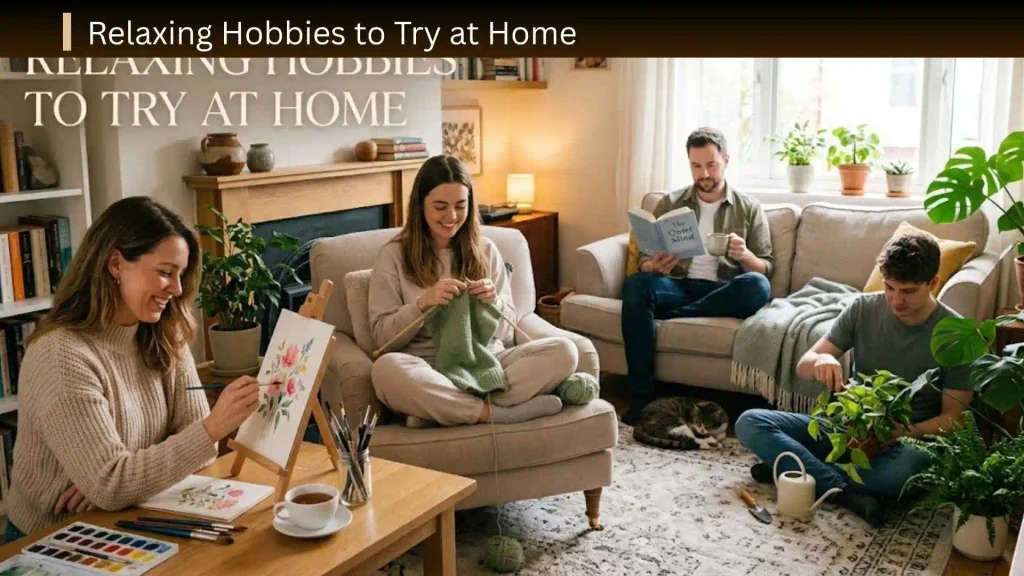
If your main goal is to have something enjoyable to do during quiet time, consider hobbies that can be picked up without much preparation.
13. Reading
Reading is remarkably flexible because you can turn it into almost any kind of hobby.
Try choosing a theme for a month rather than simply deciding to “read more.” You could explore American history, science fiction, biographies, mystery novels, nature writing, or a subject you’ve always wanted to understand.
Best for: People who enjoy stories, information, or quiet concentration.
14. Gardening
Gardening involves planning, planting, observing, and caring for living plants. You don’t necessarily need a large yard; container gardening can work in smaller spaces where conditions permit.
You could start with:
- Herbs
- Flowers
- Vegetables
- Indoor plants
- Native plants
Best for: People who enjoy routine, nature, and hands-on work.
Beginner tip: Start with a few plants that suit your available light and climate rather than trying to maintain a large garden immediately.
15. Journaling
Journaling can be as structured or informal as you want.
You might keep:
- A daily journal
- A reading journal
- A gratitude journal
- A travel journal
- A sketch journal
- A learning log
- A project notebook
Best for: People who enjoy reflection, writing, planning, or recording experiences.
16. Knitting or Crochet
These crafts involve learning a relatively small set of fundamental techniques and then combining them into increasingly complicated projects.
Best for: People who enjoy repetitive hand movements and tangible projects.
Beginner tip: Start with a simple project that teaches the basic stitch rather than choosing an ambitious pattern immediately.
17. Coloring
Adult coloring can provide a straightforward creative activity without requiring you to learn drawing from scratch.
It is particularly useful if you want something that can be picked up for a short session.
Best for: People who want low-pressure creative time.
18. Puzzles
Jigsaw puzzles, crossword puzzles, logic puzzles, and other puzzle formats provide different kinds of challenges.
If traditional jigsaw puzzles feel repetitive, try switching to word, number, logic, or mechanical puzzles.
Hobbies to Try If You Want to Learn Something
A hobby doesn’t have to produce a physical object. Learning itself can be the activity.
19. Learn a New Language
Learning a language gives you a long-term goal with many possible milestones.
You can combine vocabulary study with listening, reading, conversation, music, films, and interaction with other learners.
Best for: People who enjoy communication and gradual progress.
Beginner tip: Practice a small amount consistently instead of attempting long study sessions that are difficult to maintain.
20. Chess
Chess provides a clear progression from learning the rules to understanding tactics, strategy, openings, endgames, and analysis.
You can play casually, study games, solve puzzles, or participate in clubs and tournaments.
Best for: People who enjoy competition, strategy, and problem-solving.
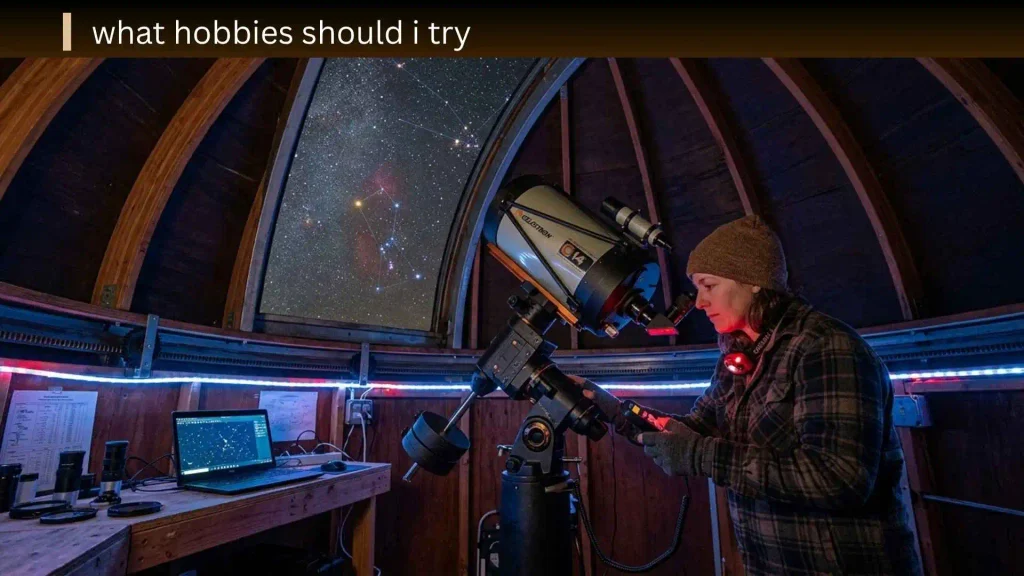
21. Astronomy
Astronomy is an excellent hobby if you’re curious about the night sky.
You can begin without a telescope by learning major constellations, planets, lunar phases, and how to identify prominent objects in the sky.
Best for: Curious people who enjoy science and observation.
Beginner tip: Learn the night sky first before deciding whether you need specialized equipment.
22. Coding
Programming can be a hobby even if you have no intention of becoming a professional developer.
Beginners can build small projects such as:
- Simple games
- Personal websites
- Automation scripts
- Interactive experiments
- Small tools
Best for: People who enjoy logical problems and building things digitally.
Beginner tip: Choose a project you actually want to make. A concrete goal is often more engaging than studying programming concepts without an application.
23. Cooking
Cooking combines creativity, practical knowledge, experimentation, and measurable improvement.
Instead of attempting to master everything at once, choose a specific area such as bread, pasta, vegetarian cooking, baking, sauces, grilling, or international cuisine.
Best for: People who like practical skills and experimenting with ingredients.
Beginner tip: Learn a few foundational techniques rather than relying entirely on recipes.
Social Hobbies to Try if You Want to Meet People
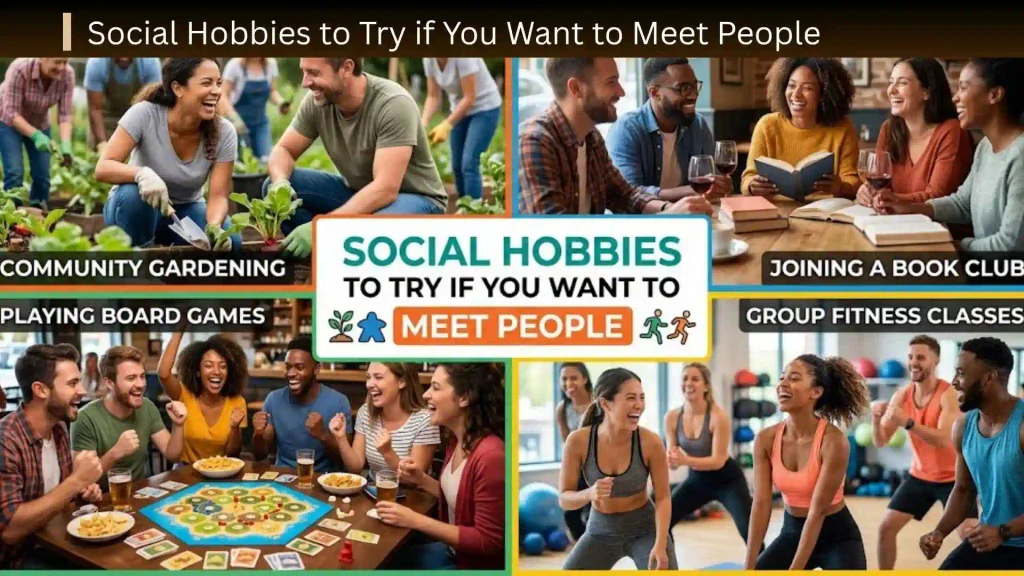
If one of your goals is expanding your social circle, choose hobbies that naturally involve repeated interaction.
24. Board Games
Board gaming has options ranging from quick party games to complex strategy games.
A local game store, community group, or regular game night can provide a natural environment for meeting other players.
Best for: People who enjoy conversation combined with structured activities.
25. Recreational Sports
Adult recreational leagues can include basketball, soccer, softball, volleyball, tennis, pickleball, and many other activities depending on your community.
The appeal isn’t necessarily competition. Regular practices and games provide repeated opportunities to interact with the same people.
26. Volunteering
Volunteering can function as a hobby when you regularly contribute time to an organization or community activity you care about.
Possible areas include:
- Animal organizations
- Environmental projects
- Food assistance
- Community events
- Libraries
- Youth programs
Best for: People who want social interaction combined with a meaningful activity.
27. Book Clubs
A book club gives reading a social dimension. Instead of reading entirely alone, you have a reason to finish a book and discuss it with other people.
Best for: Readers who want conversation without the intensity of a competitive activity.
28. Group Classes
Classes can turn almost any interest into a social hobby. Look for beginner sessions involving cooking, art, dance, music, crafts, languages, or other subjects.
The advantage is that you don’t need to create a social opportunity from scratch—the activity provides one.
Hands On Hobbies for People Who Like Making Things
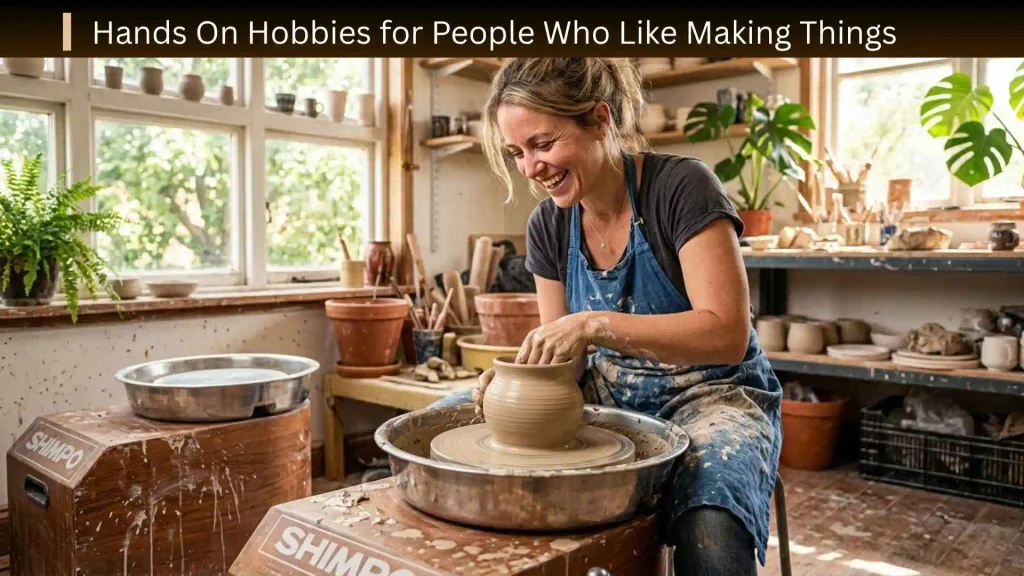
If you get more satisfaction from creating something tangible than consuming information, try one of these.
29. Woodworking
Woodworking ranges from simple projects to highly technical furniture making.
It can become a substantial hobby because tools, materials, workspace, and safety knowledge matter more as projects become complex.
Best for: People who enjoy practical problem-solving and building physical objects.
Beginner tip: Start with a simple project and learn proper tool safety before attempting complex cuts or machinery.
30. Model Building
Model building includes scale models, miniatures, ships, aircraft, vehicles, dioramas, and other forms of miniature construction.
It rewards patience and attention to detail.
Best for: People who like precision and focused projects.
31. Baking
Baking has a useful combination of creativity and repeatable technique. You can improve by experimenting with bread, cookies, cakes, pastries, or other styles.
Best for: People who enjoy practical projects with a finished result.
32. DIY Home Projects
DIY can range from small decorative projects to useful household improvements.
Start with projects appropriate to your existing tools and skills. Anything involving electrical, structural, gas, or other significant hazards should be approached with appropriate professional guidance rather than treated as a casual beginner project.
Outdoor Hobbies to Try

If you spend too much of your free time indoors, choosing an outdoor hobby can change the experience of your leisure time completely.
33. Birdwatching
Birdwatching turns an ordinary walk into an observation activity.
You can start with your eyes and ears, then add a field guide or binoculars if the hobby interests you.
Best for: Patient observers and people interested in wildlife.
Beginner tip: Learn to identify a handful of common local species rather than trying to memorize hundreds at once.
34. Fishing
Fishing combines outdoor time, patience, equipment, and technique. Regulations, licenses, seasons, and permitted methods vary by location, so beginners should check the rules where they plan to fish.
Best for: People who enjoy slower-paced outdoor activities.
35. Nature Photography
Nature photography combines two hobbies: observing the outdoors and learning photography.
You don’t need to travel to famous landscapes. Local parks, gardens, wildlife areas, and even your own neighborhood can provide subjects.
Best for: People who want an outdoor hobby with a creative component.
A Quick Comparison of Hobbies
| Hobby | Difficulty | Starting Cost | Typical Time Flexibility | Setting | Social Potential |
| Reading | Easy | Low | Very high | Indoor | Low |
| Drawing | Easy | Low | Very high | Indoor | Low |
| Journaling | Easy | Low | Very high | Indoor | Low |
| Hiking | Easy–Moderate | Low–Moderate | Moderate | Outdoor | Moderate |
| Gardening | Easy–Moderate | Low–Moderate | Moderate | Outdoor/Indoor | Moderate |
| Photography | Easy–Advanced | Low–High | High | Both | Moderate |
| Cooking | Easy–Advanced | Low–Moderate | Moderate | Indoor | High |
| Chess | Easy–Advanced | Low | High | Both | High |
| Dancing | Easy–Advanced | Low–Moderate | Moderate | Indoor | High |
| Cycling | Moderate | Moderate | Moderate | Outdoor | High |
| Painting | Easy–Advanced | Low–Moderate | High | Indoor | Low–Moderate |
| Woodworking | Moderate–Advanced | Moderate–High | Low–Moderate | Indoor/Outdoor | Moderate |
| Birdwatching | Easy–Advanced | Low–Moderate | High | Outdoor | Moderate |
| Learning a language | Easy–Advanced | Low–Moderate | High | Both | High |
| Board games | Easy–Advanced | Low–Moderate | Moderate | Indoor | High |
Cost and difficulty are relative beginner estimates. They can change considerably depending on equipment, instruction, location, and how deeply you pursue the hobby.
What Hobby Should You Try Based on Your Personality?
You don’t need to fit perfectly into a personality type, but your preferences can provide a useful starting point.
If you like creating things
Try:
- Drawing
- Painting
- Photography
- Pottery
- Writing
- Crafts
- Woodworking
- Baking
Choose these if the process of making something is more satisfying to you than simply consuming entertainment.
If you like solving problems
Try:
- Chess
- Puzzles
- Coding
- Model building
- Electronics
- Strategy games
These hobbies are particularly suitable if you enjoy figuring out why something works or finding a solution to a problem.
If you love nature
Try:
- Hiking
- Gardening
- Birdwatching
- Fishing
- Nature photography
- Camping
Your location can make a major difference here. A hobby becomes much easier to maintain when interesting outdoor spaces are accessible.
If you want to meet people
Try:
- Dancing
- Recreational sports
- Board games
- Volunteering
- Book clubs
- Group classes
Look for activities where the same people meet regularly. Repeated interaction is generally more useful for building familiarity than attending a one-time event.
If you want quiet time
Try:
- Reading
- Drawing
- Gardening
- Journaling
- Knitting
- Puzzles
- Model building
- Photography
These can provide focused personal time without requiring constant social interaction.
If you want a hobby that keeps you moving
Try:
- Hiking
- Cycling
- Swimming
- Running
- Dancing
- Recreational sports
- Yoga
Choose the activity you are most likely to enjoy doing consistently rather than selecting one solely because it appears demanding.
What Hobbies Should I Try If I Have Almost No Money?
You don’t need a large budget to start exploring hobbies.
Good low-cost options include:
- Reading
- Walking
- Writing
- Journaling
- Drawing
- Photography with a smartphone
- Birdwatching without specialized equipment
- Bodyweight exercise
- Free online language-learning practice
- Puzzles you already own
- Cooking with ingredients you already have
Libraries can also provide access to books, programs, clubs, and other community resources at little or no cost.
The important distinction is between starting a hobby and buying equipment for a hobby. You can often test your interest before making a substantial purchase.
What Hobbies Should I Try at Home?
For a home-based hobby, consider how much space and noise you can tolerate.
Small-space options
- Reading
- Journaling
- Drawing
- Painting
- Knitting
- Crochet
- Puzzles
- Chess
- Language learning
- Coding
- Music practice with appropriate equipment
If you have more workspace
- Woodworking
- Pottery
- Larger craft projects
- Model building
- DIY projects
- Gardening
- Baking
If storage is limited, prioritize hobbies where materials can be packed away easily after each session.
What Hobbies Should I Try If I Get Bored Easily?
If you frequently abandon hobbies, avoid choosing something that has only one narrow way to engage with it.
Instead, choose hobbies with multiple directions for progression.
Photography, for example, can lead into portraits, wildlife, landscapes, street photography, editing, composition, or photo projects.
Cooking can branch into baking, international cuisines, bread, sauces, fermentation, grilling, or recipe development.
Gardening can lead to herbs, flowers, vegetables, container gardening, propagation, or landscape design.
A hobby with multiple paths gives you somewhere to go when the beginner stage becomes familiar.
What Hobbies Should I Try If I Want to Improve at Something?
Choose a hobby with visible progression.
Good examples include:
- Musical instruments
- Drawing
- Photography
- Chess
- Coding
- Cooking
- Dancing
- Woodworking
- Language learning
- Running
- Swimming
A useful approach is to define a small skill milestone instead of a vague goal.
For example, rather than saying “I want to learn photography,” your first goal could be “I want to understand exposure and create 10 intentionally composed photographs.”
That gives you something concrete to work toward.
How to Start a New Hobby Without Overspending
The first mistake many beginners make is purchasing everything before discovering whether they actually enjoy the activity.
Try this sequence instead:
Step 1: Pick one hobby
Don’t start six hobbies simultaneously. Choose the one that most strongly matches your current interests.
Step 2: Set a small trial period
Give yourself several sessions rather than judging the hobby after five minutes.
Step 3: Use beginner level equipment
Buy only what is necessary to begin.
Step 4: Learn one fundamental skill
Avoid overwhelming yourself with advanced tutorials. Identify the one skill that unlocks the activity and practice it.
Step 5: Make a small project
A project creates a reason to practice.
For example:
- Photograph 20 interesting objects
- Grow three types of herbs
- Bake one style of bread
- Complete a simple woodworking project
- Read one book about a subject you’re curious about
- Learn 50 useful words in a new language
Step 6: Decide whether to continue
After several sessions, ask:
- Did I look forward to doing it?
- Did I enjoy the process, not just the result?
- Would I do it without anyone telling me to?
- Am I curious to learn more?
- Does it fit my schedule and budget?
If most answers are yes, you may have found a hobby worth developing.
Don’t Confuse a Hobby With Something You Feel You “Should” Enjoy
One of the easiest ways to choose the wrong hobby is to select something because it sounds impressive.
You don’t need to choose photography because it is creative, running because it is popular, or woodworking because it produces useful objects.
A hobby can be worthwhile simply because you enjoy doing it.
If you spend an hour making miniature models and genuinely enjoy the concentration involved, that can be just as valuable as learning a traditionally productive skill.
The goal isn’t to construct the most impressive list of hobbies. It is to find activities that you actually want to return to.
A Simple Hobby Matching Quiz
Choose the answer that sounds most like you.
Do you want to make something?
Yes: Try drawing, painting, pottery, crafts, woodworking, writing, photography, or baking.
Do you want to spend more time outdoors?
Yes: Try hiking, cycling, gardening, birdwatching, fishing, or nature photography.
Do you want to meet new people?
Yes: Try dancing, recreational sports, volunteering, board games, book clubs, or group classes.
Do you want a quiet hobby?
Yes: Try reading, journaling, drawing, puzzles, knitting, model building, or gardening.
Do you want to learn a difficult skill?
Yes: Try chess, coding, a musical instrument, photography, woodworking, a language, or a technical craft.
Do you want something inexpensive?
Yes: Start with reading, walking, writing, drawing, journaling, free language practice, or smartphone photography.
Do you want something physical?
Yes: Try hiking, cycling, swimming, running, dancing, yoga, or recreational sports.
Common Mistakes When Choosing a New Hobby
Choosing based only on the final result
You might love the idea of having beautiful photographs, paintings, or a garden while disliking the actual process required to create them.
Choose based on whether you enjoy doing the hobby, not just having its results.
Buying too much equipment
Expensive equipment doesn’t automatically make a beginner more interested or skilled.
Test the activity first whenever possible.
Choosing something that doesn’t fit your schedule
A hobby that requires an hour of travel each way may be difficult to maintain if you only have an hour of free time.
Convenience matters.
Expecting to be good immediately
Most worthwhile hobbies involve an awkward beginner stage. Don’t mistake being inexperienced for being incapable.
Trying too many hobbies at once
Exploration is good, but constantly switching activities can prevent you from discovering whether one becomes enjoyable after the initial learning curve.
Frequently Asked Questions
What is a good hobby for someone who doesn’t have any hobbies?
Start with something inexpensive and easy to test, such as reading, walking, drawing, cooking, photography, gardening, puzzles, or learning a language. Pick an activity based on what you are curious about rather than what you think you are supposed to enjoy.
What hobby should I try if I am a beginner?
Good beginner-friendly choices include drawing, reading, cooking, gardening, photography, hiking, journaling, puzzles, and board games. The best option depends on whether you prefer creative, physical, intellectual, social, or quiet activities.
What are some hobbies I can do at home?
Reading, writing, drawing, painting, cooking, baking, knitting, crochet, puzzles, chess, coding, model building, language learning, and music are all possible home-based hobbies. Your available space and equipment will determine which options are most practical.
What are some inexpensive hobbies?
Reading, walking, writing, drawing, journaling, birdwatching, smartphone photography, puzzles, and free language-learning practice can all be started relatively inexpensively. You can often reduce costs by borrowing equipment or using resources available through your local library or community.
What hobby is good for meeting people?
Dancing, recreational sports, volunteering, board games, book clubs, and group classes are particularly social because they create regular opportunities to interact with other people.
What hobby should I try if I want to be more creative?
Drawing, painting, photography, creative writing, pottery, crafts, woodworking, and baking are strong options. Choose based on whether you prefer visual art, writing, physical making, or practical creativity.
How do I know if a hobby is right for me?
Try it several times and evaluate the experience. A good fit usually has at least some combination of enjoyment, curiosity, manageable cost, convenient access, and a desire to improve. You don’t have to be naturally talented for a hobby to be worthwhile.
Is it okay to quit a hobby I don’t enjoy?
Absolutely. Trying a hobby is an experiment, not a commitment. If you’ve given it a fair chance and don’t enjoy the process, moving on to another activity can help you find a better fit.
Conclusion
The answer to what hobbies should I try isn’t the same for everyone. If you want creativity, start with drawing, painting, photography, or crafts. If you want movement, consider hiking, cycling, swimming, dancing, or running. For quiet time, reading, gardening, journaling, puzzles, and knitting are worth exploring. If your priority is learning or socializing, consider languages, chess, coding, group classes, board games, volunteering, or recreational sports.
Rather than searching for the “perfect” hobby, choose one that fits your interests, budget, available time, space, and preferred level of social interaction. Start small, give it a few genuine attempts, and let your experience not the popularity of the hobby—decide whether you keep going.

I’m James Anderson, a dedicated writer and lifelong learner who enjoys researching topics and explaining them in a practical way. Through my work at Cognivoora, I aim to give readers reliable, easy-to-follow information that helps them learn something new. I always try to keep my writing natural, useful, and focused on the questions readers actually have.
Books:
- A Practical Guide to Better Thinking
- Questions Worth Asking