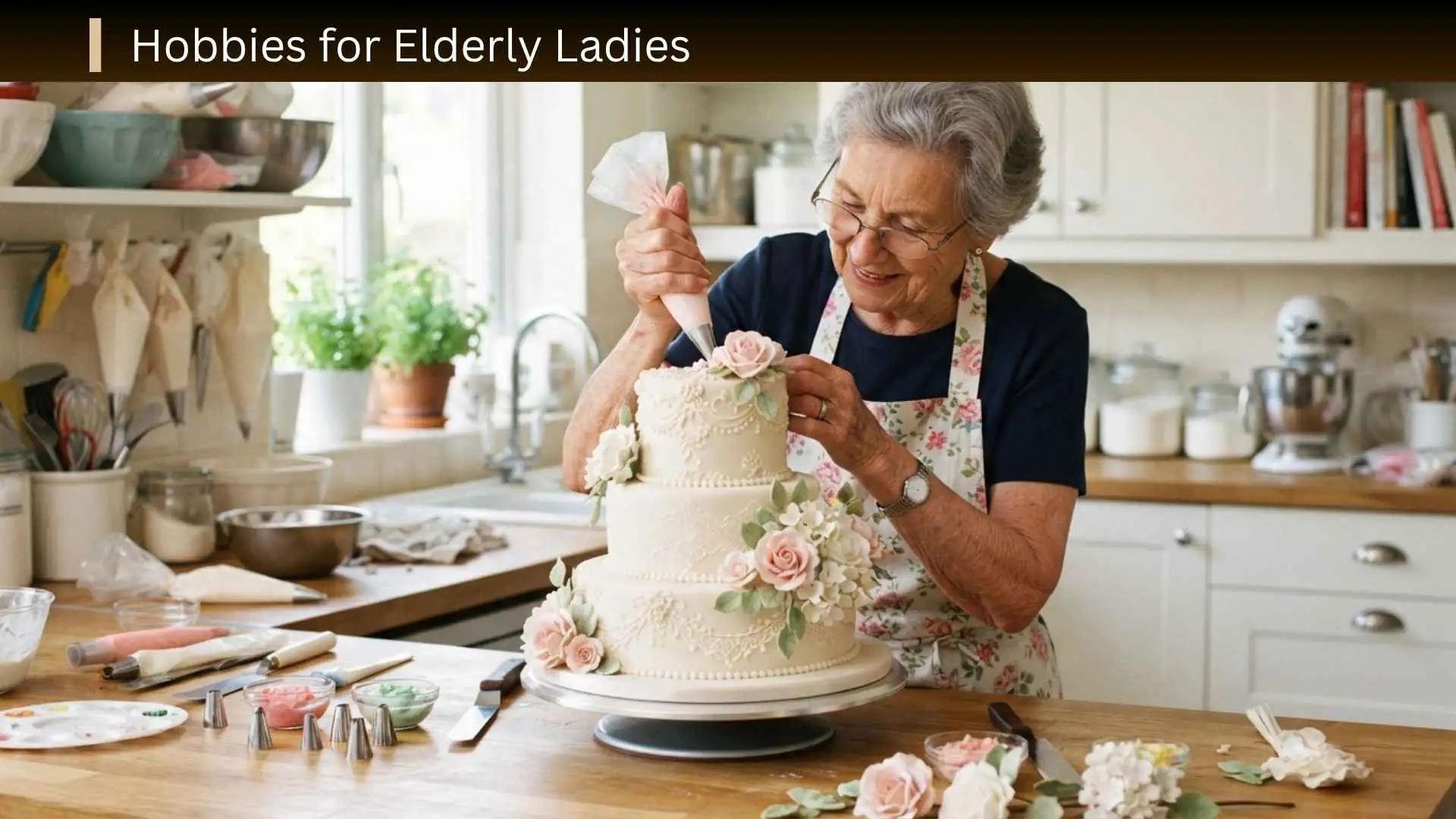
Finding enjoyable hobbies for elderly ladies can make free time more meaningful, relaxing, and engaging. The best hobbies are not about age or ability they are about choosing activities that match personal interests, energy levels, available space, and comfort. From gardening and knitting to painting, reading, puzzles, baking, birdwatching, and gentle creative projects, there are many options to explore. Whether the goal is to learn something new, stay socially connected, express creativity, or simply enjoy a peaceful activity, the right hobby can bring more enjoyment and purpose to everyday life. e.
Best Hobbies for Elderly Ladies
Here are 25 hobby ideas worth considering:
| Hobby | Best For | Cost | Where to Do It |
| Gardening | Nature lovers | Low–Medium | Outdoors |
| Reading | Quiet relaxation | Low–Medium | Indoors |
| Knitting | Creative projects | Low–Medium | Indoors |
| Crochet | Handmade crafts | Low–Medium | Indoors |
| Painting | Artistic expression | Low–Medium | Indoors |
| Birdwatching | Nature and observation | Low–Medium | Indoor/Outdoor |
| Puzzles | Mental stimulation | Low | Indoors |
| Baking | Food lovers | Low–Medium | Indoors |
| Scrapbooking | Memories and creativity | Medium | Indoors |
| Photography | Exploring and creativity | Low–High | Both |
| Sewing | Crafting and practical projects | Medium | Indoors |
| Flower arranging | Decorating | Low–Medium | Indoors |
| Cooking | Culinary creativity | Low–Medium | Indoors |
| Journaling | Reflection and writing | Low | Indoors |
| Coloring | Relaxation | Low | Indoors |
| Walking | Gentle activity | Free | Outdoors |
| Yoga | Flexibility and relaxation | Low–Medium | Indoors/Outdoors |
| Dancing | Music and movement | Free–Medium | Indoors |
| Genealogy | Family history | Low–Medium | Indoors |
| Card games | Socializing | Low | Indoors |
| Board games | Social fun | Low–Medium | Indoors |
| Volunteering | Community involvement | Free | Both |
| Learning an instrument | Music | Medium | Indoors |
| Learning a language | Lifelong learning | Low–Medium | Indoors |
| Collecting | Personal interests | Varies | Both |
The right choice depends less on age and more on personal interests, comfort, energy level, budget, and whether the person prefers solitary or social activities.
Creative Hobbies for Elderly Ladies
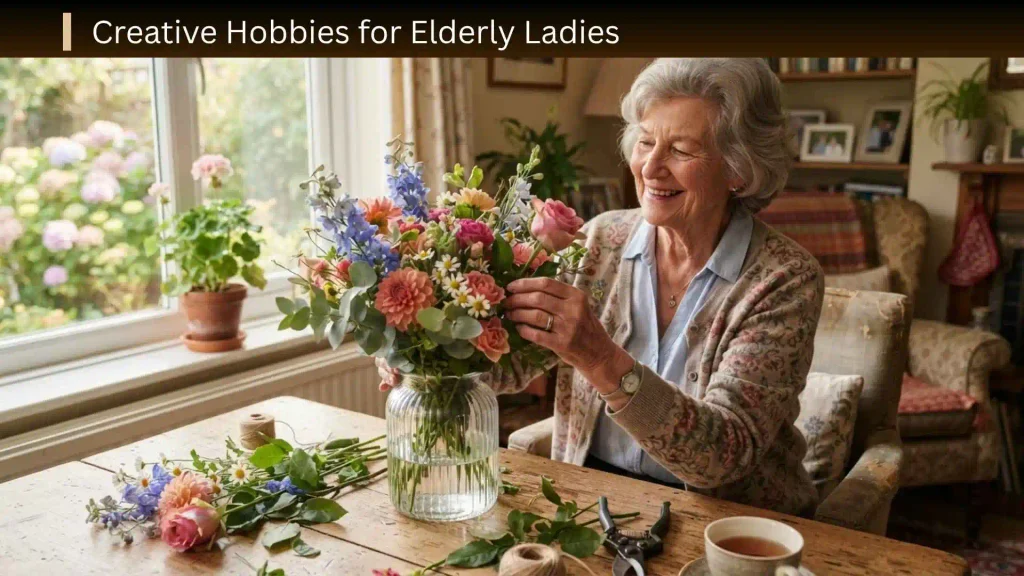
Creative hobbies can provide an enjoyable outlet for self-expression while producing something tangible to keep, display, or give to family and friends.
Knitting
Knitting is a practical craft that can be done while sitting comfortably at home. Scarves, blankets, hats, dishcloths, and other small projects give beginners manageable goals.
A simple project with larger yarn and needles can be easier to handle than intricate patterns.
Crochet
Crochet offers another accessible fiber craft. Beginners can start with basic stitches and gradually move toward blankets, baskets, scarves, flowers, or decorative items.
Crochet can also be a social hobby when practiced with a local craft group or friends.
Painting
Painting does not require professional artistic ability. Watercolor, acrylic painting, and other beginner-friendly approaches can provide different creative experiences.
Someone who wants a simple setup might start with:
- A small set of paints
- A few brushes
- Heavy paper or a small canvas
- A cup for water
- A basic palette
Adult Coloring
Coloring can be a particularly simple hobby because it requires little preparation. A coloring book and colored pencils or markers may be enough to begin.
It is also easy to pause and resume without having to maintain a complicated project.
Scrapbooking
Scrapbooking combines photographs, writing, decorative paper, and personal memorabilia. It can become especially meaningful when focused on family celebrations, vacations, childhood memories, or important milestones.
Sewing
Sewing can range from simple hand-sewing projects to using a sewing machine. Beginners might start with repairs, fabric bookmarks, pillow covers, or other straightforward projects before attempting more complicated patterns.
Relaxing Hobbies for Older Women
Some people prefer hobbies that create a calm routine rather than demanding a major physical or mental commitment.
Reading
Reading is one of the most flexible hobbies because it can be adapted to almost any interest. Possible choices include:
- Mystery novels
- Historical fiction
- Biographies
- Memoirs
- Romance
- Travel books
- Cookbooks
- Gardening books
- Poetry
- Large-print books
E-books and audiobooks can provide additional formats for people who prefer not to use traditional print books.
Journaling
Journaling can be as simple as writing a few sentences about the day. Another approach is keeping a gratitude journal, recipe journal, travel journal, or family-memory notebook.
There is no requirement to write a certain amount. The value is in creating a personal activity that is easy to maintain.
Jigsaw Puzzles
Jigsaw puzzles provide a quiet activity that can be completed gradually. Large-piece puzzles may be more convenient for someone who finds small pieces difficult to handle.
Puzzle difficulty can also be adjusted by changing the number of pieces and the complexity of the image.
Flower Arranging
Arranging flowers can combine creativity with home decoration. Fresh flowers, dried flowers, or artificial flowers can all be used depending on preference and budget.
Outdoor Hobbies for Elderly Ladies
Outdoor hobbies can make time outside more purposeful while providing opportunities to enjoy nature.
Gardening
Gardening is one of the most versatile hobbies for older women. It can involve a large backyard garden, raised beds, containers, window boxes, or a few pots on a patio.
For easier maintenance, consider:
- Container gardening
- Herbs
- Low-maintenance flowers
- Raised planters
- Lightweight gardening tools
- A small number of plants rather than a large garden
The gardening setup should match the person’s comfort and physical abilities.
Birdwatching
Birdwatching can be done from a backyard, balcony, local park, or even through a window. A beginner can start without expensive equipment by simply observing birds and learning to identify common species.
A notebook can be used to record sightings, dates, and locations.
Photography
Photography can turn ordinary walks, gardens, family gatherings, or trips into creative opportunities. A smartphone may be sufficient for someone who does not want to purchase a dedicated camera.
Interesting subjects include:
- Flowers
- Birds
- Landscapes
- Architecture
- Family events
- Sunrises and sunsets
- Seasonal changes
Social Hobbies for Elderly Women
Hobbies become more social when they involve friends, family, clubs, classes, or community groups.
Card Games
Card games are easy to adapt to different group sizes and preferences. Traditional games can also become a regular weekly or monthly activity with friends.
Board Games
Board games can provide an entertaining way to spend time with family or other adults. Choose games according to the group’s interests and comfort with rules.
Book Clubs
A book club combines reading with conversation. Members can meet at someone’s home, a library, community center, or another convenient location.
A group does not necessarily need to read difficult books. Choosing accessible books that generate interesting discussion can make meetings more enjoyable.
Craft Groups
A local knitting, quilting, sewing, painting, or general craft group can turn an individual hobby into a social activity.
Hobbies That Can Be Done at Home
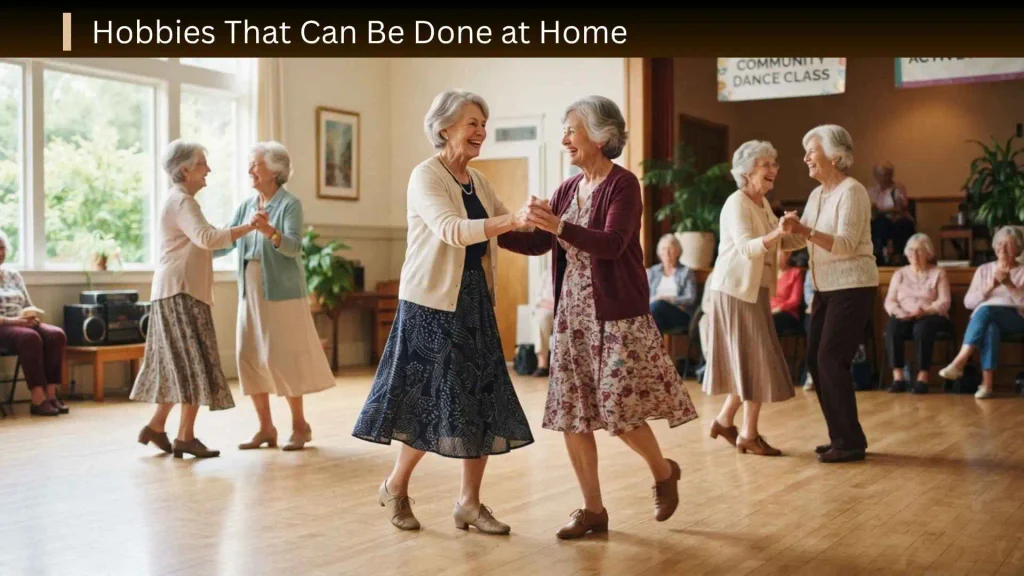
For someone who prefers staying home, there are plenty of rewarding options.
Baking
Baking allows people to experiment with recipes and share the results with family or friends. Simple cookies, breads, muffins, and cakes can provide approachable projects.
Cooking
Cooking can become a hobby rather than simply a daily responsibility when someone experiments with cuisines, ingredients, recipes, or presentation.
A themed cooking night—such as Italian, Mexican, or Mediterranean-inspired recipes—can make the activity more interesting.
Genealogy
Genealogy involves researching family history and organizing information about relatives and ancestors. Old photographs, letters, family stories, public records, and family documents can become valuable starting points.
It can also provide a meaningful project to share with younger family members.
Learning a Musical Instrument
Older adults can begin learning an instrument even if they have never played one before. The best choice is usually an instrument that genuinely interests the learner and fits comfortably into their living environment.
Short, regular practice sessions can make the hobby easier to maintain than infrequent long sessions.
Learning a New Language
Learning a language can provide an ongoing intellectual challenge. Apps, books, online lessons, videos, conversation groups, and language classes offer different ways to practice.
The goal does not have to be fluency. Learning useful phrases and understanding basic conversations can be rewarding in itself.
Hobbies That Encourage Gentle Movement
Some hobbies naturally involve movement without requiring competitive exercise.
Walking
Walking can be combined with another interest, such as photography, birdwatching, gardening, or exploring local parks.
The appropriate pace, distance, and environment depend on the individual’s physical abilities and circumstances.
Dancing
Dancing can be enjoyed socially or at home with music. Options range from simple dancing for enjoyment to structured dance classes designed for older adults.
Anyone with physical limitations should choose movements appropriate for their abilities.
Gentle Yoga
Yoga can combine stretching, balance work, breathing, and relaxation. Beginners should choose instruction appropriate for their experience and physical condition rather than assuming every yoga pose is suitable.
For people with health or mobility concerns, discussing new physical activities with a healthcare professional can be sensible.
How to Choose the Right Hobby
The best hobby is one that is enjoyable enough to continue. Consider these questions before choosing:
Does She Prefer Indoor or Outdoor Activities?
Someone who enjoys being outside might prefer gardening, walking, birdwatching, or photography. Someone who prefers staying indoors may enjoy reading, crafts, puzzles, baking, or genealogy.
Does She Want a Social or Solo Hobby?
For regular social interaction, consider:
- Book clubs
- Card games
- Craft groups
- Dance classes
- Volunteer activities
- Community classes
For independent activities, consider:
- Reading
- Journaling
- Painting
- Puzzles
- Gardening
- Genealogy
How Much Equipment Is Required?
A hobby that requires extensive equipment may be less convenient than one that can begin with a few inexpensive supplies.
For beginners, it is usually sensible to start small rather than buying everything at once.
How Physically Demanding Is It?
Physical requirements vary considerably. Gardening, walking, dancing, and some crafts can involve movement, while reading, journaling, puzzles, and genealogy can be done while seated.
The hobby should be adapted to the individual’s comfort and abilities.
How Much Does It Cost?
Free or inexpensive options include walking, journaling, borrowing books from a library, observing nature, and playing games with items already at home.
Other hobbies, such as sewing, photography, painting, or collecting, can become more expensive depending on the equipment and materials involved.
Best Low Cost Hobbies for Elderly Ladies
If budget is an important consideration, start with hobbies requiring little or no specialized equipment.
Good options include:
- Walking
- Reading library books
- Journaling
- Birdwatching
- Nature observation
- Coloring
- Puzzles
- Family-history research
- Cooking with existing ingredients
- Learning through free educational resources
- Card games with friends
- Photography with a smartphone
A low-cost hobby can still become deeply engaging. The enjoyment comes from the activity itself, not necessarily from expensive supplies.
Hobbies for Elderly Ladies With Limited Mobility
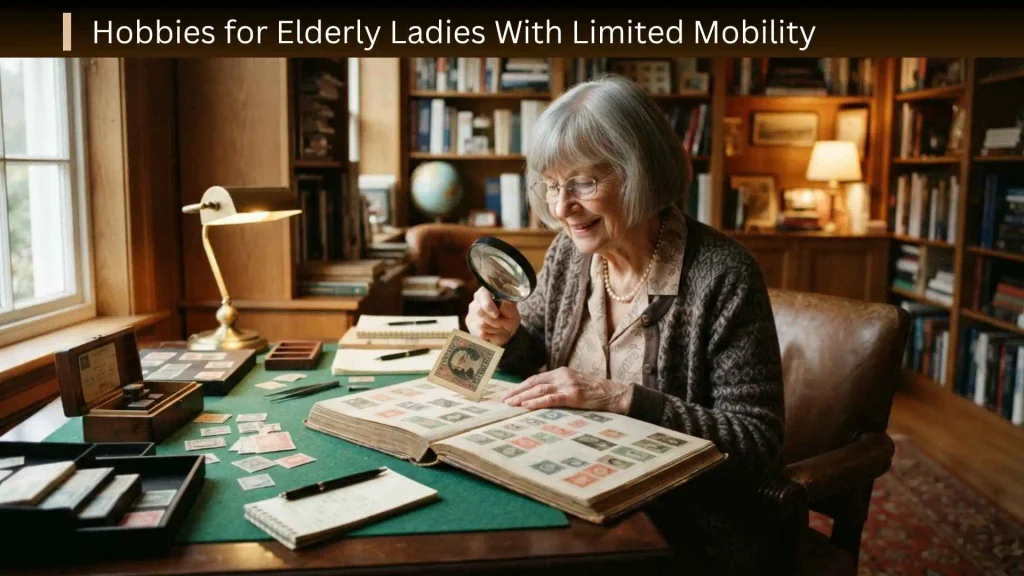
Limited mobility does not eliminate the possibility of having interesting hobbies. Many activities can be modified to work from a comfortable seated position.
Options may include:
- Reading
- Audiobooks
- Journaling
- Painting
- Coloring
- Knitting
- Crochet
- Scrapbooking
- Genealogy
- Puzzles
- Flower arranging
- Listening to or learning music
- Online classes
- Virtual book clubs
- Photography from a window or accessible location
The key is to modify the activity rather than assuming the hobby has to be abandoned.
How to Make a Hobby More Enjoyable
A hobby is more likely to become a lasting part of a routine when it is convenient and personally meaningful.
Start With a Small Project
Instead of beginning with a complicated blanket, large garden, or extensive scrapbook, choose a project that can be completed relatively quickly.
Finishing something provides a natural sense of progress.
Connect the Hobby With Other Interests
Combining hobbies can make them more engaging. For example:
- Gardening + photography
- Reading + book clubs
- Cooking + family gatherings
- Birdwatching + walking
- Genealogy + storytelling
- Knitting + volunteering
- Painting + home decorating
Invite Someone to Participate
A friend, daughter, granddaughter, neighbor, or other family member can make a hobby more social.
Even a hobby normally done alone can become a shared activity.
Create a Regular Routine
A hobby does not need to occupy hours every day. Setting aside a consistent period—such as a few evenings each week—can make it easier to maintain.
Frequently Asked Questions
What are the best hobbies for elderly ladies?
Some popular choices include gardening, reading, knitting, crochet, painting, puzzles, birdwatching, baking, photography, sewing, journaling, genealogy, card games, and book clubs. The best option depends on personal interests, mobility, budget, and whether the person prefers social or solitary activities.
What are good hobbies for an elderly woman at home?
Reading, knitting, crochet, painting, coloring, puzzles, baking, cooking, sewing, genealogy, journaling, scrapbooking, and learning a musical instrument can all be done primarily at home.
What are inexpensive hobbies for elderly women?
Reading library books, walking, journaling, birdwatching, nature observation, coloring, puzzles, photography with a smartphone, and playing cards are among the options that can require little money to start.
What are good social hobbies for older women?
Book clubs, card games, board games, craft groups, dance classes, community classes, volunteering, and group gardening activities can provide opportunities for social interaction.
What hobbies are suitable for elderly women with limited mobility?
Seated hobbies such as reading, audiobooks, journaling, painting, coloring, knitting, crochet, puzzles, genealogy, scrapbooking, and flower arranging can often be adapted for different mobility levels.
Can elderly women start a new hobby later in life?
Yes. There is no general age requirement for starting a hobby. A beginner can choose an activity based on interest and start with a simple version before progressing to more challenging projects.
What is a good hobby for an elderly woman who gets bored easily?
Activities with variety and achievable projects may work well. Photography, gardening, genealogy, cooking, crafts, and learning a language can provide changing goals rather than repeating exactly the same activity every time.
Conclusion
The best hobbies for elderly ladies are not necessarily the most expensive, complicated, or fashionable. A good hobby should fit the woman’s interests, lifestyle, abilities, budget, and preferred level of social interaction.
Whether she enjoys growing flowers, reading mysteries, making crafts, researching family history, photographing birds, playing cards with friends, or simply learning something new, there are many ways to turn free time into a meaningful and enjoyable part of everyday life.

I’m Olivia Bennett, a passionate writer who loves exploring ideas, learning new concepts, and sharing knowledge in a straightforward way. I write for Cognivoora with the goal of making useful topics easier to understand without unnecessary complexity. My approach combines research, clarity, and a reader-first perspective.
Books:
- Think Clearly, Live Better
- The Curious Reader’s Guide