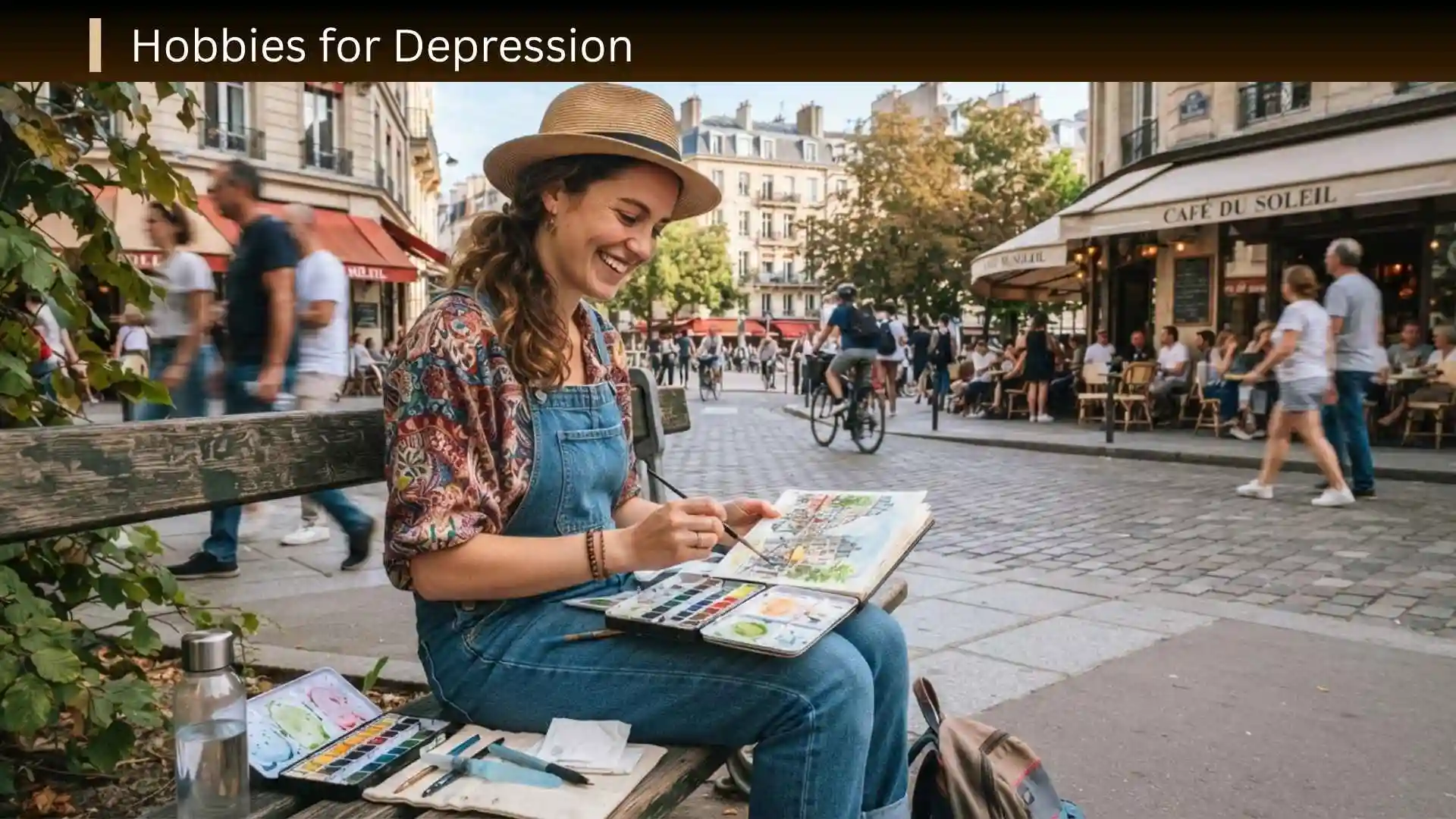
Finding the right hobby can make free time feel more structured, meaningful, and enjoyable, especially when depression makes everyday activities feel difficult or uninteresting. Hobbies for Depression can include simple creative projects, gentle physical activities, reading, gardening, music, cooking, or social interests that fit different energy levels and preferences.
A hobby is not a replacement for professional mental health care, but it can be one small part of a supportive routine. The key is to choose activities that feel manageable rather than adding pressure to your day. In this guide, we’ll explore healthy hobby ideas, how to choose one when motivation is low, and practical ways to make a new activity easier to maintain.
What Are the Best Hobbies for Depression?
The best hobbies for depression are usually activities that feel manageable rather than demanding. Depending on your interests and energy level, useful options can include walking, gardening, drawing, journaling, photography, reading, crafting, cooking, music, puzzles, and low-pressure social activities.
There is no single hobby that works for everyone. A hobby should fit your current energy, interests, budget, and environment.
If depression is making everyday life difficult, hobbies are best viewed as one supportive part of a broader approach to well-being, not as a treatment on their own.
How Hobbies May Help When You Feel Depressed
Depression can affect motivation, concentration, energy, sleep, and interest in activities. Starting something can therefore feel surprisingly difficult.
A hobby may be helpful because it gives you a small activity to focus on without requiring you to solve everything at once.
Creating a Sense of Structure
An unstructured day can sometimes make it easier to withdraw or remain inactive. A simple hobby can create a small point of structure.
For example:
- Reading for 10 minutes after breakfast
- Watering plants in the afternoon
- Taking a short walk after dinner
- Drawing before going to bed
- Working on a puzzle for a few minutes
The goal is not to create a demanding schedule. Even a small, repeatable activity can give your day something predictable to look forward to.
Providing Small Accomplishments
Depression can make ordinary tasks feel overwhelming. Hobbies can offer smaller goals that are easier to complete.
Finishing a sketch, growing a plant from a seed, completing a puzzle section, or preparing a simple meal can provide a tangible sense of progress.
The accomplishment does not have to be impressive to be meaningful.
Encouraging Gentle Movement
Some hobbies naturally involve physical activity. Walking, gardening, dancing, swimming, cycling, or recreational sports can get you moving while giving the activity another purpose besides “exercise.”
If your energy is low, start with something realistic rather than setting an ambitious fitness goal.
Offering Creativity and Self Expression
Creative hobbies give you ways to express thoughts and emotions without necessarily having to explain them to someone else.
Possible choices include:
- Drawing
- Painting
- Writing
- Photography
- Playing music
- Singing
- Knitting
- Scrapbooking
- Clay work
- Collage
- Creative cooking
You do not need to be talented or produce something impressive. The activity itself can be the point.
Creating Opportunities for Connection
Some hobbies are naturally social. Joining a book club, taking a beginner art class, volunteering, playing a recreational sport, or participating in a hobby group can create opportunities to interact with other people.
For someone experiencing depression, social activities may initially feel uncomfortable or exhausting. A low-pressure option, such as an online hobby community or a small class, may feel more manageable than a large gathering.
15 Hobbies for Depression to Consider
Different hobbies serve different needs. The following options are intentionally varied so you can choose something that matches your current energy and interests.
| Hobby | Energy Level | Cost | Good For |
| Walking | Low–Moderate | Free | Movement and getting outdoors |
| Gardening | Low–Moderate | Low–Moderate | Nature and routine |
| Drawing | Low | Low | Creativity and self-expression |
| Journaling | Low | Very low | Reflection and writing |
| Reading | Low | Low–Moderate | Quiet focus and escape |
| Photography | Low–Moderate | Low if using a phone | Observation and exploration |
| Puzzles | Low | Low | Focus and structured activity |
| Cooking | Moderate | Low–Moderate | Practical creativity |
| Knitting | Low | Low–Moderate | Repetitive creative activity |
| Music | Low–Moderate | Low | Expression and enjoyment |
| Birdwatching | Low | Low | Nature and observation |
| Baking | Moderate | Low–Moderate | Creativity and accomplishment |
| Coloring | Low | Low | Simple creative engagement |
| Volunteering | Moderate | Usually low | Connection and purpose |
| Recreational sports | Moderate–High | Varies | Movement and social interaction |
1. Walking
Walking is one of the simplest hobbies to start because it requires relatively little equipment.
You can make it more interesting by:
- Exploring a different neighborhood
- Listening to music or a podcast
- Taking photographs along the route
- Walking in a park
- Tracking interesting birds or plants
- Walking with a friend
You do not need to walk for a long time for the activity to count as a hobby.
2. Gardening
Gardening combines hands-on activity with time around plants and nature.
You can start with something as simple as:
- A few herbs in containers
- Indoor houseplants
- A small flower pot
- A windowsill garden
- A community garden plot
If maintaining many plants feels overwhelming, choose one or two low-maintenance plants instead.
3. Drawing
Drawing can be particularly accessible because you can start with paper and a pencil.
Try:
- Doodling
- Sketching objects around your home
- Drawing nature
- Following beginner tutorials
- Creating simple patterns
- Keeping a daily sketchbook
There is no requirement to produce professional-looking artwork.
4. Journaling
Journaling can be a quiet hobby for people who enjoy writing.
You could write about:
- What you did today
- Things you noticed
- Goals for tomorrow
- Ideas you want to explore
- Books or movies you enjoyed
- Creative stories
- Questions you’re thinking about
If traditional journaling feels too demanding, try writing just three sentences.
5. Reading
Reading can provide a quiet activity when social or physically demanding hobbies feel difficult.
Choose whatever genuinely interests you rather than what you think you “should” read.
Good options might include:
- Novels
- Memoirs
- Short stories
- Graphic novels
- Poetry
- History
- Nature writing
- Hobbies and craft books
Audiobooks can also be useful when concentrating on printed text feels difficult.
6. Photography
Photography turns ordinary surroundings into something worth noticing.
You do not need an expensive camera. A smartphone can be enough to begin.
Try photographing:
- Interesting architecture
- Flowers
- Birds
- Sunsets
- Everyday objects
- Textures
- Seasonal changes
- Local places
A simple photography challenge, such as finding five interesting shapes during a walk, can make the hobby easier to start.
7. Puzzles
Jigsaw puzzles, crossword puzzles, Sudoku, and logic puzzles can provide structured activities that have a clear objective.
If your concentration is poor, start with a small puzzle rather than choosing something that could take many hours.
8. Cooking
Cooking can combine creativity with a practical result.
Start with uncomplicated recipes rather than complicated projects. You might choose one new recipe each week or learn how to prepare a favorite dish.
If motivation is particularly low, even preparing a simple meal can be enough. The hobby does not have to become an elaborate culinary project.
9. Knitting or Crochet
Knitting and crochet involve repetitive movements and creative choices. Beginners can start with small projects such as:
- A simple scarf
- Dishcloths
- Small decorations
- Basic squares
- Simple accessories
Learning a new skill may take patience, so choose beginner-friendly projects rather than expecting immediate results.
10. Music
Music can be enjoyed actively or passively.
If you want an active hobby, consider:
- Learning guitar
- Playing piano or keyboard
- Singing
- Learning percussion
- Making simple digital music
- Practicing an instrument you already own
You can also create themed playlists or explore unfamiliar genres if playing an instrument feels too demanding.
11. Birdwatching
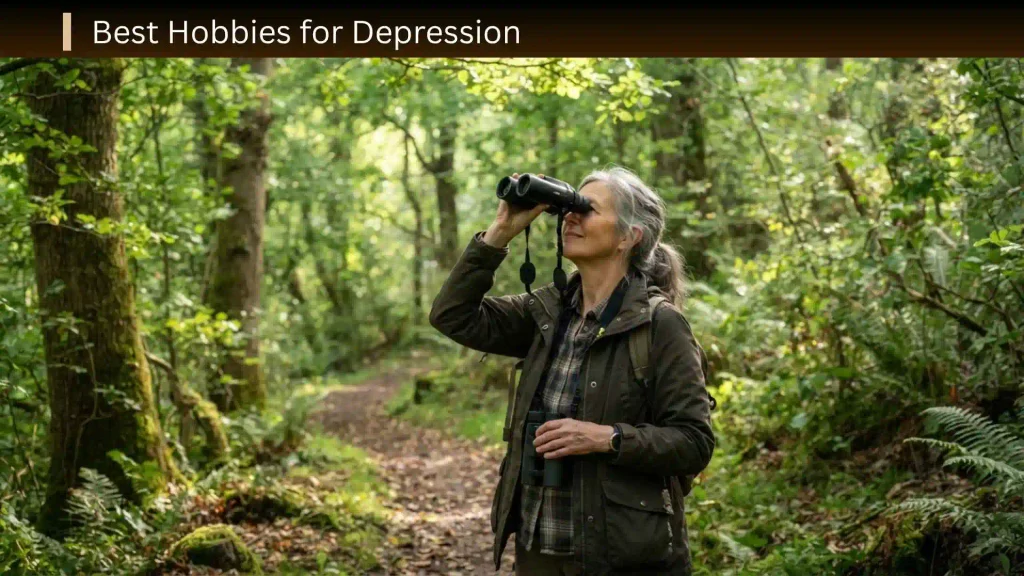
Birdwatching can encourage you to pay attention to your surroundings and spend time outdoors.
A beginner can start without expensive equipment. Look for birds in a backyard, neighborhood, local park, or other suitable public area.
A smartphone bird-identification app can make the learning process more engaging.
12. Coloring
Adult coloring books are an easy creative activity when drawing from scratch feels intimidating.
You can experiment with:
- Colored pencils
- Markers
- Crayons
- Water-based pens
The objective is not artistic perfection. Simply choosing colors and filling a page can provide an uncomplicated creative task.
13. Baking
Baking offers a sequence of manageable steps and a finished product at the end.
Begin with something straightforward, such as:
- Cookies
- Muffins
- Simple bread
- Brownies
- Fruit-based desserts
If following a recipe feels overwhelming, choose recipes with fewer ingredients and steps.
14. Volunteering
Volunteering is different from solitary hobbies because it can combine activity with social connection and contribution.
Potential opportunities include:
- Animal shelters
- Food banks
- Community organizations
- Libraries
- Environmental projects
- Local events
Choose a commitment that matches your current capacity. Volunteering should not become another source of pressure.
15. Recreational Sports
Sports can combine movement, learning, enjoyment, and social interaction.
Depending on your preferences, you might try:
- Swimming
- Pickleball
- Bowling
- Tennis
- Golf
- Hiking
- Cycling
- Recreational basketball
If joining a team feels intimidating, begin with an individual activity or a beginner class.
Best Hobbies for Depression When You Have Very Little Energy
Low energy can be one of the biggest barriers to starting a hobby. On those days, choose activities with a very low starting requirement.
Consider:
- Listening to an audiobook
- Coloring one small section
- Watering a plant
- Watching birds from a window
- Writing a few sentences
- Doing one puzzle
- Listening to music
- Taking a short walk
- Organizing photographs
- Doing a simple craft
A useful principle is to make the first step smaller.
Instead of telling yourself, “I need to spend an hour painting,” try, “I’ll put the paper and pencils on the table.”
Starting can be more important than completing a large session.
Best Hobbies for Depression at Home
If leaving home feels difficult, there are many hobbies you can pursue indoors.
Creative Hobbies
- Drawing
- Painting
- Coloring
- Writing
- Crochet
- Knitting
- Origami
- Scrapbooking
- Model building
Quiet Hobbies
- Reading
- Puzzles
- Journaling
- Listening to music
- Audiobooks
- Collecting
- Learning a language
Practical Hobbies
- Cooking
- Baking
- Indoor gardening
- Home organization
- DIY projects
- Sewing
Choose activities based on what feels approachable rather than what seems most productive.
Hobbies for Depression That Get You Outside
Spending time outdoors can make certain hobbies more engaging because the environment itself becomes part of the activity.
Try:
- Walking
- Gardening
- Hiking
- Photography
- Birdwatching
- Fishing
- Cycling
- Nature journaling
- Geocaching
- Outdoor sketching
You can combine hobbies to make them more interesting. For example, photography plus walking creates a simple reason to explore your surroundings.
Hobbies for Depression That Encourage Social Connection
If isolation is part of what you’re experiencing, a hobby that involves other people may be worth considering.
Possible choices include:
- Book clubs
- Art classes
- Community gardening
- Recreational sports
- Board-game groups
- Choirs
- Craft groups
- Dance classes
- Volunteering
- Hiking groups
You don’t have to become highly social immediately. A class that meets once a week may be enough to begin creating regular contact with others.
How to Choose a Hobby When You Feel Depressed
Choosing a hobby can itself feel like work. Use a few simple questions to narrow down your options.
Do You Want Solitude or Company?
If you want quiet time, try reading, drawing, gardening, or puzzles.
If you want connection, consider volunteering, classes, clubs, or recreational sports.
Do You Want Movement or Rest?
For gentle movement, consider walking, gardening, swimming, or cycling.
For lower-energy days, consider journaling, coloring, reading, music, or puzzles.
Do You Want to Make Something?
Try:
- Baking
- Cooking
- Drawing
- Painting
- Knitting
- Woodworking
- Crafts
- Photography
Creating something gives the activity a tangible outcome, but remember that the outcome does not need to be perfect.
Do You Want to Learn Something?
Consider:
- Playing an instrument
- Learning photography
- Studying a language
- Cooking techniques
- Drawing
- Bird identification
- Astronomy
- History
- Coding as a hobby
Learning can provide a sense of curiosity and progression.
How to Start a Hobby When You Have No Motivation
One of the hardest parts of depression can be getting started.
Rather than waiting until you feel motivated, reduce the effort required to begin.
Use the Five-Minute Approach
Choose an activity and commit to only five minutes.
For example:
- Put your supplies where you can see them.
- Set a five-minute timer.
- Begin the activity.
- Stop when the timer ends if you want to.
- Continue only if you genuinely feel like it.
There is no requirement to turn five minutes into an hour.
Keep Supplies Easy to Reach
If starting requires searching through boxes, buying equipment, setting up a complicated workspace, and cleaning everything afterward, you’re less likely to begin when energy is low.
Keep beginner-friendly supplies accessible.
Make the Hobby Smaller
Instead of:
“I’m going to learn watercolor painting.”
Try:
“I’m going to paint one small shape.”
Instead of:
“I’m going to start gardening.”
Try:
“I’m going to plant one herb.”
Smaller goals can make an intimidating hobby feel more approachable.
What If You Don’t Enjoy the Hobby?
That’s completely fine.
A hobby does not need to become a lifelong passion. If something feels frustrating, expensive, exhausting, or simply uninteresting, try something else.
You can experiment with several activities before finding one that fits.
It can also help to distinguish between not enjoying an activity and not feeling enjoyment because depression is affecting your ability to experience pleasure. If nothing feels enjoyable for an extended period, consider discussing that experience with a qualified mental health professional.
Hobbies Are Not a Replacement for Depression Treatment
Hobbies can provide structure, enjoyment, creativity, movement, or connection, but they should not be presented as a cure for depression.
Depression can be a serious mental health condition. If symptoms are persistent, interfere with daily life, or are difficult to manage, professional support can be important.
Treatment may involve approaches such as psychotherapy, medication, or a combination, depending on an individual’s circumstances and the recommendations of a qualified healthcare professional.
If you are in the United States and are experiencing a mental health crisis or thinking about suicide, call or text 988 to reach the Suicide & Crisis Lifeline. If you are in immediate danger, call 911 or go to the nearest emergency department.
How to Build a Gentle Hobby Routine

A hobby routine should support your life rather than become another obligation.
Try this simple approach:
Choose one activity → make it easy to start → set a small goal → repeat when possible → adjust without guilt.
For example:
- Monday: 10-minute walk
- Tuesday: 10 minutes of drawing
- Wednesday: Read a few pages
- Thursday: Water plants
- Friday: Listen to music
- Weekend: Try a longer activity if you have the energy
You do not have to follow the schedule perfectly.
Missing a day does not mean you’ve failed. Simply return to the activity when you’re ready.
A Simple Hobby Matching Guide
| If you want… | Consider… |
| Something very easy to start | Coloring, music, journaling |
| More movement | Walking, cycling, swimming |
| Time outdoors | Gardening, birdwatching, photography |
| Creative expression | Drawing, painting, writing |
| Social interaction | Clubs, classes, volunteering |
| A sense of accomplishment | Cooking, baking, crafts |
| Mental stimulation | Puzzles, reading, learning |
| A quiet activity | Knitting, reading, journaling |
| A hobby at home | Drawing, puzzles, baking, music |
| Something inexpensive | Walking, journaling, drawing |
Frequently Asked Questions
What is a good hobby for someone with depression?
A good hobby is one that feels manageable and personally meaningful. Walking, gardening, drawing, reading, journaling, photography, puzzles, cooking, music, and crafts are possible choices. The best option depends on the person’s energy, interests, and circumstances.
Can hobbies help with depression?
Hobbies may provide useful supportive activities by adding structure, creativity, movement, focus, or social connection to daily life. However, hobbies are not a substitute for professional treatment when depression requires clinical care.
What hobbies can I do when I have no energy?
Low-effort options include listening to music or audiobooks, coloring, journaling, reading a few pages, watering plants, doing a small puzzle, or taking a short walk. Starting with only a few minutes can make an activity feel more manageable.
What is a good hobby for depression and anxiety?
Quiet activities such as drawing, journaling, gardening, walking, photography, knitting, coloring, and music may be worth trying. If anxiety makes social interaction difficult, start with an individual hobby before trying a group activity.
What hobbies can help with loneliness?
Hobbies involving regular interaction can create opportunities for connection. Book clubs, volunteering, recreational sports, craft groups, classes, community gardening, and music groups are examples.
Should I force myself to enjoy a hobby?
No. A hobby should not become another source of pressure. It is reasonable to experiment with different activities and choose those that feel most comfortable or meaningful. If you consistently cannot enjoy activities you once liked, consider talking with a mental health professional.
Conclusion
The best hobbies for depression are not necessarily the most impressive or productive ones. They are activities that give you a manageable reason to engage with your day, whether that means taking a short walk, caring for a plant, drawing for a few minutes, reading a chapter, making something, or connecting with other people.
Start small and choose an activity that matches your current energy rather than demanding that you feel motivated first. And if depression is persistent, severe, or interfering with your life, remember that a hobby can complement professional support but cannot replace it.

I’m Sophia Carter, a writer who enjoys discovering interesting ideas and transforming them into helpful content. At Cognivoora, I write with a simple goal: to make information clearer, more accessible, and genuinely useful for readers. I value thoughtful research, easy explanations, and content that people can trust and return to whenever they need it.
Books:
- The Knowledge Journey
- Understanding the World Around Us