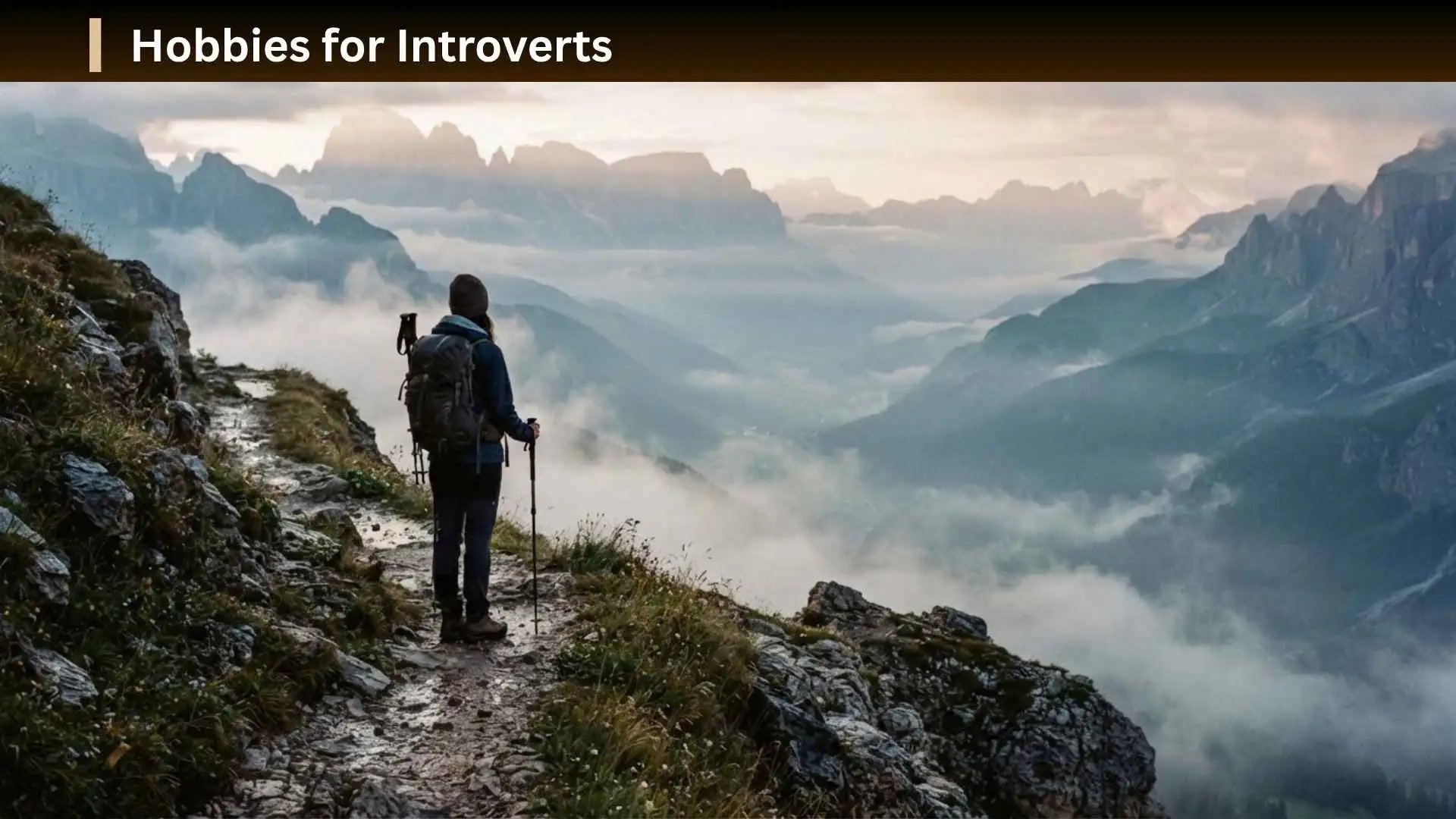
Introverts often enjoy hobbies that offer quiet, independence, creativity, or the freedom to focus without constant social interaction. The best hobbies for introverts are not necessarily activities that must be done completely alone; they are activities where you can control your pace, environment, and level of social involvement.
Whether you want a relaxing hobby after work, a creative outlet, an inexpensive activity at home, or something that helps you develop a useful skill, there are plenty of options to explore.
What Are the Best Hobbies for Introverts (Quick Answer)
Some of the best hobbies for introverts include:
- Reading
- Writing or journaling
- Drawing and sketching
- Painting
- Photography
- Gardening
- Cooking and baking
- Knitting and crocheting
- Puzzles
- Playing musical instruments
- Learning a language
- Birdwatching
- Hiking
- Collecting
- Woodworking
- Coding
- Model building
- Calligraphy
- Sewing
- Astronomy
The right choice depends on whether you want relaxation, creativity, exercise, learning, productivity, or a combination of these.
How to Choose a Hobby as an Introvert
A good hobby should fit the way you naturally prefer to spend your free time. Instead of choosing an activity simply because it is popular, consider what you want the hobby to provide.
If You Want Peace and Relaxation
Choose activities with a slow, repetitive, or contemplative nature.
Good options include:
- Reading
- Coloring
- Gardening
- Puzzles
- Journaling
- Meditation
- Knitting
- Birdwatching
These hobbies can fit naturally into quiet periods at home or outdoors.
If You Want Creativity
Creative hobbies give you something tangible or expressive to work on without requiring an audience.
Consider:
- Drawing
- Painting
- Photography
- Writing
- Calligraphy
- Pottery
- Sewing
- Digital art
- Music
If You Want to Learn Something
Some hobbies can become long-term skill-building projects.
Try:
- Coding
- Learning a language
- Playing an instrument
- Astronomy
- Cooking
- Chess
- History research
- Creative writing
These are particularly useful if you enjoy becoming deeply absorbed in a subject.
If You Want More Time Outdoors
Being introverted does not mean you have to stay indoors. Many outdoor hobbies allow you to enjoy nature without needing a group.
Good choices include:
- Hiking
- Gardening
- Fishing
- Photography
- Birdwatching
- Geocaching
- Stargazing
- Nature journaling
35 Best Hobbies for Introverts
1. Reading
Reading is one of the simplest hobbies for introverts because it can be done almost anywhere and at your own pace.
You can explore fiction, biographies, history, science, personal development, mysteries, fantasy, or virtually any subject that interests you. Libraries and used bookstores can also make reading an inexpensive hobby.
Best for: Relaxation, learning, imagination
Equipment: Books or an e-reader
Cost: Free to moderate
2. Writing
Writing can be a highly flexible solo hobby. You might write short stories, poetry, essays, personal reflections, fiction, or online content.
You do not need to publish anything. Writing privately can be enough if your goal is creativity or self-expression.
Best for: Creativity and self-expression
Equipment: Notebook or computer
Cost: Free to low
3. Journaling
Journaling is more structured than simply writing. You can record daily observations, ideas, goals, memorable moments, or creative thoughts.
There is no required format. Some people prefer a few sentences each day, while others enjoy longer entries.
Best for: Reflection and creativity
Equipment: Notebook and pen
Cost: Low
4. Drawing and Sketching
Drawing is a flexible hobby that can start with nothing more than paper and a pencil.
You can practice portraits, landscapes, animals, architecture, cartoons, or abstract designs. Beginners can focus on basic shapes and gradually develop more advanced skills.
Best for: Creative focus
Equipment: Pencil, paper, optional drawing tools
Cost: Low to moderate
5. Painting
Painting provides more opportunities to experiment with color, texture, and composition.
Watercolor, acrylic, and other painting approaches offer different experiences. Beginners can start with inexpensive materials rather than investing in a large collection of supplies.
Best for: Artistic expression
Equipment: Paint, brushes, and a suitable surface
Cost: Low to moderate
6. Photography
Photography can turn ordinary surroundings into opportunities to observe details more carefully.
You can photograph architecture, landscapes, plants, wildlife, objects, or interesting patterns. A dedicated camera is not necessary when starting; a smartphone can be enough for learning basic composition and observation.
Best for: Creativity and outdoor exploration
Equipment: Smartphone or camera
Cost: Free to moderate
7. Gardening
Gardening combines quiet activity with hands-on work. You can grow flowers, herbs, vegetables, or indoor plants depending on your available space.
If you live in an apartment, container gardening or indoor plants can provide a smaller-scale alternative.
Best for: Nature lovers and hands-on activities
Equipment: Plants, containers, soil, basic gardening tools
Cost: Low to moderate
8. Cooking
Cooking can become a creative hobby rather than simply a daily responsibility.
You can experiment with cuisines, sauces, breads, desserts, presentation, or techniques. It also has the practical advantage of producing something you can eat.
Best for: Creativity and practical skills
Equipment: Kitchen basics
Cost: Low to moderate
9. Baking
Baking is particularly appealing if you enjoy following processes and gradually improving a recipe.
Cookies, bread, cakes, pastries, and other baked goods offer plenty of room for experimentation.
Best for: Creative and methodical personalities
Equipment: Basic baking equipment
Cost: Low to moderate
10. Knitting
Knitting is a portable, repetitive craft that can be done quietly at home.
You can begin with simple projects such as scarves and gradually progress toward more complicated patterns.
Best for: Relaxing, hands-on creativity
Equipment: Needles and yarn
Cost: Low to moderate
11. Crocheting
Crocheting is another fiber craft that can be practiced independently.
Projects range from simple squares and accessories to clothing, decorative items, and stuffed figures.
Best for: Crafting and focused relaxation
Equipment: Crochet hook and yarn
Cost: Low to moderate
12. Puzzles
Jigsaw puzzles provide a structured activity without requiring social interaction.
If you enjoy problem-solving, logic, patterns, and visual details, puzzles can be an easy hobby to pick up and put down whenever you have time.
Best for: Relaxation and concentration
Equipment: Puzzle
Cost: Low to moderate
13. Playing a Musical Instrument
Learning an instrument gives you a long-term skill to develop independently.
Piano, guitar, ukulele, keyboard, and many other instruments can be learned through books, courses, or structured online lessons.
Best for: Creativity and skill development
Equipment: Instrument
Cost: Moderate, depending on the instrument
14. Learning a New Language
Language learning can work especially well for people who enjoy independent study.
You can practice vocabulary, pronunciation, reading, listening, and writing. Apps, books, videos, and other resources can supplement structured study.
Best for: Intellectual stimulation and cultural learning
Equipment: Learning resources
Cost: Free to moderate
15. Calligraphy
Calligraphy combines writing with visual design.
You can begin with basic lettering exercises and eventually explore different styles, layouts, cards, signs, or decorative projects.
Best for: Detail-oriented creativity
Equipment: Pens, ink, paper
Cost: Low to moderate
16. Coloring
Adult coloring books offer a low-pressure creative activity.
Unlike drawing, coloring does not require you to create the underlying image yourself, making it accessible when you want something creative without starting from a blank page.
Best for: Relaxation
Equipment: Coloring book and pencils or markers
Cost: Low
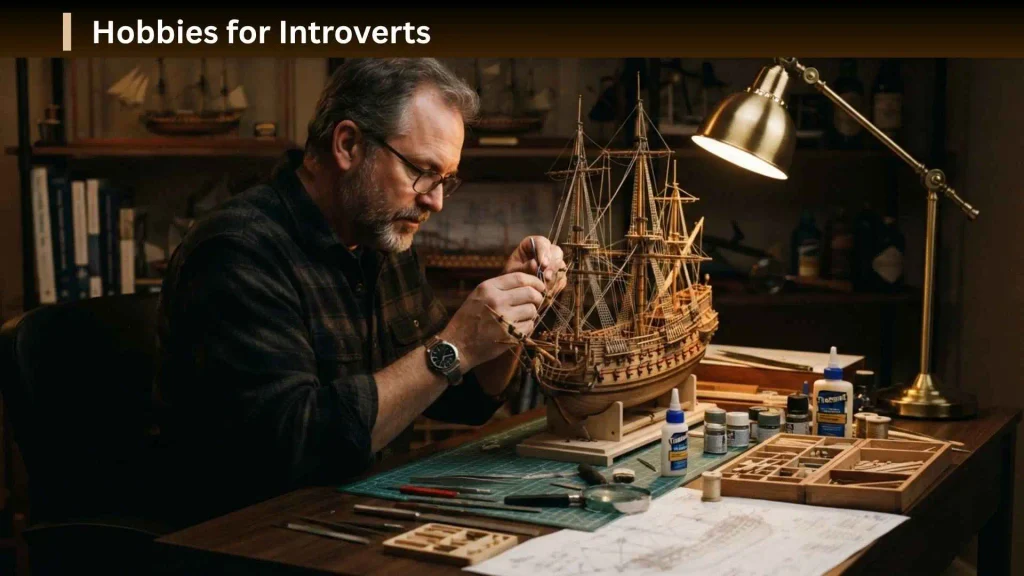
17. Model Building
Building models can appeal to people who enjoy detailed, hands-on projects.
Depending on your interests, you might build vehicles, buildings, aircraft, ships, miniature scenes, or other models.
Best for: Patience and detailed work
Equipment: Model kits and tools
Cost: Moderate
18. Collecting
Collecting can turn an ordinary interest into a long-term hobby.
Possible collections include:
- Coins
- Stamps
- Books
- Postcards
- Sports memorabilia
- Vinyl records
- Vintage objects
- Rocks and minerals
- Trading cards
The key is to choose a subject you genuinely enjoy rather than collecting simply because something may become valuable.
Best for: Research and personal interests
Equipment: Depends on the collection
Cost: Highly variable
19. Birdwatching
Birdwatching encourages you to observe wildlife and spend time outdoors.
You can begin in a backyard, local park, or other suitable outdoor area. A field guide or bird identification app can help you learn to recognize species.
Best for: Nature observation
Equipment: Optional binoculars and field guide
Cost: Free to moderate
20. Hiking
Hiking provides physical activity while allowing you to explore natural environments independently.
You can choose routes according to your comfort level, from short local trails to longer hikes.
Best for: Outdoor time and exercise
Equipment: Appropriate footwear and basic outdoor gear
Cost: Low to moderate
21. Stargazing
Stargazing is a quiet hobby that can be done from a backyard, balcony, or suitable outdoor location.
You can begin by learning major constellations and observing the Moon before deciding whether you want binoculars or a telescope.
Best for: Curiosity and quiet outdoor time
Equipment: Optional binoculars or telescope
Cost: Free to moderate
22. Coding
Coding can be an engaging solo hobby for people who enjoy logic, problem-solving, and creating things.
You can build small websites, automate tasks, create simple games, or learn programming concepts.
Best for: Problem-solving and technology
Equipment: Computer
Cost: Often free to start
23. Chess
Chess combines strategy, pattern recognition, and problem-solving.
You can play against computer opponents, study famous games, solve chess puzzles, or participate in online games when you want social interaction on your own terms.
Best for: Strategic thinking
Equipment: Chess set or digital platform
Cost: Free to low
24. Sewing
Sewing allows you to create or repair clothing, accessories, decorations, and other fabric projects.
A beginner can start with straightforward projects before learning more complicated techniques.
Best for: Practical creativity
Equipment: Sewing supplies and optionally a sewing machine
Cost: Low to moderate
25. Woodworking
Woodworking is a hands-on hobby that can range from simple projects to advanced furniture making.
Because tools and workspace requirements vary significantly, beginners should start with projects appropriate for their equipment and skill level and follow proper tool-safety practices.
Best for: Building and craftsmanship
Equipment: Depends on project
Cost: Moderate to high
26. Pottery and Clay Crafting
Working with clay provides a tactile creative experience.
You do not necessarily need access to a full pottery studio to experiment with air-dry clay and small sculpting projects. Traditional pottery involving firing requires access to appropriate equipment or a studio.
Best for: Hands-on creativity
Equipment: Clay and sculpting tools
Cost: Low to moderate
27. Digital Art
Digital art lets you draw, paint, design, or illustrate using a computer or tablet.
It can be particularly appealing if you enjoy traditional art but want the ability to edit, duplicate, and experiment easily.
Best for: Modern creative work
Equipment: Computer or tablet and appropriate software
Cost: Free to moderate
28. Scrapbooking
Scrapbooking combines photographs, paper, writing, decoration, and personal memories.
It can be a relaxing project-based hobby, especially if you enjoy organizing and preserving meaningful moments.
Best for: Creativity and memory keeping
Equipment: Album, photographs, paper, adhesive, decorations
Cost: Low to moderate
29. Geocaching
Geocaching turns outdoor exploration into a treasure-hunt-style activity using GPS-enabled devices.
You can participate alone or with others, making it flexible for different social preferences.
Best for: Exploration and outdoor discovery
Equipment: Smartphone or GPS device
Cost: Often free to start
30. Fishing
Fishing can provide a quiet way to spend time outdoors while learning about equipment, techniques, and local environments.
Where required, anglers should follow applicable local regulations and licensing requirements.
Best for: Outdoor relaxation
Equipment: Fishing equipment appropriate to the location
Cost: Moderate
31. Nature Journaling
Nature journaling combines observation, writing, and sometimes drawing.
Instead of simply taking a walk, you can record plants, animals, weather, landscapes, or other details you notice.
Best for: Nature lovers and reflective creativity
Equipment: Notebook and pen or drawing supplies
Cost: Low
32. Genealogy
Genealogy involves researching family history using records, documents, photographs, and other sources.
It can become a deep research hobby for people who enjoy investigating connections and historical details. Be mindful of privacy when researching or publishing information about living relatives.
Best for: Research and history
Equipment: Computer and research resources
Cost: Free to moderate
33. Origami
Origami turns paper into decorative or functional forms through folding.
The basic materials are inexpensive, and projects range from simple beginner designs to highly complex models.
Best for: Concentration and creativity
Equipment: Paper
Cost: Very low
34. Lego and Building Sets
Building sets can provide a structured creative activity without requiring artistic drawing skills.
You can follow instructions or create your own designs, depending on whether you prefer structured or open-ended projects.
Best for: Building and creativity
Equipment: Building sets
Cost: Low to high
35. Solo Board Games and Strategy Games
Not every board game requires a group. Many games are designed for solo play or offer dedicated solo modes.
This can be a good option if you enjoy strategy and game mechanics but prefer controlling when and how you interact with other players.
Best for: Strategy and entertainment
Equipment: Game or digital platform
Cost: Low to moderate
Best Hobbies for Introverts at Home

If you want to stay home, consider hobbies that require little space and can be started gradually.
| Hobby | Main Benefit | Typical Space Needed | Beginner Cost |
| Reading | Relaxation and learning | Very little | Free–Low |
| Journaling | Reflection | Very little | Low |
| Drawing | Creativity | Small | Low |
| Coloring | Relaxation | Small | Low |
| Knitting | Crafting | Small | Low |
| Puzzles | Concentration | Moderate | Low |
| Writing | Creativity | Very little | Free–Low |
| Coding | Skill development | Small | Free–Moderate |
| Cooking | Practical creativity | Kitchen | Low–Moderate |
| Music | Skill development | Varies | Moderate |
The best home hobby is often the one that fits naturally into your available space and schedule rather than requiring a major setup.
Best Creative Hobbies for Introverts
If creativity is your priority, these hobbies are worth considering:
- Drawing
- Painting
- Photography
- Writing
- Calligraphy
- Knitting
- Crocheting
- Sewing
- Digital art
- Pottery
- Origami
- Scrapbooking
Creative hobbies also make it easier to see your progress because you can compare projects over time.
Best Cheap Hobbies for Introverts
You do not need to spend much money to develop a meaningful hobby.
Free or Nearly Free Options
- Reading through a public library
- Writing
- Journaling
- Hiking
- Nature observation
- Stargazing with the naked eye
- Learning a language using free resources
- Drawing with basic paper and pencils
- Photography with a smartphone
- Walking and exploring local areas
Low-Cost Options
- Origami
- Coloring
- Puzzles
- Knitting
- Crocheting
- Calligraphy
- Cooking
- Gardening
- Scrapbooking
A useful approach is to start with what you already own. If you discover that you genuinely enjoy the activity, you can gradually invest in better equipment.
Best Hobbies for Introverts Who Want to Make Things
If the satisfaction of creating something tangible motivates you, focus on project-based hobbies.
Good choices include:
- Baking
- Cooking
- Woodworking
- Sewing
- Knitting
- Crocheting
- Model building
- Pottery
- Origami
- Gardening
- Painting
- Digital design
These hobbies can be especially rewarding because each project gives you a clear endpoint.
Best Hobbies for Introverts Who Like Learning
Some introverts prefer hobbies that involve research, analysis, or continuous skill development.
Consider:
- Coding
- Chess
- Genealogy
- Astronomy
- Language learning
- Reading
- History research
- Playing an instrument
- Photography
- Bird identification
Instead of trying to master everything at once, choose one subject and give yourself a manageable learning goal.
Can Introverts Have Social Hobbies?
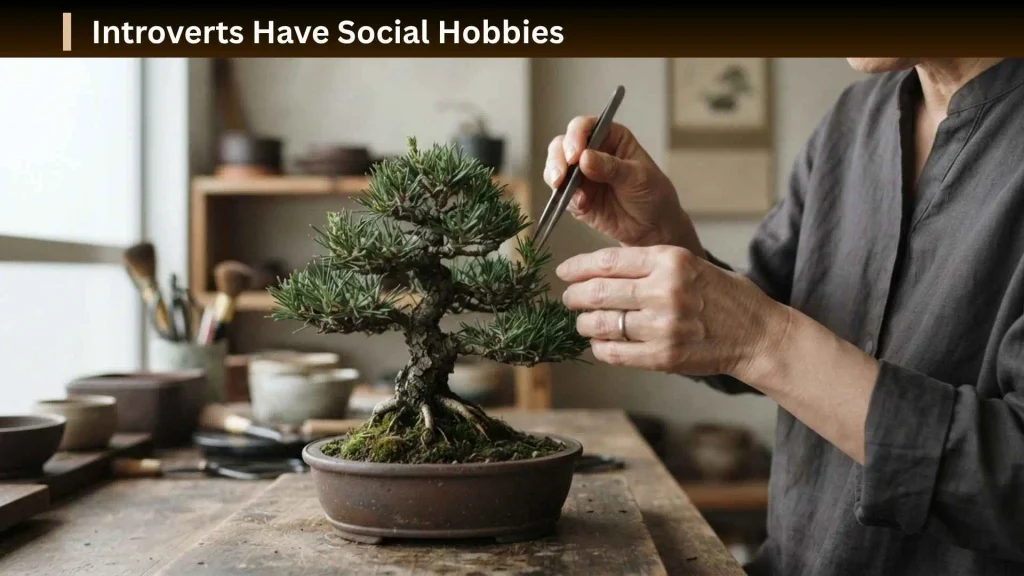
Absolutely. Being introverted does not mean avoiding people altogether.
An introvert may simply prefer smaller groups, meaningful conversations, predictable social settings, or time alone between activities. A hobby can therefore have a social component without requiring constant interaction.
For example, you could:
- Join a small book club
- Take a photography class
- Attend a gardening workshop
- Play chess at a local club
- Join a hiking group occasionally
- Take an art class
- Participate in a writing group
- Attend a craft meetup
You can also choose a hobby that is primarily solitary but has optional online or in-person communities.
How to Start a New Hobby Without Getting Overwhelmed
Starting too aggressively can turn an enjoyable hobby into another obligation.
Start With a Small Experiment
Give yourself a simple first project instead of buying everything immediately.
For example:
- Read one book.
- Complete one puzzle.
- Plant a few herbs.
- Sketch for 15 minutes.
- Bake one recipe.
- Learn one song.
- Take ten photographs.
- Write one short story.
Use the Minimum Equipment
Do not assume you need professional equipment to begin.
Start with basic supplies and upgrade only when you understand what you actually enjoy.
Give Yourself Time to Be a Beginner
A new hobby often feels awkward at first. Skill develops through repeated practice, so early imperfections are normal.
The goal at the beginning is not to produce impressive results. It is to determine whether you enjoy the process enough to continue.
Choose a Hobby That Matches Your Energy
Your ideal hobby may change depending on how you feel.
After a demanding day, you might prefer reading or puzzles. On a weekend, you might want hiking, gardening, photography, or a larger creative project.
You do not need to commit to one hobby forever.
How to Find a Hobby That You Will Actually Stick With
A hobby is more likely to become sustainable when it fits your real life.
Ask yourself:
- Do I want to relax or challenge myself?
- Do I prefer creating, learning, collecting, or exploring?
- How much time can I realistically give it?
- Do I want to stay indoors or go outside?
- Do I want a hobby that produces something?
- What equipment do I already have?
- What subjects naturally hold my attention?
- Do I want complete solitude or occasional social interaction?
Your answers can narrow dozens of possibilities down to two or three strong candidates.
Hobbies for Introverts by Personality and Interest
| If You Enjoy… | Try… |
| Stories | Reading, writing |
| Art | Drawing, painting, digital art |
| Nature | Gardening, hiking, birdwatching |
| Problem-solving | Chess, puzzles, coding |
| History | Genealogy, collecting, research |
| Working with your hands | Woodworking, sewing, model building |
| Food | Cooking, baking |
| Music | Learning an instrument |
| Quiet observation | Photography, stargazing |
| Organization | Scrapbooking, collecting |
| Repetition and detail | Knitting, crochet, origami |
| Learning | Languages, astronomy, coding |
Common Mistakes When Choosing an Introvert-Friendly Hobby
Choosing a Hobby Only Because It Is Popular
A hobby can be popular and still be a poor fit for you. Your interests and available time matter more than trends.
Buying Too Much Equipment
Expensive equipment does not automatically make an activity more enjoyable. Start small and learn what you need as your skills develop.
Expecting Immediate Results
Many hobbies have a learning curve. Give yourself enough time to discover whether you enjoy practicing before deciding that you are not good at something.
Treating Hobbies Like Another Job
A hobby does not always need measurable productivity. Reading a novel, drawing something imperfect, or spending an hour watching birds can be worthwhile simply because you enjoy doing it.
Assuming Every Hobby Must Be Completely Solitary
Some introverts enjoy occasional social interaction. If you like an activity but dislike large groups, look for smaller communities or participate only when you feel comfortable.
Frequently Asked Questions
What is a good hobby for an introvert?
Reading, writing, drawing, gardening, photography, puzzles, cooking, knitting, coding, and hiking are all strong options. The best hobby depends on whether you want relaxation, creativity, learning, exercise, or outdoor exploration.
What are some hobbies for introverts at home?
Good home-based options include reading, journaling, writing, drawing, painting, knitting, crocheting, puzzles, coding, cooking, baking, calligraphy, digital art, and model building.
What is a good hobby for a shy person?
A hobby that allows you to practice privately and control your level of interaction can be a comfortable starting point. Reading, drawing, photography, writing, gardening, puzzles, cooking, and coding are examples.
What are inexpensive hobbies for introverts?
Reading through a library, writing, journaling, hiking, drawing, nature observation, photography with a smartphone, origami, and learning from free educational resources can all be inexpensive ways to start.
Can an introvert enjoy group hobbies?
Yes. Introversion describes preferences around stimulation and social interaction; it does not mean someone cannot enjoy groups. Small classes, book clubs, hobby communities, and occasional group activities can work well for people who prefer more controlled social settings.
What hobby is good for someone who gets bored easily?
Choose a hobby with multiple levels or directions. Photography, cooking, language learning, coding, gardening, music, and collecting can continually introduce new challenges and subjects.
How many hobbies should an introvert have?
There is no ideal number. One hobby may be enough, while someone else may enjoy several activities for different purposes—for example, reading for relaxation, hiking for outdoor time, and cooking for creativity.
Conclusion
The best hobbies for introverts are the ones that match your interests, energy level, available time, and preferred environment. You can choose something completely solitary, such as reading or writing, or an activity with optional social interaction, such as photography groups, book clubs, or hiking communities.
If you are unsure where to begin, pick one inexpensive hobby that interests you and try a small project before investing heavily in equipment. The goal is not to find the most impressive hobby—it is to find an activity you genuinely look forward to doing.

I’m Sophia Carter, a writer who enjoys discovering interesting ideas and transforming them into helpful content. At Cognivoora, I write with a simple goal: to make information clearer, more accessible, and genuinely useful for readers. I value thoughtful research, easy explanations, and content that people can trust and return to whenever they need it.
Books:
- The Knowledge Journey
- Understanding the World Around Us