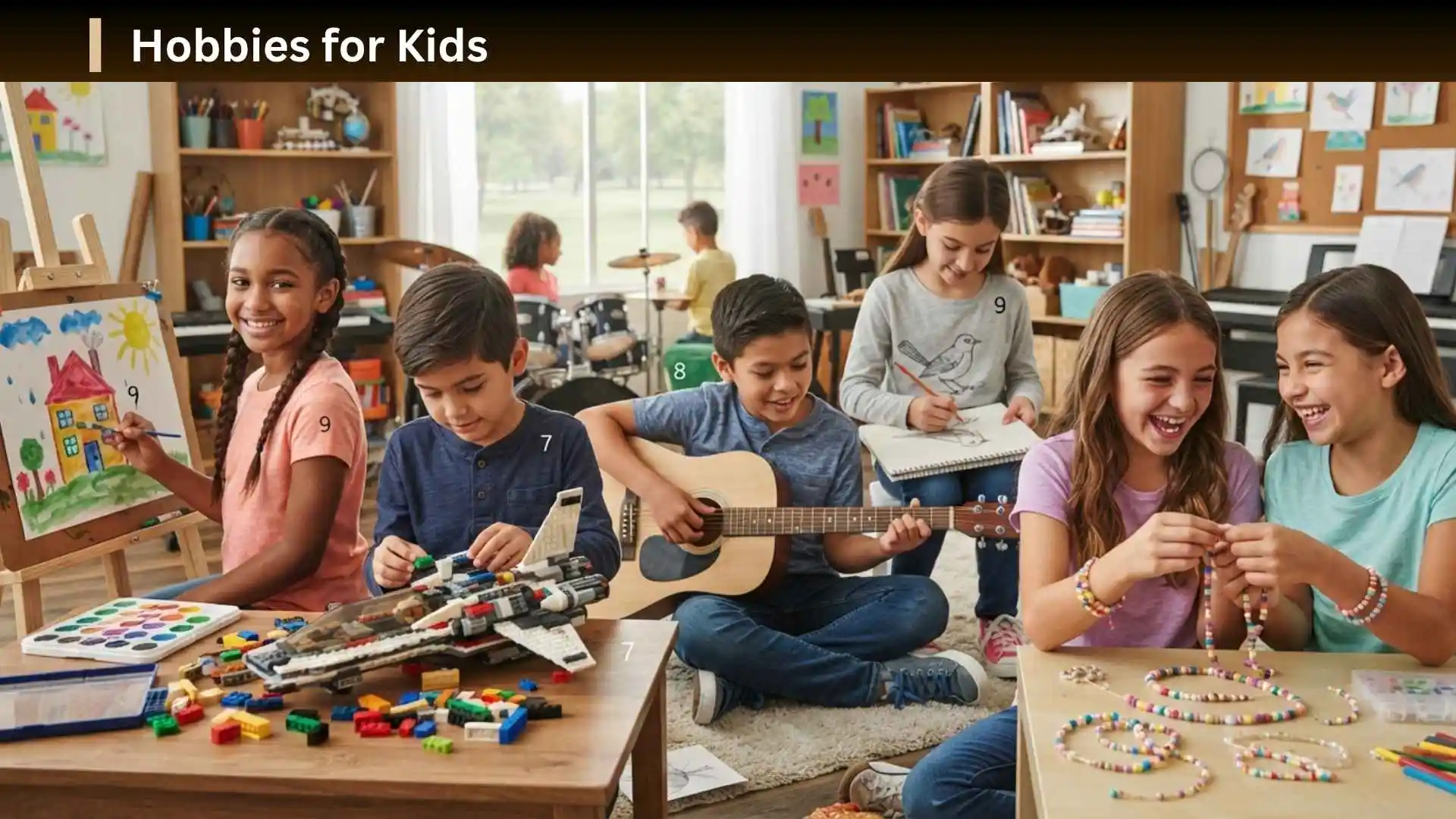
Hobbies for kids are a fun way to explore interests, build useful skills, and make free time more enjoyable. From drawing and crafts to reading, sports, cooking, collecting, and simple science projects, children can choose activities that match their personalities and curiosity. The best hobbies do not have to be expensive or complicated—they simply need to be enjoyable and age-appropriate. Whether your child loves creating, learning, moving, or discovering new things, exploring different hobbies can help them find activities they genuinely enjoy.
What Are Good Hobbies for Kids?
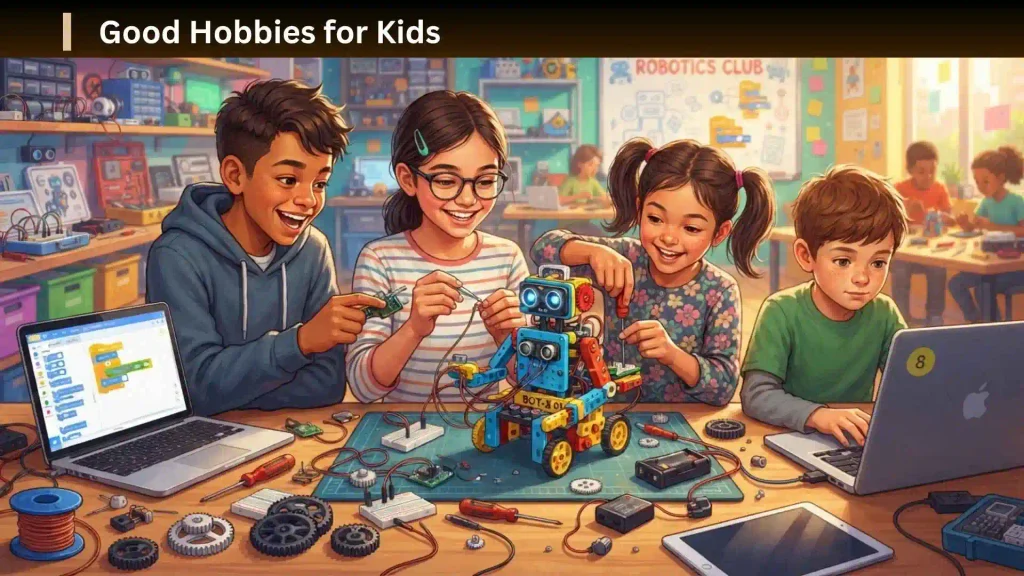
Good hobbies for kids are activities they can enjoy regularly while learning, creating, exploring, or practicing something they find interesting. Depending on the child, a hobby might be artistic, athletic, educational, outdoor-focused, hands-on, or social.
Some children love making things with their hands, while others prefer sports, animals, books, music, technology, or exploring nature. The goal is not to choose the most productive hobby but to help the child find something they genuinely want to continue doing.
(Quick Answer)
Some of the best hobbies for kids include:
- Drawing and painting
- Reading
- Building with LEGO or other construction sets
- Gardening
- Cooking and baking with adult supervision
- Photography
- Playing a musical instrument
- Swimming
- Biking
- Hiking and nature exploration
- Collecting rocks, stamps, or other age-appropriate items
- Crafts and DIY projects
- Puzzles and board games
- Writing stories or keeping a journal
- Science experiments
- Coding and beginner robotics
- Birdwatching
- Dancing
- Fishing with appropriate adult supervision
- Origami
The best choice depends on the child’s age, interests, available space, budget, and how independently they can participate.
25 Hobbies for Kids to Try
1. Drawing and Sketching
Drawing is an accessible hobby that requires relatively little equipment. Children can start with pencils and paper and gradually experiment with colored pencils, markers, charcoal, or digital drawing tools.
It can be especially appealing to kids who enjoy characters, animals, cartoons, nature, or inventing their own worlds.
2. Painting
Painting lets children experiment with color, shapes, textures, and visual expression. Watercolors, washable tempera paints, and acrylics can provide different experiences depending on the child’s age and the project.
For younger children, washable materials and an easy-to-clean workspace are practical choices.
3. Reading
Reading can become a long-term hobby that grows with a child. Kids can explore picture books, graphic novels, fiction, nonfiction, biographies, science books, mysteries, and many other genres.
A child does not need to read only “educational” books for reading to be valuable. Enjoyment can be an important part of developing a lasting reading habit.
4. Writing Stories
Children who enjoy imagination may like writing short stories, comics, poems, or fictional adventures.
A simple notebook can become a place for characters, story ideas, drawings, and unfinished projects. There is no need to focus on perfect grammar at the beginning—the goal can simply be encouraging creativity.
5. LEGO and Building
Construction hobbies give kids an opportunity to design, build, modify, and solve problems.
Instead of following instructions every time, children can also be encouraged to create their own structures, vehicles, buildings, or imaginary inventions.
6. Puzzles
Jigsaw puzzles, logic puzzles, mazes, and age-appropriate brain teasers can provide quiet entertainment while encouraging children to work through challenges.
Puzzle difficulty should match the child’s ability. A puzzle that is too difficult can quickly become frustrating rather than enjoyable.
7. Board Games
Board games can turn family time into a hobby. Depending on age, children can explore matching games, strategy games, cooperative games, word games, and traditional games.
Cooperative games can be particularly useful when a child enjoys playing with others but becomes discouraged by competition.
8. Gardening
Gardening introduces children to plants, soil, weather, insects, and the process of caring for living things.
Kids can start with something simple, such as growing herbs or easy-to-manage flowers in a container. They can help with watering, planting, observing growth, and keeping a basic garden journal.
9. Cooking and Baking
Cooking can be both creative and practical. Children can help prepare simple recipes, decorate baked goods, measure ingredients, or assemble snacks.
Adults should handle tasks involving hot surfaces, sharp knives, ovens, and other hazards. The level of independence should match the child’s age and abilities.
10. Photography
Photography can encourage children to pay attention to details in their surroundings.
A child might photograph animals, interesting objects, architecture, plants, family activities, or seasonal changes. Older children can begin learning about composition, lighting, perspective, and basic photo editing.
11. Playing a Musical Instrument
Music can become a rewarding long-term hobby. Popular starting options for children include piano, keyboard, guitar, ukulele, violin, drums, and recorder.
The best instrument depends on the child’s interest, physical readiness, access to instruction, and family circumstances.
12. Dancing
Dance combines movement, music, coordination, and creativity. Children can explore styles such as ballet, hip-hop, jazz, tap, contemporary, or cultural dance.
Some children may enjoy structured classes, while others simply prefer learning routines at home.
13. Swimming
Swimming can be both a recreational activity and an important physical skill. Children should learn in an environment appropriate for their ability and be supervised around water.
For many kids, swimming can eventually become a regular sport or a casual leisure activity.
14. Biking
Biking gives children an active outdoor hobby and can become a family activity.
A properly fitted helmet and age-appropriate riding environment are important. Beginners may benefit from practicing in controlled areas away from traffic before progressing to more challenging routes.
15. Hiking and Nature Walks
Nature exploration does not require complicated equipment. A walk through a local park, trail, or nature area can become a hobby when children start paying attention to birds, plants, insects, rocks, weather, and other features.
A simple notebook can turn a walk into a nature journal.
16. Birdwatching
Birdwatching encourages observation and patience. Children can learn to identify birds by appearance, behavior, habitat, or sound.
A beginner does not necessarily need expensive binoculars. A basic bird guide or identification app can be enough to start exploring.
17. Collecting
Collecting can give children a way to organize and learn about objects they find interesting.
Possible collections include:
- Rocks and minerals
- Leaves
- Postcards
- Stamps
- Coins
- Seashells
- Trading cards
- Interesting natural objects
Children should be taught not to collect protected wildlife, archaeological objects, or items from places where removal is prohibited.
18. Origami
Origami turns paper into animals, flowers, boxes, decorations, and other shapes through folding.
It is inexpensive, portable, and suitable for a wide range of skill levels. Children can begin with simple models and gradually attempt more complicated designs.
19. Arts and Crafts
Crafting provides almost endless possibilities. Kids can work with paper, cardboard, fabric, yarn, clay, recycled materials, or other age-appropriate supplies.
Projects can include greeting cards, decorations, puppets, paper animals, friendship bracelets, and simple handmade gifts.
20. Science Projects
Children who constantly ask “why?” may enjoy science as a hobby.
Simple projects can explore concepts involving plants, water, magnets, weather, motion, light, or other everyday phenomena. Projects should be selected according to the child’s age, and potentially hazardous experiments should be avoided or conducted only with appropriate adult supervision.
21. Coding
Coding can become a creative hobby rather than simply a technical exercise.
Younger children can explore visual programming concepts, while older kids may progress toward text-based programming, websites, games, or simple applications.
The emphasis should be on creating something and solving problems rather than memorizing programming syntax.
22. Robotics and Building Projects
Robotics combines construction, technology, problem-solving, and creativity.
Children can begin with age-appropriate building kits and gradually explore sensors, motors, programming, and engineering concepts as their skills develop.
23. Fishing
Fishing can introduce kids to outdoor recreation, patience, and basic knowledge of aquatic environments.
Because fishing involves equipment, water, hooks, and local regulations, children should participate with appropriate adult supervision and use equipment suitable for their age.
24. Journaling
A journal can be used for much more than recording daily events. Children can write about hobbies, draw pictures, record goals, describe nature observations, or collect interesting ideas.
Kids who do not enjoy traditional diary writing may prefer a combination of drawings, lists, stickers, and short notes.
25. Model Building
Model building can appeal to children who enjoy detailed projects and construction.
Depending on age, this might involve simple snap-together models, building kits, miniature scenes, vehicles, or other projects. Small pieces and specialized tools should be appropriate for the child’s age and used with supervision when necessary.
Hobbies for Kids by Interest
Choosing a hobby based on personality can make the decision easier than simply presenting a long list.
| If a child enjoys… | Hobbies to consider |
| Drawing and imagination | Drawing, painting, crafts, writing, photography |
| Building things | LEGO, model building, robotics, woodworking with supervision |
| Being outdoors | Hiking, gardening, birdwatching, biking, fishing |
| Animals | Birdwatching, nature observation, animal drawing |
| Technology | Coding, robotics, digital art, photography |
| Music | Piano, guitar, ukulele, singing, drums |
| Physical activity | Swimming, biking, dancing, hiking, sports |
| Quiet activities | Reading, puzzles, origami, journaling, collecting |
| Science | Nature study, experiments, astronomy, rock collecting |
| Social activities | Team sports, dance, music groups, board games |
Hobbies for Younger Kids
Younger children generally benefit from activities that are simple, hands-on, flexible, and easy to stop and restart.
Good possibilities include:
- Coloring
- Finger painting
- Building blocks
- Simple puzzles
- Storybooks
- Gardening with an adult
- Nature walks
- Playdough or modeling activities
- Simple crafts
- Singing and dancing
- Sorting and collecting safe objects
At this age, the process matters more than producing a polished result.
Hobbies for School Age Kids
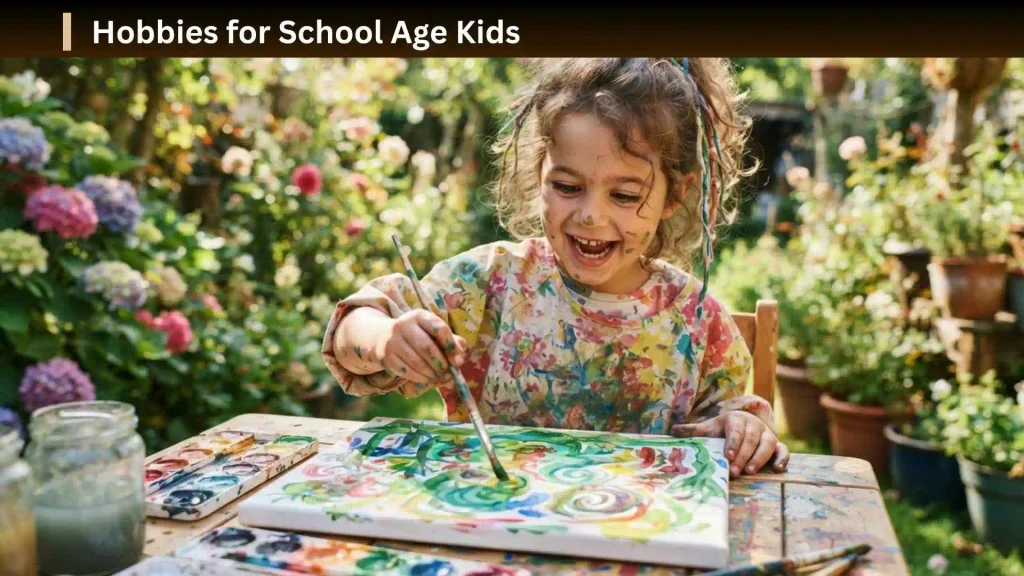
School-age children can usually explore more structured activities while still benefiting from opportunities for free creativity.
Ideas include:
- Drawing
- Reading
- Cooking with supervision
- Photography
- Gardening
- Biking
- Swimming
- Musical instruments
- Crafts
- Board games
- Coding
- Science projects
- Collecting
- Writing
- Birdwatching
This is often a good age to let children try several activities rather than expecting them to immediately choose one lifelong hobby.
Hobbies for Tweens and Older Kids
Older children may want hobbies that give them more independence, challenge, or opportunities to develop specialized skills.
Options include:
- Creative writing
- Digital art
- Photography
- Coding
- Robotics
- Guitar or another instrument
- Advanced crafts
- Cooking
- Hiking
- Gardening
- Model building
- Astronomy
- Video editing
- Sports
- Dance
- Volunteering-related interests
As children get older, hobbies can also become connected to personal projects, clubs, competitions, performances, or community activities if the child wants that experience.
Best Low Cost Hobbies for Kids
A hobby does not need expensive equipment. Some activities can start with supplies that many families already have at home.
Low-Cost Ideas
- Drawing with pencils and paper
- Reading books from a library
- Writing stories
- Origami
- Nature walks
- Gardening from seeds
- Journaling
- Homemade crafts
- Puzzles you already own
- Collecting leaves or rocks where permitted
- Cooking simple recipes with an adult
- Birdwatching
- Building with existing blocks
Libraries, community centers, parks, schools, and local recreation programs may also provide access to activities without requiring a large investment in equipment.
Best Indoor Hobbies for Kids
Indoor hobbies can be particularly useful during hot weather, winter, rainy days, or when outdoor space is limited.
Consider:
- Reading
- Drawing
- Painting
- Origami
- Crafts
- LEGO building
- Puzzles
- Board games
- Cooking
- Journaling
- Coding
- Musical instruments
- Model building
- Photography
- Creative writing
For younger children, choose activities that are easy to supervise and that do not depend on small parts or specialized equipment when those materials are inappropriate for their age.
Best Outdoor Hobbies for Kids
Outdoor hobbies can encourage movement and observation while giving children opportunities to explore their surroundings.
Popular choices include:
- Gardening
- Hiking
- Biking
- Swimming
- Birdwatching
- Nature photography
- Fishing
- Outdoor sports
- Stargazing
- Nature collecting and journaling
The appropriate activity depends on the child’s abilities and the local environment. Outdoor hobbies should also account for weather, terrain, traffic, water safety, and supervision needs.
How to Choose the Right Hobby for a Child
There is no single best hobby for every child. A practical way to choose one is to consider five factors.
1. Follow the Child’s Interest
Pay attention to what the child naturally talks about, watches, draws, builds, reads, or asks questions about.
A child who repeatedly draws animals may enjoy art or nature observation. A child who takes apart toys to see how they work might enjoy building, engineering, or robotics.
2. Match the Activity to the Child’s Age
The same hobby can look completely different at different ages.
For example, gardening for a young child might mean watering plants, while an older child may plan a small garden, research plants, and track growth.
3. Consider the Cost
Start with the simplest version of the hobby before purchasing expensive equipment.
This gives the child an opportunity to discover whether they actually enjoy the activity.
4. Consider Time and Space
A hobby requiring a large workspace may not be practical for a small home. Similarly, a hobby requiring regular travel may be difficult for a busy family.
A sustainable hobby is one that fits realistically into the family’s routine.
5. Let the Child Have a Say
Parents can suggest options, but children are more likely to engage with hobbies they have some ownership over.
Instead of saying, “You should learn piano,” try offering several possibilities and asking which one sounds interesting.
How Many Hobbies Should a Child Have?
There is no universal number of hobbies a child should have.
One child may happily focus on a single activity, while another may enjoy several hobbies at the same time. What matters is whether the activities remain enjoyable and manageable alongside school, sleep, family time, free play, and other responsibilities.
A hobby should not automatically become another source of pressure.
Should Kids Have Structured or Unstructured Hobbies?
Both can be valuable.
Structured hobbies include organized sports, music lessons, dance classes, clubs, and scheduled programs. They can provide instruction, routines, and opportunities to practice with others.
Unstructured hobbies include drawing freely, building with blocks, exploring nature, writing stories, collecting objects, or experimenting with crafts. They give children more control over what they do and how they do it.
A healthy balance can give children both guidance and freedom.
How Parents Can Support a Child’s Hobby
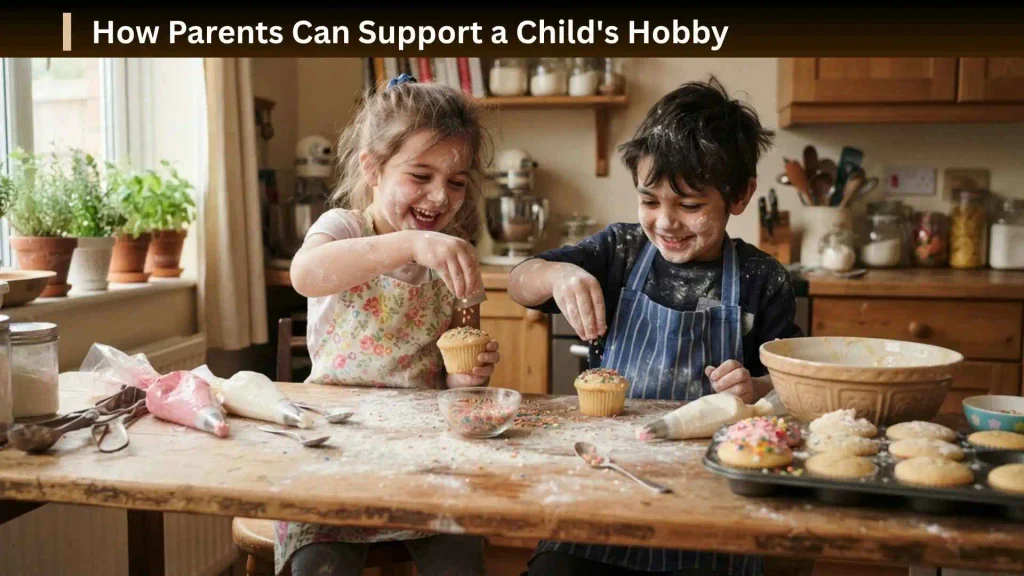
Parents do not need to become experts in every activity their children try.
Helpful support can include:
- Providing basic age-appropriate materials
- Giving the child time to practice
- Showing interest without taking over
- Asking open-ended questions
- Helping solve practical problems
- Allowing mistakes
- Celebrating effort and progress
- Avoiding unnecessary pressure to compete
- Helping the child find new challenges when they are ready
One of the most useful things parents can do is give children room to explore without turning every hobby into an achievement goal.
What If a Child Keeps Quitting Hobbies?
Trying several hobbies and losing interest is not necessarily a problem.
Children are still discovering what they enjoy. A hobby may seem exciting initially but become less interesting after the novelty disappears.
Before deciding that a child has “given up,” consider why they stopped. The activity might be too difficult, too easy, too expensive, too competitive, poorly matched to their personality, or simply not enjoyable.
If a child repeatedly switches activities, offering short-term opportunities to explore different interests can be more useful than demanding long-term commitment immediately.
Frequently Asked Questions
What are the best hobbies for kids?
The best hobbies are those that match a child’s interests, age, abilities, and circumstances. Drawing, reading, building, gardening, music, sports, crafts, cooking, nature exploration, coding, and photography are all possibilities.
What are some easy hobbies for kids?
Easy hobbies to start include drawing, coloring, reading, journaling, origami, simple crafts, puzzles, nature walks, gardening, and building with blocks.
What hobbies are good for kids who don’t like sports?
Children who do not enjoy sports can explore reading, drawing, painting, writing, crafts, coding, music, puzzles, cooking, gardening, photography, collecting, science projects, or model building.
What are good hobbies for kids at home?
Reading, drawing, painting, crafts, LEGO building, puzzles, board games, cooking, coding, journaling, origami, music, photography, and creative writing can all work well at home.
What are inexpensive hobbies for kids?
Reading from the library, drawing, writing, origami, nature observation, journaling, gardening from seeds, simple crafts, and collecting permitted natural objects can be inexpensive ways to explore hobbies.
How can I find a hobby my child will actually enjoy?
Start with the child’s existing interests. Offer a few different activities, let the child choose, and begin with inexpensive or low-commitment options. Pay attention to what they voluntarily return to without being reminded.
Should parents choose their child’s hobby?
Parents can provide guidance and introduce children to new activities, but giving children some choice is generally helpful. The goal is to find an activity the child genuinely enjoys rather than selecting a hobby solely because it seems impressive or productive.
Can hobbies help children learn new skills?
Yes. Different hobbies naturally involve different skills. Building can involve planning and problem-solving, music involves practice and coordination, gardening involves observation and responsibility, and writing involves communication and creativity. The specific skills depend on the activity and how the child engages with it.
Conclusion
The best hobbies for kids are not necessarily the most expensive, educational, or competitive ones. A good hobby gives a child something they want to explore, practice, create, or discover.
Start with their natural interests, choose an age-appropriate activity, and try a simple version before making a major investment. Whether a child spends an afternoon drawing, building a model, growing plants, reading a book, riding a bike, or observing birds, the experience can become a meaningful part of growing up.

I’m Olivia Bennett, a passionate writer who loves exploring ideas, learning new concepts, and sharing knowledge in a straightforward way. I write for Cognivoora with the goal of making useful topics easier to understand without unnecessary complexity. My approach combines research, clarity, and a reader-first perspective.
Books:
- Think Clearly, Live Better
- The Curious Reader’s Guide