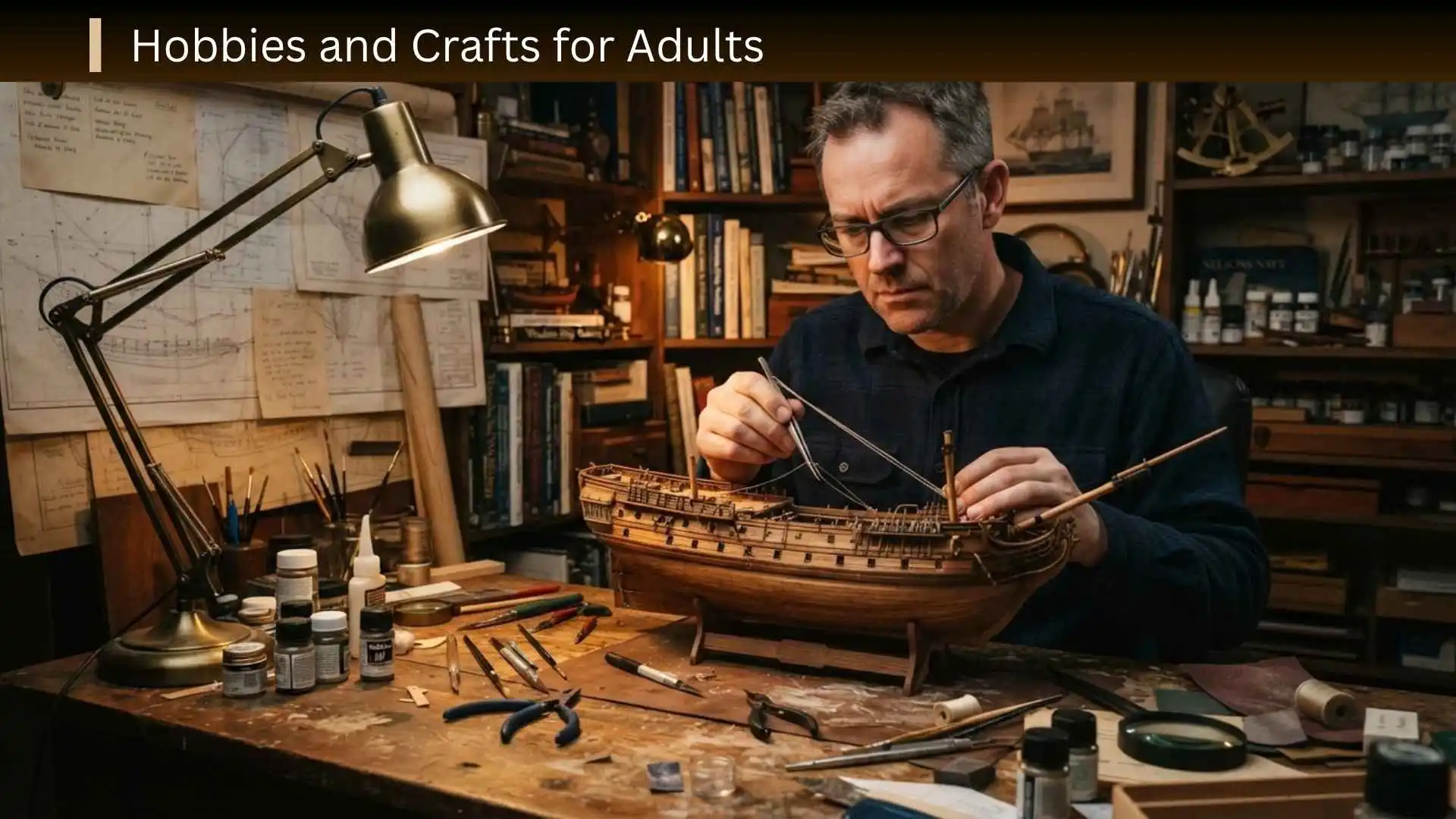
Life can get busy, but I believe you don’t need a lot of free time to enjoy something that is truly yours. Hobbies and crafts for adults give you a chance to step away from daily responsibilities, explore your creativity, and make something you can actually be proud of. Whether you enjoy painting, DIY projects, knitting, journaling, woodworking, or simple crafts, there is an activity that can fit your interests and lifestyle.
If you’ve ever thought, “I’m not creative,” don’t let that stop you. You don’t need to be an artist or an expert to get started. You simply need curiosity and a little time. In this guide, you’ll discover fun, creative, affordable, and beginner-friendly hobbies and crafts that can help you make your free time more enjoyable—and maybe even inspire a new passion.
What Are Some Good Hobbies and Crafts for Adults(Quick Answer)
Some of the best hobbies and crafts for adults include:
- Painting and drawing
- Knitting and crocheting
- Embroidery and cross-stitch
- Pottery and clay crafts
- Jewelry making
- Woodworking
- Candle making
- Soap making
- Sewing and quilting
- Scrapbooking
- Journaling
- Paper crafts
- Photography
- Gardening
- Baking and cake decorating
- Flower arranging
- Calligraphy and hand lettering
- Leather crafting
- Model building
- DIY home décor
- Tie-dye and fabric crafts
- Diamond painting
- Macramé
- Origami
- Beading
The right hobby is one that fits your personality and is enjoyable enough that you want to keep doing it.
How to Choose the Right Adult Hobby
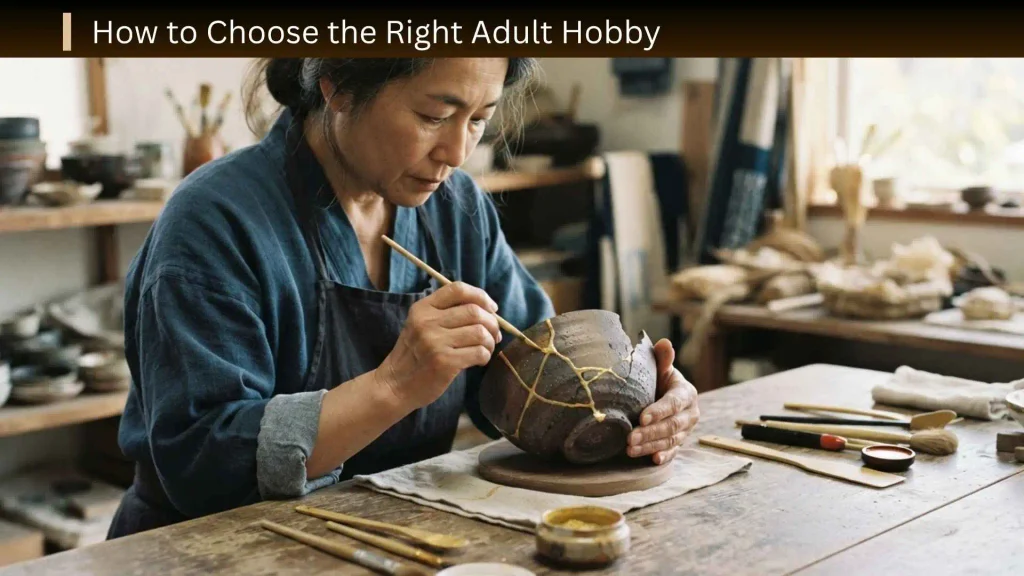
With so many possibilities, choosing one can feel harder than starting one. A simple way to narrow your options is to consider what you want from the activity.
If You Want a Relaxing Hobby
Look for repetitive, low-pressure activities that allow you to focus on the process rather than the result.
Good choices include:
- Knitting
- Crocheting
- Coloring
- Embroidery
- Diamond painting
- Gardening
- Journaling
- Origami
These activities can be particularly appealing when you want something quiet to do during your downtime.
If You Want to Make Useful Things
Some crafts produce items you can actually use around your home or give as gifts.
Consider:
- Sewing
- Woodworking
- Candle making
- Soap making
- Pottery
- Leather crafting
- Baking
- Jewelry making
- DIY home décor
A practical hobby can be especially satisfying because you get both the creative experience and a finished product.
If You Want an Inexpensive Hobby
You do not need a large budget to start a creative hobby.
Affordable options can include:
- Drawing
- Journaling
- Origami
- Paper crafts
- Hand lettering
- Nature photography
- Pressed flowers
- Collage
- Upcycling
- Basic embroidery
Start with a small amount of supplies rather than buying everything at once.
If You Want a Social Hobby
Some hobbies are more enjoyable when shared with other people.
Try:
- Craft groups
- Knitting circles
- Book-and-craft clubs
- Community gardening
- Pottery classes
- Sewing groups
- Photography walks
- Painting classes
- Quilting groups
- DIY workshops
Local libraries, community centers, recreation programs, and hobby stores may offer classes or groups where available.
25 Hobbies and Crafts for Adults
1. Painting
Painting is one of the most flexible creative hobbies for adults. You can experiment with acrylics, watercolor, oils, or other painting mediums depending on your interests.
Acrylic painting is often a practical starting point because acrylics can be used on several surfaces and are available in a wide range of colors.
You can begin with simple subjects such as:
- Landscapes
- Flowers
- Abstract shapes
- Still life
- Animals
- Simple portraits
The goal does not have to be creating gallery-quality artwork. Learning how colors, shapes, textures, and brush techniques work can be enjoyable on its own.
2. Drawing and Sketching
Drawing requires relatively little equipment, making it an accessible hobby for beginners.
A basic setup can consist of:
- Pencils
- Eraser
- Sketchbook
- Sharpener
- Optional colored pencils or markers
You can practice observational drawing, doodling, architectural sketches, portraits, botanical illustrations, or character design.
Drawing is also a useful foundation if you eventually want to explore painting, illustration, animation, or digital art.
3. Knitting
Knitting combines creativity with a repetitive process that many people find enjoyable.
Beginners can start with simple projects such as:
- Scarves
- Dishcloths
- Headbands
- Hats
- Simple blankets
As your skills improve, you can explore more complicated patterns, textures, garments, and decorative projects.
You can also choose different yarn weights and fibers to change the appearance and feel of your finished work.
4. Crocheting
Crochet uses a hook rather than knitting needles and can be used to create everything from small decorative pieces to clothing and blankets.
Popular beginner projects include:
- Coasters
- Granny squares
- Small baskets
- Scarves
- Hats
- Simple stuffed animals
Crochet is particularly appealing to people who enjoy learning through patterns and gradually building more complex techniques.
5. Embroidery
Embroidery involves decorating fabric with thread and different stitches.
It can be started with a relatively small collection of supplies, such as:
- Embroidery hoop
- Fabric
- Embroidery floss
- Needles
- Scissors
You can embroider flowers, lettering, geometric patterns, animals, landscapes, or personalized designs.
It can also be combined with clothing customization and home décor.
6. Cross Stitch
Cross-stitch is a structured form of counted-thread embroidery. Instead of creating free-form designs, you generally follow a chart to build an image from individual stitches.
It can be a good option if you prefer:
- Clear patterns
- Repetitive movements
- Small projects
- Detailed designs
- Gradual progress
Finished pieces can be framed or incorporated into decorative projects.
7. Pottery and Clay Crafts
Working with clay gives you an opportunity to create three-dimensional objects rather than flat artwork.
Possible projects include:
- Bowls
- Mugs
- Small sculptures
- Plant pots
- Decorative tiles
- Figurines
Traditional pottery may require access to a kiln and specialized equipment, so beginners often start through a local pottery class or studio.
For home crafting, air-dry clay and other suitable modeling materials can provide a simpler introduction, although they are different from traditional kiln-fired ceramics.
8. Jewelry Making
Jewelry making can range from simple beadwork to more advanced metalworking.
Beginners might start with:
- Beads
- Jewelry wire
- Clasps
- Findings
- Pliers
- Elastic cord
You can make bracelets, necklaces, earrings, rings, or decorative accessories.
One advantage of jewelry making is that projects can be small, making the hobby suitable for people who have limited workspace.
9. Sewing
Sewing can be both creative and practical. You can use it to make clothing, accessories, home textiles, and gifts.
Beginner projects might include:
- Tote bags
- Pillow covers
- Simple skirts
- Fabric organizers
- Scrunchies
- Small pouches
A sewing machine can make some projects faster, but hand sewing is also a useful skill and requires less initial equipment.
10. Quilting
Quilting combines fabric selection, cutting, sewing, and design.
Traditional quilts can involve intricate patterns, while modern quilting may use simpler geometric designs.
Quilting can become a long-term hobby because there are many techniques to learn, including:
- Patchwork
- Appliqué
- Foundation piecing
- Machine quilting
- Hand quilting
- Fabric design
It can also turn fabric scraps into useful and meaningful projects.
11. Woodworking
Woodworking is an excellent choice for adults who enjoy building physical objects.
Beginner projects can include:
- Small shelves
- Planter boxes
- Serving boards
- Simple stools
- Storage boxes
- Wall décor
Basic woodworking requires careful attention to tools, measurements, materials, and workshop safety.
If you do not have a suitable workspace, consider taking classes at a community workshop or makerspace.
12. Candle Making
Candle making combines fragrance, color, containers, and design.
You can experiment with different styles, including:
- Container candles
- Decorative candles
- Seasonal designs
- Gift candles
- Unscented candles
Because candle making involves heated materials and an open flame during use, follow the safety instructions provided with your materials and equipment.
13. Soap Making
Making soap can be a creative hobby, but different soap-making methods have very different safety requirements.
Melt-and-pour soap is generally simpler for beginners because the base has already undergone the major chemical reaction involved in traditional cold-process soap making.
More advanced methods require careful handling of ingredients such as lye, along with appropriate protective equipment and procedures.
14. Scrapbooking
Scrapbooking combines photographs, paper, lettering, decorative elements, and personal memories.
You can create albums around:
- Family events
- Travel
- Holidays
- Milestones
- Special occasions
- Personal projects
Digital scrapbooking is another option if you prefer working on a computer or tablet.
15. Journaling
Journaling is not necessarily a craft in the traditional sense, but it can become a highly creative hobby.
You can experiment with:
- Daily journaling
- Gratitude pages
- Travel journals
- Art journals
- Reading journals
- Bullet-style planning
- Memory keeping
Adding sketches, stickers, photographs, lettering, and collage elements can turn ordinary writing into a visual creative project.
16. Calligraphy and Hand Lettering
Calligraphy focuses on decorative writing, while hand lettering involves drawing letters and words as visual designs.
You can begin with relatively simple tools:
- Practice paper
- Pencil
- Ruler
- Pens or markers
Later, you can explore brush lettering, pointed-pen calligraphy, digital lettering, or decorative typography.
This hobby can also be useful for creating cards, invitations, signs, and personalized gifts.
17. Paper Crafts
Paper is one of the most versatile craft materials.
Projects can include:
- Greeting cards
- Paper flowers
- Collages
- Paper sculptures
- Gift tags
- Decorative boxes
- Cut-paper art
Many paper crafts can be completed with inexpensive supplies, making them suitable for beginners and casual hobbyists.
18. Origami
Origami is the art of folding paper into shapes and objects.
Simple designs can be learned quickly, while complex models can provide a much greater challenge.
You can make:
- Animals
- Flowers
- Geometric forms
- Boxes
- Decorations
- Greeting-card elements
Origami also has the advantage of requiring very little equipment.
19. Macramé
Macramé involves tying cords into decorative knots to create patterns and objects.
Common projects include:
- Wall hangings
- Plant hangers
- Keychains
- Curtains
- Decorative pieces
It is particularly attractive to people who enjoy textile crafts but want an alternative to sewing or knitting.
20. Gardening
Gardening is a hobby that combines creativity with hands-on outdoor activity.
Depending on your available space, you might grow:
- Herbs
- Flowers
- Vegetables
- Houseplants
- Container gardens
- Native or pollinator-friendly plants
You do not need a large yard. Container gardening can work for people with patios, balconies, or other limited spaces, provided the plants receive appropriate growing conditions.
21. Photography
Photography allows you to turn everyday surroundings into creative subjects.
You can explore:
- Nature photography
- Street photography
- Architecture
- Food photography
- Portraits
- Wildlife
- Travel photography
You do not necessarily need an expensive camera to begin. A smartphone can be enough to learn fundamentals such as composition, light, perspective, and timing.
22. Baking and Cake Decorating
Baking can become a creative hobby when you move beyond basic recipes and experiment with presentation and decoration.
You can explore:
- Bread
- Cookies
- Cupcakes
- Cakes
- Pastries
- Pies
- Decorative icing
Cake decorating offers another creative dimension through piping, shaping, color combinations, and themed designs.
23. Flower Arranging
Flower arranging is a good option for adults who enjoy working with color, shape, texture, and natural materials.
You can practice with:
- Fresh flowers
- Dried flowers
- Seasonal foliage
- Branches
- Containers and vases
Learning basic principles such as proportion, balance, and contrast can improve arrangements without requiring complicated equipment.
24. Leather Crafting
Leather crafting involves creating practical or decorative objects from leather.
Possible beginner projects include:
- Keychains
- Card holders
- Small pouches
- Belts
- Simple accessories
More advanced work can involve stamping, tooling, stitching, dyeing, and more specialized construction techniques.
25. Model Building
Model building can be a rewarding hobby for people who enjoy detailed, focused projects.
Options include:
- Scale vehicles
- Aircraft
- Ships
- Buildings
- Miniature scenes
- Figurines
Some models are designed for beginners, while others require considerable patience and precision.
Hobbies and Crafts for Adults by Budget
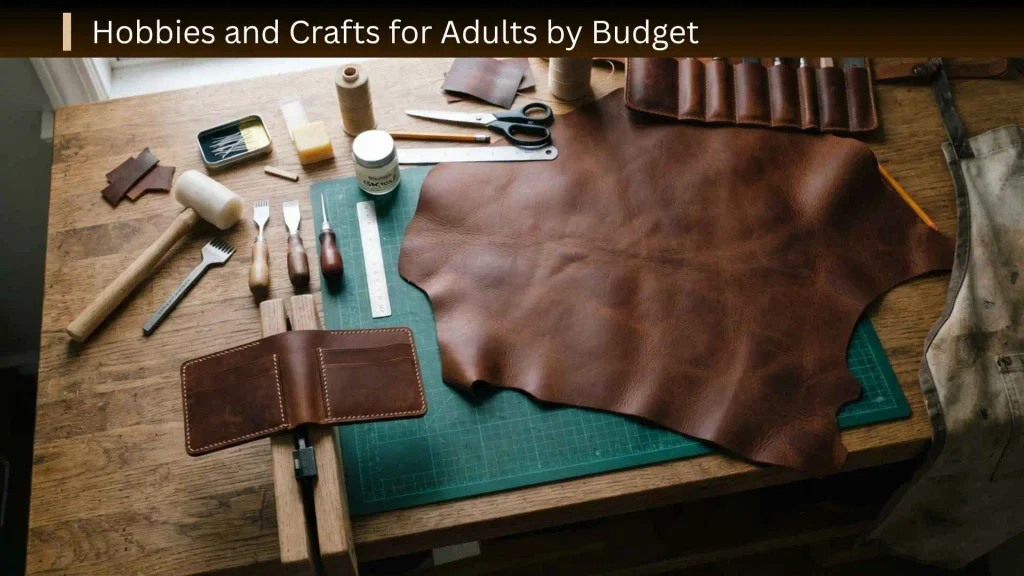
Your budget can influence which hobby makes sense, especially when you are trying something for the first time.
| Budget | Hobby Ideas | Typical Starting Approach |
| Very low | Drawing, journaling, origami, paper crafts | Use basic supplies |
| Low | Embroidery, crochet, hand lettering, collage | Purchase a small starter kit |
| Moderate | Painting, jewelry making, sewing, baking | Invest in essential tools |
| Higher | Pottery, woodworking, photography | Equipment or studio access may be needed |
| Variable | Gardening, model building, quilting | Costs depend heavily on materials and scale |
These categories are relative rather than fixed price ranges. A hobby can become inexpensive or expensive depending on the quality and quantity of materials you choose.
Hobbies and Crafts for Adults Who Are Beginners
If you are completely new to crafting, avoid starting with the most complicated project you can find.
Choose something that allows you to finish a small project fairly quickly.
Good beginner choices include:
- Drawing
- Origami
- Journaling
- Simple embroidery
- Crochet
- Paper crafts
- Hand lettering
- Beginner painting
- Beading
- Gardening in containers
Finishing a small project can give you a better sense of whether you actually enjoy the hobby before you invest more money.
Creative Hobbies for Adults With Limited Space
Apartment living or a small home does not eliminate your options.
Consider hobbies that need minimal workspace, such as:
- Drawing
- Watercolor
- Embroidery
- Crochet
- Origami
- Journaling
- Jewelry making
- Calligraphy
- Photography
- Small-scale model building
For larger hobbies such as woodworking or pottery, a shared studio, makerspace, or community class may be more practical than trying to create a workshop at home.
Hobbies for Adults That Can Become Skills
Some hobbies offer opportunities to develop skills that extend beyond the hobby itself.
| Hobby | Skills You Can Develop |
| Photography | Composition, lighting, editing |
| Sewing | Construction, pattern reading, fabric selection |
| Woodworking | Measuring, cutting, assembly |
| Painting | Color theory, composition, brush control |
| Gardening | Plant care, planning, observation |
| Baking | Measurement, timing, food preparation |
| Calligraphy | Lettering, spacing, precision |
| Jewelry making | Design, hand skills, material selection |
| Pottery | Form, texture, shaping |
| Writing and journaling | Communication, reflection, organization |
The most useful hobby is not necessarily the one that looks impressive. It is the one you genuinely want to practice.
Hobbies and Crafts for Adults You Can Do at Home
If you prefer staying home, many creative activities are easy to adapt to a home environment.
Easy At Home Options
- Drawing
- Painting
- Crochet
- Knitting
- Embroidery
- Journaling
- Scrapbooking
- Origami
- Hand lettering
- Beading
- Paper crafts
- Baking
- Indoor gardening
For activities involving heat, chemicals, sharp tools, dust, or specialized machinery, make sure your workspace and equipment are appropriate for the activity.
How to Start a New Craft Without Overspending
One of the easiest mistakes beginners make is buying too many supplies before knowing whether they will enjoy the hobby.
Instead:
Start With One Small Project
Choose a beginner-friendly project rather than purchasing supplies for several advanced projects.
Buy Only Essential Materials
Start with the basic tools and materials needed for that project.
Learn the Fundamentals First
Use books, classes, reputable tutorials, or demonstrations to understand basic techniques.
Avoid Buying Every Available Tool
Specialized tools can be useful later, but many beginners can accomplish their first projects with a simple setup.
Upgrade When You Need To
Once you know that you enjoy the hobby, you can gradually invest in better materials or equipment.
How to Make a Hobby More Enjoyable
A hobby should feel rewarding rather than like another obligation.
Try these approaches:
- Choose projects that match your interests.
- Keep beginner projects small.
- Set aside a regular time for your hobby.
- Keep your supplies organized.
- Experiment instead of trying to make everything perfect.
- Join a hobby community if you enjoy social interaction.
- Keep finished projects as a record of your progress.
- Try different techniques before deciding what you like.
- Give yourself permission to make mistakes.
Progress is often easier to notice when you compare your current work with what you made when you first started.
How to Turn a Craft Into a Long-Term Hobby
A craft becomes a sustainable hobby when it continues to provide something you value.
That might be:
- Creative expression
- Learning
- Relaxation
- Social connection
- Useful objects
- Personal accomplishment
- A break from screens
- A way to explore new interests
You do not have to become highly skilled for a hobby to be worthwhile. Likewise, if you eventually become very skilled, you can decide whether you want to keep it recreational or explore teaching, selling, exhibiting, or other opportunities.
Can Hobbies and Crafts for Adults Become a Side Business?
Yes, some crafts can potentially be developed into small businesses, although earning money from a craft requires more than making attractive products.
Potential craft businesses include:
- Handmade jewelry
- Custom artwork
- Wood products
- Personalized gifts
- Sewn accessories
- Decorative items
- Art prints
- Handmade cards
- Baked goods where legally permitted
- Craft kits
Before selling products, consider material costs, packaging, shipping, marketplace fees, taxes, local requirements, product safety, and the amount of time each item takes to produce.
A hobby can remain a hobby, too. There is no requirement to monetize something you enjoy.
How to Find the Best Hobby for Your Personality
Your natural preferences can provide useful clues.
If You Like Detailed Work
Try:
- Embroidery
- Cross-stitch
- Model building
- Jewelry making
- Calligraphy
- Miniatures
If You Prefer Practical Projects
Try:
- Woodworking
- Sewing
- Gardening
- Leather crafting
- Pottery
- DIY home décor
If You Love Visual Creativity
Try:
- Painting
- Drawing
- Photography
- Flower arranging
- Scrapbooking
- Paper art
If You Prefer Quiet, Repetitive Activities
Try:
- Knitting
- Crochet
- Coloring
- Origami
- Diamond painting
- Embroidery
If You Enjoy Learning New Techniques
Try:
- Pottery
- Photography
- Woodworking
- Sewing
- Baking
- Calligraphy
Frequently Asked Questions
What are the best hobbies and crafts for adults?
The best options depend on your interests and goals. Painting, crochet, knitting, embroidery, gardening, photography, woodworking, pottery, jewelry making, sewing, journaling, and paper crafts are all versatile choices.
What is a good hobby for an adult who has never crafted before?
Start with something simple and inexpensive, such as drawing, origami, journaling, basic embroidery, paper crafts, or beginner crochet. A small project lets you test the hobby without a major investment.
What is the easiest craft to learn as an adult?
Simple paper crafts, origami, basic drawing, journaling, and beginner hand embroidery can be relatively approachable. The difficulty ultimately depends on the project and the individual’s learning style.
What crafts can adults do at home?
Adults can do many crafts at home, including painting, drawing, crochet, knitting, embroidery, jewelry making, journaling, scrapbooking, paper crafts, calligraphy, baking, and small gardening projects.
What is a good hobby for adults with limited space?
Drawing, journaling, embroidery, crochet, origami, calligraphy, photography, and small jewelry projects require relatively little space.
What crafts are good for making gifts?
Jewelry, candles, handmade cards, knitted accessories, embroidered pieces, baked goods, sewn items, pottery, and personalized artwork can all make thoughtful handmade gifts.
Can crafting become a profitable hobby?
Some crafts can become small businesses, but profitability depends on demand, material costs, labor time, pricing, marketing, fees, taxes, and other business expenses. It is usually best to learn the craft first and consider selling later.
How much money should I spend when starting a new hobby?
There is no universal amount. Start with the minimum equipment and materials needed for a beginner project. Once you know you enjoy the activity, you can decide whether additional tools or higher-quality materials are worthwhile.
Conclusion
The best hobbies and crafts for adults are not necessarily the most complicated or expensive. A good hobby should fit your interests, available time, budget, and lifestyle.
If you want something relaxing, consider knitting, crochet, embroidery, journaling, or gardening. If you enjoy making practical objects, sewing, woodworking, pottery, or leather crafting may be a better fit. For inexpensive creative activities, drawing, origami, paper crafts, and hand lettering are excellent places to begin.
The easiest way to find your ideal hobby is to choose one small project, gather only the basic supplies, and give yourself time to explore. You may discover a completely new skill or simply find a creative activity that makes your free time more enjoyable.
I’m Sophia Carter, a writer who enjoys discovering interesting ideas and transforming them into helpful content. At Cognivoora, I write with a simple goal: to make information clearer, more accessible, and genuinely useful for readers. I value thoughtful research, easy explanations, and content that people can trust and return to whenever they need it.
Books:
- The Knowledge Journey
- Understanding the World Around Us