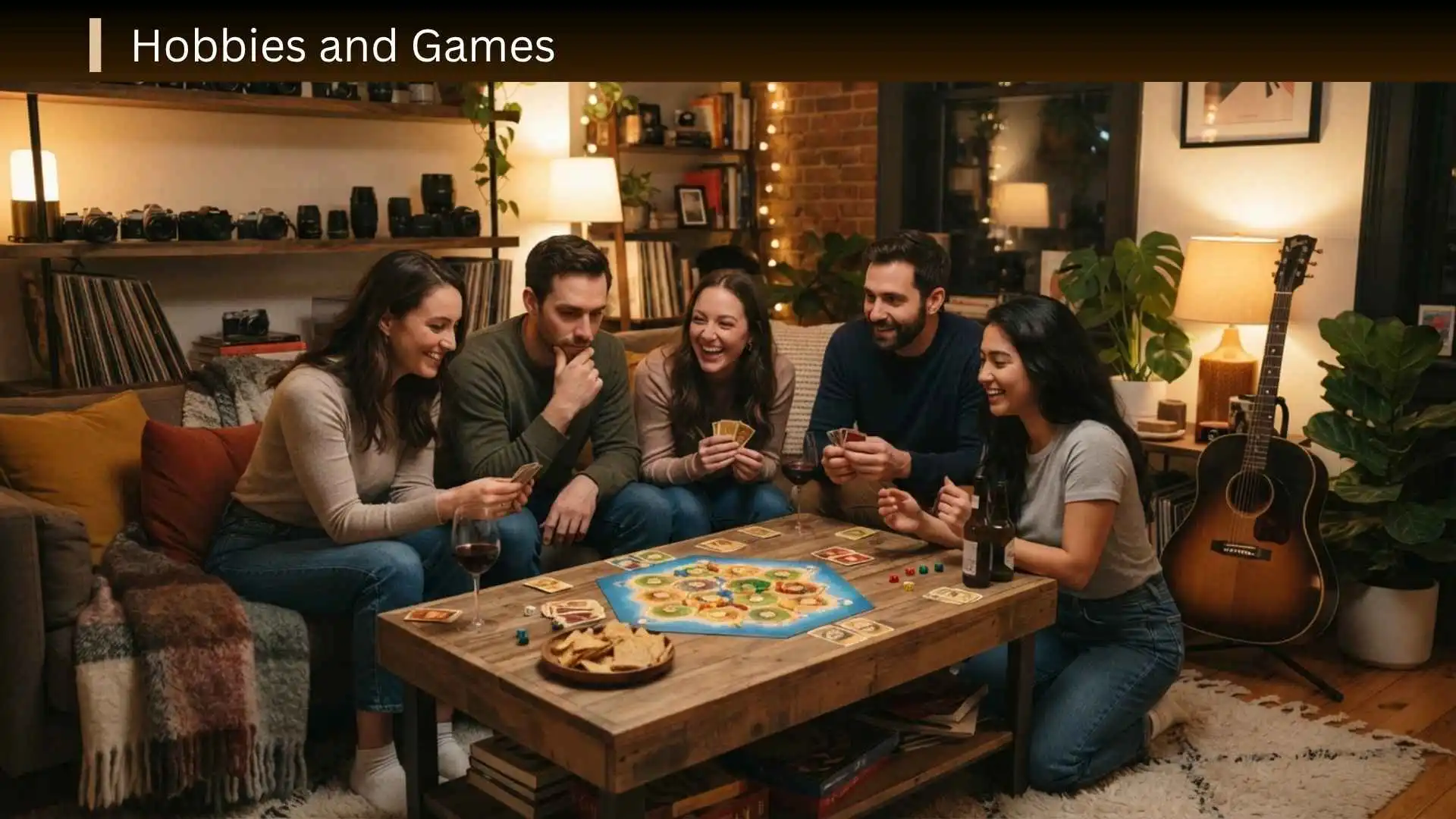
I believe free time becomes much more enjoyable when you have something that genuinely excites you. Whether you love solving puzzles, playing board games, exploring outdoor activities, drawing, collecting things, or competing with friends, hobbies and games can turn an ordinary day into something memorable.
You don’t need to be an expert or spend a lot of money to get started. The right hobby or game can help you relax, challenge your mind, stay active, express your creativity, or simply have fun. If you’re looking for something new to try, you’re in the right place—let’s explore hobbies and games that can match your interests, personality, and lifestyle.
What Are Hobbies and Games?
A hobby is an activity a person chooses to do regularly for enjoyment, relaxation, learning, creativity, or personal interest rather than as a primary job.
A game is a structured activity that usually involves rules, goals, challenges, decisions, or competition. Games can be played alone or with other people and can range from traditional board games to video games, card games, puzzles, sports, and outdoor activities.
The two categories often overlap. For example, someone may enjoy chess as an occasional game, while another person may make chess a long-term hobby by studying strategies, playing tournaments, collecting chess sets, or joining a chess club.
Why Hobbies and Games Matter
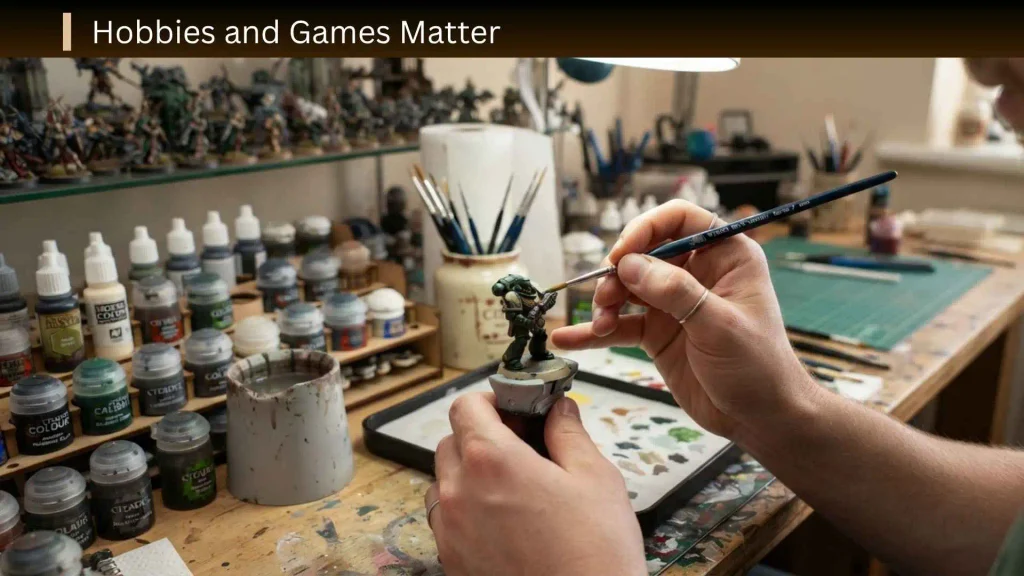
Hobbies and games can make leisure time more meaningful. Different activities provide different experiences, so there is no single “best” choice for everyone.
They Provide Enjoyable Ways to Spend Free Time
A good hobby gives your free time a clear purpose without making relaxation feel like another obligation. Reading, drawing, gardening, puzzles, cooking, gaming, and model building can all turn an ordinary afternoon or evening into something engaging.
They Encourage Learning
Many hobbies involve developing new skills. You might learn photography techniques, improve your cooking, understand how plants grow, practice a musical instrument, or learn the rules and strategies of a new game.
They Offer Opportunities for Creativity
Creative hobbies allow people to experiment and make something of their own. Examples include:
- Drawing and painting
- Photography
- Writing
- Knitting and crochet
- Woodworking
- Pottery
- Scrapbooking
- Jewelry making
- Sewing
- DIY projects
- Model building
They Can Bring People Together
Games are especially useful for social interaction. Board games, card games, trivia, tabletop role-playing games, sports, and multiplayer video games can give friends and family a shared activity.
Hobbies can also become social pursuits when people participate in clubs, classes, conventions, workshops, online communities, or local groups.
Popular Types of Hobbies and Games
There are thousands of possibilities, but most can be organized into a few broad categories.
Board Games
Board games range from simple family games to complex strategy games. They can involve planning, negotiation, deduction, cooperation, storytelling, or competition.
They are a good choice when you want a screen-free activity that can be enjoyed with family or friends.
Common categories include:
- Strategy games
- Family games
- Cooperative games
- Party games
- Word games
- Trivia games
- Deduction games
- Abstract games
When choosing a board game, consider the number of players, approximate playing time, complexity, and age suitability.
Card Games
Card games are convenient because a standard deck takes very little space and can support many different games.
Options range from traditional games such as solitaire, hearts, spades, and rummy to collectible and trading card games with extensive rules and communities.
Card games can be especially useful for people who want inexpensive entertainment that is easy to store and take with them.
Video Games
Video games cover an enormous range of experiences. Players can choose from:
- Puzzle games
- Simulation games
- Role-playing games
- Strategy games
- Adventure games
- Sports games
- Racing games
- Cooperative games
- Competitive multiplayer games
- Casual games
The right choice depends heavily on personal preference. Someone looking for relaxation may prefer a peaceful simulation or puzzle game, while another player may enjoy the challenge of a competitive strategy game.
Puzzles
Puzzles are a flexible hobby because they can be enjoyed alone or with others.
Popular options include:
- Jigsaw puzzles
- Crossword puzzles
- Sudoku
- Logic puzzles
- Word puzzles
- Mechanical puzzles
- Puzzle books
- Escape-room-style puzzles
Puzzles can be particularly appealing to people who enjoy solving problems, identifying patterns, and working toward a clear objective.
Arts and Crafts
Arts and crafts provide a hands-on alternative to screen-based entertainment. They also offer a wide range of difficulty levels.
Beginners can start with relatively simple projects such as coloring, paper crafts, basic drawing, or simple DIY decorations. More experienced hobbyists may move into sewing, woodworking, ceramics, painting, or detailed model making.
Collecting
Collecting can turn an interest in a particular subject into a long-term hobby.
People collect many different things, including:
- Coins
- Stamps
- Books
- Trading cards
- Vinyl records
- Postcards
- Vintage toys
- Sports memorabilia
- Art
- Rocks and minerals
- Antiques
A collection does not need to be expensive to be meaningful. Many collectors focus on learning about the objects, preserving them, organizing them, and understanding their history.
Outdoor Hobbies
Outdoor hobbies are a good fit for people who prefer activities away from screens and indoor spaces.
Examples include:
- Hiking
- Birdwatching
- Gardening
- Fishing
- Cycling
- Photography
- Camping
- Geocaching
- Nature observation
- Recreational sports
The best option depends on your environment, equipment, fitness level, available time, and personal interests.
Sports and Recreational Games
Sports combine physical activity with skill, rules, and often social interaction.
Popular recreational options include:
- Basketball
- Tennis
- Pickleball
- Soccer
- Golf
- Swimming
- Bowling
- Volleyball
- Table tennis
- Badminton
You do not necessarily need to play competitively. Recreational participation can simply be a way to have fun and spend time with other people.
Best Hobbies and Games for Different Interests
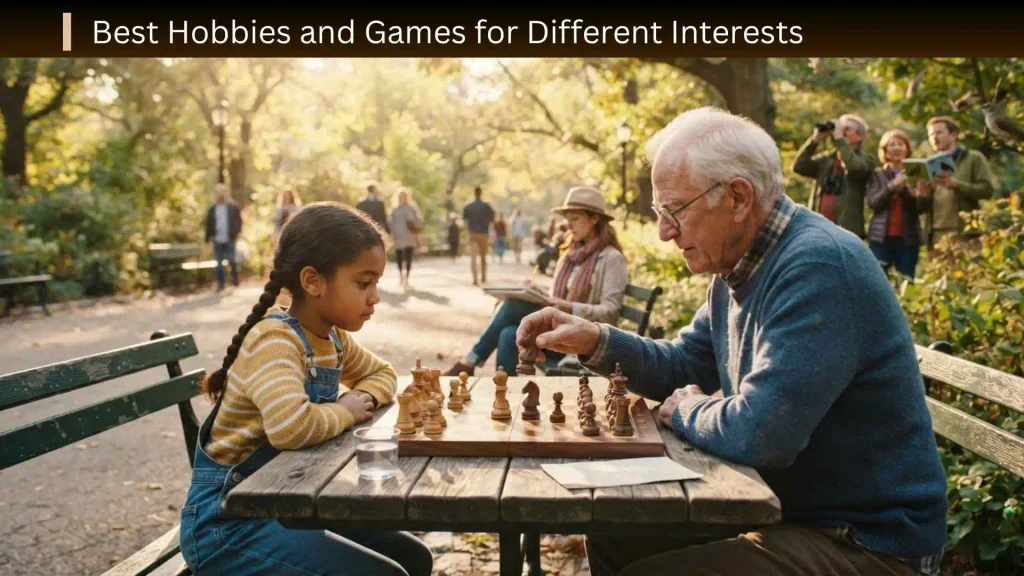
Choosing by personality or interest can make it easier to narrow down the possibilities.
| If you enjoy… | Consider… |
| Creativity | Painting, drawing, crafts, photography |
| Competition | Chess, sports, strategy games |
| Relaxation | Reading, gardening, puzzles, coloring |
| Technology | Video games, programming, digital art |
| Nature | Hiking, birdwatching, gardening |
| Social activities | Board games, trivia, recreational sports |
| Collecting | Coins, cards, books, records |
| Physical activity | Cycling, swimming, hiking, sports |
| Problem-solving | Chess, Sudoku, puzzles, strategy games |
| Making things | Woodworking, sewing, pottery, DIY |
| Storytelling | Writing, role-playing games, theater |
| Learning | History clubs, languages, astronomy, cooking |
Hobbies and Games for Adults
Adults often have limited free time, so a hobby should ideally be enjoyable without creating unnecessary pressure.
Short activities such as puzzles, reading, drawing, casual gaming, cooking, or photography can work well for busy schedules.
People with more available time might prefer hobbies that involve deeper skill development, such as woodworking, gardening, playing an instrument, tabletop gaming, collecting, or participating in recreational sports.
A useful approach is to distinguish between a hobby you can enjoy in 15–30 minutes and one that requires a longer block of time. Having both types available makes it easier to stay engaged when your schedule changes.
Hobbies and Games for Families
Family activities work best when the rules, difficulty, and length are appropriate for everyone involved.
Good possibilities include:
- Family board games
- Card games
- Jigsaw puzzles
- Charades
- Trivia
- Outdoor scavenger hunts
- Simple crafts
- Cooking projects
- Gardening
- Building projects
- Recreational sports
The goal does not always need to be winning. Cooperative activities can be especially useful when family members prefer working toward a shared objective rather than competing against one another.
Hobbies and Games for Kids and Teens
Children and teenagers can explore hobbies that match their interests while gradually developing new skills.
Examples include:
- LEGO and other building activities
- Drawing and painting
- Reading
- Sports
- Music
- Puzzles
- Board games
- Science projects
- Model building
- Photography
- Coding
- Creative writing
- Gardening
Parents and caregivers can help by providing opportunities to try different activities instead of expecting a child to immediately commit to one hobby.
Interest often changes with age, and trying something new is part of discovering what feels enjoyable.
Solo Hobbies and Games
Not every hobby needs a group.
Solo activities can be ideal when you want quiet time or have a schedule that does not match other people’s availability.
Popular solo options include:
- Reading
- Journaling
- Drawing
- Painting
- Photography
- Gardening
- Cooking
- Puzzles
- Model building
- Video games
- Collecting
- Writing
- Learning an instrument
Solo games can also provide structured entertainment. Solitaire, many puzzle games, single-player video games, and solo board games can all be played independently.
Social Hobbies and Games
If your main goal is meeting people or spending more time with friends, choose activities that naturally encourage interaction.
Board-game groups, recreational sports, book clubs, tabletop role-playing groups, crafting circles, dance classes, photography clubs, and volunteer activities can all create opportunities for regular social contact.
The important distinction is that a social hobby gives people something to do together. That shared activity can make conversation and connection feel more natural.
How to Choose the Right Hobby
With so many choices available, start by considering your own circumstances rather than following a generic list of “best” hobbies.
1. Think About What You Already Enjoy
Ask yourself:
- Do I prefer creating or consuming?
- Do I like competition or cooperation?
- Do I prefer indoor or outdoor activities?
- Do I enjoy working alone or with others?
- Do I like physical or mental challenges?
- Do I want relaxation or stimulation?
- Do I enjoy learning new skills?
Your answers can quickly eliminate activities that are unlikely to suit you.
2. Consider Your Available Time
A hobby should fit your actual schedule.
If you only have a few minutes available, choose something that can be started and stopped easily. If you regularly have several free hours, you may enjoy a more involved activity.
3. Consider Your Budget
Some hobbies require very little money, while others can become expensive.
Low-cost options include:
- Walking
- Writing
- Drawing
- Reading through a library
- Puzzles
- Gardening from existing supplies
- Free community activities
- Card games
For more expensive hobbies, establish a budget before buying equipment or collectibles.
4. Start Small
You do not need to buy everything associated with a hobby on your first day.
Try the basic version first. If you enjoy it, gradually invest in better equipment, classes, supplies, or specialized materials.
This approach can prevent spending a lot of money on an activity that turns out not to interest you.
5. Choose Something You Will Actually Do
Theoretically interesting does not always mean practically suitable.
A hobby may sound exciting but require more preparation, space, travel, or time than you are willing to provide. Choose an activity that fits naturally into your lifestyle.
How to Start a New Hobby
Starting does not have to be complicated.
Step 1: Pick one activity.
Choose something that genuinely interests you.
Step 2: Learn the basics.
Use a beginner-friendly book, tutorial, class, guide, or community resource.
Step 3: Get only the essentials.
Avoid purchasing advanced equipment before you know whether you enjoy the activity.
Step 4: Set aside regular time.
Even a small, consistent amount of time can help turn an occasional activity into a hobby.
Step 5: Track your progress.
For skill-based hobbies, keep examples of your work or record what you have learned.
Step 6: Explore the community.
If you want a social experience, look for local clubs, classes, groups, events, or online communities related to the hobby.
How to Choose a Game
Choosing a game is different from choosing a long-term hobby because the immediate goal is usually entertainment.
Consider these factors:
Number of Players
Some games work best with two people, while others are designed for larger groups. Check the recommended player count before buying.
Playing Time
A short game may be better for casual gatherings, while longer games can work well when everyone wants a more involved experience.
Complexity
Some games can be learned in minutes. Others require extensive rules and several practice sessions.
Choose complexity based on the players’ experience and patience rather than assuming a more complicated game is automatically better.
Competition vs. Cooperation
Competitive games involve players working against one another. Cooperative games allow participants to work toward a shared objective.
Neither style is universally better. The best choice depends on the group.
Age and Accessibility
Make sure the game is appropriate for the intended players. Consider reading ability, visual requirements, physical dexterity, attention span, and familiarity with game rules when relevant.
How to Turn a Game Into a Hobby
A game can become much more than occasional entertainment when you decide to explore it deeply.
For example, a person interested in chess might:
- Learn the basic rules.
- Practice common tactics.
- Study openings and endgames.
- Play regularly.
- Analyze completed games.
- Join a chess club.
- Participate in tournaments.
- Explore the history and culture surrounding the game.
The same pattern can apply to card games, tabletop games, video games, sports, puzzles, and other activities.
The difference is the level of involvement. Casual players seek occasional entertainment, while hobbyists often enjoy learning, improving, collecting, creating, or participating in a wider community.
Low Cost Hobbies and Games
You do not need a large budget to enjoy hobbies and games.
Some inexpensive possibilities include:
- Walking
- Writing
- Sketching
- Reading
- Birdwatching
- Journaling
- Origami
- Puzzles
- Card games
- Cooking
- Gardening
- Photography with an existing phone
- Nature observation
- Free community events
Libraries can also provide access to books, educational resources, community programs, and sometimes games or hobby-related activities.
Hobbies and Games Without Screens
If you want to spend less time looking at a screen, consider hands-on or face-to-face activities.
Board games, cards, puzzles, drawing, painting, gardening, cooking, woodworking, knitting, hiking, fishing, collecting, and recreational sports can all provide alternatives.
Screen-free hobbies can also work well as shared activities because people can talk and interact while participating.
How to Keep a Hobby Enjoyable
A hobby should not become another source of unnecessary pressure.
Avoid Turning Everything Into a Competition
Improvement can be satisfying, but constant comparison can make a relaxing hobby stressful. Focus on what you personally enjoy and what you want to learn.
Allow Yourself to Change Interests
It is perfectly reasonable to stop enjoying a hobby. Interests change over time, and trying different activities can help you discover something that suits your current lifestyle better.
Do Not Overspend
Enjoyment does not always increase with the amount of equipment you own. Learn what you actually need before making major purchases.
Make Time for Fun
A hobby is supposed to be enjoyable. If an activity begins feeling like an obligation, consider changing how you approach it or trying something different.
Frequently Asked Questions
What are examples of hobbies and games?
Examples include reading, gardening, painting, photography, collecting, board games, card games, video games, puzzles, hiking, cooking, sports, model building, writing, and crafts.
What is the difference between a hobby and a game?
A hobby is a broader leisure activity that someone may pursue regularly for enjoyment or personal development. A game is a structured activity with rules, goals, or challenges. A game can become a hobby when someone plays or studies it regularly.
What are good hobbies for people who are bored?
Try activities that provide either a creative challenge or a clear goal. Puzzles, drawing, cooking, photography, reading, gardening, learning an instrument, board games, and outdoor exploration are useful starting points.
What are good hobbies to do alone?
Reading, writing, drawing, painting, puzzles, gardening, photography, cooking, collecting, model building, and many single-player games can be enjoyed alone.
What hobbies are good for socializing?
Board games, recreational sports, book clubs, tabletop role-playing games, crafting groups, photography clubs, dance classes, and community activities can provide natural opportunities to meet and interact with people.
What are some inexpensive hobbies?
Reading from a library, walking, writing, drawing, journaling, birdwatching, nature observation, basic card games, puzzles, and some forms of gardening can be inexpensive ways to spend free time.
How do I find a hobby I actually enjoy?
Start with activities connected to interests you already have. Try several options without making a large investment, then pay attention to which activities you naturally look forward to doing.
Can playing games be considered a hobby?
Yes. If you regularly play, study, collect, discuss, create content about, or participate in a game community, gaming can become a hobby rather than simply occasional entertainment.
Conclusion
Hobbies and games give people many ways to make their free time more enjoyable, creative, social, active, or intellectually engaging. The possibilities range from simple activities such as reading and card games to more involved interests such as collecting, woodworking, recreational sports, tabletop gaming, and photography.
The best choice is not necessarily the most popular or expensive one. It is the activity that fits your interests, time, budget, space, and preferred way of spending leisure time. Start small, explore different options, and give yourself permission to change interests as your life changes.

I’m Olivia Bennett, a passionate writer who loves exploring ideas, learning new concepts, and sharing knowledge in a straightforward way. I write for Cognivoora with the goal of making useful topics easier to understand without unnecessary complexity. My approach combines research, clarity, and a reader-first perspective.
Books:
- Think Clearly, Live Better
- The Curious Reader’s Guide