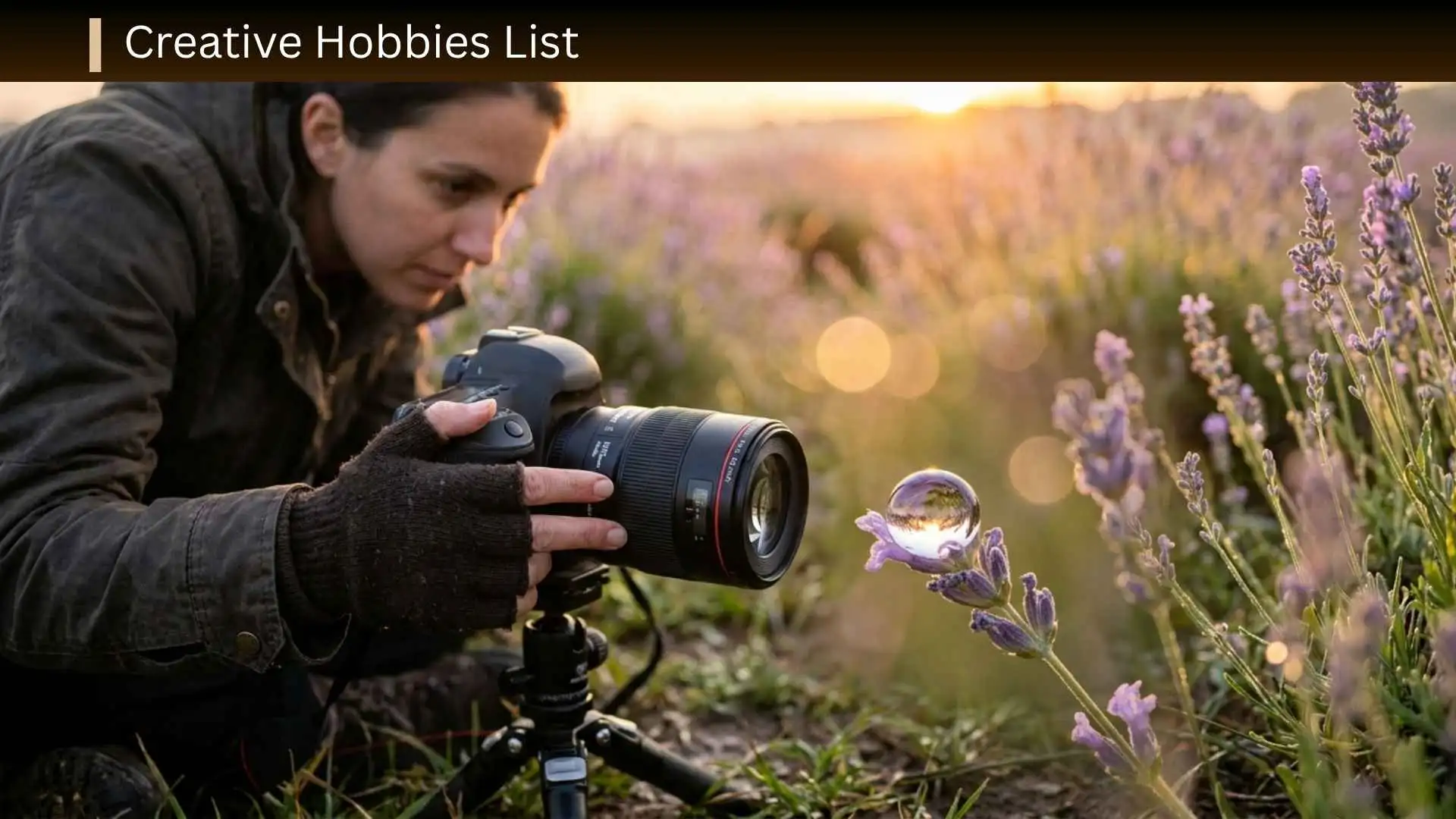
I believe a good hobby can do more than simply fill your free time—it can give you a chance to create, explore, and enjoy something that feels truly yours. If you’re tired of the same daily routine or you’re looking for a fun way to express yourself, this creative hobbies list can help you discover something new.
You don’t need to be naturally artistic or highly skilled to get started. Whether you enjoy drawing, crafting, writing, photography, cooking, DIY projects, or learning a hands-on skill, you can find a creative hobby that matches your personality, interests, budget, and available time. Keep reading to explore creative hobby ideas that can inspire you to put your imagination to work and find an activity you’ll genuinely enjoy.
What Are the Best Creative Hobbies?(Quick Answer)
Some of the most versatile creative hobbies for beginners include sketching, watercolor painting, creative writing, photography, journaling, crochet, knitting, embroidery, paper crafts, calligraphy, digital art, baking, gardening, pottery, woodworking, jewelry making, sewing, collage, music, and candle making.
If you’re choosing your first creative hobby, consider three things: what you enjoy making, how much time and space you have, and how much you’re willing to spend on supplies.
50 Creative Hobbies to Try
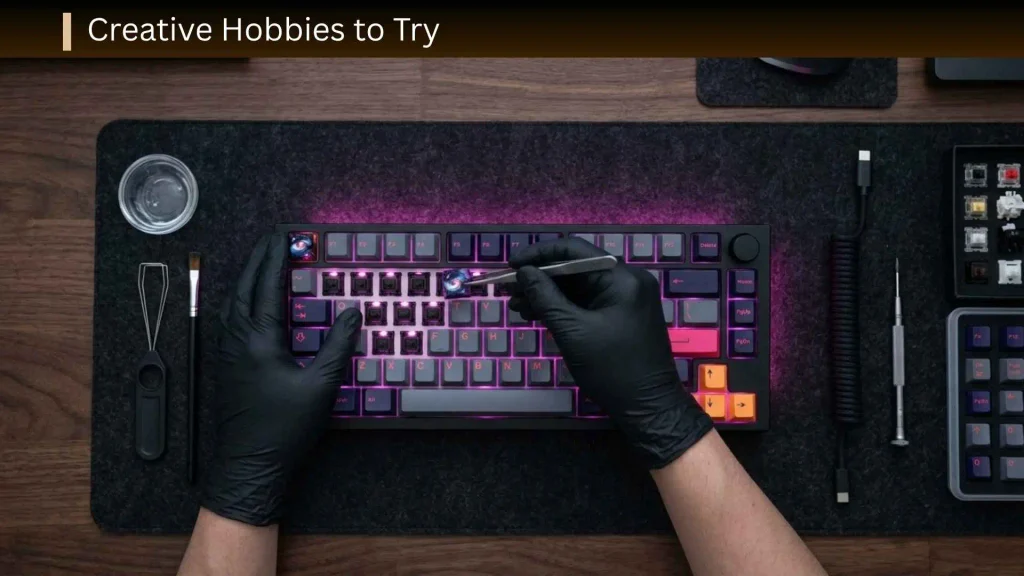
The ideas below are organized by the kind of creativity they involve, making it easier to find something that matches your interests rather than working through a random list.
1. Sketching
Sketching is one of the simplest ways to practice visual creativity. You can work with a pencil and paper almost anywhere, experimenting with portraits, landscapes, objects, architecture, or imaginative drawings.
Best for: Beginners, quiet solo practice, portable creativity
Starting supplies: Pencil, eraser, sketchbook
Difficulty: Easy to moderate
Cost: Low
A useful way to begin is to draw ordinary objects around your home instead of waiting for inspiration. Regular observation teaches proportion, shape, texture, and shading.
2. Watercolor Painting
Watercolor uses diluted pigment to create transparent layers and flowing effects. It works particularly well for landscapes, botanical illustrations, loose portraits, cards, and small studies.
Unlike some larger painting setups, watercolor can be relatively compact, making it practical for a desk or small living space.
Beginner tip: Start with a limited palette and practice washes, gradients, and simple shapes before attempting complicated paintings.
3. Acrylic Painting
Acrylic paint is versatile enough for canvas painting, mixed-media projects, decorative objects, and experimental techniques. It dries relatively quickly and can be used in both detailed and expressive styles.
You don’t need a large studio. A small canvas, basic brushes, a palette, and a few colors can provide plenty of room to experiment.
4. Oil Painting
Oil painting offers a slower working process that allows artists to blend colors and develop layers over time. It can be rewarding for people who enjoy detailed, deliberate artwork.
It generally requires more setup and cleanup than beginner-friendly drawing or watercolor, so it is better suited to people who have dedicated workspace and patience for learning the medium.
5. Digital Drawing
Digital drawing combines traditional visual-art skills with software and electronic tools. Depending on your setup, you can create illustrations, character designs, comics, concept art, posters, or abstract artwork.
A drawing tablet can be useful, but beginners can also explore digital art with a tablet or other compatible device and drawing application.
Best for: People interested in technology, illustration, design, or animation.
6. Digital Collage
Digital collage involves combining photographs, illustrations, textures, typography, and other visual elements into a new composition.
It’s a good choice if you enjoy collecting images and arranging them but aren’t particularly interested in drawing everything from scratch.
7. Photography
Photography turns everyday observation into a creative practice. You can specialize in landscapes, architecture, street scenes, food, portraits, nature, macro photography, or still life.
You don’t necessarily need expensive camera equipment to start. A smartphone can provide enough flexibility to learn composition, perspective, lighting, and visual storytelling.
8. Photo Editing
Photo editing can become a creative hobby in its own right. You can experiment with cropping, exposure, color, contrast, black-and-white treatments, retouching, and artistic effects.
Learning to edit also gives photographers a better understanding of how an image can communicate a particular mood or idea.
9. Calligraphy
Calligraphy turns handwriting into a deliberate visual art form. Different styles have their own letterforms, tools, and techniques.
It works particularly well for people who enjoy detailed, repetitive practice and want a hobby that can produce useful results such as decorated envelopes, artwork, signs, or personalized gifts.
10. Hand Lettering
Hand lettering focuses on drawing letters rather than reproducing a formal calligraphic script. You can experiment with different fonts, layouts, decorative elements, and lettering styles.
A notebook and a few pens are enough to begin.
11. Creative Writing
Creative writing gives you a way to construct stories, characters, scenes, essays, poetry, or fictional worlds.
You don’t need to plan an entire novel to start. Short stories, flash fiction, personal essays, and writing prompts can make the hobby more approachable.
Best for: People who enjoy ideas, language, storytelling, imagination, or observation.
12. Poetry
Poetry offers a particularly flexible creative outlet because a finished piece can be only a few lines long. You can experiment with imagery, rhythm, metaphor, free verse, rhyme, or spoken-word writing.
One advantage is the minimal setup: a notebook or digital document is enough.
13. Journaling
Journaling becomes creative when you use writing, sketches, lists, memories, photographs, lettering, or visual layouts to document your experiences and ideas.
It can be completely private, which removes the pressure to produce something polished for an audience.
14. Scrapbooking
Scrapbooking combines photographs, paper, typography, memorabilia, decorative elements, and personal storytelling.
It is particularly appealing if you enjoy preserving family events, vacations, milestones, or everyday memories in a physical format.
Watch for: Supplies can accumulate quickly, so setting a storage limit can help keep the hobby manageable.
15. Collage
Traditional collage involves combining pieces of paper, photographs, magazine pages, fabric, or other materials into a new composition.
Because you can rearrange found materials rather than creating every component yourself, collage is a good option for people who want to experiment with art without beginning with advanced drawing skills.
16. Origami
Origami is the art of folding paper into recognizable or abstract forms. Projects range from simple animals and geometric shapes to highly intricate models.
It requires very little equipment and can gradually become more challenging as you learn new folds and patterns.
Starting supplies: Paper and a flat surface
Cost: Very low
Space: Minimal
17. Paper Quilling
Quilling involves rolling, shaping, and arranging narrow strips of paper to create decorative designs.
It’s particularly suitable for people who like precision and small-scale projects. Finished designs can become cards, framed artwork, ornaments, or decorations.
18. Card Making
Handmade cards combine paper crafting, lettering, drawing, stamping, collage, and other techniques.
You can keep projects simple or gradually introduce cutting machines, specialty papers, embossing, watercolor, or other decorative methods.
19. Scrap Paper Bookmaking
Bookmaking lets you construct small notebooks, journals, sketchbooks, or handmade books from paper and binding materials.
This hobby is especially satisfying because you’re creating both the container and the content.
20. Rubber Stamping
Rubber stamping involves using ink and stamps to create repeated images or patterns on paper and other suitable surfaces.
It can complement card making, journaling, scrapbooking, gift wrapping, and mixed-media art.
Fiber and Textile Creative Hobbies
If you enjoy working with fabric, yarn, thread, or other flexible materials, these hobbies offer a large range of difficulty and project sizes.
21. Crochet
Crochet uses a hook and yarn to create fabric through different stitches. Beginners can start with straightforward projects such as scarves, dishcloths, simple hats, or small decorative pieces.
Once you understand basic stitches, you can explore blankets, garments, amigurumi, bags, and more complex patterns.
22. Knitting
Knitting uses needles to create fabric from yarn. It can be learned through relatively simple projects and expanded into garments, accessories, toys, and household items.
Knitting is particularly attractive if you like working with patterns and seeing a project develop gradually row by row.
23. Embroidery
Embroidery involves decorating fabric with stitched designs. There are numerous techniques, from simple outlines and botanical motifs to elaborate decorative work.
A basic hoop, fabric, embroidery needle, and thread can provide a low-cost starting point.
24. Cross-Stitch
Cross-stitch uses X-shaped stitches arranged according to a pattern. Because designs are usually represented on a grid, it can be easier for beginners who prefer clear instructions over free-form drawing.
It’s also convenient for small projects that can be completed in short sessions.
25. Sewing
Sewing can be both practical and artistic. You can make clothing, bags, cushions, fabric decorations, toys, or alterations.
A beginner doesn’t need to start with complicated garments. Small projects such as a simple tote bag or cushion cover can teach basic cutting, seams, pressing, and machine control.
26. Quilting
Quilting combines fabric selection, geometric design, sewing, and layered construction. A quilt can take considerable time, but that is part of its appeal for people who enjoy long-term projects.
If a full quilt feels overwhelming, start with a small wall hanging, table runner, or patchwork project.
27. Fabric Dyeing
Fabric dyeing allows you to alter plain textiles using color and pattern. Techniques can produce very different results, from deliberately patterned designs to subtle color changes.
Always follow the instructions for the specific dye and fabric, and protect your workspace from stains.
28. Macramé
Macramé creates decorative or functional objects through knotting cord. Common projects include plant hangers, wall decorations, keychains, and small accessories.
It is a useful choice when you want a tactile craft that doesn’t require a sewing machine or extensive equipment.
29. Weaving
Weaving interlaces strands to produce fabric or decorative textiles. Small frame looms can make the hobby accessible even if you don’t have room for a large loom.
You can experiment with yarns, textures, colors, and patterns to create wall hangings or small textile pieces.
30. Felting
Felting involves working with wool fibers to create shapes, textures, and textiles. Needle felting is often used for small sculptures and decorative objects, while wet felting can produce broader textile forms.
Because felting needles are sharp, beginners should use an appropriate work surface and handle tools carefully.
Hands On Making and Craft Hobbies
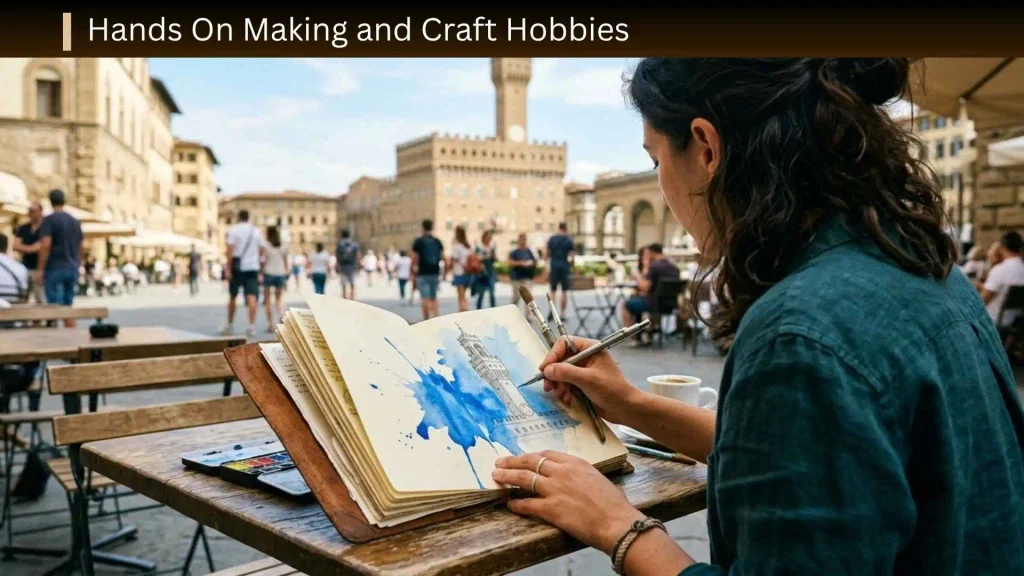
These options are ideal if your idea of creativity involves building something you can hold, use, display, or give away.
31. Pottery
Pottery involves shaping clay into functional or decorative objects. Hand-building techniques can be a practical introduction because they don’t necessarily require access to a pottery wheel.
Wheel throwing is another path, but it requires equipment and usually access to a kiln through a studio or community facility.
Best for: People who enjoy tactile materials and making physical objects
Space: Home-friendly for some hand-building projects; studio access is often useful for firing
32. Ceramics
Ceramics extends beyond basic pottery and can include sculptural work, tiles, decorative objects, and functional pieces.
A local ceramics studio or community art center can be a good way to learn because clay firing requires specialized equipment.
33. Woodworking
Woodworking combines design, measurement, material selection, joinery, and finishing. Projects can range from simple shelves and boxes to furniture and detailed decorative pieces.
It has a steeper equipment and safety requirement than many desk-based hobbies.
Beginner tip: Learn tool safety and basic measuring and cutting techniques before attempting complex projects.
34. Wood Carving
Wood carving focuses on shaping wood with carving tools to create decorative or functional objects.
It requires patience and careful tool handling. Starting with a beginner-friendly project and learning proper cutting direction and tool control is more important than buying a large collection of tools.
35. Jewelry Making
Jewelry making can include beading, wirework, metalwork, polymer clay, or mixed-media techniques.
It offers a relatively quick project cycle: a beginner may be able to complete a simple bracelet, pair of earrings, or pendant without committing to a large project.
36. Polymer Clay
Polymer clay can be shaped into miniature sculptures, beads, jewelry components, figurines, and decorative pieces before being cured according to the manufacturer’s instructions.
It is particularly appealing to people who enjoy miniature work and detailed modeling.
37. Candle Making
Candle making combines scent selection, vessel design, wax, color, and presentation.
Because it involves heated materials and potentially flammable products, beginners should follow the specific manufacturer’s safety instructions, use suitable equipment, and work in an appropriate space.
38. Soap Making
Soap making can be a creative formulation and design hobby, with opportunities to explore scents, colors, shapes, and presentation.
Different soap-making methods have different safety considerations. Processes involving lye require particular care because lye is corrosive. Beginners should learn the method thoroughly and follow established safety guidance rather than improvising recipes.
39. Miniature Making
Miniature making involves creating tiny environments, furniture, objects, figures, or scenes.
It can combine painting, woodworking, sculpting, paper crafting, modeling, and other techniques, making it an excellent hobby for someone who likes switching between creative disciplines.
40. Model Building
Model building includes assembling and finishing scale models of vehicles, aircraft, ships, buildings, figures, and other subjects.
The creative component often comes after assembly, when you paint, weather, detail, or customize the model.
Food, Nature, and Everyday Creative Hobbies
Creativity doesn’t have to produce conventional artwork. Food, plants, and everyday materials can also become creative media.
41. Baking
Baking combines recipes with technique, decoration, flavor, texture, and presentation. Once you understand basic principles, you can experiment with cakes, cookies, breads, pastries, and decorated desserts.
Baking is especially rewarding for people who like creating something that can be shared rather than simply displayed.
42. Cake Decorating
Cake decorating focuses specifically on the visual side of baking. You can practice piping, fondant work, edible decorations, lettering, and design.
Start with basic piping techniques before moving into elaborate themed cakes.
43. Bread Making
Bread making is a creative process with a strong technical component. You can experiment with shaping, scoring, flour combinations, hydration, fermentation, and presentation.
It is a good match for people who enjoy learning how small changes in a process affect the final result.
44. Creative Cooking
Cooking can become a hobby rather than simply a daily task when you deliberately explore unfamiliar ingredients, cuisines, presentation techniques, sauces, or recipe development.
Keeping notes about successful combinations can turn casual experimentation into a structured creative practice.
45. Gardening
Gardening involves planning, planting, arranging, and caring for living things. It can be as simple as growing herbs in containers or as involved as designing a landscape.
Container gardening makes the hobby accessible to people without a traditional yard.
46. Floral Arranging
Floral arranging involves combining flowers, foliage, color, shape, height, and texture into an intentional composition.
You can practice with supermarket flowers, garden cuttings where appropriate, or locally available seasonal plants.
47. Terrarium Making
Terrariums create miniature plant environments in suitable containers. Designing one involves plant selection, composition, layering, and ongoing care.
Because the finished arrangement is relatively small, it can suit people who want a nature-oriented creative project without maintaining a large garden.
Creative Hobbies Involving Music and Performance
Creativity can also be auditory or performance-based rather than visual.
48. Playing a Musical Instrument
Learning guitar, piano, ukulele, drums, violin, or another instrument develops creativity through rhythm, melody, interpretation, and practice.
A beginner should choose an instrument based partly on practical factors such as available space, noise restrictions, budget, and access to instruction.
49. Singing
Singing requires no instrument to get started and can be practiced privately or socially. You can explore vocal technique, different musical styles, songwriting, or ensemble singing.
Joining a choir or community music group adds a social dimension if you want one.
50. Music Production
Music production combines composition, recording, sound selection, arrangement, editing, and mixing.
A computer and suitable audio software can provide a starting point, although the learning curve can be substantial. Beginners often benefit from learning one skill at a time rather than trying to master every part of production immediately.
Creative Hobbies Compared at a Glance
| Hobby | Difficulty | Starting Cost | Time Flexibility | Space Needed | Main Creative Outlet |
| Sketching | Easy | Low | High | Minimal | Drawing |
| Watercolor | Easy–Moderate | Low–Moderate | High | Small | Painting |
| Photography | Easy–Moderate | Low–High | High | Minimal | Visual storytelling |
| Creative writing | Easy–Moderate | Very low | Very high | Minimal | Words and stories |
| Crochet | Easy–Moderate | Low | High | Small | Fiber craft |
| Embroidery | Easy–Moderate | Low | High | Minimal | Textile design |
| Sewing | Moderate | Low–Moderate | Moderate | Small–Medium | Fabric construction |
| Pottery | Moderate | Moderate–High | Moderate | Studio often useful | Clay |
| Woodworking | Moderate–Advanced | Moderate–High | Moderate | Medium–Large | Wood construction |
| Jewelry making | Easy–Advanced | Low–Moderate | High | Small | Wearable design |
| Gardening | Easy–Moderate | Low–Moderate | Seasonal | Outdoor or containers | Living design |
| Baking | Easy–Advanced | Low–Moderate | Moderate | Kitchen | Food and decoration |
| Musical instrument | Moderate–Advanced | Low–High | High | Varies | Music |
| Music production | Moderate–Advanced | Low–High | High | Small | Sound |
| Miniature making | Moderate | Low–Moderate | High | Small | Modeling |
Costs vary considerably by equipment, materials, quality, and how far you take the hobby. “Low” means the activity can generally be explored without a major initial investment, not that advanced participation will always remain inexpensive.
How to Choose the Right Creative Hobby
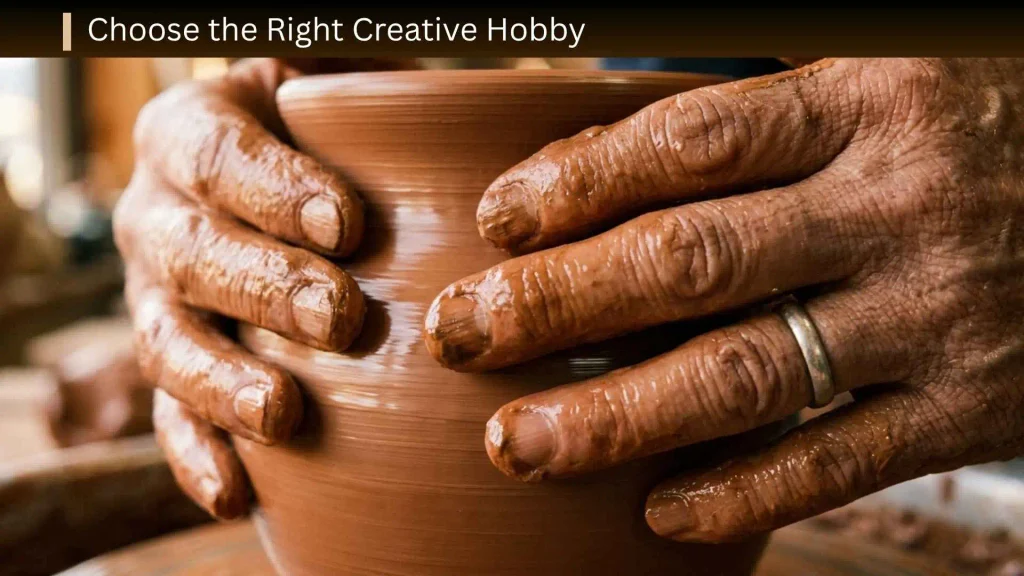
With 50 possibilities, the problem may be having too many choices, not too few. Use your everyday preferences to narrow them down.
If You Want a Very Low-Cost Hobby
Start with activities that require little equipment:
- Sketching
- Creative writing
- Poetry
- Journaling
- Origami
- Hand lettering
- Collage
- Singing
A low-cost hobby is easier to test without feeling committed to a significant purchase.
If You Want to Make Physical Objects
Consider:
- Crochet
- Knitting
- Pottery
- Woodworking
- Jewelry making
- Sewing
- Paper crafts
- Miniature making
These are especially satisfying if you enjoy seeing a tangible result develop over several sessions.
If You Have Very Little Space
Look at hobbies that can be packed away easily:
- Writing
- Drawing
- Embroidery
- Cross-stitch
- Calligraphy
- Origami
- Photography
- Digital art
- Jewelry making
A small workspace doesn’t prevent you from having a serious creative hobby.
If You Want Something Social
Some creative hobbies naturally create opportunities to meet other people:
- Community theater or performance
- Choir singing
- Group painting classes
- Pottery classes
- Quilting groups
- Knitting or crochet circles
- Photography clubs
- Writing groups
- Community gardening
- Music ensembles
The social aspect is optional; many of these can also be practiced independently.
If You Want a Hobby You Can Practice in Short Sessions
Choose activities that don’t require extensive setup and cleanup:
- Sketching
- Journaling
- Embroidery
- Cross-stitch
- Crochet
- Calligraphy
- Poetry
- Photography
- Origami
A hobby that fits naturally into 15- to 30-minute gaps may be easier to maintain than one that requires a full afternoon.
If You Prefer Long-Term Projects
Some creative hobbies become more rewarding when you enjoy gradual progress:
- Quilting
- Woodworking
- Oil painting
- Pottery
- Creative writing
- Learning an instrument
- Model building
- Gardening
- Music production
Choose one of these if you like having a project that evolves over weeks or months.
Creative Hobbies by Personality and Preference
There is no scientific test that determines which hobby is right for a particular personality, but your preferences can provide useful clues.
If you like precision: Try calligraphy, embroidery, cross-stitch, miniature making, origami, or jewelry making.
If you like experimentation: Try acrylic painting, collage, creative cooking, photography, digital art, or music production.
If you like storytelling: Try creative writing, photography, scrapbooking, filmmaking, or songwriting.
If you like working with your hands: Consider pottery, woodworking, crochet, sewing, jewelry making, or model building.
If you like nature: Gardening, floral arranging, nature photography, and terrarium making may be good fits.
If you like technology: Explore digital illustration, photography editing, graphic design, animation, or music production.
If you want a quiet solo activity: Writing, sketching, embroidery, crochet, watercolor, origami, and journaling are easy places to begin.
How to Start a Creative Hobby Without Overbuying
One of the most common beginner mistakes is purchasing a complete collection of supplies before discovering whether you actually enjoy the activity.
A better approach is to run a small experiment.
Start With the Basic Version
Buy or borrow only what is necessary for your first project. If you enjoy it, upgrade gradually.
For example, someone interested in painting doesn’t need a large selection of paints immediately. A small starter setup can reveal whether they enjoy the process before they invest further.
Choose a First Project You Can Finish
An achievable first project provides useful feedback. If your first project requires six months of practice, you may never learn whether the hobby itself suits you.
Pick something that is challenging enough to teach you but realistic enough to finish.
Learn One Fundamental Skill at a Time
Trying to master everything simultaneously can make a new hobby unnecessarily frustrating.
For photography, you might begin with composition. For crochet, learn foundational stitches. For drawing, practice shapes and observation. For woodworking, start with measuring and safe tool handling.
Don’t Confuse Expensive Equipment With Creative Skill
Better equipment can be useful in some hobbies, but it doesn’t replace practice.
Before upgrading, ask whether your current tools are actually preventing you from doing something you want to learn. If not, continued practice may provide more value than another purchase.
Keep a Record of Your Progress
Photograph finished projects, save drafts, maintain a sketchbook, or keep notes about what you learned.
Progress is often easier to recognize when you compare your current work with something you created several months earlier.
How to Make a Creative Hobby More Enjoyable
A hobby is easier to sustain when it fits your real life.
Set a small minimum: Instead of planning three-hour creative sessions, decide that you will spend 15 minutes on the hobby when time is limited.
Keep supplies accessible: If every session requires a major setup, you’re less likely to begin.
Alternate projects: Move between easy and challenging projects so that every session doesn’t feel like an examination.
Learn from multiple sources: Books, classes, tutorials, workshops, communities, and practice projects can all contribute different perspectives.
Allow unfinished work: Not every project needs to become a finished masterpiece. Experiments and failed attempts can teach you what you like.
Follow your curiosity: If a particular technique or subject keeps attracting your attention, let your hobby evolve rather than forcing yourself to follow a predetermined path.
Can Creative Hobbies Become Side Businesses?
Some creative hobbies can potentially become income-producing activities, but turning a hobby into a business changes the experience.
Potentially monetizable creative skills include:
- Photography
- Illustration
- Graphic design
- Jewelry making
- Sewing
- Woodworking
- Pottery
- Baking
- Writing
- Calligraphy
- Crafting
- Music production
Possible routes include selling finished products, accepting commissions, licensing creative work, teaching, freelancing, or creating digital products.
However, income is not guaranteed. Profit depends on factors such as material costs, pricing, demand, marketing, competition, time, skill, and consistency. A hobby can also be valuable even if it never generates money.
Creative Hobbies That Pair Well Together
You don’t have to choose only one.
Photography + photo editing: Learn to create and refine images.
Writing + photography: Combine visual storytelling with captions, essays, or travel writing.
Crochet + embroidery: Explore multiple textile techniques.
Gardening + floral arranging: Grow plants and use suitable flowers creatively.
Baking + cake decorating: Develop both culinary and visual skills.
Woodworking + miniature making: Apply construction skills at different scales.
Painting + journaling: Combine visual artwork with personal documentation.
Music + creative writing: Explore songwriting and lyric writing.
Pairing complementary hobbies can keep you interested while allowing skills from one activity to transfer to another.
Common Mistakes When Choosing a Creative Hobby
Choosing Based Only on What Looks Impressive
A hobby may look beautiful online while being frustrating to practice. Consider the process, not just the finished result.
Starting With an Advanced Project
Your first attempt doesn’t need to resemble professional work. Beginner projects are designed to teach the underlying skills.
Buying Too Many Supplies
Large supply collections can create expense, clutter, and pressure. Start small.
Expecting Immediate Skill
Creative ability develops through practice. Early work is often more about learning than producing polished results.
Turning Every Hobby Into Productivity
A creative hobby doesn’t have to make money, improve your résumé, or produce something useful. Enjoyment and curiosity are legitimate reasons to create.
Comparing Your Beginning With Someone Else’s Expertise
Online portfolios often show selected finished work rather than the many unsuccessful attempts behind it. Use other people’s work for inspiration and learning rather than as a measurement of your own starting point.
Frequently Asked Questions About Creative Hobbies
What are the best creative hobbies for beginners?
Sketching, watercolor, journaling, creative writing, origami, collage, hand lettering, photography, crochet, and embroidery are approachable starting points. The best option depends on whether you prefer words, images, physical materials, technology, or hands-on making.
What is the cheapest creative hobby to start?
Creative writing, poetry, sketching with basic stationery, journaling, singing, and simple origami can be started with very little equipment. Existing household materials can also make collage and paper crafts inexpensive to test.
What creative hobbies can I do at home?
Most of the hobbies in this list can be practiced at home, including drawing, painting, writing, photography, crochet, knitting, embroidery, sewing, jewelry making, baking, digital art, music production, and many forms of paper craft.
Some activities, such as pottery firing and larger-scale woodworking, may require access to a studio or suitable workspace.
What creative hobby is good for someone who doesn’t consider themselves artistic?
Creative hobbies don’t require traditional drawing ability. Writing, photography, baking, gardening, crochet, woodworking, music, journaling, paper folding, and jewelry making all involve creativity in different ways.
The important distinction is that creativity is broader than drawing or painting.
What creative hobbies require little space?
Writing, sketching, journaling, embroidery, cross-stitch, origami, calligraphy, digital art, photography, and small jewelry projects can work well in limited spaces.
What creative hobbies can be done in short sessions?
Sketching, journaling, embroidery, crochet, cross-stitch, calligraphy, poetry, origami, and photography can be divided into relatively short sessions. Choose projects that can be paused without creating difficult setup or cleanup.
Which creative hobbies can become income opportunities?
Photography, writing, illustration, jewelry making, woodworking, sewing, pottery, baking, calligraphy, and other creative skills can potentially be monetized. Actual income varies according to skill, demand, pricing, operating costs, and consistency, so a hobby should not be treated as guaranteed income.
How do I choose a creative hobby when I have too many interests?
Start with the constraint that matters most. If money is the priority, choose a low-cost option. If space is limited, choose a compact hobby. If you want social interaction, choose a group-friendly activity. If you want a tangible result, select a making-based craft. Testing two or three hobbies with small starter projects can also reveal which process you actually enjoy.
Conclusion
The best creative hobby isn’t necessarily the most impressive or popular one. It’s the activity whose process you genuinely want to return to.
If you want a low-cost starting point, try sketching, writing, origami, journaling, or hand lettering. If you prefer tactile projects, explore crochet, embroidery, pottery, woodworking, or jewelry making. For digital creativity, photography, digital drawing, photo editing, and music production offer room to develop technical skills alongside artistic expression.
Start small, choose a manageable first project, and give yourself enough time to discover what kind of creativity feels natural to you. You can always add a second hobby once you’ve found one worth continuing.

I’m Ethan Mitchell, a curious writer who enjoys turning complex ideas into simple, useful information. At Cognivoora, I focus on creating clear and engaging content that readers can understand and apply in everyday life. I believe good writing should educate, answer real questions, and leave readers with something valuable to remember.
Books:
- The Everyday Mind
- Simple Ideas, Better Thinking