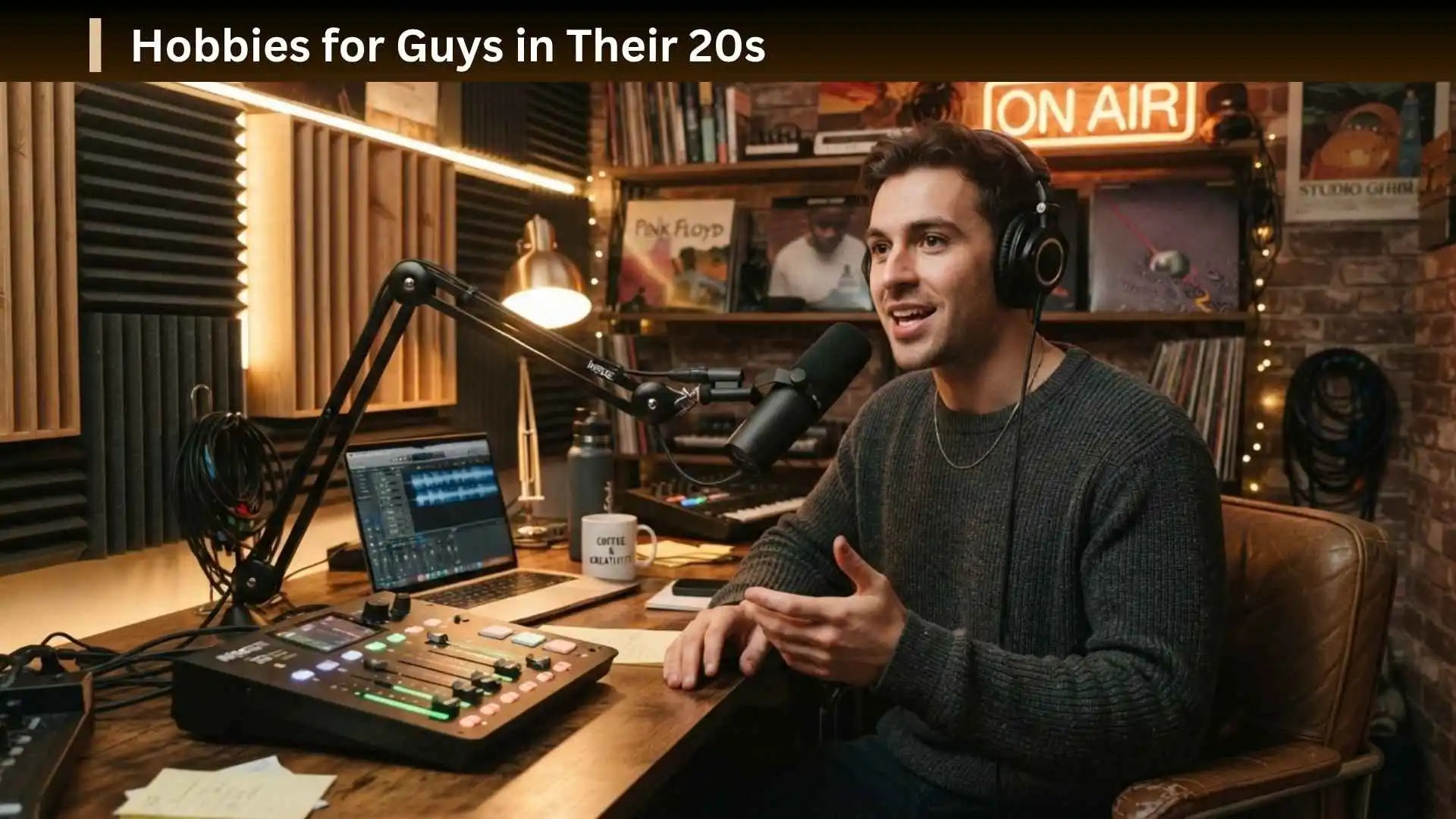
Your 20s are a great time to explore hobbies that fit your personality, budget, schedule, and long-term goals. The best hobbies for guys in their 20s do more than fill free time—they can help you meet people, stay active, develop practical skills, become more creative, or simply give you something enjoyable to look forward to.
Whether you want an inexpensive hobby at home, a social activity, an outdoor adventure, or a skill that could become a lifelong interest, there are plenty of options to try.
What Are Good Hobbies for Guys in Their (20s Quick Answer)
Some of the best hobbies for guys in their 20s include:
- Hiking and backpacking
- Weight training or calisthenics
- Photography
- Cooking
- Playing a musical instrument
- Reading
- Fishing
- Running
- Cycling
- Camping
- Golf
- Woodworking
- Drawing or digital art
- Gaming
- Home brewing non-alcoholic beverages
- Gardening
- Learning a language
- Volunteering
- Rock climbing
- Geocaching
- DIY projects
- Chess
- Coding
- Collecting
- Writing
The right choice depends on what you want from a hobby. If you want to meet people, choose a group-based activity. If you want to get stronger, choose a physical hobby. If you want to develop a useful skill, cooking, woodworking, coding, or photography may be better choices.
How to Choose a Hobby in Your 20s
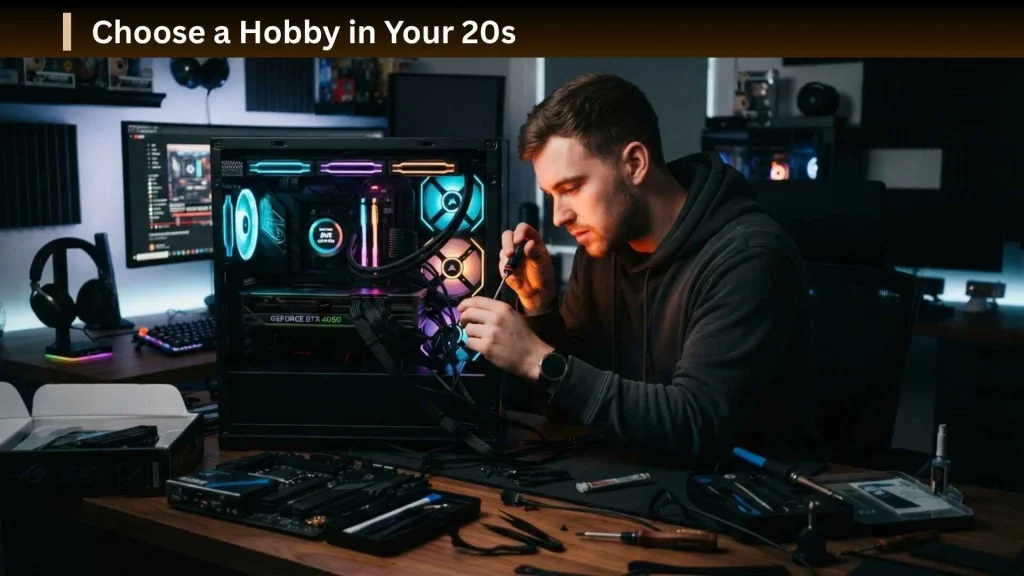
There is no universally best hobby. A good hobby should be something you can realistically continue rather than something that sounds impressive but quickly becomes another obligation.
Consider these five questions before choosing one:
Do You Want to Be More Active?
If you spend most of your day sitting at work, school, or home, an active hobby can provide a useful change of pace.
Consider:
- Hiking
- Running
- Cycling
- Swimming
- Climbing
- Golf
- Recreational sports
- Calisthenics
You do not necessarily need a gym membership. Many activities can start with little equipment.
Do You Want to Meet More People?
Your 20s can be a useful time to expand your social circle outside work or school. Hobbies that naturally involve other people make this easier.
Good social options include:
- Recreational sports leagues
- Board game groups
- Climbing gyms
- Photography clubs
- Running groups
- Volunteer organizations
- Dance classes
- Hiking groups
- Chess clubs
A hobby gives you something to talk about and a reason to interact repeatedly, which can make meeting people feel more natural.
Do You Want to Learn a Valuable Skill?
Some hobbies can eventually become practical skills you use throughout your life.
Cooking, for example, can help you become more independent. Basic woodworking can make DIY projects easier. Photography can improve your ability to create visual content. Coding can provide a foundation for technical projects.
Useful skill-based hobbies include:
- Cooking
- Coding
- Photography
- Personal writing
- Woodworking
- Sewing
- Car maintenance
- Gardening
- Home improvement
- Learning a language
Do You Need a Low Cost Hobby?
You do not need to spend hundreds of dollars to start a hobby.
Low-cost options include:
- Reading
- Walking
- Running
- Drawing
- Writing
- Hiking
- Chess
- Geocaching
- Cooking with ingredients you already use
- Bodyweight workouts
Start with the minimum equipment necessary. You can invest more if you discover that you genuinely enjoy the activity.
Do You Prefer Time Alone?
Some hobbies work particularly well when you want quiet time away from work, social media, or other people.
Try:
- Reading
- Photography
- Drawing
- Writing
- Fishing
- Gardening
- Cooking
- Playing an instrument
- Model building
- Gaming
Solo hobbies can also be a good way to develop concentration and personal interests without worrying about competition or performance.
25 Hobbies for Guys in Their 20s
Here are practical options across fitness, creativity, learning, social activities, and outdoor recreation.
1. Hiking
Hiking is an accessible way to spend time outdoors while exploring local parks, trails, forests, and other natural areas.
You can start with short day hikes and gradually work toward longer routes. It also works well as either a solo activity or a social hobby.
Best for: Outdoor enthusiasts and people who want an active hobby
Cost: Low to moderate
Time: A few hours to a full day
Equipment: Comfortable shoes, water, appropriate clothing, and basic trail supplies
2. Cooking
Learning to cook is one of the most practical hobbies you can develop in your 20s.
Instead of trying complicated recipes immediately, learn fundamental techniques such as roasting, sautéing, grilling, making sauces, cooking grains, and preparing vegetables.
You can then build a collection of reliable meals that fit your taste and budget.
Best for: Practical skills and creativity
Cost: Low to moderate
Time: 20 minutes to several hours
Equipment: Basic kitchen equipment
3. Photography
Photography turns ordinary surroundings into opportunities for observation and creativity.
You do not need an expensive camera to begin. A smartphone can be enough to learn composition, lighting, framing, and editing.
As your interest develops, you can explore landscape, street, wildlife, sports, portrait, or architectural photography.
Best for: Creative people and visual learners
Cost: Low to high
Time: Flexible
Equipment: Smartphone or camera
4. Weight Training
Strength training can become a structured hobby rather than simply another workout.
You can learn about exercise technique, programming, progressive overload, mobility, and recovery while gradually developing a routine.
If traditional weightlifting does not appeal to you, bodyweight training is another option.
Best for: Fitness and structured goal-setting
Cost: Low to moderate
Time: About 30–90 minutes per session
Equipment: Optional weights or gym access
5. Running
Running requires relatively little equipment and can fit into almost any schedule.
You can make it interesting by setting personal goals, exploring different routes, joining local running groups, or training for an organized race.
Start gradually if you are new to running rather than immediately attempting long distances.
Best for: Simple fitness routines
Cost: Low to moderate
Time: 20–60+ minutes
6. Cycling
Cycling combines exercise with exploration. A bike can also turn ordinary trips around your area into a recreational activity.
You can choose road cycling, mountain biking, casual rides, bike touring, or simply recreational cycling depending on your surroundings and interests.
Best for: Active people who enjoy exploring
Cost: Moderate to high
Time: 30 minutes to several hours
7. Playing a Musical Instrument
Learning guitar, piano, drums, bass, keyboard, or another instrument gives you a skill that can continue developing for years.
The key is consistency. Even short practice sessions can be productive when you focus on specific skills instead of simply playing randomly.
Best for: Creativity and long-term skill development
Cost: Moderate
Time: 15–60 minutes per session
8. Reading
Reading is one of the easiest hobbies to fit into a busy schedule.
You can explore fiction, history, biographies, science, business, philosophy, psychology, sports, or any subject that genuinely interests you.
If you struggle to maintain attention, start with short books or a few pages each day rather than setting an unrealistic reading target.
Best for: Learning and relaxation
Cost: Low
Time: 10 minutes to several hours
9. Fishing
Fishing combines patience, outdoor recreation, and learning about equipment and local environments.
It can be a peaceful solo hobby or something you do with friends and family.
Before fishing, learn the regulations that apply to the location where you plan to fish, including licensing and seasonal restrictions.
Best for: Relaxation and outdoor time
Cost: Moderate
Time: Several hours
10. Camping
Camping can help you become more comfortable with outdoor skills while providing a break from your normal environment.
You can start with an established campground rather than immediately planning a complicated backcountry trip.
Over time, you can learn skills such as campsite organization, outdoor cooking, navigation, and responsible outdoor recreation.
Best for: Adventure and outdoor skills
Cost: Moderate
Time: Overnight to several days
11. Rock Climbing
Indoor climbing is a social and skill-based activity that combines problem-solving with physical movement.
Many climbing gyms provide introductory instruction and rental equipment, allowing beginners to try the activity before investing in their own gear.
Best for: People who enjoy challenges and social activities
Cost: Moderate
Time: 1–3 hours
12. Golf
Golf can become both a recreational hobby and a social activity.
Beginners can start with a driving range or practice facility before committing to full rounds. Learning basic swing mechanics, putting, course etiquette, and club selection can make the game more enjoyable.
Best for: Social recreation and outdoor time
Cost: Moderate to high
Time: 1–5 hours
13. Woodworking
Woodworking is an excellent choice if you like building physical objects.
You can begin with small projects such as shelves, boxes, simple furniture, or decorative items. As your skills improve, you can learn joinery, finishing, and more advanced construction techniques.
Safety matters with power tools, so beginners should learn how to use equipment properly before attempting complex projects.
Best for: Makers and hands-on learners
Cost: Moderate to high
Time: 1–several hours
14. Drawing
Drawing is inexpensive and portable.
You can practice sketching objects around you, portraits, landscapes, cartoons, technical drawings, or digital illustration.
Improvement comes from deliberate practice, so choose a specific area rather than trying to master every style simultaneously.
Best for: Creative people
Cost: Very low to moderate
Time: 15 minutes to several hours
15. Digital Art
If traditional drawing is not your thing, digital art offers another creative direction.
You can explore illustration, graphic design, character design, photo manipulation, or digital painting.
A tablet and software can expand your options, but beginners can also experiment with free or inexpensive tools.
Best for: Creative and technology-oriented people
Cost: Low to high
Time: Flexible
16. Gaming
Gaming can be a legitimate recreational hobby when approached intentionally.
You can play single-player games for relaxation, competitive games for challenge, strategy games for problem-solving, or cooperative games to socialize with friends.
The main consideration is balance. A hobby should complement your life rather than consistently displace sleep, responsibilities, exercise, or relationships.
Best for: Entertainment and social connection
Cost: Moderate to high
Time: Highly flexible
17. Chess
Chess is inexpensive to start and provides plenty of room for improvement.
You can play casually with friends, study openings and tactics, solve puzzles, or participate in organized competitions.
Online platforms also make it easy to find opponents at different skill levels.
Best for: Strategy and mental challenge
Cost: Low
Time: 10 minutes to several hours
18. Coding
Coding can turn curiosity about technology into a practical hobby.
You can build websites, automate repetitive tasks, create small games, analyze data, or experiment with software projects.
You do not need to decide on a career path before starting. Begin with a small project that produces something you actually want to use.
Best for: Problem-solving and technology
Cost: Low
Time: 30 minutes to several hours
19. Gardening
Gardening is a surprisingly flexible hobby for people who want something slower and more hands-on.
You can grow herbs, vegetables, flowers, or container plants depending on your available space.
Apartment dwellers can experiment with windowsill or container gardening rather than assuming they need a large yard.
Best for: Outdoor or hands-on relaxation
Cost: Low to moderate
Time: A few minutes to several hours
20. Learning a Language
Learning another language can be both intellectually stimulating and practical.
Choose a language that has a meaningful connection to your interests, travel plans, family, community, or media you enjoy.
Consistency matters more than trying to study for several hours once a week.
Best for: Learning and cultural exploration
Cost: Low to moderate
Time: 10–30+ minutes daily
21. Geocaching
Geocaching combines outdoor exploration with a location-based treasure hunt.
Participants use GPS-enabled devices to find hidden containers, or “geocaches,” in various locations.
It can turn an ordinary walk into a small adventure and can be done alone or with friends.
Best for: Exploration and casual outdoor activity
Cost: Low
Time: 30 minutes to several hours
22. DIY Home Projects
DIY projects can be useful if you enjoy fixing, modifying, or improving things.
Start with manageable projects such as organizing storage, assembling furniture, painting, repairing simple household items, or improving a workspace.
Learn when a project is appropriate for DIY and when professional assistance is safer or more appropriate.
Best for: Practical, hands-on people
Cost: Low to moderate
Time: 30 minutes to several hours
23. Writing
Writing is a versatile hobby that can take many forms.
You could keep a journal, write short stories, create essays, publish a personal blog, write poetry, or document your interests.
You do not need to consider yourself a “writer” to start. Writing regularly is the hobby.
Best for: Reflection and creativity
Cost: Very low
Time: 10 minutes to several hours
24. Volunteering
Volunteering can turn a hobby into a way of contributing to your community.
Look for opportunities that match your interests, such as animal shelters, environmental projects, community events, youth programs, food distribution, or nonprofit organizations.
It can also expose you to people and activities you might not otherwise encounter.
Best for: Social connection and community involvement
Cost: Usually very low
Time: A few hours occasionally or a regular schedule
25. Car Maintenance and Detailing
If you enjoy cars, learning basic maintenance and detailing can be an engaging hands-on hobby.
You can begin with cleaning and detailing, then learn basic concepts such as checking fluids, changing simple consumables where appropriate, understanding tire maintenance, and recognizing when a problem requires professional service.
Always follow the vehicle manufacturer’s instructions and appropriate safety practices.
Best for: Automotive enthusiasts and hands-on learners
Cost: Low to moderate
Time: 1–several hours
Best Hobbies for Different Goals

The best hobby depends heavily on what you want it to accomplish.
| Your Goal | Hobbies to Consider |
| Get more active | Running, hiking, cycling, climbing |
| Meet new people | Recreational sports, climbing, volunteering, chess |
| Learn practical skills | Cooking, DIY, woodworking, car maintenance |
| Spend more time outdoors | Camping, fishing, hiking, gardening |
| Be more creative | Photography, drawing, music, writing |
| Save money | Reading, running, drawing, chess, hiking |
| Learn technology | Coding, digital art, electronics |
| Relax | Fishing, gardening, reading, drawing |
| Challenge yourself | Climbing, chess, running, musical instruments |
| Find a long-term skill | Cooking, music, photography, woodworking |
Best Cheap Hobbies for Guys in Their 20s
If money is a major consideration, start with hobbies that have low entry costs.
Walking and Hiking
You can explore local trails, parks, and neighborhoods without paying for expensive equipment.
Reading
Libraries can provide access to a huge range of books without requiring you to build a personal collection.
Running
After obtaining suitable running shoes, you can exercise in many public spaces without paying for ongoing access.
Drawing
A basic sketchbook and pencil are enough to begin.
Chess
A physical chess set is inexpensive, and there are also many ways to play digitally.
Writing
A notebook or basic digital document can be your entire setup.
Bodyweight Training
Exercises such as squats, push-ups, lunges, and other bodyweight movements can form the foundation of a fitness hobby without specialized equipment.
Best Social Hobbies for Guys in Their 20s
If your primary goal is making friends, choose hobbies that involve repeated interaction.
Recreational Sports
Joining a local league gives you a recurring reason to meet the same people.
Climbing
Climbing gyms can provide a social environment while giving you an individual physical challenge.
Volunteering
Working toward a shared community goal creates natural opportunities for conversation.
Board Games
Strategy and party games provide an easy structure for social interaction.
Photography Groups
Photo walks and photography communities combine learning with social activity.
Running Groups
A group run can make exercise more social and provide accountability.
Best Hobbies to Do at Home
You do not have to leave home to develop an interesting hobby.
Consider:
- Cooking
- Reading
- Gaming
- Drawing
- Digital art
- Writing
- Learning a language
- Playing an instrument
- Coding
- Gardening
- Chess
- DIY projects
The best home hobby depends on your available space. Someone living in an apartment may prefer reading, coding, drawing, cooking, or digital art, while someone with a garage might have room for woodworking or larger DIY projects.
How to Turn a Hobby Into a Regular Habit

Finding a hobby is easy. Continuing it is harder.
Start Smaller Than You Think
Do not begin with an ambitious schedule that requires several hours every day.
Try 20–30 minutes a few times a week. If you enjoy it, increase the time naturally.
Focus on One Hobby First
Trying ten hobbies simultaneously can make it difficult to develop any of them.
Choose one primary hobby and perhaps one secondary hobby. Give each enough time to determine whether you actually enjoy it.
Set a Simple Goal
Instead of saying, “I want to get better at photography,” choose a measurable project such as:
- Take 10 photos each week.
- Learn one editing technique.
- Photograph a different location each weekend.
- Complete one photo project each month.
Specific goals make progress easier to see.
Avoid Buying Everything Immediately
A common mistake is purchasing expensive equipment before knowing whether you enjoy the activity.
Try renting, borrowing, using what you already own, or buying basic equipment first.
Upgrade when your current equipment genuinely limits what you want to do.
Choose a Hobby You Can Actually Access
A hobby becomes difficult to maintain if it requires a long drive every time you want to participate.
Consider the activities available near your home, workplace, school, or regular travel routes.
Convenience can make a major difference in whether a hobby becomes part of your routine.
Should You Have More Than One Hobby?
Yes. Having different types of hobbies can create balance.
For example, you might choose:
- One physical hobby: Running
- One creative hobby: Photography
- One relaxing hobby: Reading
- One social hobby: Recreational sports
You do not need all four. Even two complementary hobbies can provide variety.
The goal is not to build an impressive list of activities. It is to have things you genuinely enjoy doing.
FAQs About Hobbies for Guys in Their 20s
What are the best hobbies for guys in their 20s?
Good choices include hiking, cooking, strength training, photography, cycling, reading, gaming, music, coding, woodworking, climbing, running, fishing, and volunteering. The best option depends on whether you prioritize fitness, socializing, creativity, learning, relaxation, or practical skills.
What is a good hobby for a 20 year-old guy who has no idea what he likes?
Start with low-cost activities that let you experiment. Try hiking, cooking, reading, photography with your phone, running, drawing, chess, or volunteering. Give each activity enough time to determine whether you enjoy the process rather than judging it after one attempt.
What are some cheap hobbies for men in their 20s?
Reading, walking, running, drawing, writing, hiking, chess, bodyweight workouts, photography with a smartphone, and learning a language can all be started relatively inexpensively.
What hobbies help you meet people in your 20s?
Recreational sports, climbing, volunteering, running groups, photography clubs, chess groups, board games, and group classes are strong choices because they provide repeated opportunities to interact with other people.
What is a good hobby to learn at home?
Cooking, coding, reading, drawing, digital art, writing, playing an instrument, chess, language learning, gaming, and container gardening can all work well at home.
What hobbies can become useful life skills?
Cooking, basic home maintenance, gardening, car maintenance, coding, photography, woodworking, sewing, and financial or organizational skills can have practical applications beyond recreation.
How do I find a hobby I will actually stick with?
Choose something accessible, affordable, and genuinely interesting to you. Start with a small commitment, avoid overspending on equipment, and give the activity several sessions before deciding whether it belongs in your routine.
Conclusion
The best hobbies for guys in their 20s are not necessarily the most expensive, impressive, or popular ones. They are the activities that fit your interests and give you a reason to keep coming back.
If you want to become more active, try hiking, running, cycling, climbing, or strength training. If you want practical skills, explore cooking, DIY, woodworking, or car maintenance. For creativity, photography, music, drawing, and writing are strong choices. And if your priority is meeting people, recreational sports, volunteering, clubs, and group activities can give you regular social opportunities.
Start with one hobby that genuinely interests you, keep the initial commitment small, and let your interests develop naturally.

I’m Ethan Mitchell, a curious writer who enjoys turning complex ideas into simple, useful information. At Cognivoora, I focus on creating clear and engaging content that readers can understand and apply in everyday life. I believe good writing should educate, answer real questions, and leave readers with something valuable to remember.
Books:
- The Everyday Mind
- Simple Ideas, Better Thinking