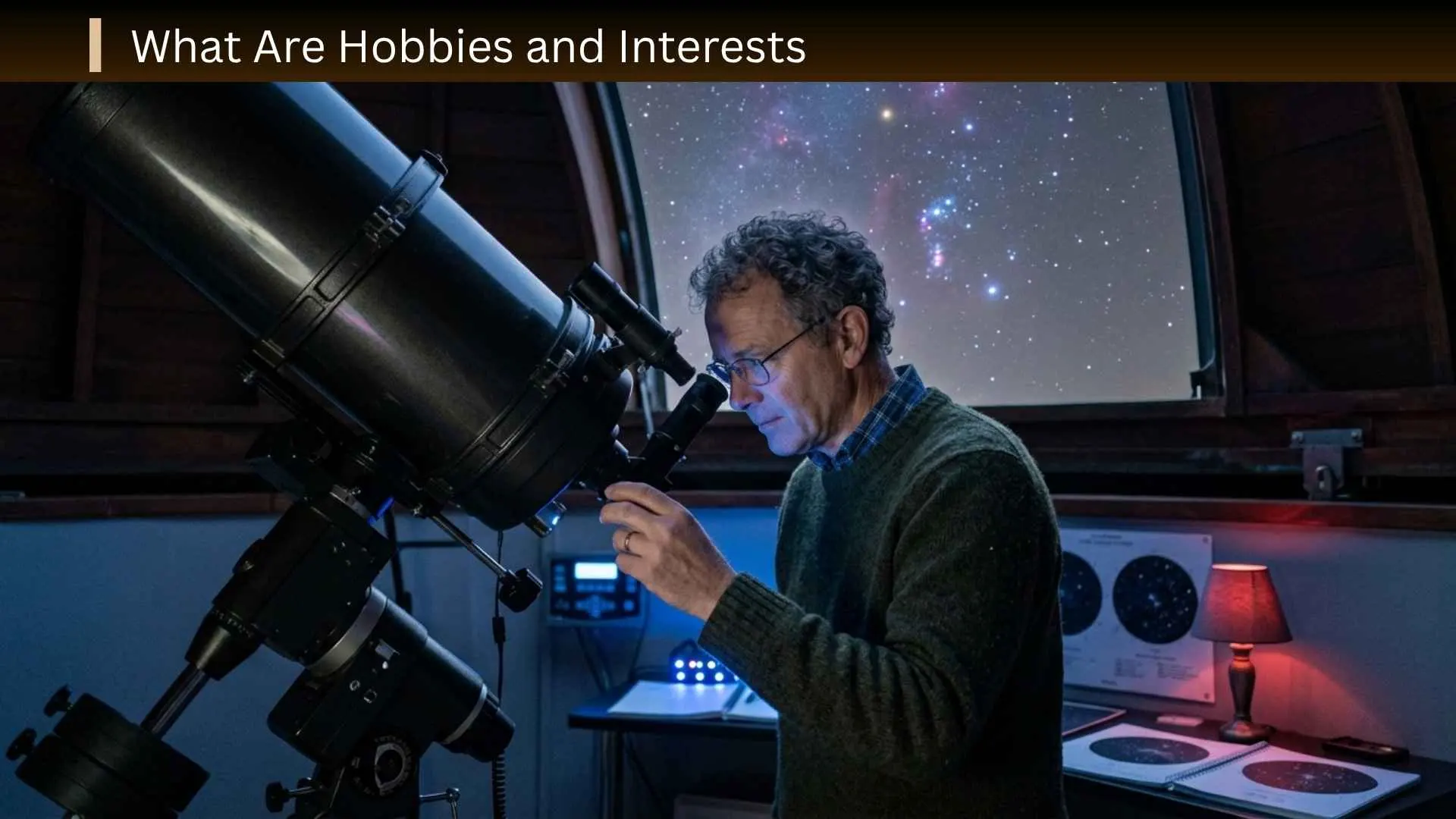
I believe hobbies and interests are more than just ways to fill your free time,they can help you discover what excites you, build new skills, and make everyday life more enjoyable. You might already have a favorite activity, or you may be wondering what truly interests you and where to start. Either way, finding the right hobby can give you something meaningful to look forward to.
In this guide, I’ll help you understand what hobbies and interests really mean, how they are different, and how you can identify activities that match your personality, goals, and lifestyle. Whether you enjoy creating, learning, exploring, staying active, or simply relaxing, you can find interests that make your free time feel more rewarding.
What Are Hobbies and Interests?

A hobby is a regular activity that someone chooses to do for enjoyment, relaxation, learning, creativity, social connection, or personal development rather than as their primary job.
An interest is something a person is curious about, enjoys learning about, or wants to explore. An interest does not necessarily involve regularly doing an activity.
For example:
- Hobby: Photography — you regularly take and edit photographs.
- Interest: Photography — you enjoy learning about cameras and looking at photographs but rarely take pictures yourself.
- Hobby: Gardening — you grow and care for plants.
- Interest: Botany — you enjoy learning about plants and how they grow.
- Hobby: Playing guitar — you regularly practice and play music.
- Interest: Music — you enjoy learning about different artists, genres, and musical history.
The two terms overlap, and something can begin as an interest and eventually become a hobby.
What Is the Difference Between a Hobby and an Interest?
The simplest distinction is action versus curiosity.
| Hobby | Interest |
| Usually involves active participation | May involve observation, reading, or curiosity |
| Often practiced regularly | Does not have to be pursued regularly |
| Requires some degree of time or involvement | Can exist without a regular activity |
| Examples include baking, cycling, painting, and chess | Examples include history, astronomy, technology, and current events |
| Can develop into a skill | Can lead to a hobby or area of study |
For instance, someone might have an interest in astronomy because they enjoy learning about planets and galaxies. If they begin regularly observing the night sky with a telescope, astronomy may become a hobby.
There is no strict rule that separates the two. In everyday conversation, people often use “hobbies and interests” together to describe the activities and subjects they enjoy.
Why Do People Have Hobbies?
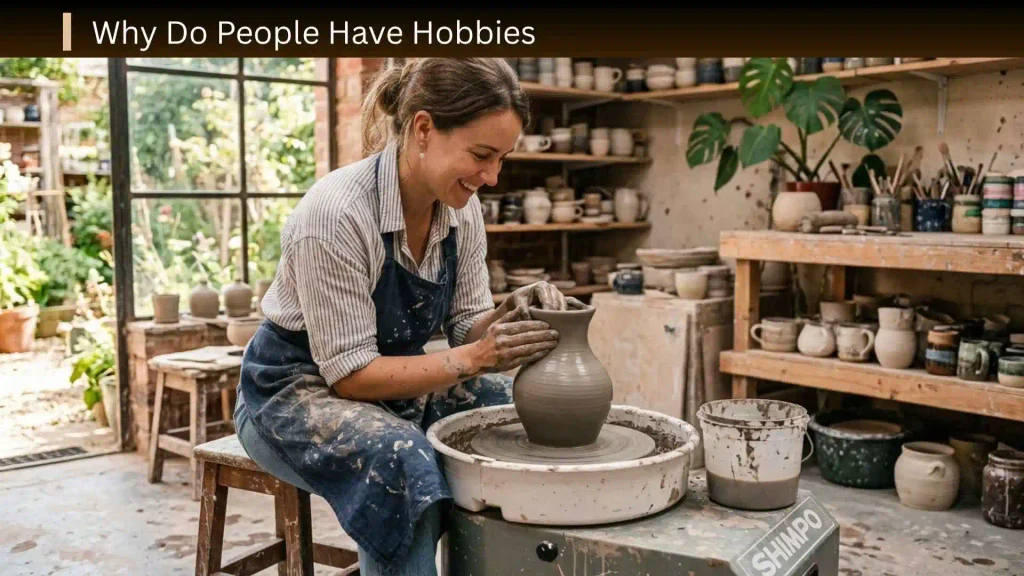
People pursue hobbies for many different reasons. There is no single purpose that applies to everyone.
Recreation and Enjoyment
Some hobbies are simply enjoyable. Playing video games, baking, reading fiction, collecting items, or watching and analyzing sports can provide a rewarding way to spend free time.
Creativity
Creative hobbies give people an opportunity to make, design, perform, or experiment.
Examples include:
- Drawing
- Painting
- Photography
- Writing
- Pottery
- Woodworking
- Sewing
- Jewelry making
- Playing music
- Digital art
Creative activities can also provide a tangible result that people can improve over time.
Learning
A hobby can be an informal way to develop knowledge outside school or work.
Someone interested in history might explore historical books and museums. Someone fascinated by technology might learn programming or electronics. A person interested in languages might study Spanish, French, Japanese, or another language as a personal pursuit.
Relaxation
Some hobbies fit naturally into quieter routines. Reading, knitting, journaling, gardening, puzzles, coloring, and certain crafts can be done at a comfortable pace.
A hobby should not automatically be described as a treatment for stress or a mental health condition, but enjoyable leisure activities can be part of a person’s broader approach to relaxation and balance.
Social Connection
Not all hobbies are solitary. Many create opportunities to meet people with similar interests.
Examples include:
- Team sports
- Running clubs
- Book clubs
- Community gardening
- Board-game groups
- Dance classes
- Volunteer activities
- Photography groups
- Amateur theater
- Recreational leagues
The social element may be an important part of why someone continues a hobby.
Physical Activity
Some hobbies naturally involve movement and time outdoors.
Examples include:
- Hiking
- Cycling
- Swimming
- Tennis
- Kayaking
- Dancing
- Recreational sports
- Walking
- Gardening
The physical demands vary considerably, so a person’s fitness level, experience, environment, and personal circumstances should be considered when choosing an active hobby.
What Are Common Types of Hobbies and Interests?
Hobbies can be grouped in many ways. The categories below are useful because they help people identify activities that match their personalities, available time, and goals.
Creative Hobbies
Creative hobbies involve making or expressing something.
Popular examples include:
- Painting
- Drawing
- Photography
- Creative writing
- Calligraphy
- Pottery
- Sewing
- Knitting
- Crochet
- Woodworking
- Graphic design
- Music
- Singing
- Film making
These hobbies vary widely in cost and difficulty. Drawing, for example, can begin with inexpensive materials, while woodworking may require tools, workspace, and additional safety considerations.
Intellectual Hobbies
Intellectual hobbies center on learning, problem-solving, research, or exploring ideas.
Examples include:
- Reading
- Chess
- Learning languages
- Astronomy
- History
- Philosophy
- Genealogy
- Coding
- Mathematics
- Creative writing
- Studying science
- Solving puzzles
These activities can be particularly appealing to people who enjoy understanding how things work or exploring unfamiliar subjects.
Outdoor Hobbies
Outdoor hobbies take place primarily outside and can range from gentle recreational activities to physically demanding pursuits.
Examples include:
- Hiking
- Camping
- Fishing
- Birdwatching
- Gardening
- Cycling
- Photography
- Kayaking
- Geocaching
- Stargazing
The best option depends on local conditions, available outdoor spaces, equipment, weather, and the amount of physical activity involved.
Indoor Hobbies
Indoor hobbies are useful when someone wants an activity that can be done at home or in an indoor community space.
Examples include:
- Reading
- Baking
- Cooking
- Drawing
- Painting
- Puzzles
- Board games
- Playing an instrument
- Knitting
- Model building
- Writing
- Video games
Many indoor hobbies require little space, although activities such as woodworking, crafting, or home brewing may require a dedicated area and appropriate equipment.
Active Hobbies
Active hobbies involve physical movement.
Examples include:
- Running
- Swimming
- Cycling
- Tennis
- Basketball
- Soccer
- Dancing
- Hiking
- Martial arts
- Rock climbing
People choosing an active hobby should consider its physical demands, necessary instruction, equipment, and safety requirements.
Social Hobbies
Social hobbies are particularly suited to people who enjoy participating with others.
Examples include:
- Team sports
- Dancing
- Book clubs
- Board games
- Community theater
- Choir
- Recreational clubs
- Group classes
- Volunteering
- Cooking groups
Some hobbies can be either social or solitary. Photography, for example, can be practiced alone or through a photography club.
Collecting Hobbies
Collecting involves intentionally building and organizing a collection around a particular theme or category.
People collect items such as:
- Coins
- Stamps
- Books
- Vinyl records
- Sports memorabilia
- Trading cards
- Vintage objects
- Art
- Postcards
- Rocks and minerals
Collecting can be inexpensive or costly depending on what is collected, so setting a budget is useful.
50 Examples of Hobbies and Interests
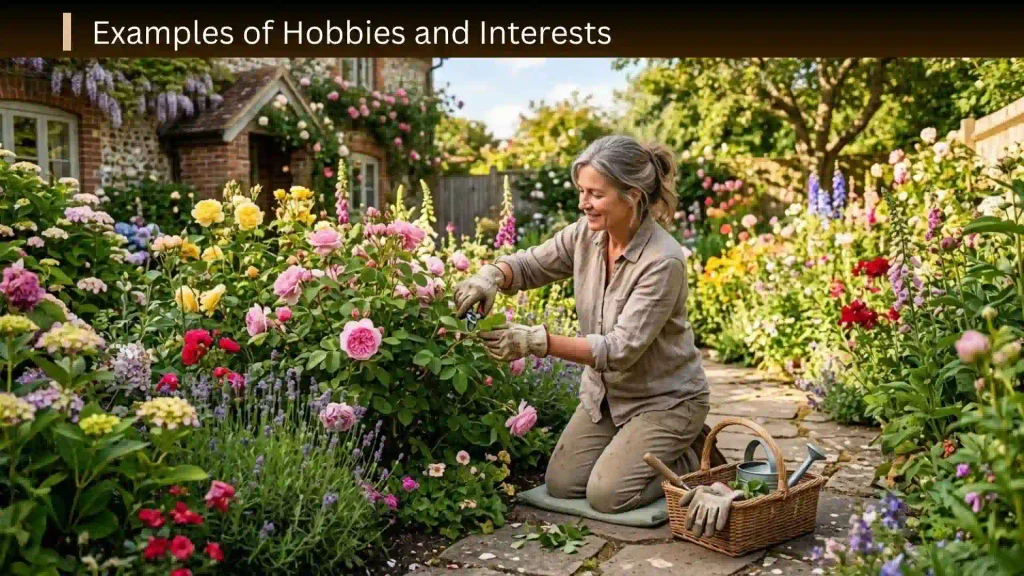
If you are trying to identify your own hobbies and interests, the following examples can help you think beyond the most obvious choices.
- Reading
- Writing
- Photography
- Painting
- Drawing
- Gardening
- Cooking
- Baking
- Hiking
- Cycling
- Swimming
- Running
- Fishing
- Camping
- Birdwatching
- Stargazing
- Playing chess
- Board games
- Video games
- Learning languages
- Playing guitar
- Singing
- Dancing
- Knitting
- Crochet
- Sewing
- Pottery
- Woodworking
- Calligraphy
- Journaling
- Blogging
- Genealogy
- Astronomy
- Collecting coins
- Collecting books
- Model building
- Volunteering
- Travel
- Film making
- Graphic design
- Coding
- Origami
- Scrapbooking
- Puzzles
- Home improvement
- Interior decorating
- Yoga
- Tennis
- Geocaching
- Learning about history
The important point is not to choose an activity simply because it sounds impressive. A genuine hobby is something you actually enjoy or regularly pursue.
Hobbies vs. Interests on a Resume
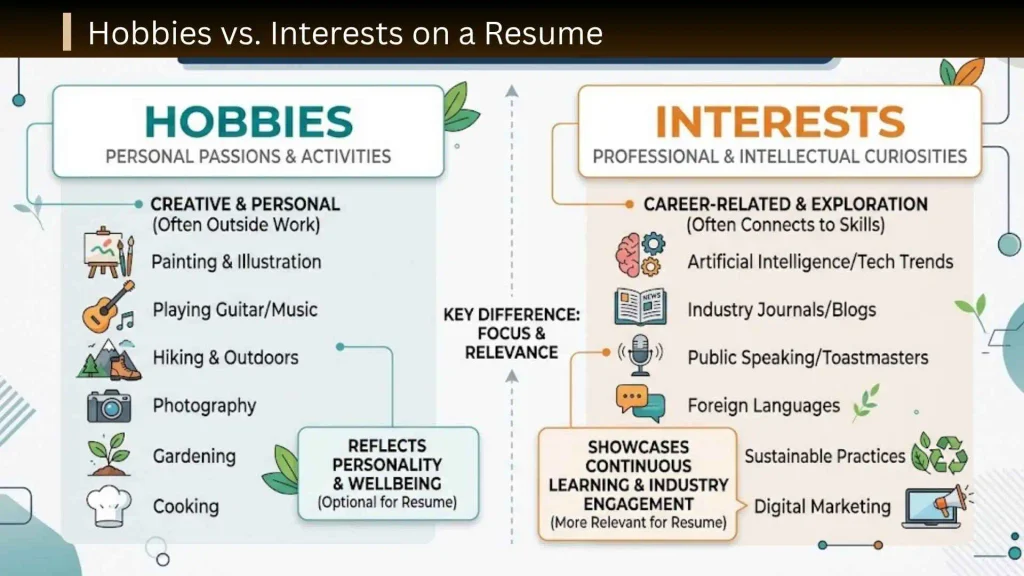
The phrase “hobbies and interests” is also commonly encountered when completing a resume, job application, or interview.
On a resume, hobbies and interests can provide additional context about a candidate, particularly when they reveal relevant skills or help demonstrate personality. However, they are usually less important than qualifications, work experience, education, and accomplishments.
For example, simply writing:
Reading, music, travel
provides little information.
A more specific description can be more meaningful when the activity is relevant:
Volunteer mentor at a local youth coding program
This communicates an activity as well as potential qualities such as communication, initiative, and community involvement.
When Should You Include Hobbies on a Resume?
Consider including hobbies or interests when they:
- Relate to the position
- Demonstrate useful transferable skills
- Show meaningful involvement
- Help explain a career transition or personal project
- Provide a relevant conversation point
- Add useful context when you have limited professional experience
For experienced candidates with a strong employment history, there may be little reason to devote significant resume space to unrelated hobbies.
What Hobbies Can Say About You Professionally?
A hobby does not automatically prove that someone possesses a particular professional skill. However, it can provide supporting context.
For example:
- Team sports may demonstrate experience working within a group.
- Chess can show an interest in strategy and problem-solving, although it does not by itself prove strong strategic ability.
- Photography may be relevant to visual communication or creative roles.
- Volunteering can demonstrate community involvement and commitment.
- Public speaking or debate may be relevant to communication-oriented positions.
- Coding projects can provide evidence of practical technical work when accompanied by specific projects or results.
- Creative writing may be relevant to content, publishing, or communication roles.
The strongest resume examples connect the activity to something concrete rather than relying on a vague personality claim.
Hobbies and Interests for Students

Students often have a wider range of interests than they realize because hobbies can develop alongside school subjects.
Useful examples include:
- Reading
- Sports
- Coding
- Robotics
- Art
- Music
- Creative writing
- Debate
- Volunteering
- Photography
- Science projects
- Language learning
- Chess
- Theater
- Gardening
A student’s hobby does not need to be prestigious or directly related to a future career. Exploring different activities can help reveal what subjects and types of work they genuinely enjoy.
Hobbies for Adults
Adults may choose hobbies based on different constraints, including work schedules, family responsibilities, budget, available space, and energy.
Someone with only a few minutes available may prefer reading, journaling, drawing, or language practice. Someone with a free weekend might prefer hiking, camping, woodworking, photography, or recreational sports.
The best hobby is therefore not necessarily the most popular one. It is one that fits realistically into the person’s life.
How to Choose a Hobby
If you do not currently have a hobby or want to find a new one, start with your interests rather than trying to find a supposedly “perfect” hobby.
1. Think About What Naturally Holds Your Attention
Ask yourself:
- What subjects do I enjoy learning about?
- What activities make me lose track of time?
- What do I often watch or read about voluntarily?
- What did I enjoy doing as a child?
- Do I prefer making things, learning things, moving, collecting, or socializing?
Your answers can point toward potential hobbies.
2. Decide Whether You Prefer Solo or Social Activities
If you enjoy independent time, consider reading, drawing, writing, gardening, puzzles, coding, or photography.
If you prefer interacting with people, consider sports, dance, theater, clubs, classes, volunteering, or group games.
You can also choose a hobby that works both ways.
3. Consider Your Available Time
A hobby should fit your schedule.
If you have limited free time, an activity with a short setup and flexible sessions may be easier to maintain than one requiring long travel or extensive preparation.
4. Set a Realistic Budget
Some hobbies cost very little to begin. Others require equipment, lessons, materials, memberships, transportation, or dedicated space.
Before spending heavily, try the basic version of the activity first. This lets you determine whether you actually enjoy it.
5. Consider Your Space
A small apartment may be well suited to reading, drawing, digital art, language learning, or musical practice with appropriate equipment.
Activities involving large tools, messy materials, or substantial equipment may require a garage, studio, yard, workshop, or community facility.
6. Try Before You Commit
You do not have to choose one hobby permanently.
Borrow equipment, take an introductory class, visit a local club, use a library, or try a beginner project before making a larger investment.
Experimenting is part of finding out what you genuinely enjoy.
How to Turn an Interest Into a Hobby

An interest becomes a hobby when you begin actively engaging with it.
For example:
Interest: You enjoy watching cooking videos.
First step: Try preparing one simple recipe.
Developing hobby: Cook once or twice a week and learn basic techniques.
More advanced pursuit: Experiment with recipes, cuisines, presentation, or specialized techniques.
The same process works with almost any subject. An interest in history might become museum visits, historical research, genealogy, reenactment, or collecting historical books. An interest in nature might become hiking, gardening, birdwatching, or wildlife photography.
How to Make a Hobby More Enjoyable
A hobby does not need to become a serious project. If enjoyment is the main reason you chose it, protect that purpose.
A few practical approaches can help:
- Start with manageable projects.
- Avoid buying advanced equipment too early.
- Track progress if seeing improvement motivates you.
- Learn from people who are more experienced.
- Join a community if you enjoy social interaction.
- Try variations of the activity to prevent boredom.
- Set personal goals rather than comparing yourself with experts.
- Allow yourself to change hobbies when your interests change.
Not every hobby needs to become a skill, side business, competition, or achievement. Sometimes the value is simply having an activity that you enjoy.
How Hobbies Can Develop Skills

Many hobbies involve skills that can be useful beyond the hobby itself.
For example, cooking can involve planning, measurement, timing, and experimentation. Photography involves composition, observation, technical settings, and editing. Gardening requires planning, patience, observation, and routine care. Team sports involve coordination and communication.
However, it is better to describe these connections accurately. Participating in a hobby does not automatically make someone highly skilled in a particular professional area.
A hobby provides an opportunity to practice certain abilities; the actual level of skill depends on experience and effort.
What Makes a Good Hobby?
There is no universal “best hobby.” A good hobby generally meets some combination of these criteria:
- You genuinely enjoy it.
- You can fit it into your schedule.
- The cost is manageable.
- It suits your available space.
- The difficulty feels appropriate.
- You are curious enough to keep learning.
- It provides the kind of experience you want, whether that is creativity, activity, learning, relaxation, or social interaction.
A hobby that looks impressive but feels like another obligation may be a poor fit.
How to Find Your Hobbies and Interests
If you are filling out a profile, application, resume, or introduction and are unsure what your hobbies are, look at how you actually spend your free time.
Ask yourself:
- What do I voluntarily do when I have free time?
- What subjects do I repeatedly search for or read about?
- What activities have I practiced for several weeks or months?
- What do I enjoy discussing with other people?
- What would I like to become better at?
- What activities would I do even if nobody asked me to?
- What communities, clubs, or groups do I voluntarily participate in?
Your answers may reveal hobbies and interests that you previously overlooked.
Hobbies and Interests Examples by Goal
Different goals naturally lead to different choices.
| Goal | Examples |
| Relaxation | Reading, gardening, knitting, journaling, puzzles |
| Creativity | Painting, photography, writing, pottery, music |
| Learning | Languages, history, astronomy, coding, chess |
| Physical activity | Hiking, cycling, swimming, tennis, dancing |
| Socializing | Team sports, clubs, theater, board games, volunteering |
| Outdoor time | Camping, fishing, birdwatching, gardening, hiking |
| Staying at home | Reading, baking, drawing, gaming, crafts |
| Building a skill | Cooking, photography, programming, woodworking, music |
| Collecting | Coins, books, stamps, records, memorabilia |
This type of comparison can be more useful than ranking hobbies because the right choice depends on what you want from your free time.
Are Hobbies and Interests Important?
Yes, but their importance depends on the context.
Personally, hobbies can provide enjoyable ways to use free time, explore interests, learn skills, and connect with other people.
Professionally, hobbies can sometimes provide useful context about a person, especially when they demonstrate genuine involvement or relate to a role. They should not, however, replace evidence of qualifications or professional experience when those are required.
For students and people exploring careers, hobbies can also help identify subjects and activities worth pursuing further.
Frequently Asked Questions
What is a hobby in simple words?
A hobby is an activity you regularly choose to do for enjoyment, relaxation, learning, creativity, or personal interest rather than as your main job.
What is an interest in simple words?
An interest is a subject, topic, or activity that you are curious about or enjoy learning about. Unlike a hobby, an interest does not necessarily require regular active participation.
What is the difference between hobbies and interests?
A hobby generally involves actively doing an activity, while an interest can simply involve curiosity or enjoyment of a subject. For example, regularly playing guitar is a hobby, while being interested in music may not involve playing an instrument.
What are some common hobbies?
Common hobbies include reading, cooking, gardening, photography, hiking, sports, painting, writing, music, gaming, crafts, collecting, and learning languages.
What are good hobbies for beginners?
Good beginner hobbies are activities that match your interests, budget, available space, and schedule. Reading, walking, drawing, cooking, gardening, photography, puzzles, and learning a language can all be started at a basic level without requiring advanced expertise.
What hobbies can I do at home?
Many hobbies can be done at home, including reading, writing, cooking, baking, drawing, painting, gaming, playing music, knitting, puzzles, coding, photography, and language learning.
Should hobbies be included on a resume?
Hobbies can be included when they are relevant, demonstrate meaningful involvement, or add useful context about you. They are generally less important than relevant experience, education, skills, and accomplishments.
Can an interest become a hobby?
Yes. An interest can become a hobby when you begin actively pursuing it. For example, an interest in plants can develop into gardening, while an interest in astronomy can develop into regular stargazing or amateur observation.
Conclusion
Hobbies are activities people choose to pursue in their free time, while interests are subjects or activities that capture their attention. The two often overlap, and an interest can easily develop into a hobby through regular participation.
Whether you want something creative, active, educational, social, relaxing, or simply enjoyable, there is no single hobby that is right for everyone. Consider what naturally interests you, how much time and money you can dedicate to it, and whether you prefer doing something alone or with others. The best hobby is one that fits your life and gives you a reason to keep coming back to it.

I’m Ethan Mitchell, a curious writer who enjoys turning complex ideas into simple, useful information. At Cognivoora, I focus on creating clear and engaging content that readers can understand and apply in everyday life. I believe good writing should educate, answer real questions, and leave readers with something valuable to remember.
Books:
- The Everyday Mind
- Simple Ideas, Better Thinking