
Hobbies are activities people choose to do regularly during their free time because they enjoy them, want to learn something new, express themselves, stay active, relax, or connect with other people. Examples include reading, gardening, painting, cooking, photography, hiking, playing music, crafting, sports, collecting, and many other activities.
If you searched “what is hobbies,” the more natural grammatical question is “What are hobbies?” or “What is a hobby?” This guide explains the meaning of a hobby, different types of hobbies, why people have them, how they differ from interests and passions, and how to find one that fits your lifestyle.
What Is a Hobby?
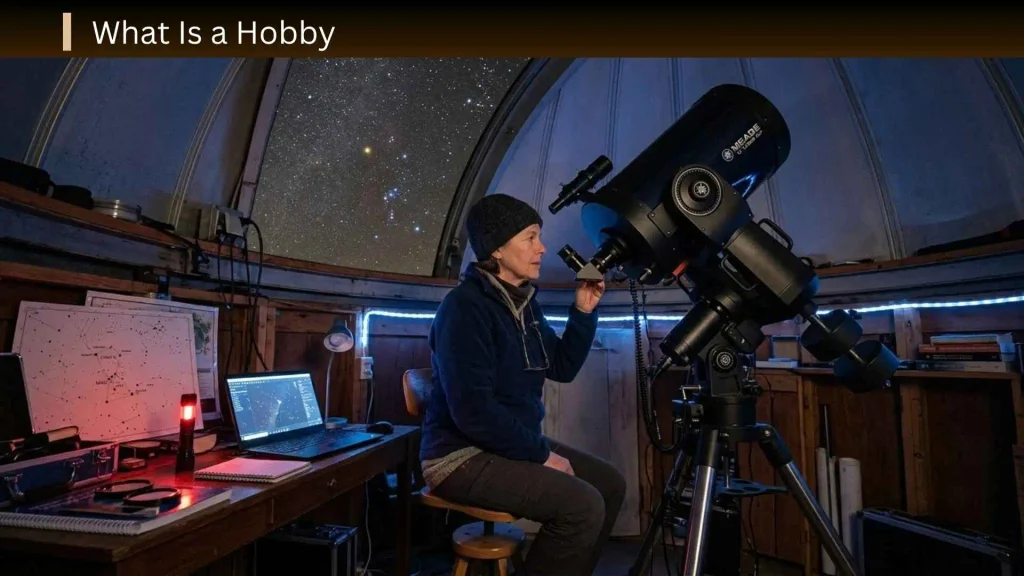
A hobby is an activity that a person voluntarily does during their free time for enjoyment, personal interest, learning, creativity, relaxation, or recreation.
A hobby does not usually have to be part of someone’s job or required responsibilities. It is something a person chooses to spend time doing because the activity itself is rewarding or interesting.
For example:
- Someone who reads novels in their spare time has reading as a hobby.
- Someone who grows vegetables and cares for plants may have gardening as a hobby.
- Someone who photographs landscapes on weekends may consider photography a hobby.
- Someone who spends evenings making pottery may enjoy pottery as a hobby.
- Someone who regularly goes hiking for recreation may consider hiking a hobby.
A hobby can be simple or highly specialized. It can cost almost nothing or require substantial equipment. Some hobbies take only a few minutes at a time, while others can occupy several hours each week.
What Are Hobbies?

Hobbies are recreational or personally meaningful activities that people voluntarily pursue in their spare time. They can be creative, physical, intellectual, social, practical, collecting-based, or technology-related.
There is no single list of activities that officially qualifies as a hobby. What matters is the way the person engages with the activity.
For example, cooking can simply be an everyday responsibility when someone prepares necessary meals. But experimenting with new recipes, learning culinary techniques, baking for enjoyment, or exploring different cuisines can become a hobby.
Likewise, taking photographs for a required work assignment is not necessarily a hobby, while photographing nature because you enjoy it can be.
Hobby Meaning in Simple Words
In simple terms, a hobby is something you enjoy doing in your free time.
It can be something you:
- Make
- Learn
- Practice
- Collect
- Explore
- Play
- Observe
- Do outdoors
- Do alone
- Do with other people
The important element is voluntary personal engagement. A hobby is generally pursued because the activity has value or enjoyment for the person doing it, rather than simply because it is required.
What Is the Difference Between a Hobby and an Interest?
A hobby is usually an activity you actively participate in, while an interest can simply be something you like learning about or paying attention to.
For example, you might have an interest in astronomy by reading about planets and space. If you regularly use a telescope, learn constellations, attend astronomy events, or photograph the night sky, astronomy may become a hobby.
The two concepts can overlap:
| Hobby | Interest |
| Usually involves active participation | May involve observation or curiosity |
| Often practiced repeatedly | Does not necessarily require regular practice |
| Takes up some leisure time | Can remain an occasional curiosity |
| Often involves developing skills | May involve mainly learning or following a subject |
An interest can therefore develop into a hobby when you begin regularly participating in an activity.
Hobby vs. Passion: What’s the Difference?
A hobby is an activity you enjoy pursuing in your free time. A passion generally describes a much stronger and more enduring enthusiasm for a subject or activity.
Someone can enjoy painting as a casual weekend hobby without considering it a major passion. Another person may devote years to painting, study it deeply, participate in exhibitions, and make it an important part of their life.
You do not need to be passionate about a hobby for it to be worthwhile.
Hobby vs. Skill: What’s the Difference?
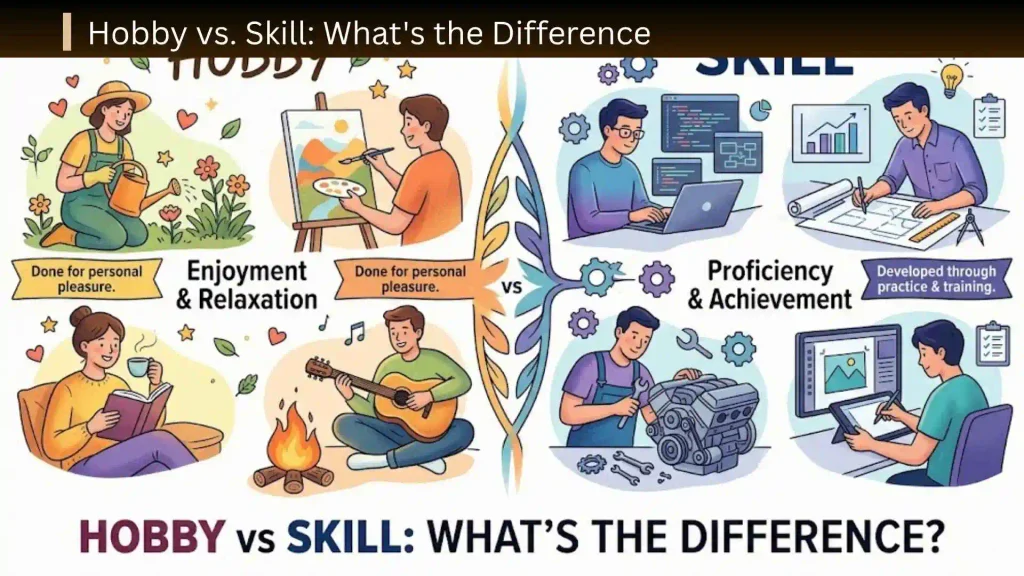
A skill is an ability that you develop through learning and practice. A hobby is an activity you choose to pursue for personal reasons.
The two often develop together.
For example:
- Gardening can be a hobby.
- Plant propagation can become a skill developed through gardening.
- Photography can be a hobby.
- Camera operation, composition, and photo editing can become photography skills.
- Cooking can be a hobby.
- Knife handling, baking, or sauce-making can become culinary skills.
You can practice a hobby without being highly skilled at it. In fact, learning and improving can be part of what makes the hobby enjoyable.
Why Do People Have Hobbies?
People choose hobbies for many different reasons. There is no single benefit that applies equally to everyone.
Hobbies Provide Enjoyable Use of Free Time
A hobby gives free time a purposeful activity without turning leisure into another obligation.
Someone might spend an hour reading, drawing, fishing, baking, playing chess, or working on a model simply because they enjoy doing it.
Hobbies Create Opportunities to Learn
Many hobbies involve continuous learning.
A person who starts photography may gradually learn about:
- Camera settings
- Composition
- Lighting
- Lenses
- Image editing
Similarly, someone who begins gardening may learn about soil, planting, seasonal growing, pruning, and plant care.
The learning process can keep a hobby interesting even after the basics become familiar.
Hobbies Encourage Creativity
Creative hobbies give people a way to make or experiment with something.
Examples include:
- Drawing
- Painting
- Writing
- Photography
- Pottery
- Sewing
- Woodworking
- Jewelry making
- Music
- Cooking
- Crafting
Creative hobbies do not require professional-level talent. The process of experimenting and improving can itself be rewarding.
Hobbies Can Provide Physical Activity
Some hobbies naturally involve movement.
Examples include:
- Hiking
- Cycling
- Swimming
- Dancing
- Gardening
- Recreational sports
- Kayaking
- Running
The amount and intensity of physical activity varies considerably, so a hobby should be chosen according to someone’s abilities, preferences, and circumstances.
Hobbies Can Create Social Connections
Not every hobby is solitary. Many activities provide opportunities to meet people who share similar interests.
Social hobbies include:
- Team sports
- Dance classes
- Book clubs
- Photography groups
- Gardening clubs
- Board-game groups
- Community theater
- Volunteer activities
- Craft groups
A hobby can therefore become a natural way to participate in a community without making social interaction the main purpose of the activity.
Hobbies Can Give People a Sense of Progress
Many hobbies have visible learning curves.
You might move from:
Beginner → Basic competence → More advanced skills → Personal projects → Mastery
For example, a beginner guitarist may start by learning simple chords. Over time, they might learn songs, music theory, improvisation, recording, or songwriting.
That sense of progress can make an activity more engaging.
Main Types of Hobbies

Hobbies can be grouped in several ways. The categories overlap, so one activity may belong to multiple groups.
Creative Hobbies
Creative hobbies involve making, designing, composing, or expressing ideas.
Examples include:
- Drawing
- Painting
- Creative writing
- Photography
- Pottery
- Sewing
- Knitting
- Crochet
- Calligraphy
- Scrapbooking
- Woodworking
- Music
- Jewelry making
These hobbies can range from casual crafts to highly developed artistic practices.
Physical and Active Hobbies
Active hobbies involve physical movement and may be performed indoors or outdoors.
Examples include:
- Hiking
- Cycling
- Swimming
- Running
- Dancing
- Yoga
- Tennis
- Basketball
- Golf
- Rock climbing
- Martial arts
The physical demands vary considerably. Someone looking for a hobby should consider the activity’s intensity, required equipment, environment, and their own experience level.
Intellectual Hobbies
Intellectual hobbies focus primarily on learning, problem-solving, investigation, or mental challenge.
Examples include:
- Reading
- Chess
- Puzzles
- Learning languages
- Astronomy
- History research
- Writing
- Coding
- Mathematics
- Studying philosophy
These activities can be pursued casually or developed into serious areas of study.
Outdoor Hobbies
Outdoor hobbies take place primarily outside the home.
Examples include:
- Gardening
- Hiking
- Fishing
- Birdwatching
- Camping
- Cycling
- Kayaking
- Geocaching
- Photography
- Stargazing
Outdoor hobbies can also overlap with physical, creative, scientific, and social hobbies.
Indoor Hobbies
Indoor hobbies can be practiced at home or in another indoor environment.
Examples include:
- Reading
- Painting
- Drawing
- Baking
- Cooking
- Playing an instrument
- Puzzles
- Board games
- Knitting
- Sewing
- Model building
- Journaling
These can be particularly convenient for people who have limited outdoor access or prefer activities they can do at home.
Social Hobbies
Social hobbies naturally involve interaction with other people.
Examples include:
- Team sports
- Book clubs
- Dance
- Theater
- Group hiking
- Board games
- Community gardening
- Choirs
- Photography clubs
- Recreational classes
A social hobby does not necessarily mean constant interaction. Some activities can combine independent practice with occasional group participation.
Collecting Hobbies
Collecting involves deliberately building and organizing a collection around a particular subject.
Examples include:
- Coins
- Stamps
- Books
- Postcards
- Sports memorabilia
- Vinyl records
- Trading cards
- Antiques
- Rocks and minerals
Collectors may focus on historical significance, rarity, personal memories, artistic qualities, or simply the enjoyment of finding interesting items.
Practical Hobbies
Some hobbies produce useful skills or objects while still being pursued for enjoyment.
Examples include:
- Cooking
- Baking
- Gardening
- Woodworking
- Sewing
- Home brewing
- DIY projects
- Electronics
- Car restoration
A practical hobby can be especially appealing to someone who enjoys learning by doing and seeing a tangible result.
Technology Related Hobbies
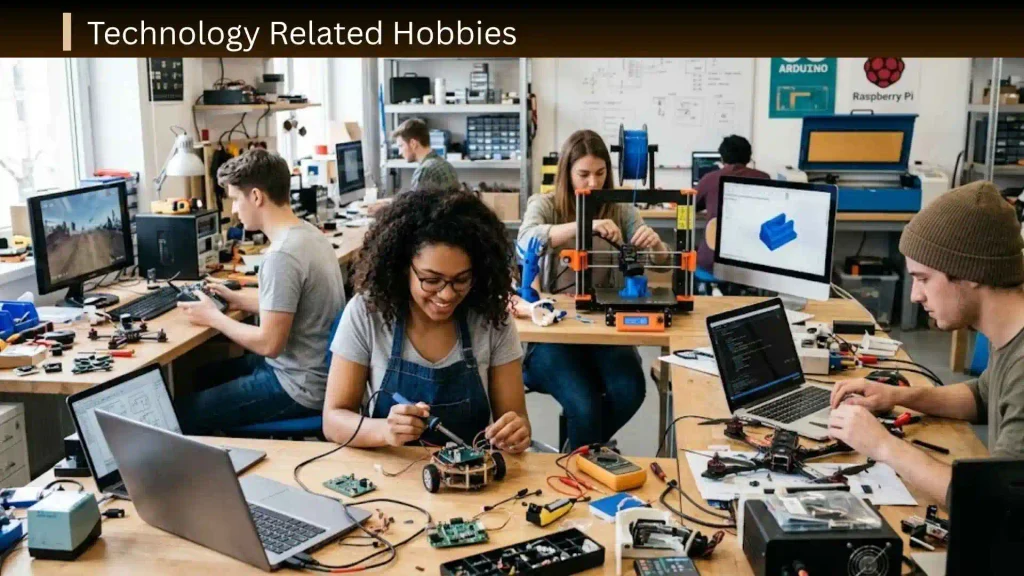
Technology can also form the basis of hobbies.
Examples include:
- Coding
- Game development
- Computer building
- Digital art
- 3D modeling
- Robotics
- Electronics
- Video editing
- Digital photography
- Amateur radio
Some technology hobbies require specialized equipment, while others can begin with a computer or freely available software.
Popular Hobby Examples
The right hobby depends on personal interests rather than popularity, but some activities are widely accessible.
| Hobby | Difficulty | Cost to Start | Setting | Main Appeal |
| Reading | Easy | Low | Indoor | Learning and entertainment |
| Walking | Easy | Low | Outdoor | Movement and exploration |
| Gardening | Easy–Moderate | Low–Moderate | Outdoor/Indoor | Growing and caring for plants |
| Drawing | Easy–Moderate | Low | Indoor | Creative expression |
| Cooking | Easy–Advanced | Low–Moderate | Indoor | Creativity and practical skills |
| Photography | Easy–Advanced | Low–High | Both | Visual creativity and exploration |
| Hiking | Easy–Advanced | Low–Moderate | Outdoor | Nature and physical activity |
| Chess | Easy–Advanced | Low | Indoor | Strategy and problem-solving |
| Playing music | Moderate–Advanced | Moderate | Indoor | Creativity and skill development |
| Sewing | Moderate | Low–Moderate | Indoor | Making and practical creativity |
Costs vary depending on the equipment you already own and how deeply you pursue the hobby. A beginner does not necessarily need professional-grade equipment.
How to Choose a Hobby

Choosing a hobby is easier when you start with your lifestyle rather than trying to select the “best” hobby in general.
Consider What You Already Enjoy
Think about the subjects and activities that naturally hold your attention.
If you enjoy:
- Nature, consider hiking, gardening, birdwatching, or photography.
- Making things, consider woodworking, pottery, sewing, or crafts.
- Stories, consider reading or creative writing.
- Competition, consider chess, sports, or strategy games.
- Learning, consider languages, astronomy, history, or coding.
Your existing interests can provide a useful starting point.
Consider Your Available Time
A hobby should fit realistically into your schedule.
If you only have short periods of free time, activities such as reading, drawing, journaling, puzzles, or practicing an instrument may be easier to maintain than hobbies that require extensive preparation or travel.
If you have larger blocks of free time, you may be able to explore activities such as hiking, woodworking, gardening, cycling, or photography.
Consider Your Budget
You do not need to spend a lot of money to have a meaningful hobby.
Low-cost options include:
- Reading
- Walking
- Writing
- Drawing
- Hiking
- Birdwatching
- Cooking with ingredients you already use
- Puzzles
- Learning through free educational resources
For equipment-heavy hobbies, begin with basic gear and determine whether you genuinely enjoy the activity before making major purchases.
Consider Your Space
Your available space can eliminate some options immediately.
A person living in a small apartment may prefer reading, drawing, photography, music, cooking, or indoor gardening. Someone with a garage or workshop might have more room for woodworking, model building, or larger DIY projects.
Decide Whether You Want a Solo or Social Activity
Ask yourself whether you want your hobby to provide solitude, social interaction, or a combination.
For quiet personal time, consider:
- Reading
- Drawing
- Writing
- Gardening
- Puzzles
- Photography
For more social involvement, consider:
- Team sports
- Clubs
- Classes
- Group hiking
- Dance
- Theater
- Board games
Think About What You Want From the Hobby
Different hobbies satisfy different goals.
You might want:
- Relaxation
- Creative expression
- Physical activity
- Intellectual challenge
- Social connection
- Practical skills
- Outdoor exploration
- Personal growth
- A way to make things
Knowing your main reason for choosing a hobby can narrow the options considerably.
How to Start a New Hobby

You do not need to become an expert before you begin.
Start With the Basics
Learn only enough to complete a simple first project or activity.
For example, someone interested in photography can begin by learning composition and basic camera controls rather than trying to understand every advanced feature immediately.
Keep the Initial Cost Reasonable
Avoid buying a complete collection of specialized equipment before you know whether you enjoy the activity.
Start with basic materials, use what you already have when possible, and upgrade as your skills and interest develop.
Set a Small First Goal
A specific first goal is easier to act on than a vague intention.
Examples:
- Read one book this month.
- Grow a few beginner-friendly plants.
- Complete one drawing.
- Cook one unfamiliar recipe.
- Take a short local hike.
- Learn three basic guitar chords.
- Photograph one subject from several different perspectives.
Allow Yourself to Be a Beginner
Early mistakes are normal. A hobby does not need to produce professional results to be worthwhile.
The purpose of a hobby can be enjoyment, exploration, learning, or practice—not necessarily achievement.
How to Stay Interested in a Hobby
Some people enjoy a hobby for years, while others eventually lose interest. Both are normal.
If an activity starts feeling repetitive, try changing the challenge rather than immediately abandoning it.
You could:
- Learn a new technique.
- Start a small project.
- Join a community.
- Try a related activity.
- Set a personal challenge.
- Teach someone what you have learned.
- Explore a different style or subject.
- Take a break and return later.
A hobby does not have to remain the same forever. Your interests can change as your skills, schedule, and circumstances change.
Can a Hobby Become a Career?
Sometimes a hobby can develop into professional work, but it does not have to.
For example, someone who enjoys photography might eventually pursue professional photography. A person who enjoys writing might publish books or work as a writer. A cook might eventually enter the food industry.
However, turning a hobby into paid work changes the nature of the activity. Deadlines, customers, competition, business costs, and financial expectations can make an activity feel very different from casual recreation.
For many people, keeping a hobby separate from their career is equally valuable.
Are Hobbies Important?
Hobbies can be an important part of a balanced lifestyle because they provide time for activities outside work, school, household responsibilities, or other obligations.
Their value depends on the individual. One person may find meaning in creating art, another in restoring old objects, another in playing sports, and another in quietly reading.
There is no requirement for a hobby to be productive, profitable, impressive, or difficult. An activity can be a perfectly worthwhile hobby simply because you enjoy doing it.
Frequently Asked Questions About Hobbies
What is a hobby in simple words?
A hobby is an activity you voluntarily do during your free time because you enjoy it, want to learn, create something, stay active, relax, or pursue a personal interest.
What are examples of hobbies?
Examples include reading, gardening, cooking, baking, photography, painting, drawing, writing, hiking, cycling, swimming, playing music, collecting, crafts, chess, sports, and many other activities.
What is the difference between a hobby and an interest?
An interest is something you are curious about or enjoy learning about, while a hobby usually involves actively doing an activity regularly in your free time. An interest can develop into a hobby.
Do hobbies have to be productive?
No. A hobby does not have to produce money, useful objects, qualifications, or measurable achievements. Enjoyment and personal interest are enough reasons to pursue one.
Can watching movies be a hobby?
Yes. If someone regularly watches films during their free time because they enjoy exploring movies, directors, genres, or cinema, it can reasonably be considered a hobby. More active forms of film-related hobbies include film collecting, reviewing, filmmaking, or studying cinema.
What are good hobbies for beginners?
Good beginner hobbies are activities that match your interests, budget, available time, and environment. Reading, walking, drawing, cooking, gardening, photography, puzzles, and basic crafts can all be accessible starting points, depending on the individual.
Can a hobby become a career?
Yes, some hobbies can develop into professional work or a business. However, earning money from an activity introduces professional responsibilities and does not guarantee that the activity will remain as enjoyable as it was as a hobby.
How many hobbies should a person have?
There is no ideal number. One person may prefer one hobby and become deeply involved in it, while another may enjoy several activities. The right number is whatever fits your time, energy, interests, and responsibilities.
Conclusion
So, what are hobbies? The grammatically correct question is “What are hobbies?” A hobby is an activity a person chooses to pursue in their free time for enjoyment, learning, creativity, recreation, personal interest, social connection, or other meaningful reasons.
Hobbies can be creative, physical, intellectual, social, practical, outdoor, indoor, or collecting-based. The best hobby is not necessarily the most popular or impressive one—it is the activity that fits your interests, available time, budget, space, and personal goals.
If you are choosing your first hobby, start small, use what you already have where possible, and give yourself permission to experiment. You can keep an activity for years, change it as your interests evolve, or try something completely different.

I’m James Anderson, a dedicated writer and lifelong learner who enjoys researching topics and explaining them in a practical way. Through my work at Cognivoora, I aim to give readers reliable, easy-to-follow information that helps them learn something new. I always try to keep my writing natural, useful, and focused on the questions readers actually have.
Books:
- A Practical Guide to Better Thinking
- Questions Worth Asking