
If ordinary hobbies like reading, cooking, or gardening feel too predictable, odd hobbies offer a different kind of entertainment. These unusual pastimes can involve collecting strange objects, exploring obscure skills, creating quirky art, observing unusual subjects, or learning activities most people rarely consider.
The best odd hobby is not necessarily the strangest one. It is one that gives you a reason to stay curious, fits your available time and budget, and feels genuinely enjoyable.
What Are Odd Hobbies?
Odd hobbies are unusual or unconventional leisure activities that fall outside the hobbies people commonly mention. They can be creative, observational, collecting-based, historical, technical, nature-focused, or simply quirky.
“Odd” does not necessarily mean dangerous, pointless, or bizarre. A hobby may seem unusual simply because relatively few people participate in it.
For example, someone might spend weekends:
- Collecting vintage matchbooks
- Photographing abandoned-looking architecture from public areas
- Learning semaphore
- Identifying clouds
- Making miniature rooms
- Collecting unusual maps
- Building model ships
- Studying old handwriting
- Recording local sounds
- Designing tiny paper objects
Many odd hobbies have practical skills hidden inside them, including research, patience, photography, craftsmanship, observation, organization, and problem-solving.
45 Odd Hobbies to Try

1. Urban Sketching
Urban sketching involves drawing buildings, streets, transportation, parks, and everyday scenes as you observe them.
You do not need to be an accomplished artist. A notebook and pen are enough to start. The hobby can also make ordinary surroundings more interesting because you begin paying attention to architectural details and changing light.
Best for: Creative people and beginners who enjoy drawing
Starter gear: Sketchbook and pen or pencil
Cost: Low
2. Cloud Identification
Instead of simply watching clouds, learn to recognize different cloud formations and understand how they relate to weather.
It combines casual observation with basic atmospheric science. You can keep a cloud journal with sketches, photographs, dates, and observations.
Best for: Nature lovers and curious learners
Starter gear: Notebook or phone camera
Cost: Free to low
3. Geocaching
Geocaching turns outdoor exploration into a location-based treasure hunt. Participants use GPS-enabled devices to locate hidden caches and record their finds.
It can make familiar parks and walking routes feel like small adventures.
Best for: People who enjoy puzzles, walking, and exploration
Starter gear: Smartphone with a geocaching app
Cost: Free or low, depending on activities and travel
4. Miniature Making
Miniature making involves creating tiny versions of rooms, buildings, furniture, food, plants, or other objects.
The hobby can range from simple paper crafts to highly detailed miniature scenes.
Best for: Patient crafters
Starter gear: Basic craft supplies
Cost: Low to moderate
5. Vintage Matchbook Collecting
Matchbooks can provide a small window into advertising, graphic design, restaurants, hotels, travel, and popular culture from different periods.
Collectors may organize them by location, design, business, era, or subject.
Best for: Collectors and design enthusiasts
Starter gear: Storage sleeves or boxes
Cost: Low to moderate
6. Semaphore
Semaphore is a visual signaling system that uses the positions of flags or other objects to represent letters.
Learning it is an unusual way to explore communication history while giving yourself a memorization challenge.
Best for: History buffs and people who enjoy learning systems
Starter gear: Reference chart or flags
Cost: Low
7. Sound Mapping
Sound mapping involves documenting the sounds associated with particular places.
You might record birds, traffic, trains, public spaces, fountains, markets, or natural environments, while noting where and when each sound occurred.
Best for: Audio enthusiasts, travelers, and observers
Starter gear: Smartphone or portable recorder
Cost: Free to moderate
8. Ephemera Collecting
Ephemera are everyday printed or paper objects that were generally designed for temporary use rather than long-term preservation.
Examples include old tickets, postcards, menus, advertisements, brochures, labels, and event programs.
The appeal is often the story behind an ordinary object.
9. Spoon Collecting
Souvenir spoons are inexpensive compared with many collectible categories and can be organized around destinations, designs, materials, or historical periods.
You can also build a collection around places you personally visit.
10. Letterboxing
Letterboxing is a treasure-hunting hobby involving clues, exploration, and hidden containers containing rubber stamps.
Participants typically use stamps to document discoveries in personal journals.
Best for: Puzzle lovers and outdoor explorers
Starter gear: Notebook, stamp, and clue resources
Cost: Low
11. Rock Balancing
Rock balancing involves carefully positioning rocks so they remain balanced without permanent adhesives or supports.
It combines patience, concentration, and an understanding of weight distribution.
For environmental reasons, practice it responsibly and avoid disturbing sensitive habitats.
12. Pressed Flower Art
Pressed flower art transforms naturally fallen or appropriately collected plant material into decorative compositions.
You can create bookmarks, cards, framed artwork, or botanical arrangements.
13. Historical Map Collecting
Old maps can be fascinating collectibles because they reveal how cities, roads, borders, and geographic knowledge changed over time.
Beginners can focus on a particular city, state, transportation system, or historical period.
14. Fountain Pen Restoration
Instead of simply collecting fountain pens, some hobbyists enjoy learning how vintage pens work and restoring them.
This can involve cleaning, replacing worn components, adjusting nibs, and researching different pen designs.
Because delicate components can be easily damaged, beginners should start with inexpensive pens rather than valuable collectibles.
15. Tiny Food Crafting
Tiny food crafting involves making miniature representations of food using materials such as polymer clay, paper, or other craft media.
The challenge is creating recognizable details at a very small scale.
16. Train Watching
Train watching is more than simply seeing trains pass by. Enthusiasts may document locomotive types, routes, liveries, rail infrastructure, and schedules.
Always observe from locations where public access is permitted and stay away from tracks and restricted railroad property.
17. License Plate Collecting
License plates can become an inexpensive way to explore geography, design, transportation history, and regional identity.
Some collectors specialize in older plates, while others focus on unusual designs or specific states.
18. Antique Key Collecting
Old keys can be interesting because their shapes and mechanisms reflect changing lock technology.
Collectors can categorize them by age, design, manufacturer, size, or intended use.
19. Typewriter Collecting
Mechanical typewriters appeal to people interested in writing, engineering, design, and nostalgia.
You can collect different models or simply find one affordable machine and learn to maintain and use it.
20. Historical Handwriting Study
Studying historical handwriting can involve examining old letters, diaries, documents, and handwritten records.
Learning to recognize older writing styles can make historical documents more accessible and interesting.
21. Mushroom Photography
Instead of collecting mushrooms, photograph and document them in their natural environment.
This hobby combines photography with nature observation. Identification should be approached cautiously because visual similarities can make mushroom identification difficult.
22. Insect Photography
Insect photography turns ordinary outdoor walks into opportunities to observe small creatures.
A phone camera can be enough to begin, while macro photography equipment can be added later if you become more serious.
23. Miniature Bookmaking
Miniature books can be made by folding, sewing, gluing, and binding very small pages.
You can create fictional books, tiny replicas, journals, or decorative pieces.
24. Origami Tessellations
Traditional origami is already creative, but tessellations take paper folding into a more geometric direction.
Repeated folds create complex patterns that can become surprisingly intricate.
Best for: People who enjoy geometry and precision
Difficulty: Moderate to advanced
25. Pen Spinning
Pen spinning involves manipulating a pen through controlled finger movements.
It costs almost nothing to begin and provides a small skill challenge that can be practiced in short sessions.
26. Juggling
Juggling is an unusual hobby when viewed as a skill-building pursuit rather than a performance.
Start with lightweight objects designed for practice and learn basic patterns before progressing to more complicated tricks.
27. Yo-Yo Trick Practice
Modern yo-yoing includes considerably more than basic up-and-down movement.
Learning tricks gives the hobby a progression system, allowing you to work from simple movements toward increasingly technical combinations.
28. Historical Recipe Recreation
Choose recipes from older cookbooks and recreate them using the original instructions as closely as practical.
The hobby combines cooking, research, food history, and experimentation.
One interesting approach is to compare an old recipe with a modern version of the same dish.
29. Postcard Swapping
Postcard swapping turns a simple piece of mail into a hobby centered on geography, design, writing, and collecting.
You can collect cards based on places, illustrations, historical subjects, architecture, or personal correspondence.
30. Bottle Cap Collecting
Bottle caps are small, inexpensive, and available in many designs.
Collectors can organize them by brand, country, artwork, era, or shape.
31. Matchbox Art
Instead of collecting matchboxes, transform small boxes into miniature artworks.
You can create tiny scenes, decorative boxes, dioramas, or themed designs.
32. Leaf Identification
Leaf identification is an accessible nature hobby that can gradually develop into broader plant knowledge.
Start by learning common trees in your region rather than trying to identify every plant immediately.
33. Cemetery History Research
Historic cemeteries can provide valuable clues about local communities, architecture, migration, occupations, and family histories.
This hobby should always be approached respectfully, following cemetery rules and avoiding damage to graves or monuments.
34. Architecture Photography
Choose a specific architectural feature—doors, windows, staircases, signs, bridges, or Art Deco details—and photograph examples around your city.
Giving yourself a theme can turn an ordinary walk into a focused visual project.
35. DIY Diorama Building
Dioramas are miniature scenes that recreate environments, events, fictional settings, or historical moments.
They can be made from cardboard, foam board, paper, modeling materials, recycled objects, and household supplies.
36. Puzzle Box Making
Puzzle boxes are containers that require a sequence of movements or discoveries to open.
Building them introduces basic design, woodworking, mechanics, and problem-solving.
37. Knot Tying
Knot tying can become a surprisingly deep hobby.
You can learn different knots for camping, boating, climbing-related knowledge, decorative work, or general utility. For activities where knot failure could cause injury, use instruction appropriate to the specific application.
38. Wax Seal Collecting and Making
Wax seals combine historical aesthetics with modern crafting.
You can experiment with different seal designs, paper types, colors, and presentation styles for letters, journals, and decorative projects.
39. Weird History Research
Choose an obscure historical subject and investigate it through reliable books, archives, museums, newspapers, and other credible sources.
The key is to go beyond sensational claims and distinguish documented history from myths or internet folklore.
40. Local Sign Photography
Old storefront signs, painted advertisements, neon signs, and unusual street lettering can become the focus of a photography project.
A themed collection can document how a neighborhood’s visual identity changes over time.
41. Mechanical Puzzle Solving
Mechanical puzzles require manipulation rather than conventional question-and-answer solving.
They can include disentanglement puzzles, sequential movement puzzles, and complex locking mechanisms.
42. LEGO Architecture
Building architectural models from LEGO can become a specialized hobby rather than simply a childhood pastime.
You can recreate real buildings, design imaginary structures, or study how different construction techniques work.
43. Nature Journaling
Nature journaling combines writing, drawing, observation, and documentation.
A single journal might contain sketches of plants, weather notes, animal observations, questions, and photographs.
44. Weird Object Museum Making
Create your own miniature “museum” of unusual everyday objects.
You could display obsolete technology, strange packaging, unusual tools, discarded objects with interesting designs, or items connected to a particular theme.
The fun comes from developing your own classification system and writing short descriptions for each item.
45. Personal Archive Building
A personal archive is a carefully organized collection of documents, photographs, tickets, postcards, notes, or other materials connected to a particular subject.
Instead of simply accumulating things, the hobby focuses on preservation, organization, labeling, and research.
How to Choose an Odd Hobby
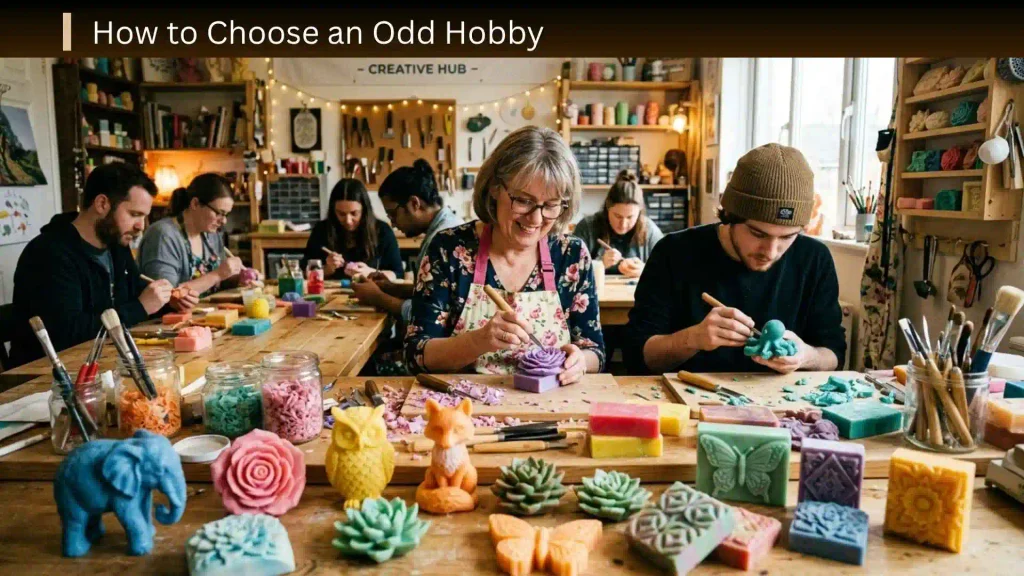
The most unusual hobby is not automatically the best one for you. Consider what type of experience you actually want.
| If you want… | Try… |
| Something almost free | Cloud identification, pen spinning, nature journaling |
| A collecting hobby | Postcards, license plates, matchbooks, bottle caps |
| A creative hobby | Miniatures, dioramas, pressed flowers, miniature books |
| Outdoor exploration | Geocaching, letterboxing, train watching |
| Research and history | Historical maps, ephemera, handwriting study |
| A skill challenge | Juggling, semaphore, knot tying, yo-yo tricks |
| Photography | Insects, architecture, local signs, mushrooms |
| A relaxing activity | Leaf identification, sketching, postcard collecting |
| A technical hobby | Fountain pen restoration, puzzle boxes, mechanical puzzles |
Odd Hobbies That Cost Little or Nothing
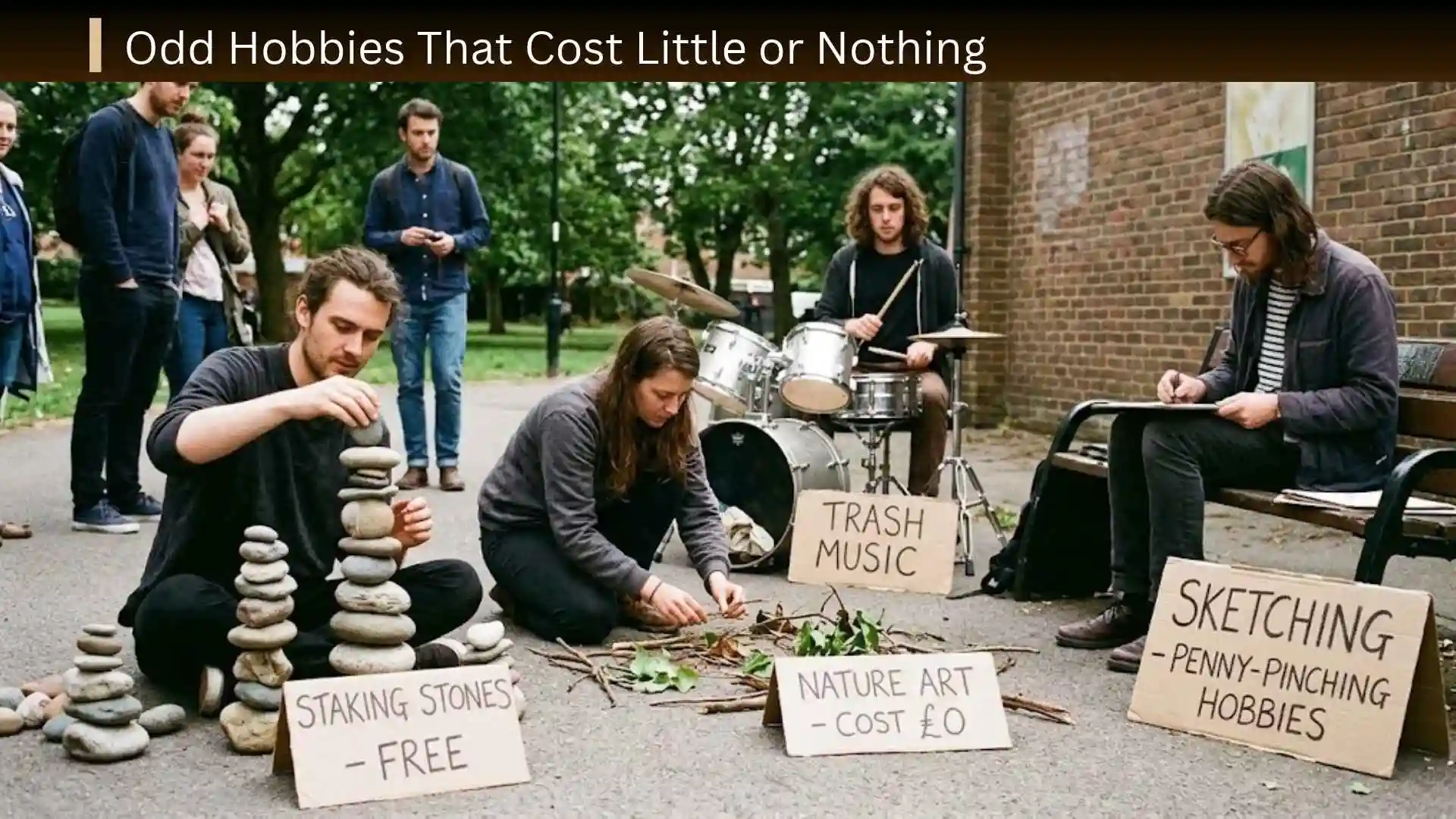
You do not need an expensive collection or specialized equipment to have an unusual hobby.
Some of the easiest low-cost options include:
- Cloud identification
- Nature journaling
- Leaf identification
- Urban sketching
- Architecture photography with a phone
- Pen spinning
- Knot tying
- Historical research
- Sound observation
- Cemetery history research
- Local sign photography
- Weird history research
A useful strategy is to start with a hobby that uses something you already own. If you remain interested after several weeks, then consider buying specialized equipment.
Odd Hobbies for Introverts
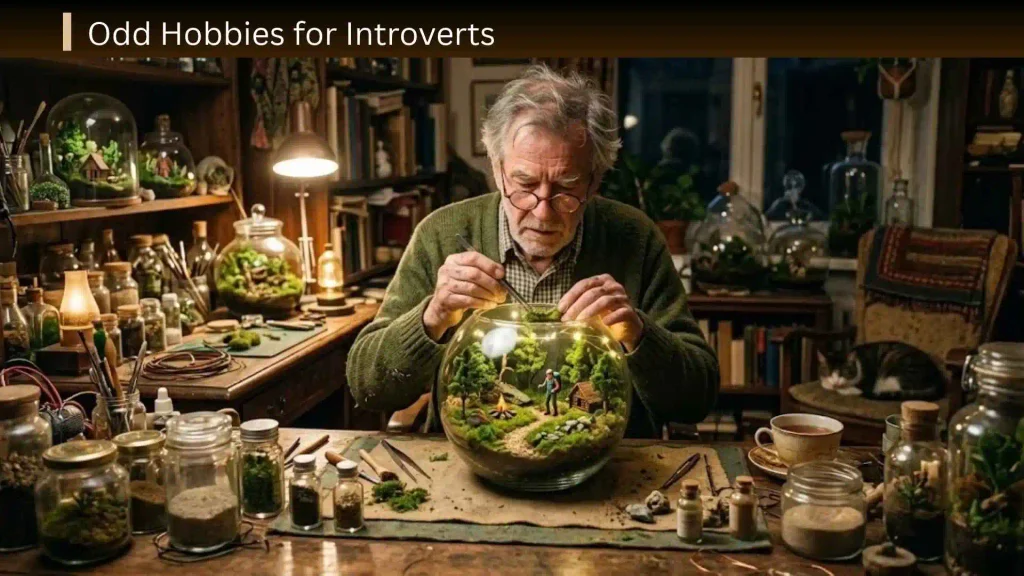
Many unusual hobbies work particularly well for people who prefer independent activities.
Good choices include:
- Miniature making
- Historical map collecting
- Typewriter collecting
- Postcard collecting
- Nature journaling
- Fountain pen restoration
- Mechanical puzzles
- Ephemera collecting
- Personal archiving
- Photography
- Historical handwriting study
These activities can be practiced alone while still providing opportunities to join communities later if you want to share your interests.
Odd Hobbies You Can Do at Home
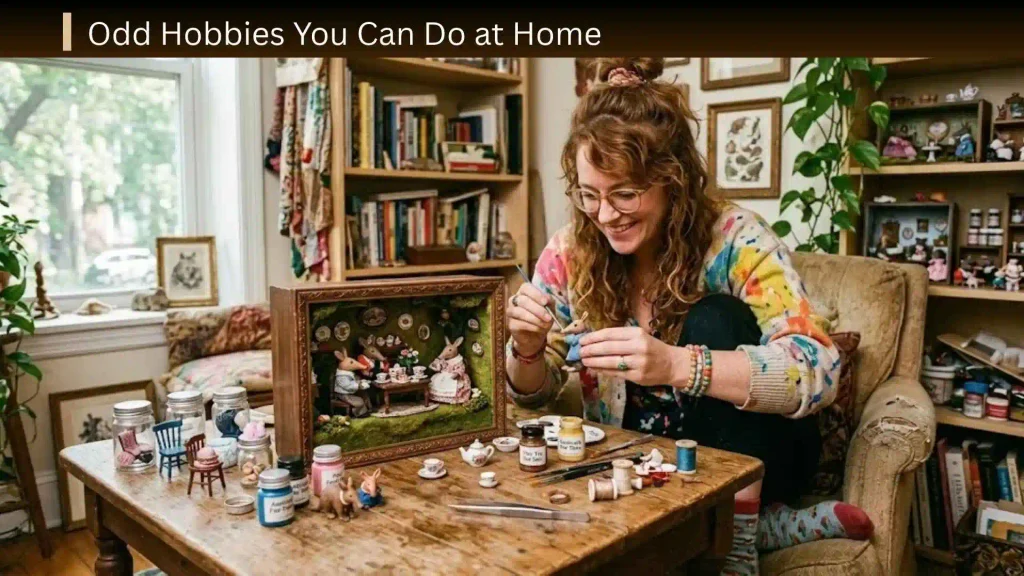
If you want something unusual without leaving home, consider:
- Miniature making
- Origami tessellations
- Puzzle solving
- Typewriter writing
- Fountain pen restoration
- Postcard collecting
- Wax seal crafting
- Miniature bookmaking
- Bottle cap collecting
- Weird object museum making
- Historical recipe recreation
- Personal archive building
The advantage of home-based hobbies is that you can usually practice them in short sessions without needing to travel.
Odd Hobbies for People Who Like Collecting
Collecting becomes more interesting when you give it a clear theme.
Instead of collecting “anything unusual,” choose a defined category such as:
- Vintage postcards from one state
- Old restaurant menus
- Historical maps of one city
- Unusual keys
- Souvenir spoons
- Vintage matchbooks
- License plates
- Bottle caps
- Ephemera from a particular decade
- Old advertisements
A narrow collecting theme is easier to organize, research, and display.
Odd Hobbies for Creative People
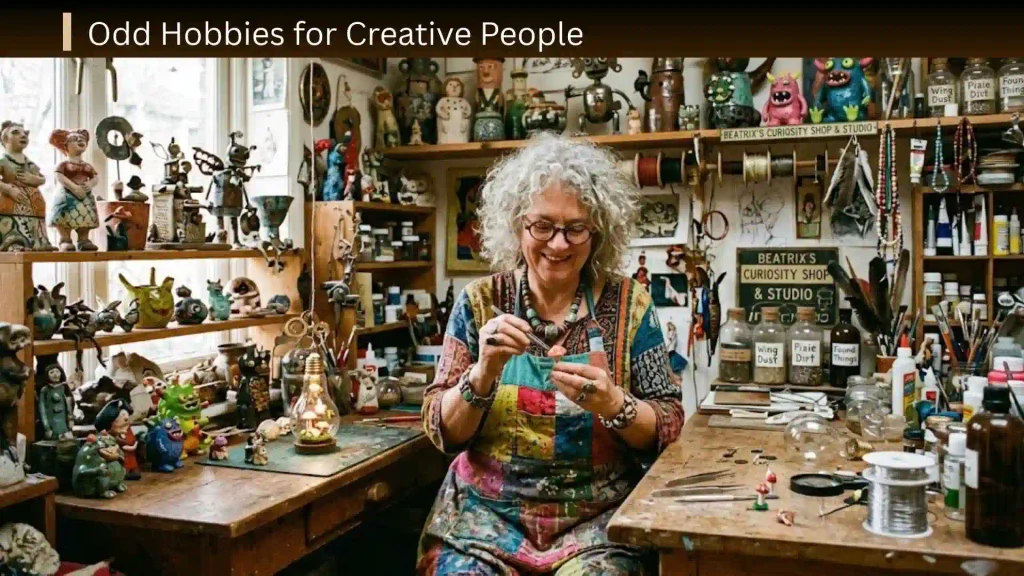
If your main goal is making something, consider:
- Miniature rooms
- Dioramas
- Miniature books
- Tiny food crafts
- Pressed flower art
- Matchbox art
- Origami tessellations
- Wax seal designs
- Architecture sketching
- Puzzle box construction
These hobbies also offer a natural progression: start with simple projects, identify the techniques you enjoy, and gradually increase complexity.
Are Odd Hobbies Worth Trying?
Yes, if the activity genuinely interests you.
An unusual hobby can be valuable because it gives you a specific subject to explore rather than another generic form of entertainment. It can also encourage observation, creativity, research, craftsmanship, or skill development.
However, you do not need to choose a hobby because it is unusual. If something ordinary gives you more satisfaction, it is still a good hobby.
The best test is simple: Does it make you curious enough to want to do it again?
How to Start an Odd Hobby Without Overspending
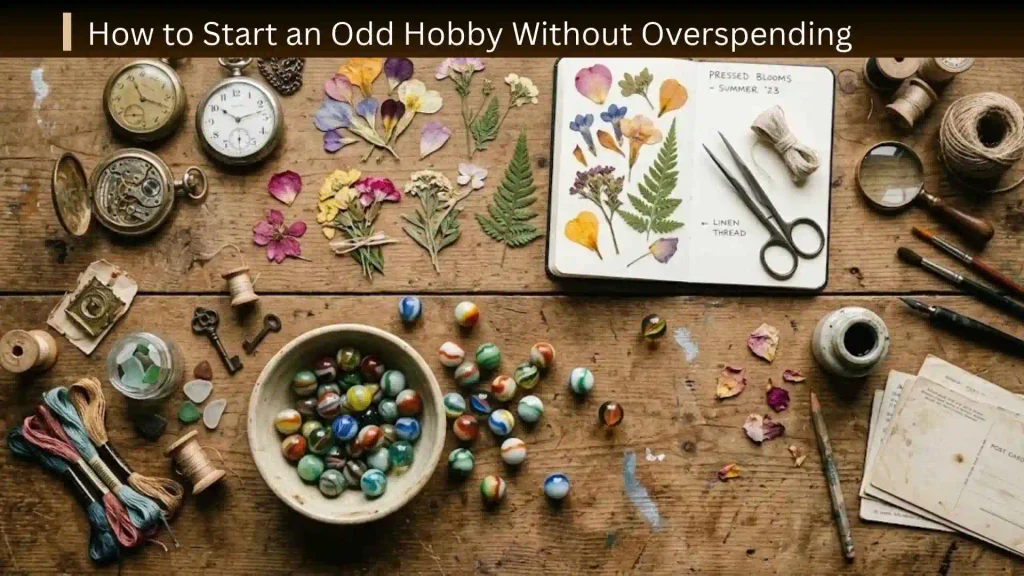
Start with the smallest possible version of the hobby.
For example, if you are interested in miniature making, make one small scene before buying a large collection of supplies. If you want to collect historical objects, research the category before purchasing anything expensive. If you want to learn a skill, practice the basics before buying advanced equipment.
A simple approach is:
- Pick one hobby that genuinely interests you.
- Spend little or nothing during the first week.
- Learn the basic rules or techniques.
- Complete one small project or activity.
- Decide whether you enjoyed the process.
- Invest more only if you want to continue.
- Keep notes about what you learn and create.
This prevents an unusual hobby from turning into an expensive collection of supplies you rarely use.
FAQs About Odd Hobbies
What is considered an odd hobby?
An odd hobby is generally an unconventional or less commonly practiced leisure activity. It can involve unusual collecting, niche research, specialized skills, miniature crafts, observation, photography, or historical interests.
What are some really weird hobbies?
Some particularly unconventional examples include sound mapping, semaphore, vintage matchbook collecting, miniature food crafting, historical handwriting study, unusual object archiving, puzzle box making, and ephemera collecting.
What seems “weird” is subjective, so an activity that sounds strange to one person may be a perfectly normal hobby within another community.
What are good odd hobbies for adults?
Good choices include geocaching, miniature making, historical map collecting, photography, fountain pen restoration, postcard collecting, mechanical puzzles, nature journaling, train watching, and historical research.
What odd hobbies are cheap to start?
Cloud identification, leaf identification, pen spinning, nature journaling, urban sketching, photography with an existing phone, historical research, and basic knot tying can be started with little or no specialized equipment.
Can an odd hobby become a career?
Sometimes. Photography, restoration, crafts, historical research, writing, collecting expertise, and specialized design skills can potentially develop into freelance work, teaching, content creation, or small businesses. However, a hobby does not need to become a career to be worthwhile.
How do I find an unusual hobby that fits me?
Start with the type of experience you want. If you like making things, try miniatures or dioramas. If you enjoy research, explore maps or ephemera. If you prefer being outdoors, try geocaching or nature observation. If you like collecting, choose a narrow category that you can research and organize.
Is collecting an odd hobby?
Collecting can be an odd hobby when the subject is unusual or highly specialized, but collecting itself is a common hobby. The unusual aspect usually comes from what someone chooses to collect and how deeply they research it.
Conclusion
Odd hobbies can turn ordinary free time into something much more interesting. Whether you prefer collecting forgotten objects, documenting sounds, making miniature worlds, studying obscure history, photographing tiny creatures, or learning unusual skills, there are countless ways to explore interests outside the mainstream.
You do not need the strangest hobby possible. Choose something that sparks curiosity, fits your lifestyle, and gives you a reason to keep learning. Start small, experiment before spending heavily, and let your interests become more specialized naturally.

I’m James Anderson, a dedicated writer and lifelong learner who enjoys researching topics and explaining them in a practical way. Through my work at Cognivoora, I aim to give readers reliable, easy-to-follow information that helps them learn something new. I always try to keep my writing natural, useful, and focused on the questions readers actually have.
Books:
- A Practical Guide to Better Thinking
- Questions Worth Asking