
Finding the right hobbies for young women does not have to mean choosing whatever is currently trending. A good hobby should fit your personality, available time, budget, and the kind of experience you want from it—whether that is creativity, relaxation, fitness, learning, social connection, or simply having fun.
From painting and photography to hiking, gardening, reading, baking, and learning a new skill, there are plenty of hobbies that can become enjoyable parts of everyday life. The best choice is usually one that makes you want to keep coming back to it.
How to Choose a Hobby That Fits You
Before picking a hobby, think about what you want it to add to your life.
- Want to be more creative? Try painting, pottery, crochet, photography, or creative writing.
- Need a relaxing activity? Consider reading, journaling, coloring, gardening, or puzzles.
- Want to get active? Try hiking, yoga, dancing, cycling, or recreational sports.
- Want to learn something useful? Explore cooking, sewing, coding, a language, or personal finance.
- Want to meet people? Join a book club, recreational sports group, crafting group, or volunteer organization.
- Want a hobby you can do at home? Reading, baking, drawing, knitting, gaming, and scrapbooking are easy options.
- Want to spend less money? Start with walking, writing, sketching, reading library books, or learning from free resources.
You do not have to commit to one hobby immediately. Trying several inexpensive activities can help you discover what genuinely holds your interest.
35 Hobbies for Young Women to Try
1. Reading
Reading is a flexible hobby that can fit almost any schedule. You can explore novels, biographies, memoirs, history, science, personal development, mysteries, fantasy, or other subjects that interest you.
A library card can also make reading an inexpensive hobby. If you prefer social activities, consider joining a local or online book club.
Best for: Relaxation, learning, imagination, and quiet time
Cost: Free to moderate
Equipment: Books or an e-reader
2. Journaling
Journaling can be as simple as writing a few thoughts at the end of the day. You might keep a traditional diary, gratitude journal, reading journal, travel journal, or creative notebook.
There are no strict rules. Some people enjoy writing several pages, while others prefer short lists or prompts.
Best for: Reflection, creativity, and organizing thoughts
Cost: Low
Equipment: Notebook and pen
3. Photography
Photography gives you a reason to pay closer attention to ordinary surroundings. You can photograph landscapes, architecture, food, pets, plants, portraits, or everyday moments.
You do not need an expensive camera to begin. A smartphone can be enough for learning composition, lighting, framing, and editing.
Best for: Creativity and exploring your surroundings
Cost: Low to high
Equipment: Smartphone or camera
4. Painting
Painting offers many directions, including watercolor, acrylic, gouache, and oil painting. Beginners can start with inexpensive supplies and simple subjects.
Instead of worrying about creating a perfect finished painting, focus on experimenting with color, shapes, textures, and different techniques.
Best for: Artistic expression and creative relaxation
Cost: Low to moderate
Equipment: Paint, brushes, paper or canvas
5. Drawing and Sketching
Drawing is one of the easiest creative hobbies to start because you can begin with a pencil and paper.
Try sketching people, animals, plants, buildings, objects around your home, or scenes from places you visit. Digital drawing is another option if you have a tablet and compatible software.
Best for: Creativity and developing artistic skills
Cost: Low to moderate
Equipment: Pencil and sketchbook
6. Crochet
Crochet can turn yarn into practical and decorative objects such as scarves, blankets, bags, hats, and small accessories.
It can also be a satisfying hobby because you can see a project develop one stitch at a time. Beginners can start with a basic hook, yarn, and a simple pattern.
Best for: Crafting, patience, and handmade projects
Cost: Low to moderate
Equipment: Crochet hook, yarn, and patterns
7. Knitting
Knitting is another fiber craft with countless project possibilities. Once you understand basic stitches, you can gradually work toward more complicated patterns.
It is particularly appealing if you enjoy hands-on activities that can be done while listening to music or watching a show.
Best for: Relaxing, creative projects, and handmade gifts
Cost: Low to moderate
Equipment: Knitting needles, yarn, and patterns
8. Sewing
Sewing can be both creative and practical. You can make clothing, tote bags, pillows, costumes, accessories, or household items.
If you are new to sewing, begin with a straightforward project rather than immediately attempting complicated clothing.
Best for: Creativity and practical skills
Cost: Moderate
Equipment: Basic sewing supplies; a machine is optional
9. Embroidery
Embroidery is a portable craft that allows you to decorate fabric with patterns, lettering, flowers, and illustrations.
A basic embroidery project requires relatively little equipment, making it approachable for beginners who want to experiment with textile art.
Best for: Detailed crafts and creative relaxation
Cost: Low
Equipment: Fabric, embroidery hoop, needle, and thread
10. Baking
Baking combines creativity with a practical result you can share with other people. Try cookies, bread, muffins, cakes, pies, or pastries.
You can also make the hobby more interesting by learning why ingredients behave differently and gradually experimenting with recipes.
Best for: Creativity, learning, and sharing
Cost: Low to moderate
Equipment: Basic kitchen equipment and ingredients
11. Cooking
Cooking can become much more than preparing everyday meals. You can explore cuisines from different regions, learn knife skills, experiment with sauces, or create your own recipes.
A useful approach is to choose one new recipe each week rather than trying to master everything at once.
Best for: Creativity and practical life skills
Cost: Low to moderate
Equipment: Basic kitchen equipment
12. Gardening
Gardening can work whether you have a large yard, a balcony, or only a sunny windowsill. Herbs, flowers, houseplants, and vegetables all offer different experiences.
If you are new to gardening, start with a small number of plants so that watering and care remain manageable.
Best for: Nature, patience, and hands-on activity
Cost: Low to moderate
Equipment: Plants, containers, soil, and basic gardening tools
13. Hiking
Hiking combines movement with time outdoors. You can begin with short, accessible trails and gradually explore longer routes as your interests and abilities develop.
For outdoor activities, choose routes appropriate for your experience and conditions, and prepare for the weather and terrain.
Best for: Outdoor exploration and physical activity
Cost: Free to moderate
Equipment: Comfortable shoes and weather-appropriate clothing
14. Walking
Walking is one of the simplest hobbies because it requires very little equipment. You can make it more interesting by exploring different neighborhoods, parks, trails, or scenic areas.
Some people also combine walking with photography, podcasts, audiobooks, or nature observation.
Best for: Getting outdoors and clearing your mind
Cost: Free to low
Equipment: Comfortable footwear
15. Yoga
Yoga can be practiced at home or in a class. Beyond following routines, you can learn about different styles and focus on movement, balance, breathing, flexibility, or relaxation.
Beginners should choose instruction appropriate to their level and avoid pushing through pain.
Best for: Movement, flexibility, and relaxation
Cost: Free to moderate
Equipment: Comfortable clothing and an optional yoga mat
16. Dancing
Dancing can be both a creative and active hobby. Options range from hip-hop and ballet to salsa, ballroom, contemporary dance, and other styles.
You can take formal classes or learn routines at home, depending on your goals and available resources.
Best for: Movement, music, creativity, and socializing
Cost: Free to moderate
Equipment: Comfortable clothing and suitable footwear
17. Cycling
Cycling provides an opportunity to explore your local area while staying active. Recreational cycling can be casual, while longer rides can become a more structured hobby.
If you cycle outdoors, learn basic road and bike safety and use appropriate protective equipment.
Best for: Outdoor activity and exploration
Cost: Moderate to high
Equipment: Bicycle and appropriate safety gear
18. Creative Writing
Creative writing includes short stories, poetry, personal essays, scripts, and fiction. You can write privately or eventually share your work with a writing community.
A simple starting point is to write for 10–15 minutes without worrying about producing polished work.
Best for: Imagination, storytelling, and self-expression
Cost: Free to low
Equipment: Notebook or computer
19. Learning a New Language
Learning another language can become a long-term hobby with clear milestones. You can practice vocabulary, pronunciation, listening, reading, and conversation.
Choose a language that connects with something meaningful to you, such as travel, literature, family interests, music, or culture.
Best for: Learning and long-term personal development
Cost: Free to moderate
Equipment: Learning materials or an app
20. Playing a Musical Instrument
Learning guitar, piano, ukulele, violin, drums, or another instrument can provide a creative challenge that develops over time.
Start with a realistic practice routine. Consistency is generally more useful than trying to practice for a very long session occasionally.
Best for: Music, creativity, and skill development
Cost: Moderate to high
Equipment: Instrument and learning materials
21. Singing
Singing can be practiced casually at home or developed through lessons, choirs, or community groups.
You can explore different genres and gradually work on pitch, breathing, rhythm, and vocal technique.
Best for: Music and self-expression
Cost: Free to moderate
Equipment: None required
22. Pottery and Ceramics
Pottery offers a tactile way to create bowls, mugs, sculptures, vases, and decorative pieces.
Because a kiln and specialized equipment can be expensive, beginners often find it easier to take classes at a local ceramics studio rather than setting up a home studio.
Best for: Hands-on creativity
Cost: Moderate to high
Equipment: Usually provided by a studio
23. Scrapbooking
Scrapbooking combines photographs, paper, writing, decorations, and memories into physical pages.
It can be especially enjoyable if you like organizing photos from trips, celebrations, friendships, or everyday experiences.
Best for: Memory keeping and crafts
Cost: Low to moderate
Equipment: Album, photographs, paper, adhesive, and decorations
24. Calligraphy and Hand Lettering
Calligraphy and hand lettering focus on creating attractive written designs. You can practice traditional lettering styles or develop your own decorative approach.
It can also become useful for handmade cards, invitations, artwork, and journals.
Best for: Detailed creative work
Cost: Low
Equipment: Pens, paper, or specialized lettering tools
25. Puzzles
Jigsaw puzzles, crosswords, logic puzzles, and other puzzle formats provide mentally engaging activities without requiring a major time commitment.
Choose the type and difficulty according to how challenging you want the experience to be.
Best for: Quiet entertainment and problem-solving
Cost: Low to moderate
Equipment: Depends on the puzzle
26. Gaming
Video games can be a hobby rather than simply a way to pass time. Different genres offer different experiences, from story-driven adventures and simulations to strategy and cooperative games.
If you enjoy social gaming, multiplayer games can also provide opportunities to connect with friends.
Best for: Entertainment, storytelling, strategy, and social play
Cost: Free to high
Equipment: Phone, computer, console, or handheld system
27. Thrifting and Upcycling
Thrifting can become a hobby centered on finding unusual clothing, furniture, books, decorations, or collectibles.
You can take it a step further by learning to repair, customize, paint, or repurpose secondhand items instead of simply purchasing them.
Best for: Fashion, creativity, and treasure hunting
Cost: Low to moderate
Equipment: Depends on the project
28. DIY Home Decor
DIY projects can turn ordinary materials into decorations, organizers, artwork, or functional household items.
Start with projects that match your skill level and use appropriate tools safely.
Best for: Creativity and improving your living space
Cost: Low to moderate
Equipment: Depends on the project
29. Volunteering
Volunteering can turn an interest in animals, education, the environment, community programs, or other causes into regular activity.
It is also a social hobby for people who prefer doing something purposeful with their free time.
Best for: Community involvement and meeting people
Cost: Usually free
Equipment: Depends on the organization
30. Birdwatching
Birdwatching encourages you to spend time outdoors while learning to identify different species by appearance, behavior, habitat, and sound.
A smartphone or inexpensive pair of binoculars can be enough to begin.
Best for: Nature, observation, and outdoor exploration
Cost: Free to moderate
Equipment: Optional binoculars and a bird guide or identification app
31. Stargazing
Stargazing can turn an evening outdoors into an opportunity to learn about the night sky.
You can begin by identifying the Moon and prominent constellations before learning more about planets, stars, and other astronomical objects.
Best for: Science, quiet outdoor time, and curiosity
Cost: Free to moderate
Equipment: None required; binoculars or a telescope are optional
32. Traveling and Local Exploring
Travel does not have to mean expensive international trips. Exploring museums, parks, historic sites, small towns, markets, and attractions within driving distance can become a hobby.
Keeping a travel journal or taking photographs can give the activity an additional creative element.
Best for: Exploration, culture, and photography
Cost: Free to high
Equipment: Depends on the trip
33. Collecting
Collecting can revolve around almost anything meaningful to you: vintage postcards, records, books, stamps, rocks, art prints, or other objects.
A good collection benefits from a clear theme and reasonable boundaries so the hobby does not become unnecessary clutter.
Best for: Research, organization, and personal interests
Cost: Low to high
Equipment: Depends on the collection
34. Bookbinding
Bookbinding combines craft and practical creativity. You can make handmade notebooks, journals, sketchbooks, or small books.
It is a particularly good choice for someone who enjoys paper crafts and wants to create something functional.
Best for: Crafting and stationery lovers
Cost: Low to moderate
Equipment: Paper, thread, needles, adhesive, and basic tools
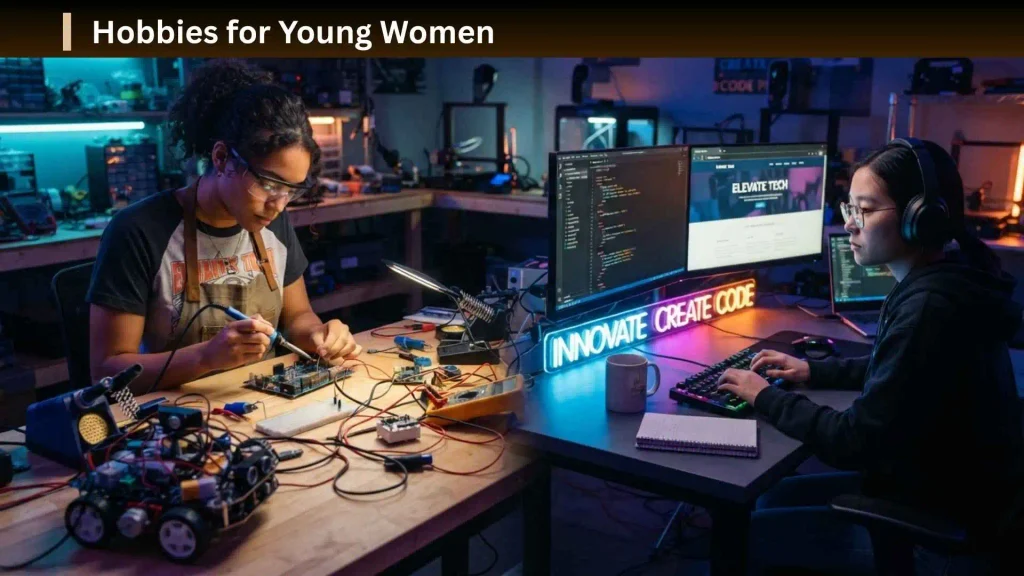
35. Learning to Code
Coding can be a creative hobby as well as a technical skill. Beginners can experiment with websites, simple games, automation, or small personal projects.
The most effective starting point is usually a project that solves a simple problem or creates something you actually want to use.
Best for: Technology, creativity, and problem-solving
Cost: Free to moderate
Equipment: Computer and learning resources
Best Hobbies for Young Women Based on Your Lifestyle
Different hobbies work better for different schedules and personalities.
| If you want… | Hobbies to consider |
| A relaxing hobby | Reading, journaling, crochet, puzzles |
| A creative outlet | Painting, drawing, photography, embroidery |
| Something active | Hiking, walking, dancing, cycling |
| A social activity | Book clubs, dancing, recreational sports, volunteering |
| A hobby at home | Baking, gaming, writing, knitting |
| A low-cost hobby | Reading, walking, sketching, journaling |
| A practical skill | Cooking, sewing, coding, gardening |
| Time outdoors | Hiking, gardening, birdwatching, cycling |
| A long-term skill | Music, language learning, coding, painting |
| A hands-on craft | Pottery, crochet, embroidery, bookbinding |
| A hobby for short sessions | Journaling, sketching, reading, puzzles |
| A hobby with shareable results | Baking, photography, painting, sewing |
Best Cheap Hobbies for Young Women

You do not need a large budget to develop an enjoyable hobby. Some of the easiest inexpensive options include:
- Reading books from the library
- Walking
- Journaling
- Drawing
- Creative writing
- Photography with a smartphone
- Birdwatching
- Yoga at home
- Learning a language with free resources
- Cooking with ingredients you already have
- Puzzles
- Digital art using available software
- Stargazing
- Nature walks
- Learning basic coding
A useful strategy is to start with what you already own. Your phone can support photography, reading, language learning, music, and writing, while a notebook can support journaling, sketching, planning, and creative writing.
Best Creative Hobbies for Young Women
If creativity is your main goal, consider hobbies that allow you to make something rather than simply consume entertainment.
For visual creativity
Try:
- Painting
- Drawing
- Photography
- Digital art
- Calligraphy
- Scrapbooking
For textile creativity
Try:
- Crochet
- Knitting
- Embroidery
- Sewing
For creative storytelling
Try:
- Creative writing
- Poetry
- Filmmaking
- Photography
- Journaling
For hands-on creativity
Try:
- Pottery
- DIY projects
- Bookbinding
- Upcycling
- Baking
The right creative hobby is usually the one that matches the type of creating you naturally enjoy.
Best Indoor Hobbies for Young Women
Indoor hobbies can be particularly useful when weather, work, school, or other commitments limit outdoor time.
Good options include:
- Reading
- Journaling
- Painting
- Drawing
- Crochet
- Knitting
- Embroidery
- Baking
- Cooking
- Gaming
- Puzzles
- Creative writing
- Playing an instrument
- Learning a language
- Coding
- Scrapbooking
Many of these can be done in short sessions, so they can fit around a busy schedule.
Best Outdoor Hobbies for Young Women
If you would rather spend your free time outside, consider:
- Hiking
- Walking
- Cycling
- Gardening
- Birdwatching
- Stargazing
- Photography
- Outdoor sketching
- Nature journaling
- Recreational sports
- Local exploring
Outdoor hobbies do not necessarily require expensive equipment. Walking, nature observation, photography with a phone, and sketching can all be started simply.
How to Start a New Hobby Without Getting Overwhelmed
A common mistake is buying everything before discovering whether you actually enjoy the activity.
Instead, use a simple approach.
Start with the smallest version
If you want to paint, buy a basic beginner set rather than a professional collection.
If you want to write, use a notebook you already have.
If you want to hike, start with a manageable local trail rather than planning an ambitious multi-day trip.
Give yourself a small first goal
Instead of saying, “I want to become a photographer,” try:
“I will take 10 intentional photos this weekend.”
Instead of saying, “I want to learn guitar,” try:
“I will learn three basic chords.”
Small goals make it easier to discover whether you enjoy the process.
Do not expect immediate mastery
A hobby is supposed to be enjoyable, not another source of performance pressure. Being a beginner is part of learning.
You can improve gradually once you know that you genuinely like the activity.
Try before investing heavily
Classes, libraries, community centers, maker spaces, local groups, and introductory workshops can sometimes let you experience an activity before purchasing specialized equipment.
How to Turn a Hobby Into a Regular Habit
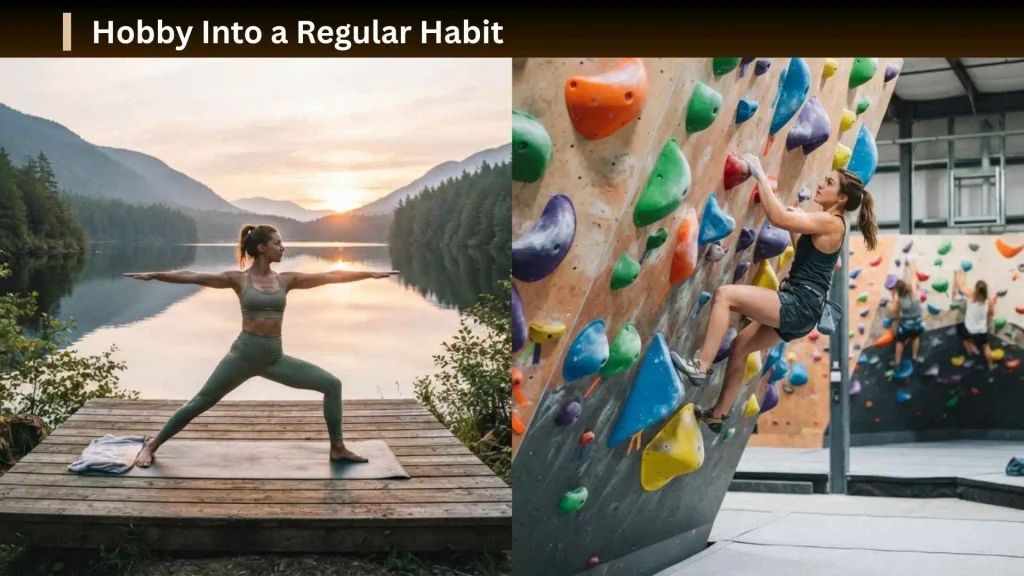
Finding a hobby is only the first step. The bigger challenge can be making time for it.
Choose a realistic schedule rather than an idealized one. Even 15–30 minutes can be enough for activities such as reading, sketching, journaling, crochet, language practice, or music.
It can also help to connect the hobby with an existing routine. For example, you might read before bed, journal after breakfast, photograph something during your daily walk, or practice an instrument at the same time each evening.
Most importantly, allow your interests to change. A hobby does not have to become a lifelong commitment to be worthwhile.
How to Find a Hobby You Will Actually Enjoy
If you are unsure what to choose, ask yourself these questions:
- Do I prefer creating, learning, moving, collecting, or socializing?
- Do I want to spend my hobby time indoors or outdoors?
- How much money am I comfortable spending?
- Do I want something I can do in 15 minutes, or do I enjoy longer sessions?
- Do I prefer working alone or with other people?
- Do I want a hobby that produces something tangible?
- Am I looking for relaxation, challenge, entertainment, or personal growth?
Your answers can quickly narrow down the possibilities.
For example, someone who wants a quiet, inexpensive indoor activity might prefer reading or journaling. Someone who wants creativity and tangible results might enjoy sewing, painting, or baking. Someone who wants social interaction could explore dance classes, book clubs, recreational sports, or volunteering.
FAQs About Hobbies for Young Women
What are some good hobbies for young women?
Popular options include reading, photography, painting, journaling, baking, cooking, hiking, dancing, gardening, crochet, sewing, creative writing, gaming, language learning, and playing musical instruments. The best choice depends on your interests, budget, schedule, and preferred environment.
What are good hobbies for young women at home?
Reading, journaling, painting, drawing, crochet, knitting, embroidery, baking, cooking, gaming, puzzles, creative writing, music, coding, and language learning can all be done at home.
What are the best cheap hobbies for young women?
Reading, walking, journaling, sketching, creative writing, photography with a smartphone, birdwatching, stargazing, and learning from free educational resources are good low-cost choices.
What hobbies can help young women meet new people?
Book clubs, dance classes, recreational sports, volunteering, crafting groups, community classes, hiking groups, and music groups can provide opportunities to interact with people who share similar interests.
What is a good hobby for someone who gets bored easily?
Choose a hobby with variety and room for progression. Photography, cooking, travel planning, creative writing, gardening, gaming, language learning, and DIY projects can offer many different challenges and directions.
Can a hobby become a useful skill?
Yes. Many hobbies can develop practical or transferable skills. Cooking, sewing, gardening, coding, photography, writing, music, and language learning can all involve skills that extend beyond the hobby itself.
How many hobbies should I have?
There is no ideal number. One hobby can be enough, while someone else may enjoy several activities for different purposes. Having a creative hobby, an active hobby, and a relaxing hobby can provide variety without requiring you to pursue everything at once.
Conclusion
The best hobbies for young women are not necessarily the most popular or impressive ones—they are the activities that genuinely fit your interests and make you want to spend time doing them.
If you want creativity, try painting, photography, drawing, crochet, or writing. If you want movement, explore hiking, walking, dancing, or cycling. For quiet time, reading, journaling, puzzles, and crafts are excellent starting points. And if you want to develop useful skills, consider cooking, sewing, gardening, coding, music, or language learning.
Start small, choose something you are curious about, and give yourself permission to experiment. A hobby does not need to be productive or perfect to be valuable; sometimes the best reason to have one is simply that you enjoy it.

I’m Ethan Mitchell, a curious writer who enjoys turning complex ideas into simple, useful information. At Cognivoora, I focus on creating clear and engaging content that readers can understand and apply in everyday life. I believe good writing should educate, answer real questions, and leave readers with something valuable to remember.
Books:
- The Everyday Mind
- Simple Ideas, Better Thinking