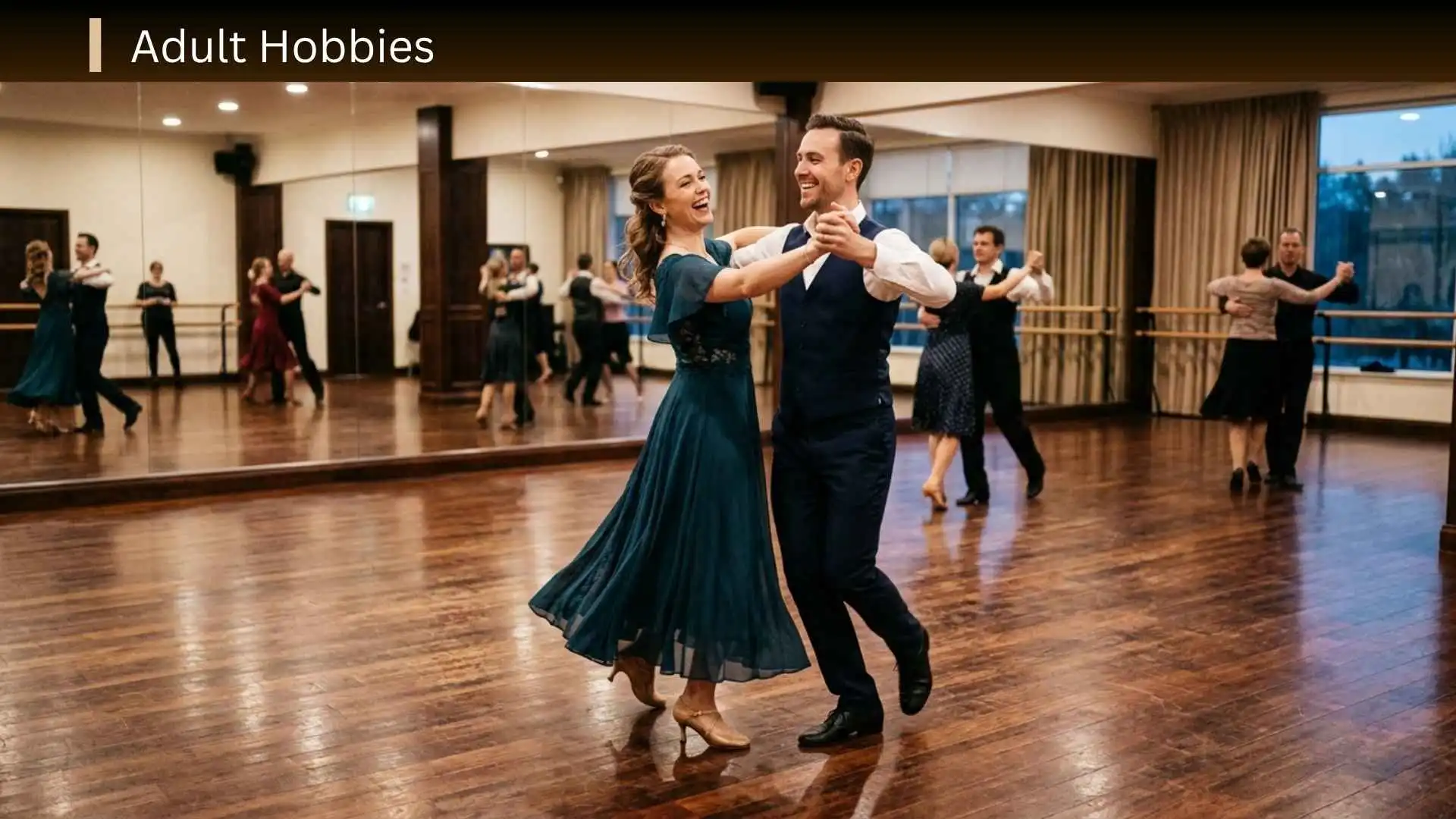
As an adult, it’s easy to get caught up in work, family, responsibilities, and everyday routines—and forget to make time for yourself. I believe a hobby can be more than just a way to pass the time; it can give you something exciting to look forward to, help you explore your interests, and make your free time feel more meaningful. Whether you want to create something, learn a new skill, stay active, relax after a busy day, or simply try something different, there are countless adult hobbies to explore.
You don’t need to be naturally talented or have hours of free time to get started. You can choose a hobby that fits your personality, budget, schedule, and lifestyle. In this guide, you’ll discover a variety of hobby ideas for adults—from creative and relaxing activities to social, outdoor, hands-on, and skill-building options—so you can find something that genuinely feels right for you.
Adult Hobbies
If you are exploring fun hobbies for adults, you have plenty of options to choose from, regardless of your schedule, budget, or experience. Reading, photography, gardening, cooking, painting, hiking, knitting, gaming, and learning a musical instrument are just a few activities that can make your free time more enjoyable.
Adult hobbies and interests vary from person to person. You might prefer a quiet activity you can enjoy alone, a creative project that helps you express yourself, or a group activity that gives you opportunities to meet new people. The best approach is to start with something that genuinely interests you rather than choosing a hobby simply because it is popular.
If you are looking for adult hobbies worth trying, consider testing two or three activities before committing to one. You may discover an unexpected interest in birdwatching, pottery, creative writing, chess, or gardening. You do not need to become an expert; enjoying the process is reason enough to continue.
Adult Hobbies(Quick Answer)

ant from your free time. Some of the most versatile choices include photography, gardening, cooking, hiking, painting, reading, drawing, woodworking, knitting, playing an instrument, cycling, baking, birdwatching, journaling, pottery, fishing, volunteering, and learning a language.
For a busy beginner, choose something that is easy to start and can fit into short sessions. If you want a social outlet, consider a recreational sports league, dance class, book club, board-game group, or volunteer activity. If you want a creative challenge, try photography, painting, ceramics, writing, woodworking, or sewing.
The best hobby is not necessarily the most impressive one. It is the activity you genuinely want to return to.
How to Choose an Adult Hobby
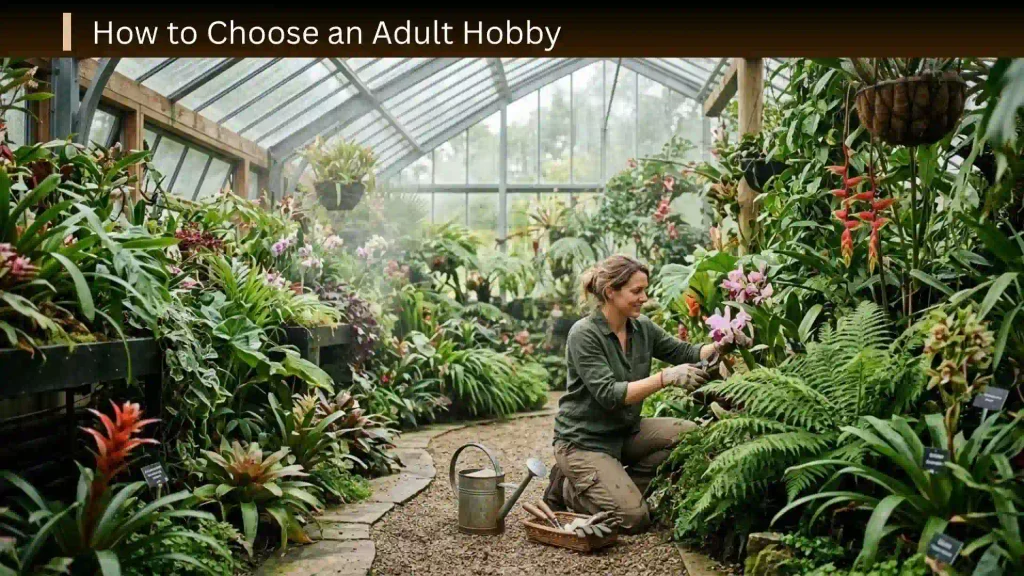
Before picking a hobby, think about what you want your free time to feel like. A hobby that suits your personality, schedule, and available space is much easier to maintain.
Start With Your Goal
Ask yourself what you want the hobby to provide:
- Relaxation: gardening, reading, knitting, drawing, puzzles, or watercolor
- Creativity: photography, painting, pottery, writing, sewing, or music
- Exercise: hiking, cycling, swimming, dancing, tennis, or climbing
- Social connection: team sports, board games, volunteering, or classes
- Learning: languages, astronomy, cooking, coding, history, or chess
- Time outdoors: gardening, hiking, fishing, birdwatching, or camping
- Making things: woodworking, ceramics, model building, leathercraft, or sewing
- A personal challenge: running, chess, playing an instrument, or learning a new craft
Consider Your Available Time
A hobby does not have to require an entire afternoon.
Some activities work well in 10- to 30-minute sessions, including:
- Reading
- Sketching
- Journaling
- Practicing an instrument
- Language practice
- Knitting
- Puzzles
- Photography editing
Other hobbies naturally require longer blocks of time. Camping, woodworking, pottery classes, fishing trips, and longer hikes are easier to enjoy when you have several uninterrupted hours.
If your schedule is unpredictable, favor hobbies that can be paused and resumed without much preparation.
Consider Your Budget
You do not need expensive equipment to have a worthwhile hobby.
Low-cost options include walking, reading through a library, writing, drawing, birdwatching, cooking with ingredients you already use, gardening from seeds, and many forms of exercise.
Some hobbies become more expensive as you advance. Photography, cycling, golf, woodworking, musical instruments, camping, and specialized crafts can all involve substantial equipment costs. Starting with basic gear lets you discover whether you actually enjoy the activity before making a larger investment.
Think About Where You Will Do It
Your available space matters.
If you live in an apartment, hobbies such as drawing, reading, digital photography, journaling, knitting, language learning, cooking, and many musical activities may be easier to manage than woodworking or large-scale gardening.
If you have access to a garage, workshop, backyard, or nearby natural area, your options expand considerably.
Creative Adult Hobbies
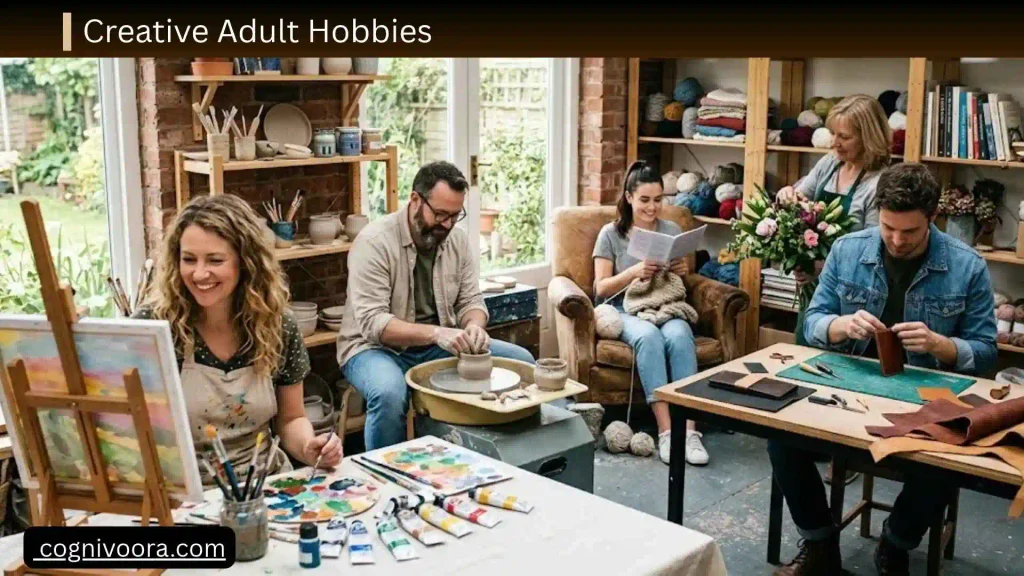
Creative hobbies are a good fit for adults who enjoy making, designing, experimenting, or expressing ideas rather than simply consuming entertainment.
1. Photography
Photography turns ordinary surroundings into subjects worth noticing. You can photograph landscapes, architecture, food, wildlife, people, street scenes, or everyday details.
Why try it: It develops observation and composition skills while giving you a reason to explore your surroundings.
Best for: Visual thinkers and people who enjoy technology or storytelling.
Difficulty: Easy to begin; more technical at advanced levels.
Cost: Low if you start with a phone; moderate to high with dedicated camera equipment.
Beginner tip: Concentrate on composition and light before buying additional lenses or accessories.
2. Drawing
Drawing requires little space and very little equipment. You can work with pencils, pens, charcoal, colored pencils, or digital tools.
You do not have to aim for photorealism. Sketching objects, buildings, plants, people, or imaginary subjects can all be legitimate ways to practice.
Best for: People who want a quiet creative activity they can practice almost anywhere.
What you need: Paper and a pencil are enough to start.
3. Painting
Painting offers a broad range of approaches, from watercolor and acrylic to oil and gouache. Each medium behaves differently, so part of the hobby is discovering which one suits your working style.
Watercolor is convenient when portability matters. Acrylic dries relatively quickly and works on a variety of surfaces. Oil painting provides a slower-working medium but requires more attention to setup, cleanup, and ventilation.
Beginner tip: Start with a small number of colors instead of buying a large collection of paints.
4. Creative Writing
Creative writing can include short stories, poetry, personal essays, scripts, or fiction.
Unlike many creative hobbies, it requires almost no physical equipment. A notebook or computer is enough.
Why try it: It gives you a structured way to turn observations, ideas, characters, and experiences into something tangible.
A useful beginner exercise is to write a short scene around a specific setting, object, or conversation rather than worrying about producing a complete novel.
5. Pottery and Ceramics
Pottery combines creativity with a hands-on process. Depending on the studio, you may learn hand-building, wheel throwing, glazing, and firing.
Because kilns and pottery wheels require specialized equipment, many beginners start through a local studio or community class rather than setting up at home.
Best for: People who enjoy tactile projects and learning through repeated practice.
Difficulty: Moderate.
Cost: Moderate, particularly when taking classes.
6. Sewing
Sewing can range from basic repairs and alterations to clothing construction, quilting, bags, and decorative projects.
It is especially useful if you like hobbies that produce practical objects.
Beginner tip: Learn straight seams, basic machine operation, measuring, and simple repairs before tackling complicated garments.
7. Knitting or Crochet
Knitting and crochet are portable fiber crafts that can be practiced while listening to music or watching a show.
They have a relatively low barrier to entry, although creating polished garments or intricate patterns takes practice.
Best for: People who enjoy repetitive handwork and gradual progress.
8. Woodworking
Woodworking lets you make functional or decorative objects, from small shelves and boxes to furniture.
The hobby ranges from simple hand-tool projects to advanced furniture making, so beginners can choose a level that matches their workspace and skills.
Important consideration: Tools can cause serious injuries if used improperly. Learn safe operating procedures for every tool, use appropriate protective equipment, and keep your workspace organized.
9. Jewelry Making
Jewelry making can involve beads, wire, metal, clay, stones, or other materials.
It works well for people who enjoy small-scale projects and detailed design. You can begin with simple pieces before exploring more specialized techniques.
10. Calligraphy and Hand Lettering
Calligraphy focuses on deliberate letterforms, while hand lettering emphasizes designing individual letters and words.
A pen and paper can provide enough equipment to begin. More advanced work can involve specialized nibs, inks, brushes, or digital tools.
Relaxing Adult Hobbies
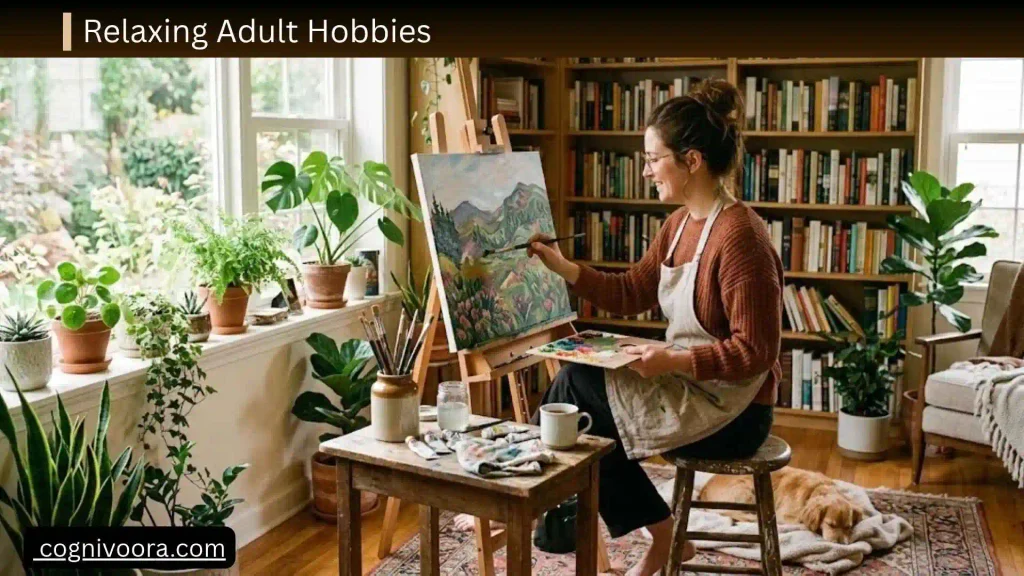
Relaxing hobbies are generally low-pressure activities where the process matters more than competition or performance.
11. Reading
Reading remains one of the most flexible hobbies for adults because you can choose almost any subject or genre.
Try alternating between fiction and nonfiction, or choose a specific theme for a month. Libraries can make the hobby inexpensive while giving you access to a large selection.
12. Gardening
Gardening involves growing and caring for plants, whether in a backyard, raised bed, balcony container, or indoor setup.
It can be as simple as maintaining a few herbs or as involved as planning a vegetable garden.
Best for: People who enjoy routine, nature, and visible progress.
Beginner tip: Start with a small number of plants suited to your local growing conditions rather than attempting a large garden immediately.
13. Journaling
Journaling can be as structured or informal as you want. You might write about your day, record ideas, track projects, describe books you read, or keep a simple gratitude or reflection practice.
You do not need a special notebook or elaborate system.
14. Puzzles
Jigsaw puzzles, crossword puzzles, logic puzzles, and number puzzles offer different kinds of mental engagement.
A puzzle hobby is particularly convenient when you want something absorbing without needing a large time commitment.
15. Coloring
Adult coloring can provide a simple creative activity without requiring advanced drawing skills.
You can use colored pencils, markers, or other suitable materials. It is particularly convenient when you want a hobby that can be picked up and put away quickly.
16. Baking
Baking combines creativity with a repeatable process. Beginners can start with cookies, muffins, quick breads, or simple cakes before moving into bread, pastries, or decorated desserts.
The practical advantage is that the result can also be shared with friends or family.
17. Cooking
Cooking is both a hobby and a useful life skill. You can explore cuisines, ingredients, knife skills, sauces, fermentation, grilling, vegetarian cooking, or meal preparation.
Instead of trying dozens of unrelated recipes, choose a theme and gradually build competence around it.
Active Adult Hobbies
If you spend much of your day sitting, an active hobby can add movement to your leisure time.
18. Hiking
Hiking combines walking with exploration and can range from easy local trails to demanding mountain routes.
The best starting point is a trail appropriate for your current fitness, experience, weather conditions, and equipment.
Beginner tip: Start with shorter routes and learn basic trail etiquette, navigation, hydration, and weather awareness before attempting more demanding terrain.
19. Cycling
Cycling can be recreational, fitness-oriented, social, or exploratory.
You can ride on roads, paved trails, bike paths, or suitable off-road routes depending on your equipment and local regulations.
A properly fitted helmet and a bicycle in good working condition are important starting considerations.
20. Swimming
Swimming provides a way to exercise without requiring a large collection of equipment. Many adults also enjoy it simply as a skill-based recreational activity.
If you are not confident in the water, formal instruction is a better starting point than attempting difficult swimming activities alone.
21. Dancing
Dancing is available in many forms, including salsa, ballroom, swing, hip-hop, contemporary, line dancing, and social dance.
Classes can make the hobby especially appealing if you want both physical activity and interaction with other people.
22. Tennis
Tennis combines movement, coordination, strategy, and skill development. Beginners can start with recreational play or lessons before worrying about competitive performance.
23. Pickleball
Pickleball has become a popular recreational sport in the United States. It uses a smaller court than tennis and can be played in singles or doubles.
Local recreation centers and community facilities may offer beginner sessions, making it a practical choice for adults who want a social activity.
24. Running
Running can be as casual as a short neighborhood jog or as goal-oriented as training for a race.
If you are new to running, increase activity gradually and pay attention to discomfort that does not resolve with rest. Appropriate shoes and a sensible progression matter more than trying to run a specific distance immediately.
25. Yoga
Yoga combines physical movement with balance, mobility, breathing, and focused attention. Different styles and classes can vary substantially in intensity.
Beginners should choose instruction appropriate to their experience and physical abilities rather than assuming every class has the same demands.
Outdoor Adult Hobbies
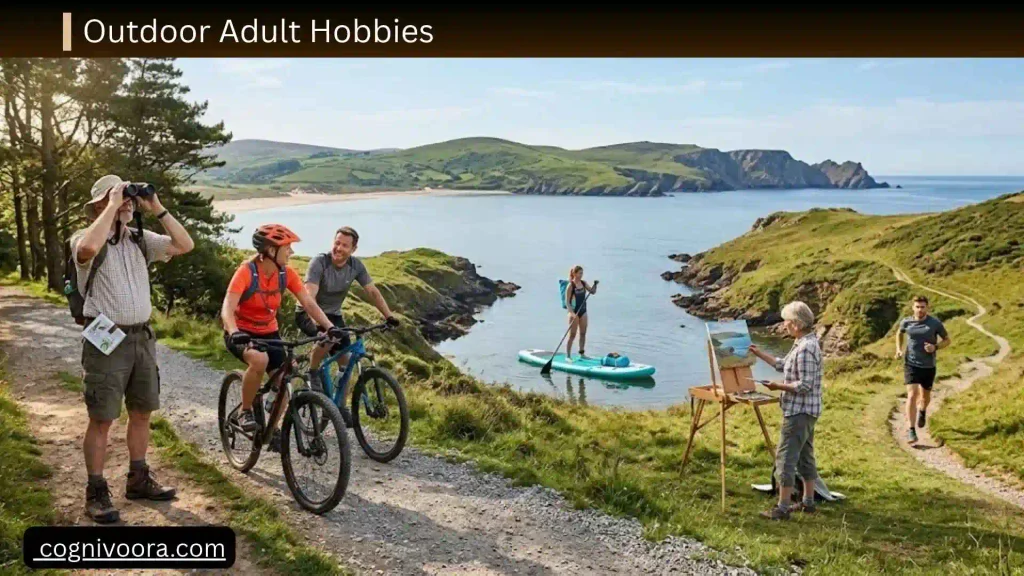
Outdoor hobbies can provide a change of environment while encouraging exploration and observation.
26. Birdwatching
Birdwatching involves identifying and observing wild birds. You can practice in city parks, backyards, wetlands, forests, or other suitable habitats.
You do not need expensive binoculars to begin. A field guide or identification app can help you learn species and recognize patterns.
What makes it distinctive: It encourages you to pay attention to sounds, movement, habitats, seasons, and small details that are easy to overlook.
27. Fishing
Fishing can be a quiet outdoor pastime or a more active pursuit depending on the location and method.
Before fishing, check local regulations, licensing requirements, seasons, and restrictions for the water you intend to use.
28. Camping
Camping ranges from established campgrounds with substantial amenities to remote backcountry trips.
For beginners, car camping at an established campground is generally a simpler introduction than immediately attempting a remote trip.
29. Geocaching
Geocaching combines outdoor exploration with GPS-based searching for hidden containers or locations.
It can turn a familiar park or neighborhood into a small discovery challenge and works well for people who enjoy both technology and being outdoors.
30. Stargazing
Stargazing involves observing the night sky and learning to recognize stars, planets, constellations, and other celestial objects.
You can begin with your eyes alone. A darker location away from excessive artificial light can make faint objects easier to see.
Social Adult Hobbies
If your main goal is meeting people, choose hobbies with built-in opportunities for repeated interaction.
31. Board Games
Modern board games cover strategy, cooperation, deduction, storytelling, wordplay, and many other styles.
Local game stores, libraries, community centers, and organized groups can make it easier to find other players.
32. Book Clubs
A book club gives reading a social dimension. The discussion can also expose you to books you might not have selected independently.
If you dislike formal meetings, consider a small group of friends who choose one book each month.
33. Volunteering
Volunteering can become a meaningful recurring activity rather than a one-time event.
Look for organizations whose work matches your interests, such as animal welfare, environmental projects, community services, libraries, cultural organizations, or food assistance programs.
34. Recreational Sports Leagues
Adult recreational leagues can include softball, soccer, basketball, volleyball, tennis, and other sports.
The appeal is not necessarily athletic performance. Regular practices and games create a predictable social routine.
35. Dance Classes
Dance classes are particularly useful for adults who want a structured environment where interaction happens naturally.
Partner dances can provide more direct social interaction, while group-based styles offer a different kind of community experience.
36. Improv
Improvisational theater involves spontaneous performance and collaborative exercises.
It can be appealing if you want a hobby that challenges you socially and creatively at the same time. Beginners generally start through structured classes rather than jumping directly into performances.
Intellectual and Learning-Based Adult Hobbies

A hobby does not have to produce something physical to be rewarding.
37. Learning a Language
Learning a language can be approached through classes, books, conversation practice, audio resources, writing, or a combination of methods.
Set a practical goal such as holding a basic conversation, reading simple material, or understanding common phrases rather than treating fluency as the only worthwhile outcome.
38. Chess
Chess provides a structured intellectual challenge with an enormous range of skill levels.
Beginners can learn the rules, basic principles, simple tactical patterns, and common opening ideas before studying more advanced strategy.
39. Astronomy
Astronomy can begin as a casual interest in the night sky and develop into a deeper study of planets, stars, galaxies, astrophysics, and observational techniques.
It is possible to learn a great deal before purchasing a telescope.
40. History Research
If you enjoy digging into the past, history can become a hobby through books, documentaries, archives, historical societies, museums, and genealogy-related research.
Choosing a specific subject—such as a city, period, technology, building, or historical event—can make research more manageable.
41. Coding
Coding can be a hobby even if you have no professional interest in software development.
You can build small websites, automate repetitive tasks, create simple games, analyze data, or experiment with programming languages.
The most useful beginner projects solve a small problem rather than attempting a massive application immediately.
42. Learning an Instrument
Guitar, piano, keyboard, ukulele, drums, violin, and other instruments can become long-term hobbies.
The most important beginner resource is regular practice. Ten or twenty focused minutes several times a week can be more manageable than waiting for a large block of free time.
Hands On and Collecting Hobbies

Some adults prefer hobbies involving objects, craftsmanship, or careful research.
43. Model Building
Model building can include scale vehicles, aircraft, ships, architecture, miniatures, and other subjects.
The hobby can involve assembly, painting, weathering, customization, and research.
Best for: Detail-oriented people who enjoy projects with a defined beginning and end.
44. Lego and Building Sets
Building sets provide structured creativity without requiring you to design every component yourself.
Adults can choose sets based on architecture, vehicles, engineering, fantasy, or personal interests—or use loose pieces for original creations.
45. Coin Collecting
Coin collecting can be approached casually or studied in considerable depth.
Rather than buying expensive pieces immediately, beginners can learn about denominations, mint marks, dates, condition, authenticity, and responsible purchasing.
46. Vintage and Antique Research
Collecting vintage objects can turn shopping into a research-driven hobby. Furniture, books, cameras, posters, kitchenware, clothing, and other objects all have different histories and collecting communities.
The key is learning how to identify condition, provenance, reproductions, and realistic market value before spending significant money.
47. LEGO or Miniature Photography
Miniature photography combines collecting or model building with photographic storytelling. Small figures and models can be arranged into scenes and photographed using ordinary household spaces and lighting.
This is particularly appealing if you enjoy both making things and taking pictures.
Low Cost Adult Hobbies
If cost is the main limitation, begin with activities where equipment is optional or already available.
48. Walking
Walking can become a genuine hobby when you give it a purpose: exploring different neighborhoods, photographing architecture, identifying plants, listening to podcasts, or following local trails.
You can also turn it into a personal exploration project by gradually discovering parks and public spaces in your area.
49. Library Exploration
Instead of choosing one subject, make the library itself part of the hobby. Pick an unfamiliar section, explore a topic for a month, or create a reading challenge based on different genres.
This can keep reading fresh without requiring constant purchases.
50. Sketching Outdoors
Outdoor sketching combines observation, creativity, and exploration. A small notebook and pencil are enough.
Choose simple subjects such as buildings, trees, street scenes, or objects rather than trying to create a finished masterpiece every time.
51. Nature Observation
You can turn ordinary walks into a structured hobby by learning to identify local plants, insects, birds, trees, rocks, or clouds.
A notebook can help you record what you see and gradually build knowledge about your local environment.
Adult hobbies for men
Unique Hobbies for Adults
Unique hobbies for adults offer a chance to explore interests beyond familiar activities such as reading, cooking, or exercising. These hobbies can combine creativity, research, practical skills, and exploration, making them appealing if you want something different to do in your spare time.
Here are several ideas worth considering:
- Geocaching: Use GPS-based coordinates to find hidden containers or designated locations while exploring parks and public spaces.
- Miniature photography: Create small scenes using miniature objects, models, or figurines and photograph them as imaginative stories.
- Astronomy: Learn about planets, stars, constellations, and other celestial objects. You can start by observing the night sky without buying a telescope.
- Model building: Assemble and customize miniature buildings, vehicles, aircraft, or other models while developing patience and attention to detail.
- Calligraphy: Experiment with decorative lettering, different writing tools, and artistic compositions.
- Historical research: Explore the history of a particular place, object, family, or historical period through books, archives, and museums.
- Nature journaling: Combine outdoor observation with sketches, notes, photographs, and descriptions of plants, birds, and seasonal changes.
- Creative mapmaking: Design fictional worlds, fantasy maps, neighborhood maps, or illustrated travel maps using traditional or digital tools.
When choosing among unique hobbies for adults, think about the type of experience you want. Some activities are inexpensive and easy to begin, while others require specialized equipment, classes, or dedicated workspace. Start with a small project and expand as your interest develops.
Adult Hobbies for Women
Adult hobbies for women can be creative, active, relaxing, educational, or social. You do not have to follow a particular trend or choose an activity based on traditional expectations. A good hobby is one that matches your interests and makes you look forward to your free time.
Here are some possibilities to explore:
- Painting and drawing: Experiment with watercolor, acrylics, sketching, or digital illustration.
- Knitting and crochet: Create scarves, blankets, accessories, decorations, or handmade gifts.
- Gardening: Grow flowers, herbs, vegetables, or houseplants in a backyard, balcony, or indoor space.
- Baking and cooking: Learn new recipes, decorate cakes, make bread, or explore international cuisines.
- Photography: Practice portrait photography, nature photography, or creative everyday photography.
- Dancing: Try salsa, contemporary dance, hip-hop, ballroom, or another style that interests you.
- Writing and journaling: Explore short stories, poetry, personal essays, or creative journaling.
- Pottery and ceramics: Learn to shape clay and create functional or decorative objects through studio classes.
- Hiking and cycling: Explore outdoor spaces while developing a regular recreational activity.
- Language learning: Study a new language through lessons, books, apps, or conversation groups.
- Volunteering: Support a community organization or cause that matters to you.
- DIY crafts: Make jewelry, candles, greeting cards, decorations, or personalized gifts.
The best adult hobbies for women are not necessarily expensive or time-consuming. You can begin with a notebook, basic art supplies, a few plants, or a free learning resource. If you want more social interaction, consider a local class, book club, craft group, or recreational sports activity.
Hobbies for Young Adults
Placement: Add after “Adult Hobbies for Women” and before “Low Cost Adult Hobbies.”
Hobbies for young adults can provide a welcome break from studying, work, and other responsibilities. They can also help you discover personal interests, develop practical skills, build friendships, and explore activities that may remain enjoyable for years.
If you are in your late teens or twenties, consider these options:
- Digital creativity: Learn graphic design, video editing, animation, or digital illustration.
- Personal finance as a learning hobby: Study budgeting, financial literacy, and long-term money management through educational resources.
- Cooking: Build confidence in the kitchen by learning basic meals, meal preparation, and new recipes.
- Fitness activities: Try running, yoga, swimming, strength training, or recreational sports that match your abilities.
- Creative writing: Write short stories, poetry, blog posts, or fictional worlds.
- Photography and video: Document everyday experiences, nature, travel, or creative projects.
- Board games and tabletop gaming: Explore strategy, cooperation, storytelling, and social play.
- Coding: Build a simple website, experiment with programming, or create a small personal project.
- Volunteering: Gain experience while contributing to a community project or cause.
- Music: Learn an instrument, practice singing, or explore music production.
- Outdoor exploration: Try hiking, geocaching, birdwatching, or beginner-friendly camping.
- Language learning: Develop communication skills and explore another culture.
Young adult hobbies do not need to be career-focused or productive. You can choose something purely for enjoyment, or you can use a hobby to develop a skill that complements your education or work. Start with one manageable activity and give yourself time to discover whether it fits your lifestyle.
Adult Hobbies for Men
Adult hobbies for men can include everything from hands-on projects and outdoor adventures to creative pursuits, social activities, and intellectual challenges. There is no single type of hobby that suits every man, so the best choice depends on personal interests, available time, budget, and preferred lifestyle.
Consider these options if you want to explore something new:
- Woodworking: Build shelves, storage boxes, furniture, or decorative objects while learning practical skills and safe tool handling.
- Photography: Capture landscapes, architecture, wildlife, cars, or everyday moments using a smartphone or camera.
- Fitness and recreational sports: Try cycling, swimming, running, tennis, or basketball if you enjoy movement and setting personal goals.
- Car and motorcycle detailing: Learn cleaning techniques, paint care, and interior maintenance as a practical, hands-on interest.
- Model building: Assemble scale models, miniature vehicles, aircraft, or other detailed projects.
- Cooking and grilling: Experiment with recipes, cooking methods, sauces, and different cuisines.
- Gaming and chess: Explore strategy games, puzzles, competitive gaming, or tabletop games that challenge your thinking.
- Gardening: Grow herbs, vegetables, flowers, or indoor plants, even if you have limited outdoor space.
- Hiking and camping: Explore trails and established campsites while learning outdoor planning and safety skills.
- Learning an instrument: Practice guitar, keyboard, drums, or another instrument at a comfortable pace.
When comparing adult hobbies for men, consider whether you prefer working with your hands, spending time outdoors, learning independently, or participating in a group. You can also combine interests—for example, photography with hiking or woodworking with home improvement—to make your leisure time more engaging.
Adult Hobbies You Can Do at Home
Home-friendly hobbies are particularly useful for people with limited transportation, demanding schedules, or little desire to travel for recreation.
| Hobby | Difficulty | Starting Cost | Time Flexibility | Space Needed | Best For |
| Reading | Easy | Low | Excellent | Very little | Quiet downtime |
| Drawing | Easy | Low | Excellent | Very little | Creativity |
| Journaling | Easy | Low | Excellent | Very little | Reflection and writing |
| Cooking | Easy–Moderate | Low–Moderate | Good | Kitchen | Practical creativity |
| Baking | Easy–Moderate | Low–Moderate | Moderate | Kitchen | Making food |
| Knitting | Easy–Moderate | Low | Excellent | Very little | Handcrafts |
| Chess | Easy to start | Low | Excellent | Very little | Strategy |
| Photography editing | Moderate | Low–Moderate | Excellent | Small workspace | Visual creativity |
| Coding | Easy–Advanced | Low | Excellent | Computer | Learning and problem-solving |
| Painting | Easy–Advanced | Low–Moderate | Good | Small workspace | Artistic expression |
| Model building | Moderate | Moderate | Good | Table/workspace | Detailed projects |
| Music practice | Easy–Advanced | Moderate | Good | Varies | Skill development |
Adult Hobbies for Introverts
If you prefer independent activities or lower-pressure social interaction, consider:
- Reading
- Drawing
- Photography
- Gardening
- Writing
- Birdwatching
- Puzzles
- Cooking
- Baking
- Knitting
- Coding
- Astronomy
- Model building
- Fishing
- Learning a language
- Playing an instrument
Being introverted does not mean you have to avoid social hobbies. A structured class, small club, or activity centered on a shared interest can offer social interaction without requiring constant conversation.
Adult Hobbies for Couples

A hobby can also become a shared project rather than another activity to schedule separately.
Good options include:
- Cooking new cuisines
- Hiking
- Gardening
- Cycling
- Photography
- Board games
- Camping
- Dancing
- Pottery classes
- Tennis or pickleball
- Volunteering
- Home improvement projects
- Travel journaling
- Birdwatching
- Learning a language together
For couples, the best choice often depends on whether you want competition, collaboration, conversation, exploration, or a shared creative project.
Low Cost Adult Hobbies
Cheap adult hobbies make it easier to enjoy your free time without committing to expensive equipment, memberships, or classes. If you are working with a limited budget, start with activities that use supplies you already own or resources available through libraries and community organizations.
Walking, reading library books, sketching, journaling, birdwatching, home workouts, language learning, and nature observation are all examples of activities you can begin with little or no initial spending. Cooking with ingredients you already have can also become a hobby when you experiment with new techniques and recipes.
Some activities have optional costs as you progress. Photography may eventually involve camera equipment, while painting, gardening, and model building can require additional materials. You can keep expenses manageable by borrowing equipment, using free tutorials, buying basic supplies, and completing small projects before upgrading.
The goal is to find a hobby you enjoy consistently, not to spend money trying to make your free time feel meaningful.
Hobbies for Adults at Home
Hobbies for adults at home are ideal when you want to enjoy your free time without commuting, joining a club, or needing a large workspace. Whether you live in an apartment, share a house, or prefer quiet evenings indoors, you can choose activities that fit your environment.
Reading, drawing, journaling, knitting, puzzles, cooking, baking, chess, coding, and photography editing are all options worth considering. If you enjoy learning, you could study a language, practice an instrument, explore astronomy through educational resources, or follow a structured online course.
For small spaces, prioritize activities that are easy to store and pause. A notebook, a few art supplies, or a compact puzzle can be enough to get started. If you have a dedicated workspace, you might explore model building, sewing, painting, or more involved craft projects.
The best adult hobbies at home are those you can fit into your ordinary routine. Choose something that suits your space, schedule, and interests instead of feeling that you need a separate room or expensive equipment to begin.
Social Adult Hobbies to Make Friends
Adult hobbies to make friends are especially useful when you want to build connections around a shared interest rather than relying entirely on work or existing social circles. Activities that bring the same people together regularly can make it easier to start conversations and develop friendships naturally.
Consider joining a book club, board-game group, recreational sports league, dance class, photography club, community garden, or volunteering program. Cooking classes, pottery workshops, hiking groups, and language exchanges can also create opportunities to meet people who enjoy similar activities.
If you feel nervous about attending alone, choose a beginner-friendly activity with a clear structure. For example, a board-game meetup gives you something to focus on, while a group class lets you interact with others through a shared task.
You do not have to become close friends with everyone you meet. Attend regularly, show interest in other participants, and give relationships time to develop.
How to Find Adult Hobbies Near Me
Update your existing “How to Find Adult Hobby Groups in the USA” section.
If you are searching for adult hobbies near me, start by identifying the activities you want to try and the places that offer them locally. Libraries, community centers, recreation departments, hobby stores, museums, studios, and local clubs may organize beginner-friendly classes, workshops, and group activities.
Try these practical steps:
- Search for a specific activity: Instead of searching only for hobbies, look for local pottery classes, photography clubs, beginner dance lessons, hiking groups, or board-game meetups.
- Check community calendars: Libraries, recreation centers, and community organizations may publish information about upcoming activities.
- Explore local classes: Art studios, craft workshops, gyms, and educational centers can offer structured opportunities to learn.
- Review costs and schedules: Compare membership fees, equipment requirements, transportation, and meeting times before committing.
- Try an introductory session: A one-time class or beginner meetup can help you decide whether the activity suits you.
If you prefer meeting people, prioritize recurring groups rather than one-time events. If you want an independent hobby, look for nearby parks, walking trails, gardens, or other places where you can practice at your own pace.
Adult Hobbies for Women Near Me
If you are looking for adult hobbies for women near me, consider local craft workshops, painting classes, book clubs, dance lessons, gardening groups, fitness classes, photography meetups, and volunteering opportunities.
You can search for women-focused groups if that environment makes you more comfortable, but mixed groups and general beginner classes can offer equally useful opportunities. Check current schedules, fees, accessibility, and participant reviews before attending.
Choose an activity based on your interests and practical needs rather than assuming that certain hobbies are exclusively for women.
Adult Hobbies for People Who Get Bored Easily
If you tend to abandon hobbies after a few weeks, avoid activities that offer only one type of challenge.
Look for hobbies with multiple levels or directions, such as:
- Photography: composition → editing → portraits → landscapes → specialized genres
- Gardening: herbs → vegetables → flowers → propagation → landscape design
- Cooking: recipes → techniques → cuisines → baking → food presentation
- Music: basic chords → songs → theory → improvisation → performance
- Woodworking: simple projects → joinery → furniture → design
- Hiking: local walks → longer trails → navigation → backpacking
- Astronomy: constellations → planets → equipment → astrophotography
A hobby with a natural progression gives you room to improve without requiring you to switch activities whenever the beginner stage becomes familiar.
How to Start a New Hobby Without Overspending
One of the most common mistakes adults make is buying equipment before determining whether they enjoy the activity.
A better approach is:
- Choose one hobby based on genuine curiosity.
- Start with the simplest version of it.
- Borrow, rent, or use existing equipment when practical.
- Try the hobby several times before upgrading your gear.
- Learn basic skills before buying specialized equipment.
- Set a small first project or goal.
- Evaluate what is actually limiting your progress.
- Upgrade only when a specific need becomes clear.
For example, someone interested in photography does not necessarily need a professional camera immediately. Someone curious about woodworking does not need a complete workshop on day one. And someone interested in gardening can learn a great deal from a few containers before creating a large garden.
How to Make a Hobby Stick
Finding a hobby is one challenge; making it part of your routine is another.
Make the First Step Small
A hobby should be easy enough to start on an ordinary day.
Instead of deciding to “learn photography,” make the first goal “take five intentional photographs this weekend.”
Instead of “learn guitar,” make the first goal “practice three chords for 15 minutes.”
Specific, manageable actions remove some of the friction that makes new hobbies difficult to maintain.
Keep Supplies Accessible
If you have to unpack a large collection of equipment every time, you may practice less often.
Keep frequently used materials somewhere convenient when possible. A small sketchbook on your desk or knitting project in an accessible basket can make it easier to begin.
Focus on Projects, Not Just Improvement
“Get better” is difficult to measure.
A project gives your practice a destination:
- Complete a small painting.
- Grow three herbs.
- Photograph a local landmark.
- Cook one dish from a new cuisine.
- Finish a short story.
- Build a simple wooden box.
- Learn one complete song.
Projects create natural milestones without turning every hobby into a performance.
Let Your Interests Change
You do not have to keep a hobby forever.
Some hobbies become lifelong pursuits. Others are valuable because they introduce you to a skill, community, or subject that eventually leads somewhere else.
Trying something for a few months and deciding it is not for you is not necessarily failure. It can be useful information about what you actually enjoy.
Common Mistakes When Choosing an Adult Hobby
Choosing a Hobby Because It Looks Impressive
A hobby does not need to produce something impressive on social media to be worthwhile.
If you enjoy crossword puzzles more than painting, the puzzle is the better hobby for you.
Buying Too Much Equipment
Expensive equipment cannot replace interest or practice. Begin with the essentials and learn what you actually need.
Picking Something That Does Not Fit Your Schedule
A hobby that requires a three-hour commute each way is unlikely to become a regular part of life if your free time is limited.
Convenience matters.
Turning Every Hobby Into a Side Business
Not everything you enjoy needs to generate income.
Monetizing a hobby can introduce deadlines, customers, pricing, marketing, and financial pressure. For many people, the value of a hobby is precisely that it exists outside work.
Comparing Your Beginning With Someone Else’s Expertise
Established hobbyists may have years of practice, specialized equipment, and extensive knowledge.
Your first attempts are supposed to look like first attempts.
How to Find Adult Hobby Groups in the USA
If you want the social side of a hobby, start locally.
Potential places to look include:
- Public libraries
- Community centers
- Parks and recreation departments
- Local colleges and continuing-education programs
- Hobby and craft stores
- Running or cycling groups
- Community gardens
- Museums and cultural organizations
- Volunteer organizations
- Local sports facilities
- Photography clubs
- Makerspaces
- Book clubs
- Board-game groups
Search for a beginner-friendly group rather than assuming you need to already be skilled.
Frequently Asked Questions About Adult Hobbies
What Are Adult Hobbies?
Adult hobbies are activities people choose to enjoy during their free time outside their regular responsibilities. They can include creative projects, sports, cooking, gardening, reading, collecting, gaming, learning, and social activities. Some hobbies help develop skills, while others are simply enjoyable ways to relax and explore personal interests.
What Are Some Adult Hobbies Worth Trying?
If you are wondering what are some adult hobbies worth trying, consider photography, gardening, painting, cooking, hiking, knitting, chess, creative writing, birdwatching, and learning an instrument. For social interaction, try a book club, dance class, recreational sports league, or volunteering. The right choice depends on your interests, available time, budget, and preferred environment.
What Are the Best Adult Hobbies?
The best adult hobbies are those that fit your lifestyle and provide an experience you genuinely enjoy. Reading, walking, drawing, and journaling are flexible options, while pottery, woodworking, photography, music, and coding offer opportunities to develop more specialized skills. Social hobbies such as dancing, board games, and volunteering are worth considering if meeting people is a priority.
How Many Hobbies Should an Adult Have?
There is no fixed number of hobbies every adult should have. One enjoyable activity can be enough, while others prefer several hobbies for different situations. For example, you might enjoy reading at home, hiking on weekends, and attending a social class once a week. Choose a manageable number that fits your schedule and budget.
What is the best hobby for an adult?
There is no single best hobby for every adult. The right choice depends on your interests, time, budget, space, and goals. Reading and drawing are easy to start at home, while hiking and cycling suit people who want outdoor activity. Cooking, photography, gardening, music, and crafts offer room for long-term skill development.
What are good hobbies for adults with little free time?
Reading, journaling, drawing, puzzles, knitting, language practice, music practice, photography, and coding can fit into relatively short sessions. Choose an activity that can be paused easily so you do not need a large uninterrupted block of time.
What is a good hobby to start alone?
Photography, reading, gardening, drawing, writing, cooking, birdwatching, puzzles, coding, astronomy, and learning an instrument are all suitable for independent practice.
What are some inexpensive hobbies for adults?
Walking, reading through a library, journaling, drawing, sketching, nature observation, puzzles, language learning, and many forms of exercise can be started inexpensively. Costs can increase for hobbies that require specialized equipment, so starting with basic materials is usually sensible.
What hobby is good for meeting new people?
Recreational sports, dance classes, book clubs, volunteering, board-game groups, community gardening, photography clubs, and hobby classes can all provide recurring opportunities to meet people with similar interests.
What are relaxing hobbies for adults?
Reading, gardening, knitting, crochet, drawing, watercolor painting, puzzles, journaling, birdwatching, fishing, and stargazing can provide quieter forms of leisure. The most relaxing option depends on whether you personally find repetitive, creative, intellectual, or outdoor activities calming.
Can an adult learn a completely new hobby?
Yes. Adults can learn new skills at any age. The learning curve varies by activity, but beginners generally benefit from starting with basic skills, practicing consistently, and choosing manageable projects rather than attempting advanced work immediately.
How many hobbies should an adult have?
There is no ideal number. One hobby that you genuinely enjoy can be enough. Some people prefer one main hobby, while others maintain several activities for different moods—for example, an active hobby for weekends, a creative hobby for evenings, and a quiet hobby for low-energy days.
Conclusion
The best adult hobbies are the ones that fit naturally into your life and give you a reason to spend your free time intentionally. You might choose a creative activity such as painting or photography, an active pursuit such as hiking or cycling, a quiet hobby such as reading or gardening, or a social activity such as dancing or volunteering.
Start smaller than you think you need to. Try the basic version, give yourself enough time to discover whether you enjoy it, and invest more only when your interest grows. A hobby does not need to be productive, profitable, competitive, or impressive to be worthwhile—it simply needs to make your free time more meaningful to you.

I’m James Anderson, a dedicated writer and lifelong learner who enjoys researching topics and explaining them in a practical way. Through my work at Cognivoora, I aim to give readers reliable, easy-to-follow information that helps them learn something new. I always try to keep my writing natural, useful, and focused on the questions readers actually have.
Books:
- A Practical Guide to Better Thinking
- Questions Worth Asking