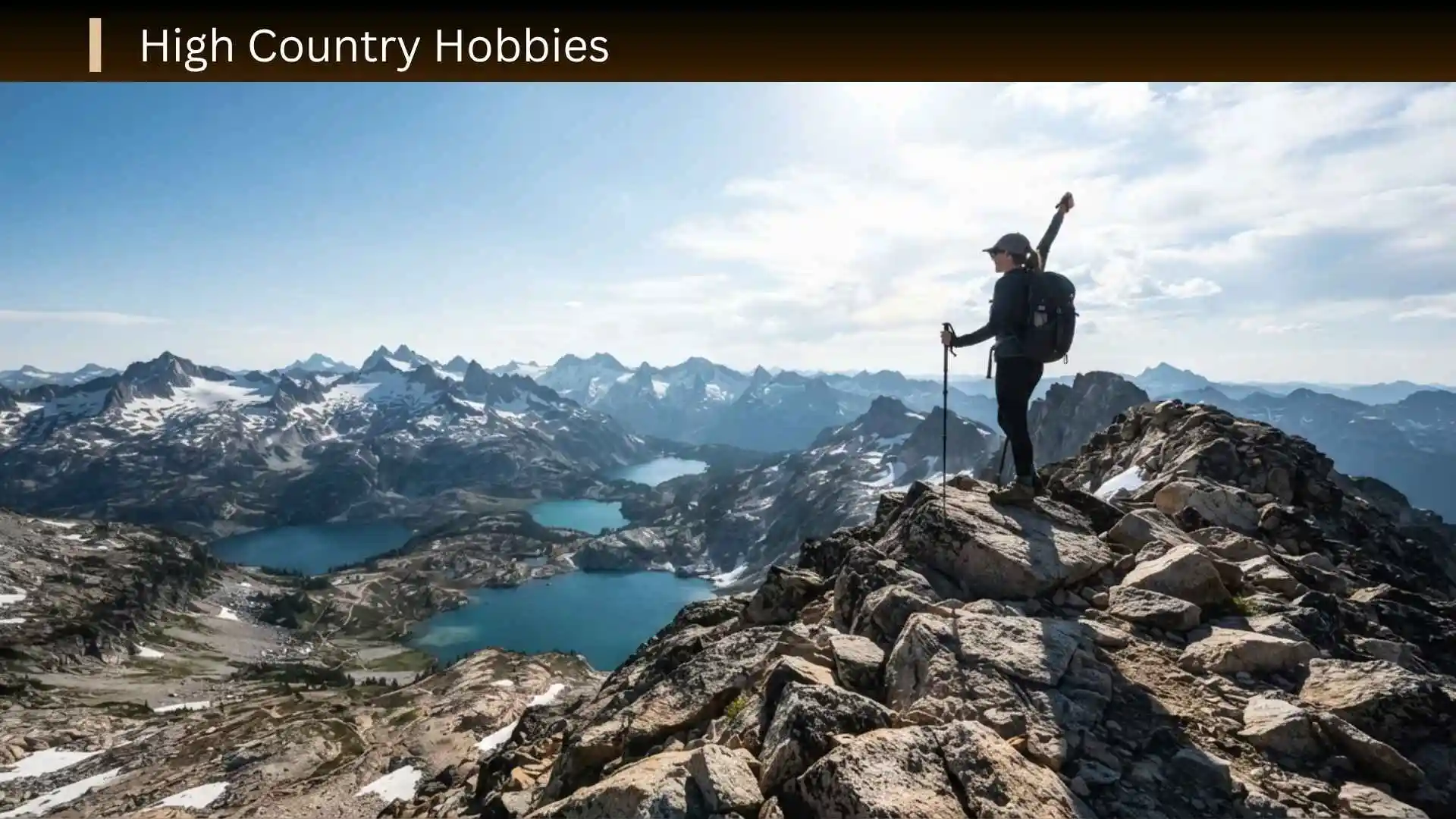
I believe a great hobby can turn ordinary free time into something you genuinely look forward to. If you love mountain landscapes, fresh air, outdoor adventure, or simply want to discover a new way to spend your time, high country hobbies can open the door to countless exciting experiences. From hiking and fishing to photography, camping, wildlife watching, and exploring scenic trails, there is something for almost every interest and skill level.
You don’t have to be an experienced adventurer to get started. Whether you want a peaceful activity that helps you slow down or an exciting hobby that challenges you physically and creatively, high country activities give you plenty of ways to explore, learn, and enjoy the outdoors. In this guide, I’ll help you discover interesting high country hobbies and show you how to find an activity that fits your interests, lifestyle, and comfort level.
What Are High Country Hobbies?
High country hobbies are recreational activities commonly enjoyed in mountainous, elevated, rural, or wilderness environments.
They often involve:
- Mountains and alpine landscapes
- Forests and wilderness areas
- Lakes, rivers, and streams
- Hiking and multi-use trails
- Wildlife and bird observation
- Seasonal outdoor recreation
- Camping and backcountry travel
- Nature photography
- Snow and winter activities
- Outdoor skills and crafts
The phrase does not describe one specific hobby category. Instead, it is a useful way to group hobbies that fit naturally into mountain and high-elevation environments.
For example, North Carolina’s High Country supports activities ranging from hiking and biking to climbing, tubing, winter sports, festivals, and vineyard visits. Southeast Idaho’s High Country offers hiking, backpacking, mountain biking, fishing, water sports, wildlife watching, and winter trail activities.
Best High Country Hobbies
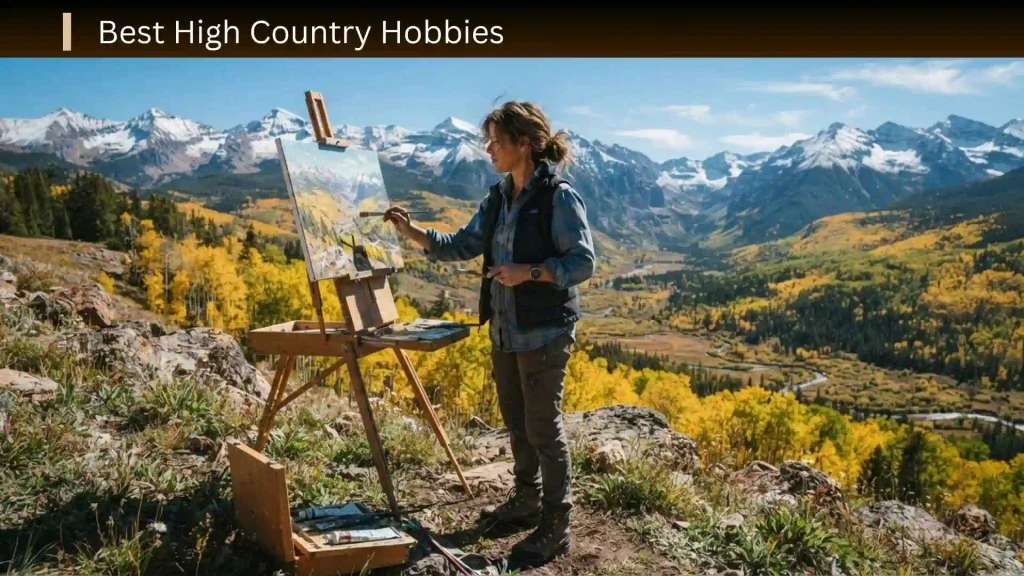
Here are some of the most rewarding high country hobbies to consider.
1. Hiking
Hiking is one of the easiest ways to start enjoying mountain environments.
You can choose everything from short nature walks to challenging full-day mountain routes. Hiking also works well as a gateway hobby because it can introduce you to photography, birdwatching, wildflowers, geology, and wildlife observation.
Beginners should start with established trails appropriate for their ability and gradually work toward longer or steeper routes.
2. Backpacking
Backpacking takes hiking a step further by combining travel with camping.
Instead of returning home at the end of the day, you carry your shelter, food, water, clothing, and other essentials and spend one or more nights outdoors.
Backpacking can be especially rewarding in mountainous areas because it allows you to explore remote landscapes that may be difficult to reach on a day hike.
It also requires more preparation than ordinary hiking, including:
- Navigation
- Weather awareness
- Food planning
- Water treatment
- Campsite selection
- Layered clothing
- Emergency preparation
3. Camping
Camping is a flexible high country hobby suitable for individuals, couples, and families.
You can keep it simple with a tent at an established campground or gradually learn more advanced outdoor skills.
Camping can also become a base for other hobbies, including fishing, hiking, photography, stargazing, wildlife watching, and mountain biking.
4. Mountain Biking
Mountain biking combines physical exercise with exploration.
Riders can choose relatively smooth beginner trails or more technical terrain involving rocks, roots, steep climbs, and descents.
A suitable mountain bike, helmet, repair supplies, water, and knowledge of local trail rules are important starting points.
Many mountain destinations specifically promote biking alongside hiking and other trail activities.
5. Fishing
Fishing is one of the classic high country hobbies because mountain regions often contain streams, rivers, lakes, and reservoirs.
You can make fishing as relaxed or skill-focused as you want. Some people enjoy sitting beside a quiet lake, while others become interested in fly fishing and learning how water conditions, insects, seasons, and fish behavior influence their approach.
For example, Southeast Idaho’s High Country highlights fishing across its lakes, reservoirs, rivers, and creeks.
Always check local fishing regulations, licenses, seasons, and catch limits before fishing.
6. Fly Fishing
Fly fishing deserves its own category because it combines outdoor recreation with a specialized skill.
It can involve learning:
- Casting techniques
- Fly selection
- Reading currents
- Identifying aquatic insects
- Fish behavior
- River safety
Beginning fly-fishing clinics are offered in some mountain communities, showing how the hobby can also become a social activity rather than something you have to learn alone.
7. Birdwatching
Birdwatching is an excellent choice if you enjoy nature but do not necessarily want an intense physical activity.
Mountain environments can provide opportunities to observe birds in forests, wetlands, meadows, lakes, and other habitats.
A beginner can start with binoculars and a field guide or bird-identification app. Over time, you can learn to recognize birds by appearance, habitat, behavior, and calls.
8. Wildlife Watching
Wildlife watching turns an ordinary outdoor trip into an observation exercise.
Rather than simply moving along a trail, you begin paying attention to tracks, sounds, movement, feeding behavior, and habitat.
A camera and binoculars can make the hobby even more engaging.
However, wildlife should always be observed from a safe distance. Never approach, feed, corner, or attempt to touch wild animals.
9. Nature Photography
Nature photography is one of the most accessible creative high country hobbies.
You do not need an expensive professional camera. A smartphone can be enough to begin photographing:
- Mountain landscapes
- Waterfalls
- Wildflowers
- Wildlife
- Sunrise and sunset
- Clouds
- Forest textures
- Rivers and lakes
- Snow-covered scenery
The hobby becomes particularly rewarding when you combine photography with hiking or camping.
10. Landscape Photography
Landscape photography focuses specifically on scenery.
Mountain environments provide constantly changing compositions because light, weather, seasons, vegetation, and snow can transform the same viewpoint.
You can develop your skills by experimenting with:
- Foreground and background
- Leading lines
- Natural framing
- Different focal lengths
- Golden-hour light
- Weather conditions
- Panoramic compositions
11. Stargazing
High country areas can be excellent places to enjoy the night sky, particularly where there is limited artificial light.
Stargazing can be a relaxing hobby that requires relatively little equipment.
Beginners can start by learning a few major constellations and bright celestial objects. Binoculars can provide an inexpensive step beyond naked-eye observation.
For more serious astronomy, a telescope and astronomy software can open up a much larger hobby.
12. Rock Climbing
Rock climbing combines physical movement, problem-solving, and technical skills.
Outdoor climbing requires more preparation than simply visiting a climbing gym. Depending on the type of climbing, you may need specialized equipment and instruction in rope systems, anchors, belaying, route assessment, and rescue procedures.
Beginners should learn through qualified instruction or an experienced climbing community rather than attempting technical routes without training.
13. Bouldering
Bouldering involves climbing shorter rock formations without the ropes and harness systems commonly used for taller climbing routes.
A crash pad, climbing shoes, and appropriate knowledge of safe falling and spotting are important.
Indoor climbing gyms can also provide a controlled way to develop movement skills before transitioning to outdoor bouldering.
14. Trail Running
Trail running combines running with mountain and forest environments.
Compared with road running, trails can introduce uneven surfaces, elevation changes, rocks, roots, mud, and other challenges.
If you are new to trail running, start with short, relatively moderate routes and increase difficulty gradually.
15. Horseback Riding
Horseback riding can be an enjoyable way to explore mountain landscapes at a slower pace.
In areas with appropriate trails, riders can experience forests, meadows, ridgelines, and scenic overlooks without covering the terrain on foot.
Beginners can consider guided rides or riding lessons before attempting longer backcountry routes.
16. Kayaking
Kayaking brings a high country hobby onto the water.
Depending on local conditions, paddlers may explore calm lakes, slow-moving rivers, or more technical waterways.
Beginners should start with appropriate calm-water environments and learn basic paddle technique, boat control, and water safety before moving into challenging conditions.
17. Canoeing
Canoeing is another good choice for people who enjoy water, scenery, and relaxed exploration.
It can be especially appealing for families and groups because a canoe can provide space for multiple people and equipment.
Mountain regions can offer lakes and rivers suitable for different levels of paddling, although conditions vary considerably by location and season.
18. Whitewater Rafting
Whitewater rafting is a more adventurous option.
It combines teamwork, physical activity, and fast-moving water. Because river conditions can change quickly, beginners should use reputable outfitters and appropriate safety equipment.
Mountain destinations such as North Carolina’s High Country promote rafting, kayaking, canoeing, tubing, and other water-based recreation during warmer months.
19. Skiing
Skiing is one of the most recognizable winter high country hobbies.
Depending on the destination and snow conditions, options can include downhill skiing and cross-country skiing.
Learning at a resort with professional instruction can make the beginning stages easier and safer.
20. Snowboarding
Snowboarding provides another way to enjoy mountain environments during winter.
It requires balance, coordination, and practice, so beginners should expect a learning period.
Starting on appropriate beginner terrain and taking lessons can help reduce frustration and build foundational skills.
21. Cross Country Skiing
Cross-country skiing offers a different experience from downhill skiing.
Instead of primarily descending slopes, participants use skis to travel across relatively flatter or gently rolling terrain.
It can be a peaceful way to explore snowy landscapes while getting substantial physical exercise.
22. Snowshoeing
Snowshoeing is an approachable winter hobby for people who enjoy hiking but want to continue exploring when snow covers the trails.
Modern snowshoes are designed to distribute body weight over a larger surface area, helping users travel across snow that would otherwise be difficult to walk through.
You still need to understand winter weather, navigation, clothing, and terrain before heading into remote areas.
23. Mountain Gardening
Gardening in high-elevation environments can be challenging but rewarding.
Shorter growing seasons, colder temperatures, wind, soil conditions, and local climate all influence what can grow successfully.
A useful approach is to learn about plants that are specifically suited to your elevation and USDA hardiness zone rather than assuming plants that thrive at lower elevations will perform equally well.
24. Foraging and Nature Study
Learning about native plants, trees, fungi, rocks, and other natural features can turn a simple walk into an educational hobby.
Foraging requires particular caution. Some wild plants and mushrooms are poisonous or difficult to identify accurately.
Beginners should learn from reputable local resources or qualified instructors and should never consume an unidentified wild organism.
25. Geocaching
Geocaching adds a game-like element to hiking and outdoor exploration.
Participants use GPS-enabled devices to locate hidden containers or designated locations.
It can be especially appealing to families because it gives children and adults a reason to explore trails while developing navigation and observation skills.
Best High Country Hobbies by Interest
Different hobbies suit different personalities.
| If you enjoy… | Consider these hobbies |
| Peace and relaxation | Stargazing, fishing, birdwatching, nature photography |
| Exercise | Hiking, trail running, mountain biking, skiing |
| Adventure | Rock climbing, rafting, backpacking, snowboarding |
| Creativity | Photography, journaling, nature sketching |
| Wildlife | Birdwatching, wildlife observation, nature study |
| Winter | Skiing, snowboarding, snowshoeing, cross-country skiing |
| Water | Kayaking, canoeing, fishing, rafting |
| Families | Camping, hiking, geocaching, fishing |
| Learning | Foraging education, geology, astronomy, birdwatching |
| Social activities | Climbing, group hikes, skiing, cycling, fishing clubs |
High Country Hobbies for Beginners
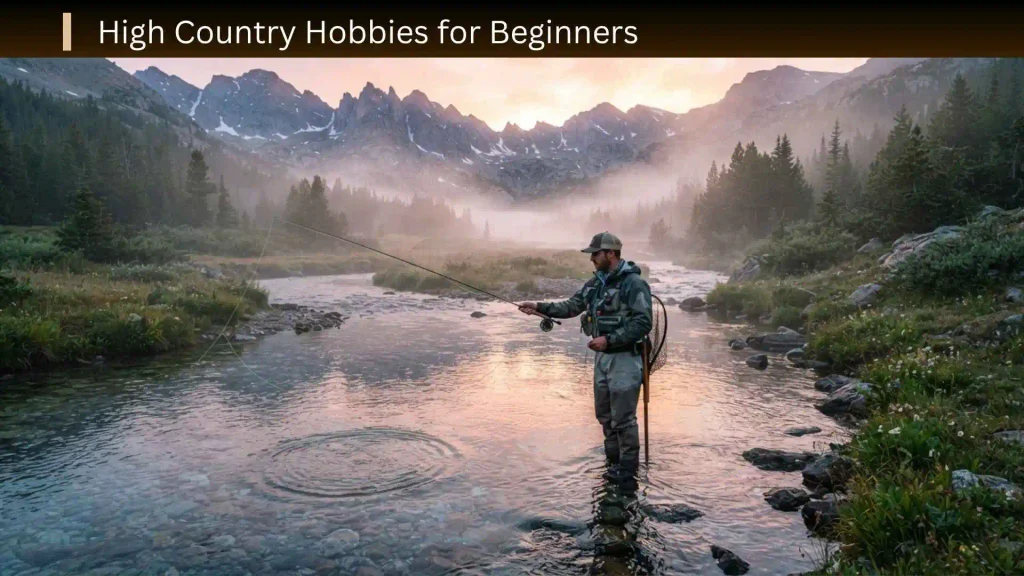
If you are completely new to mountain recreation, you do not need to begin with an extreme activity.
Some of the easiest starting points are:
- Hiking — Start with short, established trails.
- Nature photography — Use your phone and photograph what interests you.
- Birdwatching — Begin with binoculars and a simple field guide.
- Camping — Try an established campground before attempting backcountry camping.
- Fishing — Learn local rules and basic equipment before heading out.
- Stargazing — Begin with the naked eye and add binoculars later.
- Geocaching — Combine navigation with an outdoor treasure-hunt format.
These hobbies can also serve as stepping stones into more technical activities.
For example, someone who begins hiking may eventually become interested in backpacking, trail running, photography, wildlife observation, or mountaineering.
High Country Hobbies for Families
Families often benefit from hobbies that allow different ages and skill levels to participate together.
Good choices include:
Family Hiking
Choose shorter trails with interesting scenery, waterfalls, wildlife opportunities, or natural features that give children something to discover.
Camping
Camping can introduce children to outdoor cooking, tent setup, stars, wildlife, and basic outdoor responsibility.
Fishing
Fishing provides a slower pace and can teach patience, observation, and respect for aquatic environments.
Geocaching
Geocaching can turn a normal walk into a mission, making navigation and exploration more engaging for children.
Nature Photography
Give each family member a simple photography challenge, such as finding a bird, unusual leaf, interesting rock, waterfall, or interesting cloud formation.
High Country Hobbies by Season
Mountain recreation changes dramatically throughout the year.
Spring
Spring is ideal for:
- Hiking
- Birdwatching
- Wildflower photography
- Fishing
- Mountain biking in suitable conditions
- Nature study
- Photography
Mountain areas can experience rapidly changing weather during spring, so conditions should be checked before heading out.
Summer
Summer opens up many outdoor possibilities, including:
- Backpacking
- Camping
- Hiking
- Fishing
- Kayaking
- Canoeing
- Rafting
- Mountain biking
- Rock climbing
- Horseback riding
- Wildlife watching
Water-based activities are particularly prominent in many mountain destinations during the warmer months.
Fall
Fall can be excellent for:
- Hiking
- Landscape photography
- Wildlife observation
- Camping
- Fishing
- Scenic drives
- Birdwatching
Changing foliage can add a major photographic attraction to mountain landscapes.
Winter
Winter brings a different set of high country hobbies:
- Downhill skiing
- Snowboarding
- Cross-country skiing
- Snowshoeing
- Winter photography
- Ice fishing where permitted
- Winter wildlife observation
Winter recreation requires additional attention to temperature, snow conditions, daylight, clothing, navigation, and emergency preparation.
How to Choose the Right High Country Hobby
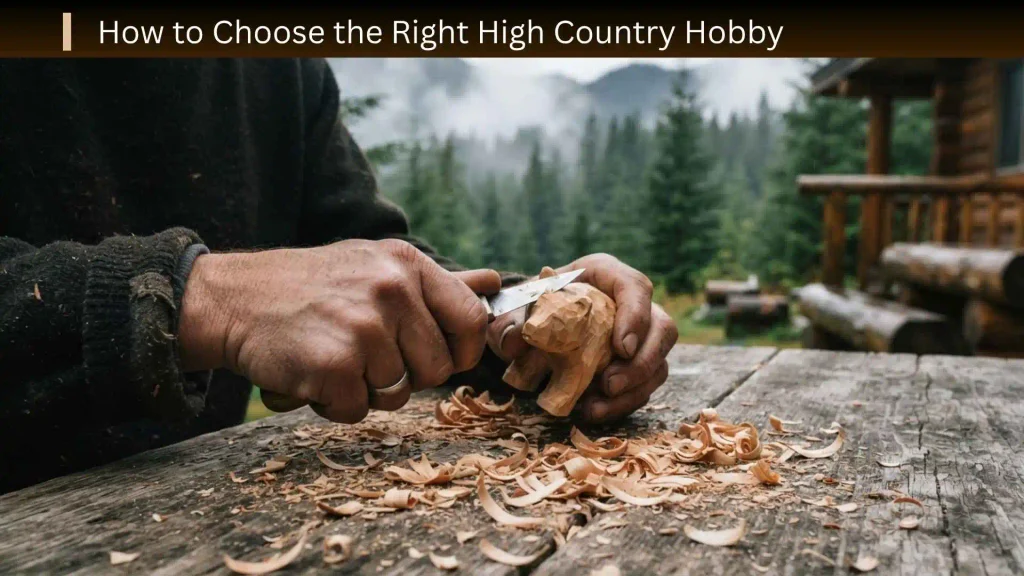
Choosing a hobby becomes easier when you consider five factors.
1. Your Fitness Level
A short nature walk and a steep mountain climb are very different physical experiences.
Start with something appropriate for your current ability and progress gradually.
2. Your Budget
Some hobbies are inexpensive.
Hiking, birdwatching, stargazing, nature journaling, and smartphone photography can be started with relatively little equipment.
Other activities can become expensive because of specialized gear, instruction, transportation, or membership fees.
3. Your Location
Your local environment matters.
Someone living near alpine terrain may have easy access to skiing and climbing, while someone near a mountain lake may naturally gravitate toward kayaking or fishing.
4. Your Preferred Pace
Ask yourself whether you prefer:
- Quiet observation
- Physical exercise
- Adrenaline
- Creativity
- Learning
- Social interaction
- Solitude
This can quickly narrow your options.
5. The Season
A hobby that works beautifully in summer may be impractical in winter.
Choose activities based on current trail, weather, snow, water, and environmental conditions rather than assuming a destination is suitable year-round.
What Equipment Do You Need for High Country Hobbies?
Equipment depends heavily on the hobby.
For general outdoor recreation, useful basics can include:
- Comfortable footwear
- Weather-appropriate layers
- Water
- Food or snacks
- Sun protection
- Navigation tools
- First-aid supplies
- Headlamp or flashlight
- Emergency communication method
- Appropriate backpack
More technical hobbies require specialized equipment.
For example, climbing, skiing, kayaking, rafting, and winter backcountry travel should not be approached as simple gear purchases. Training, experience, appropriate equipment, and understanding local conditions are equally important.
How to Make High Country Hobbies More Social
You do not have to enjoy mountain hobbies alone.
Consider joining:
- Hiking groups
- Outdoor clubs
- Cycling groups
- Fishing clubs
- Climbing communities
- Photography groups
- Local conservation organizations
- Community recreation programs
- Outdoor education programs
Local communities can also offer organized activities. For example, High Country outdoor groups may combine hiking with skiing, snowboarding, floating, festivals, and social events.
Social participation can make it easier to learn new skills, find compatible activities, and discover trails or recreation areas you might not find on your own.
High Country Hobbies and Outdoor Skills
Many mountain hobbies become more enjoyable as you develop practical outdoor skills.
Useful skills include:
Navigation
Learn how to use maps, trail information, GPS devices, and other navigation tools.
Weather Awareness
Mountain weather can change quickly. Understanding forecasts and recognizing changing conditions is an important part of outdoor planning.
Leave No Trace Practices
Outdoor recreation should minimize damage to natural environments. Follow local regulations, pack out appropriate waste, respect wildlife, and stay on designated routes where required.
Basic First Aid
Basic first-aid knowledge is useful for many outdoor activities, particularly when traveling away from immediate medical services.
Water Awareness
If you are hiking, camping, fishing, paddling, or rafting near water, understand the conditions and hazards associated with the specific environment.
Are High Country Hobbies Expensive?
They can be, but they do not have to be.
Some hobbies can begin with equipment you already own. Hiking, nature observation, journaling, smartphone photography, and basic stargazing are examples.
Costs can increase when an activity requires:
- Specialized equipment
- Professional instruction
- Transportation
- Lift tickets
- Campsites
- Licenses or permits
- Technical clothing
- Maintenance
- Guide services
A good strategy is to start with an accessible hobby and rent or borrow specialized equipment before making a major purchase.
High Country Hobbies for People Who Prefer Quiet Activities
Not everyone wants an adrenaline-filled mountain experience.
If you prefer slower activities, consider:
- Birdwatching
- Fishing
- Stargazing
- Nature photography
- Landscape photography
- Nature journaling
- Wildlife observation
- Plant identification
- Scenic hiking
- Outdoor sketching
- Reading outdoors
- Gardening
These hobbies can provide a strong connection with nature without requiring extreme physical challenges.
High Country Hobbies for Adventure Seekers
If you prefer challenging experiences, consider:
- Rock climbing
- Bouldering
- Backpacking
- Mountain biking
- Trail running
- Whitewater rafting
- Skiing
- Snowboarding
- Winter backcountry recreation
The important distinction is that adventurous does not have to mean reckless. Technical mountain activities require appropriate preparation, skill development, equipment, and respect for environmental conditions.
How to Start a High Country Hobby
A simple five-step approach works for most activities:
- Choose one hobby that genuinely interests you.
- Learn the basics through reputable books, courses, clubs, or instructors.
- Start at an appropriate difficulty level.
- Use suitable equipment rather than improvising critical safety gear.
- Increase your skills gradually as you gain experience.
Trying to learn several demanding outdoor hobbies at once can become expensive and overwhelming. Choosing one activity and developing competence first is usually more practical.
Frequently Asked Questions
What are high country hobbies?
High country hobbies are recreational activities commonly enjoyed in mountainous, elevated, forested, or wilderness environments. Examples include hiking, backpacking, camping, fishing, photography, climbing, mountain biking, skiing, snowboarding, birdwatching, and kayaking.
What is the best high country hobby for beginners?
Hiking is one of the easiest starting points because it requires relatively little equipment and can be adapted to different fitness levels. Birdwatching, photography, camping, fishing, and geocaching are also approachable options.
What are the best high country hobbies for families?
Camping, hiking, fishing, geocaching, wildlife observation, nature photography, and easy paddling activities can work well for families. The best choice depends on children’s ages, local conditions, and available facilities.
What high country hobbies can you do in winter?
Popular winter options include skiing, snowboarding, cross-country skiing, snowshoeing, winter photography, and some forms of ice fishing where permitted.
Can high country hobbies be enjoyed without expensive equipment?
Yes. Hiking, birdwatching, nature journaling, stargazing, wildlife observation, and smartphone photography can be started with relatively basic equipment.
What is the difference between hiking and backpacking?
Hiking generally refers to walking on trails or through natural areas, often as a day activity. Backpacking combines hiking with overnight travel, requiring you to carry camping equipment, food, water, and other supplies.
Are high country hobbies only for people who live in the mountains?
No. People can enjoy high country hobbies during trips and vacations even if they live in flatter areas. Mountain destinations throughout the USA offer opportunities for hiking, camping, fishing, skiing, paddling, wildlife watching, and other outdoor activities.
Which high country hobby is best for relaxation?
Fishing, birdwatching, stargazing, nature photography, wildlife observation, and easy scenic hiking are good choices for people who prefer calm outdoor experiences.
Which high country hobbies provide the most exercise?
Trail running, mountain biking, hiking, backpacking, skiing, snowboarding, and climbing can provide substantial physical activity. The intensity depends on terrain, duration, pace, and individual ability.
How can I find high country hobbies near me?
Start by checking nearby state parks, national forests, recreation areas, trail systems, lakes, rivers, ski areas, outdoor clubs, and community recreation organizations. Local hiking, cycling, fishing, climbing, and photography groups can also help you discover activities and people with similar interests.
Conclusion
High country hobbies offer much more than outdoor entertainment. They provide ways to explore nature, stay active, develop practical skills, meet other people, and experience the changing character of America’s mountain landscapes.
There is no single “best” high country hobby. Hiking may be perfect for one person, while another may prefer fishing, photography, climbing, skiing, mountain biking, or simply sitting beneath a dark sky and watching the stars.
The best approach is to start with an activity that matches your interests, ability, budget, and local environment. Build your skills gradually, respect wildlife and natural areas, prepare for changing conditions, and let one hobby lead naturally to another.
For many people, that is the real appeal of high country hobbies: a simple interest in the outdoors can eventually become a lifelong collection of skills, adventures, and reasons to keep exploring.

I’m Sophia Carter, a writer who enjoys discovering interesting ideas and transforming them into helpful content. At Cognivoora, I write with a simple goal: to make information clearer, more accessible, and genuinely useful for readers. I value thoughtful research, easy explanations, and content that people can trust and return to whenever they need it.
Books:
- The Knowledge Journey
- Understanding the World Around Us