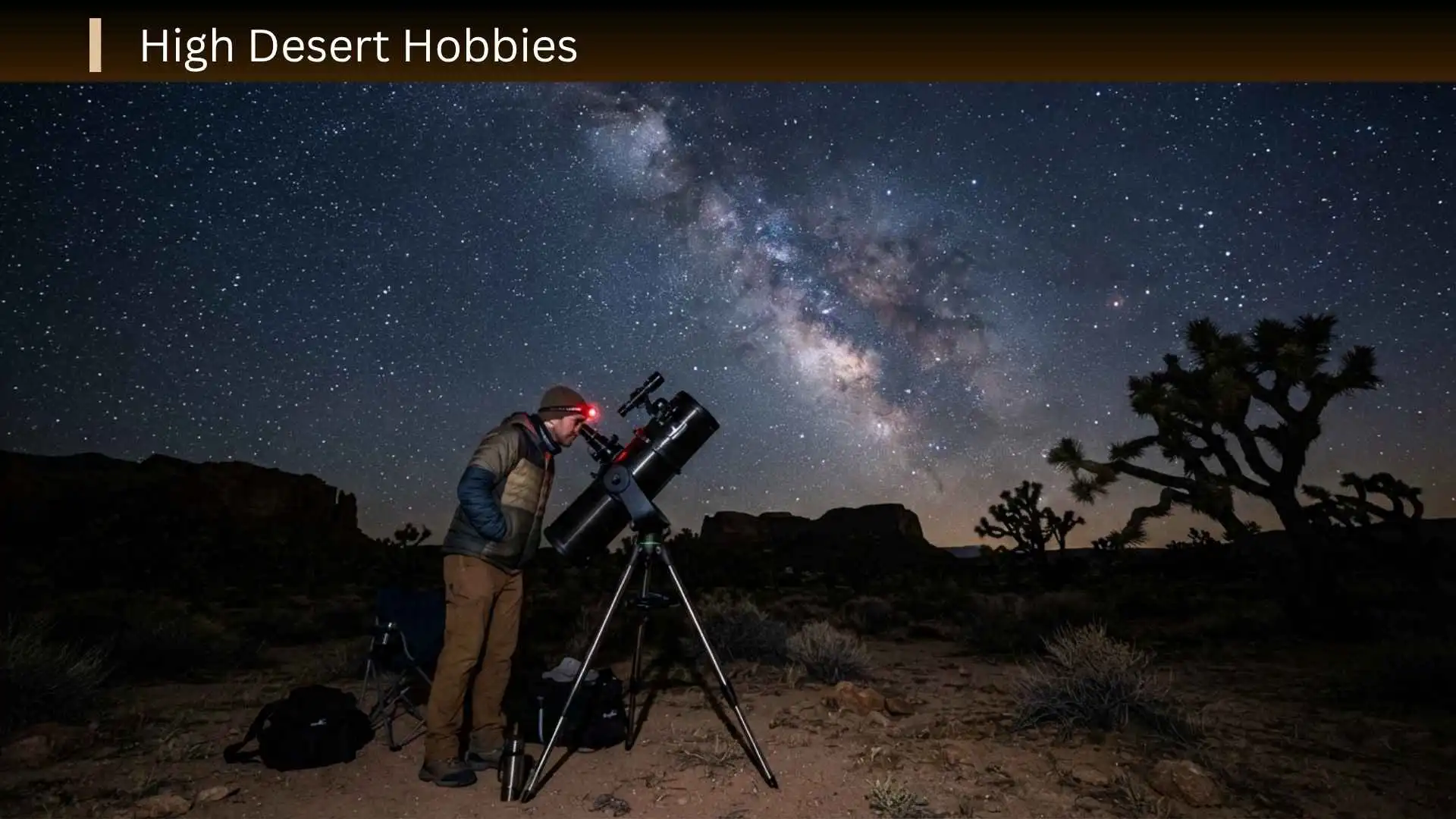
I believe the high desert has a special kind of beauty: wide open landscapes, quiet evenings, rugged trails, and endless opportunities to explore something new. If you enjoy spending your free time away from the usual routine, you can find plenty of hobbies that fit the unique high desert environment.
From hiking, stargazing, photography, and gardening to rock collecting, crafting, off-road adventures, and nature journaling, high desert hobbies can turn your surroundings into a place for creativity, relaxation, and discovery. Whether you live in a high desert community or simply love its dry, open landscape, you can choose activities that match your interests, budget, and lifestyle. In this guide, I’ll help you discover enjoyable high desert hobbies and show you how to find one that feels right for you.
What Are High Desert Hobbies?
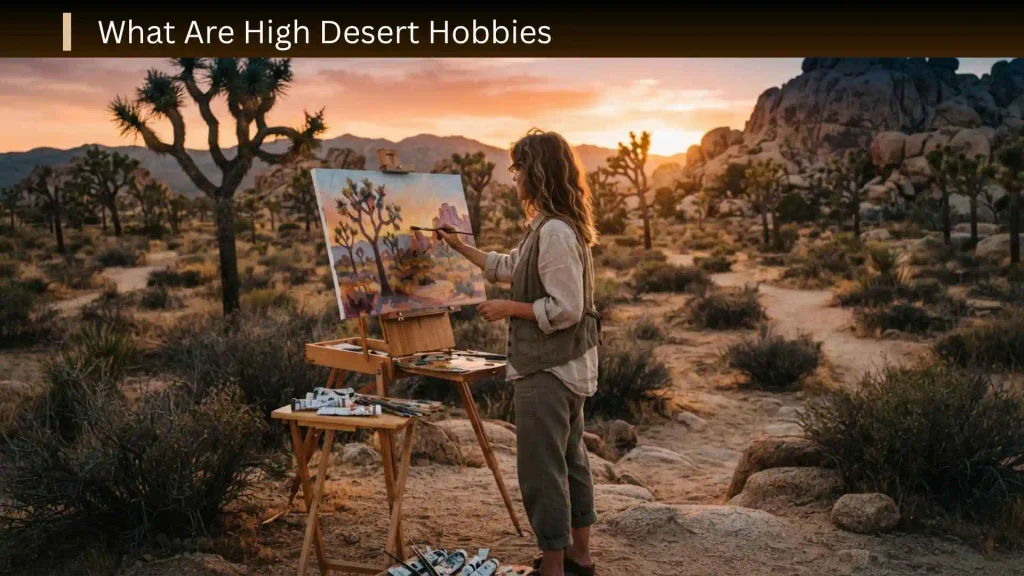
High desert hobbies are recreational, creative, educational, or outdoor activities that work particularly well in high-desert environments.
The term high desert generally describes elevated arid or semi-arid landscapes rather than simply any desert. These areas can combine dry conditions with cooler nights, seasonal temperature changes, rugged terrain, sagebrush or other desert vegetation, mountains, plateaus, volcanic landscapes, and expansive skies.
Because conditions vary considerably from one region to another, a high-desert hobby in southern Idaho may look very different from one in eastern Oregon, northern Nevada, Utah, Arizona, New Mexico, or California.
That variety is part of the appeal.
Best High Desert Hobbies at a Glance
| Hobby | Difficulty | Equipment Needed | Best For |
| Hiking | Easy to challenging | Boots, water, navigation | Fitness and exploration |
| Stargazing | Easy | Optional binoculars or telescope | Quiet evenings |
| Rockhounding | Easy to moderate | Rock hammer, containers, map | Geology enthusiasts |
| Landscape photography | Easy to moderate | Camera or smartphone | Creative people |
| Birdwatching | Easy | Binoculars, field guide | Nature lovers |
| Camping | Easy to challenging | Tent or other shelter, supplies | Outdoor adventure |
| Mountain biking | Moderate to challenging | Bike, helmet, repair kit | Active riders |
| Wildlife watching | Easy to moderate | Binoculars, camera | Animal lovers |
| Nature journaling | Easy | Notebook and pencils | Creative learners |
| Desert gardening | Moderate | Containers, soil, gardening tools | Home gardeners |
| Geocaching | Easy | Smartphone or GPS device | Treasure hunters |
| Scenic driving | Easy | Vehicle, maps, supplies | Casual explorers |
| Horseback riding | Moderate | Appropriate riding equipment | Equestrians |
| Climbing and bouldering | Moderate to advanced | Specialized gear | Adventure seekers |
| Amateur astronomy | Moderate | Telescope and accessories | Astronomy enthusiasts |
1. Hiking and Desert Walking
Hiking is one of the most accessible high desert hobbies because you can start with relatively little equipment.
High-desert trails can lead through rocky canyons, open plateaus, volcanic landscapes, mountain foothills, dry washes, forests, and surprisingly diverse habitats. BLM-managed lands include hiking opportunities ranging from developed trails to more rugged backcountry routes.
You can make hiking as simple or challenging as you want.
Beginner hiking ideas
- Short nature trails
- Sunrise walks
- Sunset walks
- Geological walks
- Wildflower walks during appropriate seasons
- Birding hikes
- Photography hikes
- Historical or archaeological interpretation trails
The high desert can also present serious environmental hazards. Carry sufficient water, check weather and trail conditions, tell someone where you are going when appropriate, and understand the terrain before starting.
2. Stargazing
Stargazing is one of the most naturally suited high desert hobbies.
Many high-desert areas are away from major population centers, giving hobby astronomers opportunities to experience darker skies. The NPS notes that remote locations can provide excellent conditions for viewing the Milky Way, meteors, planets, and other night-sky features.
You do not need an expensive telescope to begin.
Start with:
- Your eyes
- A comfortable reclining chair or blanket
- A red flashlight or headlamp
- A basic astronomy app or star chart
- Warm layers for nighttime temperatures
Once you become interested, binoculars can provide an affordable next step before purchasing a telescope.
Why high desert skies are attractive
The combination of open landscapes and relatively low light pollution can make the night sky a major part of the outdoor experience. Some national parks and monuments in the American West also offer astronomy programs or night-sky events.
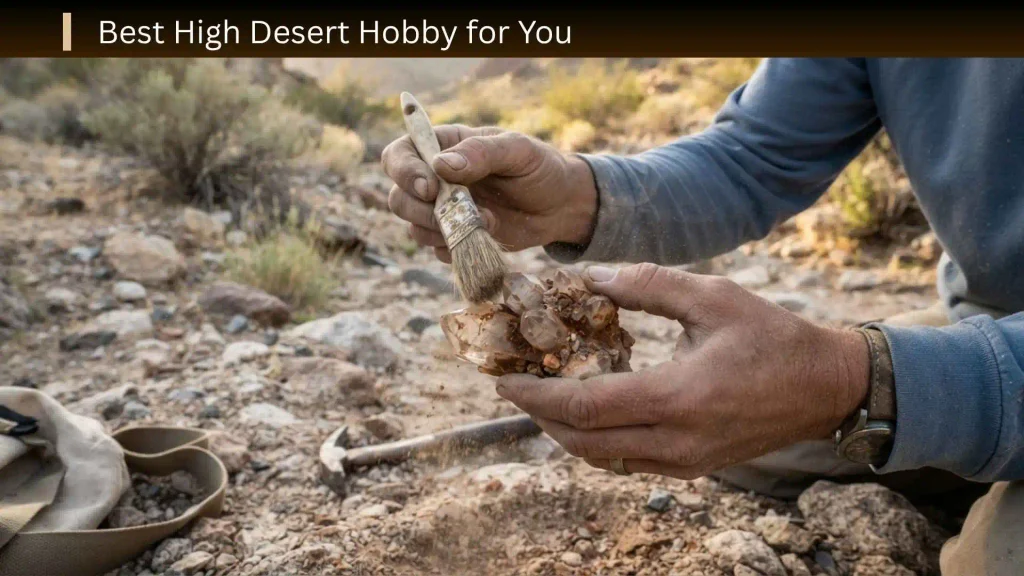
3. Rockhounding
Rockhounding is particularly appealing in areas with interesting geological formations.
The hobby involves searching for rocks, minerals, crystals, fossils where permitted, and other geological specimens. BLM-managed public lands include designated areas where recreational collecting may be allowed, although rules vary by location.
Possible finds depend heavily on the geology of the area and can include:
- Agates
- Jasper
- Quartz
- Geodes
- Obsidian
- Petrified wood
- Semiprecious stones
- Mineral specimens
Important rockhounding rule
Never assume that you can collect anything simply because land appears undeveloped.
Land ownership, mining claims, protected areas, national monuments, recreation sites, and local regulations can affect what is permitted. BLM specifically recommends checking local rules and contacting the appropriate office when uncertain.
Rockhounding can become more than a weekend activity. Many hobbyists eventually learn geology, mineral identification, mapping, specimen cleaning, photography, and collection organization.
4. Landscape Photography
High desert landscapes provide endless subjects for photographers.
You can photograph:
- Rock formations
- Mountains
- Desert plants
- Storm clouds
- Sunrises
- Sunsets
- Wildlife
- Night skies
- Old buildings
- Roads and trails
- Seasonal changes
A smartphone is enough to begin. You can gradually experiment with a dedicated camera, tripod, wide-angle lens, telephoto lens, or night-photography equipment.
Photography also works well alongside other hobbies. A hiking trip can become a photography outing, and a rockhounding trip can become a geological photography project.
5. Birdwatching
Birdwatching is an excellent choice if you want a quieter high desert hobby.
Dry landscapes can contain a surprising variety of habitats, particularly where desert terrain meets rivers, wetlands, mountain slopes, grasslands, or woodland.
A beginner can start with:
- Binoculars
- A bird identification guide or app
- Notebook
- Camera, if desired
Instead of trying to identify every bird immediately, begin by recording what you see, where you saw it, and what it was doing.
Over time, you can create a personal high-desert bird list and learn how bird populations change throughout the seasons.
6. Camping
Camping allows you to turn a hobby into a longer outdoor experience.
High-desert camping can involve everything from developed campgrounds to more early experiences, depending on the location and land-management rules. BLM public lands provide various camping opportunities, but requirements and restrictions differ between areas.
Camping can also be combined with:
- Stargazing
- Photography
- Hiking
- Birdwatching
- Fishing
- Rockhounding
- Nature journaling
- Wildlife observation
For beginners, a developed campground is often an easier starting point than remote backcountry camping.
7. Mountain Biking and Gravel Riding
If you enjoy exercise and exploration, cycling can be an excellent high desert hobby.
Depending on the terrain, you may find:
- Mountain-bike trails
- Gravel roads
- Desert two-track routes
- Scenic cycling routes
- Rolling plateau terrain
- Technical rocky trails
BLM-managed lands include opportunities for mountain biking and e-biking in appropriate areas.
A beginner should start with terrain appropriate for their experience rather than choosing a route solely because it looks scenic.
Carry water, basic repair equipment, navigation tools, and appropriate protective gear.
8. Wildlife Watching
Wildlife watching can turn an ordinary walk into a much more interesting experience.
Depending on the region, you may encounter animals adapted to dry environments as well as species associated with mountains, grasslands, forests, or waterways.
The key is patience.
Instead of trying to get close to wildlife, observe from a safe distance and learn to recognize tracks, calls, feeding behavior, and habitat.
A pair of binoculars can make this hobby much more rewarding.
9. Nature Journaling
Nature journaling combines observation, writing, drawing, and outdoor exploration.
You can sit beside a trail, under a tree, near a campsite, or in your backyard and record what you notice.
Your journal might include:
- Weather
- Plants
- Birds
- Insects
- Rocks
- Clouds
- Landscapes
- Animal tracks
- Seasonal changes
- Personal observations
You do not need artistic talent. The goal is to pay closer attention to the environment.
This is also an excellent family hobby because children can create their own nature journals.
10. Desert and High-Desert Gardening
Gardening in a high-desert climate can be challenging, but that challenge can become the hobby itself.
Instead of trying to recreate a lush garden that requires large amounts of water, consider learning about plants adapted to local conditions.
Depending on your exact region, you might explore:
- Native plants
- Drought-tolerant landscaping
- Container gardening
- Native wildflowers
- Herb gardening
- Small vegetable gardens
- Pollinator gardens
Local climate, elevation, frost dates, soil, water availability, and plant selection matter enormously. A plant that thrives in one high-desert community may struggle in another.
A good starting point is to research plants native to your specific area rather than relying on a generic “desert plant” list.
11. Geocaching
Geocaching turns outdoor exploration into a treasure-hunting game.
Participants use GPS coordinates or smartphone-based tools to locate hidden caches. The hobby can encourage you to explore trails, parks, roads, and places you might otherwise overlook.
It can be:
- Solo
- Family-friendly
- Social
- Competitive
- Educational
Because some caches are located in remote terrain, always consider weather, navigation, water, and access conditions before heading out.
12. Amateur Astronomy
Stargazing and amateur astronomy overlap, but astronomy can become a deeper technical hobby.
Once you become comfortable identifying major constellations and planets, you can begin learning about:
- Lunar observation
- Planetary observation
- Double stars
- Star clusters
- Nebulae
- Galaxies
- Meteor showers
- Astrophotography
A telescope is not necessary at the beginning. Learning the night sky with your eyes or binoculars can make later telescope use much easier.
13. Desert Plant Identification
Plant identification is an excellent hobby for people who enjoy nature but prefer a slower pace.
Carry a field guide or identification app and begin learning a few common species at a time.
Pay attention to:
- Leaf shape
- Flowers
- Bark
- Growth patterns
- Habitat
- Elevation
- Seasonal changes
Avoid collecting plants unless you have confirmed that collection is legal and environmentally appropriate. BLM rules, state laws, protected-species regulations, and land-specific restrictions can apply.
14. Scenic Driving and Backcountry Road Exploration
Not every outdoor hobby needs to involve strenuous exercise.
Scenic driving can be a relaxing way to explore high-desert landscapes, especially when combined with photography, geology, history, or wildlife observation.
BLM’s public-land recreation system includes scenic routes and backcountry byways in many areas.
Before leaving paved roads, however, check:
- Road conditions
- Weather
- Vehicle requirements
- Fuel availability
- Cell coverage
- Land-access restrictions
- Seasonal closures
A remote road that looks easy on a map can become difficult after storms or other changes in conditions.
15. Horseback Riding
Horseback riding can be an especially enjoyable way to experience large landscapes.
It allows you to travel farther than walking while experiencing the terrain at a slower pace than driving. BLM-managed lands include opportunities for equestrian and pack-stock recreation.
This hobby does require more preparation than hiking because you need appropriate knowledge, equipment, animal care, and an understanding of trail and land-management rules.
16. Rock Climbing and Bouldering
High desert landscapes often contain cliffs, canyon walls, volcanic formations, and other terrain suitable for climbing where access and regulations allow it.
Climbing is different from ordinary hiking because it requires technical skills and specialized equipment.
Beginners should learn through an established climbing program, experienced instructor, or qualified partner rather than attempting unfamiliar technical routes alone.
National parks and public lands can have specific climbing rules, closures, and environmental restrictions, so check the current regulations for the location.
17. Fishing
Fishing may not be the first activity people associate with the high desert, but rivers, lakes, reservoirs, streams, and mountain environments can provide opportunities in some regions.
The exact species, seasons, licensing requirements, and regulations depend on the state and waterbody.
This hobby works particularly well for people who enjoy combining outdoor recreation with patience and quiet observation.
18. Outdoor Sketching and Painting
You do not need professional artistic skills to enjoy landscape art.
Bring a sketchbook and basic pencils or watercolor supplies and spend an hour observing a landscape.
Possible subjects include:
- Canyons
- Mountains
- Desert plants
- Old structures
- Rock formations
- Skies
- Trails
Outdoor art can also encourage you to slow down and notice details that you might miss while hiking.
19. Fossil and Natural History Study
High-desert landscapes can be excellent places to learn about geology and natural history.
You can study:
- Rock layers
- Volcanic formations
- Erosion
- Fossils where legally accessible
- Ancient landscapes
- Geological processes
- Local natural history
Collection rules vary significantly, so research the regulations before removing anything. In protected areas, collecting geological or paleontological resources may be prohibited or heavily regulated.
You can enjoy the hobby without collecting at all by photographing specimens and learning how they formed.
20. Outdoor Cooking and Campfire Skills
Outdoor cooking can become a hobby in its own right.
You can experiment with:
- Campfire cooking
- Dutch-oven meals
- Portable stoves
- Foil-packet meals
- Outdoor breakfasts
- Coffee brewing
- Dehydrated meals
Always check current fire restrictions before using a campfire or stove. Dry conditions can create significant wildfire risks, and local restrictions can change with weather and fire danger. BLM specifically advises visitors to check current restrictions and site-specific information before recreating.
21. Desert History and Cultural Exploration
High-desert landscapes often contain layers of human history.
A hobbyist can explore the subject through:
- Museums
- Visitor centers
- Historic routes
- Local historical societies
- Public-land interpretation programs
- Books
- Ranger programs
- Photography
Treat archaeological and cultural sites with care. Do not remove artifacts, disturb sites, or assume that an interesting object is legal to collect.
Learning about the history of a landscape can make hiking and road trips much more meaningful.
22. Outdoor Volunteering
If you want a hobby that combines recreation with community involvement, consider volunteering.
Depending on the area, opportunities may include:
- Trail projects
- Habitat restoration
- Wildlife monitoring
- Park events
- Community cleanups
- Citizen science
- Conservation projects
The National Park Service and other public-land agencies offer various programs and activities, although opportunities vary by location.
23. Citizen Science
Citizen science gives your outdoor hobby an educational purpose.
You can participate in projects involving:
- Birds
- Plants
- Weather
- Insects
- Wildlife
- Astronomy
- Seasonal observations
This can be especially satisfying if you enjoy collecting observations and identifying patterns over time.
24. Sunrise and Sunset Watching
You do not need expensive equipment to enjoy one of the simplest high desert hobbies.
The open horizon can provide beautiful views of changing light across mountains, plateaus, rocks, and vegetation.
Turn sunset watching into a regular hobby by choosing different locations and recording:
- Date
- Location
- Weather
- Cloud conditions
- Season
- Photography settings
- What made that evening interesting
The activity can be completely free while still encouraging you to spend more time outdoors.
25. High Desert Hobby Combinations
Some of the best hobbies are combinations of two or more activities.
For example:
Hiking + photography: Explore trails while building photography skills.
Camping + stargazing: Spend the night outdoors and learn the constellations.
Rockhounding + geology: Collect legally where permitted while learning how rocks and minerals form.
Birdwatching + photography: Practice wildlife observation and camera skills simultaneously.
Gardening + botany: Grow appropriate plants while learning their natural history.
Scenic driving + history: Explore remote landscapes while researching their cultural and geological background.
Cycling + photography: Turn bike rides into landscape-photography trips.
These combinations make hobbies more flexible and can keep you interested as your skills improve.
How to Choose the Best High Desert Hobby for You
The right hobby depends less on what is considered popular and more on what you actually enjoy doing.
If you want a low-cost hobby
Start with:
- Hiking
- Nature journaling
- Birdwatching
- Stargazing
- Plant identification
- Sunrise and sunset watching
- Geocaching
Many of these can begin with equipment you already own.
If you want exercise
Consider:
- Hiking
- Mountain biking
- Trail running
- Horseback riding
- Climbing
- Backpacking
Choose the activity according to your current fitness and experience.
If you prefer quiet hobbies
Try:
- Stargazing
- Photography
- Birdwatching
- Nature journaling
- Plant identification
- Fishing
- Landscape sketching
If you enjoy collecting
Rockhounding may be a natural fit, but always research land ownership and collection regulations first. BLM rules permit certain noncommercial recreational collecting in many areas, but exceptions and local restrictions are important.
If you enjoy technology
Consider:
- Amateur astronomy
- Astrophotography
- GPS navigation
- Geocaching
- Digital wildlife photography
- Citizen science
- Weather observation
Best High Desert Hobbies by Season
High-desert weather can vary substantially, so seasonal planning matters.
| Season | Good Hobby Ideas |
| Spring | Hiking, wildflower observation, photography, birdwatching, gardening |
| Summer | Stargazing, high-elevation hiking, early-morning photography, mountain biking |
| Fall | Hiking, camping, photography, rockhounding, wildlife observation |
| Winter | Astronomy, photography, scenic driving when conditions permit, indoor geology study |
The exact best season depends heavily on elevation and location.
For example, a lower desert area can become dangerously hot during summer, while a higher-elevation landscape may have snow and winter travel hazards. The National Park Service specifically warns that desert heat can make low-elevation hiking dangerous during hot periods.
What Equipment Do You Need for High Desert Hobbies?
You do not need to buy everything at once.
For many activities, a few basic items are enough:
- Water
- Sun protection
- Appropriate footwear
- Weather-appropriate clothing
- Navigation method
- First-aid supplies
- Phone or communication device
- Headlamp or flashlight
- Food or snacks
- Small backpack
Specialized hobbies can require additional equipment.
For example, rockhounding may require collecting tools, astronomy may eventually require a telescope, and climbing requires specialized safety equipment and training.
The smartest approach is to start with the simplest version of a hobby and invest in equipment only after you know you enjoy it.
High Desert Hobby Safety Tips
High-desert recreation can be extremely rewarding, but remote terrain requires preparation.
Check conditions before leaving
Weather, road conditions, closures, fire restrictions, and access rules can change.
BLM recommends checking current conditions, permits, fees, hazards, and site-specific requirements before visiting public lands.
Carry enough water
Do not assume that a short-looking trail will be easy simply because it appears close on a map.
Protect yourself from the sun
Use appropriate clothing, sunscreen, sunglasses, and shade when conditions require them.
Prepare for temperature changes
High desert environments can experience substantial differences between daytime and nighttime temperatures. Carry layers appropriate for the season and elevation.
Know your route
Remote areas can have limited cell service. Download maps or carry another suitable navigation method when necessary.
Respect wildlife
Observe animals from a safe distance and never attempt to feed or handle wild animals.
Follow land-management rules
Public lands are not governed by one universal set of recreation rules. Regulations can differ by agency, location, season, and activity.
High Desert Hobbies for Families
Families have plenty of options that do not require advanced skills.
Good choices include:
- Easy hiking
- Stargazing
- Geocaching
- Nature journaling
- Wildlife watching
- Rock and mineral identification
- Photography
- Camping
- Scenic drives
- Plant identification
For children, turn activities into simple challenges.
For example, on a family hike, ask children to identify five different plants, find three types of rocks, photograph two interesting landscapes, or locate a particular bird.
The goal is not to turn every outing into a competition. It is to make observation and exploration enjoyable.
Are High Desert Hobbies Expensive?
They can be, but they do not have to be.
Some hobbies cost almost nothing once you have basic outdoor clothing and transportation. Hiking, nature journaling, sunset watching, and basic stargazing can be inexpensive.
Other hobbies can become expensive as your interest grows.
For example:
- Photography can lead to multiple lenses and accessories.
- Astronomy can lead to advanced telescopes and cameras.
- Cycling can lead to specialized bikes and equipment.
- Climbing requires technical equipment and instruction.
- Camping can involve increasingly sophisticated shelters and gear.
Start small and upgrade based on actual use rather than buying the most advanced equipment immediately.
Where Can You Practice High Desert Hobbies?
The American West offers many possible locations, including areas managed by:
- Bureau of Land Management
- National Park Service
- U.S. Forest Service
- State park systems
- Local parks
- Private land with permission
BLM manages extensive public lands across the western United States and provides opportunities for hiking, camping, biking, climbing, rockhounding, horseback riding, photography, wildlife viewing, and other recreation.
However, the fact that land is public does not automatically mean every activity is allowed everywhere.
Always check the rules for the specific location.
Frequently Asked Questions About High Desert Hobbies
What are the best high desert hobbies for beginners?
Hiking, photography, birdwatching, stargazing, nature journaling, plant identification, and geocaching are excellent starting points because they can be learned gradually and do not necessarily require expensive equipment.
What is the most relaxing high desert hobby?
Stargazing, birdwatching, nature journaling, fishing, photography, and landscape sketching are particularly suitable if you prefer slower, quieter activities.
What are good high desert hobbies for families?
Easy hiking, camping, stargazing, geocaching, wildlife watching, photography, nature journaling, and rock identification can work well for families.
Is rockhounding allowed on public land?
It can be, but the answer depends on the specific land and regulations. BLM generally allows certain reasonable noncommercial collections on eligible public lands, while restrictions apply in particular locations and circumstances. Always check the rules before collecting.
Can you go stargazing in the high desert?
Yes. High-desert landscapes can be excellent for stargazing, particularly in areas with limited artificial light. The NPS recommends preparing for nighttime conditions and allowing your eyes time to adjust to darkness.
What is a good high desert hobby without expensive equipment?
Hiking, nature journaling, sunset watching, basic stargazing, plant identification, and wildlife observation can all be started inexpensively.
Are high desert hobbies suitable for winter?
Yes, but the appropriate activities depend on elevation, weather, snow, and road conditions. Winter can be a good time for photography, astronomy, hiking in suitable lower-elevation areas, and other activities when conditions are safe.
What should I bring when exploring the high desert?
At minimum, consider water, suitable clothing, sun protection, navigation tools, food, a flashlight or headlamp, and basic emergency supplies. More remote activities may require substantially more preparation.
Can high desert hobbies be educational?
Absolutely. Geology, astronomy, botany, wildlife identification, photography, natural history, and citizen science can all turn outdoor recreation into long-term learning.
Conclusion
The best high desert hobbies take advantage of the environment rather than trying to ignore it. Vast landscapes, unusual geology, wildlife, native plants, open roads, mountains, and dark night skies create opportunities for both adventure and quiet recreation.
If you are new to the high desert, start with something simple. Take a short hike, watch the sunset, learn a few local plants, photograph interesting rocks, or spend an evening identifying constellations.
As your interests develop, you can move into more specialized hobbies such as rockhounding, astrophotography, mountain biking, climbing, horseback riding, camping, or citizen science.
Most importantly, explore responsibly. Check local regulations, prepare for changing conditions, respect wildlife and cultural resources, and leave the landscape in good condition for the next person.

I’m Olivia Bennett, a passionate writer who loves exploring ideas, learning new concepts, and sharing knowledge in a straightforward way. I write for Cognivoora with the goal of making useful topics easier to understand without unnecessary complexity. My approach combines research, clarity, and a reader-first perspective.
Books:
- Think Clearly, Live Better
- The Curious Reader’s Guide