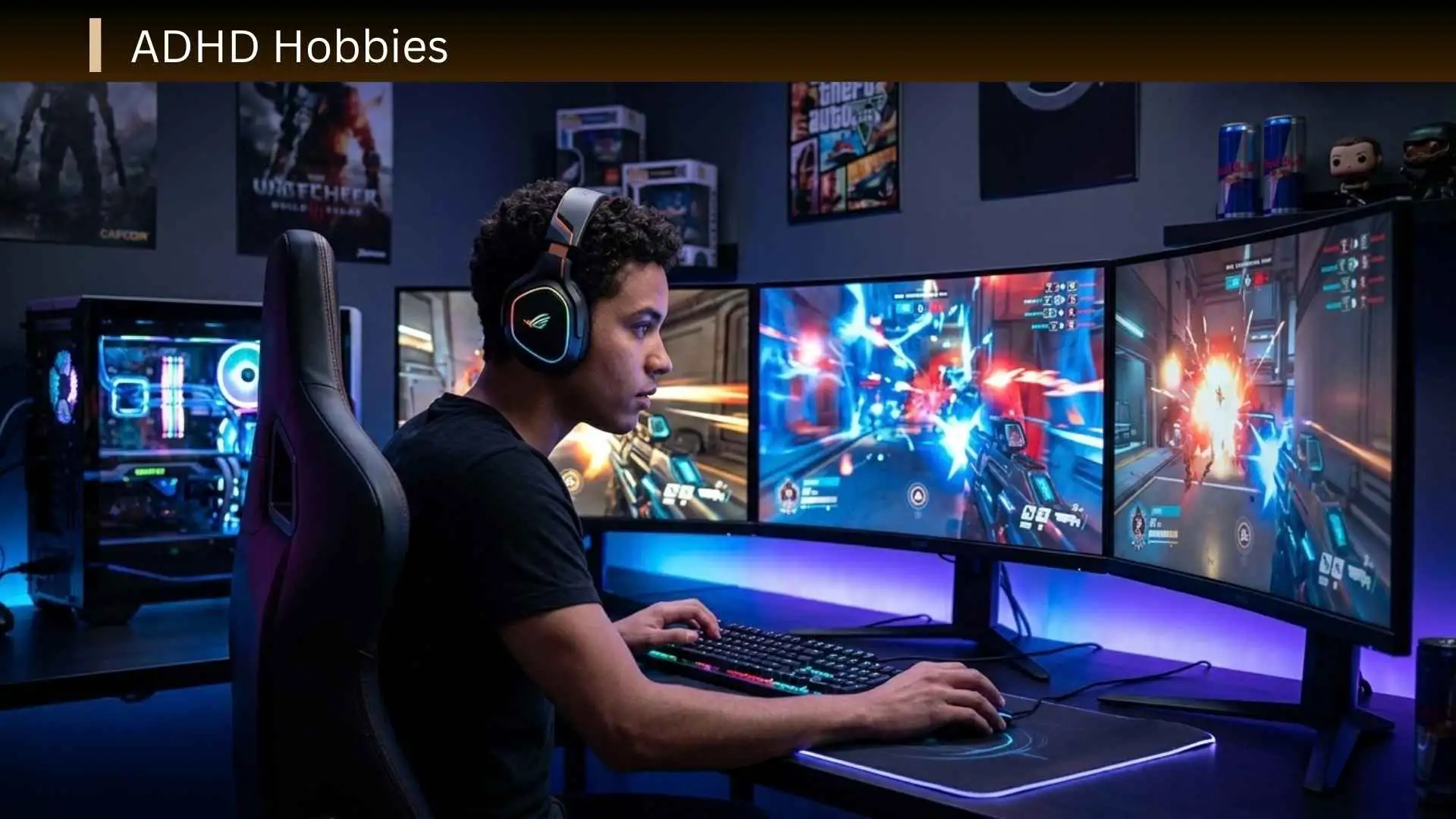
Finding a hobby you actually enjoy can feel surprisingly difficult when you have ADHD. I know how frustrating it can be when an activity sounds exciting at first but quickly becomes boring, overwhelming, or hard to stick with. The good news is that you don’t need to force yourself into a hobby that doesn’t fit the way you naturally think and focus.
In this guide to ADHD hobbies, I’ll help you explore enjoyable activities that can keep your mind engaged without making hobbies feel like another obligation. Whether you love creativity, movement, learning, collecting, gaming, or hands-on projects, you can find options that match your interests and energy level. You’ll discover ideas that are easy to start, flexible to enjoy, and interesting enough to keep you coming back. So, if you’re wondering which hobby might finally click for you, let’s find one you’ll genuinely look forward to.
What Are the Best Hobbies for ADHD? (Quick Answer)
Some particularly ADHD-friendly hobbies include:
- Photography
- Drawing or digital art
- Playing a musical instrument
- Dancing
- Hiking
- Cycling
- Rock climbing or bouldering
- Gardening
- Cooking and baking
- Woodworking
- Knitting or crochet
- Puzzles and strategy games
- Model building
- Writing
- Video editing
- Birdwatching
- Geocaching
- Martial arts
- Pottery
- Learning a language
- Fishing
- DIY projects
- Collecting and restoring objects
- Volunteering
- Board games and tabletop games
There is no single hobby that works for everyone with ADHD. A good starting point is to look for activities that provide interest, movement, novelty, creativity, challenge, immediate feedback, or a clear sense of progress.
Why Hobbies Can Be Especially Appealing for People With ADHD

ADHD is a neurodevelopmental disorder that can affect attention, organization, task completion, impulse control, and restlessness. Adults may particularly struggle to stay engaged with lengthy tasks when those tasks are not interesting to them.
That makes the difference between an obligation and a hobby important.
A hobby is chosen voluntarily. You have more freedom to change the difficulty, switch activities, experiment, or follow an unexpected interest. That flexibility can make recreational activities more engaging than tasks that feel repetitive or externally imposed.
Many adults with ADHD also describe moving intensely into a new interest and later losing interest. This kind of hobby-switching does not necessarily mean you have chosen the “wrong” hobby. Interest can naturally change, and a hobby does not have to become a lifelong commitment to be worthwhile.
The goal is not to force yourself to maintain one hobby forever. The goal is to find activities that make your free time satisfying.
Best ADHD Hobbies for Different Types of Interests

1. Photography
Photography combines exploration, creativity, technology, and an immediate reason to pay attention to your surroundings.
You can make it as simple or technical as you want. A smartphone is enough to start, while a dedicated camera opens up subjects such as manual exposure, lenses, portraits, wildlife, street photography, and landscapes.
Why it can work well: Every outing can be different, and there is always something new to notice.
Best for: Curious people who enjoy visual creativity and exploring.
Cost: Low to high, depending on equipment.
Beginner idea: Pick one theme for a week, such as interesting doors, shadows, street signs, plants, or reflections.
2. Drawing
Drawing provides immediate feedback and can be practiced almost anywhere.
You do not need to become an accomplished artist. Sketching objects around the house, making cartoons, doodling, urban sketching, or learning digital illustration are all legitimate ways to use the hobby.
Why it can work well: Short sessions are possible, but the activity can also absorb you for much longer when inspiration strikes.
Best for: People who enjoy visual expression and experimentation.
Cost: Low to moderate.
Beginner idea: Start with a small sketchbook and draw for 10 minutes rather than setting an ambitious daily art goal.
3. Playing a Musical Instrument
Learning guitar, piano, drums, ukulele, keyboard, or another instrument gives you a mixture of repetition and constant challenge.
You can practice scales, learn songs, improvise, record yourself, or play with other people.
Why it can work well: Music provides rhythm, sensory stimulation, measurable improvement, and frequent small rewards.
Best for: People who enjoy sound, performance, rhythm, or learning skills.
Cost: Low to high.
Beginner idea: Learn recognizable songs before worrying about mastering music theory.
4. Dancing
Dancing is a particularly useful option if sitting still for a hobby sounds unappealing.
Try hip-hop, salsa, swing, ballroom, contemporary dance, line dancing, or simply follow dance tutorials at home.
Why it can work well: It combines movement, music, coordination, and learning.
Best for: People who need physical activity and dislike repetitive gym workouts.
Cost: Free to moderate.
Where: Indoor.
Beginner idea: Choose one song and learn its basic choreography rather than attempting a full class immediately.
5. Hiking
Hiking provides a changing environment rather than requiring you to remain in one place.
Trails introduce different terrain, scenery, weather, wildlife, and destinations. You can also combine hiking with photography, birdwatching, geocaching, or nature journaling.
Why it can work well: It combines physical movement with exploration and changing sensory input.
Best for: People who become restless indoors.
Cost: Low to moderate.
Safety note: Match the trail to your experience, check weather and trail conditions, carry appropriate water and supplies, and let someone know your plans for more remote hikes.
6. Cycling
Cycling can turn exercise into exploration.
Instead of treating a ride as a workout, give yourself a destination: a park, coffee shop, scenic road, trail, landmark, or neighborhood you have never explored.
Why it can work well: Movement, speed, changing scenery, and destination-based goals can make riding more engaging.
Best for: Active people who dislike conventional workouts.
Cost: Moderate to high.
Beginner tip: Start with short, familiar routes before progressing to longer rides.
7. Rock Climbing and Bouldering
Climbing demands attention because you have to decide where your hands and feet should go next.
Bouldering, in particular, offers short problems that can be attempted repeatedly, making it easy to see progress.
Why it can work well: It combines movement with immediate problem-solving.
Best for: People who enjoy challenges and physical activity.
Difficulty: Moderate.
Cost: Moderate.
Safety: Learn from qualified staff or instructors, use appropriate equipment, and follow the facility’s safety rules.
8. Gardening
Gardening provides a different kind of engagement because the project changes over time.
You can grow vegetables, herbs, flowers, houseplants, or container gardens. There are always seasonal tasks, new plants to experiment with, and visible changes to observe.
Why it can work well: It combines hands-on work with a long-term project while allowing small tasks to be completed independently.
Best for: People who enjoy nature and tangible results.
Cost: Low to moderate.
Beginner idea: Start with a few easy container plants rather than creating an elaborate garden immediately.
9. Cooking
Cooking can be turned into a series of small experiments rather than a repetitive household chore.
Try learning cuisines from different countries, recreating restaurant dishes, baking bread, making sauces, or improving one cooking technique at a time.
Why it can work well: There is sensory stimulation, a clear end result, and plenty of room for experimentation.
Best for: Creative people who enjoy food and practical skills.
Cost: Low to moderate.
Beginner idea: Choose recipes with fewer ingredients and manageable preparation times.
10. Baking
Baking is especially appealing if you enjoy precise processes and visible results.
Cookies, cakes, breads, pastries, and decorated desserts each provide different levels of complexity.
Why it can work well: The activity has a clear beginning and end, while advanced recipes provide increasing challenges.
Beginner tip: Use timers and read the entire recipe before starting so that a forgotten step does not derail the project.
Creative ADHD Hobbies
Creative hobbies can be particularly attractive when you want an activity that allows experimentation rather than a single correct outcome.
11. Pottery
Pottery is tactile and highly hands-on. Working with clay gives you something physical to manipulate while learning techniques such as hand-building and wheel throwing.
A local studio or community art center can be easier than trying to purchase and install equipment at home.
Good for: Sensory, creative, hands-on learners.
12. Knitting or Crochet
Knitting and crochet provide repetitive hand movements while still producing something tangible.
You can switch between simple projects and increasingly complicated patterns.
Good for: People who like quiet activities but still want their hands occupied.
Beginner tip: Start with a small project such as a scarf, coaster, or simple square rather than an ambitious garment.
13. Woodworking
Woodworking combines planning, measurement, tools, materials, and physical construction.
Projects can range from simple shelves and boxes to furniture and decorative pieces.
Good for: People who enjoy building and solving practical problems.
Safety: Learn proper tool handling, wear appropriate protective equipment, and use tools according to manufacturer and workshop guidance.
14. Model Building
Model kits, miniatures, scale vehicles, architectural models, and dioramas can provide a focused project without requiring artistic perfection.
Good for: Detail-oriented hobbyists who enjoy construction and collecting.
15. Video Editing
Video editing combines storytelling, technology, visual design, sound, and problem-solving.
You can edit travel clips, gaming footage, short documentaries, family videos, tutorials, or completely fictional projects.
Good for: People who enjoy computers and creative projects.
Beginner idea: Create a one-minute video rather than beginning with a 20-minute production.
Active ADHD Hobbies

If restlessness makes sedentary hobbies difficult, movement-based activities may be a better match.
16. Martial Arts
Martial arts provide structured learning while keeping the body active.
Depending on the school, you might explore Brazilian jiu-jitsu, karate, taekwondo, judo, boxing, or another discipline.
Why it stands out: Classes provide external structure, while techniques create progressive challenges.
Best for: People who like skill progression and physical activity.
Important: Choose a reputable school with qualified instruction and appropriate safety practices.
17. Swimming
Swimming offers a repetitive physical activity with fewer distractions than many land-based environments.
It can also be practiced alone, with a coach, or as part of a club.
Best for: People who enjoy water and prefer structured physical activity.
18. Geocaching
Geocaching turns walking or exploring into a search game using GPS-enabled devices.
Instead of simply going for a walk, you have a destination and a problem to solve.
Why it stands out: It combines exploration, technology, movement, and discovery.
Best for: People who find ordinary walks boring.
Quiet ADHD Hobbies for Home
Not everyone with ADHD wants an energetic hobby. Some people prefer activities that occupy their hands while keeping the overall environment calm.
19. Puzzles
Jigsaw puzzles, logic puzzles, crosswords, Sudoku, and mechanical puzzles provide different kinds of mental challenges.
For someone who gets bored with a 1,000-piece puzzle, a smaller puzzle may be a better fit.
Tip: Choose the puzzle size based on your current interest rather than what you think you “should” be able to finish.
20. Reading
Reading can work well when the subject is genuinely interesting.
If traditional books are difficult to stick with, try graphic novels, short stories, nonfiction on a favorite subject, audiobooks, or e-books.
The goal is not to prove that you can finish a particular book. It is to enjoy reading.
21. Writing
Writing can take many forms:
- Journaling
- Short stories
- Poetry
- Blogging
- Fan fiction
- Creative nonfiction
- Screenwriting
- Personal essays
Short-form writing can be particularly approachable if long projects feel overwhelming.
22. Coloring
Adult coloring books offer a low-pressure creative activity without requiring you to invent an image from scratch.
It can be a useful option when you want something artistic but do not want to spend time learning drawing fundamentals.
Social ADHD Hobbies

Some people become more engaged when other people are involved. A scheduled class, team, or group can also provide external structure.
23. Board Games and Tabletop Games
Modern board games range from quick card games to long strategy campaigns.
They can provide competition, social interaction, problem-solving, storytelling, and changing objectives.
Best for: People who enjoy games and social stimulation.
Beginner tip: Start with games that can be learned in 10–15 minutes rather than highly complex strategy games.
24. Volunteering
Volunteering turns free time into purposeful activity.
You might help at an animal shelter, community organization, food bank, library, environmental project, or local event.
Why it stands out: The activity has a real-world purpose and often involves people, movement, and changing tasks.
Best for: People who lose interest when an activity feels disconnected from a larger purpose.
25. Improv or Theater
Improvisation and theater provide novelty, social interaction, creativity, and performance.
Improv is especially unpredictable: you do not know exactly what another performer will say or what situation will develop.
Best for: Social, expressive people who enjoy spontaneity.
Best ADHD Hobbies by What You Need
There is no universally “best” ADHD hobby. Instead, match the hobby to the type of stimulation you are looking for.
| Hobby | Difficulty | Cost | Activity Level | Best Match |
| Photography | Easy–Moderate | Low–High | Low–Moderate | Novelty and creativity |
| Drawing | Easy–Advanced | Low–Moderate | Low | Creative expression |
| Musical instrument | Moderate | Low–High | Low–Moderate | Skill progression |
| Dancing | Easy–Advanced | Free–Moderate | High | Movement and music |
| Hiking | Easy–Advanced | Low–Moderate | Moderate–High | Exploration |
| Cycling | Easy–Advanced | Moderate–High | High | Movement and variety |
| Bouldering | Moderate | Moderate | High | Challenge and problem-solving |
| Gardening | Easy–Moderate | Low–Moderate | Moderate | Nature and tangible results |
| Cooking | Easy–Advanced | Low–Moderate | Moderate | Creativity and practical skills |
| Knitting | Easy–Advanced | Low | Low | Hands-on repetition |
| Woodworking | Moderate–Advanced | Moderate–High | Moderate | Building and problem-solving |
| Puzzles | Easy–Advanced | Low–Moderate | Low | Mental challenge |
| Geocaching | Easy | Low | Moderate | Exploration and discovery |
| Martial arts | Moderate–Advanced | Moderate | High | Structure and movement |
| Board games | Easy–Advanced | Low–Moderate | Low–Moderate | Social stimulation |
How to Choose an ADHD Hobby That You Will Actually Stick With

The biggest mistake is choosing a hobby because it sounds impressive rather than because it genuinely interests you.
Instead, ask a few practical questions.
Do You Need Movement?
If sitting down makes you restless, consider dancing, cycling, hiking, swimming, climbing, martial arts, or another active hobby.
Do You Need Your Hands Busy?
Try knitting, crochet, pottery, model building, woodworking, drawing, gardening, or cooking.
Hands-on activities can be particularly appealing when passive entertainment feels unsatisfying.
Do You Need Novelty?
Choose hobbies that naturally change from session to session.
Photography, geocaching, hiking, travel-related activities, cooking different cuisines, and learning new musical pieces can provide plenty of variation.
Do You Prefer Clear Goals?
Some people are more motivated when there is a specific objective.
Consider:
- Completing a puzzle
- Learning a song
- Finishing a model
- Reaching a climbing grade
- Growing a particular plant
- Completing a hiking route
- Cooking a new recipe
- Entering a photography challenge
A clear finish line can make an open-ended hobby easier to start.
Do You Prefer Structure?
Classes and clubs can provide an external schedule.
Look for:
- Dance classes
- Martial arts
- Art classes
- Climbing gyms
- Community gardening groups
- Photography clubs
- Running or cycling groups
- Board-game groups
- Volunteer organizations
External commitments can be useful when remembering to make time for a hobby is harder than actually enjoying it.
How to Start an ADHD Hobby Without Overspending
A common problem with a new interest is buying everything before discovering whether the interest lasts.
Instead, use a minimum viable hobby approach.
Start With the Cheapest Version
Borrow equipment, rent when practical, use what you already own, or take an introductory class.
For example, you do not need an expensive camera to discover whether photography interests you. You do not need a professional kitchen setup to experiment with baking.
Set a Small First Project
Instead of saying:
“I’m going to learn photography.”
Try:
“I’m going to take 20 interesting photos this weekend.”
Instead of:
“I’m going to learn woodworking.”
Try:
“I’m going to build one simple project.”
A concrete first objective creates a natural stopping point.
Give Yourself Permission to Switch
You may discover that a hobby is exciting for three weeks and then stops being interesting.
That does not automatically make the hobby a failure.
Exploring interests can itself be part of finding activities that suit you.
ADHD Hobby Hopping: Is It a Problem?
Changing hobbies frequently can be frustrating, particularly when you repeatedly purchase supplies for a new interest and then abandon the project.
But changing interests does not mean that every new hobby needs to become a permanent commitment.
A more practical strategy is to create boundaries around new interests.
For example:
- Borrow equipment before buying it.
- Set a starter budget.
- Complete one small project before purchasing advanced supplies.
- Keep a list of hobbies you want to revisit.
- Store unfinished projects in one designated place.
- Wait before buying expensive equipment.
- Keep one or two established hobbies alongside new experiments.
Some adults with ADHD report becoming intensely absorbed in new interests and later losing interest, so designing your hobby setup around that possibility can be more sustainable than expecting every interest to last forever.
How to Make Boring Hobbies More Engaging
Even a hobby that initially sounds suitable can become repetitive.
If you notice yourself losing interest, change the format rather than immediately abandoning the activity.
Try adding:
- A timer
- Music or a podcast where appropriate
- A challenge
- A friend
- A new location
- A competition
- A deadline
- A new technique
- A more difficult project
- A completely different subject
For example, photography can become more engaging when you give yourself a theme. Running can become more interesting when you explore a new route. Cooking can become a challenge when you choose an unfamiliar cuisine.
Novelty, challenge, interest, movement, social interaction, and other forms of stimulation are commonly discussed as ways people with ADHD can make activities more engaging.
ADHD Hobbies for Kids and Teens
Children and teenagers with ADHD may enjoy many of the same hobbies as adults, but the activity should be matched to age, interests, abilities, and supervision needs.
Good possibilities include:
- Building with LEGO or other construction sets
- Drawing and painting
- Music
- Dance
- Swimming
- Team sports
- Martial arts
- Gardening
- Cooking with an adult
- Puzzles
- Model building
- Photography
- Nature exploration
- Board games
- Robotics
- Coding
- Drama
The objective should not be to turn every hobby into ADHD treatment. Hobbies can simply provide opportunities for enjoyment, creativity, skill development, movement, and positive experiences.
For children with ADHD, the CDC emphasizes positive opportunities around activities such as sports, art, music, and play, alongside appropriate health and professional support.
Can Hobbies Help With ADHD Symptoms?
Hobbies can be enjoyable and may support a person’s lifestyle, but they should not be presented as a treatment or cure for ADHD.
The National Institute of Mental Health notes that lifestyle changes such as adding physical exercise may be helpful, while evidence-supported ADHD treatment can include medication and psychotherapy.
A hobby may provide structure, enjoyable activity, movement, social connection, creativity, or a reason to spend time away from passive screen use. Those are valuable qualities, but they are different from treating the underlying disorder.
If ADHD symptoms are interfering significantly with work, school, relationships, sleep, or everyday responsibilities, a qualified healthcare professional can help determine appropriate evaluation and treatment.
How to Build a Sustainable ADHD Hobby Routine
You do not need a complicated schedule.
Try this simple system:
- Choose one hobby you genuinely want to try.
- Make the first session short.
- Prepare the equipment beforehand.
- Choose a specific first project.
- Schedule the activity at a realistic time.
- Stop while you still have some interest if possible.
- Decide afterward whether you want to repeat it.
If remembering the hobby is the problem, connect it to an existing routine. For example, you might photograph something during your Saturday walk or practice guitar immediately after dinner.
The objective is to make starting easier, not to build an elaborate productivity system around leisure.
Low Cost ADHD Hobbies
You do not need a large budget to explore hobbies.
Some inexpensive options include:
- Walking
- Hiking
- Drawing
- Writing
- Reading
- Photography with a smartphone
- Birdwatching
- Geocaching
- Cooking
- Gardening with containers
- Origami
- Puzzles
- Digital art using free software
- Bodyweight exercise
- Learning a language
- Volunteering
- Journaling
Starting cheaply is especially useful if you frequently become interested in new activities. It lets you explore without turning every new interest into a major purchase.
ADHD Hobbies for People Who Get Bored Easily

If boredom is your biggest obstacle, look for hobbies with built-in variation.
Good examples include:
- Photography
- Geocaching
- Hiking
- Travel journaling
- Cooking
- Improv
- Climbing
- DIY projects
- Gardening
- Collecting
- Learning languages
- Musical improvisation
- Strategy games
You can also make repetitive hobbies more interesting by changing the challenge. For example, instead of simply running the same route, explore a different route each week. Instead of drawing the same type of subject, give yourself a new drawing prompt.
ADHD Hobbies for People Who Need Something Calming
ADHD does not mean every person wants constant stimulation.
If you are looking for a quieter activity, consider:
- Knitting
- Crochet
- Coloring
- Reading
- Gardening
- Drawing
- Puzzles
- Model building
- Journaling
- Photography
- Fishing
- Cross-stitch
- Origami
Analog hobbies can be particularly appealing because they give the hands something to do while producing visible progress. Community experiences shared with ADDitude also highlight activities such as knitting, cross-stitch, whittling, puzzles, and gardening as examples of hands-on analog hobbies some people with ADHD enjoy.
Frequently Asked Questions About ADHD Hobbies
What is a good hobby for someone with ADHD?
A good hobby is one that naturally holds your interest and matches how you like to spend your free time. Photography, music, drawing, climbing, gaming, cooking, gardening, cycling, and creative projects are examples, but there is no universally best ADHD hobby.
What hobbies are good for ADHD adults?
Adults with ADHD can enjoy virtually any hobby. Particularly engaging choices may include activities involving movement, creativity, novelty, problem-solving, hands-on work, or social interaction. The right choice depends on the individual’s interests and needs.
Are creative hobbies good for ADHD?
Creative hobbies can be a good fit because they allow experimentation and provide visible results. Drawing, photography, music, pottery, writing, woodworking, and video editing are examples.
What are good ADHD hobbies at home?
Good at-home options include drawing, reading, writing, cooking, baking, knitting, crochet, puzzles, model building, digital art, music, gaming, and video editing.
What are good active hobbies for ADHD?
Cycling, hiking, swimming, dancing, martial arts, climbing, running, and recreational sports are options for people who prefer movement.
How do I choose an ADHD hobby if I lose interest quickly?
Start with a low-cost version of the hobby and set a small first project. Avoid buying expensive equipment immediately. If your interest changes, you can move to another activity without treating the change as failure.
Can hobbies replace ADHD treatment?
No. Hobbies can be enjoyable and may support a healthy, active lifestyle, but they should not be considered a replacement for professional ADHD evaluation or evidence-supported treatment.
Is hobby hopping normal with ADHD?
Some adults with ADHD report rapidly becoming absorbed in new interests and later moving on to something else. If frequent hobby changes are causing financial problems or significant disruption, setting a budget and using inexpensive trial versions can help.
Conclusion
The best ADHD hobbies are not necessarily the most productive, impressive, or popular activities. They are the ones that make you want to come back.
If you need movement, try cycling, dancing, hiking, climbing, or martial arts. If you prefer creativity, explore photography, drawing, music, pottery, writing, or woodworking. If you want something quieter, consider puzzles, knitting, reading, gardening, or model building. And if you tend to lose interest quickly, choose inexpensive hobbies with plenty of variety and give yourself permission to explore.
A hobby does not have to become a lifelong passion to be worthwhile. Start small, follow genuine curiosity, and choose activities that fit the way you actually enjoy spending your time.

I’m Sophia Carter, a writer who enjoys discovering interesting ideas and transforming them into helpful content. At Cognivoora, I write with a simple goal: to make information clearer, more accessible, and genuinely useful for readers. I value thoughtful research, easy explanations, and content that people can trust and return to whenever they need it.
Books:
- The Knowledge Journey
- Understanding the World Around Us