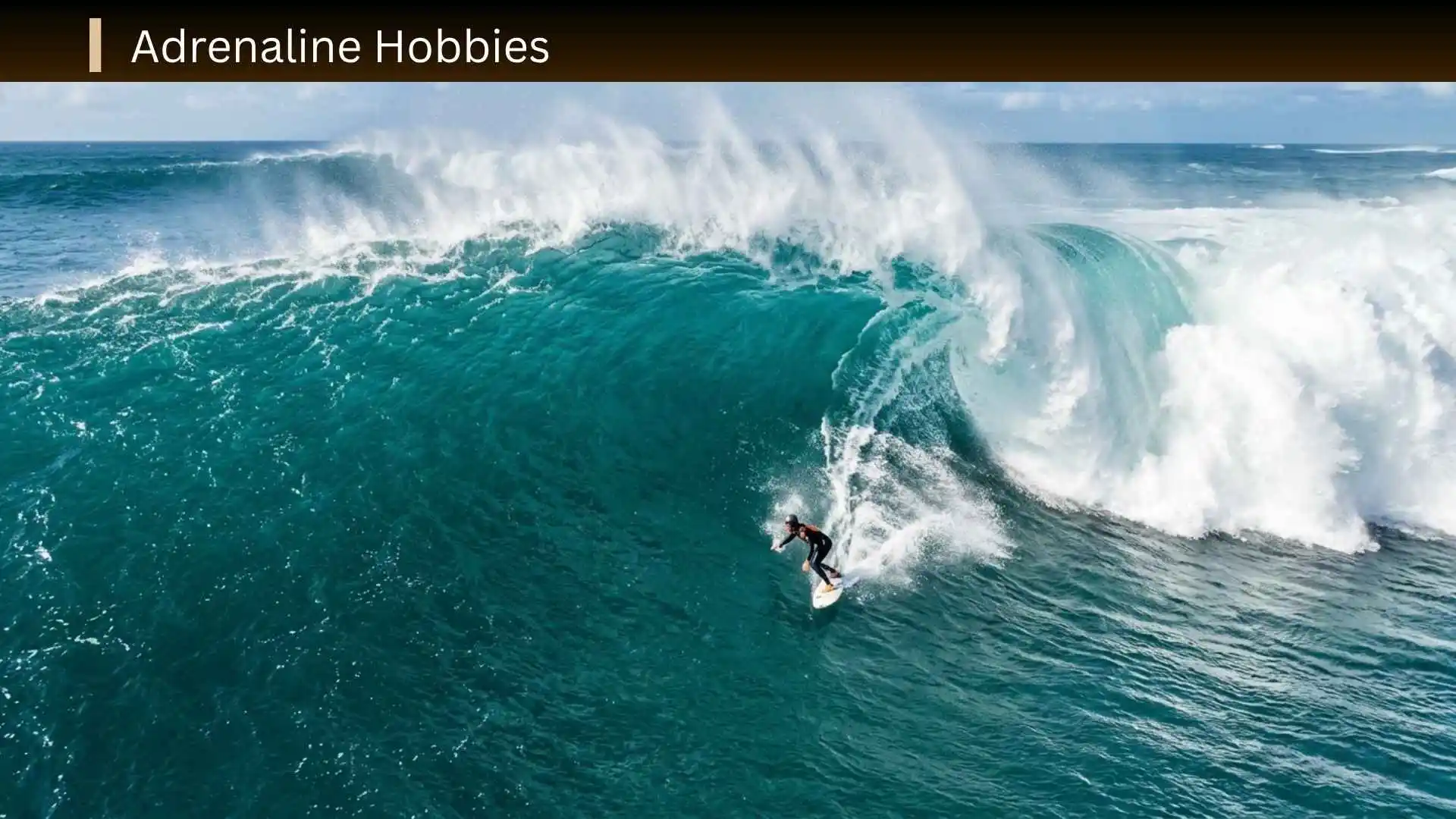
If ordinary hobbies feel a little too predictable for you, adrenaline hobbies can add the excitement you’ve been looking for. I know that feeling when you want to step outside your routine, challenge yourself, and experience something that makes your heart race. You may be looking for a new thrill, a way to test your courage, or simply an activity that never feels boring.
From rock climbing and mountain biking to skydiving, whitewater rafting, and other high-energy pursuits, adrenaline hobbies give you opportunities to explore, learn, and push your limits. I’ll help you discover exciting options based on your comfort level, interests, experience, and willingness to try something new. Whether you want an occasional rush or a hobby that keeps you active and adventurous, there’s an adrenaline-filled activity waiting for you to explore.
What Are Adrenaline Hobbies?

Adrenaline hobbies are recreational activities that create excitement through speed, heights, physical challenge, demanding environments, competition, or controlled exposure to risk.
They range from relatively accessible activities such as indoor bouldering and mountain biking to highly technical pursuits such as mountaineering, skydiving, and technical scuba diving.
Importantly, an adrenaline hobby does not have to mean deliberately taking unnecessary risks. Many adventure activities have structured beginner programs, professional instruction, protective equipment, and established safety procedures.
Best Adrenaline Hobbies at a Glance
| Hobby | Difficulty | Cost | Setting | Best For |
| Rock climbing | Moderate | Moderate | Indoor/Outdoor | Height + skill |
| Bouldering | Easy–Moderate | Low–Moderate | Indoor/Outdoor | Beginners |
| Mountain biking | Moderate | Moderate–High | Outdoor | Speed + trails |
| Whitewater rafting | Moderate | Moderate | Outdoor | Group adventure |
| Kayaking | Moderate | Moderate | Outdoor | Water + exploration |
| Surfing | Moderate | Moderate | Outdoor | Waves + balance |
| Skateboarding | Moderate | Low–Moderate | Indoor/Outdoor | Tricks + progression |
| BMX riding | Moderate–Advanced | Moderate | Indoor/Outdoor | Tricks + speed |
| Parkour | Moderate–Advanced | Low | Indoor/Outdoor | Movement |
| Ziplining | Easy | Moderate | Outdoor | Heights |
| Paragliding | Advanced | High | Outdoor | Flight |
| Skydiving | Advanced | High | Outdoor | Freefall |
| Scuba diving | Moderate | Moderate–High | Underwater | Exploration |
| Freediving | Advanced | Moderate | Outdoor/Pool | Breath + water |
| Snowboarding | Moderate | Moderate–High | Outdoor | Snow + speed |
| Skiing | Moderate | Moderate–High | Outdoor | Speed + mountains |
| Downhill mountain biking | Advanced | High | Outdoor | Speed + terrain |
| Canyoneering | Advanced | Moderate–High | Outdoor | Water + cliffs |
| Mountaineering | Advanced | High | Outdoor | Mountains |
| Ice climbing | Advanced | High | Outdoor | Vertical challenge |
| Motocross | Advanced | High | Outdoor | Motorsports |
| Kart racing | Easy–Moderate | Moderate | Indoor/Outdoor | Racing |
| Off-road driving | Moderate–Advanced | High | Outdoor | Vehicles + terrain |
| Hang gliding | Advanced | High | Outdoor | Flight |
| Adventure racing | Advanced | Moderate–High | Outdoor | Endurance + competition |
Costs vary substantially by location, equipment ownership, instruction, and whether you participate through a commercial operator or club.
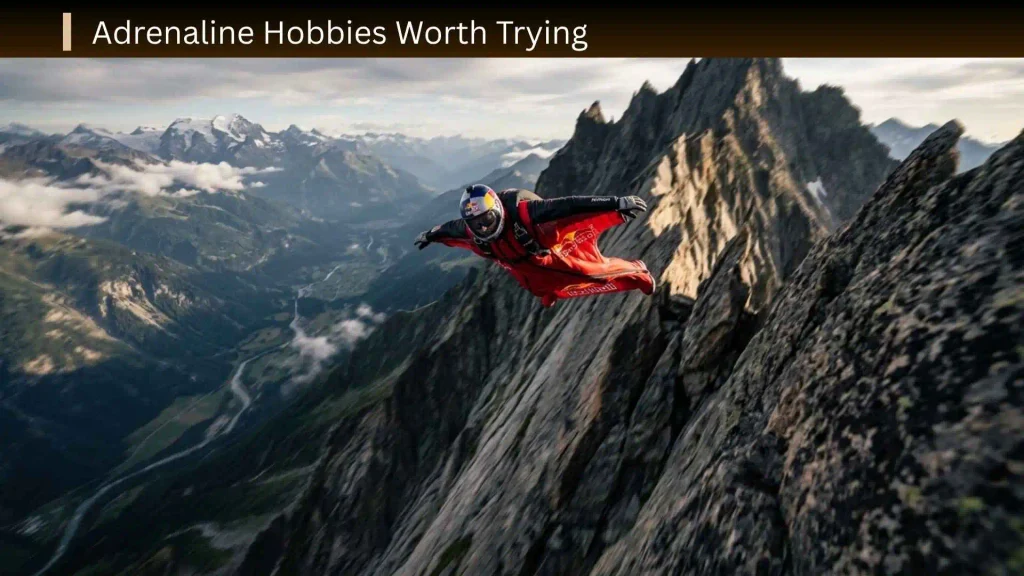
25 Adrenaline Hobbies Worth Trying
1. Rock Climbing
Rock climbing combines physical strength, balance, route-finding, and problem-solving with the psychological challenge of moving vertically.
For beginners, an indoor climbing gym can be one of the most approachable ways to enter the sport. Bouldering keeps climbs relatively low and eliminates the need for ropes, while top-rope climbing introduces harnesses, ropes, and belaying under controlled conditions. REI specifically identifies indoor gyms, bouldering, and top-rope climbing as accessible starting points for newcomers.
Best for: People who enjoy technical challenges and measurable progression.
Beginner tip: Start with an introductory gym session rather than buying a large amount of equipment immediately.
2. Bouldering
Bouldering is a form of rock climbing performed on shorter walls or rock formations without a rope system. The emphasis is on movement, technique, balance, and solving individual climbing problems.
It is particularly appealing if you want the challenge of climbing without committing to a full rope-and-harness setup. Indoor gyms also make it possible to practice throughout the year.
Difficulty: Easy to moderate at beginner level
Cost: Low to moderate
Setting: Indoor or outdoor
A crash pad and appropriate footwear are important for outdoor bouldering, while indoor facilities generally provide a more controlled environment.
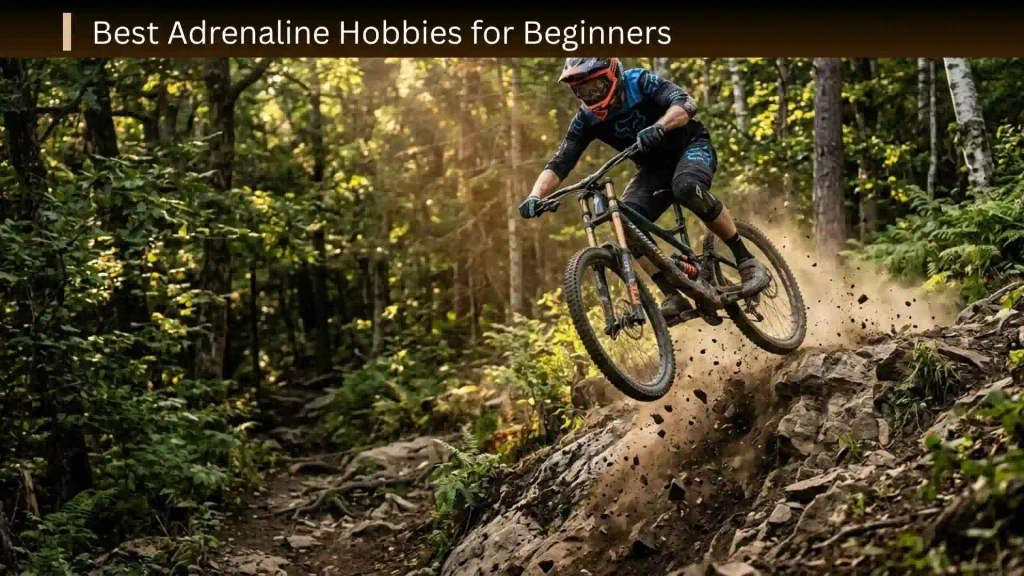
3. Mountain Biking
Mountain biking turns cycling into an adventure hobby by taking you onto trails, uneven terrain, descents, climbs, and technical features.
Unlike ordinary road cycling, mountain biking requires active control of the bike and constant adjustment to changing terrain. Riders can choose relatively gentle trails before progressing toward more technical routes.
Best for: People who want speed and outdoor exploration without relying on a motor.
A properly fitting helmet is essential, and beginners should build their handling skills before tackling steep or technical terrain.
4. Downhill Mountain Biking
Downhill mountain biking takes the speed and technical demands of mountain biking much further. Riders descend steep trails containing rocks, roots, jumps, drops, berms, and other obstacles.
This is better suited to riders who already have solid bike-handling skills.
Difficulty: Advanced
Cost: High
Setting: Outdoor
Protective equipment and appropriate instruction become increasingly important as terrain becomes more demanding.
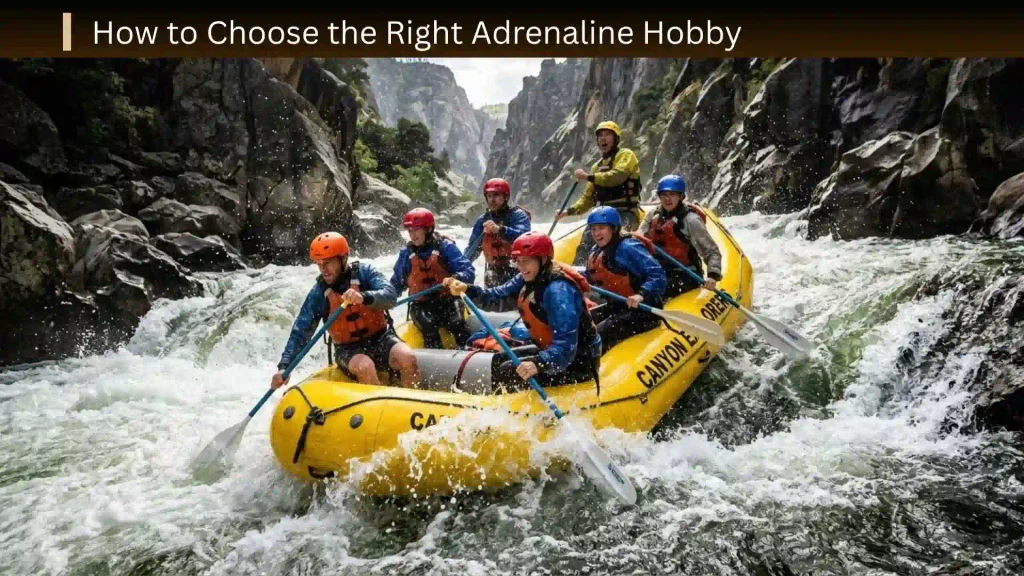
5. Whitewater Rafting
Whitewater rafting puts a group in an inflatable raft and sends it through moving river water and rapids. It combines teamwork, water skills, navigation, and excitement.
A major advantage for beginners is that guided commercial trips can provide instruction and equipment, allowing newcomers to experience whitewater without immediately developing the skills required for independent river travel.
Water conditions can change because of rainfall, snowmelt, dam releases, debris, and other environmental factors. REI recommends learning to read river conditions, practicing on easier water, and gaining experience with knowledgeable boaters before progressing to more difficult rapids.
Best for: Groups, adventurous travelers, and people who want excitement without necessarily doing a solo activity.
6. Whitewater Kayaking
Whitewater kayaking offers a more individual and technical experience than rafting. The paddler controls a smaller boat while navigating rapids and river features.
The learning curve can be substantial because boat control, water reading, rescue skills, and appropriate equipment all matter.
Difficulty: Moderate to advanced
Best for: People who enjoy technical progression and water sports.
Beginners should learn with qualified instruction and start on water appropriate to their skill level.
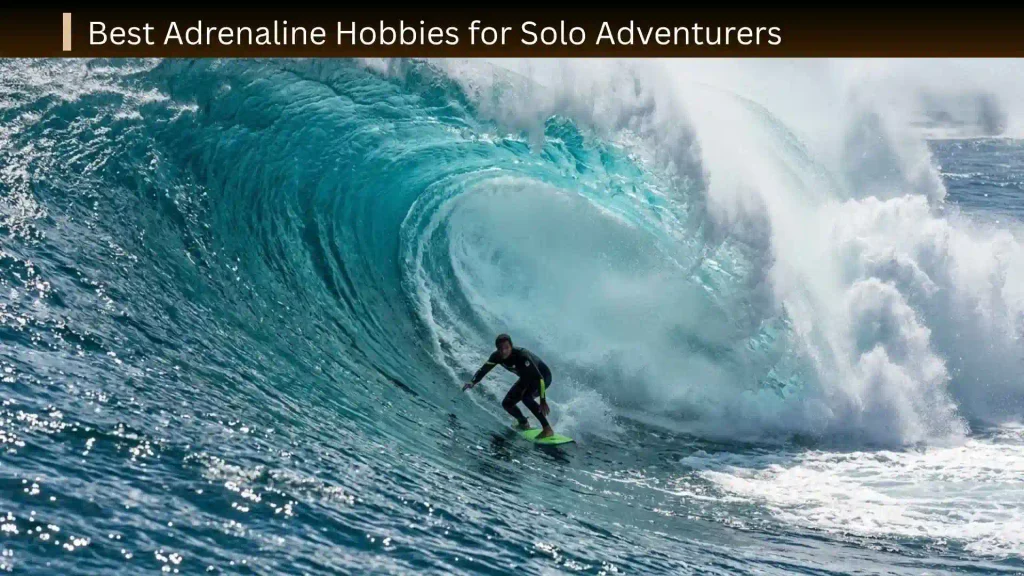
7. Surfing
Surfing combines balance, timing, paddling, wave reading, and physical effort. The challenge changes constantly because no two waves behave exactly the same.
The first stage is usually less about dramatic rides and more about learning to handle the board, paddle effectively, position yourself, and catch smaller waves safely.
Best for: Ocean lovers who enjoy repetition and gradual improvement.
A lesson at a suitable beginner beach can shorten the learning curve considerably.
8. Skateboarding
Skateboarding can be as relaxed or adrenaline-heavy as you make it. Beginners can start with basic riding and balance, while experienced skaters may work toward ramps, bowls, street lines, and more technical tricks.
One of its biggest advantages is accessibility: you do not necessarily need a large facility to practice basic skills.
Cost: Low to moderate
Setting: Indoor or outdoor
Best for: People who enjoy skill progression and short practice sessions.
Protective equipment is especially useful while learning to fall and control the board.
9. BMX Riding
BMX combines cycling with jumps, tricks, racing, and technical bike handling. Different disciplines create very different experiences, from BMX racing to freestyle riding.
It is a strong choice if you enjoy the combination of repetition and precision required to master individual movements.
Difficulty: Moderate to advanced
Best for: Riders who prefer bikes but want more technical challenges than conventional cycling.
10. Parkour
Parkour focuses on efficient movement through environments using running, jumping, climbing, vaulting, balancing, and other movement techniques.
Although it may look spontaneous, good parkour involves considerable control and technique. Beginners should learn foundational movements in an appropriate environment rather than immediately attempting large jumps or drops.
Best for: People interested in body control, agility, and creative movement.
Indoor parkour gyms can provide a more forgiving learning environment than urban settings.
11. Ziplining
Ziplining is one of the more accessible ways to experience height and speed. Participants travel along suspended cables, often through forests, canyons, or other elevated environments.
It requires much less technical skill than activities such as climbing or mountaineering, making it suitable for people who want a strong thrill without a long learning curve.
Difficulty: Easy
Cost: Moderate
Best for: Beginners and occasional adventure seekers.
Always follow the operator’s equipment, weight, age, and safety requirements.
12. Skydiving
Skydiving is one of the most recognizable adrenaline hobbies, combining aircraft altitude, freefall, and canopy flight.
A first-time participant generally experiences the activity through a structured introduction rather than independently managing every aspect from the beginning. The progression after an introductory jump depends on the training system and the person’s goals.
Difficulty: Advanced
Cost: High
Best for: People specifically seeking the experience of freefall.
Because this activity involves substantial height and specialized equipment, professional instruction and strict adherence to established procedures are essential.
13. Paragliding
Paragliding uses a lightweight foot-launched aircraft to allow pilots to soar through the air using rising air currents.
Unlike skydiving, where the defining experience is freefall followed by parachute descent, paragliding emphasizes sustained flight and aerial navigation.
Best for: People fascinated by flight and outdoor landscapes.
It requires dedicated training and should be learned through an established instructional program rather than self-teaching.
14. Hang Gliding
Hang gliding offers another form of human flight, using a rigid-wing glider controlled by the pilot’s body position.
The experience is particularly appealing to people who want a direct connection with wind, terrain, and flight rather than the enclosed feeling of an aircraft.
Difficulty: Advanced
Cost: High
Setting: Outdoor
Weather and launch conditions are fundamental considerations, so appropriate training is essential.
15. Scuba Diving
Scuba diving provides adrenaline through underwater exploration rather than simply speed or height. Divers can explore reefs, wrecks, caves, walls, and marine environments depending on their training and certification.
The hobby has a particularly interesting progression: recreational diving can eventually lead into specialties and more technically demanding forms of diving.
Best for: Curious explorers who enjoy water and learning technical skills.
Good buoyancy control, equipment knowledge, environmental awareness, and appropriate certification are central to responsible diving.
16. Freediving
Freediving involves underwater swimming and exploration while holding your breath rather than using scuba equipment.
It may look simple from the surface, but breath-hold diving requires appropriate training and disciplined safety practices. It should not be approached as a competition with friends to see who can hold their breath longest.
Difficulty: Advanced
Best for: Experienced swimmers interested in underwater skills.
Never practice breath-hold diving alone.
17. Snowboarding
Snowboarding combines balance, speed, turning, and terrain management on snow-covered slopes.
Beginners often spend considerable time simply learning how to stand, stop, turn, and control speed. Once those fundamentals become comfortable, terrain parks and more challenging slopes can add a significant adrenaline component.
Best for: Winter-sports enthusiasts who enjoy progression.
Lessons can help beginners learn basic control before moving onto terrain that exceeds their ability.
18. Alpine Skiing
Skiing offers a broad range of intensity. A beginner can spend time on gentle slopes, while advanced skiers can explore steeper terrain, moguls, trees, and other challenging environments.
That scalability makes skiing suitable for both people seeking a recreational winter hobby and those pursuing serious technical progression.
Difficulty: Moderate to advanced
Cost: Moderate to high
Equipment rental can be useful for beginners who are still deciding whether skiing is something they want to pursue regularly.
19. Canyoneering
Canyoneering combines several adventure disciplines while traveling through canyons. Depending on the route, it may involve hiking, scrambling, swimming, rappelling, and navigating narrow passages.
The attraction is partly the variety: a single outing can require several different skills.
Difficulty: Advanced
Best for: Experienced outdoor enthusiasts who enjoy exploration and technical terrain.
Routes can vary dramatically, so beginners should choose appropriate guided experiences rather than assuming every canyon is accessible.
20. Mountaineering
Mountaineering combines hiking, climbing, navigation, weather awareness, and expedition planning in mountainous environments.
Unlike a simple summit hike, mountaineering can involve snow, ice, exposed terrain, ropes, specialized equipment, and changing weather.
Difficulty: Advanced
Cost: High
Time commitment: High
It is better viewed as a long-term skill-building pursuit than a hobby you can safely master in a weekend.
21. Ice Climbing
Ice climbing takes vertical climbing onto frozen waterfalls, ice formations, and other suitable terrain using specialized equipment.
The environment adds an additional layer of complexity because temperature, ice quality, weather, and route conditions matter.
Best for: Experienced climbers who want a seasonal technical challenge.
Professional instruction is particularly valuable when learning how to use specialized tools and climbing systems.
22. Motocross
Motocross involves racing or riding motorcycles over purpose-built dirt tracks containing jumps, turns, berms, and changing terrain.
It provides a combination of machine control, physical effort, reaction speed, and competition.
Difficulty: Advanced
Cost: High
Setting: Outdoor
Unlike casual motorcycle riding, motocross requires specialized protective equipment, appropriate riding areas, and significant practice.
23. Kart Racing
Kart racing delivers a motorsport experience in a relatively accessible format. Indoor and outdoor tracks allow drivers to practice braking, cornering, racing lines, and racecraft.
It is one of the better choices for someone who wants speed and competition without immediately committing to owning a performance vehicle.
Difficulty: Easy to moderate
Cost: Moderate
Best for: Competitive people and motorsport fans.
Racing etiquette and track rules are just as important as driving technique.
24. Off Road Driving
Off-road driving involves taking appropriately equipped vehicles onto unpaved terrain such as dirt trails, rocks, sand, or mud.
The challenge is not simply driving fast. Successful off-road driving involves vehicle control, terrain assessment, route selection, and understanding what the vehicle can safely handle.
Best for: Vehicle enthusiasts who enjoy exploration and mechanical skills.
Stay on legal trails and respect land-use restrictions. Private land, public land, and designated off-road areas can have different rules.
25. Adventure Racing
Adventure racing combines multiple disciplines, which may include running, cycling, paddling, navigation, and other outdoor skills.
Rather than focusing on one technical activity, it challenges participants to switch between disciplines while managing fatigue, navigation, and strategy.
Difficulty: Advanced
Time commitment: Moderate to high
Best for: Competitive endurance enthusiasts who dislike doing only one sport.
Best Adrenaline Hobbies for Beginners
Not every adrenaline hobby requires you to start with the most extreme version.
For someone new to adventure activities, these are particularly approachable:
Indoor Bouldering
You can experience climbing, problem-solving, and physical challenge without immediately committing to outdoor climbing systems.
Indoor Kart Racing
It offers speed and competition in a controlled venue, with relatively little equipment required from the participant.
Ziplining
If heights appeal to you but you do not want a long technical learning curve, ziplining provides a straightforward introduction to aerial adventure.
Mountain Biking on Easy Trails
Cycling skills transfer naturally into mountain biking, and beginners can increase trail difficulty gradually.
Guided Whitewater Rafting
A guided trip can introduce you to river environments while experienced professionals manage much of the technical complexity.
Beginner Surf Lessons
A professional lesson can help you learn basic board handling and wave awareness without trying to figure everything out independently.
Best Adrenaline Hobbies for People Who Love Heights

If the main attraction is being high above the ground, consider:
- Skydiving
- Paragliding
- Hang gliding
- Rock climbing
- Ziplining
- Mountaineering
- Canyoneering
- Ice climbing
The experience differs considerably. Ziplining emphasizes speed along a fixed line, climbing focuses on movement and problem-solving, while skydiving and free-flight activities center on aerial experiences.
Best Adrenaline Hobbies for Water Lovers
Water-based options include:
- Whitewater rafting
- Whitewater kayaking
- Surfing
- Scuba diving
- Freediving
- Canyoneering
- Kayaking
Water sports deserve special attention to conditions and equipment. REI’s water-safety guidance emphasizes understanding the environment, including currents, tides, river conditions, weather, and appropriate safety equipment.
For boating and other water-based sports, the American Red Cross recommends appropriate life-jacket use, and its guidance specifically identifies boating and water sports as situations in which life jackets should be worn.
Best Adrenaline Hobbies for Speed Lovers
If speed is the main attraction, these hobbies stand out:
- Kart racing
- Mountain biking
- Downhill mountain biking
- Skateboarding
- Snowboarding
- Skiing
- Motocross
- BMX
- Skydiving
- Whitewater rafting
Speed alone should not determine which activity you choose. A hobby that lets you progressively develop control is usually more sustainable than jumping immediately into an advanced version.
Best Adrenaline Hobbies for Solo Adventurers
Some adrenaline activities work particularly well for people who prefer individual progression:
- Bouldering
- Rock climbing
- Mountain biking
- Skateboarding
- Surfing
- Skiing
- Snowboarding
- Scuba diving
- Paragliding
- Trail-based adventure sports
“Solo” does not necessarily mean practicing without other people nearby. For higher-risk activities, having trained partners, guides, instructors, or appropriate supervision can be an important part of responsible participation.
Best Adrenaline Hobbies for Groups
If the social experience matters as much as the thrill, try:
- Whitewater rafting
- Kart racing
- Paintball
- Adventure racing
- Canyoneering
- Group climbing
- Mountain biking
- Skiing or snowboarding
- Guided outdoor expeditions
Group activities can also make it easier for beginners to stay motivated because the social element becomes part of the hobby.
How to Choose the Right Adrenaline Hobby
The most exciting hobby is not necessarily the most extreme one. Start by identifying what kind of adrenaline you actually enjoy.
If You Like Heights
Try climbing, ziplining, skydiving, paragliding, or mountaineering.
If You Like Speed
Look at kart racing, downhill biking, skiing, snowboarding, BMX, or motocross.
If You Like Water
Consider rafting, kayaking, surfing, scuba diving, or freediving.
If You Like Technical Challenges
Rock climbing, whitewater kayaking, scuba diving, mountaineering, and adventure racing offer substantial skill development.
If You Want a Social Hobby
Rafting, kart racing, climbing gyms, group mountain biking, and adventure races can provide built-in opportunities to meet other participants.
If You Have a Small Budget
Bouldering, skateboarding, parkour, and some forms of cycling can be started relatively inexpensively compared with activities requiring aircraft, specialized vehicles, or extensive travel.
However, “low cost” should not mean skipping necessary safety equipment or instruction.
How to Start an Adrenaline Hobby Safely
The goal is not to eliminate excitement. It is to keep the challenge appropriate to your current ability.
Start Below Your Maximum
Choose a beginner route, class, trail, rapid, slope, or experience. You can increase difficulty as your skills improve.
Learn From Qualified Instructors
Technical hobbies often involve skills that are difficult to learn safely from short online videos. Climbing, diving, flying, mountaineering, and whitewater sports are examples where structured instruction can be particularly valuable.
For example, REI recommends learning climbing fundamentals from experienced climbers or qualified instructors and notes that proper instruction and experience cannot be replaced by an internet article.
Use the Right Equipment
Protective equipment should fit the activity and the participant. Depending on the hobby, that may include:
- Helmet
- Harness
- Personal flotation device
- Appropriate footwear
- Eye protection
- Protective pads
- Sport-specific equipment
Do not assume that inexpensive or improvised equipment is an acceptable substitute for equipment appropriate to the activity.
Understand the Environment
Outdoor adrenaline hobbies are affected by weather, terrain, water conditions, temperature, visibility, and other factors.
The American Red Cross recommends checking weather and environmental conditions before water activities, while REI emphasizes checking forecasts and river gauges for whitewater recreation.
Know When to Stop
Being willing to turn around, cancel a session, or choose easier terrain is part of good judgment. Weather changes, fatigue, equipment problems, unfamiliar terrain, or conditions beyond your skill level can all be reasons to stop.
Build Skills Before Chasing Intensity
Progression is one of the best features of an adrenaline hobby. Instead of asking, “How can I make this more dangerous?” ask, “What skill can I learn next?”
That approach creates a much larger range of challenges while keeping progression connected to competence.
Common Mistakes Beginners Make
Choosing the Most Extreme Version First
Seeing advanced climbers, riders, divers, or skiers online can make difficult activities look deceptively simple. Start with the beginner version and learn the fundamentals.
Buying Too Much Equipment
You may not know whether a hobby will become a long-term interest. Renting equipment or using introductory facilities can make more sense initially.
Ignoring Conditions
A trail, river, mountain, or ocean can behave very differently depending on weather and seasonal conditions.
Treating Protective Equipment as Optional
Protective equipment is not a substitute for skill, but deliberately skipping it removes an important layer of protection.
Practicing High Risk Skills Alone
Some activities require partners, instructors, guides, spotters, or other safety systems. Do not turn an individual preference for independence into unnecessary exposure to risk.
Confusing Fear With Progress
Feeling nervous is normal when trying something new. But escalating difficulty simply because an activity feels frightening is not the same thing as developing skill.
Adrenaline Hobbies vs. Extreme Sports
The terms overlap, but they are not identical.
An adrenaline hobby can be any recurring recreational activity that provides excitement, challenge, or a strong sense of adventure. It could be relatively accessible, such as kart racing or mountain biking.
An extreme sport generally refers to activities associated with substantially greater technical difficulty, speed, height, environmental exposure, or physical risk.
The distinction is useful because someone searching for an adrenaline hobby may not actually want an extreme sport. They may simply want a hobby that feels more exciting than passive leisure activities.
Are Adrenaline Hobbies Expensive?
Some are inexpensive to try, while others require significant ongoing investment.
Generally lower-cost entry points may include:
- Skateboarding
- Parkour
- Bouldering
- Basic cycling
- Some hiking-based adventure activities
Moderate-cost options often include:
- Climbing
- Rafting
- Surfing
- Skiing
- Snowboarding
- Scuba diving
- Kart racing
Higher-cost hobbies can include:
- Skydiving
- Paragliding
- Hang gliding
- Motocross
- Downhill mountain biking
- Mountaineering
- Technical diving
The initial experience and long-term cost can be very different. A hobby may be inexpensive to try through a class or rental program but expensive once you begin purchasing specialized equipment or traveling to suitable locations.
Do Adrenaline Hobbies Have to Be Dangerous?
No. Adrenaline and danger are related but not identical.
An activity can feel thrilling because of speed, height, physical effort, uncertainty, competition, or technical concentration. Good instruction, appropriate equipment, sensible progression, and suitable conditions can reduce avoidable risk without removing the challenge.
That does not mean inherently hazardous activities become risk-free. Skydiving, mountaineering, whitewater sports, technical climbing, motorsports, and similar activities still involve meaningful hazards and require appropriate preparation.
How to Make an Adrenaline Hobby More Interesting
Once you have learned the basics, you can create new challenges without simply increasing danger.
Try:
- Learning a new technique
- Exploring a different location
- Joining a club
- Entering an appropriate competition
- Training for a specific goal
- Tracking skill progression
- Learning navigation or rescue skills where relevant
- Combining two related activities
- Taking an advanced course
- Planning a multi-day adventure
- Teaching basic skills to a qualified beginner group when you are genuinely competent
For example, a mountain biker might move from local trails into navigation and longer rides, while a climber might progress from bouldering into top-rope climbing and eventually more advanced disciplines.
Frequently Asked Questions About Adrenaline Hobbies
What are the best adrenaline hobbies for beginners?
Bouldering, indoor climbing, kart racing, ziplining, beginner mountain biking, guided rafting, and introductory surfing are good places to explore the category. The best option depends on whether you prefer heights, speed, water, physical movement, or competition.
What is the most exciting adrenaline hobby?
There is no universal answer because excitement is subjective. Skydiving, downhill mountain biking, whitewater sports, motocross, and mountaineering can all provide intense experiences, but they require different levels of skill and preparation.
What are some adrenaline hobbies that do not require expensive equipment?
Parkour, skateboarding, bouldering at an accessible gym, and some forms of cycling can have relatively manageable entry costs. However, required safety equipment should still be budgeted for.
What are good adrenaline hobbies for people who are afraid of heights?
Kart racing, mountain biking, surfing, skateboarding, whitewater rafting, and some snow sports can provide excitement without making height the central feature.
What adrenaline hobbies can I do indoors?
Indoor bouldering, climbing, kart racing, skateboarding at indoor facilities, parkour, and some forms of BMX can provide an adrenaline-focused experience without relying entirely on outdoor conditions.
What are the best adrenaline hobbies for couples or friends?
Whitewater rafting, climbing, kart racing, mountain biking, skiing, snowboarding, surfing, and guided adventure activities can work well for two or more people.
Are adrenaline hobbies good for fitness?
Many adrenaline hobbies involve physical movement and can contribute to an active lifestyle, but the physical demands vary considerably. Mountain biking, climbing, skiing, kayaking, surfing, and parkour, for example, place different demands on strength, balance, endurance, coordination, and technique.
How should I choose an adrenaline hobby?
Choose based on the type of excitement you want, your current skills, budget, available time, location, physical demands, and comfort with heights, water, speed, or technical equipment. Start with an appropriate beginner experience and increase difficulty as your skills develop.
Conclusion
The best adrenaline hobby is not necessarily the most extreme activity on the list. It is the one that gives you the type of challenge you actually enjoy and offers a realistic path for improving your skills.
If you want height, explore climbing or ziplining. If you want speed, consider kart racing, mountain biking, skiing, or snowboarding. If you prefer water, rafting, kayaking, surfing, and diving provide very different forms of adventure. For people looking for a long-term technical pursuit, mountaineering, climbing, diving, or adventure racing can offer years of progression.
Start at an appropriate level, learn the relevant skills, use suitable equipment, pay attention to conditions, and let competence not recklessness drive your progression.

I’m Olivia Bennett, a passionate writer who loves exploring ideas, learning new concepts, and sharing knowledge in a straightforward way. I write for Cognivoora with the goal of making useful topics easier to understand without unnecessary complexity. My approach combines research, clarity, and a reader-first perspective.
Books:
- Think Clearly, Live Better
- The Curious Reader’s Guide