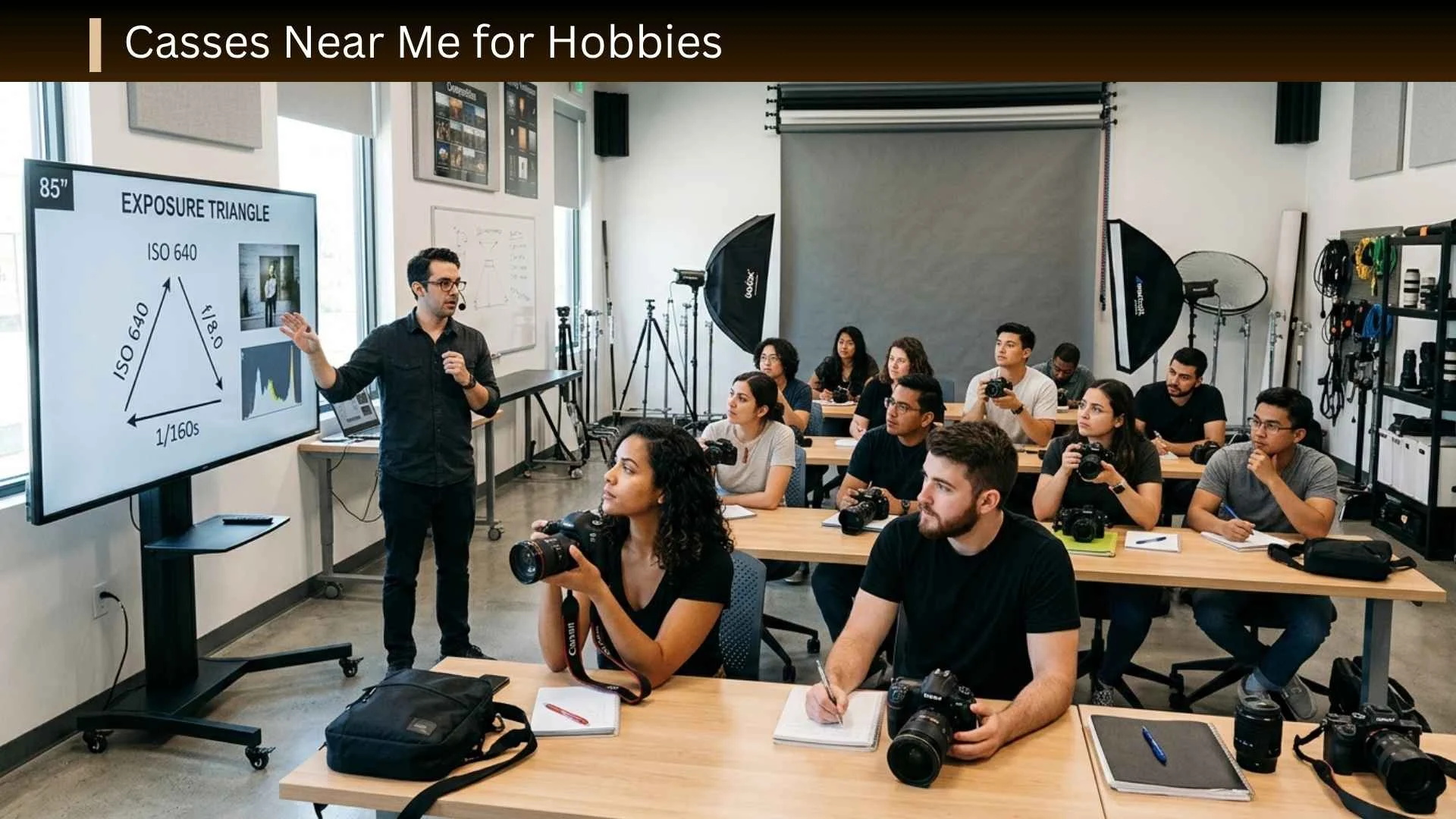
If you are searching for classes near my hobbies, you are probably looking for a practical way to discover a new interest, improve an existing skill, meet people with similar interests, or find a structured activity for yourself or your family. Local hobby classes can include everything from pottery, painting, photography, cooking, sewing, and woodworking to dance, music, gardening, fitness based activities, and recreational sports.
The challenge is that “hobby classes near me” can return a huge range of options. The best choice depends on your age, interests, budget, schedule, experience level, and whether you want a creative, social, educational, relaxing, or active hobby.
This guide explains what kinds of hobby classes you can find locally, where to look, how to compare them, what to ask before enrolling, and how to choose a class you are likely to enjoy long term.
What Are Hobby Classes?
Hobby classes are organized lessons or workshops designed to help people learn, practice, or explore an activity for personal enjoyment rather than necessarily pursuing it as a career.
Examples include:
- Painting and drawing
- Pottery and ceramics
- Photography
- Cooking and baking
- Sewing and quilting
- Knitting and crochet
- Woodworking
- Jewelry making
- Gardening
- Dance
- Music and singing
- Acting
- Creative writing
- Calligraphy
- Candle or soap making
- Glasswork
- Craft workshops
- Chess and board games
- Golf and tennis
- Yoga and other recreational movement classes
The format varies considerably. A local class might be a one-evening workshop, a weekly course, a multi-week program, an open studio with instruction, or a recurring club or group.
Local class directories currently show a particularly broad mix of activities, including cooking, photography, pottery, painting, drawing, dance, music, sports, fiber arts, and other recreational lessons.
Best Types of Hobby Classes to Search for Near You
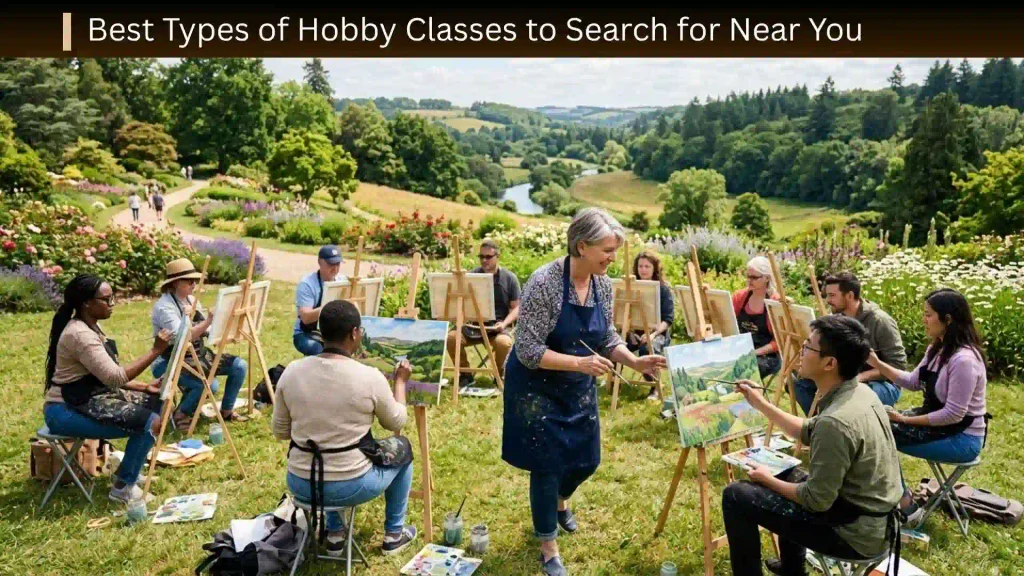
Instead of searching for one enormous list of “fun classes,” start by identifying the kind of experience you want. The following categories can make your search much more productive.
Art and Painting Classes
Art classes are a strong choice if you want a creative hobby that can be practiced independently after you learn the fundamentals.
Local options may include:
- Drawing
- Watercolor
- Acrylic painting
- Oil painting
- Sketching
- Portraiture
- Illustration
- Mixed media
- Printmaking
- Figure drawing
- Art journaling
A beginner class can teach fundamentals such as composition, color, perspective, materials, and basic techniques without requiring you to already consider yourself an artist.
Some community art programs combine instruction with studio time, allowing students to develop their own projects rather than simply following a single demonstration.
Best for: Creative people, beginners, visual learners, and anyone looking for an indoor hobby.
Before enrolling: Check whether the class supplies paint, brushes, paper, easels, or other materials. A low registration price can be less attractive if you need to purchase a large amount of equipment separately.
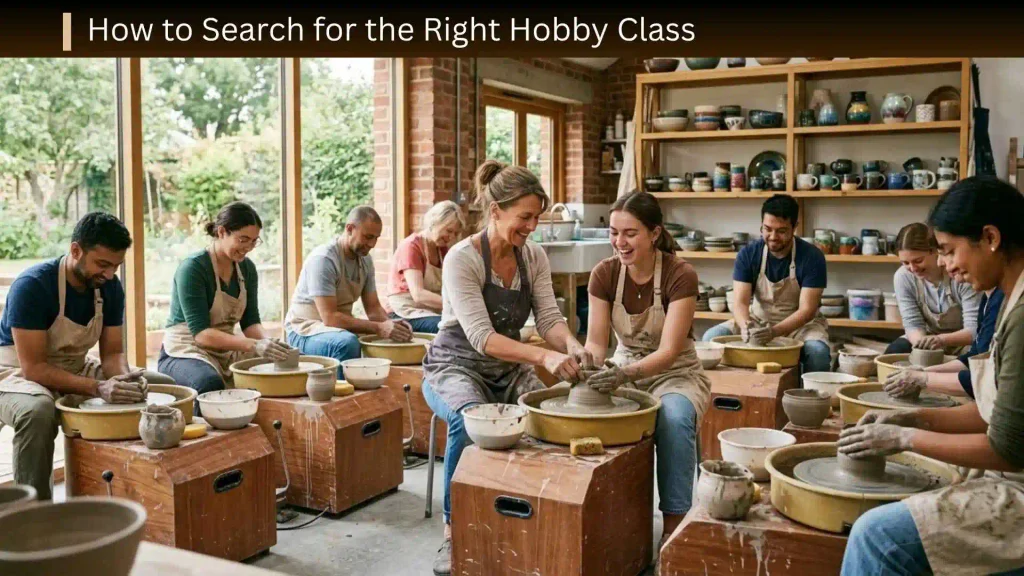
Pottery and Ceramics Classes
Pottery is worth considering if you prefer a hands-on hobby where you physically make objects.
Classes may teach:
- Hand-building
- Pinch pots
- Coil construction
- Slab building
- Wheel throwing
- Surface decoration
- Glazing
- Basic kiln processes
Beginner ceramics classes are often structured around a series of sessions because clay work involves learning techniques and, depending on the studio, waiting for pieces to dry and be fired.
Some local ceramics programs welcome complete beginners while also providing enough flexibility for more experienced participants to develop their own projects.
Best for: Hands-on learners, makers, creative people, and people who enjoy tangible results.
Check first: Ask whether clay, firing, glaze, studio fees, and tools are included in the advertised price.
Cooking and Baking Classes
Cooking classes can turn a practical skill into a genuine hobby. They are especially useful if you enjoy experimenting with food and want to learn techniques rather than simply follow recipes.
Possible classes include:
- Bread making
- Pasta making
- Cake decorating
- International cuisines
- Knife skills
- Vegetarian cooking
- Baking
- Fermentation
- Sauces and pastry
- Regional or specialty dishes
Some cooking schools organize classes around a particular meal or technique, while others offer longer courses that progressively build culinary skills. Current local class listings demonstrate how specific these workshops can be, from handmade pasta and sushi to cake decorating and bread making.
Best for: Food lovers, couples, families, social learners, and people who want a hobby with practical everyday value.
Beginner tip: Look for a class that teaches techniques you can repeat at home rather than one centered entirely on watching an instructor demonstrate.
Craft and DIY Workshops
Craft classes are useful when you want to make something during the class and take the finished project home.
You may find workshops for:
- Jewelry making
- Candle making
- Soap making
- Paper crafts
- Collage
- Bookbinding
- Lino printing
- Floral crafts
- Mosaics
- Screen printing
- Wire wrapping
- Seasonal decorations
One advantage of a workshop is that you can test a craft before purchasing all the necessary supplies. Many art and craft workshops provide the primary materials, although the exact arrangement depends on the instructor.
Best for: Beginners who want a low-commitment experiment, creative groups, date activities, and people who like making physical objects.
Sewing, Knitting, Crochet, and Fiber Arts
Fiber hobbies can be particularly appealing if you want an activity that can continue at home after the class ends.
Look for classes covering:
- Sewing basics
- Garment construction
- Quilting
- Embroidery
- Knitting
- Crochet
- Weaving
- Mending
- Textile arts
- Pattern reading
A beginner sewing course may be more equipment-dependent than a simple craft workshop because you may eventually need access to a sewing machine and basic sewing tools.
For knitting or crochet, however, the initial equipment can be comparatively portable, making it easier to continue practicing between classes.
Best for: People who enjoy repetitive, focused making and want a hobby that produces useful or decorative items.
Photography Classes
Photography classes can help you move beyond simply taking pictures with a phone or camera.
Depending on the course, you might learn:
- Composition
- Exposure
- Lighting
- Portrait photography
- Landscape photography
- Street photography
- Smartphone photography
- Photo editing
- Camera settings
- Visual storytelling
Photography is particularly flexible because you can practice almost anywhere. A local class may also provide an opportunity to photograph specific subjects under an instructor’s guidance.
Best for: Visual learners, travelers, people who enjoy documenting everyday life, and anyone interested in creative technology.
Dance Classes
Dance combines learning with movement and social interaction.
Common options include:
- Ballroom
- Salsa
- Bachata
- Swing
- Ballet
- Hip-hop
- Contemporary
- Line dancing
- Country dance
- Jazz
If your main objective is social connection, look for beginner classes designed around partner rotation or group participation. Some local dance events explicitly welcome people without previous experience or a partner.
Best for: People who want an active and social hobby.
Beginner tip: Do not assume you need to arrive already knowing the steps. Search specifically for “beginner,” “introductory,” or “no experience required.”
Music Classes
Music is another broad hobby category, ranging from individual instruction to group participation.
You can search locally for:
- Guitar lessons
- Piano lessons
- Violin lessons
- Drums
- Singing
- Choir
- Ukulele
- Music production
- Songwriting
- Music theory
Individual lessons may provide more personalized feedback, while group classes can make the learning process more social.
Best for: People who enjoy listening to or creating music and are willing to practice between sessions.
Gardening and Nature Classes
Gardening classes are worth searching for if you want a hobby that connects learning with outdoor activity.
Potential subjects include:
- Vegetable gardening
- Container gardening
- Native plants
- Herb gardening
- Composting
- Flower gardening
- Landscaping basics
- Indoor plants
- Seed starting
- Pollinator-friendly gardening
Look at local botanical gardens, community gardens, parks programs, extension-related educational programs, and environmental organizations for opportunities.
Best for: People who enjoy plants, outdoor projects, seasonal activities, and hands-on learning.
Woodworking and Making Classes
Woodworking can be a rewarding hobby if you like building functional objects and learning how materials and tools behave.
Beginner courses may cover:
- Measuring and marking
- Basic joinery
- Sanding
- Hand tools
- Power-tool fundamentals
- Simple furniture
- Small woodworking projects
Because woodworking involves potentially hazardous tools, instructor supervision, appropriate protective equipment, and a properly equipped workspace matter more here than they do in a typical craft class.
Best for: Hands-on learners, DIY enthusiasts, and people interested in building physical objects.
Fitness, Recreational Sports, and Outdoor Skills
Not every hobby class is artistic. Local programs may also offer instruction in activities such as:
- Tennis
- Golf
- Swimming
- Martial arts
- Yoga
- Cycling
- Climbing
- Pickleball
- Archery
- Outdoor recreation
These can be a good fit if your primary goal is to make regular activity more enjoyable rather than simply attend a traditional exercise session.
Sports and recreational lessons can also be useful for people who want structured instruction before joining a club or participating independently.
Where to Find Hobby Classes Near You
The phrase “near me” is important because local hobby opportunities vary dramatically from one community to another. A class that is common in a large city may not be available in a smaller town, while rural areas may have specialized community programs that are difficult to find through broad national searches.
Local Parks and Recreation Departments
Your city, county, or municipal parks and recreation department should be one of the first places to check.
Programs may include:
- Arts and crafts
- Dance
- Sports
- Fitness
- Cooking
- Gardening
- Youth activities
- Senior activities
- Outdoor recreation
Availability is seasonal, so check the current program catalog rather than relying on an old listing.
Community Centers
Community centers frequently host recurring classes, workshops, clubs, and social activities.
They can be especially useful if you want something affordable, beginner-friendly, or close to home.
Search for:
“community center hobby classes near me”
or:
“community center classes + [your city]”
Libraries
Public libraries are often overlooked when people search for hobbies.
Depending on the branch and local programming, libraries may host:
- Craft workshops
- Writing groups
- Book clubs
- Technology classes
- Art activities
- Chess groups
- Photography events
- Guest-led workshops
These programs may be free or inexpensive, although registration can be required.
Community Colleges and Continuing Education Programs
Community colleges and continuing-education departments can be a good option if you want a more structured learning experience.
Search for noncredit or continuing-education programs in subjects such as:
- Photography
- Culinary arts
- Art
- Languages
- Music
- Sewing
- Technology
- Woodworking
These courses may be more substantial than a one-evening workshop and can suit learners who want to develop a skill progressively.
Art Centers and Independent Studios
Local art centers and studios can provide specialized instruction that is difficult to find through general community programs.
For example, a dedicated ceramics studio may offer wheel classes, open studio time, glazing instruction, and longer courses rather than a single introductory workshop.
Local Clubs and Hobby Groups
Not every hobby requires formal instruction.
Once you have basic skills, you may find that a local club provides more value than another class. Photography groups, gardening clubs, craft circles, running groups, chess clubs, and maker communities can provide opportunities to practice regularly and meet people with similar interests.
Community platforms can also be useful for discovering local groups and workshops; for example, local event listings can connect people with art and craft communities and nearby activities.
How to Search for the Right Hobby Class
A generic search such as “classes near me” is often too broad. Add the information that matters to you.
Try searches such as:
- hobby classes near me for adults
- beginner hobby classes near me
- creative classes near me
- art and craft classes near me
- weekend hobby classes near me
- evening hobby classes near me
- free hobby classes near me
- hobby classes near me for alternative
- hobby classes near me for kids
- family hobby classes near me
- pottery classes near me
- cooking classes near me
- photography classes near me
- woodworking classes near me
- dance classes near me for beginners
Then add your city or ZIP code when the results are too broad.
For example:
“beginner pottery classes near me”
is more useful than:
“classes near me”
because it tells the search system what activity and experience level you want.
How to Compare Hobby Classes Before You Enroll
Finding several options is only the first step. Compare the details that will affect whether you actually continue with the hobby.
| Factor | What to Check |
| Skill level | Is it genuinely suitable for beginners? |
| Schedule | Does the day and time fit your routine? |
| Location | Is the commute short enough to remain practical? |
| Class length | Is it a one-time workshop or recurring course? |
| Class size | Will you receive enough instructor attention? |
| Cost | Does the fee include materials and facility charges? |
| Equipment | Do you need to bring or buy anything? |
| Teaching style | Demonstration, hands-on practice, or lecture? |
| Age requirements | Is the class appropriate for your age group? |
| Cancellation policy | What happens if you cannot attend? |
| Accessibility | Can the facility and activity accommodate your needs? |
| Next step | Is there an intermediate class or open studio afterward? |
The cheapest class is not necessarily the best value. A slightly more expensive course that includes materials, equipment access, and more hands-on instruction may cost less overall than an inexpensive class that requires substantial additional purchases.
What Makes a Good Beginner Hobby Class?
A good beginner class should make the starting point clear.
Look for descriptions that explain:
- Whether previous experience is required
- What you will learn
- What you will make or practice
- What equipment is provided
- What you need to bring
- How long the class lasts
- Whether the instructor provides individual guidance
- Whether there are follow-up classes
Be cautious when a listing gives almost no information beyond a title and price. You should be able to understand what you are paying for before registering.
A beginner-friendly course does not necessarily mean an easy course. Some hobbies, such as ceramics, woodworking, musical instruments, or photography, require practice before the fundamentals become comfortable.
One-Time Workshop or Multi-Week Class?
Your choice should depend on how much commitment you want.
Choose a One Time Workshop If You Want to:
- Try something unfamiliar
- Make a specific project
- Spend an evening doing something different
- Test whether you enjoy an activity
- Avoid buying equipment before trying it
Craft workshops are particularly well suited to this approach because many are structured around a single finished project.
Choose a Multi Week Class If You Want to:
- Develop a real skill
- Receive ongoing feedback
- Progress beyond basic techniques
- Build a consistent routine
- Meet the same group of learners
- Work on more complex projects
A longer course generally makes more sense for hobbies where improvement depends on repeated practice, such as music, ceramics, dance, drawing, or a technical craft.
How Much Do Hobby Classes Cost?
There is no single national price for hobby classes. Costs vary according to location, instructor experience, class length, materials, equipment, facility costs, and the type of hobby.
You may encounter:
- Free community activities
- Low-cost library or municipal programs
- Affordable group workshops
- Mid-priced studio classes
- Premium specialized instruction
- Private one-on-one lessons
For example, current listings range from community-based art programming to specialized studio courses with multi-week schedules and separate material or studio considerations.
Before comparing prices, determine what is included. Ask whether the registration fee covers:
- Materials
- Equipment
- Studio access
- Firing or processing fees
- Protective gear
- Printed materials
- Membership fees
- Parking or facility charges
This gives you the real cost of participating, rather than simply comparing advertised tuition.
Hobby Classes for Adults
Adults often search for hobby classes because they want something separate from work and everyday responsibilities.
Good options include:
- Pottery
- Painting
- Photography
- Cooking
- Dance
- Gardening
- Woodworking
- Sewing
- Creative writing
- Music
- Jewelry making
- Drawing
If your primary objective is social connection, prioritize group-based activities where participants have time to interact. If you mainly want focused personal time, a small studio class or individual lesson may be a better fit.
Adult hobby class listings can include both in-person and online options, with subjects ranging from dance and creative activities to other personal interests.
Hobby Classes for Kids and Families
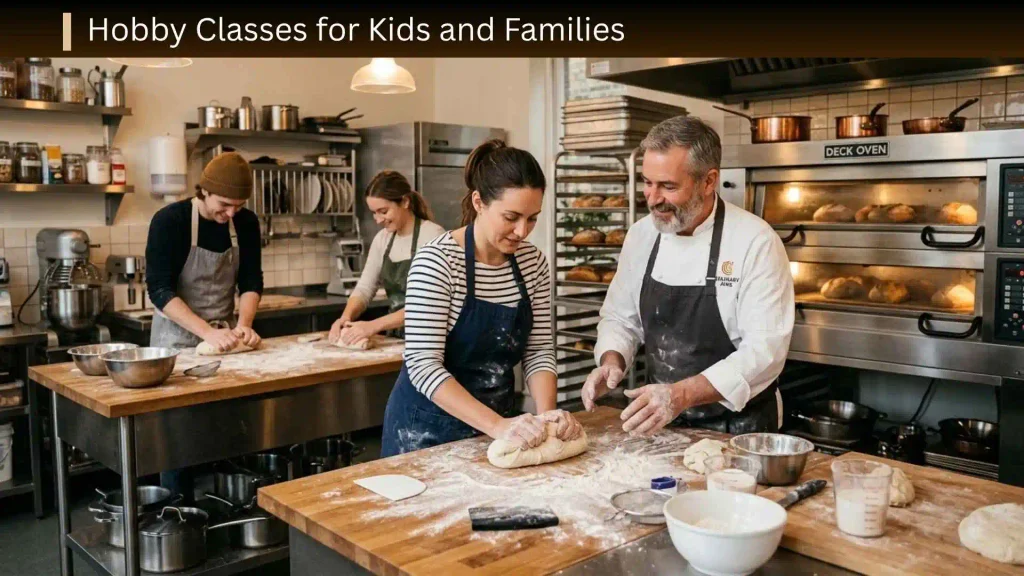
For children, the most important considerations are different.
Look for:
- Age-appropriate instruction
- Reasonable class length
- Appropriate supervision
- Clear safety policies
- Suitable equipment
- Small or manageable groups
- Activities matched to the child’s interests
Popular categories include art, cooking, technology, acting, dance, sports, gymnastics, martial arts, and other creative activities.
For families, look specifically for parent-child workshops or classes that allow adults and children to participate together. These can be more engaging than enrolling everyone in separate programs.
How to Choose a Hobby Class Based on Your Goal
Your goal can narrow the search dramatically.
If You Want to Be More Creative
Consider:
- Painting
- Drawing
- Ceramics
- Photography
- Jewelry making
- Sewing
- Printmaking
- Creative writing
If You Want a Social Hobby
Consider:
- Dance
- Cooking
- Group music
- Theater
- Craft workshops
- Photography groups
- Board-game or chess groups
If You Want a Hands-On Hobby
Consider:
- Pottery
- Woodworking
- Gardening
- Sewing
- Jewelry making
- Cooking
- DIY crafts
If You Want an Active Hobby
Consider:
- Dance
- Tennis
- Golf
- Swimming
- Martial arts
- Pickleball
- Hiking or outdoor skills
If You Want a Quiet Hobby
Consider:
- Drawing
- Painting
- Writing
- Calligraphy
- Knitting
- Crochet
- Photography
- Gardening
If You Want to Learn a Practical Skill
Consider:
- Cooking
- Sewing
- Woodworking
- Gardening
- Photography
- Basic home crafts
- Computer or creative-technology classes
Questions to Ask Before Booking
If the class description does not answer your questions, contact the instructor or organization before paying.
Useful questions include:
- Is this class suitable for a complete beginner?
- What exactly is included in the registration fee?
- Do I need to bring my own materials?
- Do I need special equipment?
- How many people are normally in the class?
- How long is each session?
- Is attendance required every week?
- Is there a make-up option if I miss a class?
- What should I wear or bring?
- Are there age restrictions?
- Is the facility accessible?
- Is there an intermediate class after this one?
For activities involving tools, heat, chemicals, water, heights, or other physical hazards, ask about the facility’s safety procedures and required protective equipment before participating.
Common Mistakes When Choosing a Local Hobby Class
Choosing Based Only on Price
A low price does not automatically mean good value. Compare the instruction, class size, materials, equipment, and total cost.
Starting at the Wrong Skill Level
An advanced class can be discouraging if you have never touched the equipment or learned the basic terminology.
Likewise, an experienced hobbyist may become bored in an introductory class.
Ignoring the Commute
A class can look perfect online but become difficult to maintain if getting there takes an hour each way.
For a recurring hobby, convenience matters.
Buying Expensive Equipment Too Early
If possible, try the hobby through a class before investing heavily in equipment.
This is one of the practical advantages of workshops that supply materials or tools: you can learn whether you actually enjoy the activity before building a home setup.
Focusing Only on the Finished Project
The final product is not the only measure of a good hobby class.
Ask yourself whether you enjoy the process of learning, practicing, experimenting, and improving. A hobby is much easier to sustain when the activity itself is enjoyable.
How to Turn a Class Into a Long-Term Hobby
A class introduces the activity, but regular practice is what turns it into a hobby.
After your first course:
- Practice the skill at home when possible.
- Keep your basic supplies organized.
- Take notes about techniques you want to improve.
- Join a local group related to the activity.
- Try a slightly more advanced class.
- Set small projects rather than waiting for inspiration.
- Attend open studio or practice sessions when available.
- Avoid buying advanced equipment until you know what you actually need.
The best next step depends on the hobby. A pottery student might move into open studio time, while a photographer may join a photo walk and a dancer may attend a regular social dance.
A Simple Way to Pick Your First Hobby Class
If you are overwhelmed by the number of choices, use this five-question filter:
1. What do I want from this hobby?
Choose creativity, social connection, movement, relaxation, learning, or making.
2. How much time can I realistically give it?
Decide whether you want a one-evening workshop, weekly class, or flexible activity.
3. What is my budget?
Include supplies and equipment rather than looking only at tuition.
4. How far am I willing to travel?
For a recurring class, choose a location you can realistically reach every week.
5. Do I want to try or commit?
Choose a workshop if you are experimenting and a multi-week course if you already know you want to develop the skill.
This simple filter can reduce dozens of search results to a handful of realistic options.
Frequently Asked Questions About Classes Near Me for Hobbies
What are the best hobby classes near me?
The best class depends on what you want from a hobby. Popular local options include art, pottery, cooking, photography, dance, music, sewing, crafts, gardening, woodworking, and recreational sports. Start with the activity that matches your interests, available time, and preferred level of social interaction.
Where can I find hobby classes near me?
Check local parks and recreation departments, community centers, libraries, community colleges, art centers, independent studios, hobby clubs, and local event directories. Searching with your city or ZIP code can make results much more relevant.
What is a good hobby class for a complete beginner?
One-time art, craft, cooking, pottery, or introductory dance workshops can be good starting points because they allow you to experience an activity without making a long-term commitment. Look for listings that explicitly state “beginner,” “introductory,” or “no experience required.”
Are hobby classes expensive?
They can range from free community programs to specialized private instruction. The total cost depends on the class, location, duration, materials, equipment, and facility fees. Always check what is included before comparing prices.
Can adults take hobby classes?
Yes. Many local programs are specifically designed for adults, including art, ceramics, cooking, photography, dance, music, crafts, gardening, and woodworking. Some programs offer separate beginner and advanced levels.
What hobby classes are good for meeting people?
Group activities with built-in interaction tend to work well, including dance, cooking, theater, group art workshops, photography groups, craft circles, and recreational sports. Look for classes where participants have opportunities to work together rather than simply watching an instructor.
Should I take a one-day workshop or a multi-week class?
Choose a one-day workshop if you want to test a new hobby or complete a specific project. Choose a multi-week course if you want structured practice, ongoing feedback, and progressive skill development.
How do I know if a hobby class is worth the money?
Look beyond the advertised price. Consider class size, instructor guidance, materials, equipment, duration, location, and what you will actually learn. A class that gives you hands-on practice and a clear path to continue learning may provide more value than a cheaper but less structured option.
Final Thoughts
Searching for classes near me is really a search for an activity that fits your life not simply the closest class on a map.
Start with the kind of experience you want: creative, social, active, relaxing, practical, or skill-focused. Then compare beginner level, schedule, location, total cost, materials, class size, and instructor support.
If you are unsure, start small. A single pottery workshop, cooking lesson, art session, dance class, or craft event can tell you much more about whether a hobby suits you than spending heavily on equipment before trying it. Once you find an activity you genuinely enjoy, look for a recurring class, local club, open studio, or community group that gives you a reason to keep practicing.
The right hobby class is the one you can realistically attend, enjoy while you are there, and continue exploring afterward.

I’m Ethan Mitchell, a curious writer who enjoys turning complex ideas into simple, useful information. At Cognivoora, I focus on creating clear and engaging content that readers can understand and apply in everyday life. I believe good writing should educate, answer real questions, and leave readers with something valuable to remember.
Books:
- The Everyday Mind
- Simple Ideas, Better Thinking