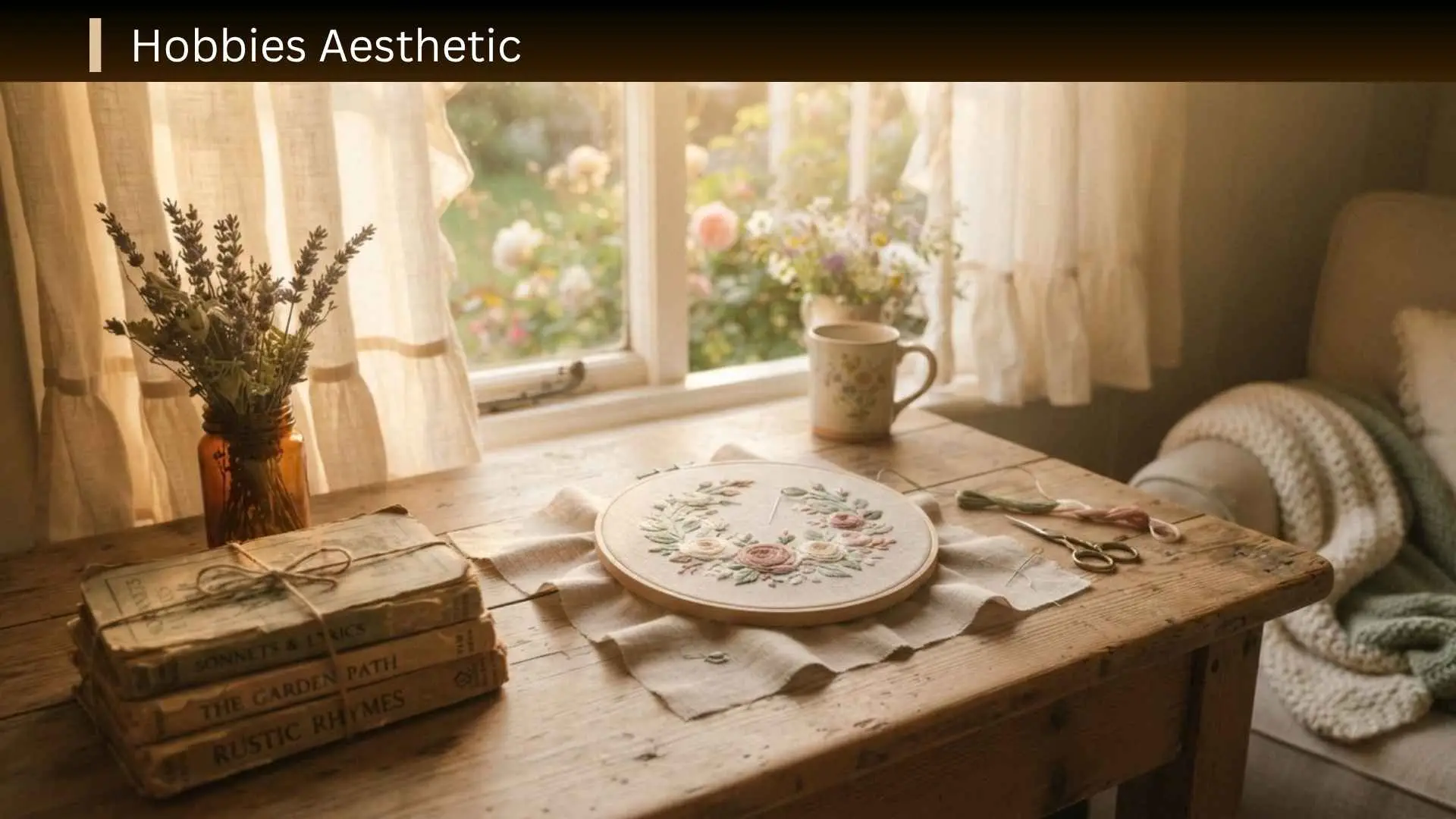
I believe a hobby can be more than something you do in your free time. It can become a small part of your personality, your style, and the way you express yourself. If you’re looking for aesthetic ideas that feel creative, calming, beautiful, or simply you, there are countless activities you can explore.
You don’t need expensive supplies or a picture-perfect setup to start. Whether you love journaling, photography, painting, reading, gardening, baking, crafting, or creating cozy DIY projects, you can turn almost any hobby into an aesthetic experience. The best part is choosing something that makes you genuinely happy while reflecting your personal taste.
In this guide, you’ll discover aesthetic hobby ideas for different interests, moods, and lifestyles—so you can find something that looks beautiful, feels meaningful, and inspires you to enjoy your free time in a whole new way.
What Are Aesthetic Hobbies?
Aesthetic hobbies are activities that combine personal enjoyment with a strong sense of visual style, atmosphere, creativity, or self-expression.
The word “aesthetic” does not mean that a hobby has to look perfect or follow a particular social-media trend. It can simply mean choosing an activity, environment, materials, or finished projects that appeal to your personal taste.
For example, someone who enjoys a cozy aesthetic might choose reading, baking, knitting, candle making, or watercolor painting. Someone interested in a vintage aesthetic might prefer film photography, collecting postcards, sewing, or visiting antique markets.
The most important part is that the hobby feels enjoyable and meaningful to you.
Best Aesthetic Hobbies to Try
There are countless ways to make your leisure time more creative and visually appealing. The following hobbies cover different interests, budgets, skill levels, and aesthetic styles.
1. Journaling
Journaling is one of the easiest aesthetic hobbies to start because you can customize almost every part of it.
You can use a notebook to write about your day, record goals, collect ideas, track habits, or simply express your thoughts. If you enjoy visual creativity, you can add stickers, washi tape, drawings, pressed flowers, photographs, colored pens, or decorative lettering.
Different journaling styles can create very different moods:
- Minimalist journaling
- Vintage journaling
- Nature journaling
- Scrapbook journaling
- Travel journaling
- Bullet journaling
- Gratitude journaling
- Art journaling
You only need a notebook and something to write with, although decorative supplies can make the activity more visually engaging.
2. Scrapbooking
Scrapbooking is ideal if you enjoy photographs, paper crafts, memories, and arranging small details.
You can create pages around holidays, birthdays, friendships, travel, family memories, seasons, or personal milestones. Combining photographs with paper, stickers, handwritten notes, tickets, labels, and decorative elements gives each page a personal character.
Scrapbooking can also become a relaxing way to preserve memories instead of leaving photographs stored digitally.
3. Photography
Photography is an excellent aesthetic hobby because almost anything can become a subject.
You can photograph architecture, nature, food, clothing, books, interiors, flowers, landscapes, or everyday moments. You do not necessarily need an expensive camera; a smartphone can be enough for learning composition, lighting, framing, and visual storytelling.
You can also explore different photography aesthetics, including:
- Film-inspired photography
- Street photography
- Nature photography
- Vintage photography
- Minimalist photography
- Moody photography
- Architectural photography
- Lifestyle photography
The hobby can gradually develop from taking casual pictures into learning more advanced photographic techniques.
4. Painting
Painting offers a broad creative outlet and works with almost any aesthetic.
Watercolor is particularly appealing if you like soft, delicate artwork, while acrylics can be useful for bold colors and decorative projects. Gouache offers another option for creating illustrations and stylized artwork.
You could paint:
- Flowers
- Landscapes
- Buildings
- Animals
- Abstract designs
- Food illustrations
- Small decorative objects
- Greeting cards
The goal does not have to be creating professional artwork. Painting can simply be a way to experiment with color and creativity.
5. Drawing and Sketching
Drawing is another accessible hobby that requires relatively little equipment.
A pencil and sketchbook are enough to begin. As your skills develop, you can explore colored pencils, charcoal, ink, markers, or digital drawing.
Aesthetic drawing ideas include botanical illustrations, fashion sketches, architectural sketches, portraits, cozy interiors, animals, and small everyday objects.
Keeping a sketchbook can also make your progress visible over time.
6. Reading
Reading can become an aesthetic hobby when you make the surrounding experience part of the activity.
A comfortable chair, a carefully arranged bookshelf, a reading journal, bookmarks, soft lighting, and a favorite beverage can create a relaxing reading environment.
You can also keep a reading log where you record:
- Books you want to read
- Books you have finished
- Favorite passages
- Characters you enjoyed
- Personal ratings
- Reading goals
- Short reflections
Reading works particularly well with cozy, dark academia, light academia, vintage, minimalist, and cottage-inspired aesthetics.
7. Book Collecting
If you love books as physical objects, collecting them can become a hobby of its own.
You might focus on first editions, vintage covers, illustrated books, particular authors, specific genres, or attractive editions. Some readers enjoy arranging their books by color, size, subject, or personal importance.
The important distinction is that collecting should be based on genuine interest rather than simply buying books for decoration.
8. Calligraphy and Hand Lettering
Calligraphy combines writing with visual design.
You can practice traditional lettering styles, modern calligraphy, decorative handwriting, or hand lettering. Once you become comfortable with basic techniques, you can use your skills for cards, journals, invitations, artwork, gift tags, and home decorations.
Beginners can start with ordinary pens and paper before investing in specialized calligraphy tools.
9. Flower Arranging
Flower arranging is a beautiful hobby for people who enjoy nature and interior decoration.
You can work with fresh flowers, dried flowers, or seasonal foliage. Learning how different colors, textures, heights, and shapes work together can turn a simple collection of flowers into an attractive arrangement.
It can also encourage you to pay closer attention to seasonal plants and natural textures.
10. Gardening
Gardening is an especially good choice if you want an aesthetic hobby that also gets you outdoors.
You do not need a large yard. Container gardening, balcony gardening, herb gardening, indoor plants, and small flower beds can all provide opportunities to grow something yourself.
Different gardening styles can create different visual moods:
- Cottage garden
- Herb garden
- Wildflower garden
- Indoor plant collection
- Balcony garden
- Minimalist garden
- Pollinator-friendly garden
Gardening also gives you an evolving project because plants change throughout the seasons.
11. Baking
Baking combines creativity, sensory enjoyment, and practical results.
Cookies, cakes, bread, pastries, pies, and decorated desserts can all become creative projects. If presentation interests you, you can experiment with decorating techniques, serving arrangements, seasonal themes, and handmade packaging.
Baking is particularly suitable for people who enjoy cozy, cottagecore, vintage, or seasonal aesthetics.
12. Cooking and Recipe Journaling
Cooking can become more creative when you treat recipes as a collection rather than simply a daily task.
Try keeping a recipe journal containing favorite meals, family recipes, seasonal dishes, cooking notes, and photographs. You can also create themed menus around seasons or special occasions.
This combines practical skill-building with writing, organization, photography, and design.
13. Crochet
Crochet is a relaxing fiber-art hobby that can produce useful and decorative objects.
Beginners can start with simple projects such as scarves, dishcloths, small bags, coasters, or basic accessories. As your skills improve, you can move toward blankets, clothing, amigurumi, and more complex patterns.
Crochet naturally fits cozy, cottagecore, handmade, vintage, and soft-color aesthetics.
14. Knitting
Knitting offers another creative way to work with yarn.
It can be especially satisfying if you enjoy making something that you can actually use. Scarves, hats, sweaters, blankets, socks, and small accessories are common project possibilities.
Like crochet, knitting can become both a relaxing pastime and a practical creative skill.
15. Embroidery
Embroidery involves decorating fabric with thread and stitches.
You can create floral designs, names, geometric patterns, animals, landscapes, or abstract artwork. Small embroidery projects can be displayed in hoops as wall art or incorporated into clothing and accessories.
Because designs can be extremely personal, embroidery works well for people who enjoy detailed, handmade aesthetics.
16. Sewing
Sewing can range from simple repairs to designing clothing and home decorations.
Beginners might start by learning basic stitches, hemming, buttons, or simple fabric projects. Eventually, you can explore clothing construction, tote bags, quilts, cushions, costumes, and other handmade items.
Sewing is particularly attractive if you enjoy vintage fashion, cottagecore, historical-inspired clothing, or handmade design.
17. Jewelry Making
Jewelry making allows you to create small wearable pieces that match your personal style.
Depending on the technique, you might work with beads, charms, wire, polymer clay, fabric, or other craft materials.
You can make:
- Bracelets
- Earrings
- Necklaces
- Rings
- Charm accessories
- Beaded pieces
- Personalized gifts
It is also a good hobby if you prefer relatively small projects that can be completed in a short amount of time.
18. Pottery and Clay Art
Working with clay offers a tactile alternative to drawing and painting.
Pottery can involve making cups, bowls, vases, plates, sculptures, or decorative objects. If access to a pottery studio is limited, air-dry or polymer clay can provide simpler ways to explore clay-based crafts at home.
Clay projects are especially appealing if you like earthy, handmade, rustic, minimalist, or organic aesthetics.
19. Candle Making
Candle making can combine creativity, fragrance, containers, labels, and presentation.
You can experiment with different vessel designs and decorative themes. Because candle making involves hot wax and other materials, beginners should follow the safety instructions for their specific supplies and equipment.
The hobby can be particularly appealing to people who enjoy cozy home environments.
20. Pressed Flower Art
Pressed flower art turns natural materials into decorative pieces.
Flowers and leaves can be pressed and incorporated into bookmarks, cards, framed artwork, journal pages, and other crafts.
This hobby is especially suitable for people who enjoy botanical, vintage, romantic, nature-inspired, and cottage aesthetics.
21. Vintage and Thrift Shopping
For people who enjoy discovering unusual objects and clothing, vintage and thrift shopping can become an exploratory hobby.
Instead of shopping simply to buy more things, you can develop an eye for particular periods, materials, patterns, furniture styles, books, artwork, or clothing.
You can also make the hobby more focused by choosing a theme, such as:
- Vintage fashion
- Retro home decor
- Old books
- Classic kitchenware
- Vintage postcards
- Antique-inspired accessories
22. Interior Decorating
If you enjoy creating beautiful spaces, interior decorating can turn your home into an ongoing creative project.
Start by identifying the atmosphere you enjoy rather than copying a specific trend. You might prefer minimalist, rustic, vintage, cozy, colorful, botanical, or modern surroundings.
Small changes such as rearranging furniture, displaying books, organizing collections, adding artwork, or changing textiles can have a noticeable visual effect without requiring a complete room makeover.
23. Nature Sketching
Nature sketching combines drawing with outdoor observation.
You can take a sketchbook to a park, garden, hiking trail, or other outdoor setting and draw plants, trees, insects, landscapes, buildings, or objects that catch your attention.
The purpose does not have to be scientific accuracy. It can simply be about slowing down and observing your surroundings carefully.
24. Creative Writing
Creative writing is an aesthetic hobby for people who enjoy words, imagination, storytelling, and self-expression.
You can write short stories, poetry, fictional characters, personal essays, descriptive scenes, or creative journal entries.
Creating a particular writing environment can also make the hobby more enjoyable. A favorite notebook, quiet room, music, books, or a specific writing ritual can help establish an atmosphere that makes you want to write.
25. Making Mood Boards
Mood boarding is a simple way to explore your visual interests.
You can create physical mood boards using magazine pages, photographs, printed images, paper samples, colors, typography, and handwritten notes. Digital mood boards can also be created using design or image-collection tools.
Mood boards can represent:
- A room you want to decorate
- A future trip
- A fashion style
- A creative project
- Seasonal inspiration
- A personal color palette
- A dream workspace
This hobby is particularly useful if you enjoy collecting visual ideas but are not sure how to turn them into a larger creative project.
Aesthetic Hobby Ideas by Style
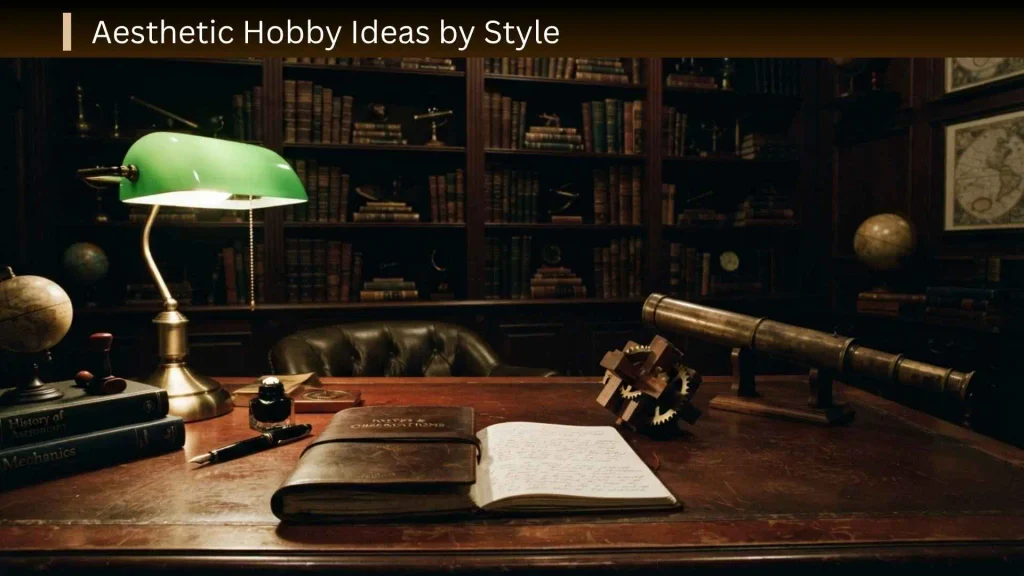
Different hobbies naturally fit different aesthetic preferences. However, you do not have to follow these categories strictly.
| Aesthetic style | Hobbies to explore |
| Cottagecore | Gardening, baking, crochet, embroidery, flower arranging |
| Dark academia | Reading, creative writing, calligraphy, photography, sketching |
| Light academia | Reading, journaling, drawing, photography, classical-inspired crafts |
| Vintage | Film photography, sewing, scrapbooking, collecting, calligraphy |
| Minimalist | Journaling, sketching, photography, reading, pottery |
| Nature-inspired | Gardening, nature sketching, photography, pressed flowers |
| Cozy | Baking, reading, knitting, crochet, journaling |
| Romantic | Flower arranging, poetry, painting, scrapbooking, jewelry making |
| Handmade | Crochet, sewing, pottery, embroidery, woodworking |
| Artistic | Painting, drawing, photography, collage, creative writing |
How to Choose the Right Aesthetic Hobby
Choosing a hobby becomes easier when you consider more than appearance.
Think About What You Naturally Enjoy
Ask yourself what you already spend time doing.
If you love books, reading or book journaling may feel natural. If you constantly take pictures, photography could be a better choice. If you like making things with your hands, crochet, clay, sewing, or jewelry making may suit you better.
The best hobby is usually one that matches an existing interest.
Consider Your Available Space
Some hobbies require very little space, while others need a dedicated work area.
Journaling, reading, drawing, and calligraphy can fit comfortably into a small space. Gardening, pottery, sewing, and larger craft projects may require more room or specialized equipment.
Consider Your Budget
You do not need to spend a lot of money to have an aesthetic hobby.
Low-cost options include:
- Sketching
- Writing
- Reading
- Nature walks
- Photography with a smartphone
- Journaling
- Mood boarding
- Learning calligraphy with basic materials
Start with what you already have and expand your supplies only when you know you genuinely enjoy the activity.
Decide How Much Time You Have
Some hobbies work well in short sessions.
For example, you can journal for 10 minutes, sketch for 20 minutes, or read a few pages before bed. Other projects, such as sewing a garment or completing a large painting, may require longer uninterrupted periods.
Choose something that fits your actual routine rather than an idealized schedule.
How to Make Any Hobby More Aesthetic
You do not need to choose a hobby specifically because it is considered aesthetic. Almost any activity can become visually appealing when you personalize the experience.
Create a Dedicated Hobby Space
Even a small corner of a desk can become a creative area.
Keep your most-used supplies accessible and organize them in a way that makes you want to use them. A tidy workspace can also make it easier to return to the hobby regularly.
Choose Materials You Enjoy Using
The feel, appearance, and functionality of your materials can influence how enjoyable the hobby becomes.
For example, a person who enjoys journaling might prefer a particular paper texture, pen style, or notebook format. Someone who paints might enjoy experimenting with different paper surfaces and brushes.
Develop a Personal Color Palette
You can choose a small group of colors that repeatedly appear in your projects.
This can create visual consistency without forcing you to follow a particular trend.
Document Your Progress
Photographing finished projects can make your hobby feel like an evolving creative collection.
You can keep photographs in a digital folder, journal, scrapbook, or private album. Looking back at older projects can also show how your skills and preferences have changed.
Aesthetic Hobbies That Are Easy for Beginners
If you are completely new to creative hobbies, start with activities that have a low barrier to entry.
Good beginner options include:
- Journaling
- Reading
- Sketching
- Smartphone photography
- Baking
- Gardening with a few plants
- Collage making
- Hand lettering
- Pressed flower crafts
- Creative writing
These hobbies allow you to experiment before committing to expensive equipment or extensive supplies.
Aesthetic Hobbies for Adults
Adults often have limited free time, so hobbies that can be paused and resumed easily can be especially practical.
Reading, journaling, photography, gardening, baking, painting, knitting, crochet, and creative writing can all be adapted to different schedules.
The key is not to turn a relaxing hobby into another obligation. A hobby should provide enjoyment rather than create unnecessary pressure to produce something perfect.
Aesthetic Hobbies for Teens
Teenagers can explore a wide range of inexpensive creative hobbies.
Journaling, photography, drawing, reading, scrapbooking, friendship-bracelet making, baking, creative writing, crochet, and mood boarding are accessible choices.
A smartphone can also be useful for documenting creative projects, photographing nature, or creating visual inspiration collections.
Aesthetic Hobbies for Introverts
If you prefer quiet activities, consider hobbies that can be practiced independently.
Some good options include:
- Reading
- Writing
- Painting
- Drawing
- Journaling
- Crochet
- Knitting
- Embroidery
- Photography
- Gardening
- Baking
- Calligraphy
These activities can be enjoyed alone while still providing opportunities for creativity and personal expression.
Aesthetic Hobbies You Can Do at Home
Many aesthetic hobbies require little or no travel.
At-home options include:
- Journaling
- Reading
- Painting
- Drawing
- Baking
- Crochet
- Knitting
- Embroidery
- Sewing
- Jewelry making
- Scrapbooking
- Creative writing
- Mood boarding
- Indoor gardening
If you have limited space, prioritize hobbies with compact supplies and projects that can be stored easily.
Low Cost Aesthetic Hobbies
If budget is your main concern, you can start with activities that use materials you already own.
Nearly Free Options
- Walking and nature observation
- Creative writing
- Smartphone photography
- Reading books you already own
- Sketching with existing pens or pencils
- Rearranging your room
- Making digital mood boards
- Nature journaling
Affordable Craft Options
- Journaling
- Collage
- Hand lettering
- Pressed flower art
- Basic embroidery
- Simple crochet
- Basic baking
The goal should be to explore an interest before investing heavily in supplies.
Why Aesthetic Hobbies Can Be Enjoyable
The appeal of aesthetic hobbies often comes from the combination of activity and atmosphere.
A hobby can give you something engaging to do while also allowing you to create an environment that feels personal. Choosing colors, materials, objects, music, surroundings, or routines can make ordinary free time feel more intentional.
However, aesthetics should support the hobby rather than replace it. A beautiful notebook is not useful if you never write in it, and expensive art supplies cannot substitute for practicing art.
The most satisfying aesthetic hobby is one you genuinely enjoy doing.
Frequently Asked Questions
What is the most aesthetic hobby?
There is no single most aesthetic hobby because aesthetics are subjective. Popular choices include journaling, photography, painting, reading, gardening, crochet, baking, flower arranging, calligraphy, and scrapbooking.
What are some aesthetic hobbies for girls?
Anyone can enjoy any hobby, regardless of gender. Popular visually creative choices include journaling, photography, painting, reading, baking, gardening, crochet, embroidery, jewelry making, flower arranging, and scrapbooking.
What is a good aesthetic hobby to start at home?
Journaling, drawing, reading, photography, baking, creative writing, crochet, mood boarding, and indoor gardening are all practical starting points for home.
What is the cheapest aesthetic hobby?
Creative writing, nature walks, reading books you already own, smartphone photography, sketching with existing supplies, and rearranging your personal space can cost little or nothing to begin with.
Can a hobby be aesthetic without being creative?
Yes. Reading, gardening, collecting, walking, cooking, and photography can all have an aesthetic element even if you are not creating traditional artwork.
How do I find my hobby aesthetic?
Start by identifying the colors, environments, subjects, materials, and activities you naturally enjoy. Then experiment with several hobbies rather than trying to choose a perfect aesthetic immediately. Your personal style may develop naturally as you discover what you enjoy.
Are aesthetic hobbies only about social media trends?
No. An aesthetic hobby is simply an activity that you find visually appealing, meaningful, or enjoyable. Social-media trends may influence some styles, but you do not need to follow them to enjoy your hobby.
Conclusion
The best hobby aesthetic is ultimately the one that makes you want to spend time creating, learning, exploring, or relaxing. Whether you prefer the cozy atmosphere of reading and baking, the natural beauty of gardening and flower arranging, or the creative satisfaction of painting, crochet, photography, and journaling, there is plenty of room to develop a hobby around your personal style.
Start small. Choose one activity that genuinely interests you, use the supplies you already have when possible, and give yourself permission to experiment. Your aesthetic does not need to be perfect or follow a trend. Over time, the activities you enjoy, the projects you create, and the spaces you build around them will naturally become part of your own personal aesthetic.

I’m James Anderson, a dedicated writer and lifelong learner who enjoys researching topics and explaining them in a practical way. Through my work at Cognivoora, I aim to give readers reliable, easy-to-follow information that helps them learn something new. I always try to keep my writing natural, useful, and focused on the questions readers actually have.
Books:
- A Practical Guide to Better Thinking
- Questions Worth Asking