
I believe the right hobby can add more to your life than just a way to pass the time. It can help you learn something new, stay active, get creative, meet people, or simply give you a break from the same daily routine. If you’re looking for the best hobbies for men, you have plenty of options even if you’re not sure what interests you yet.
You don’t need to be naturally talented or have hours of free time to start. Whether you want an exciting outdoor activity, a relaxing hobby at home, a creative skill, or something you can enjoy with friends, you can find an option that fits your personality and lifestyle. In this guide, I’ll help you explore different hobbies so you can discover something that feels genuinely fun, rewarding, and worth your time.
Best Hobbies for Men(Quick Answer)
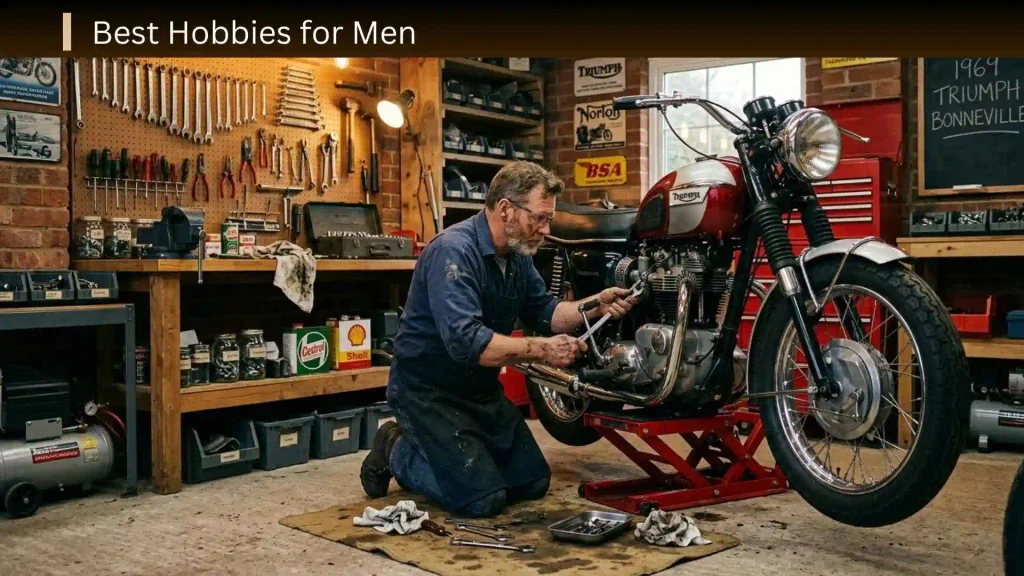
Some of the strongest all-around choices are hiking, strength training, woodworking, photography, cooking, fishing, cycling, gardening, golf, playing a musical instrument, home brewing, coding, reading, camping, drawing, automotive restoration, woodworking, chess, running, and volunteering.
The best choice depends on what you want from your free time:
- For fitness: Running, cycling, strength training, hiking
- For relaxation: Fishing, gardening, reading, photography
- For creativity: Woodworking, drawing, music, cooking
- For practical skills: Home improvement, woodworking, cooking, automotive work
- For socializing: Golf, pickleball, recreational sports, volunteering
- For intellectual stimulation: Chess, reading, coding, astronomy
- For outdoor adventure: Camping, hiking, fishing, kayaking
- For affordable entertainment: Reading, drawing, running, gardening, chess
Best Hobbies for Men at a Glance
| Hobby | Difficulty | Starting Cost | Time Commitment | Where | Best For |
| Hiking | Easy | Low | Moderate | Outdoor | Adventure and fitness |
| Strength Training | Moderate | Low–High | Moderate | Both | Fitness and progression |
| Photography | Moderate | Moderate–High | Flexible | Both | Creativity and exploration |
| Cooking | Easy–Moderate | Low–Moderate | Flexible | Indoor | Practical creativity |
| Woodworking | Moderate | Moderate–High | Moderate | Indoor/Outdoor | Making things |
| Fishing | Easy–Moderate | Moderate | Moderate | Outdoor | Quiet recreation |
| Cycling | Moderate | Moderate–High | Moderate–High | Outdoor | Fitness and exploration |
| Gardening | Easy | Low–Moderate | Low–Moderate | Outdoor | Relaxation and hands-on work |
| Golf | Moderate | Moderate–High | High | Outdoor | Recreation and socializing |
| Reading | Easy | Low | Flexible | Indoor | Learning and relaxation |
| Playing an Instrument | Moderate | Low–High | Moderate | Indoor | Music and creativity |
| Camping | Moderate | Moderate | Occasional | Outdoor | Adventure |
| Drawing | Easy–Moderate | Low | Flexible | Indoor | Artistic expression |
| Coding | Moderate | Low | Flexible | Indoor | Technology and problem-solving |
| Chess | Moderate | Low | Flexible | Both | Strategy |
| Home Improvement | Moderate | Moderate | Flexible | Indoor/Outdoor | Practical skills |
| Running | Easy–Moderate | Low | Moderate | Outdoor/Indoor | Fitness |
| Astronomy | Moderate | Low–High | Flexible | Outdoor | Science and curiosity |
| Pickleball | Easy–Moderate | Low–Moderate | Moderate | Both | Social activity |
| Volunteering | Easy | Low | Flexible | Both | Community involvement |
1. Hiking
Hiking combines movement, exploration, and time outdoors without requiring the specialized skills associated with many adventure sports. In the United States, trail options range from short urban and state-park walks to demanding mountain routes.
Why it stands out: You can make hiking as simple or challenging as you want. A beginner can start with a local trail and gradually work toward longer or more technical routes.
Best for: Men who want an active outdoor hobby with relatively little equipment.
What you need: Comfortable footwear, water, weather-appropriate clothing, navigation basics, and appropriate supplies for the length and difficulty of the trail.
Beginner tip: Choose a trail that is comfortably within your current ability rather than selecting one based solely on distance or popularity.
2. Strength Training
Strength training is a hobby built around measurable progress. You can train with barbells, dumbbells, machines, resistance bands, or bodyweight exercises, making it adaptable to a commercial gym or home setup.
The appeal is partly the ability to establish concrete goals: learning a movement, improving technique, increasing resistance, or following a consistent training program.
Best for: People who enjoy structure, progression, and physical challenges.
Cost: It can range from inexpensive bodyweight workouts to a substantial home gym or ongoing gym membership.
Beginner tip: Learn basic movement technique before worrying about lifting heavy. A sustainable routine is more useful than an ambitious program you cannot maintain.
3. Photography
Photography turns ordinary outings into opportunities to notice details, light, architecture, landscapes, wildlife, or people. You can begin with a smartphone and eventually move to a dedicated camera if you become interested in lenses, manual exposure, or specialized photography.
Areas to explore include:
- Landscape photography
- Street photography
- Wildlife photography
- Portrait photography
- Sports photography
- Architecture photography
- Macro photography
- Night photography
Best for: Creative people who enjoy both technology and observation.
Beginner tip: Learn composition and lighting before spending heavily on equipment. Better gear cannot compensate for a lack of understanding about how an image is constructed.
4. Cooking

Cooking is one of the rare hobbies that produces something useful every time you practice. It can also become a long-term skill-building project as you move from basic meals to regional cuisines, baking, grilling, sauces, fermentation, or advanced techniques.
Instead of trying to master everything at once, choose a narrow challenge. You might learn five reliable dinners, practice knife skills, explore Mexican cuisine, perfect homemade pizza, or learn to cook inexpensive meals well.
Best for: Anyone who wants a creative hobby with an immediate practical payoff.
Starting cost: Relatively low if you already have basic kitchen equipment.
Beginner tip: Learn how heat, seasoning, texture, and timing affect food rather than relying exclusively on recipes.
5. Woodworking
Woodworking appeals to people who enjoy building tangible objects. Projects can range from simple shelves and boxes to furniture, cabinetry, carving, and detailed joinery.
Unlike many digital hobbies, woodworking leaves you with a physical result that can be used in your home or given as a gift.
Best for: Hands-on learners who enjoy tools and making things.
What you need: The equipment depends heavily on the type of woodworking you want to do. A beginner does not need a fully equipped workshop.
Safety: Learn correct tool operation, use appropriate eye and hearing protection, control dust, and follow the manufacturer’s instructions for power tools.
Beginner tip: Start with a small project that teaches one or two techniques rather than buying equipment for projects you have not yet learned to make.
6. Fishing
Fishing offers a slower pace than many outdoor activities. Part of the appeal is the process: choosing a location, understanding conditions, preparing tackle, learning how fish behave, and waiting for an opportunity.
It can also become a technical hobby. Anglers may eventually specialize in particular species, freshwater or saltwater fishing, fly fishing, lure selection, or different environments.
Best for: Men who enjoy the outdoors and prefer a patient, quieter activity.
Cost: Equipment ranges from relatively inexpensive beginner setups to specialized gear.
Beginner tip: Learn local regulations, licensing requirements, access rules, and species-specific restrictions before fishing.
7. Cycling
Cycling can be a fitness hobby, transportation hobby, social activity, or exploration hobby depending on how you approach it.
Possible directions include:
- Road cycling
- Mountain biking
- Gravel riding
- Bicycle touring
- Recreational cycling
- Commuting
The type of bicycle and equipment you need depends on your chosen style, so it is worth deciding where you actually intend to ride before purchasing expensive gear.
Best for: People who want an active hobby that can also take them farther from home.
Beginner tip: Prioritize a correctly fitted bicycle and essential safety equipment over immediately buying high-end components.
8. Gardening
Gardening is an accessible hands-on hobby that can be scaled to the space available. A backyard is not essential; containers, raised beds, patios, and balconies can support many types of plants.
You can approach gardening as:
- Vegetable growing
- Herb gardening
- Flower gardening
- Native-plant gardening
- Container gardening
- Indoor plant care
- Landscaping
Best for: People who enjoy working with their hands but prefer a slower pace.
Beginner tip: Start with a small number of plants suited to your local conditions. Managing five healthy plants is a better introduction than creating a large garden you cannot maintain.
9. Golf
Golf combines physical movement, technical practice, concentration, and social interaction. Unlike many sports, it can remain a recreational pursuit for a wide range of ages and abilities.
There are several ways to enjoy it without immediately committing to full rounds: driving ranges, putting practice, lessons, and shorter courses can all provide entry points.
Best for: Men who want a social hobby with a substantial skill-development component.
Beginner tip: Take a few introductory lessons or learn basic fundamentals before buying a large collection of clubs.
10. Reading
Reading is inexpensive, portable, and remarkably flexible. A person who dislikes fiction may still enjoy biographies, history, science, business, philosophy, travel writing, essays, or technical books.
You can also turn reading into a more active hobby by keeping notes, joining a book club, comparing different authors’ perspectives, or studying one subject systematically.
Best for: Anyone who wants an intellectually engaging hobby that requires little equipment.
Beginner tip: Stop forcing yourself through books you genuinely dislike. Finding subjects that hold your attention is more useful than treating reading as an obligation.
11. Playing a Musical Instrument
Learning an instrument gives you a clear progression from basic coordination to increasingly sophisticated skills. Guitar, piano, drums, bass, violin, keyboard, harmonica, and other instruments offer different learning experiences.
The important factor is regular practice rather than occasional marathon sessions.
Best for: Men who want a creative hobby with a measurable learning curve.
Beginner tip: Pick music you actually want to play. Motivation is easier to maintain when practice connects to songs or styles you enjoy.
12. Camping
Camping is more than sleeping outside. It can become a broad outdoor hobby involving trip planning, navigation, cooking outdoors, equipment selection, photography, fishing, hiking, and learning how to operate comfortably in different environments.
There is a significant difference between a developed campground and remote backcountry camping, so beginners should start at a level appropriate to their experience.
Best for: People who want occasional adventures rather than a hobby they must practice every day.
Beginner tip: A simple overnight trip at an established campground is often a better introduction than an ambitious remote trip.
13. Drawing
Drawing requires very little equipment but offers an enormous amount of room for improvement. You can focus on sketching, portraits, landscapes, illustration, architecture, cartoons, technical drawing, or digital art.
The hobby is particularly useful for people who like visual problem-solving because improvement involves learning to observe proportion, shape, perspective, value, and light.
Best for: Beginners seeking a creative hobby with a very low entry cost.
What you need: Paper and pencils are enough to begin.
Beginner tip: Draw regularly and study basic forms instead of judging your progress only by whether individual drawings look “good.”
14. Coding and Programming
Coding can be both a hobby and a serious technical skill. You can use it to create websites, automate repetitive tasks, build small games, analyze data, experiment with electronics, or develop personal projects.
You do not need to begin with a complicated software project. A small program that solves a real problem can teach more than copying a large tutorial project without understanding it.
Best for: Problem-solvers who enjoy computers and learning systems.
Starting cost: Potentially very low because many programming tools and learning resources are available without expensive equipment.
Beginner tip: Build small projects rather than spending months consuming tutorials without writing your own code.
15. Chess
Chess is a compact hobby with a deep learning curve. You can play casually with friends, study openings and endgames, solve tactical puzzles, or participate in organized competition.
The game is particularly appealing if you enjoy analyzing decisions and learning from mistakes.
Best for: Strategic thinkers and people who want an indoor hobby that can be played socially or independently.
Beginner tip: Learn basic principles and tactical patterns before attempting to memorize large numbers of opening variations.
16. Home Improvement
Home improvement turns everyday maintenance into an opportunity to learn useful skills. Depending on your interests, this might include painting, basic carpentry, installing fixtures, repairing furniture, improving storage, or maintaining parts of a home.
The hobby has a practical advantage: successful projects can improve the space where you live.
Best for: People who prefer useful, project-based hobbies.
Safety: Know when a project requires a licensed professional. Electrical, gas, structural, roofing, and other high-risk work may involve significant hazards and local requirements.
Beginner tip: Begin with cosmetic or low-risk projects that teach you how to measure, plan, prepare, and work carefully.
17. Running
Running is straightforward to begin but can become surprisingly sophisticated. Some runners focus on casual fitness, while others become interested in distance goals, race preparation, trail running, pacing, or structured training.
The hobby requires relatively little equipment compared with many sports, although properly fitting footwear is important.
Best for: People who like measurable goals and want an activity that can fit into a busy schedule.
Beginner tip: Increase training gradually rather than trying to match the pace or mileage of experienced runners.
18. Astronomy
Astronomy is a strong choice for anyone fascinated by space and science. You can begin by learning major constellations, tracking visible planets, observing the Moon, or using astronomy apps and guides.
A telescope can deepen the hobby, but owning one is not a prerequisite. Understanding what you can actually observe from your location is more valuable than buying equipment first.
Best for: Curious people who enjoy science, observation, and quiet nighttime activities.
Beginner tip: Spend time learning the night sky with your unaided eyes before investing in specialized equipment.
19. Pickleball
Pickleball combines elements of several racket and paddle sports and has become widely available across the United States. It can be played recreationally or competitively and is particularly well suited to people who enjoy activities with a social component.
Best for: Men looking for an active hobby that naturally creates opportunities to play with other people.
Beginner tip: Learn basic serving, positioning, and court etiquette before worrying about advanced tactics.
20. Automotive Work
Working on cars can range from basic maintenance and detailing to restoration, customization, diagnostics, or motorsport-related projects.
The hobby can teach mechanical reasoning because a vehicle is a system of interconnected components rather than a collection of isolated parts.
Best for: People who enjoy machines, tools, troubleshooting, and long-term projects.
Cost: Potentially moderate to very high depending on the vehicle and scope of the work.
Safety: Use proper lifting equipment and procedures, work in a well-ventilated area when necessary, and never compromise on safe support of a vehicle.
Beginner tip: Learn basic maintenance and identify the correct service information for your specific vehicle before attempting complex repairs.
21. Grilling and Outdoor Cooking
Outdoor cooking can develop into a hobby of its own rather than simply another way to prepare dinner. You can experiment with charcoal, gas, smokers, different cooking temperatures, sauces, rubs, vegetables, seafood, and regional barbecue traditions.
The most interesting part is often learning how different cooking methods affect texture and flavor.
Best for: People who enjoy food and entertaining but want a more focused challenge than everyday cooking.
Beginner tip: Master temperature control and a few basic techniques before experimenting with complicated recipes.
22. Collecting
Collecting works best when the subject genuinely interests you. Possible areas include coins, books, sports memorabilia, watches, vinyl records, cameras, maps, vintage tools, model vehicles, or other objects with personal or historical significance.
A good collection is not necessarily a large collection. Research, organization, preservation, and learning about the objects can be as enjoyable as acquiring them.
Best for: Detail-oriented people who enjoy history, research, categorization, and physical objects.
Beginner tip: Define what makes an item relevant to your collection before purchasing. This helps prevent the hobby from becoming uncontrolled accumulation.
23. Volunteering
Volunteering may not look like a traditional hobby, but it can become a meaningful regular activity built around a cause, skill, or community.
You might volunteer with environmental projects, animal organizations, food programs, community events, youth activities, museums, or organizations that need practical skills.
Best for: People who want their free time to have a direct community component.
Beginner tip: Choose a commitment you can realistically maintain. Consistent participation is generally more useful to an organization than agreeing to more hours than you can provide.
24. Model Building
Model building combines patience, precision, research, painting, assembly, and sometimes historical knowledge. Scale models can include aircraft, ships, cars, military vehicles, architecture, figures, and science-fiction subjects.
The hobby has a wide range of difficulty. A beginner can assemble a relatively simple kit, while experienced builders may spend substantial time on detailing and finishing.
Best for: Patient people who enjoy precise, small-scale projects.
Beginner tip: Choose a beginner-friendly kit and learn basic assembly and finishing techniques before attempting an extremely detailed project.
25. Learning a Language
Language learning is a long-term hobby with a clear practical purpose. It can connect to travel, family history, literature, films, music, cooking, or interest in another culture.
Progress becomes easier to maintain when the language is connected to activities you already enjoy rather than treated entirely as textbook study.
Best for: Lifelong learners and people interested in travel or other cultures.
Beginner tip: Combine several forms of practice—basic vocabulary, listening, reading, speaking, and writing—instead of relying on one method.
Best Hobbies for Men Based on Your Goal

The “best” hobby changes considerably depending on what you want to get out of it.
Best Hobbies for Men Who Want to Get Fit
Consider:
- Strength training
- Running
- Cycling
- Hiking
- Pickleball
- Golf
If motivation comes from measurable improvement, strength training and running offer particularly clear ways to track progress. If you dislike repetitive indoor workouts, hiking or cycling may provide more variety.
Best Hobbies for Men Who Want to Relax
Good options include:
- Fishing
- Gardening
- Reading
- Photography
- Drawing
- Astronomy
- Model building
Relaxation does not necessarily mean doing nothing. A hobby can be calming because it shifts attention toward a focused, low-pressure activity.
Best Creative Hobbies for Men
Try:
- Photography
- Cooking
- Woodworking
- Drawing
- Playing an instrument
- Model building
- Gardening
Choose based on the type of creativity you enjoy. Photography emphasizes observation, woodworking emphasizes construction, music emphasizes performance, and cooking combines experimentation with sensory judgment.
Best Hobbies for Men Who Want Practical Skills
If you want your hobby to produce skills you can use around the house or in everyday life, consider:
- Cooking
- Woodworking
- Home improvement
- Automotive work
- Gardening
- Coding
These hobbies reward project-based learning because you can immediately apply what you learn.
Best Social Hobbies for Men
If your biggest goal is meeting people or spending more time with others, consider:
- Golf
- Pickleball
- Recreational sports
- Volunteering
- Group hiking
- Chess
- Music groups
A social hobby has an important advantage over simply “trying to meet people”: the activity itself provides a reason to interact.
Best Hobbies for Men Who Prefer Solitary Activities
Some people recharge through independent activities. Good choices include:
- Reading
- Photography
- Drawing
- Coding
- Gardening
- Astronomy
- Fishing
- Woodworking
- Chess
- Model building
Solo does not have to mean isolated. Many of these hobbies have online communities, clubs, competitions, classes, or occasional group events if you eventually want more interaction.
Best Low Cost Hobbies for Men
You do not need an expensive hobby to make your free time more interesting. Several worthwhile hobbies can be started with equipment you already own or with inexpensive supplies.
Reading
Libraries, used bookstores, and digital borrowing options can make reading especially affordable.
Running
Once you have suitable footwear and basic clothing, running requires relatively little specialized equipment.
Drawing
A basic sketchbook and pencils are enough to practice.
Chess
A physical board is inexpensive, and digital play can make the hobby even more accessible.
Gardening
Starting with a few containers and inexpensive plants can provide an introduction without building a large garden.
Hiking
Local trails can provide a low-cost way to explore the outdoors, although longer or more remote trips require additional preparation and equipment.
Coding
A computer you already own may be enough to begin learning and building small projects.
Best Hobbies for Men With Busy Schedules
A good hobby does not have to consume an entire Saturday. If you have limited free time, choose something that can be started and stopped easily.
Good options include:
- Reading
- Drawing
- Chess
- Coding
- Strength training
- Running
- Cooking
- Gardening
- Photography
- Playing an instrument
The key distinction is between a hobby that requires a large uninterrupted block of time and one that can be practiced in 15–30 minute sessions.
For example, a full camping trip requires substantial planning, while practicing guitar, reading several pages, or completing a short drawing session can fit into an ordinary evening.
Best Outdoor Hobbies for Men
Outdoor hobbies can provide variety because the environment becomes part of the activity.
Consider:
- Hiking
- Fishing
- Camping
- Cycling
- Golf
- Gardening
- Running
- Astronomy
- Kayaking
- Wildlife photography
Your local climate, terrain, access to public land, and transportation options should influence your choice. An excellent hobby on paper may be impractical if reaching a suitable location requires several hours of travel every time.
Best Indoor Hobbies for Men
For hobbies that work well at home, consider:
- Cooking
- Reading
- Chess
- Drawing
- Coding
- Playing an instrument
- Woodworking
- Model building
- Photography and photo editing
- Collecting
Space matters, particularly for equipment-heavy hobbies. A small apartment may be perfectly suited to reading, music, drawing, or coding but less practical for large woodworking projects.
How to Choose the Right Hobby
Instead of asking which hobby is objectively the best, ask what you want your free time to accomplish.
1. Decide What You Are Missing
Do you want more:
- Physical activity?
- Creativity?
- Time outdoors?
- Intellectual challenge?
- Social interaction?
- Practical skills?
- Quiet time?
- A long-term project?
This immediately narrows the options.
2. Consider Your Available Time
A hobby that requires three hours of uninterrupted time may not work with your schedule. Look for activities that match the amount of time you realistically have.
3. Set a Starting Budget
Avoid buying an entire setup before discovering whether you enjoy the activity.
Start with the minimum equipment necessary, learn the basics, and upgrade when you understand what you actually need.
4. Consider Your Space
Think about where the hobby will happen.
A balcony may support container gardening. A small desk may support drawing or coding. A garage or dedicated workspace opens up possibilities for woodworking or automotive projects.
5. Decide Whether You Want People Involved
Some hobbies are naturally social, while others are better alone. You do not have to choose permanently, but knowing your preference helps you avoid an activity that feels like another obligation.
6. Choose a Hobby With a Natural Next Step
The strongest long-term hobbies often have layers.
For example:
Photography → composition → editing → specialized genres → advanced equipment
or
Cooking → basic techniques → cuisines → baking/grilling → recipe development
A hobby with room to grow can remain interesting long after the beginner stage.
How to Start a New Hobby Without Overspending
One of the most common mistakes is confusing buying equipment with learning a hobby.
A better approach is:
- Try before making a major purchase.
- Buy only essential beginner equipment.
- Learn one fundamental skill at a time.
- Complete a small project or milestone.
- Decide whether you actually enjoy the process.
- Upgrade equipment only when your current setup limits you.
For example, someone interested in photography does not necessarily need a professional camera immediately. Someone curious about woodworking does not need a complete workshop before making a first small project.
The hobby should come first; the gear should support it.
How to Turn a Hobby Into a Long Term Interest
Initial enthusiasm is easy. Building a sustainable hobby is harder.
A few strategies can help:
Create Small Goals
Instead of saying “I want to get good at photography,” set a concrete target such as learning exposure controls or completing a small photo project.
Make the Hobby Easy to Start
Keep your sketchbook accessible. Store your guitar where you can see it. Prepare your running clothes in advance. Organize your fishing equipment so preparation does not become a barrier.
Track Progress When It Helps
Some hobbies naturally benefit from tracking. Running distance, chess ratings, completed projects, books read, and musical pieces learned can provide useful feedback.
Avoid Turning Every Hobby Into a Performance Metric
Not every activity needs to become a competition. If gardening, fishing, photography, or reading is enjoyable without measurable achievement, let it remain that way.
Join a Community When You Want More Motivation
Clubs, classes, recreational leagues, workshops, online communities, and local events can add a social dimension to an otherwise solitary hobby.
Hobbies That Pair Well Together
You do not necessarily need one hobby. Pairing complementary activities can make your free time more varied.
| Primary Hobby | Complementary Hobby | Why They Work Together |
| Hiking | Photography | Outdoor exploration creates subjects to photograph |
| Cooking | Gardening | Home-grown ingredients can become cooking projects |
| Cycling | Camping | Cycling can become part of longer outdoor trips |
| Woodworking | Home improvement | Skills transfer between projects |
| Reading | Language learning | Books provide additional exposure to a language |
| Running | Hiking | Both involve outdoor movement but offer different experiences |
| Fishing | Camping | Both work naturally as outdoor trips |
| Astronomy | Photography | Night-sky observation can lead into astrophotography |
| Coding | Electronics | Software can be combined with physical projects |
| Golf | Fitness training | General conditioning can complement recreational play |
Common Mistakes When Choosing a Hobby
Choosing Based on What Looks Impressive
A hobby should fit your interests, not someone else’s idea of what you should be doing.
Buying Too Much Equipment
Expensive equipment can create financial pressure before you even know whether you enjoy the activity.
Picking Too Many Hobbies at Once
Trying ten new activities simultaneously often results in shallow participation in all of them. Start with one or two.
Expecting Immediate Skill
Many rewarding hobbies become more enjoyable as competence develops. Being a beginner is part of the process.
Choosing a Hobby That Does Not Fit Your Lifestyle
A hobby that requires extensive travel may not work for someone with very limited weekends. Likewise, a workshop-based hobby may be frustrating without adequate space.
Frequently Asked Questions About the Best Hobbies for Men
What is a good hobby for men who are beginners?
Good beginner choices include hiking, cooking, reading, drawing, gardening, running, photography, chess, and pickleball. They offer relatively accessible entry points while leaving room to develop more advanced skills.
What are the best hobbies for men at home?
Cooking, reading, drawing, coding, chess, playing an instrument, model building, collecting, and gardening in containers can all work well at home. The best option depends on your available space and interests.
What is the best hobby for a man who wants to stay active?
Running, cycling, hiking, strength training, golf, and pickleball are strong options. Choose based on whether you prefer solo exercise, structured training, outdoor exploration, or social competition.
What are some inexpensive hobbies for men?
Reading, drawing, running, chess, coding, hiking, and basic gardening can be started relatively inexpensively. Costs can increase as you pursue specialized equipment or advanced versions of these hobbies.
What are good hobbies for men who want to learn new skills?
Cooking, woodworking, coding, photography, playing an instrument, automotive work, language learning, and home improvement all offer substantial opportunities for skill development.
What are the best social hobbies for men?
Golf, pickleball, recreational sports, volunteering, group hiking, chess clubs, and music groups can make social interaction a natural part of the hobby.
What hobby is good for a man who wants something relaxing?
Fishing, gardening, reading, drawing, astronomy, photography, and model building can provide slower-paced alternatives to highly competitive or physically demanding activities.
How do I choose a hobby if I don’t know what I enjoy?
Start with the outcome you want rather than a specific hobby. If you want exercise, try hiking, running, cycling, or a sport. If you want creativity, experiment with cooking, photography, drawing, music, or woodworking. Give one option enough time to move beyond the initial beginner stage before deciding whether it suits you.
Conclusion
The best hobbies for men are not determined by age, occupation, or stereotypes. The right hobby is the one that fits the kind of time you want to have: active or quiet, social or solitary, practical or creative, structured or open-ended.
If you are unsure where to begin, choose one activity that matches your current lifestyle and try it with minimal equipment for a few weeks. You can always expand later. A hobby becomes valuable when it gives you a reason to keep learning, creating, exploring, moving, or simply enjoying your time away from everyday responsibilities.

I’m James Anderson, a dedicated writer and lifelong learner who enjoys researching topics and explaining them in a practical way. Through my work at Cognivoora, I aim to give readers reliable, easy-to-follow information that helps them learn something new. I always try to keep my writing natural, useful, and focused on the questions readers actually have.
Books:
- A Practical Guide to Better Thinking
- Questions Worth Asking