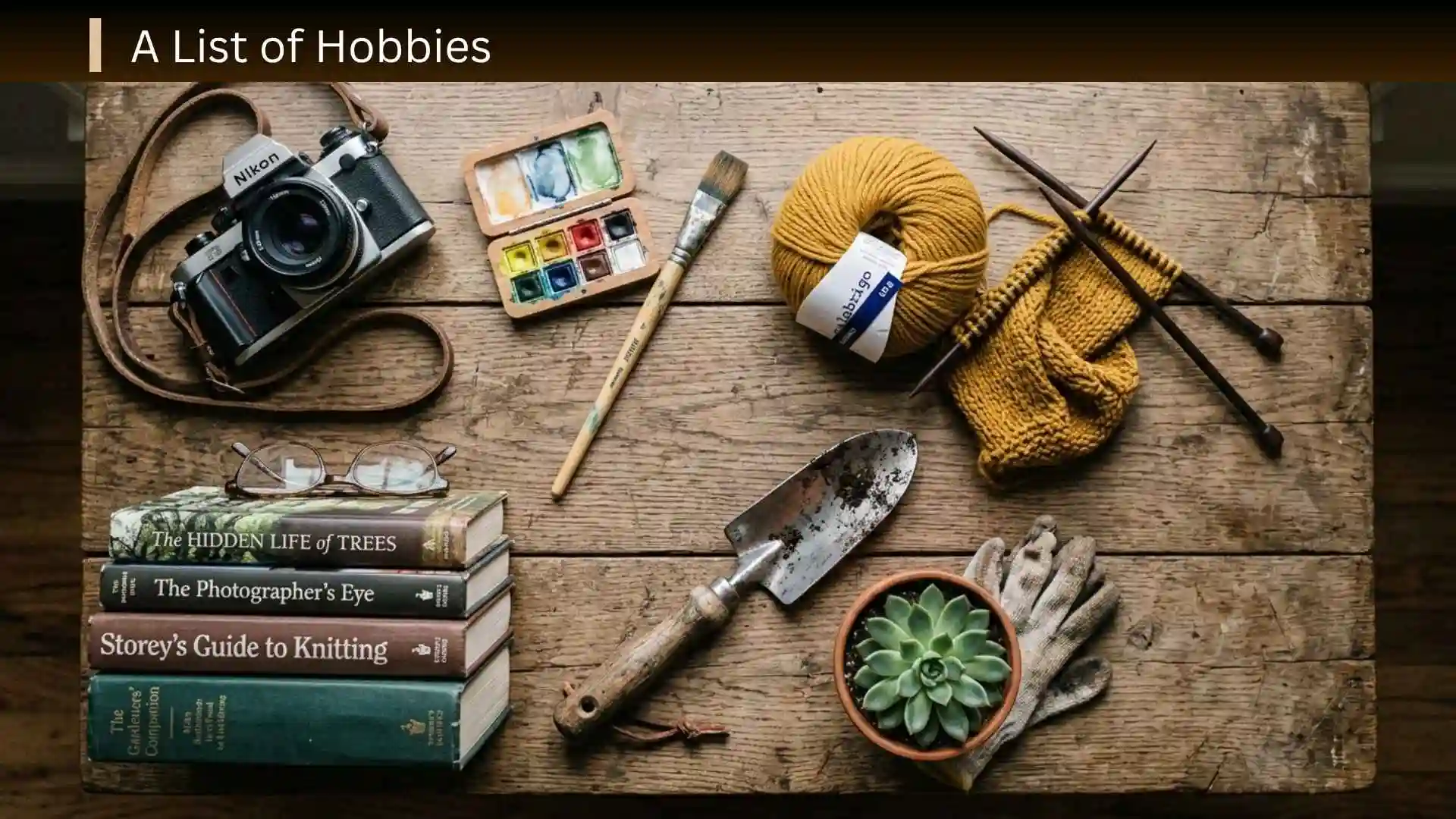
I believe the right hobby can add something special to your everyday life—whether you want to relax after a busy day, learn a useful skill, get creative, stay active, or simply try something different. But with so many possibilities, finding a hobby that genuinely feels right for you can be challenging.
That’s where this list of hobbies can help. You don’t need to be an expert, spend a lot of money, or have hours of free time to get started. You can explore creative, relaxing, social, outdoor, indoor, educational, and active hobbies and discover what matches your interests and lifestyle. You may even find a hobby you never thought you would enjoy.
As you explore these ideas, I encourage you to focus less on what seems popular and more on what makes you curious and excited to try. Whether you’re looking for a new way to spend your free time or hoping to discover a passion that stays with you for years, there’s likely an idea here worth exploring.
Quick List of Hobbies
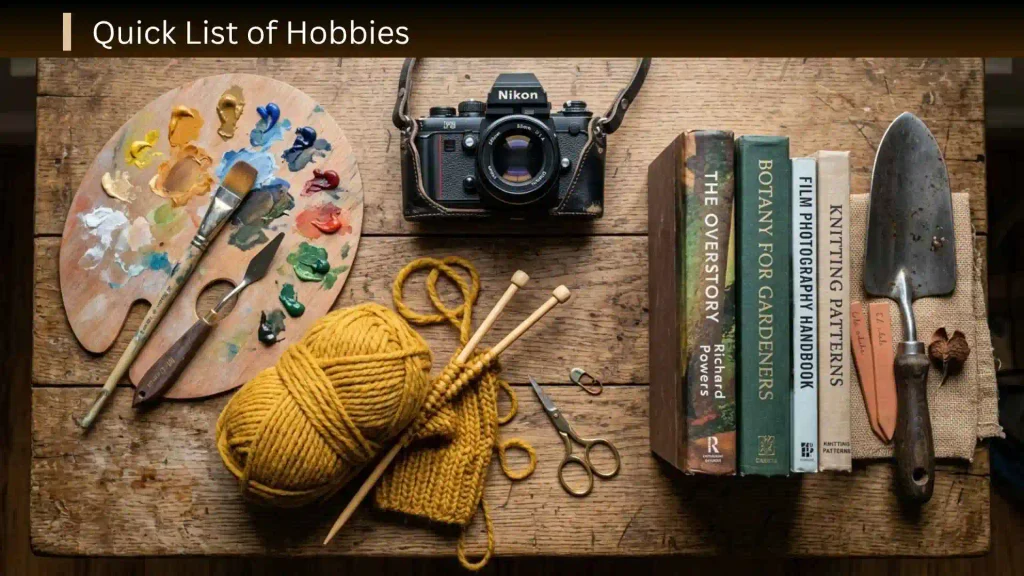
Here are some popular hobby ideas at a glance:
- Reading
- Writing
- Journaling
- Drawing
- Painting
- Photography
- Gardening
- Cooking
- Baking
- Hiking
- Cycling
- Swimming
- Running
- Birdwatching
- Fishing
- Camping
- Knitting
- Crocheting
- Sewing
- Woodworking
- Pottery
- Calligraphy
- Scrapbooking
- Playing a musical instrument
- Singing
- Dancing
- Chess
- Puzzles
- Learning a language
- Astronomy
- Geocaching
- Volunteering
- Yoga
- Meditation
- Home brewing
- Model building
- Origami
- Candle making
- Soap making
- Rock collecting
- Genealogy
- Bird photography
- Film making
- Podcasting
- Coding
- 3D printing
- Electronics
- Home improvement
- Interior decorating
- Skateboarding
- Kayaking
- Golf
- Tennis
- Pickleball
- Basketball
- Soccer
- Rock climbing
- Archery
- Running
- Travel
- Cooking international cuisines
- Coffee brewing
- Tea tasting
- Collecting coins
- Collecting stamps
- Collecting vinyl records
- Board games
- Card games
- LEGO building
- Coloring
- Floral arranging
- Bonsai
- Beekeeping
- Fermenting foods
- Fishing
- Skiing
- Snowboarding
- Surfing
- Scuba diving
- Roller skating
- Sewing
- Quilting
- Leathercraft
- Jewelry making
- Glass art
- Metalworking
- Calligraphy
- Digital art
- Graphic design
- Video editing
- Web design
- Creative writing
- Stand-up comedy
- Acting
- Photography
- Meditation
- Volunteering
- Nature observation
- Stargazing
The best hobby is not necessarily the most popular one. It is the activity you are most likely to enjoy and continue doing.
Creative Hobbies
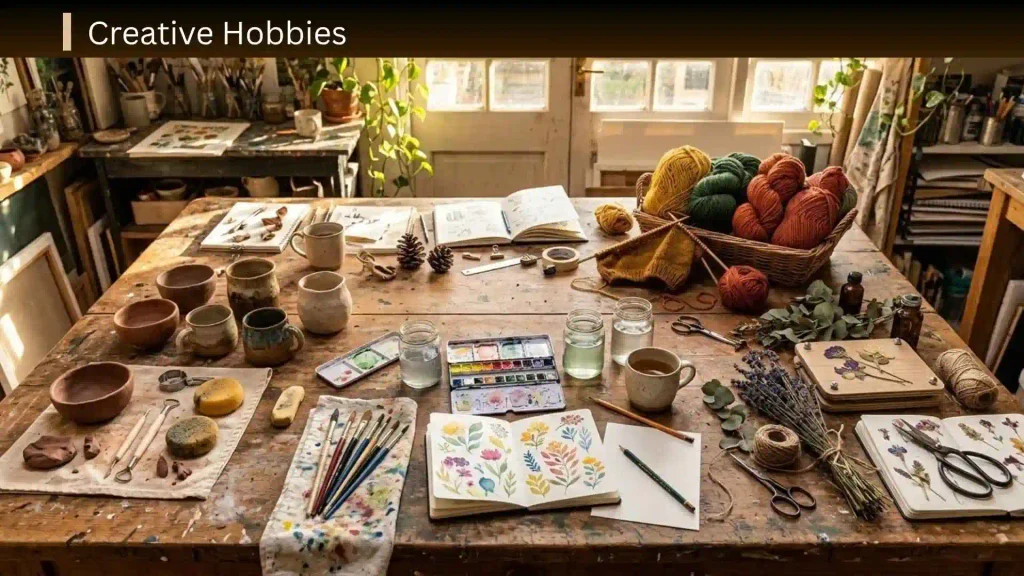
Creative hobbies are a strong choice if you like making, designing, writing, decorating, or expressing ideas.
Drawing
Drawing can range from casual sketching to detailed illustration. You can work with pencils, charcoal, ink, colored pencils, markers, or digital tools.
Best for: People who enjoy visual expression and want a hobby that requires little space.
Starting requirements: Paper and a pencil are enough to begin.
Difficulty: Easy to start; skill develops through practice.
Painting
Painting offers several directions, including watercolor, acrylic, oil, and gouache. Beginners can start with simple subjects such as landscapes, objects, or abstract designs.
Best for: Creative people who enjoy color and visual experimentation.
Cost: Low to moderate depending on the medium and equipment.
Creative Writing
Creative writing includes short stories, poetry, fiction, personal essays, scripts, and other forms of storytelling.
A useful way to begin is to choose one small project rather than trying to write an entire book. Writing regularly also helps you discover which formats and subjects you enjoy most.
Photography
Photography turns everyday surroundings, people, nature, architecture, food, or events into visual subjects.
You do not necessarily need an expensive camera. A smartphone can provide enough equipment to learn composition, lighting, perspective, and basic editing.
Related hobbies: Travel photography, wildlife photography, portrait photography, street photography, landscape photography, and photo editing.
Calligraphy and Hand Lettering
Calligraphy focuses on decorative handwriting, while hand lettering involves drawing letters as visual designs.
These hobbies work well for people interested in stationery, cards, invitations, journals, and decorative art.
Scrapbooking
Scrapbooking combines photographs, paper, captions, decorative elements, and memorabilia to preserve memories in a physical format.
It can be particularly appealing if you enjoy both organization and crafts.
Origami
Origami involves creating shapes by folding paper. It is inexpensive, portable, and suitable for short practice sessions.
Beginners can start with basic animals, boxes, flowers, and geometric forms before attempting more complex designs.
Digital Art
Digital art uses software and devices such as drawing tablets, computers, or tablets to create illustrations and designs.
It can lead naturally into related interests such as graphic design, animation, concept art, and photo manipulation.
Craft Hobbies
Craft hobbies are hands-on activities that result in something tangible.
Knitting
Knitting uses yarn and needles to create items such as scarves, hats, blankets, and garments.
The basic techniques can be learned fairly quickly, but advanced patterns require patience and practice.
Crocheting
Crocheting uses a hook rather than two knitting needles. It is commonly used for blankets, clothing, accessories, decorative objects, and stuffed figures.
It is portable, making it convenient for people who prefer hobbies they can work on in small sessions.
Sewing
Sewing can be as simple as repairing clothing or as involved as making garments from patterns.
It can become a practical household skill as well as a creative hobby.
Quilting
Quilting combines pieces of fabric into larger designs and usually involves stitching layers together.
It suits people who enjoy detailed patterns, fabric selection, and long-term projects.
Pottery
Pottery involves shaping clay into functional or decorative objects. Depending on the setting, you may work by hand or use a pottery wheel.
Because kilns and some equipment require specialized facilities, beginners may find a community studio or introductory class more practical than setting up a complete home workspace.
Woodworking
Woodworking involves cutting, shaping, joining, and finishing wood to create useful or decorative objects.
Projects can range from small shelves and boxes to furniture.
Important consideration: Tools can cause serious injuries when used improperly. Beginners should learn equipment-specific safety procedures and use appropriate protective equipment.
Jewelry Making
Jewelry making can include beadwork, wirework, metalwork, polymer clay, or other techniques.
It is particularly suitable for people who enjoy small-scale projects and detailed design.
Leathercraft
Leathercraft involves cutting, shaping, stitching, tooling, and finishing leather to make items such as wallets, belts, bags, and accessories.
It can be started with relatively small projects before moving into more specialized techniques.
Relaxing Hobbies
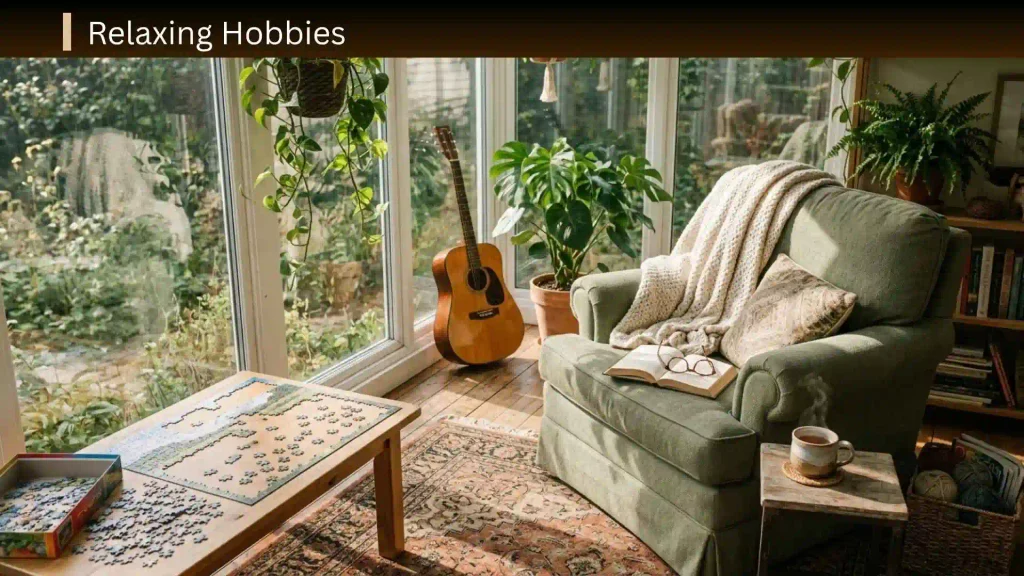
Some hobbies are attractive primarily because they provide a quiet activity and a break from screens or daily routines.
Reading
Reading is one of the most flexible hobbies because you can choose fiction, history, biographies, science, essays, mysteries, romance, fantasy, or almost any other subject.
It can be done almost anywhere and requires little equipment beyond a book or reading device.
Journaling
Journaling can involve recording daily events, writing observations, keeping a gratitude journal, planning goals, or simply putting thoughts on paper.
There is no single correct format, so it can be adapted to your personality and schedule.
Coloring
Adult coloring books provide a structured creative activity without requiring advanced drawing skills.
They are inexpensive, easy to store, and convenient for short periods of free time.
Puzzles
Jigsaw puzzles, crossword puzzles, logic puzzles, and number puzzles provide different kinds of mental engagement.
Choose the format based on whether you prefer visual problem-solving, words, numbers, or logic.
Meditation
Meditation can be practiced as a structured hobby centered on attention, breathing, awareness, or other contemplative techniques.
Beginners can start with short sessions rather than trying to maintain long periods immediately.
Gardening
Gardening combines routine care with growing plants and observing gradual changes over time. You do not need a large yard; container gardening can work in smaller spaces when conditions are suitable.
Good starting point: Choose a few plants appropriate for your available light, climate, and space rather than buying a large collection immediately.
Outdoor Hobbies
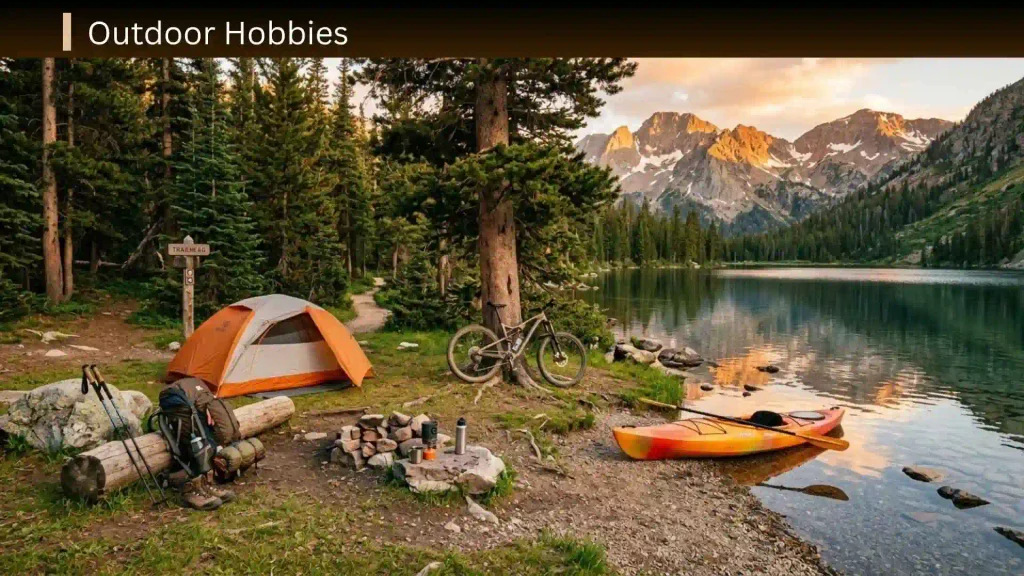
Outdoor hobbies are ideal if you want your free time to involve nature, movement, exploration, or fresh surroundings.
Hiking
Hiking ranges from short local trails to demanding backcountry routes.
Beginners should choose routes appropriate for their fitness, experience, weather conditions, and available daylight. Comfortable footwear, water, navigation, and weather-appropriate clothing become increasingly important as hikes become longer or more remote.
Camping
Camping can be as simple as spending a night at an established campground or as involved as planning extended trips.
Beginners can reduce complexity by starting at an accessible campground before attempting more remote trips.
Cycling
Cycling can be recreational, fitness-oriented, competitive, or transportation-focused.
Road cycling, mountain biking, gravel riding, and casual neighborhood riding offer distinctly different experiences.
Birdwatching
Birdwatching involves identifying and observing birds in parks, backyards, wetlands, forests, and other habitats.
A pair of binoculars and a field guide or identification app can make the hobby much easier to explore.
Fishing
Fishing combines outdoor recreation, patience, observation, and practical knowledge of local waters and regulations.
Rules concerning licenses, seasons, species, and fishing methods vary by location, so beginners should check the regulations applicable to where they plan to fish.
Stargazing
Stargazing can begin with nothing more than a dark location and an interest in the night sky.
A beginner does not need a telescope immediately. Learning major constellations, planets, and visible celestial events can provide a useful foundation before investing in equipment.
Geocaching
Geocaching combines outdoor exploration with GPS-based treasure hunting. Participants use coordinates to locate hidden containers or designated locations.
It can turn an ordinary walk into a small exploration challenge.
Active and Fitness Oriented Hobbies
These hobbies involve varying levels of physical activity. Choose activities appropriate to your current ability and gradually increase difficulty.
Running
Running requires relatively little equipment and can be done almost anywhere.
Beginners who are new to running may prefer alternating walking and running rather than immediately attempting long distances.
Swimming
Swimming provides a full-body form of exercise and can be practiced recreationally or competitively.
Access to a suitable pool or swimming area is the main practical consideration.
Yoga
Yoga combines physical postures with breathing and focused attention. Different styles can vary considerably in pace and physical demand.
A beginner class can help you learn basic movements and alignment.
Dancing
Dancing includes ballroom, salsa, hip-hop, swing, ballet, contemporary dance, line dancing, and many other styles.
It can be practiced alone through instruction or with partners and groups.
Tennis
Tennis develops skills involving movement, timing, coordination, and racket control.
Beginners can learn through lessons, recreational play, or practice with another beginner.
Pickleball
Pickleball uses a paddle, perforated plastic ball, and smaller court than traditional tennis.
It can be played recreationally or competitively and is often a social activity because games commonly involve doubles.
Golf
Golf combines technique, concentration, course strategy, and outdoor recreation.
It has a relatively high equipment and course-access barrier compared with hobbies such as running, although beginners can start with introductory lessons or practice facilities.
Skateboarding
Skateboarding involves balance, board control, coordination, and progressive skill development.
Beginners should use appropriate protective equipment and practice in suitable areas away from traffic.
Kayaking
Kayaking provides a way to explore lakes, rivers, and coastal environments.
Water conditions can change quickly, so beginners should learn basic water safety, understand local conditions, and use appropriate flotation equipment.
Intellectual Hobbies
If you enjoy learning, solving problems, researching topics, or developing knowledge, consider intellectually focused hobbies.
Chess
Chess is a strategy game involving planning, pattern recognition, calculation, and adaptation.
You can play against people in person or online and study openings, tactics, endgames, and famous games as your skills develop.
Learning a Language
Learning another language can become a long-term hobby with multiple ways to practice: reading, listening, writing, conversation, and cultural exploration.
Consistency generally matters more than trying to memorize large amounts of material in occasional sessions.
Genealogy
Genealogy involves researching family history using records, documents, photographs, family stories, and other historical sources.
A useful starting point is to document what you already know and identify sources for each new piece of information rather than relying solely on unsourced family trees.
Astronomy
Astronomy goes beyond casual stargazing and can become a serious learning hobby involving celestial objects, astrophysics, observation techniques, and amateur equipment.
You can approach it at whatever depth suits your interest.
History Research
History can become a hobby through books, documentaries, archives, museums, historical societies, and focused research into a particular period or place.
Choosing a narrow subject often makes independent research more manageable.
Puzzles and Logic Games
Sudoku, crosswords, logic grids, riddles, and other puzzles offer different forms of structured problem-solving.
The variety makes it easy to find a difficulty level that matches your preference.
Music Hobbies
Music-related hobbies can be expressive, social, technical, or performance-oriented.
Playing Guitar
The guitar is popular because it supports many musical styles and can be used for solo practice or group playing.
Beginners can focus first on basic chords, rhythm, simple songs, and consistent practice.
Piano
Learning piano develops familiarity with notes, rhythm, chords, and musical structure.
Digital keyboards can be a practical option when acoustic-piano space is unavailable.
Singing
Singing requires no instrument and can be practiced privately, in a choir, with lessons, or socially.
Working on breathing, pitch, rhythm, and vocal technique can make practice more productive.
Drumming
Drumming is a rhythm-focused hobby with options ranging from acoustic drum kits to electronic drums and practice pads.
Noise and available space are important considerations at home.
DJing
DJing combines music selection, beat matching, transitions, equipment, and sometimes live performance.
It can appeal to people interested in both music and technology.
Technology and Digital Hobbies
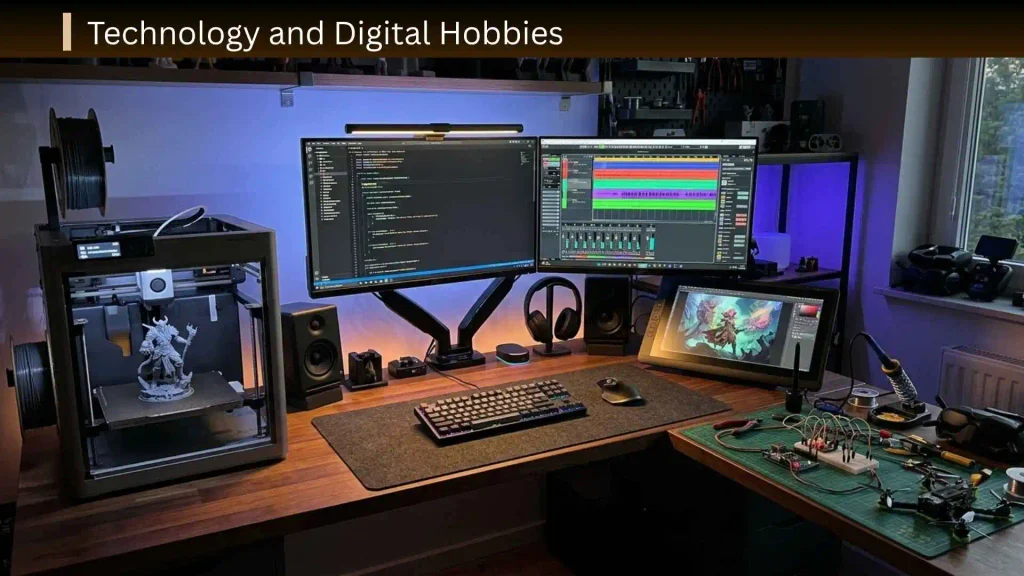
Technology hobbies can be useful if you enjoy computers, problem-solving, design, or experimentation.
Coding
Coding involves creating instructions that computers can execute. You can learn through projects such as simple websites, games, automation tools, or small applications.
A project-based approach often gives beginners a clearer goal than studying programming concepts without building anything.
3D Printing
3D printing allows digital models to be turned into physical objects.
It can connect several interests, including design, engineering, prototyping, modeling, and practical problem-solving.
Electronics
Electronics involves experimenting with circuits, components, sensors, and devices.
Beginners should start with educational projects designed for their experience level and follow appropriate electrical safety practices.
Video Editing
Video editing involves organizing footage, cutting clips, adjusting audio, adding transitions, and creating a finished video.
It can be purely recreational or become a useful skill for personal projects, storytelling, and content creation.
Graphic Design
Graphic design involves communicating ideas visually through typography, layout, imagery, and other design elements.
You can practice by creating posters, invitations, logos, social graphics, or fictional projects.
Podcasting
Podcasting combines research, speaking, interviewing, recording, editing, and publishing.
A beginner can start with a simple format and improve production quality as the project develops.
Collecting Hobbies
Collecting is a broad hobby category because almost any object with historical, artistic, cultural, or personal interest can become the focus.
Coin Collecting
Coin collecting can involve examining designs, dates, mint marks, historical periods, and different forms of currency.
Beginners can start by learning about coins they already own rather than immediately purchasing expensive pieces.
Stamp Collecting
Stamp collecting can focus on countries, themes, historical periods, printing characteristics, or particular issues.
It combines collecting with elements of history and design.
Vinyl Records
Collecting vinyl can combine an interest in music, album artwork, physical media, and record history.
Some collectors focus on particular artists, genres, pressings, or eras.
Book Collecting
Book collecting goes beyond reading. Collectors may focus on first editions, signed books, particular authors, beautiful bindings, illustrated works, or historical publications.
Sports Memorabilia
Sports memorabilia can include cards, programs, jerseys, photographs, equipment, and other items associated with sports history.
Authentication and condition can matter significantly when valuable objects are involved.
Food and Drink Hobbies
Food hobbies can be enjoyable because they combine creativity with practical results.
Cooking
Cooking can become a hobby through recipe experimentation, regional cuisines, ingredient exploration, or mastering specific techniques.
Rather than attempting complicated recipes immediately, beginners can build confidence by learning a few versatile meals.
Baking
Baking includes bread, cakes, cookies, pastries, pies, and other baked foods.
Because measurements and processes can be more sensitive than casual cooking, beginners often benefit from following recipes accurately before modifying them.
Coffee Brewing
Coffee enthusiasts can explore different beans, brewing methods, grind sizes, water, and preparation techniques.
Pour-over, French press, espresso, AeroPress-style brewing, and other methods create different learning paths.
Tea Tasting
Tea tasting can involve exploring varieties, origins, preparation methods, aromas, and flavor profiles.
It works well as a quiet hobby and can be developed gradually without collecting large quantities of equipment.
Fermentation
Fermentation can include foods such as yogurt, sauerkraut, kimchi, pickles, and other fermented products.
Because food safety matters, beginners should use reliable recipes and established food-safety practices rather than improvising preservation methods.
Social Hobbies
If you want a hobby that naturally creates opportunities to meet people, group activities can be especially useful.
Board Games
Board games range from simple party games to strategic, cooperative, thematic, and campaign-based games.
Local game stores, clubs, libraries, and organized groups can provide opportunities to play with others.
Volunteering
Volunteering is an activity rather than a conventional hobby for everyone, but it can become a meaningful regular interest centered on contributing time and skills to a cause or organization.
Community Theater
Community theater can involve acting, costumes, stage management, set construction, lighting, sound, or other behind-the-scenes roles.
It is a good option if you want a creative activity with a strong group component.
Book Clubs
Book clubs combine reading with discussion and social interaction.
They are especially useful if you enjoy books but want your reading hobby to become more interactive.
Dance Classes
Dance classes provide structured instruction while also creating a regular social environment.
Different formats range from partner dancing to group choreography and individual dance styles.
Nature Based Hobbies
Nature hobbies encourage observation and exploration without necessarily requiring strenuous activity.
Nature Photography
Nature photography combines outdoor exploration with camera skills.
Instead of focusing only on rare subjects, beginners can practice with textures, plants, insects, landscapes, weather, and changing light.
Foraging
Foraging involves identifying and gathering wild plants, fungi, or other naturally occurring foods.
It requires substantially more knowledge than simply recognizing attractive plants. Beginners should learn from reliable regional resources and avoid consuming wild organisms unless identification is genuinely certain.
Bonsai
Bonsai is the practice of cultivating and shaping trees or shrubs in containers.
It rewards patience because development occurs over long periods rather than through quick projects.
Beekeeping
Beekeeping involves maintaining honeybee colonies and learning about hive management, bee behavior, seasonal conditions, equipment, and local requirements.
It requires more space, equipment, knowledge, and responsibility than many casual hobbies.
Hobbies You Can Do at Home
If you prefer staying indoors, many hobbies require little room.
Some particularly accessible choices include:
- Reading
- Journaling
- Drawing
- Painting
- Coloring
- Writing
- Origami
- Knitting
- Crocheting
- Sewing
- Puzzles
- Chess
- Board games
- Cooking
- Baking
- Learning a language
- Playing an instrument
- Digital art
- Coding
- Video editing
- Photography
- Genealogy
- Calligraphy
- Model building
- Collecting
Your available space matters. Someone living in a small apartment may find knitting, writing, digital art, or chess more practical than woodworking or large-scale model building.
Low Cost Hobbies
You do not need a large hobby budget to develop a meaningful interest.
Good low-cost starting points include:
| Hobby | Typical Starting Barrier | Space Needed | Main Appeal |
| Reading | Very low | Low | Learning and entertainment |
| Walking | Very low | Low | Exploration and movement |
| Writing | Very low | Low | Expression and storytelling |
| Drawing | Low | Low | Visual creativity |
| Journaling | Low | Low | Reflection and organization |
| Birdwatching | Low | Low | Nature observation |
| Stargazing | Low | Low | Exploring the night sky |
| Hiking | Low to moderate | Low | Outdoor exploration |
| Origami | Very low | Low | Hands-on creativity |
| Chess | Low | Low | Strategy and problem-solving |
| Gardening | Low to moderate | Moderate | Growing plants |
| Photography | Low if using a phone | Low | Visual storytelling |
“Low-cost” does not always mean completely free. Outdoor activities may involve transportation, entrance fees, clothing, or specialized equipment as you become more serious.
Hobbies for People With Limited Free Time
A hobby does not have to require several hours every day.
If you only have a few minutes at a time, consider:
- Reading
- Journaling
- Sketching
- Coloring
- Language practice
- Meditation
- Puzzles
- Calligraphy
- Crochet
- Photography
- Chess puzzles
- Listening to and studying music
- Birdwatching during walks
The most sustainable hobby is often one that fits naturally into your existing schedule.
Hobbies That Can Build Useful Skills
Some hobbies are enjoyable while also developing abilities that can be useful elsewhere.
Practical Skills
- Cooking
- Baking
- Gardening
- Sewing
- Woodworking
- Home improvement
- Basic electronics
Creative Skills
- Photography
- Drawing
- Painting
- Writing
- Graphic design
- Music
- Video editing
Intellectual Skills
- Chess
- Language learning
- Genealogy
- Astronomy
- Research
- Puzzles
Technology Skills
- Coding
- Web design
- 3D printing
- Digital art
- Audio production
- Video editing
The value of a skill-building hobby is not that it automatically leads to a career. Its immediate purpose can simply be enjoyment and learning.
Hobbies That Can Potentially Make Money
Some hobbies can eventually be monetized, but income is never guaranteed. Results depend on skill, demand, pricing, consistency, competition, and the ability to find customers.
Potentially monetizable hobbies include:
- Photography
- Writing
- Graphic design
- Illustration
- Handmade crafts
- Jewelry making
- Sewing
- Woodworking
- Baking
- Cooking
- Web design
- Coding
- Video editing
- Podcasting
- Music
- Tutoring
- Blogging
- Selling digital artwork
- Creating educational content
The healthiest approach is to develop the skill because you enjoy it first. Once you have something genuinely useful or desirable to offer, you can investigate appropriate ways to sell it.
How to Choose the Right Hobby
With so many options, the easiest way to narrow the list is to start with your constraints rather than the hobby itself.
Consider Your Personality
Ask yourself whether you prefer:
- Quiet or social activities
- Making things or consuming content
- Routine or variety
- Competition or cooperation
- Learning or relaxation
- Indoor or outdoor environments
- Short projects or long-term projects
Your answers can eliminate many unsuitable options immediately.
Consider Your Budget
Start with the simplest version of a hobby.
For example, you can explore photography with a phone before buying a camera, experiment with drawing using basic paper and pencils before purchasing expensive supplies, or try cooking before collecting specialized kitchen equipment.
Consider Your Space
A hobby should fit your living environment.
Small-space options include reading, writing, drawing, digital art, knitting, chess, language learning, and many forms of collecting.
Larger hobbies such as woodworking, gardening, pottery, and certain forms of exercise may require dedicated space.
Consider Your Available Time
Choose something that matches your actual schedule rather than your ideal schedule.
If you have 15 minutes several times a week, a hobby that can be paused easily may be more sustainable than one requiring a fixed three-hour session.
Consider What You Want From the Hobby
Your goal might be:
- Relaxation
- Creativity
- Exercise
- Social interaction
- Learning
- Outdoor exploration
- Making things
- Building practical skills
- Competition
- Personal expression
- Potential income
Knowing the desired outcome makes the choice much easier.
How to Start a New Hobby Without Overspending
A common mistake is buying everything before determining whether you actually enjoy the activity.
Instead:
- Choose one hobby that genuinely interests you.
- Learn the basic requirements before purchasing equipment.
- Start with entry-level supplies.
- Use borrowed, rented, shared, or secondhand equipment when appropriate.
- Try a beginner class or community group if instruction would shorten the learning curve.
- Complete a small first project.
- Decide what you actually need before upgrading.
This approach keeps the hobby exploratory rather than turning the beginning into a major financial commitment.
How to Stick With a Hobby
Interest naturally rises and falls, so consistency does not require constant enthusiasm.
A few practical approaches can help:
- Set a small, realistic practice schedule.
- Work toward projects rather than endlessly consuming tutorials.
- Keep supplies easy to access.
- Track progress when improvement is part of the appeal.
- Join a group if social accountability motivates you.
- Change projects when you become bored.
- Avoid comparing your early work with advanced practitioners.
- Upgrade equipment only when your current equipment genuinely limits you.
If a hobby stops being enjoyable, it is also reasonable to move on. Exploring different interests is part of finding activities that fit your life.
Frequently Asked Questions About Hobbies
What is a good hobby for beginners?
Reading, walking, drawing, journaling, cooking, photography with a phone, puzzles, gardening, and learning a language are approachable starting points. The best beginner hobby depends on your interests, available time, budget, and preferred environment.
What are some hobbies I can do at home?
Popular at-home hobbies include reading, writing, drawing, painting, knitting, crocheting, sewing, cooking, baking, puzzles, chess, music, digital art, coding, genealogy, and collecting.
What are some inexpensive hobbies?
Reading, writing, walking, drawing, journaling, origami, puzzles, chess, birdwatching, and basic photography can all be explored without a large initial investment.
What hobby is best for someone who wants to be creative?
Drawing, painting, writing, photography, music, sewing, pottery, woodworking, digital art, jewelry making, and crafts are strong choices. Consider whether you prefer working with words, images, materials, sound, or technology.
What hobbies are good for meeting people?
Board games, sports, dance classes, community theater, volunteering, book clubs, group hiking, photography groups, and recreational clubs can create regular opportunities for social interaction.
What are some hobbies for people who do not have much free time?
Reading, journaling, sketching, puzzles, language practice, photography, meditation, and short craft projects can fit into small blocks of free time.
Can a hobby become a source of income?
Yes, some hobbies can potentially be monetized, including photography, writing, crafts, design, coding, baking, tutoring, and video production. However, income depends on market demand, skill, pricing, consistency, and other business factors, so it should not be treated as guaranteed.
How do I find a hobby I actually enjoy?
Start by identifying what you naturally enjoy doing, then test a few activities in small ways. Pay attention to whether you look forward to the activity, enjoy the learning process, and can realistically fit it into your life.
Final Thoughts
There is no single best hobby for everyone. A good choice is one that fits your interests and circumstances well enough that you want to return to it.
If you want something quiet, start with reading, journaling, puzzles, or crafts. which you want to be creative, explore art, writing, photography, music, or making. If you want to spend more time outside, try hiking, gardening, cycling, fishing, birdwatching, or stargazing. which learning motivates you, consider languages, chess, genealogy, astronomy, coding, or another subject you genuinely want to understand.
Start small, give yourself time to learn, and let your interests determine whether the hobby grows into a casual pastime or a serious long-term pursuit.

I’m James Anderson, a dedicated writer and lifelong learner who enjoys researching topics and explaining them in a practical way. Through my work at Cognivoora, I aim to give readers reliable, easy-to-follow information that helps them learn something new. I always try to keep my writing natural, useful, and focused on the questions readers actually have.
Books:
- A Practical Guide to Better Thinking
- Questions Worth Asking