
Have you ever wondered what your main hobby says about you? I believe a hobby is more than just something you do in your free time. It can reflect your personality, spark your creativity, and give you something exciting to look forward to. Whether you love creating things, exploring new ideas, staying active, or simply relaxing with a favorite activity, your main hobby can become an important part of your life.
If you’re still trying to figure out what your main hobby should be, you’re not alone. You may enjoy several activities but struggle to choose the one that truly feels like you. In this guide, I’ll help you explore what makes a hobby meaningful, while you discover ideas that match your interests, lifestyle, and personality. By the end, you may find a hobby that makes your free time more enjoyable and gives you a reason to keep learning and growing.
What Are the Main Hobbies?
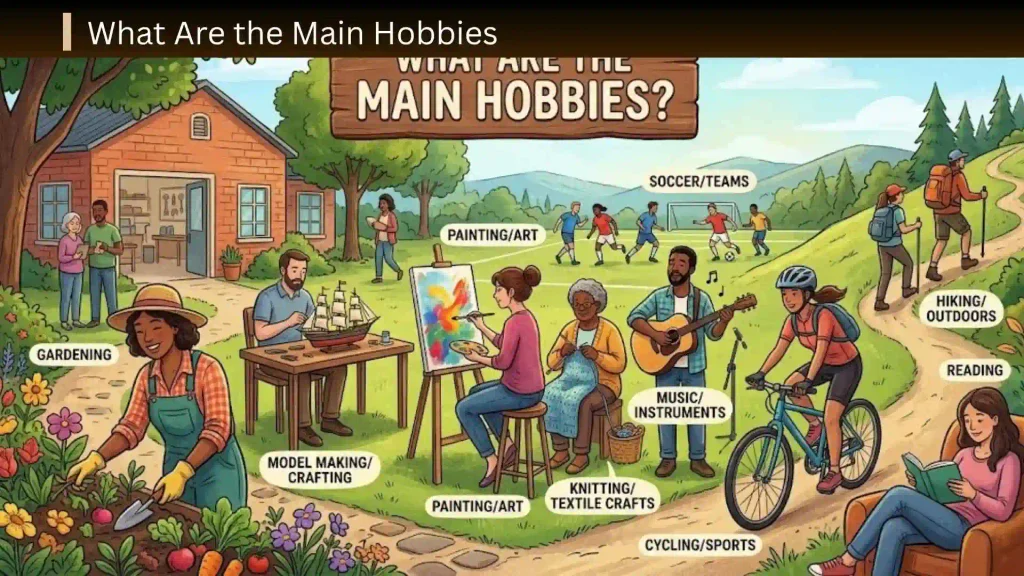
The term main hobbies does not refer to one official category. It is commonly used to describe the major or most important leisure activities people regularly enjoy.
The main hobby categories include:
- Creative hobbies
- Outdoor hobbies
- Fitness and sports hobbies
- Intellectual and learning hobbies
- Collecting hobbies
- Cooking and food-related hobbies
- Gardening and nature hobbies
- Arts and crafts
- Music and performance
- Technology and gaming
- DIY and woodworking
- Social and community hobbies
- Travel and exploration
- Photography and filmmaking
- Relaxing and home-based hobbies
The right choice depends less on what is considered “popular” and more on what fits your personality, schedule, budget, environment, and goals.
Main Types of Hobbies
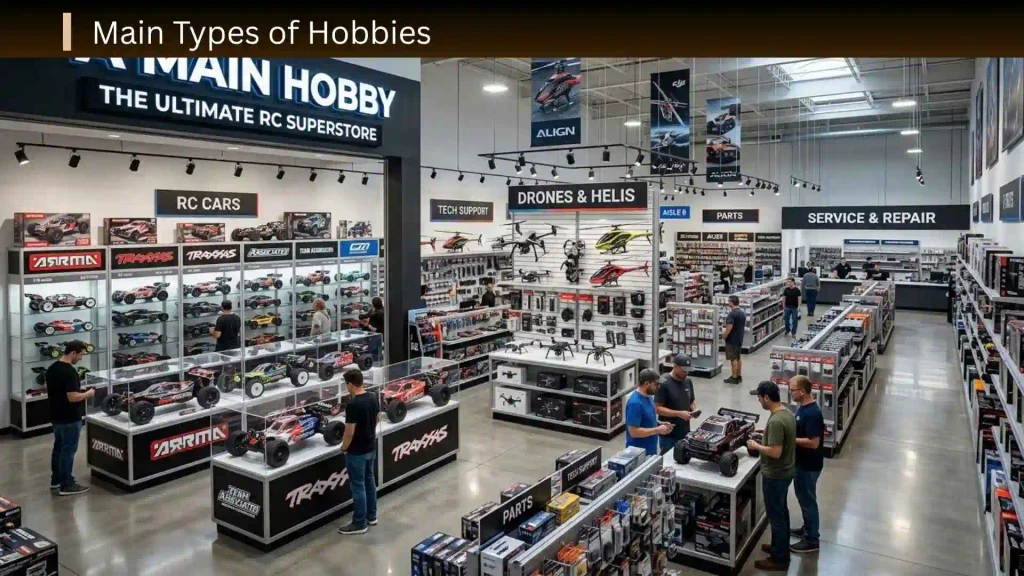
Creative Hobbies
Creative hobbies give you a way to make, design, or express something rather than simply consume entertainment.
Examples include:
- Drawing
- Painting
- Sketching
- Creative writing
- Calligraphy
- Pottery
- Jewelry making
- Sewing
- Knitting
- Crochet
- Scrapbooking
- Digital art
- Graphic design
- Photography
- Filmmaking
Best for: People who enjoy self-expression, experimentation, visual work, or making tangible projects.
Creative hobbies also vary considerably in cost. Drawing can begin with inexpensive paper and pencils, while pottery, photography, or specialized craft equipment can require a larger initial investment.
Reading
Reading is one of the simplest hobbies to adapt to almost any schedule or budget. You can read novels, biographies, history, science, essays, poetry, magazines, or nonfiction related to a particular interest.
A major advantage is flexibility. Reading can be a short daily activity or a longer weekend pursuit, and it can be done at home, while traveling, or in a library.
Best for: People who enjoy stories, learning, research, imagination, or quiet activities.
Gardening
Gardening involves growing and caring for plants. Depending on your available space, it can range from a few herbs in containers to a large vegetable or flower garden.
Common gardening interests include:
- Vegetable gardening
- Herb gardening
- Flower gardening
- Container gardening
- Indoor plants
- Native-plant gardening
- Pollinator gardens
- Seed starting
- Composting
Best for: People who enjoy working with plants, spending time outdoors, or developing a long-term project.
One useful feature of gardening is that you can scale it to your circumstances. A balcony, patio, windowsill, or backyard can all provide different starting points.
Cooking and Baking
Cooking and baking combine practical skills with creativity. You can approach them casually by learning a few favorite recipes or turn them into a deeper hobby involving cuisines, techniques, ingredients, or specialized equipment.
Popular directions include:
- Bread baking
- Cake decorating
- International cuisines
- Grilling
- Fermentation
- Homemade pasta
- Meal experimentation
- Coffee preparation
- Food photography
Best for: People who enjoy hands-on activities and want a hobby that produces something useful.
Cooking is also easy to make social: you can prepare meals with family, host a dinner, take a class, or exchange recipes with friends.
Photography
Photography is both a technical and creative hobby. Beginners can start with a smartphone before deciding whether they want a dedicated camera.
Areas to explore include:
- Landscape photography
- Portrait photography
- Street photography
- Wildlife photography
- Architecture photography
- Food photography
- Macro photography
- Travel photography
- Night photography
Best for: People who enjoy observation, visual storytelling, technology, travel, or creative composition.
You can gradually learn about composition, exposure, lenses, lighting, editing, and image organization as your interest develops.
Hiking
Hiking is an outdoor hobby centered on walking trails and exploring natural environments. The experience can range from short local walks to demanding multi-day routes.
A beginner does not need to start with difficult terrain. A sensible progression is to choose a familiar, manageable trail and gradually increase distance or difficulty.
Best for: People who enjoy nature, walking, exploration, and outdoor time.
For longer or remote hikes, preparation becomes more important. Weather, navigation, footwear, water, food, communication, and knowledge of the route should all be considered.
Cycling
Cycling can be a recreational hobby, a fitness activity, a way to explore local areas, or a social pursuit.
Common forms include:
- Road cycling
- Mountain biking
- Gravel riding
- Recreational trail riding
- Bicycle touring
- Indoor cycling
Best for: People who enjoy movement, exploration, equipment, or outdoor recreation.
The cost can vary substantially depending on the type of cycling and equipment you choose. Beginners should prioritize a properly fitting bicycle and appropriate safety equipment rather than immediately buying advanced gear.
Running
Running requires relatively little equipment compared with many sports, making it accessible to people who want a straightforward active hobby.
You can run:
- Around your neighborhood
- On tracks
- On trails
- On treadmills
- In organized races
Best for: People who like measurable goals and independent exercise.
A beginner should increase activity gradually rather than treating distance or speed as the only measure of progress. Comfortable footwear, sensible pacing, and recovery can make the hobby more sustainable.
Swimming
Swimming is a recreational and physical activity that can also become a social hobby through clubs, classes, or organized groups.
It can include:
- Lap swimming
- Recreational swimming
- Open-water swimming
- Swim training
- Diving-related activities
Best for: People who enjoy water and want an activity that can be practiced at different intensities.
Open-water activities require additional attention to local conditions, visibility, weather, water temperature, and appropriate safety practices.
Camping
Camping combines outdoor recreation, travel, practical skills, and time away from ordinary routines.
Different approaches include:
- Tent camping
- Car camping
- Backpacking
- Campground camping
- Family camping
- Wilderness camping
Best for: People who enjoy nature, outdoor cooking, exploration, or spending time away from home.
Beginners can start with an established campground rather than immediately planning a remote trip. This makes it easier to learn basic equipment and campsite routines without adding unnecessary complexity.
Fishing
Fishing is a hobby that combines patience, outdoor time, equipment knowledge, and observation.
You can explore different types of fishing depending on local regulations and available waterways, including freshwater and saltwater fishing.
Best for: People who enjoy quiet outdoor activities, learning equipment, and spending extended periods in nature.
Anyone fishing in the United States should check the rules that apply to the location, species, season, and type of fishing.
Birdwatching
Birdwatching involves observing and identifying birds in natural or urban environments. You can begin without expensive equipment by learning to recognize common local species.
As your interest grows, you might use:
- Binoculars
- Field guides
- Bird-identification apps
- A notebook or digital observation log
- A camera
Best for: People who enjoy nature, observation, photography, and learning about wildlife.
Birdwatching is particularly adaptable because you can practice it in parks, backyards, wetlands, forests, and other suitable habitats.
Music
Music can be both a creative and skill-building hobby.
Examples include:
- Guitar
- Piano
- Drums
- Singing
- Violin
- Ukulele
- Music production
- Songwriting
- DJing
Best for: People who enjoy sound, performance, creativity, or structured practice.
You do not need to become an advanced musician for music to be a meaningful hobby. Learning a small collection of songs or developing basic musical skills can itself provide a clear sense of progress.
Dancing
Dancing can be practiced recreationally, socially, or as a structured skill.
Popular styles include:
- Salsa
- Swing
- Ballroom
- Hip-hop
- Ballet
- Contemporary dance
- Line dancing
- Folk dance
Best for: People who enjoy music, movement, performance, and social environments.
Classes can be particularly useful for beginners because they provide instruction and a regular opportunity to practice.
Drawing and Sketching
Drawing is an inexpensive creative hobby with a very low barrier to entry. A pencil and paper are enough to begin.
You can explore:
- Portraits
- Landscapes
- Animals
- Architecture
- Cartoons
- Botanical drawing
- Technical sketching
- Urban sketching
Best for: Beginners who want a portable, inexpensive creative activity.
Progress comes from practicing observation and basic techniques rather than constantly buying new supplies.
Writing
Writing can take many forms, from private journaling to publishing stories or essays.
Possible writing hobbies include:
- Journaling
- Fiction
- Poetry
- Blogging
- Memoir writing
- Creative nonfiction
- Short stories
- Screenwriting
- Personal essays
Best for: People who enjoy ideas, storytelling, reflection, communication, or research.
A useful way to begin is to choose a specific project rather than simply deciding to “write more.” For example, you might keep a daily journal or write one short story each month.
Crafts
Crafting covers a broad range of hands-on activities where you make or decorate physical objects.
Examples include:
- Paper crafts
- Candle making
- Beading
- Jewelry making
- Embroidery
- Crochet
- Knitting
- Model building
- Wood crafts
- Decorative crafts
Best for: People who enjoy tactile work and completing physical projects.
Crafting is particularly suitable for people who prefer visible results from their leisure time.
Woodworking
Woodworking involves creating, repairing, or shaping objects from wood. It can range from simple beginner projects to advanced furniture making.
Beginners might start with projects such as:
- Small shelves
- Simple boxes
- Planters
- Cutting boards
- Basic home organizers
Best for: People who enjoy tools, construction, precision, and practical projects.
Because woodworking involves cutting tools, power equipment, dust, and potentially hazardous materials, proper tool use, protective equipment, workspace organization, and manufacturer instructions are important.
DIY and Home Improvement
DIY hobbies involve building, repairing, customizing, or improving things yourself.
Possible projects include:
- Furniture restoration
- Home organization
- Painting
- Basic repairs
- Decorative projects
- Upcycling
- Building simple storage solutions
Best for: People who like practical problem-solving and visible improvements.
The difficulty ranges widely. Decorative projects can be beginner-friendly, while electrical, structural, plumbing, or other specialized work may require appropriate knowledge or a qualified professional.
Chess and Strategy Games
Chess, strategy board games, puzzles, and similar activities provide structured challenges that reward planning and decision-making.
Best for: People who enjoy competition, logic, strategy, and mental challenges.
You can play casually with friends, join a local club, or use online platforms to practice against other players.
Puzzles
Puzzles include jigsaw puzzles, crosswords, logic puzzles, sudoku, word games, and other forms of problem-solving.
They can be particularly appealing when you want a quiet activity with a clearly defined task.
Best for: People who enjoy concentration and problem-solving without needing a large workspace or specialized equipment.
Gaming
Video gaming is a broad hobby rather than a single activity. Different games offer very different experiences, including storytelling, competition, strategy, simulation, exploration, and cooperation.
Gaming can include:
- Console gaming
- PC gaming
- Mobile gaming
- Multiplayer games
- Strategy games
- Simulation games
- Role-playing games
- Puzzle games
Best for: People who enjoy interactive entertainment, technology, competition, storytelling, or social play.
The best approach is to choose games according to the experience you want rather than assuming all gaming provides the same type of entertainment.
Collecting
Collecting involves intentionally building and organizing a group of related objects.
Common collections include:
- Coins
- Stamps
- Books
- Vinyl records
- Sports memorabilia
- Trading cards
- Antiques
- Art
- Postcards
- Vintage toys
Best for: People who enjoy history, research, organization, discovery, or preserving objects.
A collection can become expensive if purchases are uncontrolled, so setting a budget and deciding what qualifies for the collection can help keep the hobby manageable.
Travel
Travel can become a hobby when exploring places, cultures, food, history, landscapes, or local experiences becomes a regular leisure pursuit.
It does not necessarily require international trips. Exploring nearby towns, parks, museums, historical sites, or regional attractions can provide the same sense of discovery on a smaller budget.
Best for: People who enjoy novelty, culture, planning, and exploration.
Volunteering
Volunteering can be a hobby for people who want their free time to involve community participation or a cause they care about.
Possible opportunities include:
- Animal shelters
- Food banks
- Community organizations
- Environmental projects
- Libraries
- Cultural organizations
- Youth programs
Best for: People who prefer socially meaningful activities and want their leisure time to involve other people.
Because volunteering is organized differently by each organization, schedules and requirements vary.
Main Hobbies Compared
| Hobby | Difficulty | Starting Cost | Time Flexibility | Setting | Particularly Suitable For |
| Reading | Easy | Low | High | Indoor | Learning and quiet time |
| Drawing | Easy | Low | High | Indoor | Creative beginners |
| Gardening | Easy–Moderate | Low–Moderate | Moderate | Outdoor/Indoor | Plant lovers |
| Cooking | Easy–Moderate | Low–Moderate | Moderate | Indoor | Practical creativity |
| Photography | Easy–Advanced | Low–High | High | Both | Visual storytelling |
| Hiking | Easy–Advanced | Low–Moderate | Moderate | Outdoor | Nature and exploration |
| Cycling | Easy–Advanced | Moderate–High | Moderate | Outdoor/Indoor | Active recreation |
| Writing | Easy | Low | High | Indoor | Storytelling and ideas |
| Music | Easy–Advanced | Low–High | High | Indoor/Both | Creative skill-building |
| Chess | Easy–Advanced | Low | High | Indoor/Online | Strategy |
| Gaming | Easy | Low–High | High | Indoor | Interactive entertainment |
| Collecting | Easy | Low–High | High | Both | Research and discovery |
| Woodworking | Moderate–Advanced | Moderate–High | Moderate | Indoor/Outdoor | Making things |
| Camping | Easy–Advanced | Moderate–High | Low–Moderate | Outdoor | Adventure |
| Volunteering | Easy | Low | Moderate | Both | Community involvement |
These categories are not rigid. A hobby can belong to several categories at once. Photography, for example, can be creative, technical, outdoor, social, or travel-oriented depending on how you practice it.
How to Choose the Right Main Hobby

Instead of choosing a hobby solely because it is popular, start with your circumstances.
Consider Your Available Time
If you have only 15–30 minutes at a time, flexible hobbies such as reading, drawing, journaling, puzzles, or photography may be easier to maintain than activities that require travel or extensive setup.
If you have entire weekends available, hiking, camping, woodworking, cycling, fishing, and other longer activities become easier to accommodate.
Consider Your Budget
Low-cost hobbies include:
- Reading
- Walking
- Writing
- Drawing
- Birdwatching with basic equipment
- Puzzles
- Cooking with ingredients you already use
Hobbies such as photography, cycling, woodworking, camping, musical instruments, and collecting can involve substantially higher equipment or material costs.
A useful rule is to learn whether you genuinely enjoy the activity before investing heavily in advanced equipment.
Consider Your Space
Apartment living does not eliminate your hobby options.
Good space-efficient choices include:
- Reading
- Writing
- Drawing
- Digital art
- Music with appropriate volume considerations
- Puzzles
- Gaming
- Photography
- Container gardening
- Small crafts
If you have a garage, workshop, yard, or larger outdoor space, activities such as woodworking, gardening, DIY projects, and certain types of recreation become more practical.
Decide Whether You Want a Solo or Social Hobby
Some hobbies naturally provide more opportunities to meet people.
More solitary options:
- Reading
- Writing
- Drawing
- Collecting
- Gardening
- Puzzles
- Photography
More social options:
- Team sports
- Dancing
- Board games
- Volunteering
- Running clubs
- Cycling groups
- Music groups
- Hobby clubs
Many hobbies can work either way. You can photograph alone or join a photography club; you can garden privately or participate in a community garden.
Decide What You Want From the Hobby
Ask yourself what you want your free time to accomplish.
which you want to create, consider painting, writing, crafts, music, photography, or woodworking.
which you want to move, consider walking, hiking, cycling, swimming, dancing, or running.
If you want to learn, consider reading, chess, languages, astronomy, cooking, or history-related collecting.
which you want to relax, consider gardening, reading, drawing, puzzles, knitting, or quiet photography.
which you want to meet people, consider volunteering, dancing, recreational sports, clubs, gaming groups, or classes.
If you want to explore, consider hiking, camping, travel, birdwatching, fishing, or photography.
Why People Have Hobbies
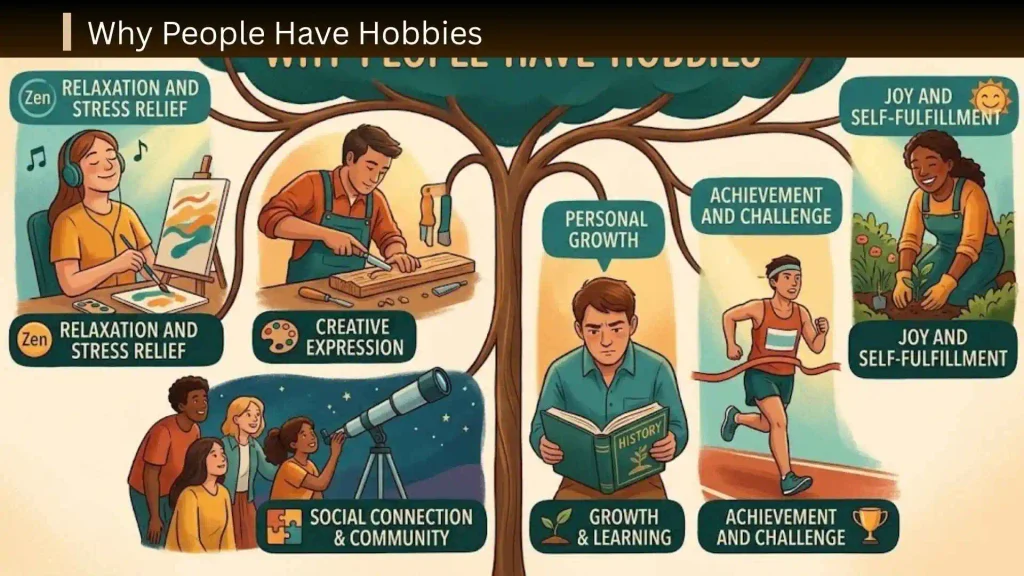
Hobbies serve different purposes for different people. They can provide recreation, creative expression, skill development, social interaction, exploration, or simply a reason to spend time doing something personally meaningful.
U.S. time-use data illustrates how broad leisure activity is. In 2025, people age 15 and older spent an average of 5.16 hours per day on leisure and sports activities when all days were considered, including activities such as socializing, television, reading, exercise, games, and relaxation.
That does not mean every leisure activity is a hobby, but it shows that free-time activities occupy a substantial part of everyday life.
The value of a hobby is therefore not necessarily measured by productivity. A hobby can be worthwhile simply because you enjoy practicing it.
Low Cost Main Hobbies
If cost is your biggest concern, start with activities that use items you already own.
Good choices include:
- Reading
- Walking
- Writing
- Drawing
- Journaling
- Birdwatching
- Photography with a smartphone
- Cooking
- Puzzles
- Learning a language
- Chess
- Digital creative projects
- Home workouts
- Gardening with containers
- Exploring local parks
Free or inexpensive hobbies can still become sophisticated over time. You do not need expensive equipment to develop genuine expertise.
Main Hobbies You Can Do at Home
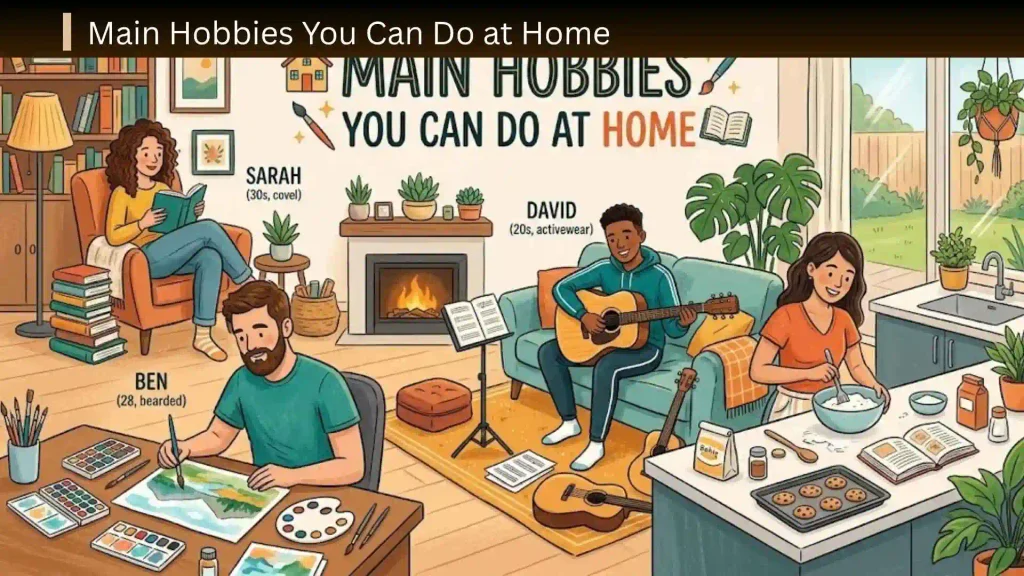
Home-based hobbies are useful when weather, transportation, mobility, schedule, or personal preference makes going out inconvenient.
Consider:
- Reading
- Painting
- Drawing
- Writing
- Baking
- Cooking
- Sewing
- Knitting
- Crochet
- Digital art
- Gaming
- Chess
- Puzzles
- Music
- Home gardening
- Model building
- DIY crafts
- Photography projects
- Learning online
The best home hobby is one that fits both your available space and your willingness to set aside time for it.
Main Hobbies for People Who Want to Learn New Skills
If skill development is your priority, choose a hobby with a progression system.
For example:
Photography: composition → camera controls → lighting → editing → specialized genres
Cooking: basic techniques → cuisines → baking or specialty techniques → recipe development
Music: fundamentals → simple songs → technique → theory → performance
Woodworking: basic tools → simple projects → joinery → furniture or specialized work
Drawing: observation → shapes → perspective → light and shadow → specialized subjects
Gardening: plant selection → soil and watering → seasonal planning → propagation → garden design
A hobby is often more engaging when you can clearly see what you are learning next.
Common Mistakes When Starting a Hobby
Buying Too Much Equipment
It is tempting to purchase professional-grade equipment before knowing whether you will continue with the hobby. Start with the basics and upgrade when a specific limitation actually affects your progress.
Choosing a Hobby Only Because It Is Popular
A hobby that is popular among other people may not fit your personality. Popularity is a poor substitute for genuine interest.
Starting With an Unrealistic Goal
Trying to master a complicated skill immediately can make a hobby feel like another job. Begin with a manageable project and increase the challenge gradually.
Comparing Your Beginning With Someone Else’s Expertise
Experienced hobbyists may have spent years developing their skills. Comparing your first attempts with advanced work can make normal beginner progress feel inadequate.
Treating Every Hobby as a Productivity Project
Not every hobby needs to produce money, credentials, social media content, or a measurable achievement. Recreation can be valuable simply because it is enjoyable.
How to Make a Hobby More Enjoyable
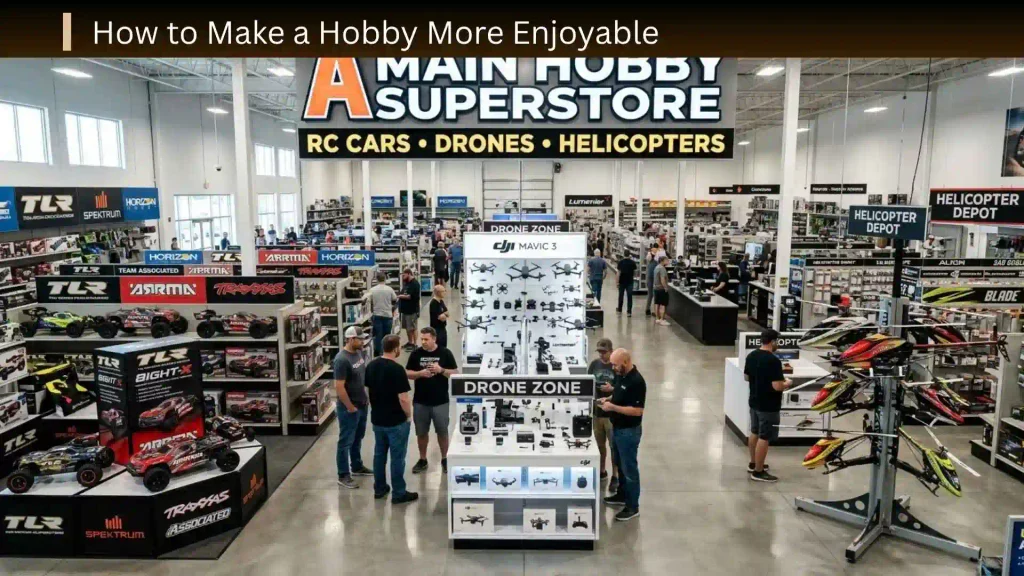
Once you find an activity you genuinely like, make it easier to continue.
- Keep basic equipment accessible.
- Set a realistic schedule.
- Choose projects that are slightly challenging but achievable.
- Learn from books, classes, communities, or reliable tutorials.
- Track projects or progress if that motivates you.
- Occasionally try a new variation.
- Share the hobby with others if you enjoy social interaction.
- Avoid buying equipment simply because it is marketed as essential.
- Give yourself permission to change hobbies.
You do not have to choose one permanent hobby. Interests naturally change as your circumstances change.
How Many Hobbies Should You Have?
There is no ideal number of hobbies.
One person may prefer a single deep interest, while another may enjoy several activities that serve different purposes. For example, someone might read during quiet evenings, garden on weekends, and hike when they have more time.
A useful combination can be:
- One easy hobby for short periods of free time
- One skill-based hobby for long-term learning
- One active hobby for movement
- One social hobby if you want more interaction
But this is a framework, not a requirement. The right number is the number you can enjoy without turning leisure into another source of pressure.
Are Hobbies Different From Interests?
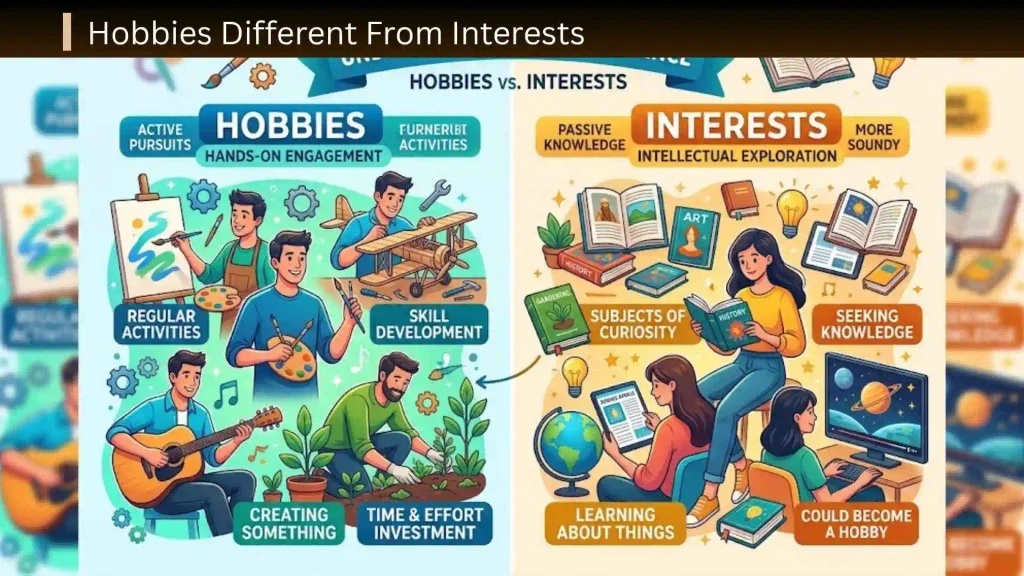
Yes. An interest is something you care about or want to learn more about, while a hobby generally involves regularly participating in an activity for enjoyment.
For example, someone may be interested in astronomy but not own a telescope or regularly observe the night sky. Another person may make astronomy a hobby by regularly identifying constellations, observing celestial objects, or participating in an astronomy club.
The distinction is not always strict, and people commonly use the terms interchangeably in everyday conversation.
Frequently Asked Questions About Main Hobbies
What are the main types of hobbies?
The major types include creative, physical, outdoor, intellectual, collecting, cooking, gardening, music, performance, technology, DIY, social, travel, and home-based hobbies. Many activities fit into more than one category.
What is a good hobby for a beginner?
Reading, walking, drawing, cooking, photography with a smartphone, puzzles, gardening, writing, and beginner-friendly crafts are generally easy places to explore because they can be started without advanced expertise.
What are some inexpensive hobbies?
Reading, walking, writing, drawing, journaling, puzzles, birdwatching, cooking, and learning skills from free or low-cost resources can all be inexpensive starting points.
What hobbies can I do at home?
Popular home-based options include reading, writing, drawing, painting, cooking, baking, gaming, puzzles, music, crafts, sewing, knitting, digital art, gardening, and DIY projects.
What are good hobbies for meeting people?
Volunteering, recreational sports, dancing, running groups, cycling clubs, board-game groups, music groups, classes, and hobby clubs can provide natural opportunities for social interaction.
What hobby is best for stress relief?
There is no single best hobby for everyone. Quiet activities such as reading, drawing, gardening, puzzles, crafts, and walking may feel relaxing for some people, while others prefer active or social activities.
Can a hobby become a career?
Yes, some hobbies can eventually develop into professional skills or income-producing activities, but this is not guaranteed. Photography, writing, music, cooking, crafts, design, woodworking, and other hobbies can potentially be monetized depending on skill, demand, business ability, and consistency.
How do I find a hobby I actually enjoy?
Start with your existing interests and ask what you want more of in your free time: creativity, movement, learning, nature, social interaction, making things, competition, or relaxation. Try a low-cost version first rather than making a major investment immediately.
Conclusion
The main hobbies cover a wide range of activities, from reading, cooking, gardening, photography, and crafts to hiking, cycling, music, gaming, collecting, and volunteering. There is no universally best hobby. The strongest choice is one that fits your interests, available time, budget, space, and preferred level of social interaction.
If you are unsure where to begin, choose one inexpensive activity that genuinely interests you and try it consistently for a few weeks. You can deepen that hobby, explore a related activity, or move on to something completely different. The purpose is not to build the most impressive list of hobbies it is to find leisure activities that you actually want to return to.

I’m Ethan Mitchell, a curious writer who enjoys turning complex ideas into simple, useful information. At Cognivoora, I focus on creating clear and engaging content that readers can understand and apply in everyday life. I believe good writing should educate, answer real questions, and leave readers with something valuable to remember.
Books:
- The Everyday Mind
- Simple Ideas, Better Thinking