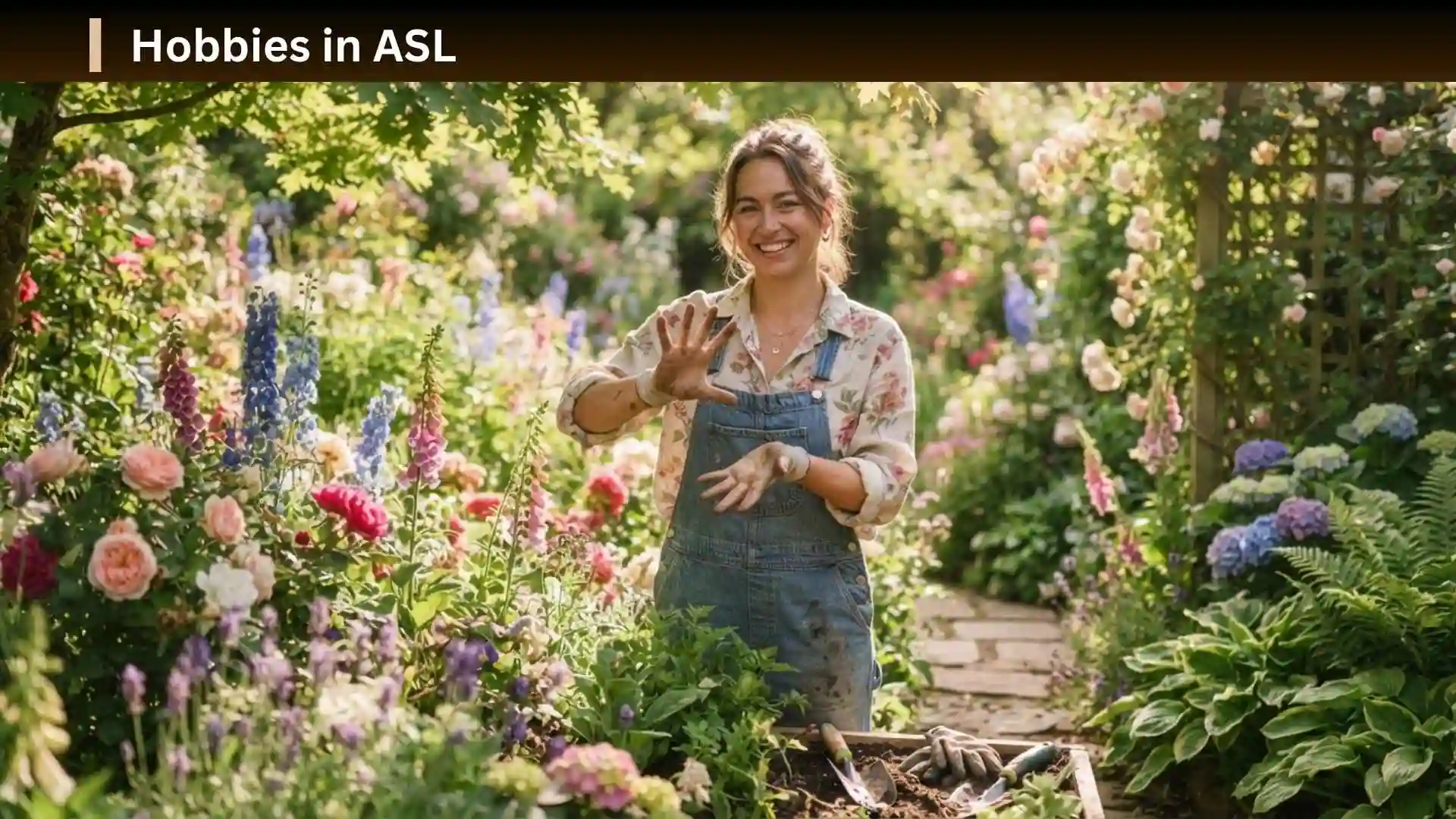
Hobbies in ASL can be a useful topic for anyone interested in learning how common leisure activities are expressed in American Sign Language. Whether you are a beginner, a student, a parent, or simply curious about ASL, learning hobby-related signs can make everyday conversations more natural and engaging. From reading and cooking to sports, music, art, and outdoor activities, there are many hobby signs worth learning. This guide explores common hobbies in ASL and offers practical ways to build your vocabulary and use these signs confidently.
What Does “Hobbies in ASL” Mean?
“Hobbies in ASL” generally refers to the signs and expressions used to talk about hobbies and leisure activities in American Sign Language.
Common hobbies include:
- Reading
- Drawing
- Painting
- Cooking
- Baking
- Gardening
- Photography
- Playing video games
- Watching movies
- Listening to music
- Dancing
- Swimming
- Hiking
- Camping
- Fishing
- Playing sports
- Crafts
- Sewing
- Collecting items
The exact sign for an activity matters, but learning how to use it naturally in an ASL sentence is just as important.
Common Hobbies in ASL
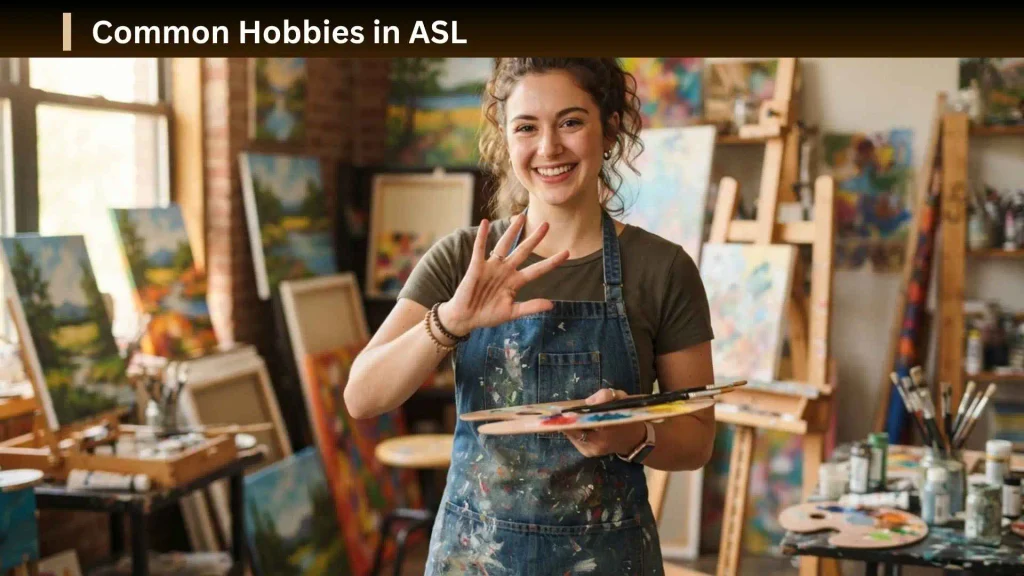
Here are some everyday hobbies you may want to learn first.
| Hobby | English Meaning | Useful ASL Practice |
| Reading | Reading books or other material | Practice talking about what you like to read |
| Drawing | Creating pictures with pencils or other tools | Describe what you enjoy drawing |
| Painting | Creating art with paint | Talk about colors and subjects |
| Cooking | Preparing food | Explain favorite foods or recipes |
| Gardening | Growing and caring for plants | Describe plants you grow |
| Photography | Taking photographs | Talk about subjects you like to photograph |
| Dancing | Dancing for recreation | Describe your preferred style |
| Swimming | Recreational or exercise swimming | Talk about where you swim |
| Hiking | Walking on trails or in nature | Describe favorite outdoor activities |
| Camping | Spending recreational time outdoors | Discuss camping activities |
| Fishing | Recreational fishing | Talk about where you like to fish |
| Gaming | Playing video or other games | Discuss games you enjoy |
| Crafts | Making decorative or useful objects | Describe projects you make |
| Sewing | Creating or repairing items with thread and fabric | Talk about sewing projects |
| Collecting | Gathering items as a hobby | Explain what you collect |
Important: ASL signs can vary by region, community, age, and signing style. A sign shown in one learning resource may not be the only accepted way to express an idea.
How to Talk About Hobbies in ASL
Knowing individual signs is only the beginning. You can combine hobby vocabulary with basic ASL structures to have an actual conversation.
For example, a conversation might communicate ideas such as:
- “What are your hobbies?”
- “I like reading.”
- “I enjoy cooking.”
- “My favorite hobby is photography.”
- “I like hiking and camping.”
- “Do you like gardening?”
- “What do you do for fun?”
Rather than trying to translate every English word directly, focus on learning the way the idea is naturally expressed in ASL.
Asking About Someone’s Hobbies
A simple conversation can begin by asking what someone enjoys doing during their free time.
You can practice questions such as:
“YOUR HOBBY WHAT?”
or other natural ASL variations taught by your instructor or signing community.
The important goal is to understand the meaning and ASL structure rather than simply memorizing an English-to-sign word order.
Describing Your Favorite Hobby
After learning the signs for several hobbies, practice describing your preferences.
For example, you can build a conversation around:
- Your favorite hobby
- How often you do it
- Where you do it
- Who you do it with
- What equipment you use
- Why you enjoy it
This turns vocabulary practice into a more realistic ASL conversation.
Hobby Vocabulary Beginners Should Learn First
If you’re new to ASL, you do not need to memorize dozens of hobby signs at once. Start with activities that are familiar to you.
A useful beginner vocabulary set includes:
Creative Hobbies
- Drawing
- Painting
- Crafts
- Photography
- Writing
- Sewing
- Knitting
Creative hobbies are especially useful for practicing descriptions because you can talk about colors, objects, materials, and finished projects.
Outdoor Hobbies
- Hiking
- Camping
- Fishing
- Gardening
- Swimming
- Biking
- Running
Outdoor activities give you opportunities to expand your vocabulary into nature, locations, weather, equipment, and movement.
At-Home Hobbies
- Reading
- Cooking
- Baking
- Gaming
- Watching movies
- Puzzles
- Collecting
These can be convenient choices for beginners because you can practice describing activities that are part of everyday life.
Social and Performing Hobbies
- Dancing
- Singing
- Acting
- Playing sports
- Board games
- Group crafts
These hobbies can help you practice conversational ASL because they naturally involve talking about other people and shared activities.
How to Learn Hobby Signs Correctly
When learning hobbies in ASL, don’t rely only on written descriptions of hand movements. ASL is a visual language, and factors such as handshape, movement, location, palm orientation, facial expression, and body movement can affect meaning.
Use Reliable ASL Learning Resources
Look for resources produced by established ASL education programs, Deaf organizations, dictionaries, or experienced ASL instructors.
Video-based learning is generally more useful than text-only descriptions because you can observe the movement and expression of the signer.
Watch the Whole Sign
Don’t focus only on the hands.
Pay attention to:
- Handshape
- Movement
- Location
- Palm orientation
- Facial expression
- Nonmanual signals
- Body position
Some ASL meanings depend on more than hand movement alone.
Learn Signs in Context
Instead of learning only a list such as:
reading = sign
cooking = sign
hiking = sign
practice putting the vocabulary into meaningful conversations.
For instance, practice answering questions about what you do on weekends, what activities you enjoy, or which hobbies you share with friends.
ASL Is Not Simply Signed English
One common mistake is assuming that ASL is English represented through hand movements.
It isn’t.
American Sign Language is a complete natural language with its own vocabulary, grammar, and linguistic structure.
That means a beginner should avoid mechanically signing every English word in an English sentence.
For example, an English sentence may require a different structure when expressed naturally in ASL. Facial expression and other nonmanual features can also contribute important grammatical information.
Learning ASL therefore involves learning the language itself, not simply memorizing an English-to-ASL dictionary.
Where to Practice Hobbies in ASL
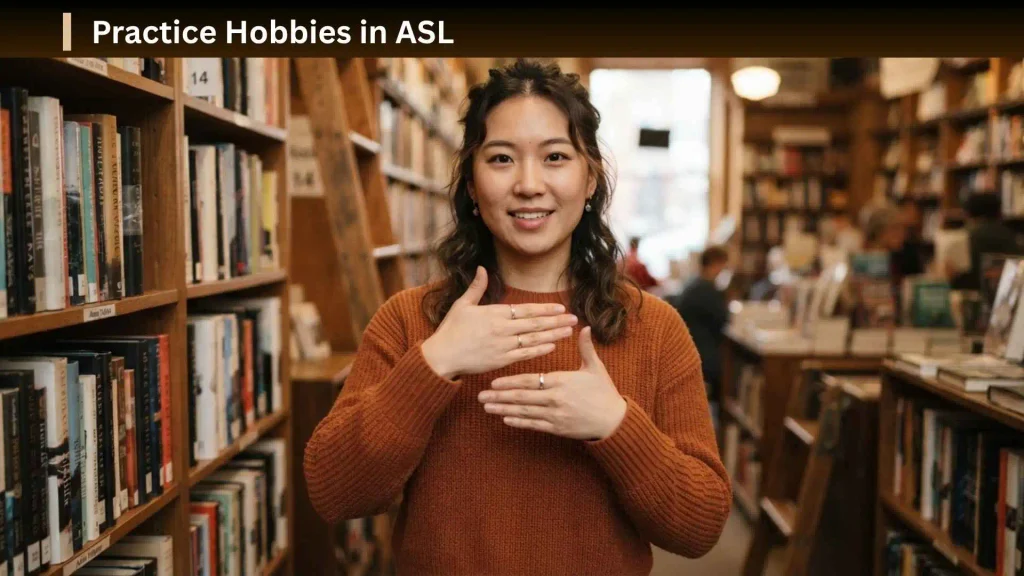
You can make hobby vocabulary part of your regular ASL practice.
Practice With a Partner
Choose five hobbies and take turns asking and answering questions.
One person can ask about favorite hobbies while the other responds and gives additional information.
For example, practice a conversation about:
- Favorite hobby
- How often you do it
- Where you do it
- Who you do it with
- Why you enjoy it
Then switch roles.
Create a Hobby Vocabulary Journal
Keep a notebook or digital document containing the hobbies you are learning.
For each hobby, record:
- The English concept
- The ASL sign from your trusted learning resource
- An example conversation
- Related vocabulary
- Questions you can ask about it
Avoid treating the written English word as a substitute for understanding the actual ASL sign.
Record Yourself Practicing
Recording yourself can help you notice whether your movements are consistent and whether your facial expressions and body language support what you’re trying to communicate.
If possible, ask a qualified ASL instructor, Deaf signer, or knowledgeable signing partner for feedback.
How to Expand Beyond Basic Hobby Signs
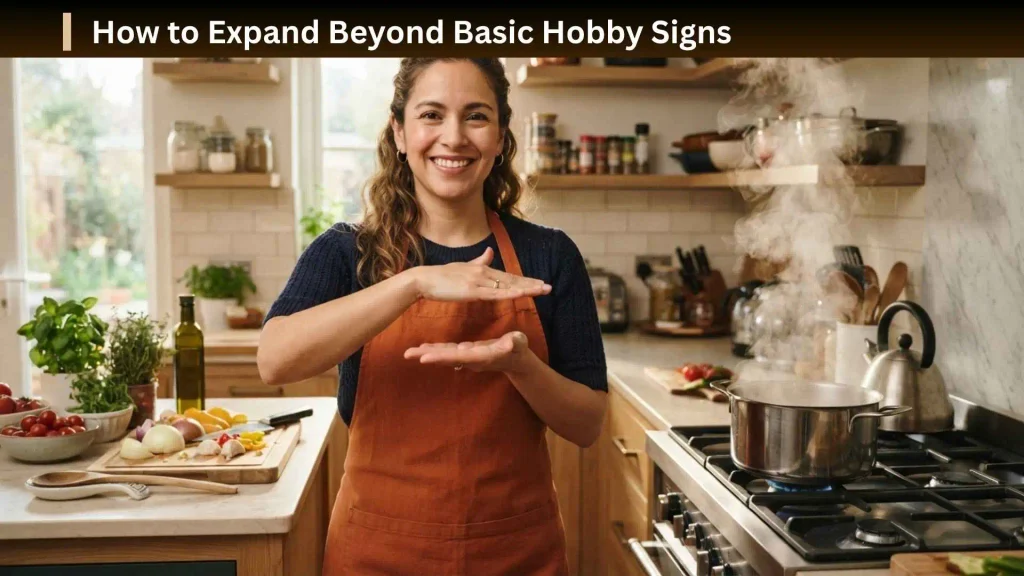
Once you know several hobby signs, expand your vocabulary around each activity.
For example, if photography is your hobby, don’t stop with the sign for photography. Learn concepts related to:
- Camera
- Picture
- Video
- Nature
- People
- Landscape
- Travel
- Light
- Color
- Editing
If gardening interests you, add vocabulary related to:
- Plants
- Flowers
- Vegetables
- Seeds
- Soil
- Water
- Growing
- Outdoor spaces
This approach helps you have meaningful conversations instead of simply listing hobbies.
A Simple ASL Hobby Practice Routine
A short, consistent routine can be more useful than trying to memorize a large vocabulary list in one sitting.
Step 1: Choose Five Hobbies
Pick five activities that you genuinely understand or enjoy.
Step 2: Learn the Signs
Study each sign from a reliable ASL video or instructor.
Step 3: Learn Related Vocabulary
Add several words or concepts connected to each hobby.
Step 4: Practice Questions
Practice asking what another person enjoys doing.
Step 5: Give Longer Answers
Instead of responding with only one hobby, practice adding information about when, where, how, or why you do it.
Step 6: Have a Real Conversation
Use the vocabulary with an ASL partner whenever possible.
This final step is important because knowing vocabulary and communicating naturally are different skills.
FAQs About Hobbies in ASL
How do you say “hobbies” in ASL?
The concept of “hobbies” can be expressed in ASL using signs and structures appropriate to the context. The best way to learn natural expression is through a reliable ASL video dictionary, instructor, or Deaf ASL user rather than relying on an English word-for-word translation.
What are common hobbies to learn in ASL?
Common beginner-friendly topics include reading, cooking, gardening, drawing, painting, photography, hiking, camping, swimming, dancing, gaming, crafts, and sports.
Is there one ASL sign for every hobby?
Not necessarily. Some concepts have established signs, while others may be expressed using combinations of signs, classifiers, fingerspelling, initialized signs, or context-dependent expressions. Regional variation also exists.
Is ASL the same as English?
No. American Sign Language is a natural language with its own grammar and linguistic structure. It is not simply English translated into hand movements.
Where can I learn hobby signs in ASL?
Video-based ASL dictionaries, reputable educational programs, ASL instructors, and Deaf-led learning resources can all be useful. A qualified instructor or experienced signer can also provide feedback on whether your signing is natural and clear.
Should beginners learn individual signs or complete sentences?
Learn both, but prioritize meaningful communication. Individual vocabulary gives you the building blocks, while sentences and conversations teach you how those signs function naturally in ASL.
Conclusion
Learning hobbies in ASL is a practical way to build everyday vocabulary while talking about subjects that are personally meaningful. Start with a small group of familiar activities, learn the signs from reliable visual resources, and then expand into related vocabulary and real conversations.
Most importantly, remember that ASL is a complete language rather than a word-for-word version of English. Learning its natural structure, visual features, and conversational patterns will help you communicate much more effectively than memorizing isolated signs.

I’m Ethan Mitchell, a curious writer who enjoys turning complex ideas into simple, useful information. At Cognivoora, I focus on creating clear and engaging content that readers can understand and apply in everyday life. I believe good writing should educate, answer real questions, and leave readers with something valuable to remember.
Books:
- The Everyday Mind
- Simple Ideas, Better Thinking