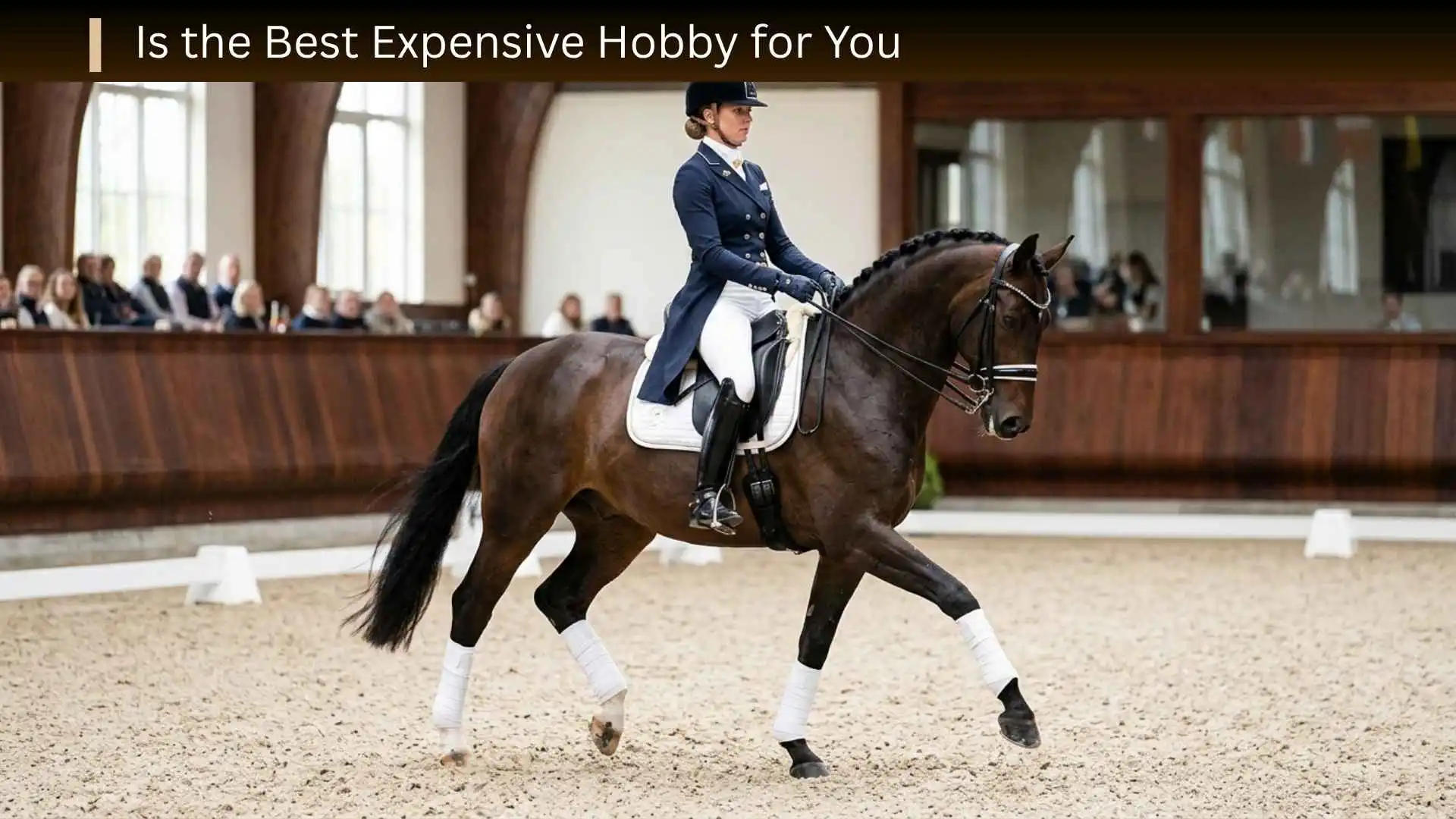
Have you ever wondered what it feels like to turn your free time into something truly extraordinary? I believe hobbies can be more than simple ways to pass the time they can become exciting experiences that challenge you, introduce you to new skills, and open the door to a different lifestyle. If you enjoy luxury, adventure, creativity, or collecting rare and valuable things, expensive hobbies can offer a whole new level of enjoyment.
You might be surprised by how many hobbies require a significant investment, from collecting luxury watches and classic cars to sailing, photography, golf, horseback riding, and traveling the world. In this guide, you’ll discover some of the most fascinating, expensive hobbies, what makes them costly, and what you should consider before investing your time and money in one. Whether you’re simply curious or looking for a new passion, you can find an expensive hobby that matches your interests, goals, and lifestyle.
What Makes a Hobby Expensive?
An expensive hobby usually has one or more major cost drivers:
- Specialized equipment: Cameras, boats, aircraft, musical instruments, sporting equipment, or workshop tools can require significant investment.
- Maintenance: Vehicles, boats, aircraft, horses, musical instruments, and equipment may need regular upkeep.
- Training: Some hobbies require lessons, certifications, coaching, or professional instruction.
- Memberships and access: Clubs, private facilities, courses, marinas, tracks, and organizations can add recurring expenses.
- Travel: Competitions, destinations, exhibitions, hunting trips, skiing, diving, and sailing can involve substantial transportation and accommodation costs.
- Storage: Boats, recreational vehicles, collectibles, aircraft, and workshop equipment may require dedicated space.
- Consumables: Ammunition, fuel, film, art materials, model building supplies, specialty foods, and other consumables can create ongoing costs.
- Collecting: The hobby can become progressively more expensive as collectors pursue rare, limited, historical, or highly desirable items.
For that reason, the total cost of a hobby should be evaluated as startup cost + recurring cost + participation cost, rather than looking only at the price of the first item you buy.
25 Expensive Hobbies Worth Exploring
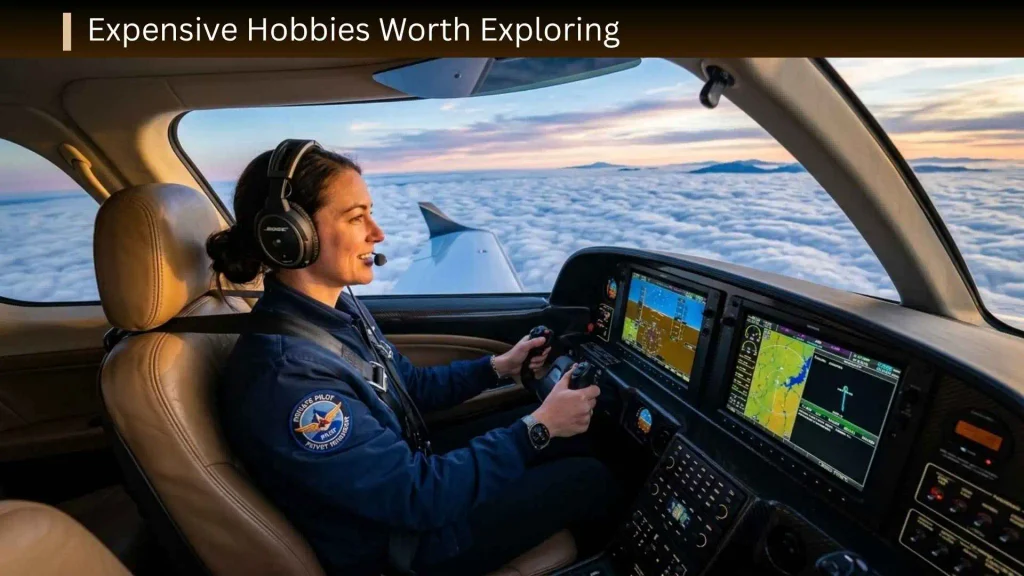
1. Private Aviation
Private aviation is one of the clearest examples of a hobby where ongoing expenses can matter more than the initial purchase.
Someone interested in recreational flying may begin with flight lessons and eventually pursue a private pilot certificate. More experienced enthusiasts may rent aircraft, join flying clubs, or purchase an aircraft.
The costs can include:
- Flight instruction
- Aircraft rental or ownership
- Fuel
- Insurance
- Hangar or parking fees
- Maintenance
- Required inspections
- Navigation and communication equipment
Best for: People who enjoy technology, travel, aviation, and hands-on learning.
Budget reality: Renting or joining a flying club can be considerably more manageable than owning an aircraft. Ownership introduces additional fixed and unpredictable expenses.
Beginner tip: Learn to fly through a reputable flight school or flying club before considering aircraft ownership.
2. Horseback Riding and Equestrian Sports
Horseback riding can range from occasional recreational riding to competitive disciplines such as dressage, show jumping, eventing, and western competition.
The hobby becomes substantially more expensive when someone owns a horse.
Potential expenses include:
- Horse purchase
- Boarding
- Feed
- Veterinary care
- Farrier services
- Tack and riding equipment
- Training
- Competition fees
- Transportation
Best for: People who want an active hobby involving animals, outdoor time, and skill development.
Budget reality: Horse ownership is a long-term financial commitment. Boarding and routine care can continue regardless of whether you’re actively competing.
Beginner tip: Taking lessons or leasing a horse can provide experience without immediately taking on full ownership responsibilities.
3. Sailing and Yacht Cruising
Sailing can be surprisingly accessible when learned through lessons or a sailing club, but ownership of a larger sailboat can turn the hobby into a major financial commitment.
Expenses can include:
- Boat purchase
- Marina or mooring fees
- Insurance
- Maintenance
- Repairs
- Safety equipment
- Sails and rigging
- Fuel for auxiliary systems
- Winter storage in some regions
- Travel
Larger boats generally introduce greater maintenance and operating demands.
Best for: People who enjoy the water, navigation, travel, and hands-on mechanical tasks.
Beginner tip: Take sailing lessons and consider joining a sailing club before purchasing a boat.
4. Golf
Golf is not inherently an expensive hobby. Public courses and used equipment can make it relatively accessible.
However, golf can become a luxury hobby when combined with:
- Private club memberships
- Premium equipment
- Professional coaching
- Frequent rounds
- Golf travel
- Resort stays
- Tournament participation
- Caddies and other course-related expenses
Best for: People who enjoy skill-based competition, outdoor recreation, and social activities.
Budget reality: The largest difference often comes from where and how frequently you play rather than simply the price of your clubs.
Beginner tip: Start with lessons and affordable public courses instead of immediately purchasing premium equipment or pursuing a private membership.
5. Motorsports and Race Car Driving
Motorsports can become extremely expensive because participation involves much more than buying a vehicle.
Depending on the discipline, expenses may include:
- Race or performance vehicle
- Safety equipment
- Tires
- Fuel
- Transportation
- Track fees
- Repairs
- Performance upgrades
- Vehicle storage
- Professional instruction
Track days can provide a way to experience performance driving without committing to a full racing program.
Best for: Car enthusiasts who enjoy competition, mechanical work, and driving skill.
Beginner tip: Start with a structured track-day program or driving school and use appropriate safety equipment.
6. Scuba Diving
Recreational scuba diving requires specialized equipment and training, while advanced diving can involve travel, boats, additional certifications, and specialized gear.
Costs can include:
- Certification courses
- Mask, fins, and exposure protection
- Buoyancy equipment
- Regulator
- Dive computer
- Tanks or tank rental
- Boat trips
- Travel
- Equipment servicing
Best for: People interested in underwater exploration, marine environments, and travel.
Budget reality: The equipment is only one part of the cost. Dive travel can become a major expense for people who regularly visit specialized destinations.
Beginner tip: Complete recognized training before diving independently and have equipment properly maintained.
7. Photography
Photography is another hobby with an enormous range of possible budgets.
A beginner can start with a smartphone or basic camera, while enthusiasts may eventually purchase:
- Professional camera bodies
- Multiple lenses
- Tripods
- Lighting equipment
- Drones where legally permitted
- Storage systems
- Computers
- Editing software
- Specialized bags
- Travel equipment
Wildlife, sports, landscape, and professional-style photography can be particularly equipment-intensive.
Best for: Creative people who enjoy technology, visual storytelling, and learning technical skills.
Beginner tip: Invest in photography skills before building a large equipment collection. Better technique often provides more value than constantly upgrading equipment.
8. Collecting Luxury Watches
Watch collecting can begin with affordable timepieces but can become extraordinarily expensive when collectors focus on prestigious, rare, vintage, or limited-production watches.
Collectors may consider:
- Brand history
- Model rarity
- Condition
- Provenance
- Movement
- Original components
- Production history
- Documentation
Best for: People interested in mechanical engineering, design, craftsmanship, and collecting.
Budget reality: A collection can become expensive quickly, but high price alone does not make a watch historically significant or desirable.
Beginner tip: Learn how to evaluate authenticity, condition, service history, and provenance before making major purchases.
9. Fine Art Collecting
Fine art collecting can range from emerging artists to major works by internationally recognized artists.
Expenses can extend beyond the artwork itself:
- Purchase price
- Framing
- Insurance
- Transportation
- Storage
- Conservation
- Professional appraisal
- Specialized display conditions
Best for: People who appreciate visual culture, artistic history, and collecting.
Budget reality: Art should not automatically be treated as an investment. Artistic importance, provenance, market demand, condition, and many other factors influence value.
Beginner tip: Collect art you genuinely understand and appreciate rather than buying solely because you expect prices to rise.
10. Equestrian Competition
Competitive equestrian sports deserve separate consideration from casual horseback riding because competition introduces another layer of expense.
Depending on the discipline, riders may need:
- Competition horses
- Specialized tack
- Coaching
- Training facilities
- Entry fees
- Transportation
- Competition clothing
- Grooming and care
- Veterinary support
- Stabling
Best for: Experienced riders who want structured competition and long-term skill development.
The financial commitment can increase dramatically as competition becomes more advanced.
11. Skiing and Snowboarding
Skiing and snowboarding can be relatively manageable for occasional local trips, but frequent resort travel creates a much larger budget.
Potential costs include:
- Skis or snowboard
- Boots
- Clothing
- Safety equipment
- Resort access
- Lessons
- Transportation
- Lodging
- Food
- Travel insurance
- Equipment maintenance
Backcountry skiing can add specialized equipment, training, and additional safety considerations.
Best for: People who enjoy winter sports, mountains, travel, and physical activity.
Beginner tip: Renting equipment initially can help determine whether you enjoy the sport before buying a complete setup.
12. Golf Travel
For some golfers, the hobby evolves from playing locally into traveling specifically to play notable courses.
A golf trip can combine:
- Airfare or long-distance transportation
- Lodging
- Course fees
- Equipment
- Meals
- Transportation
- Caddie costs where applicable
This makes golf travel one of the more expensive ways to pursue an otherwise accessible hobby.
Best for: Golfers who value travel and memorable course experiences.
13. Woodworking
Woodworking can begin with basic hand tools, but serious enthusiasts can eventually build sophisticated workshops.
Expenses may include:
- Table saw
- Planer
- Joinery tools
- Dust collection
- Workbenches
- Hand tools
- Clamps
- Specialty machinery
- Quality lumber
- Finishing supplies
- Workshop space
The workshop itself can become the expensive part.
Best for: People who enjoy craftsmanship, furniture making, engineering, and hands-on projects.
Beginner tip: Start with a small number of versatile tools and learn fundamental techniques before buying specialized machinery.
14. Home Brewing and Specialty Beverage Craft
Home brewing can be relatively inexpensive at an entry level, but enthusiasts may invest heavily in specialized equipment, ingredients, temperature-control systems, storage, and experimentation.
The hobby can involve:
- Brewing equipment
- Fermentation vessels
- Temperature control
- Ingredients
- Bottling or kegging equipment
- Storage
- Specialty measuring equipment
Best for: People who enjoy experimentation, food science, and hands-on processes.
Beginner tip: Follow applicable local laws and use food-safe equipment and sanitation practices.
15. High-End Musical Instruments
Music does not have to be expensive, but certain instruments and collections can become significant investments.
Examples include:
- Grand pianos
- Professional violins
- Vintage guitars
- Brass instruments
- Specialty percussion
- Historical instruments
The cost can extend to maintenance, climate control, accessories, repairs, transportation, and professional servicing.
Best for: Musicians and collectors who appreciate craftsmanship and sound quality.
Beginner tip: Choose an instrument appropriate to your skill level rather than assuming the most expensive instrument is the best choice.
16. Drone Photography and Aerial Filmmaking
Aerial photography can become expensive when enthusiasts move beyond basic consumer equipment into professional cameras, multiple aircraft, accessories, software, and travel.
Potential expenses include:
- Drone
- Additional batteries
- Controllers
- Camera equipment
- Storage
- Editing software
- Transportation
- Replacement parts
Drone operators in the United States must also understand applicable aviation rules and operating requirements.
Best for: Photographers, filmmakers, travelers, and technology enthusiasts.
Beginner tip: Learn the applicable rules for your location and intended operation before flying.
17. Recreational Boating
You don’t need a yacht for boating to become expensive.
Motorboats, fishing boats, wake boats, and other recreational vessels can generate costs through:
- Purchase or financing
- Fuel
- Insurance
- Storage
- Marina fees
- Maintenance
- Registration
- Safety equipment
- Repairs
- Winterization where applicable
Best for: People who enjoy fishing, water sports, cruising, or spending time outdoors.
Beginner tip: Renting different types of boats can help you identify what you actually need before buying one.
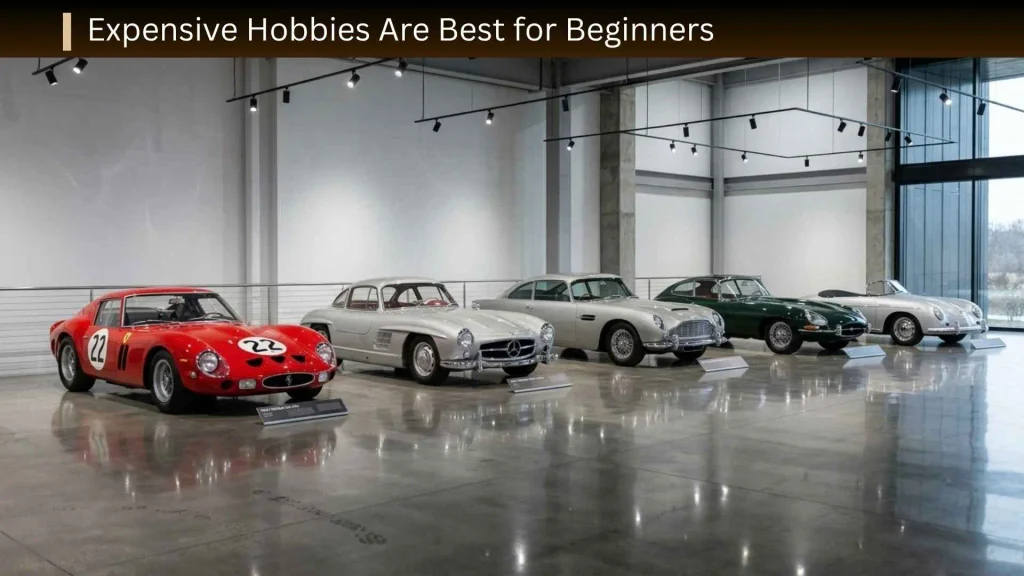
18. Collecting Classic and Exotic Cars
Automobile collecting can range from restoring an old vehicle to maintaining a collection of rare performance cars.
Expenses can include:
- Vehicle acquisition
- Restoration
- Parts
- Insurance
- Storage
- Maintenance
- Transportation
- Detailing
- Specialized tools
Classic vehicles can require particular knowledge because replacement parts, restoration quality, originality, and mechanical condition can all matter.
Best for: Automotive enthusiasts who enjoy history, engineering, restoration, and design.
Beginner tip: Research parts availability and maintenance requirements before purchasing a project vehicle.
19. Collecting Rare Books
Rare-book collecting is a quieter luxury hobby, but valuable collections can require significant spending.
Collectors may focus on:
- First editions
- Signed copies
- Historical works
- Fine bindings
- Important authors
- Scarce publications
- Association copies
The condition of a book can have a major effect on desirability.
Additional costs may involve:
- Climate-controlled storage
- Protective cases
- Insurance
- Professional appraisal
- Conservation
- Shipping
Best for: Readers, historians, researchers, and collectors interested in publishing history.
Beginner tip: Learn bibliographic terminology and condition grading before making expensive purchases.
20. Luxury Travel as a Hobby
Travel is often treated as a vacation rather than a hobby, but frequent travelers can approach it as a serious long-term interest.
An expensive travel hobby may involve:
- Luxury accommodations
- Business or premium air travel
- Private guides
- Specialized tours
- Remote destinations
- Culinary experiences
- Photography
- Cultural events
The cost comes from repetition: traveling frequently can turn individual trips into a substantial annual commitment.
Best for: People who value cultural experiences, exploration, food, photography, and comfort.
Beginner tip: Decide whether your priority is luxury, frequency, destinations, or experiences. Trying to maximize all four can make the budget rise quickly.
21. Competitive Fishing
Fishing can be inexpensive, but competitive and specialized fishing can become a high-budget hobby.
Costs may include:
- Fishing boat
- Electronics
- Rods and reels
- Specialized tackle
- Boat maintenance
- Fuel
- Tournament entry fees
- Travel
- Storage
Different forms of fishing create different equipment requirements.
Best for: People who enjoy outdoor recreation, competition, patience, and technical equipment.
Beginner tip: Start with local fishing opportunities before investing in a specialized boat or large tackle collection.
22. Amateur Astronomy
Stargazing can be free, but serious amateur astronomy can become expensive when enthusiasts move into advanced telescopes and astrophotography.
Equipment can include:
- Telescope
- Mount
- Eyepieces
- Cameras
- Filters
- Computers
- Tracking equipment
- Observing accessories
Astrophotography is particularly equipment-intensive because successful imaging often requires precise tracking, specialized cameras, and significant post-processing.
Best for: People interested in astronomy, photography, science, and technology.
Beginner tip: Learn the night sky and basic telescope operation before purchasing advanced equipment.
23. Luxury Model Building and Scale Collecting
High-end model building can be far more expensive than casual model kits.
Collectors and builders may spend heavily on:
- Detailed scale models
- Custom components
- Airbrushes
- Specialized tools
- Paints
- Display cases
- Custom lighting
- Diorama materials
The hobby becomes particularly expensive when collectors pursue rare or professionally finished models.
Best for: Detail-oriented people who enjoy craftsmanship, history, engineering, and miniature design.
Beginner tip: Start with one manageable project rather than buying a large collection of tools and kits immediately.
24. Photography-Based Wildlife Expeditions
Wildlife photography combines two expensive hobbies: photography and travel.
A serious enthusiast may need:
- Long telephoto lenses
- Camera bodies
- Tripods
- Protective equipment
- Storage
- Transportation
- Guides
- Accommodation
- Park or tour fees
The biggest expense may not be the camera itself but reaching places where unusual wildlife can be photographed.
Best for: Photographers who enjoy nature, travel, patience, and field observation.
Beginner tip: Practice wildlife photography locally before planning expensive international expeditions.
25. Luxury Cooking and Culinary Collecting
Cooking is normally an accessible hobby, but serious culinary enthusiasts can create expensive setups around specialty ingredients, equipment, cookware, and dining experiences.
Possible expenses include:
- Premium cookware
- Professional-style appliances
- Specialty knives
- Espresso equipment
- Specialty ingredients
- Imported foods
- Fermentation equipment
- Cooking classes
- Culinary travel
Best for: People who enjoy food, experimentation, craftsmanship, and hosting.
Beginner tip: Improve technique before accumulating expensive equipment. A small, versatile kitchen setup can support a surprisingly broad range of cooking projects.
The Most Expensive Hobbies by Cost Type
Not every expensive hobby becomes costly in the same way. Understanding the type of expense can help you choose something that fits your budget.
| Hobby | Main Cost Driver | Ongoing Commitment | Beginner-Friendly Entry |
| Private aviation | Aircraft, training, fuel, maintenance | Very high | Flying lessons or club |
| Horse ownership | Care, boarding, veterinary needs | Very high | Riding lessons |
| Sailing | Boat, marina, maintenance | High | Sailing club |
| Motorsports | Vehicle, track fees, tires, repairs | Very high | Track-day experience |
| Golf | Courses, memberships, travel | Moderate to high | Public courses |
| Scuba diving | Equipment, certification, travel | Moderate to high | Certification + rentals |
| Photography | Cameras, lenses, travel | Moderate to high | Smartphone or entry camera |
| Art collecting | Artwork and storage | Variable | Emerging artists |
| Watch collecting | Timepieces | Variable | One well-researched watch |
| Classic cars | Purchase, restoration, storage | High | One project or enthusiast vehicle |
| Astronomy | Telescope and imaging equipment | Moderate to high | Entry-level telescope |
| Woodworking | Tools and workshop | Moderate to high | Hand-tool projects |
The important distinction is that high startup cost and high ongoing cost are not the same thing.
For example, purchasing a quality telescope may require a substantial initial investment, but using it afterward may cost relatively little. Horse ownership, boating, and aviation can continue generating significant expenses even when you’re not actively participating.
Which Expensive Hobbies Are Best for Beginners?
If you have never participated in a high-cost hobby, the smartest approach is usually to buy access before buying ownership.
That might mean:
- Take flying lessons before purchasing an aircraft.
- Rent equipment before buying expensive photography gear.
- Take sailing lessons before purchasing a boat.
- Lease or take riding lessons before buying a horse.
- Attend a track day before building a race car.
- Rent scuba equipment before purchasing a complete setup.
- Play public golf courses before considering a private club.
- Visit an astronomy club before purchasing advanced equipment.
- Try woodworking classes before building a large workshop.
This approach answers an important question: Do you actually enjoy the activity, or do you simply like the idea of owning the equipment?
That distinction can save a considerable amount of money.
How to Choose an Expensive Hobby Without Overspending
Set a total annual budget
Don’t consider only the purchase price. Estimate what the hobby could cost over a full year.
For example, a boat may require much more than its purchase price because of storage, insurance, maintenance, fuel, and marina expenses.
Separate essential costs from luxury upgrades
Determine what you actually need to participate.
A beginner photographer may need a camera and basic lens. A professional telephoto lens, multiple camera bodies, and specialized accessories can come later.
Consider recurring expenses
Recurring expenses are especially important for:
- Horses
- Boats
- Aircraft
- Vehicles
- Private memberships
- Frequent travel
- Competitive sports
A hobby with a modest entry price can become expensive if participation is frequent.
Rent before owning
Renting is particularly useful for hobbies involving expensive equipment.
It gives you an opportunity to test:
- Whether you enjoy the activity
- What equipment you actually need
- How frequently you’ll participate
- Whether ownership is worthwhile
Learn the maintenance requirements
Ask what happens after the purchase.
A piece of equipment may look affordable until you consider:
- Repairs
- Replacement parts
- Servicing
- Storage
- Insurance
- Consumables
Avoid buying for status
A hobby is more sustainable when the spending supports your actual interests.
Buying the most expensive equipment does not automatically produce better results. Skill, knowledge, consistency, and appropriate equipment often matter more.
Expensive Hobbies That Can Be Started More Affordably
Some hobbies have a luxury ceiling but an accessible entry point.
Photography is a good example. You can begin with a smartphone and gradually move toward dedicated cameras and lenses.
Golf can start at public courses with used equipment before moving toward private clubs and destination golf.
Sailing can begin with lessons or club access rather than boat ownership.
Astronomy can begin with simple observing before progressing into sophisticated astrophotography.
Woodworking can begin with hand tools before expanding into a full workshop.
This makes these hobbies attractive for people who want the experience of a high-end hobby without immediately accepting the highest possible costs.
Expensive Hobbies vs. Luxury Hobbies
The terms are related but not identical.
An expensive hobby is an activity that requires substantial financial resources because of equipment, participation, maintenance, travel, or other costs.
A luxury hobby generally emphasizes premium experiences, high-end products, exclusivity, or discretionary spending.
For example:
- Amateur astronomy can be expensive without being particularly luxurious.
- Private aviation can be both expensive and luxurious.
- Rare-book collecting can be expensive while remaining relatively quiet and practical.
- Public-course golf may be affordable, while private-club golf can become a luxury lifestyle activity.
The distinction matters because someone looking for expensive hobbies may actually be seeking one of two things: a technically demanding activity with high costs or a premium lifestyle experience.
What Is the Best Expensive Hobby for You?
The right choice depends less on how much money you can spend and more on what kind of experience you want.
Choose private aviation if you are fascinated by flying and technology.
Choose equestrian sports if you want a long-term relationship with horses combined with physical skill and competition.
Choose sailing if you enjoy water, navigation, and travel.
Choose motorsports if performance driving and mechanical work appeal to you.
Choose photography if you want a creative hobby where equipment can grow with your skills.
Choose watch or art collecting if you prefer research, history, craftsmanship, and collecting.
Choose woodworking if you want to build physical objects yourself.
Choose scuba diving if underwater exploration interests you.
Choose golf if you want a hobby that combines skill development, outdoor activity, travel, and social opportunities.
Choose astronomy if you prefer a technical hobby centered on observation, science, and equipment.
The best expensive hobby is ultimately one whose time, recurring costs, learning curve, and level of commitment match your actual lifestyle.
Frequently Asked Questions
What is the most expensive hobby?
There is no single most expensive hobby because costs vary enormously by participation level. Private aviation, yacht ownership, competitive equestrian sports, motorsports, luxury collecting, and extensive international travel can all become extremely expensive.
What are some expensive hobbies for adults?
Popular high-budget hobbies for adults include private aviation, sailing, horseback riding, motorsports, golf, scuba diving, photography, art collecting, watch collecting, classic cars, woodworking, and astronomy.
What is an expensive hobby that is worth the money?
That depends on what you value. A hobby may be worthwhile if it provides meaningful experiences, develops skills, encourages creativity, or gives you a reason to spend time on something you genuinely enjoy. Cost alone does not determine whether a hobby is worthwhile.
Can expensive hobbies be started on a small budget?
Yes. Many expensive hobbies have affordable entry points. Renting equipment, taking lessons, joining clubs, buying used gear, and participating at a recreational level can significantly reduce the initial commitment.
What expensive hobbies can also be social?
Golf, sailing, equestrian sports, motorsports, photography clubs, scuba diving, collecting communities, woodworking groups, and amateur astronomy can all provide opportunities to meet people with similar interests.
Which expensive hobbies require the most ongoing maintenance?
Ownership-based hobbies such as horses, boats, aircraft, cars, and some specialized equipment generally have significant recurring maintenance requirements. Storage, insurance, repairs, and servicing can be as important as the initial purchase.
Are expensive hobbies only for wealthy people?
No. Some hobbies have expensive advanced levels but inexpensive entry points. Photography, golf, astronomy, woodworking, sailing, and scuba diving can all be explored without immediately purchasing the most expensive equipment or committing to ownership.
How can I control the cost of an expensive hobby?
Start by setting an annual budget, renting before buying, purchasing appropriate rather than excessive equipment, learning maintenance requirements, and tracking recurring expenses. The goal should be sustainable participation rather than simply owning expensive gear.
Conclusion
Expensive hobbies cover a surprisingly wide range of interests, from flying aircraft and sailing boats to collecting watches, building furniture, photographing wildlife, and exploring the night sky.
The biggest financial mistake is focusing only on the initial purchase. Training, maintenance, storage, travel, memberships, consumables, and frequency of participation can determine the real cost of a hobby.
If you’re considering a high-budget pastime, start small whenever possible. Take lessons, rent equipment, join a club, or try the activity at a recreational level before committing to ownership. That approach lets you discover whether the hobby genuinely fits your interests and lifestyle before making a major financial commitment.
The most expensive hobby isn’t necessarily the one that costs the most. It’s the one that gives you enough value, enjoyment, challenge, or personal satisfaction to justify the resources it requires

I’m Olivia Bennett, a passionate writer who loves exploring ideas, learning new concepts, and sharing knowledge in a straightforward way. I write for Cognivoora with the goal of making useful topics easier to understand without unnecessary complexity. My approach combines research, clarity, and a reader-first perspective.
Books:
- Think Clearly, Live Better
- The Curious Reader’s Guide