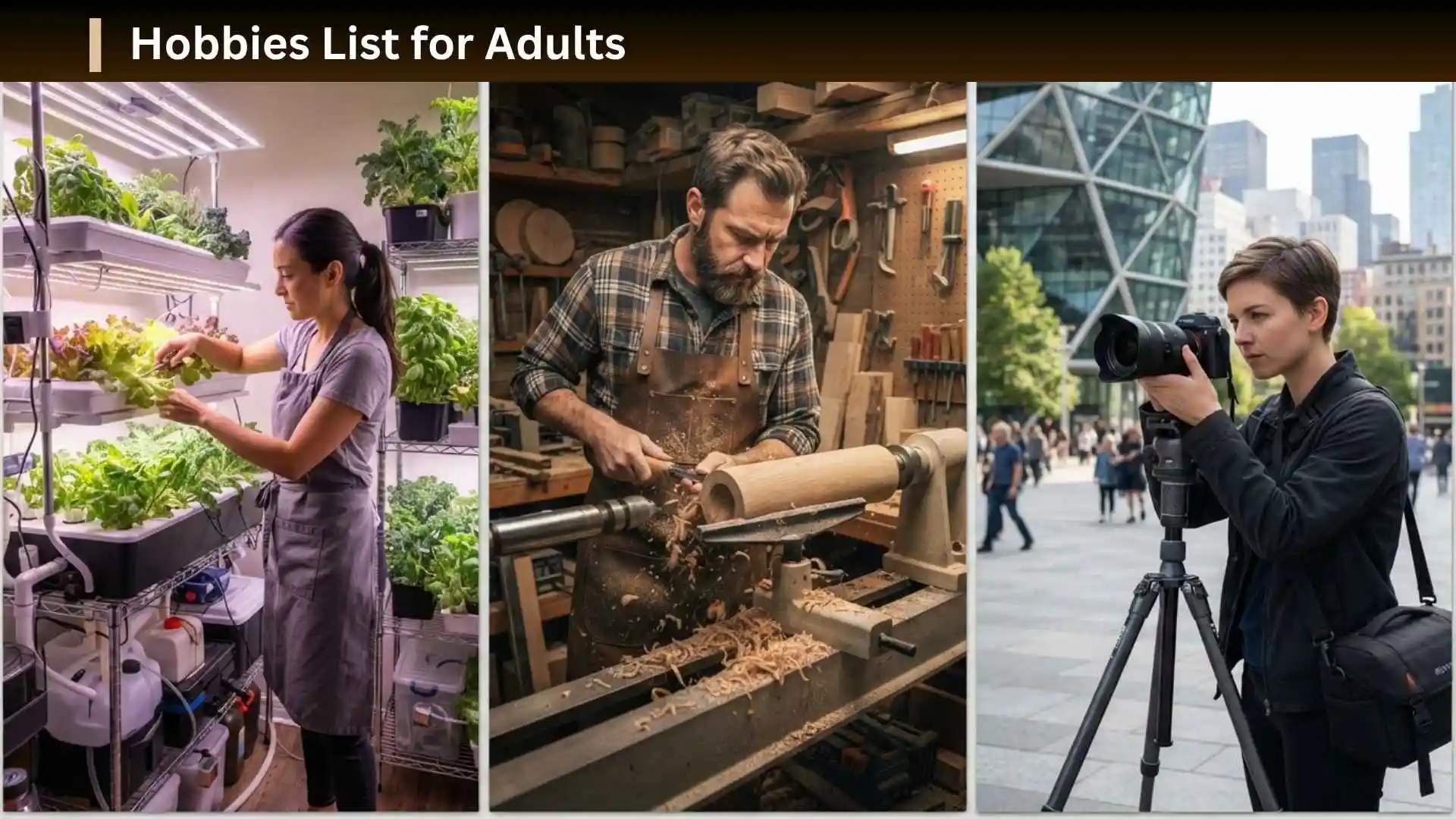
Finding a hobby as an adult can make everyday life more enjoyable while giving you something meaningful to look forward to. Whether you want to be more creative, stay active, learn a practical skill, meet new people, or simply relax after a busy day, there are countless hobbies to explore.
This hobbies list for adults brings together a wide range of ideas for different interests, budgets, personalities, and schedules. You’ll find creative, relaxing, social, outdoor, fitness, learning, and low-cost hobbies, including options you can enjoy at home.
The key is not to find the “perfect” hobby right away. Try activities that genuinely interest you, start small, and give yourself time to discover what you enjoy. A good hobby should fit your lifestyle and make your free time feel more rewarding.
Hobbies List for Adults(Quick Answer)
Some of the best hobbies for adults include:
- Reading
- Gardening
- Photography
- Cooking and baking
- Drawing and painting
- Hiking
- Yoga
- Knitting and crochet
- Woodworking
- Birdwatching
- Journaling
- Playing a musical instrument
- Fishing
- Puzzles and board games
- Sewing
- Home brewing coffee
- Creative writing
- Learning a language
- Camping
- Volunteering
- Scrapbooking
- Pottery
- Dancing
- Cycling
- Calligraphy
- Astronomy
- Model building
- Geocaching
- Genealogy
- DIY home projects
The best choice depends on what you want from your free time. A relaxing hobby may be ideal after a busy workday, while a social or active hobby may be better if you want to meet people or spend more time outdoors.
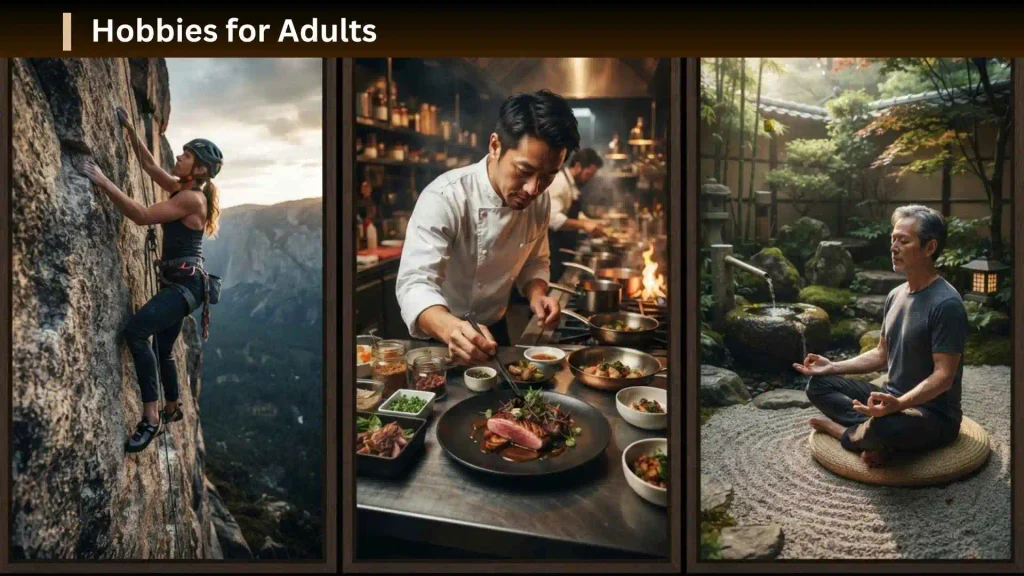
Hobbies for Adults
1. Reading
Reading is a flexible hobby that can fit into almost any schedule. You can choose novels, biographies, history, science, personal development, mysteries, or nonfiction.
Good for: Relaxation, learning, quiet evenings
Equipment: Books, e-reader, or library membership
Cost: Free to moderate
2. Gardening
Gardening combines hands-on work with time outdoors. You can grow vegetables, herbs, flowers, houseplants, or container gardens even if you have limited outdoor space.
Good for: Nature lovers and hands-on activities
Equipment: Containers, soil, seeds, and basic gardening tools
Cost: Low to moderate
3. Photography
Photography lets you turn everyday surroundings into creative subjects. You can use a smartphone or dedicated camera and explore landscapes, architecture, wildlife, food, or street photography.
Good for: Creative people who enjoy exploring
Equipment: Smartphone or camera
Cost: Free to moderate
4. Cooking
Cooking can become both a practical skill and a creative hobby. Try cuisines you have never prepared before, experiment with ingredients, or work through themed recipes.
Good for: Creative, practical, and food-focused adults
Equipment: Basic kitchen equipment
Cost: Low to moderate
5. Baking
Baking offers a structured form of creativity. Bread, cookies, cakes, pastries, and homemade desserts provide plenty of projects to work through.
Good for: People who enjoy precise, hands-on activities
Equipment: Oven, baking pans, measuring tools
Cost: Low to moderate
6. Drawing
You do not need to be naturally artistic to enjoy drawing. Practice with pencils, charcoal, colored pencils, markers, or digital tools.
Good for: Beginners and creative hobbyists
Equipment: Paper and drawing tools
Cost: Low
7. Painting
Painting gives you many directions to explore, including acrylic, watercolor, oil, and other media. Beginners can start with simple subjects rather than trying to create complex artwork immediately.
Good for: Creative expression
Equipment: Paint, brushes, and a suitable surface
Cost: Low to moderate
8. Hiking
Hiking turns exercise into exploration. Local trails, state parks, and national parks can provide different levels of difficulty and scenery.
Good for: Adults who enjoy movement and the outdoors
Equipment: Comfortable footwear, water, and weather-appropriate clothing
Cost: Free to moderate
9. Walking
Walking is one of the simplest hobbies to start. You can make it more interesting by exploring different neighborhoods, parks, trails, or scenic areas.
Good for: Beginners and people with limited free time
Equipment: Comfortable shoes
Cost: Minimal
10. Yoga
Yoga can combine movement, balance, flexibility, and relaxation. Adults can choose classes, videos, or independent practice according to their preferences.
Good for: People seeking a mindful physical hobby
Equipment: Usually a yoga mat
Cost: Free to moderate
11. Knitting
Knitting is a portable craft that can produce useful objects such as scarves, hats, blankets, and sweaters.
Good for: Patient, hands-on hobbyists
Equipment: Needles and yarn
Cost: Low to moderate
12. Crochet
Crochet is another fiber craft with projects ranging from simple squares to clothing and decorative pieces.
Good for: Creative adults who enjoy repetitive handwork
Equipment: Crochet hooks and yarn
Cost: Low
13. Sewing
Sewing can be both creative and practical. You can make clothing, bags, decorations, quilts, or alterations.
Good for: Adults who like making useful things
Equipment: Sewing machine or hand-sewing supplies
Cost: Low to moderate
14. Woodworking
Woodworking offers projects that range from beginner-friendly shelves and boxes to more advanced furniture.
Good for: Hands-on makers
Equipment: Basic hand tools or woodworking equipment
Cost: Moderate to high
15. Pottery
Pottery involves shaping clay into functional or decorative objects. Local studios and community classes can be a convenient way to get started without purchasing specialized equipment for home use.
Good for: Creative, tactile projects
Equipment: Depends on whether you use a studio or work at home
Cost: Moderate
16. Journaling
Journaling can take many forms, including daily writing, gratitude journals, travel journals, reading logs, and creative journals.
Good for: Reflection and writing
Equipment: Notebook and pen
Cost: Minimal
17. Creative Writing
You can write short stories, poetry, essays, personal reflections, or even work toward a novel.
Good for: Storytellers and people who enjoy language
Equipment: Notebook or computer
Cost: Free to low
18. Playing a Musical Instrument
Learning guitar, piano, ukulele, drums, violin, or another instrument gives you a skill you can develop over time.
Good for: Music lovers and structured learners
Equipment: Instrument and optional lessons
Cost: Moderate to high
19. Singing
Singing can be practiced privately, through lessons, community groups, choirs, or karaoke.
Good for: Music and performance enthusiasts
Equipment: Usually none to start
Cost: Free to moderate
20. Dancing
Dancing includes ballroom, salsa, swing, hip-hop, country dancing, ballet, and many other styles.
Good for: Active and social adults
Equipment: Comfortable clothing and appropriate footwear
Cost: Free to moderate
21. Cycling
Cycling can be recreational, social, or fitness-oriented. You can ride locally or explore longer routes as your skills develop.
Good for: Outdoor and active hobbyists
Equipment: Bicycle, helmet, and basic safety gear
Cost: Moderate to high
22. Fishing
Fishing combines patience, outdoor time, and learning about local environments.
Good for: Adults who prefer slower-paced outdoor activities
Equipment: Fishing equipment and any required local license
Cost: Moderate
23. Camping
Camping can range from simple overnight trips to more elaborate outdoor adventures.
Good for: Nature lovers and weekend adventurers
Equipment: Tent, sleeping gear, cooking supplies, and appropriate outdoor equipment
Cost: Moderate
24. Birdwatching
Birdwatching encourages you to observe wildlife and learn to identify different species by appearance, behavior, and calls.
Good for: Nature enthusiasts
Equipment: Binoculars and a field guide or identification app
Cost: Free to moderate
25. Astronomy
Astronomy can start with observing the night sky without specialized equipment. A pair of binoculars or a telescope can add another level of exploration.
Good for: Curious learners and science enthusiasts
Equipment: Optional binoculars or telescope
Cost: Free to high
26. Geocaching
Geocaching combines outdoor exploration with a location-based treasure-hunting concept. It can make familiar parks and walking routes feel like new destinations.
Good for: Adventurous and tech-friendly adults
Equipment: Smartphone or GPS device
Cost: Free to low
27. Puzzles
Jigsaw puzzles, crossword puzzles, logic puzzles, and other puzzle formats can provide quiet entertainment.
Good for: People who enjoy problem-solving
Equipment: Depends on the puzzle
Cost: Low
28. Board Games
Board games offer everything from quick casual games to complex strategy experiences.
Good for: Social hobbyists, families, and strategy fans
Equipment: Board games
Cost: Low to moderate
29. Model Building
Model building includes cars, aircraft, ships, miniatures, and other detailed models.
Good for: Detail-oriented hobbyists
Equipment: Model kits and appropriate tools
Cost: Low to moderate
30. Calligraphy
Calligraphy focuses on decorative handwriting and lettering. Modern variations include brush lettering and hand lettering.
Good for: Creative adults who like lettering
Equipment: Pens, brushes, ink, and paper
Cost: Low
31. Scrapbooking
Scrapbooking combines photographs, paper, writing, and decorative elements to preserve memories.
Good for: Craft and memory-keeping enthusiasts
Equipment: Album, photographs, paper, adhesive, and decorations
Cost: Low to moderate
32. Quilting
Quilting involves combining fabric pieces into larger designs and can become an extensive creative project.
Good for: Sewing and textile enthusiasts
Equipment: Fabric, cutting tools, thread, and sewing equipment
Cost: Moderate
33. Embroidery
Embroidery uses decorative stitches to create designs on fabric. Small projects can be inexpensive and portable.
Good for: Craft lovers and beginners
Equipment: Needle, thread, fabric, and embroidery hoop
Cost: Low
34. Home DIY Projects
DIY projects can include painting furniture, building shelves, organizing spaces, repairing household items, or creating decorations.
Good for: Practical makers
Equipment: Depends on the project
Cost: Low to moderate
35. Collecting
Adults collect many different things, including books, coins, stamps, postcards, sports memorabilia, records, art, or vintage objects.
Good for: Detail-oriented people with specific interests
Equipment: Depends on the collection
Cost: Low to high
36. Learning a Language
Learning another language can be a long-term intellectual hobby. Apps, books, classes, conversation groups, and media can all support practice.
Good for: Lifelong learners and travelers
Equipment: Learning materials or an app
Cost: Free to moderate
37. Genealogy
Genealogy involves researching family history through records, documents, photographs, and family stories.
Good for: Research-oriented adults
Equipment: Computer and organizational tools
Cost: Free to moderate
38. Volunteering
Volunteering can become a meaningful recurring activity rather than simply an occasional commitment. Opportunities may include community organizations, animal shelters, environmental projects, libraries, and other local groups.
Good for: Adults who want a community-focused hobby
Equipment: Depends on the activity
Cost: Usually minimal
39. Coffee Brewing
Learning about coffee can become a surprisingly deep hobby. Explore different beans, grind sizes, brewing methods, and preparation techniques.
Good for: Adults who enjoy practical experimentation
Equipment: Depends on the brewing method
Cost: Low to moderate
40. Tea Appreciation
Tea offers opportunities to explore different varieties, preparation methods, cultures, and tasting experiences.
Good for: Relaxing, sensory hobbies
Equipment: Tea and basic brewing equipment
Cost: Low to moderate
41. Origami
Origami turns paper into decorative and functional forms through folding techniques.
Good for: Low-cost creative projects
Equipment: Paper
Cost: Minimal
42. Lego and Building Sets
Building sets can provide structured creativity without requiring advanced artistic skills.
Good for: Adults who enjoy construction and collecting
Equipment: Building sets
Cost: Low to moderate
43. Digital Art
Digital art allows you to draw, paint, illustrate, or design using a computer, tablet, or other digital device.
Good for: Technology-oriented creatives
Equipment: Computer or tablet and software
Cost: Free to moderate
44. Graphic Design
Learning graphic design can turn creative experimentation into a practical skill. Projects might include posters, layouts, illustrations, or personal projects.
Good for: Creative and technology-focused adults
Equipment: Computer and design software
Cost: Free to moderate
45. Video Editing
Video editing can be a hobby for documenting travel, creating short films, making family videos, or experimenting with storytelling.
Good for: Creative people interested in media
Equipment: Computer and editing software
Cost: Free to moderate
46. Home Recording
Music lovers can explore recording vocals, instruments, podcasts, or sound experiments at home.
Good for: Musicians and audio enthusiasts
Equipment: Computer, microphone, and recording software depending on the project
Cost: Low to high
47. Stand Up Comedy
Writing and performing jokes can be a challenging creative hobby for adults who enjoy humor and public performance.
Good for: Confident performers and writers
Equipment: Notebook or phone for writing
Cost: Low
48. Theater
Community theater provides opportunities to act, work backstage, help with costumes, or participate in production.
Good for: Social and performance-oriented adults
Equipment: Depends on the role
Cost: Low to moderate
49. Travel Planning
You do not have to travel constantly to enjoy travel as a hobby. Researching destinations, designing itineraries, comparing transportation options, and learning about local cultures can be enjoyable in itself.
Good for: Curious planners and travel enthusiasts
Equipment: Computer or smartphone
Cost: Free to low
50. Home Organization
Organizing closets, books, tools, digital files, or collections can become a practical hobby for people who enjoy systems and improvement projects.
Good for: Organized, practical adults
Equipment: Depends on the project
Cost: Free to moderate
51. Nature Sketching
Nature sketching combines outdoor observation with drawing. You can sketch plants, landscapes, insects, birds, or whatever you encounter.
Good for: Adults who want a hobby combining nature and creativity
Equipment: Sketchbook and pencils
Cost: Low
52. Rockhounding
Rockhounding involves searching for and learning about rocks, minerals, and geological specimens where collecting is permitted.
Good for: Outdoor explorers and science enthusiasts
Equipment: Basic field supplies and identification resources
Cost: Low to moderate
Best Hobbies for Adults by Interest
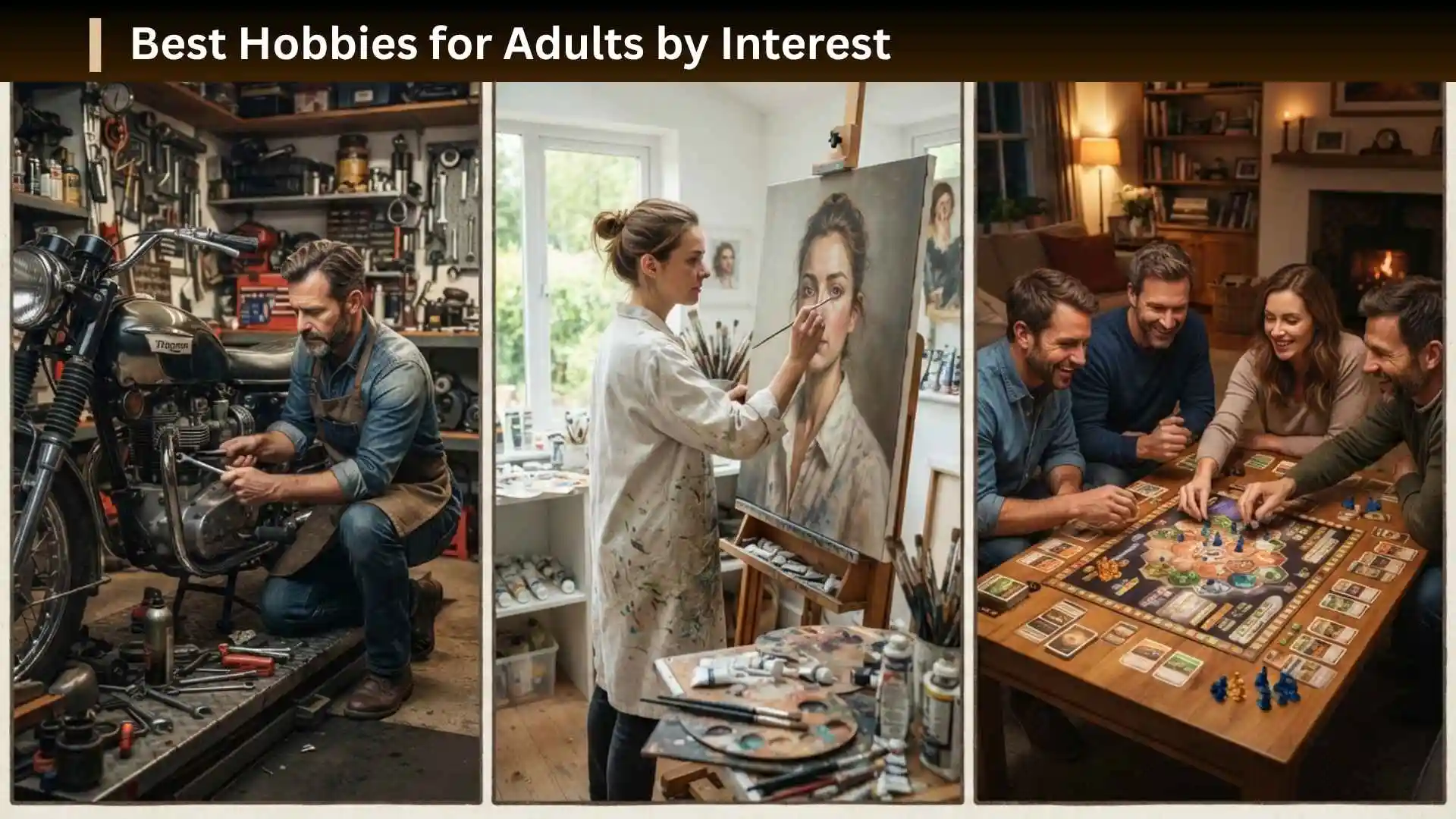
Different people want different experiences from a hobby. Instead of choosing randomly, start with the outcome you want.
| If you want to… | Consider… |
| Relax at home | Reading, journaling, knitting, puzzles, painting |
| Get outdoors | Hiking, gardening, fishing, birdwatching, camping |
| Be more active | Cycling, dancing, hiking, yoga |
| Make things | Woodworking, pottery, sewing, crochet |
| Be creative | Drawing, painting, photography, writing |
| Meet people | Dancing, volunteering, theater, board games |
| Learn something | Astronomy, genealogy, languages, cooking |
| Spend very little | Walking, reading, journaling, drawing, origami |
| Work with technology | Digital art, video editing, graphic design |
| Build practical skills | Cooking, gardening, sewing, DIY |
| Explore nature | Birdwatching, hiking, gardening, astronomy |
| Have a quiet hobby | Reading, puzzles, calligraphy, embroidery |
Best Low Cost Hobbies for Adults
A hobby does not need expensive equipment. Many worthwhile activities can begin with things you already have.
Consider:
- Reading
- Walking
- Journaling
- Creative writing
- Drawing
- Birdwatching
- Origami
- Yoga
- Cooking
- Photography with a smartphone
- Nature sketching
- Learning a language
- Genealogy
- Puzzles
- Volunteering
For low-cost hobbies, focus on activities where practice matters more than equipment. You can always invest in better supplies later if the hobby becomes a lasting interest.
Best Indoor Hobbies for Adults
Indoor hobbies can be especially useful during bad weather or when you prefer staying home.
Creative Indoor Hobbies
- Painting
- Drawing
- Calligraphy
- Crochet
- Knitting
- Sewing
- Embroidery
- Scrapbooking
- Creative writing
- Digital art
Relaxing Indoor Hobbies
- Reading
- Puzzles
- Journaling
- Tea appreciation
- Model building
- Board games
Educational Indoor Hobbies
- Language learning
- Genealogy
- Astronomy
- Cooking
- Graphic design
- Video editing
Best Outdoor Hobbies for Adults
If you spend most of your workday indoors, an outdoor hobby can provide a completely different type of free-time experience.
Popular options include:
- Hiking
- Walking
- Gardening
- Cycling
- Fishing
- Camping
- Birdwatching
- Geocaching
- Rockhounding
- Nature sketching
- Photography
- Astronomy
You do not necessarily need to make an outdoor hobby highly competitive or physically demanding. Gardening, birdwatching, photography, and walking can all be pursued at a comfortable pace.
Best Creative Hobbies for Adults
Creative hobbies are not limited to traditional art.
If you like making or designing things, consider:
- Painting
- Drawing
- Photography
- Pottery
- Woodworking
- Sewing
- Crochet
- Knitting
- Calligraphy
- Creative writing
- Digital art
- Graphic design
- Video editing
- Model building
Choose based on the kind of creativity you enjoy. If you like working with your hands, pottery or woodworking may be more satisfying than digital art. If you prefer storytelling, writing or video editing may be a better fit.
Best Social Hobbies for Adults
Making friends as an adult can be easier when a hobby naturally creates repeated opportunities to interact with the same people.
Good choices include:
- Dancing
- Community theater
- Volunteering
- Board games
- Group hiking
- Cycling groups
- Photography clubs
- Book clubs
- Choirs
- Craft groups
- Community gardening
- Language conversation groups
The key is not simply choosing a “social” hobby. Look for activities where you regularly meet the same people and participate together.
How to Choose the Right Hobby
If this long hobbies list for adults feels overwhelming, narrow your choices using five questions.
1. How much time do you have?
If you only have 15–30 minutes at a time, consider reading, journaling, drawing, walking, puzzles, or crochet.
If you regularly have several hours available, you can explore hobbies such as woodworking, hiking, gardening, photography, or music.
2. Do you want to stay home or go out?
Choose an indoor hobby if convenience is your priority. Choose an outdoor or community-based hobby if you want a reason to leave the house and explore.
3. Do you want to create something?
If the answer is yes, consider painting, woodworking, sewing, cooking, pottery, photography, writing, or crafts.
4. Do you want to learn a skill?
Look for hobbies with a natural progression, such as playing an instrument, learning a language, photography, cooking, gardening, or woodworking.
5. What do you want your hobby to add to your life?
This is perhaps the most useful question.
You might want:
- Relaxation: Reading, gardening, knitting
- Exercise: Hiking, cycling, dancing
- Creativity: Painting, writing, photography
- Social connection: Theater, volunteering, clubs
- Learning: Languages, astronomy, genealogy
- Practical skills: Cooking, sewing, DIY
How to Start a New Hobby Without Spending Too Much

A common mistake is buying everything before discovering whether you actually enjoy the activity.
Instead:
- Choose one hobby.
- Start with basic equipment.
- Try a beginner project or activity.
- Give yourself several sessions to learn the basics.
- Notice what you enjoy and what frustrates you.
- Upgrade equipment only if you remain interested.
For example, someone interested in photography can start with a smartphone instead of immediately buying an expensive camera. Someone interested in painting can begin with a small beginner set rather than a complete studio.
How to Turn a Hobby Into a Regular Habit
A hobby is easier to maintain when it has a place in your normal routine.
Keep the first sessions simple
Do not make your first project unnecessarily difficult. Early success can make it easier to continue.
Schedule hobby time
Put your hobby on your calendar just as you would another personal commitment.
Keep supplies accessible
If setting up takes 30 minutes, you may be less likely to start. Keeping basic supplies organized and ready can reduce that friction.
Track progress without obsessing over it
A simple project list, journal, photo record, or completed-project collection can help you see how your skills develop.
Let your interests change
You do not have to keep a hobby forever. Trying something for a few months and then moving to another activity is perfectly reasonable.
FAQs About Hobbies for Adults
What are some good hobbies for adults?
Good hobbies for adults include reading, gardening, cooking, photography, hiking, painting, drawing, writing, dancing, cycling, woodworking, knitting, puzzles, volunteering, and learning musical instruments. The best option depends on your available time, budget, interests, and preferred level of social interaction.
What is a good hobby for an adult who is bored?
Start with something that changes your environment or requires active participation. Hiking, cooking, photography, gardening, learning an instrument, painting, volunteering, or joining a group activity can be more engaging than passive entertainment.
What are the best inexpensive hobbies for adults?
Reading, walking, journaling, drawing, creative writing, origami, birdwatching, yoga, photography with a smartphone, and language learning can all be started inexpensively.
What hobbies can adults do at home?
Adults can enjoy reading, painting, drawing, writing, knitting, crochet, sewing, puzzles, cooking, baking, model building, digital art, music, genealogy, and language learning at home.
What hobbies help adults meet new people?
Dancing, volunteering, community theater, book clubs, board-game groups, group hikes, cycling clubs, choirs, photography groups, and community gardening can provide opportunities for regular social interaction.
What is a good hobby for someone who wants to learn something new?
Consider learning a language, playing an instrument, photography, cooking, astronomy, genealogy, woodworking, gardening, graphic design, or video editing. Choose something with enough depth that you can continue developing your skills over time.
Can a hobby become a side business?
Some hobbies can eventually become income-producing activities, such as photography, woodworking, baking, sewing, graphic design, writing, art, crafts, or video production. However, turning a hobby into a business introduces additional considerations such as pricing, taxes, marketing, licensing, and customer service.
How do I choose a hobby if I have many interests?
Pick the option that best matches your current goal rather than trying to find a perfect lifelong hobby. Choose one activity, try it several times, and evaluate whether you enjoy the process enough to continue.
Conclusion
The best hobbies list for adults is not necessarily the one with the most impressive or unusual activities. It is the one that helps you find an activity you genuinely want to return to.
If you want relaxation, try reading, gardening, knitting, or puzzles. If you want creativity, explore painting, photography, writing, pottery, or digital art. If you want movement, consider hiking, cycling, walking, or dancing. And if you want connection, look toward volunteering, theater, clubs, group activities, or classes.
Start small, avoid overspending at the beginning, and give yourself permission to experiment. A hobby does not have to be productive or profitable to be worth whil it simply needs to make your free time more enjoyable and meaningful.

I’m Ethan Mitchell, a curious writer who enjoys turning complex ideas into simple, useful information. At Cognivoora, I focus on creating clear and engaging content that readers can understand and apply in everyday life. I believe good writing should educate, answer real questions, and leave readers with something valuable to remember.
Books:
- The Everyday Mind
- Simple Ideas, Better Thinking