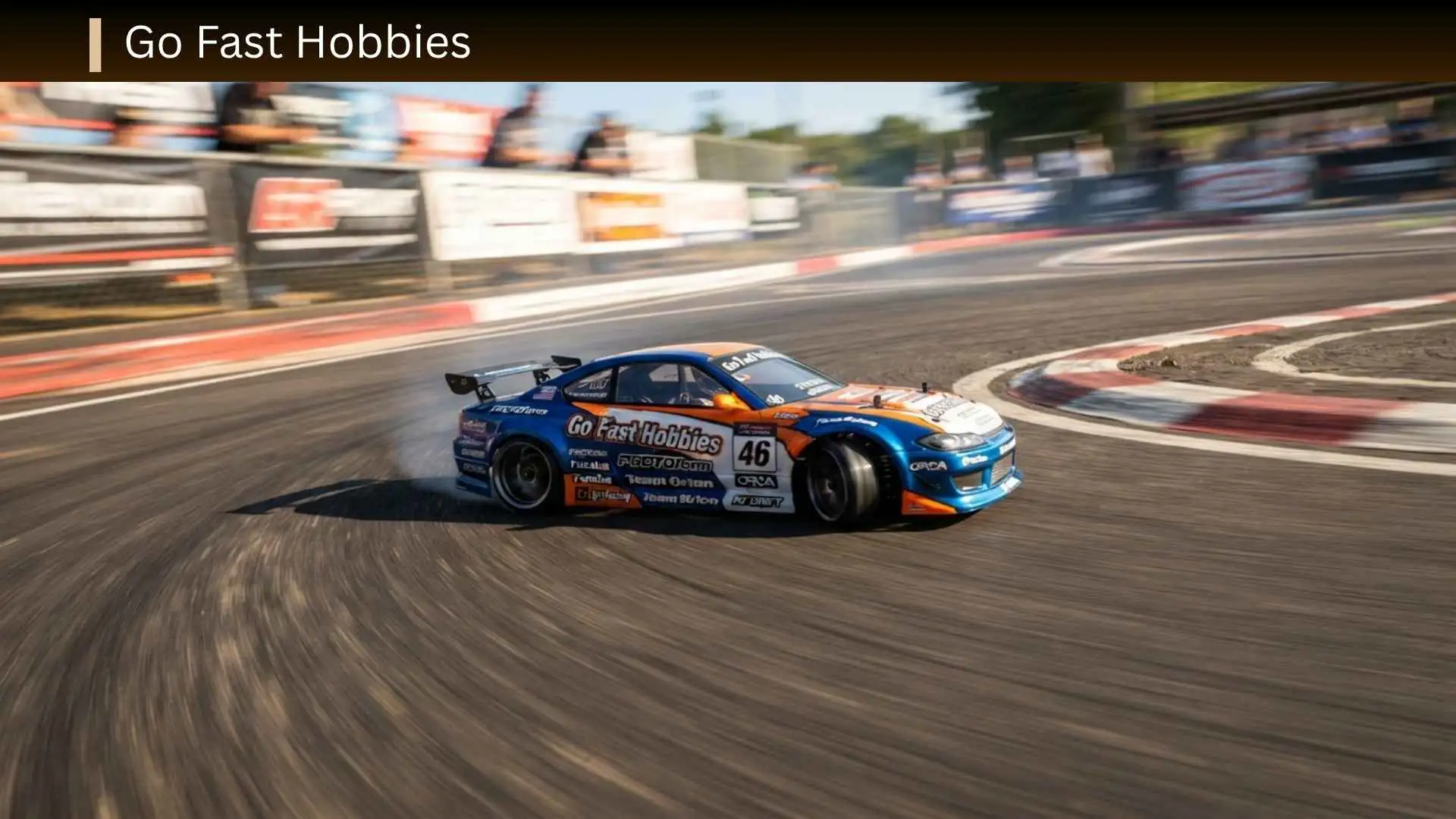
If you love staying active and enjoy the excitement of movement, fast hobbies can turn your free time into something much more thrilling. I know how boring it can feel when the same routine starts to repeat, so I want to help you discover activities that bring speed, energy, and a little adventure into your life.
Whether you want to race, ride, drive, fly, or simply challenge yourself to move faster, you can find a go-fast hobby that matches your interests and skill level. From cycling and karting to roller skating and other high-speed activities, let’s explore exciting ways to get your adrenaline going and make your free time unforgettable.
What Are Fast Hobbies?
Go fast hobbies are recreational activities centered around speed, rapid movement, racing, acceleration, or navigating quickly through a course or environment. They can include motorsports, cycling, skating, water sports, winter sports, and other activities where speed is an important part of the experience.
Not every fast hobby requires an expensive vehicle or professional equipment. For example, cycling can be relatively accessible, while kart racing lets beginners experience motorsport in a controlled environment without owning a race car.
A useful way to think about these hobbies is by the type of speed involved:
- Engine-powered speed: karting, motocross, track driving, and off-road vehicles
- Human-powered speed: cycling, rowing, sprinting, and inline skating
- Gravity-powered speed: skiing, snowboarding, and downhill mountain biking
- Water-based speed: jet skiing, waterskiing, and high-speed boating
- Competitive speed: racing activities where lap times, finishing positions, or personal records matter
25 Go Fast Hobbies to Try
1. Go-Kart Racing
Go-kart racing is one of the easiest ways for a beginner to explore speed-based recreation. You can race on indoor or outdoor tracks without owning a kart, and many facilities provide the kart and basic safety equipment.
The appeal comes from acceleration, cornering, braking, and trying to complete laps faster than other drivers or your previous time.
Best for: Beginners who want a motorsport experience without purchasing a vehicle.
Cost: Moderate per session; higher if you eventually purchase your own kart.
Beginner tip: Learn proper braking and cornering before concentrating on maximum speed.
2. Cycling
Cycling offers a practical way to enjoy speed while remaining relatively accessible. Road cycling can become particularly exciting on appropriate roads, closed courses, or organized races.
You can also make speed a personal challenge by tracking distance, average pace, hill climbs, or timed routes.
Best for: People who want a fast outdoor hobby that can also be used for everyday transportation or fitness.
Cost: Low to high depending on the bicycle and equipment.
Beginner tip: Start with manageable routes and prioritize bike fit, visibility, and safe riding habits rather than immediately chasing maximum speed.
3. Mountain Biking
Mountain biking adds terrain and technical challenges to the speed of cycling. Downhill sections can be particularly fast, but the hobby is not simply about going as quickly as possible.
Rocks, roots, corners, elevation changes, and changing trail conditions require control and judgment.
Best for: Outdoor enthusiasts who want speed combined with technical riding.
Cost: Moderate to high.
Beginner tip: Learn basic bike handling on easier trails before progressing to steeper or more technical terrain.
4. Downhill Mountain Biking
Downhill mountain biking focuses specifically on descending trails, often with significant elevation changes and technical features.
It is more specialized than ordinary mountain biking because riders need strong braking, cornering, balance, and terrain-reading skills.
Best for: Experienced mountain bikers looking for a more speed-focused challenge.
Cost: Moderate to high.
Important consideration: Protective equipment and appropriate trails are especially important because falls can happen at higher speeds.
5. Motocross
Motocross combines motorcycles, dirt tracks, jumps, corners, and competitive racing. Unlike simply riding a motorcycle quickly on public roads, motocross takes place in purpose-built environments.
The hobby demands physical coordination as well as motorcycle control.
Best for: Riders interested in off-road motorsports and competitive racing.
Cost: High compared with many recreational hobbies because motorcycles, maintenance, transportation, and protective equipment can add up.
Beginner tip: Start with professional instruction and an appropriate beginner-friendly riding environment.
6. Track Driving
Track driving allows car enthusiasts to experience higher-performance driving in a controlled motorsport environment rather than treating public roads as a place to test speed.
The emphasis is not just acceleration. Learning racing lines, braking points, cornering technique, and vehicle control can become the deeper hobby.
Best for: Car enthusiasts who want to develop driving skills in a structured environment.
Cost: Moderate to very high depending on the event, vehicle, tires, maintenance, and equipment.
Important distinction: A racetrack is an appropriate place for speed practice; public roads are not.
7. Autocross
Autocross is a form of motorsport in which drivers navigate a temporary course, often marked with cones, while trying to achieve a competitive time.
Compared with some forms of track racing, autocross can be an approachable introduction to organized motorsport because courses are typically compact and speeds are generally lower than those encountered on full racing circuits.
Best for: Car owners who want competitive driving without immediately committing to full circuit racing.
Cost: Moderate, although vehicle preparation can increase expenses.
8. Drag Racing
Drag racing focuses on straight-line acceleration over a short, defined distance.
The simplicity of the format makes acceleration the central attraction: two vehicles can compete to see who reaches the finish first.
Best for: People fascinated by acceleration, performance cars, and motorsport engineering.
Cost: Can range from relatively accessible at organized amateur events to very expensive at higher levels.
Safety: Speed testing should be limited to properly organized racing environments.
9. Dirt Karting
Dirt karting brings kart racing onto dirt surfaces, adding sliding and changing traction to the driving experience.
Instead of relying entirely on clean pavement grip, drivers have to understand how the kart behaves when the surface becomes loose.
Best for: People who enjoy racing and want something different from conventional paved kart tracks.
Cost: Moderate to high depending on whether you rent or own equipment.
10. Inline Skating
Inline skating can be surprisingly fast, particularly on smooth, appropriate paths. It combines balance, propulsion, braking, and directional control.
For people who do not want a motorized hobby, inline skating provides a way to experience speed using relatively compact equipment.
Best for: Beginners who want a portable, human-powered speed hobby.
Cost: Low to moderate.
Beginner tip: Learn reliable stopping techniques before practicing higher-speed skating.
11. Rollerblading
Rollerblading is commonly used as a general term for inline skating and can be enjoyed recreationally or as a speed-focused activity.
Long, smooth paths allow experienced skaters to build pace while working on efficient strides and control.
Best for: People who want a relatively affordable wheeled hobby.
Cost: Low to moderate.
12. Sprinting
Sprinting turns speed itself into the hobby. Rather than relying on a vehicle or equipment, you work on producing short bursts of maximum or near-maximum running speed.
Track sprinting can also provide measurable goals because you can compare your own times over standardized distances.
Best for: People who want a simple hobby centered entirely around human speed.
Cost: Low to moderate.
Beginner tip: Build gradually and learn appropriate warm-up and running technique rather than repeatedly sprinting at maximum effort from the beginning.
13. Rowing
Rowing may not immediately come to mind when thinking about go fast hobbies, but racing shells can move quickly when crews coordinate their strokes effectively.
The hobby can be recreational, competitive, indoor, or water-based depending on the equipment and setting.
Best for: People who enjoy speed combined with teamwork and endurance.
Cost: Low to high depending on whether you use a club, indoor rowing machine, or personal boat.
14. Kayak Racing
Kayaking becomes a speed-focused hobby when racing or fast-moving water is involved. Sprint kayaking emphasizes efficient paddling over a defined course, while whitewater disciplines add rapidly changing water and technical navigation.
Best for: Water enthusiasts who want speed without an engine.
Cost: Moderate to high.
Safety: Water conditions, appropriate equipment, and experience level matter significantly.
15. Jet Skiing
Jet skiing provides a motorized water-based speed experience. Riders can enjoy maneuvering across suitable waterways while learning how acceleration, turning, and water conditions affect handling.
Because water traffic, local rules, weather, and operating requirements vary, beginners should learn the applicable rules before riding.
Best for: People who enjoy water and want an engine-powered hobby.
Cost: High when ownership, storage, maintenance, fuel, and safety equipment are considered.
16. Waterskiing
Waterskiing combines speed, balance, and water skills. A boat pulls the skier across the water, requiring the participant to maintain body position while managing changing conditions.
Best for: People who enjoy water sports and want a physically active speed experience.
Cost: Moderate to high depending on access to a boat and equipment.
Beginner tip: Learning from an experienced instructor can make the early stages considerably easier.
17. Snowboarding
Snowboarding can become a speed-oriented hobby as riders develop better carving and downhill control.
The goal should not simply be to descend as fast as possible. Terrain awareness, braking, turning, and maintaining control are essential parts of becoming a better rider.
Best for: People who enjoy winter sports and downhill movement.
Cost: Moderate to high because of equipment, clothing, lift access, and travel.
18. Alpine Skiing
Alpine skiing offers a natural combination of downhill speed and technical control.
Different slopes provide different challenges, from beginner terrain to steep and demanding runs. Experienced skiers can develop more advanced carving and racing skills.
Best for: Winter enthusiasts who want speed with a strong technical component.
Cost: Moderate to high.
19. Speed Skating
Speed skating is a specialized skating discipline built around moving efficiently and quickly over ice.
It can be pursued recreationally or competitively, with technique playing a major role in performance.
Best for: People who enjoy ice skating but want a more speed-oriented challenge.
Cost: Moderate, depending on rink access and equipment.
20. BMX Racing
BMX racing uses specially designed bikes on dedicated tracks featuring turns, jumps, and other obstacles.
Races are short and explosive, making acceleration and bike handling particularly important.
Best for: Riders who enjoy cycling but want a competitive, high-energy format.
Cost: Moderate to high.
Beginner tip: Practice fundamental bike control before attempting advanced jumps or racing lines.
21. Speed Flying
Speed flying combines a small gliding wing with mountain movement and is a highly specialized adventure sport.
It is substantially different from simply hiking or recreational flying because the activity involves technical equipment, weather considerations, and significant consequences for mistakes.
Best for: Highly experienced adventure-sport participants willing to undertake specialized training.
Cost: High.
Safety: This is not an appropriate beginner speed hobby to learn independently.
22. Land Sailing
Land sailing uses a wheeled vehicle equipped with a sail, allowing wind to propel it across suitable open terrain.
It is unusual compared with mainstream speed hobbies and depends heavily on access to appropriate locations and conditions.
Best for: People interested in unusual mechanical and wind-powered activities.
Cost: Moderate to high.
23. Soapbox Racing
Soapbox racing involves gravity-powered vehicles traveling downhill on an appropriate course. Depending on the event, participants may build or modify their own vehicles.
The hobby can combine design, construction, teamwork, and racing rather than focusing solely on speed.
Best for: Families, makers, engineering enthusiasts, and people who enjoy building things.
Cost: Low to moderate for simple projects, with substantial variation depending on the vehicle and event.
24. RC Car Racing
Remote-control car racing gives you the excitement of vehicle speed without sitting inside the vehicle.
Racing can take place on indoor tracks, outdoor dirt circuits, paved courses, or other dedicated venues. Hobbyists can also become deeply involved in setup, maintenance, tuning, and vehicle customization.
Best for: People who enjoy cars and technology but want a smaller-scale hobby.
Cost: Low to high depending on the vehicle and how deeply you get into the hobby.
25. Slot Car Racing
Slot car racing is a tabletop racing hobby in which miniature cars travel along tracks with slots that guide their movement.
It does not provide physical high-speed thrills like motocross or skiing, but it captures the competitive and technical side of racing in a compact environment.
Best for: People who enjoy racing, collecting, and tinkering indoors.
Cost: Low to moderate, with enthusiast setups potentially costing more.
The Best Go Fast Hobby by What You Want
There is no single best speed hobby for everyone. Your ideal choice depends on what you actually want from the experience.
| If you want… | Consider… | Why |
| An easy introduction to motorsports | Go-kart racing | No personal race vehicle is required for many sessions |
| Human-powered speed | Cycling | Accessible and adaptable |
| Technical outdoor riding | Mountain biking | Combines speed with terrain |
| Competitive driving | Autocross | Focuses on timed driving |
| Straight-line acceleration | Drag racing | Centers on rapid acceleration |
| Winter speed | Skiing or snowboarding | Uses downhill terrain |
| Water-based speed | Jet skiing | Combines engines and water |
| Affordable wheeled fun | Inline skating | Compact and relatively accessible |
| Indoor racing | RC or slot car racing | Can be practiced in controlled environments |
| Team-based speed | Rowing | Requires coordinated movement |
| Pure human speed | Sprinting | Speed is the central objective |
How to Choose the Right Go Fast Hobby
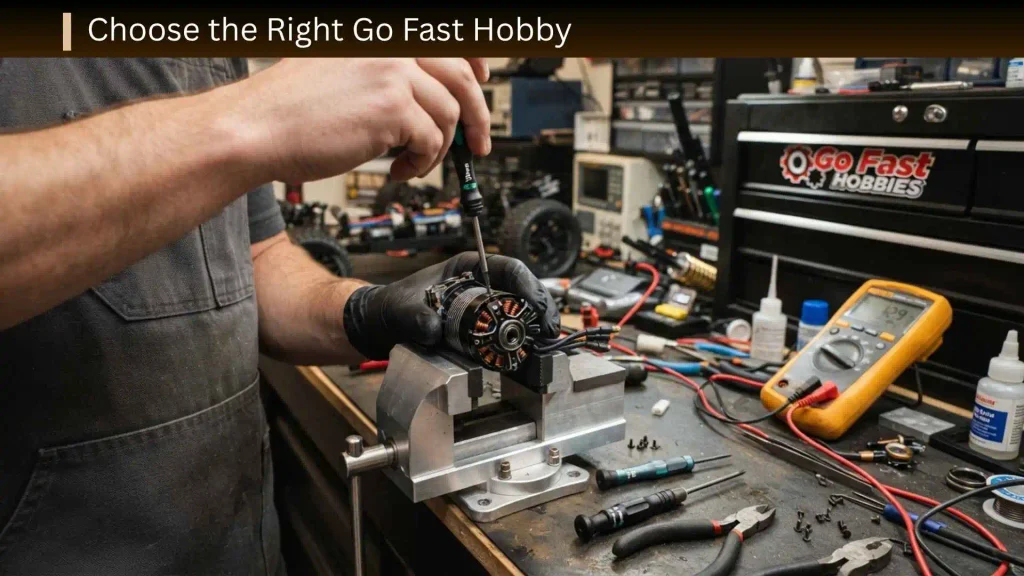
Before spending money on equipment, consider five practical questions.
How Much Can You Spend?
Some hobbies have inexpensive entry points, while others involve vehicles, maintenance, travel, storage, and specialized equipment.
A useful approach is to separate starting cost from ongoing cost.
For example, renting a kart occasionally is very different financially from owning and maintaining a racing kart. Likewise, trying skiing on a rental setup differs from purchasing skis and traveling regularly to ski resorts.
Do You Want Speed or Competition?
These are not always the same thing.
If you mainly want the sensation of moving quickly, skiing, cycling, or jet skiing may appeal to you.
If you want measurable competition, autocross, kart racing, sprinting, BMX racing, or RC racing may be better choices.
Do You Prefer Machines or Physical Activity?
If you love engines and mechanical systems, look toward karting, motorsports, motorcycles, or RC vehicles.
If you prefer using your own body, consider sprinting, cycling, skating, rowing, or skiing.
Where Will You Practice?
Location can eliminate some options immediately.
A person living near cycling trails has different opportunities from someone near a ski resort, karting facility, or motorsports track.
Before buying equipment, check whether you have a legitimate and appropriate place to use it.
How Much Risk Are You Comfortable Managing?
Speed increases the importance of control and safety.
A recreational cyclist, a competitive kart racer, and a downhill rider face very different environments and risks. Choose an activity that matches your current ability rather than choosing solely because it looks fast.
How Beginners Can Start a Go Fast Hobby
The safest way to begin most speed hobbies is to learn control before chasing maximum speed.
Start with an activity that provides an appropriate environment for beginners. A karting facility, cycling club, skating rink, ski school, or organized motorsport event may offer a more structured introduction than trying to learn independently.
A practical progression is:
- Choose the activity based on your actual interests.
- Learn the basic rules and equipment.
- Use beginner-level equipment where appropriate.
- Learn braking, stopping, turning, and control before increasing speed.
- Practice in an appropriate environment.
- Increase difficulty gradually.
- Replace or upgrade equipment only when your current setup limits your progress.
The fastest activity is not necessarily the most enjoyable one. A hobby that you can practice regularly and safely will usually provide more long-term value than an expensive activity you rarely have access to.
Safety Considerations for Speed-Based Hobbies
Speed should be treated as something to control rather than something to maximize at every opportunity.
The specific precautions depend on the hobby, but several principles apply broadly:
- Use appropriate protective equipment.
- Follow the rules of the facility, trail, course, or governing organization.
- Learn from qualified instructors when the activity is technical or high-risk.
- Check equipment before use.
- Pay attention to weather and environmental conditions.
- Avoid using public roads or shared spaces in ways that endanger other people.
- Progress gradually rather than attempting advanced maneuvers immediately.
- Never assume that experience in one speed hobby automatically transfers to another.
For vehicle-based hobbies especially, organized facilities provide a much more appropriate setting for performance driving or racing than ordinary public roads.
Are Go Fast Hobbies Expensive?
They can be, but not all go fast hobbies require a large budget.
Activities such as sprinting, cycling, inline skating, and some forms of skating can have relatively accessible entry points. Karting can also be explored through individual rental sessions rather than vehicle ownership.
On the other hand, hobbies involving cars, motorcycles, boats, aircraft, or specialized winter equipment can become significantly more expensive because the total cost may include:
- Equipment
- Maintenance
- Fuel or electricity
- Protective gear
- Training
- Facility or track fees
- Transportation
- Storage
- Repairs
- Travel
When comparing hobbies, look at the total cost of participating regularly, not just the purchase price of the primary equipment.
Go Fast Hobbies vs. Extreme Sports
The terms are related but not identical.
A go fast hobby can simply be a recreational activity where speed is important. Cycling, karting, and skiing can all fit this description without necessarily being extreme sports.
An extreme sport generally involves a greater level of physical, environmental, or technical challenge and may include activities such as highly specialized downhill or aerial sports.
This distinction matters because someone looking for an exciting hobby does not necessarily need to choose the most dangerous or technically demanding option.
The Best Fast Hobbies for Different Personalities
If You Love Cars
Try kart racing, autocross, track driving, drag racing, or RC car racing.
If You Love the Outdoors
Consider mountain biking, skiing, snowboarding, BMX racing, or kayaking.
If You Prefer Inexpensive Activities
Look at sprinting, cycling, inline skating, and recreational rollerblading.
If You Enjoy Technology and Tinkering
RC car racing and slot car racing can combine speed with mechanical experimentation.
If You Want Organized Competition
Consider kart racing, autocross, BMX racing, sprinting, speed skating, or rowing.
If You Want Water-Based Excitement
Explore jet skiing, waterskiing, or kayak racing, provided you have suitable access and training.
Common Mistakes Beginners Should Avoid
One of the biggest mistakes is assuming that going faster automatically means having more fun. In many speed hobbies, control and technique make the activity more rewarding.
Another mistake is buying advanced equipment too early. Beginners often benefit more from learning the fundamentals than from immediately purchasing expensive equipment.
It is also important not to confuse a closed-course hobby with ordinary public-road behavior. Activities such as racing and performance driving belong in environments designed for them.
Finally, consider access before investing heavily. A hobby may look exciting online, but if the nearest suitable facility is several hours away, it may not become a practical regular hobby.
Frequently Asked Questions
What Are the Best Go Fast Hobbies for Beginners?
Go-kart racing, cycling, inline skating, and some forms of recreational skiing can be approachable starting points. The best option depends on your budget, location, physical ability, and interest in vehicles.
What Is the Cheapest Go Fast Hobby?
Sprinting can have a very low equipment cost, while cycling and inline skating can also be relatively affordable. Actual costs depend on equipment quality, training, facilities, and how frequently you participate.
What Go Fast Hobbies Involve Cars?
Kart racing, autocross, track driving, drag racing, and RC car racing all involve car-based or car-like racing experiences. The appropriate choice depends on whether you want to drive a full-size vehicle, race competitively, or work with a smaller model.
What Are Good Go Fast Hobbies Without a Motor?
Cycling, sprinting, inline skating, BMX racing, rowing, kayaking, skiing, snowboarding, and speed skating can all provide speed without relying on an engine.
Are Go Fast Hobbies Dangerous?
Some speed hobbies carry meaningful risks, particularly those involving vehicles, steep terrain, water, or specialized equipment. Risk varies significantly by activity and skill level. Appropriate training, equipment, conditions, and controlled environments can help manage those risks.
Can I Enjoy Speed Hobbies Without Competing?
Yes. Many activities can be enjoyed recreationally without racing against other people. Cycling, skiing, karting, inline skating, mountain biking, and jet skiing can all be pursued primarily for the experience of movement and skill development.
Which Go Fast Hobby Is Best for Someone Who Likes Adrenaline?
There is no universal answer. Kart racing, motocross, downhill mountain biking, skiing, snowboarding, and certain water sports can provide fast-paced experiences, but the appropriate choice depends heavily on experience, training, environment, and personal risk tolerance.
Conclusion
Go fast hobbies cover much more than traditional motorsports. You can experience speed through cycling, skating, skiing, kart racing, sprinting, water sports, RC racing, and many other activities.
For beginners, the smartest starting point is usually not the fastest or most extreme option. Choose something you can access regularly, learn the fundamentals, and build speed as your control and confidence improve.
Whether you want competitive racing, outdoor adventure, mechanical tinkering, or simply the enjoyment of moving quickly, there is a speed-focused hobby that can fit your interests and budget.

I’m Olivia Bennett, a passionate writer who loves exploring ideas, learning new concepts, and sharing knowledge in a straightforward way. I write for Cognivoora with the goal of making useful topics easier to understand without unnecessary complexity. My approach combines research, clarity, and a reader-first perspective.
Books:
- Think Clearly, Live Better
- The Curious Reader’s Guide