Finding a hobby can feel like discovering a little corner of life that is completely yours. If you love cute, creative, relaxing, or feminine activities, girly hobbies can give you something fun to look forward to and a chance to express your personality. I believe the best hobby is one that makes you forget the clock and simply enjoy the moment.
Whether you want to make something beautiful, learn a new skill, relax after a busy day, or add more creativity to your routine, you have plenty of options to explore. From journaling and crafting to baking, painting, photography, and DIY projects, let’s explore girly hobbies that can inspire your creativity and help you find something you genuinely love.
What Are Girly Hobbies?
“Girly hobbies” is an informal term for hobbies that are often associated with traditionally feminine interests, aesthetics, creativity, self-expression, or social activities. The label is broad, so it can include everything from makeup and fashion to pottery, gardening, writing, fitness, cooking, photography, and collecting.
There is no fixed definition of what makes a hobby “girly.” A hobby does not have to fit a particular aesthetic or gender stereotype to be enjoyable.
The most useful way to choose one is to ask:
- Do I want something creative?
- Do I prefer relaxing or active hobbies?
- Do I want a hobby I can do alone?
- Do I want to socialize and meet people?
- Do I want to learn a practical skill?
- Do I want something inexpensive?
- Do I want to make things I can use or give as gifts?
Best Girly Hobbies to Try
Here are some of the most versatile options, organized by the kind of experience they offer.
1. Journaling
Journaling is an easy hobby for anyone who enjoys writing, organizing thoughts, recording memories, or decorating pages.
You can keep a traditional diary, gratitude journal, reading journal, travel journal, dream journal, or creative journal. A notebook and pen are enough to begin.
Best for: Quiet time, writing, reflection, and creativity
Starting cost: Low
Beginner tip: Start with five minutes a day rather than trying to fill an entire page.
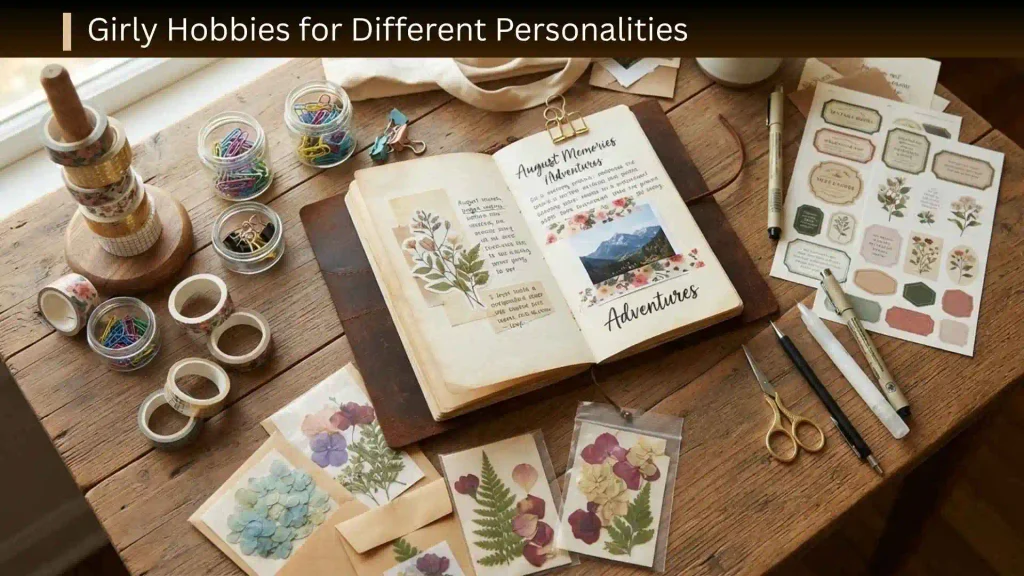
2. Scrapbooking
Scrapbooking combines creativity and memory keeping. You can create pages around vacations, birthdays, friendships, family events, favorite seasons, or everyday moments.
Photos can be combined with paper, stickers, handwritten notes, ribbons, decorative elements, and other memorabilia.
Best for: Creative people who enjoy preserving memories
Starting cost: Low to moderate
Beginner tip: Choose one theme for your first page instead of buying supplies for an entire scrapbook.
3. Reading
Reading is one of the simplest hobbies to start because you can begin with books you already own or use a library.
You can explore fiction, romance, mysteries, fantasy, biographies, essays, poetry, or nonfiction. Creating a reading list or joining a book club can make the hobby more engaging.
Best for: Relaxation, imagination, and learning
Starting cost: Low or free through libraries
Beginner tip: Pick books based on subjects you already enjoy rather than forcing yourself through popular titles.
4. Creative Writing
Creative writing can include short stories, poetry, personal essays, fictional characters, scripts, or longer stories.
You do not need to plan an entire novel to begin. Writing one page about a character, memory, place, or imaginary situation can be enough.
Best for: Storytellers and people who enjoy expressing ideas through words
Starting cost: Very low
Beginner tip: Give yourself permission to write badly during the first draft. Editing comes later.
5. Painting
Painting offers plenty of room for experimentation. Beginners can try acrylics, watercolor, gouache, or other beginner-friendly mediums.
You can paint flowers, landscapes, abstract designs, portraits, decorative objects, or small canvases.
Best for: Visual creativity and hands-on projects
Starting cost: Low to moderate
Beginner tip: Start with a small canvas and a limited selection of colors.
6. Drawing
Drawing is another accessible creative hobby. You can practice portraits, fashion illustrations, flowers, animals, cartoons, architecture, or simple doodles.
A pencil and paper are enough to start, although digital drawing is also an option.
Best for: Artistic practice and creative expression
Starting cost: Low
Beginner tip: Focus on regular practice instead of trying to create perfect drawings immediately.
7. Watercolor Painting
Watercolor is particularly appealing if you enjoy delicate colors and loose, expressive artwork.
It works well for flowers, landscapes, greeting cards, botanical illustrations, and small decorative pieces.
Best for: Relaxed, portable art projects
Starting cost: Low to moderate
Beginner tip: Practice controlling the amount of water before worrying about complicated paintings.
8. Pottery and Ceramics
Pottery lets you work with clay to create functional or decorative objects such as mugs, bowls, trays, vases, and sculptures.
Unlike many home crafts, pottery usually requires access to appropriate equipment or a studio for firing clay.
Best for: Hands-on creativity and tactile projects
Starting cost: Moderate
Beginner tip: Look for an introductory class rather than buying equipment for home use immediately.
9. Crochet
Crochet is a practical craft that can turn yarn into blankets, scarves, bags, flowers, clothing, plush items, and decorations.
It is portable and can be practiced in short sessions.
Best for: Repetitive, hands-on creative work
Starting cost: Low
Beginner tip: Learn a few basic stitches first and make a small project such as a coaster or simple scarf.
10. Knitting
Knitting is another fiber craft with both creative and practical possibilities.
You can make sweaters, scarves, hats, socks, blankets, and small decorative pieces. It can also become a long-term skill as you progress to more complex patterns.
Best for: Patient crafters who enjoy working with yarn
Starting cost: Low to moderate
Beginner tip: Start with a simple rectangular project so you can concentrate on learning the basic stitches.
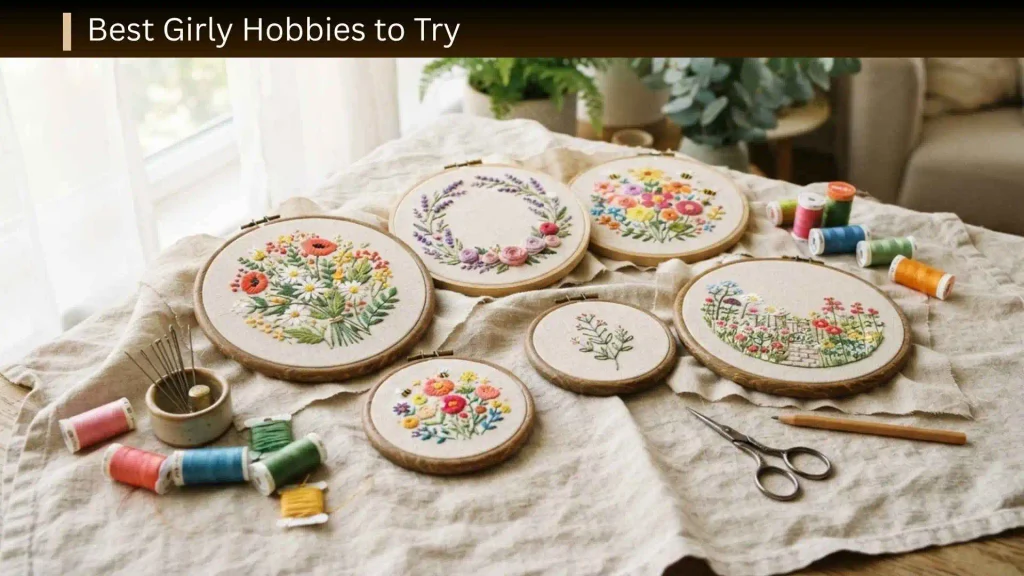
11. Embroidery
Embroidery allows you to decorate fabric with thread-based designs.
You can create flowers, initials, illustrations, patterns, or personalized gifts on clothing, bags, hoops, and household textiles.
Best for: Detailed and decorative crafting
Starting cost: Low
Beginner tip: Begin with a small hoop and a few basic stitches.
12. Sewing
Sewing can develop into both a creative and practical skill. Beginners can start with simple projects such as tote bags, pillow covers, skirts, or basic clothing alterations.
As your skills improve, you can make more complicated garments and accessories.
Best for: Fashion, crafts, and practical creativity
Starting cost: Low to moderate depending on equipment
Beginner tip: Learn how to operate your sewing machine safely before attempting complicated patterns.
13. Jewelry Making
Jewelry making can include beading, wire work, clay jewelry, charms, or simple bracelet and necklace designs.
It is especially appealing if you like accessories and personalized gifts.
Best for: Small creative projects and accessories
Starting cost: Low to moderate
Beginner tip: Start with one type of jewelry instead of purchasing many different tools and materials.
14. Beading
Beading is a narrower form of jewelry and craft making that can involve beads, charms, threads, and cords.
You can make bracelets, necklaces, earrings, keychains, phone charms, or decorative pieces.
Best for: Small projects with lots of design flexibility
Starting cost: Low
Beginner tip: Use a simple repeating pattern before experimenting with complicated designs.
15. Candle Making
Candle making can become a creative hobby involving fragrance, containers, colors, shapes, and decorative presentation.
Because it involves heated materials, beginners should follow the safety instructions for their chosen materials and equipment.
Best for: Crafting and home décor enthusiasts
Starting cost: Moderate
Beginner tip: Begin with a basic container candle rather than complicated shapes or advanced techniques.
16. Soap Making
Making decorative soaps can be an interesting craft if you enjoy experimenting with shapes, scents, colors, and presentation.
Beginners should choose an appropriate beginner method and follow product-specific handling instructions rather than improvising with chemical ingredients.
Best for: Craft lovers and people interested in handmade products
Starting cost: Low to moderate
Beginner tip: Start with a simple beginner-friendly method before progressing to more advanced soap-making techniques.
17. Baking
Baking combines creativity with a useful everyday skill. You can learn to make cookies, cakes, brownies, bread, pastries, cupcakes, and other desserts.
It can also become a social hobby when you bake for family gatherings or celebrations.
Best for: Food lovers and creative home cooks
Starting cost: Low to moderate
Beginner tip: Master a few basic recipes before experimenting with complicated decorating techniques.
18. Cake Decorating
If you enjoy baking and visual design, cake decorating can become a hobby of its own.
You can learn piping, frosting techniques, simple decorations, themed cakes, and eventually more elaborate designs.
Best for: Creative bakers
Starting cost: Low to moderate
Beginner tip: Practice piping on a flat surface or parchment before decorating an actual cake.
19. Cooking
Cooking is both a hobby and a practical life skill. You can focus on a particular cuisine, experiment with recipes, or develop your own versions of favorite meals.
It can be especially rewarding if you enjoy trying new flavors and sharing food with others.
Best for: Food enthusiasts and practical learners
Starting cost: Usually low if you already have basic kitchen equipment
Beginner tip: Choose five reliable recipes you genuinely enjoy and gradually expand your skills.
20. Gardening
Gardening can range from growing herbs on a windowsill to maintaining a large outdoor garden.
You can focus on flowers, vegetables, herbs, houseplants, or container gardening.
Best for: Nature lovers and people who enjoy caring for living things
Starting cost: Low to moderate
Beginner tip: Start with a few plants suited to your available light and space.
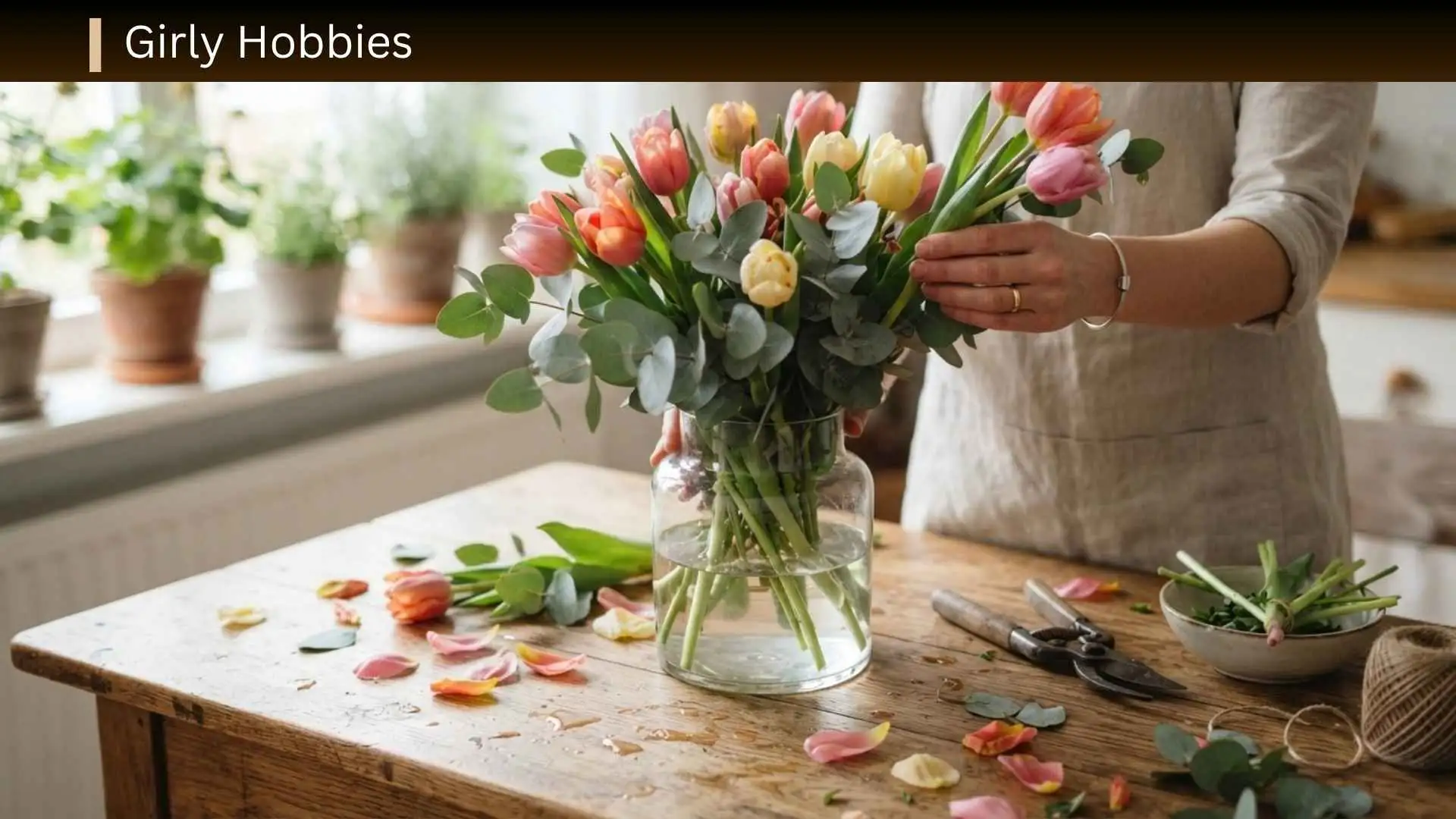
21. Flower Arranging
Flower arranging combines creativity, color selection, composition, and an appreciation for plants.
You can work with fresh flowers, dried flowers, or long-lasting decorative materials.
Best for: People interested in flowers, décor, and visual design
Starting cost: Variable
Beginner tip: Start with a small arrangement using three or four complementary types of flowers or foliage.
22. Photography
Photography can be started with a smartphone, making it one of the more accessible creative hobbies.
You can specialize in portraits, nature, architecture, food, fashion, travel, pets, or everyday life.
Best for: Visual storytellers
Starting cost: Very low with a smartphone; higher with dedicated equipment
Beginner tip: Learn composition and lighting before spending heavily on camera gear.
23. Fashion Styling
Fashion styling is more than buying clothes. It involves learning how colors, proportions, textures, accessories, and silhouettes work together.
You can experiment with outfits using clothes you already own.
Best for: People interested in clothing and personal style
Starting cost: Low if you use your existing wardrobe
Beginner tip: Create several outfits around one basic item to understand how accessories and layering change the look.
24. Thrifting
Thrifting can become a hobby centered on discovering unique clothing, accessories, furniture, books, or décor.
It can also encourage more thoughtful shopping because the focus is on finding useful or interesting pre-owned items.
Best for: Treasure hunters and fashion or décor enthusiasts
Starting cost: Flexible
Beginner tip: Decide what you are actually looking for before shopping so the hobby does not turn into unnecessary spending.
25. Makeup
Makeup can be approached as a creative skill rather than simply part of a daily routine.
You can practice natural looks, color combinations, eyeliner techniques, creative makeup, or occasion-specific styles.
Best for: Beauty and visual creativity enthusiasts
Starting cost: Flexible
Beginner tip: Learn a few foundational techniques before buying a large collection of products.
26. Nail Art
Nail art is a compact creative hobby that can include simple patterns, seasonal designs, minimalist details, or more elaborate artwork.
It can be practiced on your own nails or artificial practice tips.
Best for: Detail-oriented creative people
Starting cost: Low to moderate
Beginner tip: Start with simple dots, lines, and color combinations before attempting intricate designs.
27. Hair Styling
Learning different hairstyles can be a useful and creative hobby. You can practice braids, buns, curls, updos, or everyday styling techniques.
Best for: People interested in beauty and practical skills
Starting cost: Low if you already have basic tools
Beginner tip: Master one technique at a time and practice on yourself or a mannequin head.
28. Calligraphy
Calligraphy turns handwriting into a decorative art form.
It can be used for greeting cards, envelopes, journals, artwork, invitations, and personalized gifts.
Best for: People who enjoy lettering and precision
Starting cost: Low
Beginner tip: Practice consistent strokes before trying complete words and elaborate compositions.
29. Hand Lettering
Hand lettering is related to calligraphy but focuses more broadly on drawing and designing letters.
You can create quotes, signs, cards, journal headings, and digital artwork.
Best for: Creative people who enjoy typography
Starting cost: Low
Beginner tip: Experiment with different letter shapes and styles rather than trying to copy one style perfectly.
30. Digital Art
Digital art gives you the ability to create illustrations, stickers, wallpapers, character designs, and other artwork electronically.
A tablet or computer can be useful, but beginners can also explore simpler drawing applications.
Best for: People interested in art and technology
Starting cost: Low to high depending on equipment
Beginner tip: Learn the basic tools of one application before constantly switching between programs.
Relaxing Girly Hobbies for Your Free Time
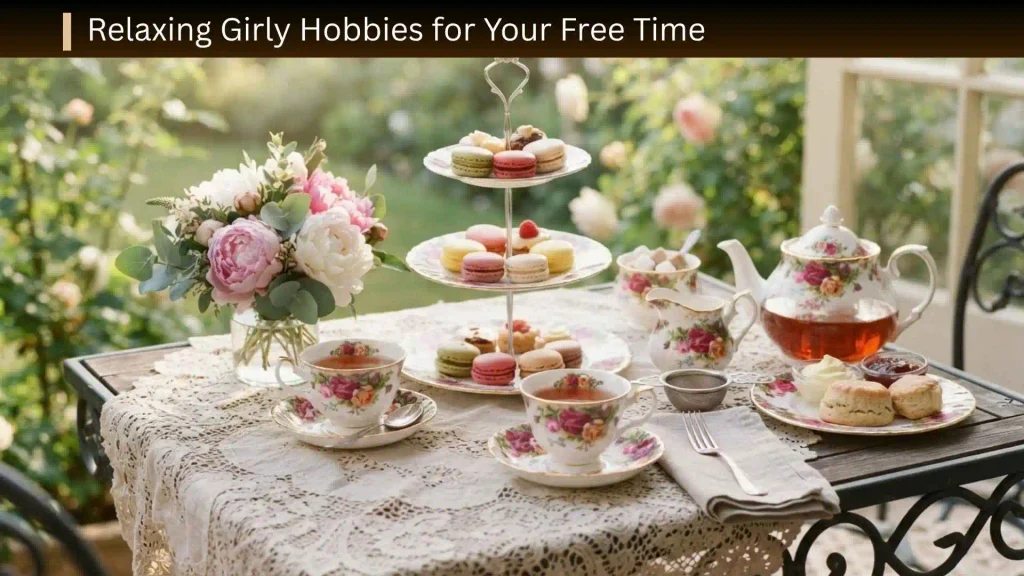
If your main goal is to slow down and enjoy quiet time, consider hobbies that do not require intense concentration or extensive preparation.
Good choices include:
- Reading
- Journaling
- Coloring
- Crochet
- Knitting
- Scrapbooking
- Puzzles
- Calligraphy
- Flower arranging
- Gardening
- Baking
- Tea blending
- Birdwatching
- Listening to music
- Collecting postcards
- Pressing flowers
The right relaxing hobby depends on whether you prefer passive relaxation or gentle concentration. Watching a movie is passive; crocheting or coloring gives your hands something to do while still being relatively low-pressure.
Creative Girly Hobbies
For people who want to make things, creative hobbies offer some of the most variety.
Consider:
- Painting
- Drawing
- Digital art
- Photography
- Jewelry making
- Embroidery
- Crochet
- Knitting
- Sewing
- Pottery
- Scrapbooking
- Calligraphy
- Cake decorating
- Floral design
- Creative writing
A useful way to choose is to decide whether you prefer working with your hands, visual design, words, food, or digital tools.
Girly Hobbies You Can Do at Home
You do not need a studio, gym, or dedicated hobby room to start many activities.
Low-space options
- Journaling
- Reading
- Drawing
- Coloring
- Calligraphy
- Hand lettering
- Crochet
- Knitting
- Embroidery
- Creative writing
- Digital art
Kitchen based options
- Baking
- Cooking
- Cake decorating
- Bread making
- Recipe development
Home and nature options
- Houseplant care
- Container gardening
- Flower arranging
- Indoor herb growing
- Pressing flowers
If space is limited, choose a hobby whose supplies can fit inside one small container or drawer. This makes it easier to keep the activity accessible instead of allowing equipment to become a barrier.
Girly Hobbies for Introverts
If you prefer spending your free time alone or in low-social-pressure environments, consider:
- Reading
- Journaling
- Painting
- Drawing
- Writing
- Crochet
- Knitting
- Embroidery
- Photography
- Gardening
- Baking
- Digital art
- Calligraphy
- Puzzles
- Collecting
Some of these hobbies can become social later through classes, clubs, online communities, or local groups, but they do not require social interaction to be enjoyable.
Girly Hobbies for Social People
If you want your hobby to help you spend time with others, choose activities that naturally create opportunities for interaction.
Good options include:
- Dance classes
- Book clubs
- Craft workshops
- Pottery classes
- Cooking classes
- Baking groups
- Photography walks
- Gardening clubs
- Choir or singing groups
- Volunteering
- Recreational sports
- Community theater
- Art classes
The key difference is that these hobbies provide a built-in social setting. You do not have to rely entirely on making plans with friends because the activity itself brings people together.
Girly Hobbies That Build Useful Skills
Some hobbies are enjoyable while also developing skills that can transfer to everyday life or future projects.
| Hobby | Useful Skill | Starting Cost | Social Level |
| Cooking | Meal preparation | Low–Moderate | Low |
| Sewing | Clothing and repairs | Low–Moderate | Low |
| Photography | Visual storytelling | Low–High | Low–Moderate |
| Writing | Communication | Very Low | Low |
| Gardening | Plant care | Low–Moderate | Low–Moderate |
| Baking | Food preparation | Low–Moderate | Low–Moderate |
| Calligraphy | Lettering | Low | Low |
| Digital art | Digital creativity | Low–High | Low |
| Dance | Movement and coordination | Low–Moderate | High |
| Public speaking | Communication | Low | High |
Starting cost can vary substantially depending on whether you already own basic supplies and how far you take the hobby.
Girly Hobbies on a Budget
You do not need to spend a lot of money to have a creative hobby.
Some inexpensive starting points include:
- Reading through a public library
- Journaling with an inexpensive notebook
- Drawing with ordinary pencils
- Writing short stories
- Taking photos with your phone
- Walking and nature photography
- Free digital drawing applications
- Gardening from seeds or cuttings where appropriate
- Learning calligraphy with basic supplies
- Making simple paper crafts
- Baking recipes with ingredients you already have
- Learning new hairstyles using your existing tools
A good rule is to test the hobby before investing heavily in it. If you enjoy it consistently, then upgrading equipment or supplies makes more sense.
Girly Hobbies for Different Personalities
The best hobby often depends more on personality than appearance.
If you are creative
Try painting, drawing, photography, digital art, jewelry making, fashion styling, or creative writing.
If you are organized
Try scrapbooking, journaling, collecting, gardening, meal planning, or sewing projects.
If you are patient and detail-oriented
Try embroidery, nail art, calligraphy, knitting, puzzles, or miniature crafts.
If you love nature
Try gardening, flower arranging, hiking, birdwatching, nature photography, or plant collecting.
If you love fashion and beauty
Try sewing, fashion styling, makeup artistry, nail art, hair styling, or jewelry making.
If you love food
Try baking, cooking, cake decorating, bread making, or learning a particular cuisine.
If you love stories
Try reading, creative writing, book collecting, journaling, or joining a book club.
How to Choose the Right Girly Hobby
Instead of choosing a hobby simply because it looks attractive online, consider four practical questions.
1. What do you actually enjoy?
Think about activities you naturally spend time researching, watching, discussing, or experimenting with.
If you constantly save outfit ideas, fashion styling may suit you. If you save recipes, cooking or baking could be a better choice.
2. How much time do you have?
Some hobbies work well in ten-minute sessions, while others need longer uninterrupted periods.
For a busy schedule, journaling, drawing, crochet, reading, or photography may be easier to fit into your routine than a hobby requiring extensive setup.
3. What is your budget?
Start with the simplest version of the hobby.
You do not need professional photography equipment to learn photography, an expensive sewing machine to learn basic sewing, or a large art collection to start drawing.
4. Do you want a finished product?
Some people enjoy the process itself, while others need a tangible result to stay interested.
If you like making things you can use, consider:
- Sewing
- Baking
- Crochet
- Jewelry making
- Gardening
- Candle making
- Painting
- Pottery
If you prefer experiences or learning, consider:
- Reading
- Photography
- Dance
- Writing
- Birdwatching
- Cooking
- Learning a language
A Simple Way to Start a New Hobby
Once you have chosen an activity, avoid turning it into a major project immediately.
Use this simple approach:
- Choose one hobby.
- Set a small budget.
- Get only the basic supplies.
- Spend one or two short sessions learning the basics.
- Complete a beginner-level project.
- Decide whether you genuinely enjoy the process.
- Invest more only if you want to continue.
This approach helps distinguish between liking the idea of a hobby and actually enjoying doing it.
Can Girly Hobbies Become More Than Just Hobbies?
Some hobbies can eventually develop into skills, creative portfolios, community activities, or potential income opportunities.
For example, someone who enjoys photography may eventually offer photography services. A baker may sell selected baked goods where legally permitted. A person who enjoys sewing might create handmade items. A writer might eventually pursue freelance writing.
However, a hobby does not need to become a business to be worthwhile. Turning every enjoyable activity into a source of income can also introduce deadlines, customer expectations, expenses, and pressure.
Choose monetization only if it makes the hobby more enjoyable rather than less enjoyable.
Frequently Asked Questions
What are the best girly hobbies?
Popular options include journaling, reading, painting, baking, photography, gardening, crochet, sewing, jewelry making, fashion styling, makeup, nail art, creative writing, and flower arranging. The best choice depends on your interests, budget, time, and preferred level of social interaction.
What is a good girly hobby to start at home?
Journaling, reading, drawing, painting, crochet, knitting, embroidery, baking, digital art, calligraphy, gardening, and creative writing can all be started at home. Choose one based on the space and equipment you already have.
What are some girly hobbies that are inexpensive?
Reading, writing, journaling, drawing, photography with a smartphone, walking, basic gardening, calligraphy, coloring, and many paper crafts can be started relatively inexpensively.
What are good girly hobbies for introverts?
Reading, journaling, writing, painting, drawing, crochet, knitting, embroidery, photography, gardening, puzzles, digital art, and calligraphy are good choices if you prefer independent activities.
What girly hobbies are good for meeting people?
Dance classes, book clubs, pottery workshops, art classes, cooking classes, photography groups, gardening clubs, recreational sports, volunteering, and community theater can provide natural opportunities to meet people.
What are some creative girly hobbies?
Painting, drawing, digital art, photography, jewelry making, embroidery, crochet, sewing, pottery, scrapbooking, calligraphy, cake decorating, floral design, and creative writing are all creative options.
Can a hobby be considered girly even if it is not traditionally feminine?
Absolutely. “Girly hobby” is an informal category rather than a strict definition. If you enjoy an activity, you do not need to justify it based on gender. Hobbies can be personal, creative, active, practical, or simply fun.
Conclusion
The best girly hobbies are not necessarily the ones that fit a particular aesthetic—they are the ones that give you a reason to look forward to your free time. Whether you prefer quiet hobbies such as reading and journaling, creative activities such as painting and crochet, practical skills such as cooking and sewing, or social experiences such as dance and book clubs, there are plenty of options to explore.
Start with one activity that genuinely interests you, keep the initial investment small, and give yourself enough time to discover whether you enjoy the process. Your ideal hobby does not have to be impressive or productive; it simply needs to be meaningful to you.

I’m Ethan Mitchell, a curious writer who enjoys turning complex ideas into simple, useful information. At Cognivoora, I focus on creating clear and engaging content that readers can understand and apply in everyday life. I believe good writing should educate, answer real questions, and leave readers with something valuable to remember.
Books:
- The Everyday Mind
- Simple Ideas, Better Thinking