
Finding the right hobby can change how you spend your free time. I believe a good hobby should give you something to look forward to, help you grow, or simply let you enjoy yourself without pressure. Whether you want to learn a useful skill, stay active, get creative, meet new people, or relax after a busy day, you have plenty of options to explore.
The challenge is knowing which hobby actually fits your personality, interests, budget, and lifestyle. In this guide to good hobbies for men, you’ll discover a variety of enjoyable and meaningful activities from creative and outdoor hobbies to fitness, technology, learning, and relaxing pursuits. You may even find a hobby you never thought you would enjoy.
What Makes a Good Hobby for Men?
A good hobby should give you a reason to return to it. It does not need to be productive, expensive, competitive, or impressive to other people.
When choosing a hobby, consider:
- Interest: Would you genuinely enjoy learning more about it?
- Time: Can you fit it into your normal week?
- Budget: Can you start without spending more than you’re comfortable with?
- Space: Does it require a garage, workshop, yard, or dedicated room?
- Social level: Do you prefer doing things alone or with other people?
- Learning curve: Do you want something easy to begin or a skill you can spend years mastering?
- Physical demand: Are you looking for movement or something more relaxed?
- Progress: Does the hobby give you projects, skills, or milestones to work toward?
The best choice is usually the hobby you can realistically continue, not necessarily the one that looks most exciting at first.
25 Good Hobbies for Men

1. Photography
Photography is a versatile hobby because you can approach it in many different ways. You might photograph landscapes, wildlife, architecture, people, street scenes, cars, food, or everyday moments.
You do not need an expensive camera to begin. A smartphone can teach you the fundamentals of composition, lighting, perspective, and timing before you invest in dedicated equipment.
Best for: Creative people, travelers, visual learners, and beginners who want a hobby they can practice almost anywhere.
Getting started: Choose one subject you enjoy photographing and practice taking different compositions rather than immediately buying more equipment.
2. Cooking
Cooking is both a practical skill and a hobby with almost unlimited room for improvement. You can explore different cuisines, learn specific techniques, or specialize in areas such as grilling, baking, pasta, or homemade sauces.
One advantage is that your progress produces something tangible. Instead of simply practicing a skill, you can eventually share the results with family or friends.
Best for: Men who enjoy practical skills, experimentation, food, or hosting.
Getting started: Learn five to ten dependable meals before attempting complicated recipes.
3. Hiking
Hiking combines exploration with physical activity and can be adapted to different fitness levels. A short local trail can be enough for a beginner, while experienced hikers can gradually explore longer and more challenging routes.
Before heading out, check trail conditions and weather, carry appropriate water and essentials, and let someone know your plans when hiking in remote areas.
Best for: Outdoor enthusiasts, people who enjoy nature, and anyone who wants a hobby away from screens.
4. Fishing
Fishing can be a quiet, patient hobby or a more active outdoor pursuit. It can also introduce you to topics such as local fish species, weather, water conditions, casting techniques, and equipment.
Rules vary by location, so beginners should check the applicable state fishing regulations and licensing requirements before fishing.
Best for: People who enjoy the outdoors, patience, and peaceful activities.
Getting started: Learn the regulations for your area and start with simple, beginner-friendly tackle rather than buying a large collection of equipment.
5. Woodworking
Woodworking offers a clear sense of progression. You can begin with simple projects and gradually learn measuring, cutting, joining, sanding, finishing, and tool maintenance.
The hobby can become as simple or advanced as you want. Small projects such as shelves or boxes require much less space and equipment than furniture making.
Best for: Hands-on learners, makers, and people who like building physical objects.
Important: Learn how to use each power tool safely and use the protective equipment recommended for the tool and task.
6. Gardening
Gardening is a good option if you want a hobby that gets you outdoors while giving you an ongoing project. You can grow vegetables, herbs, flowers, native plants, or container plants.
You do not need a large yard. Container gardening can work in smaller spaces when conditions are suitable.
Best for: People who enjoy nature, hands-on work, and gradual projects.
Getting started: Choose plants suited to your climate and available sunlight instead of choosing plants solely because they look interesting.
7. Cycling
Cycling can be recreational, social, adventurous, or fitness-oriented. You can ride around your neighborhood, explore trails, commute by bike, or eventually participate in organized rides.
A major benefit is that the hobby can scale with your interests. You can keep it simple or become interested in route planning, bike maintenance, touring, or competitive cycling.
Best for: Active people and anyone who enjoys exploring their surroundings.
Getting started: A properly fitted bike and appropriate safety equipment matter more than immediately buying an expensive model.
8. Reading
Reading is one of the easiest hobbies to start because it requires relatively little equipment and can fit into short periods of free time.
You can read fiction, history, biographies, science, business, philosophy, travel writing, or subjects connected to other interests.
Best for: People who prefer quiet, independent hobbies.
Getting started: Pick books based on subjects you already find interesting rather than forcing yourself through books you think you are supposed to read.
9. Playing a Musical Instrument
Learning guitar, piano, drums, bass, or another instrument gives you a skill that can develop for years.
The early stages can feel challenging because coordination and basic technique take practice. However, choosing songs you actually enjoy can make practice more engaging.
Best for: Creative people, music lovers, and anyone who enjoys skill development.
Getting started: Learn basic technique while working toward simple songs you genuinely want to play.
10. Running
Running requires relatively little equipment compared with many other sports and can be done in many locations.
You can approach it casually or work toward goals such as completing a particular distance. Beginners should increase their training gradually rather than trying to match experienced runners immediately.
Best for: People who enjoy individual physical activity and measurable goals.
11. Fishing and Outdoor Camping
Camping can turn an ordinary weekend into a practical outdoor project. Planning meals, selecting a campsite, setting up shelter, navigating, and managing equipment all become part of the hobby.
It can also be combined with hiking, fishing, photography, or cooking.
Best for: Men who enjoy outdoor exploration and practical skills.
Getting started: Try a well-established campground before attempting remote or complicated trips.
12. Drawing and Sketching
Drawing does not require artistic talent before you begin. The hobby itself is a way to develop observation, proportion, perspective, and visual communication.
You can sketch people, buildings, landscapes, objects, vehicles, or imaginary designs.
Best for: Creative people who want an inexpensive indoor hobby.
Getting started: A pencil and sketchbook are enough for your first practice sessions.
13. Chess
Chess offers a structured intellectual challenge with clear rules and almost endless opportunities for improvement.
You can play casually with friends or study openings, tactics, endgames, and strategic ideas if you want a deeper challenge.
Best for: Strategic thinkers and people who enjoy competition without requiring physical activity.
14. Home Brewing and Fermentation
Fermentation can become an interesting food-focused hobby when approached responsibly. Depending on your interests, you can explore foods such as sourdough, fermented vegetables, or other culinary fermentation projects.
For alcoholic brewing, make sure you understand applicable laws and safe practices before starting.
Best for: People who enjoy cooking, experimentation, and detailed processes.
15. Model Building
Model building includes many different interests, from scale vehicles and aircraft to ships, miniatures, and detailed scenes.
It rewards patience and attention to detail. Painting and customization can become hobbies of their own.
Best for: Detail-oriented people who want a relaxing indoor project.
16. Collecting
Collecting can revolve around almost anything meaningful to you: books, coins, vintage objects, sports memorabilia, records, watches, postcards, or other items.
The most satisfying collections usually have a personal theme rather than simply becoming a pile of things.
Best for: People who enjoy research, history, organization, and discovering unusual objects.
Tip: Set a budget and define what belongs in your collection before purchasing items.
17. Car Detailing
If you enjoy cars but do not necessarily want to work on engines, detailing can be a hands-on alternative.
You can learn about washing methods, interior cleaning, paint care, polishing, and organization. It can also complement an interest in automotive photography or maintenance.
Best for: Car enthusiasts and people who enjoy detailed practical work.
18. DIY Home Improvement
DIY projects can turn everyday household tasks into opportunities to develop useful skills.
Depending on your experience, projects might include painting, shelving, basic repairs, furniture assembly, or improving storage.
For electrical, gas, structural, or other potentially hazardous work, follow applicable safety requirements and use qualified professionals when appropriate.
Best for: Practical people who enjoy solving household problems.
19. Golf
Golf combines outdoor recreation, technique, concentration, and social interaction. It can be played casually or become a long-term pursuit involving course strategy and skill development.
You do not need to become highly competitive for it to be worthwhile.
Best for: People who enjoy outdoor sports, structured practice, and social activities.
20. Swimming
Swimming can be both recreational and skill-based. Beyond simply swimming for exercise, you can work on technique, endurance, different strokes, or open-water skills where appropriate.
People new to swimming should practice in appropriate supervised environments, particularly when learning.
Best for: People who prefer low-impact-feeling water activities and structured skill development.
21. Geocaching
Geocaching combines outdoor exploration with a technology-assisted treasure-hunting concept. Participants use location information to find hidden caches.
It can encourage you to explore parks, trails, neighborhoods, and unfamiliar places while giving ordinary walks an additional purpose.
Best for: Explorers, puzzle lovers, families, and people who want an outdoor hobby with a game-like element.
22. Volunteering
Volunteering can function as a hobby when you regularly dedicate free time to a cause or community activity you care about.
Options can include helping at community organizations, supporting animal welfare groups, participating in environmental projects, or assisting with local events.
Best for: People who want a social activity with a clear community purpose.
23. Home Fitness
Home fitness can include strength training, mobility work, bodyweight exercises, yoga, or other forms of physical activity.
The important distinction is that the hobby does not require an elaborate home gym. Your available space and goals should determine the equipment you use.
Best for: People who prefer exercising privately or want a convenient activity at home.
24. Writing
Writing can be a surprisingly flexible hobby. You can write short stories, personal essays, poetry, travel notes, reviews, fiction, or simply keep a journal.
You can also combine writing with another interest. Someone interested in hiking, for example, might write trip reports or trail observations.
Best for: People who enjoy ideas, storytelling, reflection, or communication.
25. Learning a New Language
Learning a language gives you a long-term skill-building project. It can also connect naturally with travel, food, history, music, movies, and relationships with people from other cultures.
Progress usually comes from consistent practice rather than occasional long study sessions.
Best for: Lifelong learners, travelers, and people who enjoy cultural exploration.
Best Hobbies for Men Based on Your Interests
Not every hobby fits every personality. Instead of asking which hobby is universally “best,” consider what you want from your free time.
| If you want… | Consider… |
| A creative outlet | Photography, drawing, music, writing |
| More outdoor time | Hiking, fishing, camping, gardening |
| A practical skill | Cooking, woodworking, DIY |
| A quiet hobby | Reading, chess, model building, collecting |
| More physical activity | Cycling, running, swimming, hiking |
| A social hobby | Golf, volunteering, cycling, music |
| A low-cost hobby | Reading, drawing, writing, running |
| A hobby with long-term mastery | Music, chess, woodworking, photography |
| A hands-on project | Woodworking, gardening, model building, car detailing |
| Something to combine with travel | Photography, hiking, cycling, language learning |
Good Low Cost Hobbies for Men

You do not need a large budget to develop a worthwhile hobby.
Some inexpensive options include:
- Reading
- Running
- Walking and hiking
- Drawing
- Writing
- Chess
- Gardening with containers
- Learning a language
- Photography with a smartphone
- Cooking with ingredients you already use
- Bodyweight fitness
A useful approach is to start with what you already own. If an activity holds your attention for several weeks, then consider whether additional equipment would genuinely improve it.
Good Hobbies for Men Who Want to Learn a Skill
If you want your hobby to involve noticeable skill development, consider:
- Woodworking — learn tools, construction, and finishing.
- Cooking — develop knife skills, techniques, and recipe judgment.
- Photography — improve composition, lighting, and editing.
- Music — develop technique, rhythm, and musical understanding.
- Chess — study tactics, strategy, and endgames.
- Gardening — learn about plants, soil, seasons, and growing conditions.
- A new language — develop vocabulary, comprehension, and communication.
- DIY — develop practical problem-solving and home maintenance skills.
These hobbies are particularly useful if you enjoy seeing yourself improve rather than simply looking for passive entertainment.
Good Hobbies for Men Who Prefer to Be Alone
If you prefer independent activities, you do not need to choose a hobby built around clubs, teams, or large groups.
Consider:
- Reading
- Photography
- Drawing
- Writing
- Chess
- Fishing
- Gardening
- Woodworking
- Model building
- Cooking
- Hiking
- Collecting
- Learning a language
Some of these can become social later, but they can all be practiced independently.
Good Social Hobbies for Men
If your main goal is to meet people or spend more time with others, choose hobbies that naturally create repeated interaction.
Good choices include:
- Golf
- Cycling groups
- Recreational sports
- Volunteering
- Community gardening
- Board games
- Music groups
- Cooking classes
- Hiking groups
- Photography groups
The advantage of a shared hobby is that conversation has a built-in subject. You do not have to rely entirely on small talk to create a connection.
Good Outdoor Hobbies for Men
For someone who spends most of the week indoors, an outdoor hobby can provide a useful change of environment.
Strong options include:
- Hiking
- Fishing
- Camping
- Cycling
- Gardening
- Photography
- Golf
- Running
- Geocaching
Choose according to how much planning you want. Running or neighborhood photography can be spontaneous, while camping generally requires more preparation and equipment.
Good Hobbies for Men Over 40
Age alone should not determine which hobby you choose. Interests, physical ability, time, and personal preferences matter much more.
For men who want hobbies that can be adapted as circumstances change, consider:
- Golf
- Photography
- Cooking
- Gardening
- Fishing
- Reading
- Woodworking
- Hiking
- Cycling
- Chess
- Writing
- Volunteering
If you are starting a physically demanding activity after a long period of inactivity, begin gradually and choose an appropriate level for your current fitness.
Good Hobbies for Men Over 50
A hobby can become more valuable when it fits comfortably into your lifestyle and remains interesting over time.
Options such as gardening, photography, fishing, cooking, reading, golf, woodworking, writing, chess, and volunteering can be adjusted according to available time, space, and physical demands.
The key is not finding an activity that is supposedly “for” a particular age. It is finding one that you can enjoy and continue safely.
How to Choose the Right Hobby
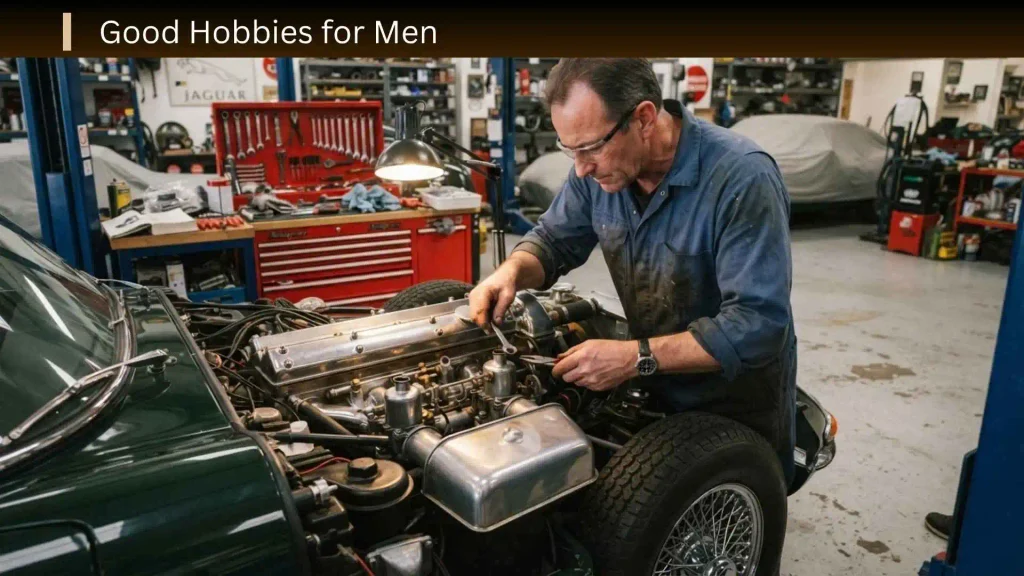
If you have too many options, use this simple process.
1. Decide What You Want From the Hobby
Ask yourself whether you want:
- Relaxation
- Creativity
- Exercise
- Social interaction
- Skill development
- Outdoor time
- Intellectual challenge
- A hands-on project
Choosing the desired outcome first makes the list much smaller.
2. Set a Realistic Budget
Start with the minimum equipment required.
A common mistake is purchasing everything associated with a hobby before discovering whether you actually enjoy doing it.
3. Consider Your Available Time
If you have only 30 minutes several evenings a week, a hobby that requires a two-hour drive each way may be difficult to sustain.
Choose something that fits your existing routine.
4. Try Before Committing
Where possible, borrow equipment, attend an introductory class, use a public facility, or start with basic supplies.
Your first goal is not mastery. It is discovering whether the activity holds your interest.
5. Give It Enough Time
Some hobbies are enjoyable immediately. Others become interesting after you understand the basics.
Do not abandon an activity solely because you are not good at it during the first few sessions.
How to Start a New Hobby Without Overspending
A simple beginner strategy is:
Explore → Start small → Practice → Evaluate → Invest
For example, someone interested in photography can begin with a smartphone. After learning basic composition and discovering what they enjoy photographing, they can decide whether a dedicated camera makes sense.
The same principle works for woodworking, cycling, cooking, music, fishing, and many other hobbies.
Avoid buying advanced equipment simply because experienced hobbyists use it. Your equipment should match your current needs and skill level.
How to Turn a Hobby Into a Long Term Interest
A hobby is easier to maintain when it has some structure.
You can:
- Set small projects instead of vague goals.
- Track what you learn.
- Join a community when you want feedback.
- Learn from books, classes, or reputable instructional resources.
- Try new variations after mastering the basics.
- Keep equipment organized and ready to use.
- Schedule hobby time rather than waiting for completely free days.
For example, instead of saying, “I want to get better at photography,” choose a specific project such as photographing local architecture for a month.
Common Mistakes When Choosing a Hobby
Choosing a Hobby Because It Looks Impressive
A hobby should suit you, not your image. If you have no interest in the activity, its perceived status will not keep you engaged for long.
Buying Too Much Equipment
Expensive equipment cannot replace practice. Start with what is necessary and upgrade only when you understand what limitation you are trying to solve.
Expecting Immediate Results
Most meaningful hobbies involve a learning curve. Being a beginner is part of the process.
Choosing Something That Does Not Fit Your Schedule
An activity that requires more time than you can regularly give it may become another obligation instead of something you look forward to.
Copying Someone Else’s Hobby
A friend may love golf, woodworking, or fishing while you may prefer reading, photography, cooking, or music. Use other people’s interests as inspiration, not as a requirement.
How Many Hobbies Should a Man Have?
There is no ideal number of hobbies. One well-developed hobby can be more satisfying than having ten activities that you rarely practice.
A practical combination might be:
- One active hobby for movement
- One creative or skill-based hobby for learning
- One relaxing hobby for downtime
But even this is optional. If one activity genuinely satisfies you, there is no need to collect hobbies simply for the sake of having more.
Frequently Asked Questions
What are the best hobbies for men?
The best hobbies depend on personal interests and goals. Popular options include photography, cooking, hiking, fishing, woodworking, gardening, cycling, reading, music, golf, chess, and writing.
What is a good hobby for a man who has no hobbies?
Start with something inexpensive and easy to test. Cooking, walking, reading, photography with a smartphone, drawing, chess, or beginner gardening are accessible options that do not require a major commitment.
What are some good hobbies for men at home?
Reading, cooking, woodworking, drawing, writing, playing an instrument, model building, chess, gardening in containers, and home fitness can all be done at home or with minimal travel.
What are good hobbies for men who want to meet people?
Golf, cycling groups, volunteering, recreational sports, board games, music groups, cooking classes, hiking groups, and community activities can provide regular opportunities to interact with other people.
What is a good hobby for a man who wants to learn something useful?
Cooking, woodworking, gardening, DIY home improvement, photography, learning a language, and playing an instrument all involve skills that can develop over time.
What are the cheapest hobbies for men?
Reading, walking, running, writing, drawing, chess, smartphone photography, and learning a language can be started with relatively little equipment or expense.
Can a hobby become a side income?
Some hobbies can potentially be monetized, including photography, woodworking, writing, cooking-related skills, teaching, art, and certain collecting activities. However, income is not guaranteed and depends on skill, demand, pricing, competition, and consistency.
Conclusion
Good hobbies for men are not limited to sports, expensive equipment, or traditionally masculine activities. The strongest choice is one that fits your interests, schedule, budget, and desired experience.
If you want to be active, try hiking, cycling, running, swimming, or golf. For creativity, consider photography, music, drawing, or writing. If you prefer practical skills, cooking, woodworking, gardening, and DIY can provide years of projects. For quieter interests, reading, chess, collecting, and model building are strong options.
Start small, give the hobby enough time to develop, and avoid spending heavily before you know that you enjoy it. The right hobby is ultimately the one that makes you want to come back to it.

I’m James Anderson, a dedicated writer and lifelong learner who enjoys researching topics and explaining them in a practical way. Through my work at Cognivoora, I aim to give readers reliable, easy-to-follow information that helps them learn something new. I always try to keep my writing natural, useful, and focused on the questions readers actually have.
Books:
- A Practical Guide to Better Thinking
- Questions Worth Asking