Finding a hobby can be more exciting than it sounds, especially when you want something that feels fun, creative, and truly you. If you’re looking for good hobbies for girls, you have plenty of options, whether you love making things, exploring new skills, staying active, or simply relaxing in your free time.
I believe the best hobby is not always the most popular one, it’s the one that makes you excited to spend your time on it. You might discover a hidden talent through painting, feel more confident while learning photography, or simply enjoy quiet moments with reading, journaling, or crafting. In this guide, I’ll share a variety of good hobbies for girls so you can explore new interests, find what fits your personality, and choose something you’ll genuinely enjoy.
What Are Some Good Hobbies for Girls(Quick Answer)
Some of the best hobbies for girls include drawing, painting, reading, photography, journaling, baking, cooking, gardening, dancing, yoga, hiking, swimming, sewing, crochet, crafting, playing an instrument, creative writing, learning a language, volunteering, and collecting.
The right choice depends on what you want from a hobby:
- For creativity: drawing, painting, photography, crafting, sewing
- For staying active: dancing, swimming, hiking, cycling, yoga
- For relaxation: reading, journaling, crochet, coloring, puzzles
- For learning: coding, languages, music, astronomy, creative writing
- For socializing: team sports, dance classes, book clubs, volunteering
- For outdoor time: gardening, hiking, birdwatching, photography
- For practical skills: cooking, baking, sewing, gardening, DIY crafts
There is no single hobby that is best for every girl. A good hobby is one that matches her interests and is enjoyable enough to keep exploring.
Creative Hobbies for Girls

Creative hobbies are a strong choice for anyone who enjoys making things, experimenting with ideas, or expressing herself through art and design.
1. Drawing
Drawing is inexpensive to begin and can develop from simple sketches into a serious creative practice. You can draw people, animals, landscapes, fashion designs, cartoons, architecture, or completely imaginary subjects.
A pencil and sketchbook are enough to start. Digital drawing is another option if you already have a tablet or compatible device.
Best for: Creative girls who enjoy visual expression
Starting cost: Low
Space needed: Very little
2. Painting
Painting provides more ways to experiment with color and texture. Beginners can try watercolor, acrylics, or simple canvas painting without needing advanced skills.
A useful way to begin is to choose small projects rather than trying to create complicated artwork immediately.
Best for: Girls who enjoy color and visual creativity
Starting cost: Low to moderate
3. Photography
Photography turns everyday surroundings into opportunities for creative exploration. A smartphone can be enough to learn basic composition, lighting, perspective, and storytelling.
You might specialize in nature, pets, portraits, food, architecture, travel, or street scenes.
Best for: Girls interested in creativity and technology
Starting cost: Low if using a smartphone
4. Crafting
Crafting can include paper crafts, handmade decorations, friendship bracelets, clay projects, scrapbooking, and many other activities.
One advantage is that crafting can be adapted to almost any interest. You can make gifts, decorations, accessories, or items for your room.
5. Sewing
Sewing combines creativity with a practical skill. Beginners can start with hand sewing before learning how to use a sewing machine.
Simple projects such as repairing clothes, making small bags, or creating fabric accessories can provide useful practice.
Best for: Girls who enjoy fashion, design, and hands-on projects
6. Crochet or Knitting
Crochet and knitting are portable hobbies that allow you to create scarves, hats, blankets, accessories, and decorative items.
They take some practice because learning stitches and maintaining consistent tension can feel awkward initially. Once the basics become familiar, projects can become more engaging.
7. Jewelry Making
Making bracelets, necklaces, earrings, or beaded accessories can be a fun creative outlet. It also gives you a way to experiment with colors, patterns, and personal style.
Start with simple beadwork before moving into more complicated techniques.
Relaxing Hobbies for Girls
A hobby does not always need to produce something impressive. Some hobbies are valuable simply because they provide quiet, focused leisure.
8. Reading
Reading is one of the most accessible hobbies because it can be done almost anywhere. Fiction, biographies, mysteries, fantasy, science fiction, history, essays, and nonfiction can all provide different experiences.
If reading feels difficult to maintain, choose books based on subjects you already enjoy instead of forcing yourself through books you find boring.
9. Journaling
Journaling can involve writing about your day, recording ideas, keeping lists, reflecting on goals, or documenting memorable experiences.
There is no required format. Some people prefer traditional diary writing, while others enjoy bullet journals or themed notebooks.
10. Coloring
Adult and teen coloring books can provide a structured creative activity without requiring advanced drawing skills.
It is particularly useful for someone who likes art but does not want the pressure of creating an image from scratch.
11. Puzzles
Jigsaw puzzles, logic puzzles, crossword puzzles, sudoku, and similar activities offer different types of mental challenges.
Choose the format according to your preference: visual problem-solving for jigsaw puzzles or word and number challenges for other puzzle types.
12. Collecting
Collecting can turn an ordinary interest into a long-term hobby. Possible collections include postcards, books, rocks, pressed leaves, stamps, figurines, art prints, or other appropriate items.
The most rewarding collections usually have a theme or personal meaning rather than simply accumulating random objects.
Active Hobbies for Girls
If you spend a lot of time sitting during school, work, or screen-based activities, an active hobby can add movement to your free time.
13. Dancing
Dancing combines physical activity with music and creative expression. Options range from ballet and contemporary dance to hip-hop, jazz, ballroom, and social dance.
You can learn through classes, community programs, or structured online instruction.
Best for: Girls who enjoy music, movement, and performance
14. Swimming
Swimming is both a recreational activity and a skill that can be developed over time. It can be practiced casually or more seriously through structured training.
Anyone learning to swim should use an appropriate supervised environment and follow local water-safety guidance.
15. Yoga
Yoga combines movement, balance, flexibility, and controlled breathing. Beginners can start with basic routines and gradually learn more challenging movements.
If a particular movement causes pain or discomfort, stop rather than forcing it.
16. Hiking
Hiking is a good option for girls who prefer outdoor activities and exploring natural environments.
Start with trails appropriate for your experience and conditions. Bring suitable footwear, water, weather-appropriate clothing, and any supplies recommended for the trail.
17. Cycling
Cycling can be both recreational and practical. You can ride around suitable local routes, explore parks, or gradually work toward longer rides.
A properly fitted helmet and awareness of local traffic and cycling rules are important parts of the hobby.
18. Tennis
Tennis provides an opportunity to develop coordination, movement, and technique while also offering a social element when played with others.
Beginners can start with basic lessons or casual practice rather than immediately focusing on competitive play.
Outdoor Hobbies for Girls
Outdoor hobbies can be particularly appealing when you want a break from indoor routines.
19. Gardening
Gardening lets you grow flowers, herbs, vegetables, or decorative plants. You do not need a large yard; containers can work for many plants.
For beginners, herbs or relatively easy-to-grow plants can be a manageable starting point.
20. Birdwatching
Birdwatching encourages observation and patience. You can begin from your backyard, neighborhood, or a local park.
A notebook or phone can be used to record observations, while binoculars are optional rather than essential for getting started.
21. Nature Photography
Nature photography combines two hobbies: exploring outdoors and creating images.
Try photographing flowers, trees, landscapes, insects, clouds, or seasonal changes. You can begin with a phone before deciding whether dedicated camera equipment is worthwhile.
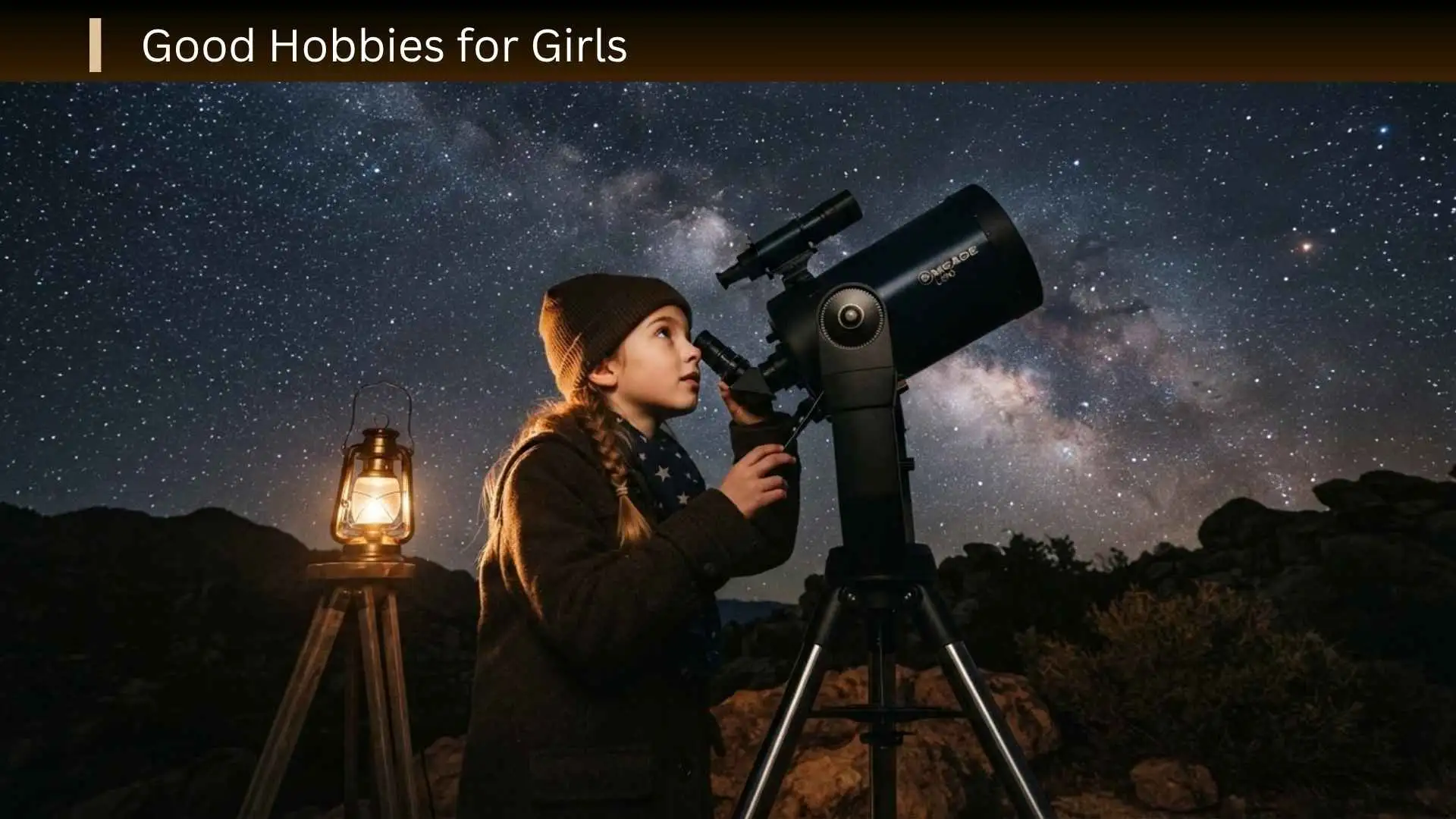
22. Stargazing
Stargazing can turn an interest in the night sky into a long-term hobby. You can begin by learning major constellations and identifying visible planets before considering additional equipment.
A clear, darker location generally provides a better view than a brightly lit urban area.
23. Geocaching
Geocaching combines outdoor exploration with a location-based treasure-hunting concept. Participants search for hidden containers using coordinates and clues.
It can be a fun option for someone who enjoys walking, exploration, puzzles, and discovering unfamiliar places.
Educational Hobbies for Girls
A hobby can also be a way to learn something simply because you are curious about it.
24. Learning a Musical Instrument
Learning piano, guitar, violin, ukulele, drums, or another instrument requires regular practice but can become a deeply rewarding long-term hobby.
Choose an instrument based on the music you enjoy and the practical factors involved, such as available space, noise, lessons, and equipment.
25. Learning a New Language
Learning another language can combine vocabulary, listening, reading, speaking, and cultural exploration.
Instead of trying to memorize everything at once, build a consistent routine around useful phrases and topics that interest you.
26. Creative Writing
Creative writing includes short stories, poetry, scripts, personal essays, fantasy worlds, and many other forms.
You do not need to plan an entire novel to begin. Writing a short scene, character description, poem, or one-page story can be enough.
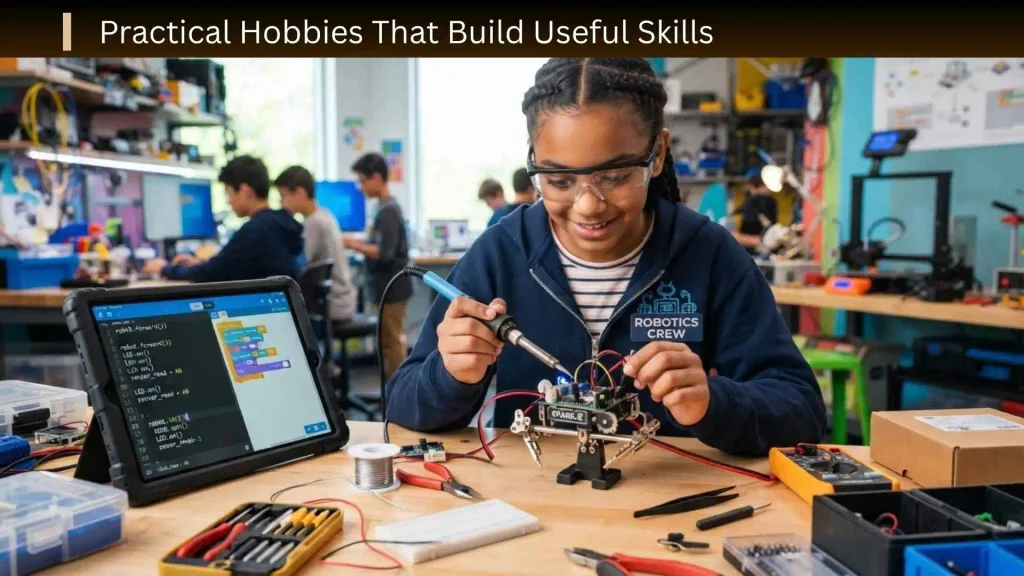
27. Coding
Coding can be a hobby for girls interested in technology, games, websites, problem-solving, or digital creativity.
Beginners can explore visual programming environments or start with beginner-friendly programming languages and small projects.
The most effective approach is usually project-based: build something small, discover what does not work, and improve it.
28. Astronomy
Astronomy can begin with learning about planets, stars, constellations, galaxies, and space missions.
You do not need an expensive telescope. Books, educational resources, sky maps, and astronomy apps can provide plenty to explore before purchasing equipment.
Social Hobbies for Girls
Some hobbies are better when shared with other people.
29. Book Clubs
A book club combines reading with conversation. You can join an existing group or organize a small group with friends.
Choosing books in advance and keeping meetings reasonably structured can make discussions easier.
30. Volunteering
Volunteering can connect a personal interest with community involvement. Opportunities vary widely, including animal-related organizations, environmental projects, community events, libraries, and other local organizations.
Choose opportunities that are appropriate for your age and circumstances and understand any participation requirements beforehand.
31. Team Sports
Soccer, basketball, volleyball, softball, and other team sports offer structured physical activity and regular interaction with teammates.
Team sports can be particularly suitable if you enjoy having a scheduled activity rather than pursuing a hobby entirely on your own.
32. Theater or Drama
Drama can involve acting, improvisation, stage production, costume work, writing, or backstage roles.
It is not limited to people who want to perform. Someone interested in design, organization, or technical production may also find a role they enjoy.
Practical Hobbies That Build Useful Skills
Some hobbies are enjoyable while also teaching skills that can be useful in everyday life.
33. Cooking
Cooking is a practical hobby that can grow with your abilities. Beginners can learn basic skills such as following recipes, preparing ingredients, using kitchen equipment safely, and understanding simple cooking methods.
Start with a few manageable recipes rather than attempting complicated dishes immediately.
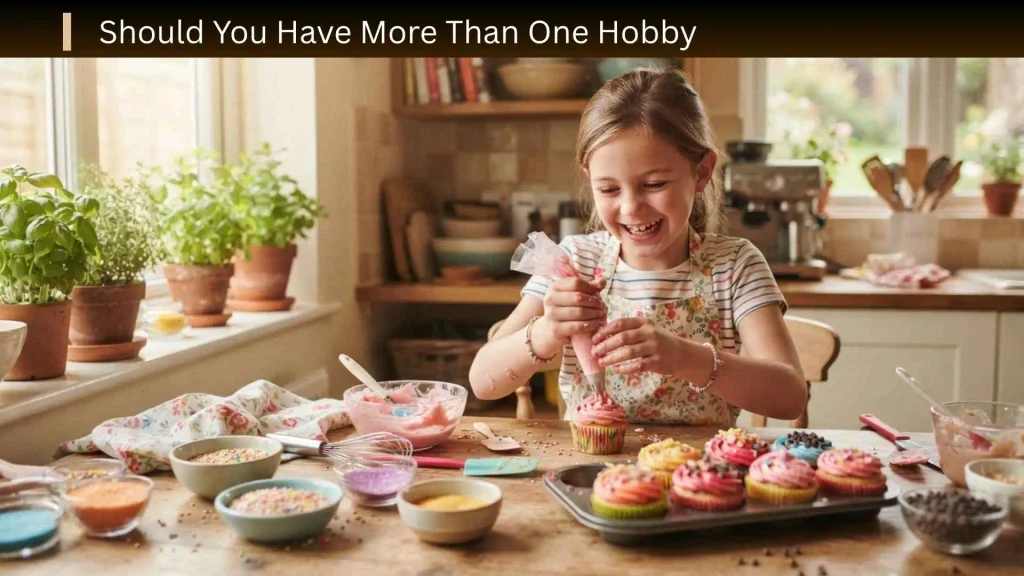
34. Baking
Baking can appeal to people who enjoy following precise recipes and experimenting with flavors and presentation.
Cookies, muffins, simple cakes, and breads can provide opportunities to learn fundamental techniques before progressing to more advanced recipes.
35. DIY and Home Projects
DIY hobbies can include decorating, organizing, repairing simple household items, upcycling materials, or creating room accessories.
Choose projects appropriate for your tools and experience, and follow safety instructions whenever tools, electricity, heat, or other hazards are involved.
How to Choose the Right Hobby
With dozens of possibilities, the hardest part may be deciding where to begin.
Ask yourself these questions:
Do You Want to Make Something?
Choose drawing, painting, crafting, crochet, sewing, jewelry making, photography, baking, or creative writing.
Do You Want to Be More Active?
Consider dancing, swimming, cycling, hiking, yoga, tennis, or another sport.
Do You Prefer Quiet, Solo Activities?
Try reading, journaling, coloring, puzzles, stargazing, drawing, or collecting.
Do You Want to Meet People?
Consider team sports, book clubs, theater, dance classes, volunteering, or group creative activities.
Do You Want to Learn a Valuable Skill?
Try cooking, coding, photography, sewing, a musical instrument, language learning, or gardening.
Do You Want a Low-Cost Hobby?
Start with hobbies that use items you may already have, such as reading, writing, drawing, walking, photography with a smartphone, or learning through free educational resources.
A Simple Way to Start a New Hobby
You do not need to commit to a hobby for years before discovering whether you like it.
Try this approach:
- Pick one activity that genuinely interests you.
- Start with the simplest version of it.
- Use what you already have when possible.
- Give yourself several sessions to learn the basics.
- Notice what you enjoy and what frustrates you.
- Adjust the hobby instead of immediately abandoning it.
- Invest more money only after you know you want to continue.
For example, someone interested in photography can begin with a smartphone rather than immediately purchasing a camera. Someone interested in painting can try inexpensive watercolor or acrylic supplies before investing in extensive equipment.
How to Avoid Choosing a Hobby Just Because It Is Popular
A hobby does not become a good hobby simply because many people recommend it.
Instead, consider fit.
A creative hobby may be a poor choice if you dislike making things. A social hobby may not suit someone who prefers independent activities. An expensive hobby may create unnecessary pressure if you are only curious about it.
The better question is:
“Would I still want to do this if nobody else knew I was doing it?”
If the answer is yes, it is more likely to be worth exploring.
Good Hobbies for Different Personalities
| If you are… | Hobbies to consider |
| Creative | Drawing, painting, photography, crafting |
| Curious | Astronomy, languages, coding, reading |
| Active | Dancing, swimming, hiking, cycling |
| Quiet | Reading, journaling, puzzles, coloring |
| Social | Team sports, book clubs, theater, volunteering |
| Practical | Cooking, baking, sewing, gardening |
| Outdoorsy | Hiking, gardening, birdwatching, stargazing |
| Tech-focused | Coding, digital art, photography |
These categories are starting points, not strict personality rules. You can enjoy hobbies from several completely different groups.
Should You Have More Than One Hobby?
Yes. There is no requirement to choose only one.
Having several hobbies can give you different types of experiences. For example, you might have:
- One active hobby for movement
- One creative hobby for self-expression
- One quiet hobby for downtime
- One social hobby for meeting people
You also do not need to maintain all of them equally. Interests naturally change over time, and trying something new is part of discovering what you actually enjoy.
Frequently Asked Questions
What is a good hobby for a girl who is bored?
Good options include drawing, reading, photography, baking, journaling, crafting, dancing, gardening, puzzles, learning an instrument, or trying a new outdoor activity. The best choice depends on whether you want something creative, active, social, or relaxing.
What are some inexpensive hobbies for girls?
Reading, writing, drawing, walking, journaling, photography with a smartphone, coloring, learning a language, and many forms of DIY crafting can be started with relatively little money. Costs vary depending on the materials and equipment you choose.
What are good hobbies for shy or introverted girls?
Quiet hobbies such as reading, drawing, journaling, photography, crochet, puzzles, creative writing, gardening, and stargazing can be good choices. If social interaction is desired but feels intimidating, structured activities such as small classes or hobby groups can provide a gradual way to participate.
What hobbies can help girls learn useful skills?
Cooking, baking, sewing, gardening, coding, photography, budgeting-related personal projects, language learning, and playing a musical instrument can all develop practical or transferable skills.
What are good hobbies for teenage girls?
Teenagers can explore a wide range of interests, including sports, photography, creative writing, music, art, coding, baking, volunteering, reading, dance, gardening, and crafts. The best choice depends on interests, schedule, budget, and available opportunities.
Can a hobby become a career?
Sometimes. Skills developed through hobbies such as photography, writing, coding, art, music, cooking, sewing, or gardening can potentially develop into educational or professional paths. However, enjoying a hobby does not automatically mean it will become a career or source of income.
How do I know if a hobby is right for me?
Give it enough time to get past the initial learning curve, then ask whether you enjoy the activity itself. If you consistently dislike it, there is nothing wrong with trying something else.
Conclusion
The best good hobbies for girls are not determined by age, popularity, or stereotypes. A worthwhile hobby should fit the individual’s interests, available time, budget, and preferred way of spending free time.
Creative girls might enjoy art, photography, crafts, or writing. Active girls may prefer dancing, swimming, hiking, or sports. Those who enjoy quiet activities can explore reading, journaling, puzzles, or gardening, while curious learners can try languages, coding, astronomy, or music.
Start small, choose something genuinely interesting, and give yourself permission to experiment. The goal is not to find the “perfect” hobby immediately—it is to discover activities that make your free time more meaningful and enjoyable.

I’m Olivia Bennett, a passionate writer who loves exploring ideas, learning new concepts, and sharing knowledge in a straightforward way. I write for Cognivoora with the goal of making useful topics easier to understand without unnecessary complexity. My approach combines research, clarity, and a reader-first perspective.
Books:
- Think Clearly, Live Better
- The Curious Reader’s Guide