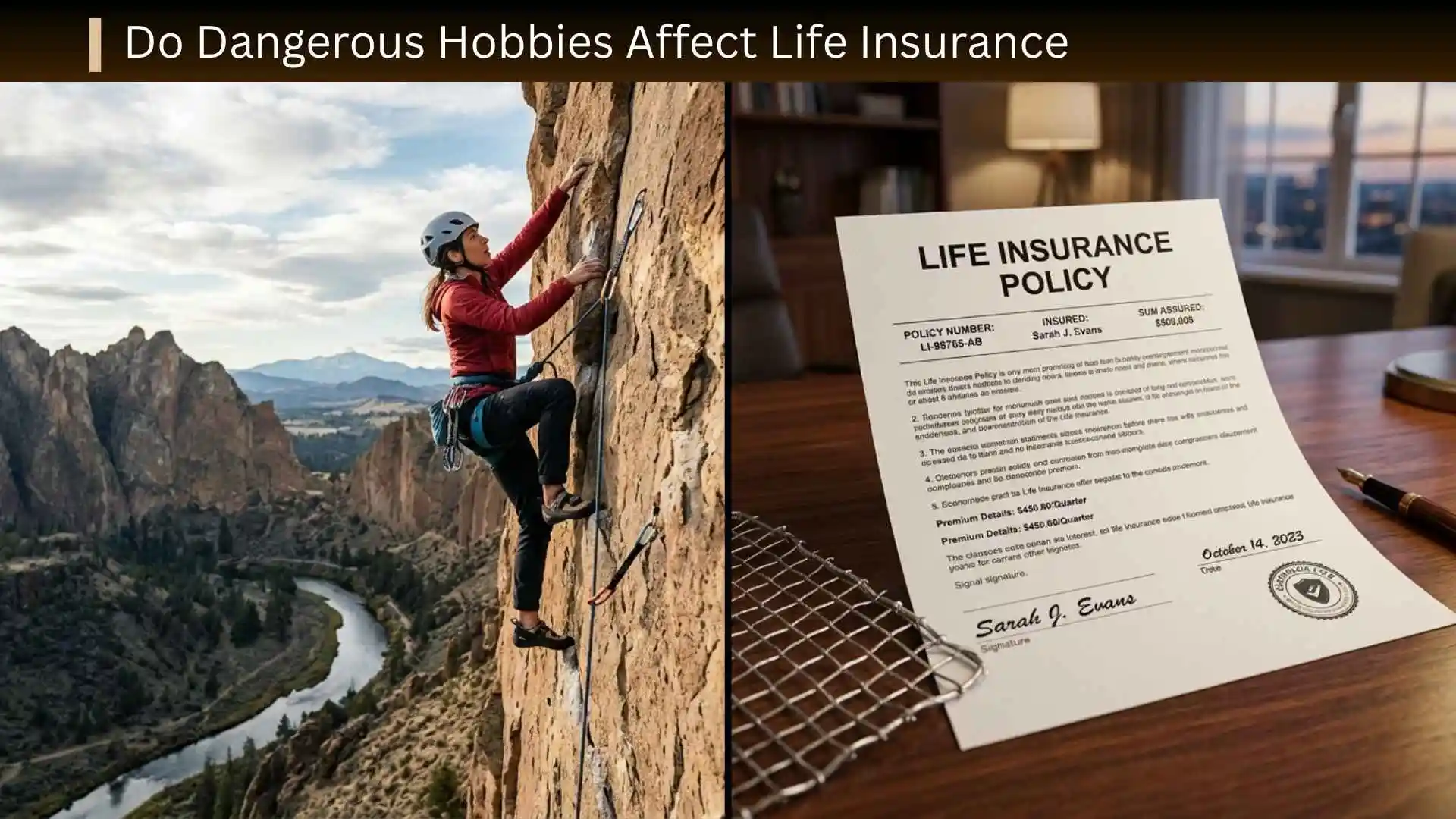
When you love an adrenaline-filled hobby, you probably think about the excitement first—not what could happen if something goes wrong. I understand why activities like skydiving, rock climbing, scuba diving, or motorcycle racing can be so appealing. But if you enjoy a high-risk hobby, you may also wonder: Can dangerous hobbies affect your life insurance?
The answer can depend on the activity, how often you do it, and the rules of your insurance provider. You may face additional questions during an application, higher premiums, exclusions, or other policy conditions. That can make choosing the right coverage feel confusing.
In this guide, I’ll help you understand how dangerous hobbies can affect life insurance and what you should know before applying. Whether you already enjoy an extreme hobby or you’re thinking about starting one, you’ll learn what insurers typically look at, what information you may need to disclose, and how you can approach coverage with greater confidence.
Do Dangerous Hobbies Affect Life Insurance?
Yes. Dangerous hobbies can affect life insurance because insurers use underwriting to evaluate the risk associated with providing coverage.
A hazardous hobby does not automatically mean you will be denied life insurance. Depending on the insurer and your circumstances, you could receive standard coverage, pay a higher premium, undergo additional underwriting, or receive a policy with specific limitations.
Different insurers may also evaluate the same hobby differently.
Why Insurers Ask About Dangerous Hobbies
Life insurance companies need to estimate the risk associated with providing coverage. Recreational activities that carry a greater possibility of serious injury or death may therefore receive additional attention during underwriting.
An insurer may want to know:
- What activity you participate in
- How frequently you participate
- How long you have participated
- Your experience and training
- Whether you compete
- Whether you participate professionally
- Where you perform the activity
- What equipment or vehicle you use
- Whether you participate in specialized forms of the activity
The exact questions depend on the insurer and application.
Does Having a Dangerous Hobby Mean You Are Uninsurable?
No.
Many people who participate in higher-risk recreational activities can still obtain life insurance. The potential effect is more likely to involve underwriting classification, premium, additional documentation, or policy terms rather than an automatic rejection.
The important distinction is between having a risky hobby and how the insurer evaluates the particular risk.
Which Hobbies Can Affect Life Insurance?
There is no universal industry-wide list of dangerous hobbies. However, certain activities commonly receive additional underwriting attention.
Skydiving and Parachuting
Skydiving is one of the most obvious examples of a recreational activity that can affect life insurance underwriting.
An insurer may ask about:
- How often you skydive
- How many years of experience you have
- Whether you jump recreationally or competitively
- The types of jumps you perform
- Your training or certifications
- Whether you participate in specialized forms of parachuting
Occasional recreational skydiving may be evaluated differently from frequent or specialized participation.
Scuba Diving
Scuba diving can also result in additional questions during a life insurance application.
Relevant factors may include:
- Diving frequency
- Typical and maximum depth
- Certification and training
- Type of diving
- Cave or technical diving
- Wreck diving
- Whether you dive professionally
- Locations where you normally dive
The word “diving” alone does not describe the entire risk. Recreational diving and specialized technical diving can involve very different circumstances.
Rock Climbing and Mountaineering
Climbing encompasses a broad range of activities, from indoor climbing to high-altitude mountaineering.
An insurer may distinguish between:
- Indoor climbing
- Outdoor recreational climbing
- Rock climbing
- Technical climbing
- Mountaineering
- High-altitude climbing
- Competitive climbing
The environment, altitude, technical difficulty, experience, and frequency of participation may all be relevant.
Motorsports and Racing
Motorsports can include automobile racing, motorcycle racing, off-road racing, and other competitive vehicle activities.
Underwriters may want information about:
- The type of vehicle
- Racing frequency
- Competitive level
- Whether you race professionally
- Where racing takes place
- The type of events involved
Occasional participation in an organized recreational event may be evaluated differently from frequent professional racing.
Private Aviation and Recreational Flying
Private aviation can also lead to additional underwriting questions.
Depending on the activity, an insurer may consider:
- Whether you are the pilot or passenger
- Aircraft type
- Flying experience
- Flight hours
- Training
- Whether flying is recreational or professional
- Whether you participate in specialized aviation
Other aerial activities, including hang gliding, ultralight aviation, and similar pursuits, may also receive additional attention.
Hang Gliding and Other Air Sports
Hang gliding and related aerial activities can involve significant environmental and accident risks.
Insurance applications may ask about:
- Frequency
- Experience
- Training
- Equipment
- Locations
- Whether the activity is recreational or competitive
The specific underwriting treatment depends on the insurer.
Bungee Jumping
Bungee jumping may be classified as a hazardous recreational activity by some insurers or within particular insurance benefits.
However, trying bungee jumping does not automatically mean you cannot obtain life insurance.
The frequency and circumstances of participation can matter.
Cave Exploration and Spelunking
Cave exploration can involve risks associated with confined spaces, falls, water, difficult terrain, and remote environments.
If you regularly participate in spelunking or cave exploration, an insurer may request more information about the activity.
High-Risk Water Sports
Some water-based activities can also receive additional underwriting attention, particularly those involving speed, racing, unusual equipment, or challenging environments.
Examples may include:
- Powerboat racing
- Offshore racing
- Certain competitive water sports
- Other high-speed recreational boating activities
Again, the specific activity matters more than simply describing yourself as someone who enjoys water sports.
What Factors Do Life Insurers Consider?
The name of your hobby is only one part of the underwriting picture.
Insurers may look at several characteristics to understand the actual level of risk.
Frequency of Participation
How often you participate can be important.
Someone who participates occasionally may present a different underwriting profile from someone who engages in a hazardous activity every week.
When an application asks about frequency, provide an accurate answer rather than assuming that minimizing participation will improve your chances.
Experience and Training
An insurer may ask about your experience and training because these details help describe how you participate in the activity.
Relevant information might include:
- Years of experience
- Formal training
- Certifications
- Membership in relevant organizations
- Safety education
Experience does not eliminate the inherent risks of an activity, but it can be part of the insurer’s overall assessment.
Type and Intensity of Activity
The same hobby can contain very different levels of risk.
For example, scuba diving can range from ordinary recreational diving to highly specialized technical diving.
Likewise, climbing can range from an indoor climbing gym to demanding mountaineering expeditions.
Providing the specific type of activity gives the insurer a more accurate picture.
Competition and Professional Participation
Competitive or professional participation may be evaluated differently from casual recreation.
An insurer may ask whether you:
- Participate in competitions
- Race
- Perform professionally
- Train for competitive events
- Receive income from the activity
Answer these questions accurately if they appear on the application.
Location
Where you participate can also be relevant.
Remote environments, unusual geographic locations, extreme altitudes, or specialized facilities may create different risk considerations than ordinary recreational settings.
How Do Dangerous Hobbies Affect Life Insurance Rates?
A dangerous hobby can potentially increase the cost of life insurance because the insurer may consider the activity when assessing your overall risk.
However, there is no universal surcharge for a particular hobby.
Your premium can also depend on:
- Age
- Health history
- Tobacco or nicotine use
- Family history
- Driving record
- Occupation
- Coverage amount
- Policy type
- Policy duration
- Hobby
- Frequency of participation
- Experience
- Insurer-specific underwriting rules
This means you should be cautious about claims that a particular hobby always adds a fixed percentage or dollar amount to your premium.
Why Quotes Can Differ Between Insurers
Life insurance companies use their own underwriting guidelines.
As a result, two insurers can evaluate the same applicant and the same hobby differently.
One company may offer coverage at a relatively favorable rate, while another may apply a higher rating or decide that the activity falls outside its preferred risk guidelines.
This is one of the strongest reasons to compare multiple insurers if you participate in a hazardous hobby.
Can You Get Life Insurance With a Dangerous Hobby?
Yes, potentially.
Having a dangerous hobby does not automatically disqualify you from life insurance.
Depending on the insurer, you might receive:
- Standard coverage
- Coverage at a higher premium
- Coverage after additional underwriting
- Coverage with specific limitations
- A decline if the risk falls outside the company’s guidelines
The result depends on your individual circumstances and the insurer’s rules.
Why Shopping Around Matters
If one insurer gives you an unfavorable decision, that does not necessarily mean every insurer will do the same.
Different companies can have different approaches to recreational risk.
For someone with a hazardous hobby, comparing insurers can therefore be more valuable than simply accepting the first quote.
Do You Have to Tell the Insurer About Your Dangerous Hobby?
If the application asks about hazardous recreational activities, you should answer accurately and completely.
Life insurance applications can ask about activities such as:
- Skydiving
- Parachuting
- Scuba diving
- Rock climbing
- Mountain climbing
- Motor racing
- Hang gliding
- Private aviation
- Other recreational activities
Some applications may request additional information about the frequency, type, location, experience, equipment, or competitive nature of the activity.
Why Accurate Disclosure Matters
It can be tempting to leave out a hobby because you are concerned about paying more for coverage.
That is generally a poor approach when the application specifically asks about the activity.
If you are uncertain whether an activity fits the wording of a question, ask the insurer or licensed insurance professional how it should be reported.
Do not guess, and do not intentionally provide misleading information.
What Happens If You Hide a Dangerous Hobby?
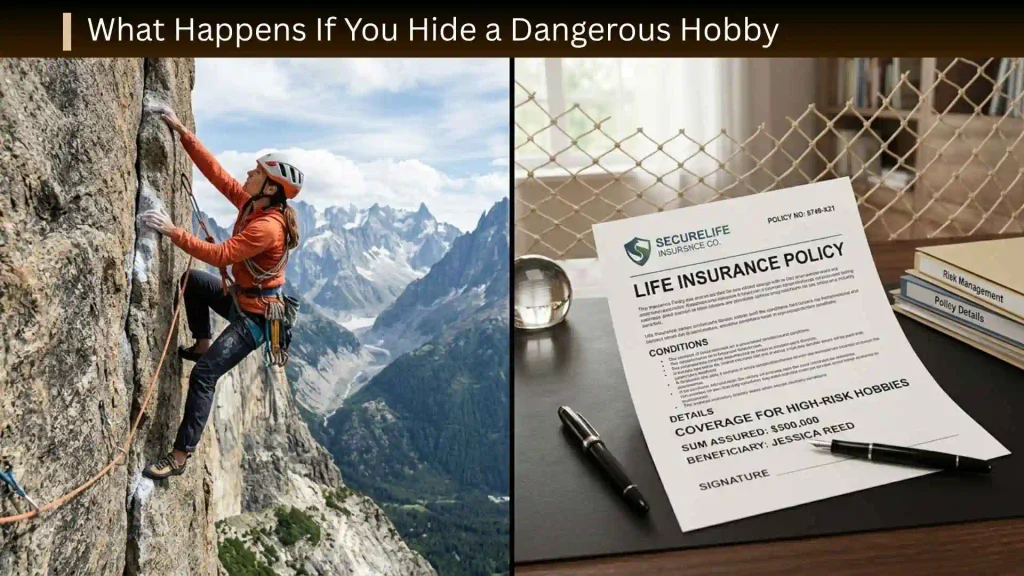
The consequences of inaccurate information can depend on the circumstances, the policy contract, applicable law, and the nature of the information that was omitted or misstated.
For that reason, the safest approach is straightforward:
Answer the application questions truthfully and provide the information the insurer requests.
A lower preliminary quote is not worth creating uncertainty about the validity of your coverage later.
Can You Start a Dangerous Hobby After Buying Life Insurance?
Possibly, but you should not assume that every policy treats new hazardous activities the same way.
Review the terms of your existing policy before assuming that taking up a dangerous hobby has no implications.
This is particularly important if you have additional benefits or riders.
Life Insurance vs. Accidental-Death Benefits
A standard life insurance policy and an accidental-death benefit are not necessarily governed by identical terms.
Some accidental-death benefits can contain exclusions for hazardous activities. Depending on the policy, activities such as skydiving, scuba diving, mountain climbing, cave exploration, bungee jumping, or racing may receive specific treatment.
Therefore, if you are considering a new high-risk hobby, read the actual policy language rather than relying on a general statement about “life insurance exclusions.”
Why the Actual Policy Contract Matters
Insurance policies can differ in their definitions, exclusions, conditions, and benefits.
An exclusion in an optional rider does not necessarily mean that the same exclusion applies to every benefit under the policy.
If you are uncertain about coverage, ask the insurer or a qualified insurance professional to explain the relevant provision.
How to Apply for Life Insurance With a Dangerous Hobby
You can make the application process easier by preparing accurate information before applying.
Prepare Details About Your Activity
Depending on the hobby, you may want to know:
- Exact type of activity
- Years of experience
- Frequency of participation
- Training or certifications
- Equipment used
- Locations
- Typical depth or altitude, where applicable
- Competitive involvement
- Professional involvement
- Participation outside the United States
Do not provide information that is not requested simply to overwhelm the application. Instead, have the relevant details available if the insurer asks for them.
Compare Multiple Insurers
Do not assume that one company’s underwriting decision represents the entire life insurance market.
Compare several insurers when possible, particularly if your hobby is an important part of your lifestyle.
Work With an Experienced Independent Professional
An independent insurance agent or broker may be useful when your circumstances are outside the simplest underwriting cases.
When speaking with one, explain the hobby accurately and ask whether they have experience working with applicants who participate in similar activities.
Compare Policy Terms as Well as Price
A low premium is not the only consideration.
When comparing policies, examine:
- Coverage amount
- Policy duration
- Premium
- Exclusions
- Riders
- Benefit provisions
- Conversion features, when applicable
- Any activity-specific limitations
The best option is the policy that provides appropriate protection for your circumstances, not necessarily the one with the lowest initial quote.
Dangerous Hobbies and High Risk Occupations Are Different

A dangerous hobby and a dangerous occupation are not the same thing, although both can be relevant to life insurance underwriting.
A hobby is generally recreational, while an occupation is your employment.
Some occupations may expose workers to elevated risks involving:
- Aviation
- Construction
- Maritime work
- Emergency response
- Industrial environments
- Certain forms of transportation
If you have both a higher-risk occupation and a dangerous hobby, the insurer may evaluate the overall risk profile rather than considering the hobby in isolation.
Common Mistakes to Avoid
Assuming a Dangerous Hobby Means Automatic Rejection
This is one of the biggest misconceptions.
Participating in a high-risk activity does not automatically mean that you cannot obtain life insurance.
The insurer needs to evaluate the actual activity and your circumstances.
Describing the Hobby Too Vaguely
Simply saying “I climb” or “I dive” may not fully describe the activity.
If the application asks for additional details, provide the specific information requested.
Hiding the Activity
Do not intentionally conceal a hobby that the application asks you to disclose.
Accurate information allows the insurer to make an informed underwriting decision.
Assuming Every Insurer Uses the Same Rules
Insurance companies can have different underwriting approaches.
A decision from one company should not automatically be treated as a decision from the entire market.
Focusing Only on the Premium
The cheapest policy may not provide the terms you actually need.
Review the complete policy, including exclusions and optional benefits.
Confusing Life Insurance With Accidental-Death Coverage
Do not assume that an exclusion affecting an accidental-death rider necessarily applies in exactly the same way to the underlying life insurance benefit.
Read the applicable contract language.
Dangerous Hobbies and Life Insurance: Quick Comparison
| Hobby or activity | Why it may receive attention | Details that may matter |
| Skydiving | Aerial accident risk | Frequency, experience, type of jumps |
| Scuba diving | Underwater accident risk | Depth, frequency, certification, type of diving |
| Rock climbing | Fall and environmental risks | Indoor/outdoor, technical level, frequency |
| Mountaineering | Altitude, falls and remote environments | Elevation, locations, experience |
| Motorsports | High-speed vehicle risk | Vehicle, racing type, competition |
| Private aviation | Aviation-related risk | Aircraft, pilot status, experience |
| Hang gliding | Aerial activity | Training, frequency, equipment |
| Cave exploration | Confined and difficult environments | Type and frequency |
| Bungee jumping | High-risk recreational activity | Frequency and circumstances |
| Powerboat racing | High-speed water activity | Boat, competition and frequency |
This table is a general guide, not a universal underwriting classification. Individual insurers can use different guidelines.
Frequently Asked Questions
Can I get life insurance if I skydive?
Yes. Skydiving does not automatically make you ineligible for life insurance. An insurer may consider your frequency, experience, type of skydiving, and other risk factors when determining your coverage and premium.
Does scuba diving increase life insurance premiums?
It can. Scuba diving may lead to additional underwriting questions, particularly concerning frequency, depth, certification, and the type of diving you perform. The actual effect depends on the insurer and your overall risk profile.
What are common dangerous hobbies for life insurance?
Examples include skydiving, scuba diving, rock climbing, mountaineering, motorsports, private aviation, hang gliding, bungee jumping, and certain types of cave exploration. The exact treatment varies between insurers.
Can a dangerous hobby cause a life insurance application to be denied?
It can in some circumstances, but a dangerous hobby does not automatically result in a denial. An insurer may instead offer coverage with a higher premium or other terms.
Should I disclose a dangerous hobby on my life insurance application?
Yes, when the application asks about it. Provide accurate information about the activity and answer the insurer’s questions completely.
Can I start a dangerous hobby after buying life insurance?
You may be able to, but review your policy first. Certain policies or riders can contain hazardous-activity exclusions or limitations, particularly accidental-death benefits.
Is life insurance more expensive if I have a dangerous hobby?
It can be, but there is no universal surcharge. The cost depends on the activity, how often you participate, your experience, the policy, and the insurer’s underwriting guidelines.
What is the best way to get life insurance with a dangerous hobby?
Compare multiple insurers, disclose the activity accurately, prepare relevant details about your participation, and compare policy terms as well as premiums. An independent insurance professional familiar with higher-risk applicants may also be useful.
Conclusion
Dangerous hobbies can affect life insurance, but they do not automatically prevent you from obtaining coverage. Activities such as skydiving, scuba diving, climbing, motorsports, aviation, and other high-risk pursuits may lead to additional underwriting questions, higher premiums, or different policy terms.
The most important factors are usually the specific activity, frequency, experience, level of risk, and the insurer’s underwriting guidelines.
If you participate in a dangerous hobby, the most practical approach is to disclose it accurately, compare multiple insurers, and review the actual policy language before choosing coverage. Pay particular attention to exclusions and optional accidental-death benefits, because their terms may differ from the underlying life insurance policy.
For a specific policy or significant coverage decision, reviewing the contract with a licensed insurance professional in your state can help you understand how the terms apply to your particular hobby.
I’m Ethan Mitchell, a curious writer who enjoys turning complex ideas into simple, useful information. At Cognivoora, I focus on creating clear and engaging content that readers can understand and apply in everyday life. I believe good writing should educate, answer real questions, and leave readers with something valuable to remember.
Books:
- The Everyday Mind
- Simple Ideas, Better Thinking