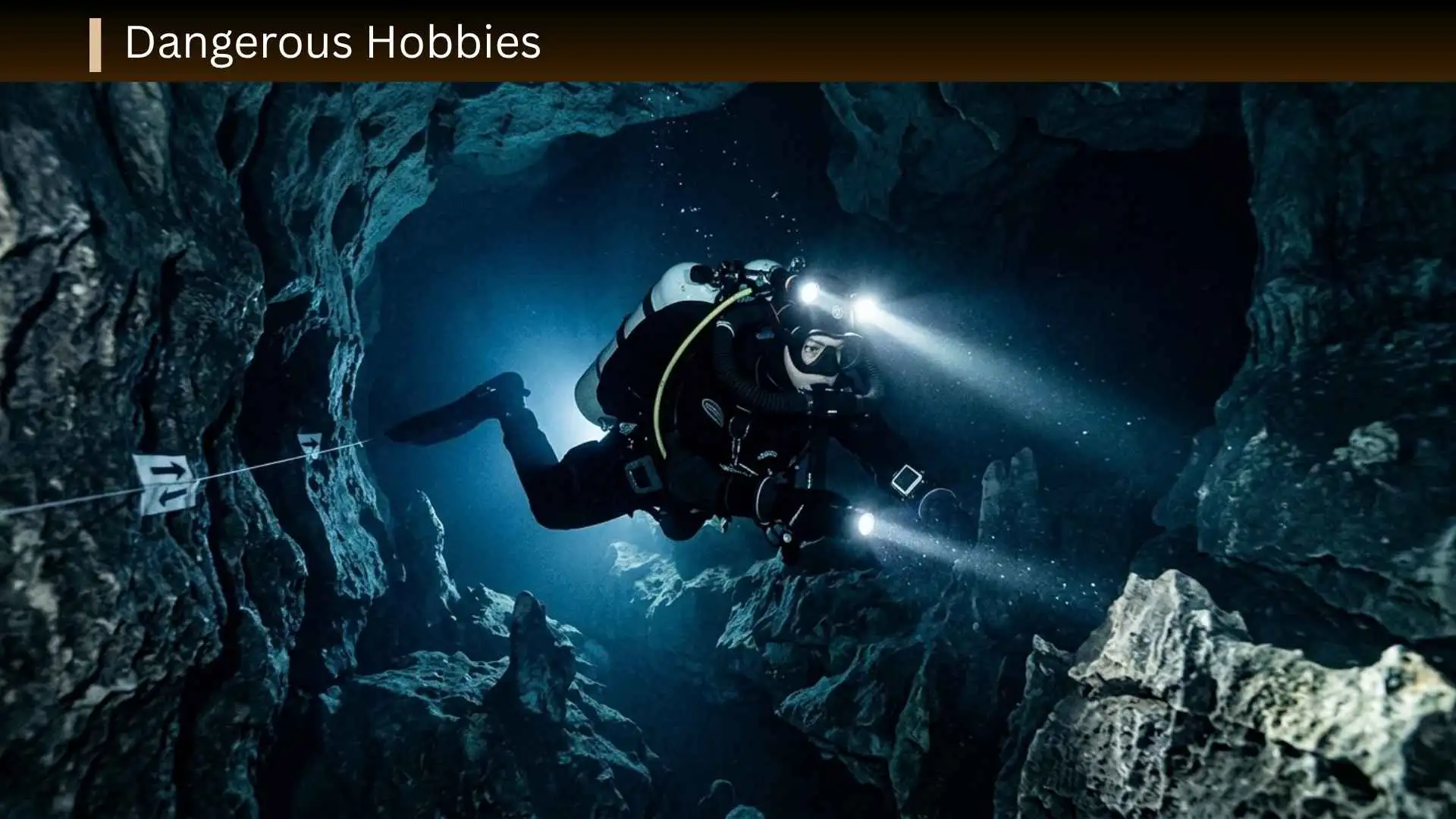
I’ve always found it fascinating how some hobbies can push you beyond your comfort zone and give you a rush that ordinary activities simply can’t match. Dangerous hobbies can bring excitement, challenge, and unforgettable experiences, but they also come with real risks that you should never ignore. If you’re curious about activities that test courage, focus, and physical limits, you’ll find plenty of options to explore.
In this guide, I’ll take you through some of the most dangerous hobbies people pursue, what makes them risky, and what you should know before trying them. Whether you’re looking for an adrenaline-filled challenge or simply want to understand why people enjoy high-risk activities, you’ll discover the excitement, risks, skill requirements, and safety considerations behind these unusual hobbies.
What Makes a Hobby Dangerous?
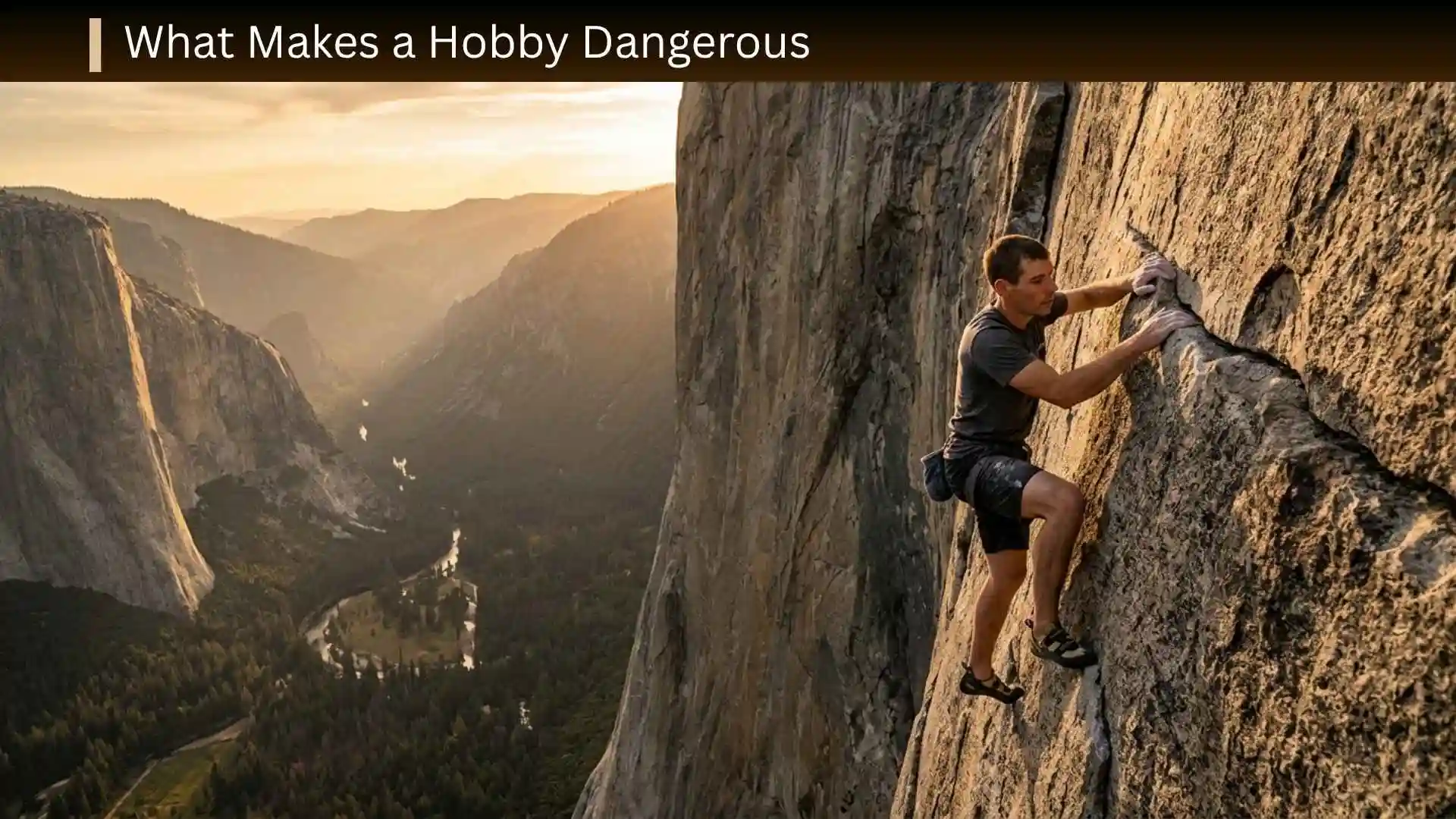
A hobby becomes high-risk when the consequences of an error can be severe, the environment is difficult to control, or professional help may not be immediately available.
Common risk factors include:
- Height: Falls from cliffs, aircraft, towers, or other elevated locations can cause catastrophic injuries.
- Speed: Motorcycles, downhill sports, and motorsports reduce the time available to react to hazards.
- Water: Strong currents, drowning, cold water, and underwater pressure create distinct risks.
- Remote locations: A relatively minor injury can become much more serious when medical help is far away.
- Weather: Lightning, avalanches, storms, extreme cold, and heat can rapidly change conditions.
- Equipment dependence: Some activities depend on ropes, parachutes, breathing systems, vehicles, or other specialized equipment.
- Human error: Poor judgment, inadequate training, fatigue, overconfidence, or ignoring changing conditions can turn manageable situations into emergencies.
The important distinction is that risk varies enormously within the same hobby. A supervised beginner climbing session at an indoor gym is not equivalent to technical alpine climbing, just as recreational skiing on a maintained slope is not equivalent to traveling through avalanche terrain.
20 Dangerous Hobbies and Why They Carry Risk
1. Skydiving
Skydiving involves exiting an aircraft at altitude and descending under a parachute. The combination of altitude, speed, parachute deployment, landing, and human decision-making makes it inherently hazardous.
Modern skydiving uses redundant equipment and structured training, but the activity still involves inherent risk.
Potential hazards include:
- Hard or poorly controlled landings
- Collisions with other jumpers
- Equipment problems
- Incorrect decisions during descent
- Weather-related complications
For beginners, the appropriate starting point is a reputable drop zone with qualified instructors and a structured training progression.
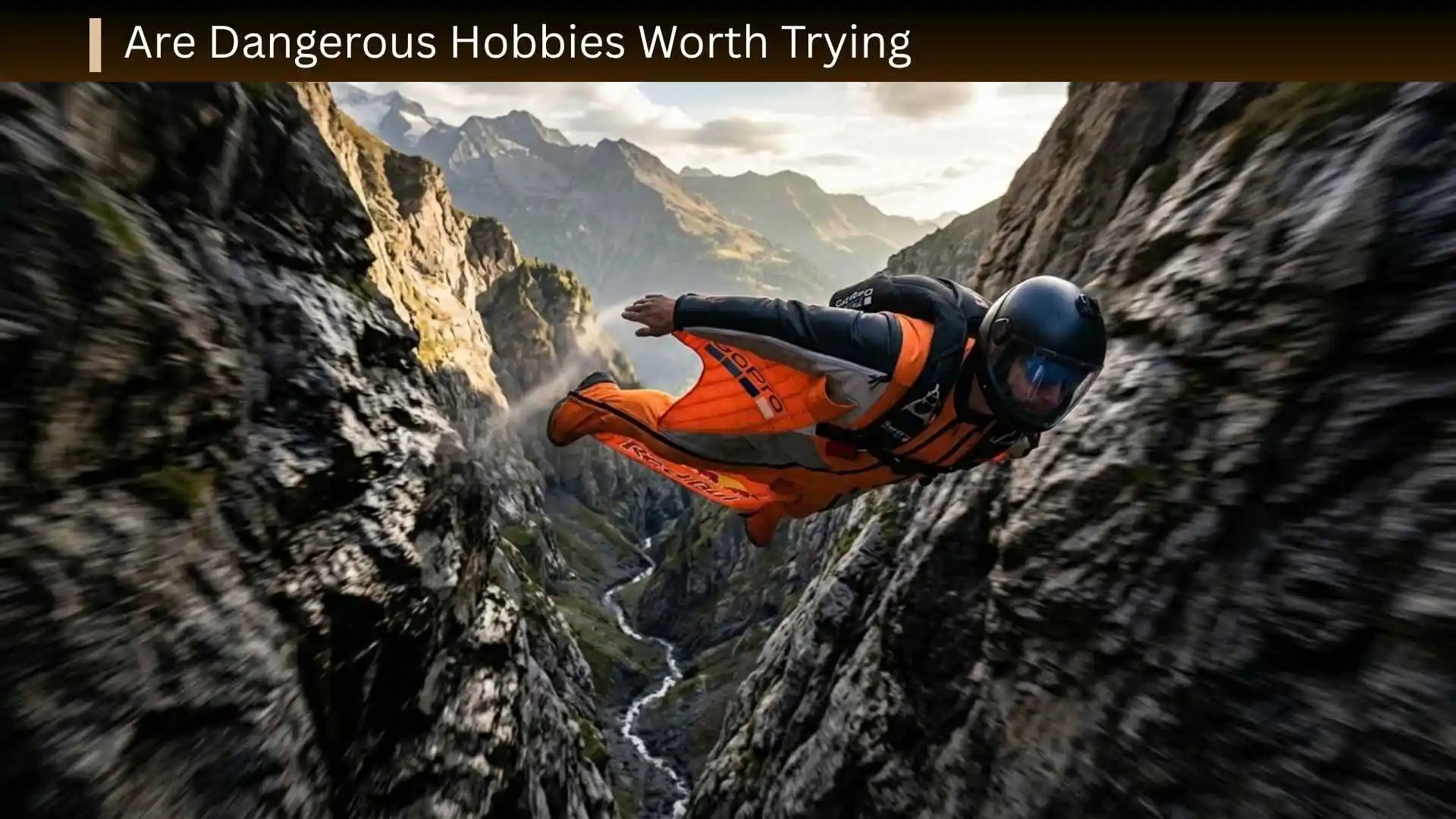
2. Wingsuit Flying
Wingsuit flying takes skydiving into a more technically demanding category by adding a specialized suit that creates lift and allows the participant to travel horizontally through the air.
The increased maneuverability also creates additional hazards.
Potential risks include:
- Very high speeds
- Limited reaction time
- Difficult parachute deployment
- Collisions with terrain or other objects
- Weather-related complications
- Increased technical complexity
Wingsuit flying should be approached only after developing substantial experience in the underlying aerial disciplines and receiving appropriate specialized training.
3. BASE Jumping
BASE jumping involves parachuting from fixed objects rather than from an aircraft. These objects can include buildings, antennas, bridges, and cliffs.
The defining hazard is the limited altitude available between the jump and parachute deployment. There is much less time to respond to problems than in many conventional skydives.
Potential hazards include:
- Impact with the launch object
- Incorrect trajectory
- Parachute deployment problems
- Wind changes
- Difficult landing areas
- Very limited reaction time
BASE jumping is an advanced activity and should not be treated as a casual introduction to aerial sports.
4. Free Solo Rock Climbing
Rock climbing can involve significant fall hazards, but free solo climbing removes the protection normally provided by a rope and belay system.
That fundamental difference dramatically increases the consequences of a climbing mistake.
Other climbing hazards can include:
- Falling rocks
- Equipment problems in protected climbing
- Changing weather
- Difficult descents
- Falls from exposed terrain
For people interested in climbing, indoor climbing, top-rope climbing, and other protected forms provide substantially different risk profiles from free soloing.
5. Mountaineering
Mountaineering combines several hazards rather than relying on one.
Depending on the route and environment, participants may encounter:
- Steep terrain
- Rockfall
- Falls
- Extreme weather
- Cold exposure
- Altitude
- Avalanches
- Navigation problems
- Remote rescue situations
Mountaineering therefore requires more than physical fitness. Participants need to understand the environment, route conditions, weather, navigation, equipment, and their own limitations.
6. Backcountry Skiing and Snowboarding
Skiing and snowboarding at a managed resort are very different from traveling through uncontrolled backcountry terrain.
Outside maintained and patrolled areas, participants may encounter:
- Avalanche terrain
- Unstable snow
- Hidden obstacles
- Severe weather
- Difficult navigation
- Limited rescue access
Backcountry participants need appropriate avalanche education and should check current conditions and forecasts before entering avalanche terrain.
The major lesson is that leaving a managed ski area can dramatically change the risk profile of the activity.
7. Scuba Diving
Scuba diving places the diver underwater while breathing gas supplied under pressure.
One major concern is decompression illness, which includes decompression sickness and arterial gas embolism. Other risks can arise from equipment problems, poor buoyancy control, insufficient breathing gas, underwater disorientation, currents, and cold water.
Important risks include:
- Decompression illness
- Barotrauma
- Equipment problems
- Running out of breathing gas
- Strong currents
- Cold exposure
- Drowning
Scuba diving is not inherently reckless, but it requires appropriate education, equipment, planning, and conservative decision-making.
8. Cave Diving
Cave diving combines the hazards of scuba diving with an overhead environment.
A diver cannot necessarily swim directly to the surface, and poor visibility or navigation problems can make an emergency considerably more difficult to manage.
Potential hazards include:
- Limited access to the surface
- Navigation errors
- Poor visibility
- Equipment problems
- Gas-management errors
- Difficult rescue conditions
Cave diving requires specialized training and should not be treated as simply an advanced version of ordinary recreational diving.
9. Whitewater Kayaking and Rafting
Moving water can be extremely powerful. Whitewater activities may involve rocks, rapids, strainers, changing water levels, cold water, and difficult rescue conditions.
Risk varies significantly depending on the river, water level, route, weather, and participant’s experience.
Important considerations include:
- Current strength
- Water temperature
- Rapids
- Obstacles
- River level
- Swimming ability
- Rescue skills
- Appropriate flotation equipment
Beginners should learn in environments appropriate to their ability rather than assuming that a calmer-looking river is automatically safe.
10. Motorcycle Riding
Motorcycling is both recreational and practical, but riders have considerably less physical protection than occupants of enclosed passenger vehicles.
Potential hazards include:
- Collisions with other vehicles
- Poor visibility
- Road debris
- Loss of traction
- Speed
- Poor weather
- Rider inexperience
- Impaired riding
Appropriate licensing, rider education, protective clothing, a properly fitted helmet, and sober riding can help reduce avoidable risk.
11. Motocross
Motocross involves motorcycles, jumps, uneven terrain, obstacles, and high-speed riding. Riders may intentionally launch from jumps and encounter frequent loss-of-control situations.
Potential hazards include:
- Falls
- Collisions
- Hard landings
- Mechanical problems
- Track hazards
- Injuries to riders or nearby people
A purpose-built track can provide a more controlled environment than riding in uncontrolled terrain, but motocross remains a physically demanding and potentially dangerous hobby.
12. Car Racing and Track Driving
Motorsports can turn driving into a technically demanding hobby involving high speeds, braking forces, close competition, and mechanical failure.
Even on a purpose-built circuit, serious crashes can occur.
Risk factors include:
- Excessive speed
- Driver inexperience
- Poor vehicle maintenance
- Fatigue
- Inadequate safety equipment
- Aggressive driving
- Mechanical failure
A closed racing circuit reduces certain road-related hazards, but it does not eliminate the physical risks associated with high-speed driving.
13. Cliff Diving
Cliff diving combines height with water impact. A jump may look straightforward while concealing hazards that are difficult to judge from above.
Potential problems include:
- Incorrect water depth
- Hidden rocks
- Poor body position
- Strong currents
- Changing water conditions
- Misjudging the landing area
Water should never be assumed to be safe simply because it looks deep enough. Conditions can change, and underwater obstacles may not be visible from the jumping point.
14. Highlining
Highlining involves walking or balancing on a narrow tensioned line positioned high above the ground, often between elevated points.
The obvious hazard is falling, but the activity also depends on the integrity and correct use of the anchoring and protection systems.
Potential risks include:
- Falls
- Anchor failure
- Equipment misuse
- Strong wind
- Poor setup
- Incorrect rigging
Because technical systems are fundamental to the activity, beginners should learn from experienced practitioners rather than improvising an elevated setup.
15. Ice Climbing
Ice climbing involves ascending frozen waterfalls, ice formations, or other frozen terrain using specialized equipment.
Ice can change substantially with temperature and weather, making the environment less predictable than many forms of solid rock climbing.
Potential hazards include:
- Falls
- Falling ice
- Changing ice quality
- Cold exposure
- Avalanche conditions
- Equipment or protection problems
- Difficult descents
Ice climbing therefore combines climbing-related fall hazards with the changing characteristics of frozen terrain.
16. Caving
Caving ranges from relatively accessible cave exploration to highly technical underground expeditions.
Even caves that do not require advanced technical skills can contain uneven ground, low ceilings, steep sections, cold temperatures, darkness, and confusing passages.
Potential hazards include:
- Falls
- Rockfall
- Getting lost
- Hypothermia
- Tight passages
- Darkness
- Difficult rescue conditions
Multiple reliable light sources, appropriate footwear, protective equipment, group awareness, and careful planning are particularly important.
17. Volcano and Lava Exploration
Volcanic landscapes can be fascinating, but active or recently active volcanic areas may contain hazards that are difficult to recognize visually.
Depending on the location, potential risks include:
- Extreme heat
- Toxic volcanic gases
- Unstable ground
- Falling rocks
- Sudden volcanic activity
- Difficult terrain
- Restricted areas
Local authorities and park regulations should always take priority. A location that appears accessible may still be closed because volcanic conditions can change.
18. Avalanche Terrain Travel
Avalanche exposure deserves particular attention because it can affect multiple winter activities, including skiing, snowboarding, snowmobiling, climbing, and mountaineering.
Avalanches involve rapidly moving snow and can cause burial, trauma, or death.
Risk depends on factors such as:
- Snowpack conditions
- Recent snowfall
- Wind
- Temperature
- Terrain
- Slope characteristics
- Human decisions
Carrying rescue equipment is important, but equipment alone does not make avalanche terrain safe. Training and understanding current avalanche information are critical.
19. Freediving
Freediving involves diving underwater while holding the breath rather than carrying a breathing supply.
One of its major dangers is loss of consciousness underwater. A person can become incapacitated before reaching the surface, creating a drowning hazard.
Potential risks include:
- Hypoxic blackout
- Drowning
- Barotrauma
- Disorientation
- Excessive breath-hold attempts
Freediving should not be treated as a breath-holding competition or practiced alone. Appropriate training and competent supervision are particularly important.
20. Remote or Extreme Hiking
Ordinary hiking is generally very different from technical mountaineering, but hiking in remote or extreme terrain can become a high-risk activity.
Potential hazards include:
- Falls
- Flash floods
- Lightning
- Extreme heat
- Extreme cold
- Dehydration
- Navigation problems
- Wildlife encounters
- Delayed emergency response
Remote locations create an additional problem: professional help may take considerably longer to arrive.
Checking weather conditions, understanding the route, carrying appropriate essentials, communicating your plans, and knowing when to turn back are fundamental parts of responsible wilderness recreation.
How Dangerous Hobbies Compare
Not every high-risk hobby creates the same type of danger. Understanding the source of the risk is more useful than simply ranking activities from most to least dangerous.
| Hobby | Main Hazard | Skill Level | Environment |
| Skydiving | Falls, landing, collisions | High | Air |
| Wingsuit flying | High-speed collision, deployment | Very high | Air |
| BASE jumping | Impact, limited reaction time | Very high | Air/terrain |
| Free solo climbing | Falls | Very high | Cliffs/mountains |
| Mountaineering | Falls, weather, altitude | High | Mountains |
| Backcountry skiing | Avalanche, falls | High | Snow/mountains |
| Scuba diving | Pressure, gas, drowning | High | Underwater |
| Cave diving | Drowning, navigation | Very high | Underwater/caves |
| Whitewater kayaking | Rapids, rocks, drowning | High | Rivers |
| Motorcycle riding | Traffic crashes | Moderate–high | Roads |
| Motocross | Falls, collisions | High | Tracks |
| Car racing | High-speed crashes | High | Tracks |
| Cliff diving | Water impact, obstacles | High | Cliffs/water |
| Highlining | Falls, rigging failure | High | Elevated terrain |
| Ice climbing | Falls, ice failure, cold | High | Mountains |
| Caving | Falls, getting lost | Moderate–high | Underground |
| Volcano exploration | Heat, gases, unstable ground | Variable | Volcanic terrain |
| Avalanche travel | Burial, trauma | Very high | Snow/mountains |
| Freediving | Blackout, drowning | High | Underwater |
| Remote hiking | Weather, falls, delayed rescue | Moderate–high | Wilderness |
The table also shows why assigning one universal danger ranking is difficult. An activity may be hazardous because of height, speed, water, isolation, weather, technical complexity, or several of these factors at once.
Which Dangerous Hobbies Are More Suitable for Beginners?

Not all dangerous hobbies have the same learning pathway.
Activities with structured beginner pathways
Some higher-risk hobbies offer established ways for beginners to develop skills gradually.
Examples include:
- Skydiving
- Recreational scuba diving
- Rock climbing
- Whitewater rafting
- Motorcycle riding
- Resort skiing
These activities may have instructors, courses, clubs, controlled facilities, or recognized progression systems.
That does not make them risk-free. It means beginners can often learn fundamental skills before entering more challenging environments.
Activities that generally require advanced experience
Other activities provide very little margin for error and should not be approached casually.
Examples include:
- BASE jumping
- Wingsuit flying
- Cave diving
- Free solo climbing
- Technical mountaineering
- Avalanche terrain travel
For these activities, experience in related disciplines, specialized training, and strong risk-management skills are especially important.
How to Reduce the Risks of Dangerous Hobbies
No safety measure can eliminate every hazard, but several principles apply across many high-risk activities.
Get activity-specific training
Being generally athletic or adventurous does not prepare someone for every type of hazard.
Learn the specific techniques, equipment procedures, emergency responses, and environmental knowledge required by the activity.
Use qualified instruction when available
A reputable instructor, guide, club, training organization, or established facility can help beginners develop skills that would otherwise be difficult to learn safely through trial and error.
Inspect and maintain equipment
Many high-risk hobbies depend on equipment functioning correctly.
Understand:
- What equipment is required
- How it should be inspected
- What damage looks like
- When equipment needs professional inspection
- When equipment should be replaced
Check environmental conditions
Weather, water levels, avalanche conditions, trail closures, and other environmental factors can dramatically change the risk of an activity.
For outdoor hobbies, checking conditions should be part of the preparation process.
Stay within your ability
A common mistake is allowing a previous successful experience to create excessive confidence.
Experience should improve judgment rather than encourage unnecessary escalation.
Know when to stop
Turning around, postponing an activity, or choosing an easier route can be the correct decision.
Good risk management includes recognizing when conditions have exceeded your skills, equipment, or preparation.
Plan for emergencies
Depending on the activity, preparation may include:
- Telling someone where you are going
- Carrying suitable communication equipment
- Knowing emergency procedures
- Understanding evacuation options
- Carrying appropriate first-aid supplies
- Knowing where professional help is available
Remote activities deserve particular attention because rescue may take considerably longer than expected.
Are Dangerous Hobbies Worth Trying?
Whether a dangerous hobby is worth trying depends on the individual and the way the activity is practiced.
The more useful question is not simply, “Is this hobby dangerous?” Instead ask:
- What can go wrong?
- How serious could the consequences be?
- How does risk change with experience?
- What training is required?
- What equipment is essential?
- Can I learn the skills in a controlled environment first?
- How quickly could emergency help reach me?
- What conditions should make me cancel the activity?
A hobby can involve genuine danger without requiring reckless behavior.
For example, indoor climbing is very different from free solo climbing. Resort skiing is different from traveling through uncontrolled avalanche terrain. Recreational scuba diving is different from cave diving.
The name of the hobby alone does not tell you its complete risk profile.
Frequently Asked Questions
What is considered a dangerous hobby?
A dangerous hobby is an activity where mistakes, equipment failure, environmental hazards, or unexpected conditions can cause serious injury or death. Examples include skydiving, technical climbing, scuba diving, motorcycle riding, mountaineering, and avalanche terrain travel.
What is the most dangerous hobby?
There is no universally valid single “most dangerous hobby.” Risk depends on how the activity is performed, participant experience, environmental conditions, equipment, and exposure. Comparing activities using one simple ranking can therefore be misleading.
Are dangerous hobbies safe for beginners?
Some dangerous hobbies have structured beginner pathways, while others require extensive prior experience. Beginners should generally start with qualified instruction, controlled environments, and gradual skill development rather than immediately attempting the most technical form of an activity.
Can safety equipment make a dangerous hobby safe?
Safety equipment can reduce certain risks and their consequences, but it cannot eliminate danger. Training, judgment, environmental awareness, equipment inspection, and knowing when to stop are also important.
What are some dangerous outdoor hobbies?
Examples include mountaineering, rock climbing, ice climbing, backcountry skiing, whitewater kayaking, caving, cliff diving, motorcycle riding, and remote wilderness hiking.
Which dangerous hobbies involve water?
Scuba diving, cave diving, freediving, whitewater kayaking, rafting, and cliff diving can all involve serious water-related hazards. Drowning, currents, cold exposure, underwater pressure, and limited access to rescue are among the potential concerns.
Are dangerous hobbies the same as extreme sports?
Not necessarily. Extreme sports are generally associated with high levels of physical or environmental risk, while “dangerous hobbies” is a broader description. A hobby does not have to be formally classified as an extreme sport to involve significant hazards.
How can I choose a high risk hobby responsibly?
Start by identifying the specific hazards, required training, equipment, environmental conditions, and emergency procedures. Choose an activity with a clear learning pathway, use reputable instruction where available, and progress gradually instead of starting with the most dangerous version.
Conclusion
Dangerous hobbies cover a wide spectrum, from skydiving and mountaineering to scuba diving, motorcycle riding, caving, and whitewater sports. What makes these activities risky is not simply the hobby itself, but the combination of hazards, exposure, consequences, skill level, equipment, environment, and decision-making.
If you are interested in a high-risk hobby, start by learning how the activity works and understanding its hazards. Get appropriate training, use suitable equipment, check conditions, and recognize when the situation exceeds your limits.
Responsible participation is not about eliminating every risk. It is about understanding the risks clearly and making informed decisions about whether, when, and how to participate.

I’m James Anderson, a dedicated writer and lifelong learner who enjoys researching topics and explaining them in a practical way. Through my work at Cognivoora, I aim to give readers reliable, easy-to-follow information that helps them learn something new. I always try to keep my writing natural, useful, and focused on the questions readers actually have.
Books:
- A Practical Guide to Better Thinking
- Questions Worth Asking