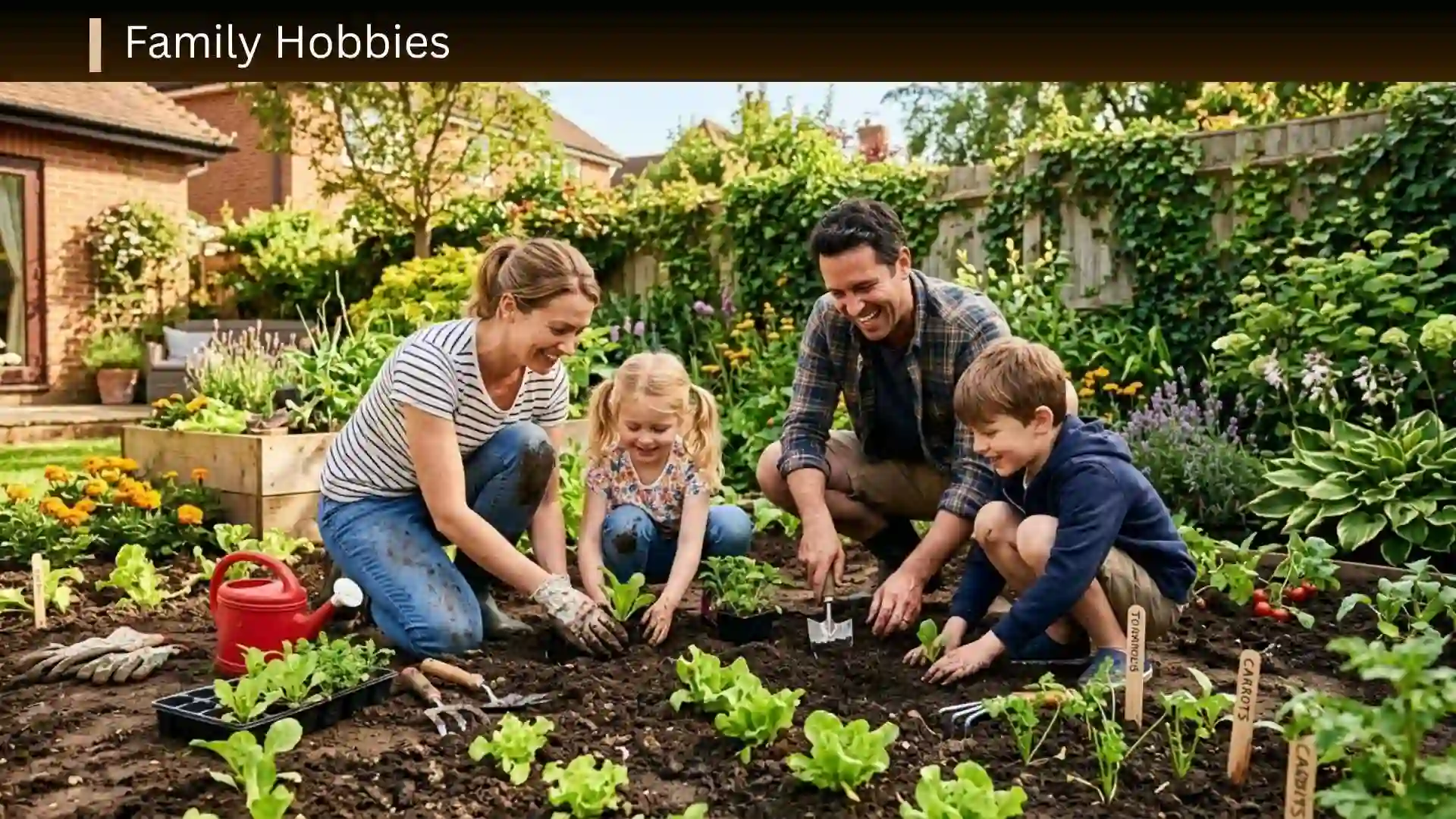
When I think about the best family moments, I don’t think about expensive trips or complicated plans, I think about the simple things we enjoy together. Family hobbies can turn an ordinary afternoon into a fun experience where you laugh, learn, create, and make memories that last.
You don’t need a big budget or lots of free time to find a hobby your family will love. Whether you enjoy cooking together, playing games, gardening, crafting, hiking, or trying something completely new, the right family hobby can bring everyone closer. In this guide, I’ll help you discover enjoyable family hobbies that you can easily explore together and choose based on your family’s interests, ages, time, and budget.
35 Family Hobbies to Try Together
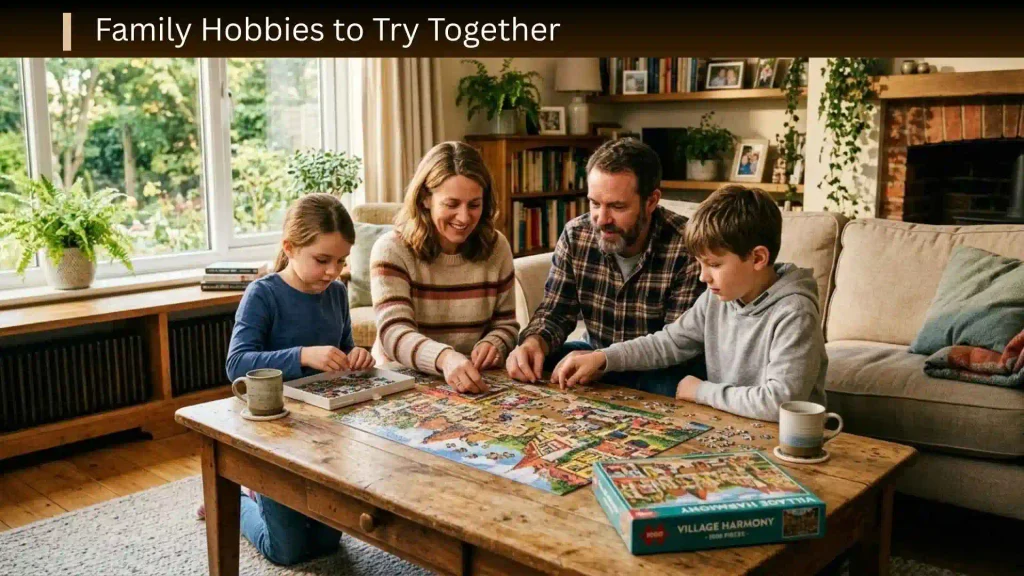
Here are family hobbies organized by the type of experience they provide, so you can choose activities that fit your family’s interests, space, budget, and schedule.
1. Gardening
Gardening gives families a hands-on project with a visible result. You can grow vegetables, herbs, flowers, or container plants depending on the space available.
Children can help choose plants, sow seeds, water them, and observe how they develop. Adults can handle tasks that require more tools or physical effort.
A small container garden is enough to get started. Families without a yard can use pots, window boxes, or other suitable containers.
Best for: Families who enjoy nature and hands-on projects
Starting cost: Low to moderate
Space: Outdoor space is helpful but not always necessary
2. Hiking
Hiking turns time outdoors into a shared activity rather than simply a walk. Families can explore local trails, parks, forests, nature preserves, or other appropriate outdoor areas.
Choose routes according to the youngest or least experienced participant rather than the strongest hiker. Short, accessible trails are often better for beginners than ambitious routes that leave someone exhausted.
You can also make hikes more engaging for children by looking for birds, plants, interesting rocks, or other natural features.
Best for: Active families who enjoy exploring
Starting cost: Low
Time commitment: Flexible
3. Family Photography
Photography can turn ordinary outings into creative projects. A smartphone is enough for beginners, so families do not need to purchase dedicated camera equipment immediately.
Try themed photography challenges such as finding interesting textures, photographing wildlife from a safe distance, capturing seasonal changes, or creating a family photo journal.
Each person can interpret the same subject differently, making photography especially useful for families with different creative styles.
Best for: Creative families and visual learners
Starting cost: Low if using existing devices
4. Cooking Together
Cooking is both a hobby and a practical life skill. Families can choose recipes, shop for ingredients, prepare meals, and evaluate the results together.
Younger children can take part in age-appropriate tasks, while older children can gradually learn more independent cooking skills. Adults can introduce different cuisines, techniques, and ingredients.
Instead of making every session a complicated recipe, create a regular family cooking night with simple dishes that everyone can contribute to.
Best for: Families who enjoy food and practical activities
Starting cost: Usually low if you already have a kitchen
5. Baking
Baking gives families a more focused cooking project. Cookies, muffins, breads, cakes, and other baked goods can be made together.
It also works well as a hobby because families can gradually develop skills. Beginners can start with simple recipes and eventually experiment with decoration, flavors, and more advanced techniques.
Keep supervision and kitchen safety appropriate for children’s ages.
6. Board Games
Board games are an easy way to create regular family time without requiring special space or outdoor access.
Families can choose games based on age, reading ability, attention span, and complexity. Some games emphasize strategy, while others focus on cooperation, memory, deduction, or simple luck.
A useful approach is to keep several types available rather than expecting one game to suit everyone.
Best for: Indoor family time
Starting cost: Low to moderate
Space: Minimal
7. Card Games
Card games require little equipment and can be played almost anywhere. Traditional games can introduce children to rules, turn-taking, strategy, and probability in an informal setting.
Families can also learn new games together rather than relying only on games everyone already knows.
For mixed-age families, choose games with rules that can be simplified for younger players.
8. Puzzles
Jigsaw puzzles provide a quiet activity that family members can work on simultaneously.
A large puzzle can remain on a suitable table for several days, allowing people to contribute whenever they have time. This makes puzzles particularly useful for families whose schedules do not always align.
Choose the number and size of pieces according to the participants’ ages and experience.
9. Reading Together
Reading does not have to mean everyone reads the same book at the same time. Families can establish a shared reading routine in several ways.
For example, parents and children can read aloud together, take turns reading a chapter, choose books around a common theme, or have informal conversations about what they are reading.
Older children and adults can also recommend books to one another.
Best for: Quiet family time and families with varied interests
Starting cost: Low, especially when using libraries
10. Family Book Club
A family book club adds structure to shared reading. Choose a book that is appropriate for the participants, set a realistic reading schedule, and discuss it afterward.
The discussion does not need to resemble a formal classroom exercise. Simple questions such as “Which character did you like?” or “What would you have done differently?” can start a conversation.
11. Drawing and Sketching
Drawing is inexpensive and adaptable to different skill levels. Families can draw objects around the house, sketch during outdoor trips, create cartoons, or participate in themed drawing challenges.
The emphasis should be on creating rather than judging artistic ability.
A family sketchbook can become a record of activities and places visited over time.
12. Painting
Painting gives families another way to explore creativity. Watercolors, acrylics, or other suitable beginner materials can be used depending on age and workspace.
Families can paint the same subject in different ways or collaborate on a single large piece.
Protect work surfaces and choose materials appropriate for the participants.
13. Crafting
Crafting covers a broad range of activities, including paper crafts, simple decorations, model-making, fabric projects, and seasonal creations.
One advantage is that projects can be adjusted for different abilities. A younger child might handle simple assembly while an older child or adult takes on more complicated steps.
Crafting also provides an opportunity to reuse suitable household materials instead of buying new supplies for every project.
14. Family Scrapbooking
Scrapbooking combines creativity with family memories. Families can organize photographs, drawings, tickets, notes, and other meaningful keepsakes into themed pages.
A digital version can work just as well for families who prefer computers or tablets.
The hobby can become an ongoing project rather than something completed in one afternoon.
15. Birdwatching
Birdwatching encourages families to slow down and pay attention to their surroundings. You can begin with birds commonly seen around your neighborhood, local parks, or other suitable outdoor areas.
A basic bird guide or identification app can help beginners learn species gradually.
The hobby does not require every family member to be an expert. Simply keeping track of birds you recognize can provide a manageable starting goal.
Best for: Nature-loving families
Starting cost: Low
16. Nature Collecting and Observation
Families can explore nature by observing leaves, rocks, insects, clouds, plants, or other appropriate natural features.
Rather than collecting everything encountered outdoors, focus on observation, photography, drawing, or learning about what you find. Follow local rules and avoid disturbing wildlife or protected natural areas.
This hobby can be combined with hiking or photography.
17. Fishing
Fishing can become a shared outdoor hobby for families who have access to suitable fishing locations.
The experience involves more than catching fish. Families can learn basic equipment use, spend time outdoors, observe the environment, and develop patience.
Requirements and regulations vary by location, so families should check the rules that apply where they plan to fish and supervise children appropriately.
Best for: Families who enjoy outdoor activities and patience-based hobbies
Starting cost: Moderate depending on equipment
18. Camping
Camping creates a larger shared project because the family participates in planning, packing, setting up, preparing food, and spending time outdoors.
Beginners do not need to start with a long remote trip. A suitable campground close to home can provide a simpler introduction.
Consider weather, sleeping arrangements, food, transportation, and the abilities of everyone attending before choosing a campsite.
19. Geocaching
Geocaching combines outdoor exploration with a location-based treasure-hunting concept. Participants use GPS-enabled technology to locate designated caches.
It can make familiar parks and walking routes more engaging because the family has a specific objective during the outing.
Check current cache information and follow the rules and etiquette associated with the activity.
20. Cycling
Cycling can be a family hobby when everyone has access to an appropriate bicycle and a suitable place to ride.
For mixed-age families, select routes based on the youngest rider’s ability and comfort. Parks, dedicated paths, and other appropriate cycling areas may be easier starting points than busy roads.
Helmets and compliance with local cycling rules are important parts of responsible riding.
21. Walking and Neighborhood Exploring
A family does not need a special destination to make walking into a hobby.
Choose a different local route each week, explore a nearby park, photograph interesting buildings, or create a walking challenge. The simplicity is part of its appeal.
This is particularly useful for families looking for an inexpensive hobby that requires little preparation.
22. Family Fitness Activities
Families can make movement a shared hobby through activities such as recreational sports, dancing, swimming, walking, or age-appropriate exercise.
The goal does not have to be competitive performance. A family can simply choose activities everyone can participate in comfortably.
Physical abilities differ, so select activities that are appropriate for each participant and modify them when necessary.
23. Dancing
Dancing works well at home because it requires relatively little equipment or space.
Families can learn a particular style, follow beginner-friendly routines, create their own choreography, or simply have a regular music-and-dance session.
It can be especially appealing when family members have different musical tastes because everyone can take turns choosing the music.
24. Learning a Musical Instrument
Music can become a long-term family hobby. Family members can learn the same instrument, learn different instruments, or simply practice music in parallel.
The important consideration is that learning speeds vary. Avoid turning practice into a competition between family members.
Even short, consistent practice sessions can make the activity more manageable.
25. Singing and Karaoke
Singing is a low-equipment activity that can be adapted for different ages and abilities.
Families can sing along with familiar songs, organize informal karaoke nights, or learn songs together.
There is no need for everyone to have strong singing skills. The hobby works best when the focus is participation rather than performance quality.
26. DIY Home Projects
DIY projects give families a practical goal to work toward. Depending on age and ability, projects might include simple decorations, organizing storage, repairing suitable household items, or building basic crafts.
Adults should handle tasks involving tools or equipment that are not appropriate for children, while children can participate in safer planning, measuring, decorating, or assembly tasks.
27. Model Building
Model building can appeal to families who enjoy detail-oriented hobbies.
Options range from simple snap-together models to more involved projects. Choose the complexity based on participants’ ages and patience.
For families with younger children, select age-appropriate models and avoid small parts when they present a safety concern.
28. LEGO and Construction Projects
Building systems such as LEGO can support open-ended family projects. Instead of following instructions every time, families can create a shared city, vehicle collection, house, amusement park, or fictional world.
One useful variation is collaborative building, where each person is responsible for one part of a larger project.
29. Family Video Projects
Families can learn basic storytelling and video production by making short videos together.
Projects could include documenting a family trip, creating a fictional story, recording a cooking demonstration, or producing a short stop-motion animation.
Assign different roles such as filming, acting, writing, editing, or organizing props so that family members with different interests can contribute.
30. Stargazing
Stargazing can turn an evening outdoors into a learning activity. Families can begin by identifying prominent objects in the night sky and learning how the sky changes over time.
A clear location with a good view of the sky can make the experience easier. Check local conditions and avoid unsafe areas when choosing where to observe.
You do not need expensive equipment to begin. Many families can start with unaided observation and add equipment later if the interest continues.
31. Volunteering Together
Volunteering can become a family activity when there are age-appropriate opportunities available.
Possibilities depend on the community and organization, but may include environmental projects, community events, food-related assistance, animal-related support, or donation drives.
Always check an organization’s age requirements and participation rules before planning a family volunteering activity.
32. Family Travel Planning
Travel itself may not always be a hobby, but planning trips can become a shared family interest.
Children can research destinations, choose attractions, compare transportation options, create packing lists, or help plan activities. Adults can guide the process and handle decisions that require more experience.
This approach can make the planning stage part of the family experience rather than treating it as something only adults do.
33. Cooking From Different Cultures
Families interested in food can turn cooking into a learning project by exploring dishes from different parts of the world.
Choose one cuisine at a time and learn about the ingredients, preparation methods, and traditions connected with the food. Keep cultural explanations respectful and avoid treating an entire culture as if it has only one cuisine or tradition.
The result is a hobby that combines cooking with curiosity and learning.
34. Family Game Creation
Instead of only playing games, families can design their own.
Start with a simple idea such as a card game, trivia game, board game, scavenger hunt, or storytelling game. Decide the objective and basic rules, create a prototype, and test it together.
Changing the rules after each test teaches children that creative projects often improve through revision.
35. Family History Projects
A family history project can involve organizing photographs, recording stories, creating timelines, or learning about relatives and places connected to the family’s history.
Be thoughtful about privacy when documenting information, particularly when sharing material online.
The project can be as simple as creating a family timeline or organizing old photographs.
How to Choose the Right Family Hobby
The best family hobby is not necessarily the most impressive or expensive one. It is the activity your household can realistically continue.
Consider these factors before choosing.
Consider the Ages of Family Members
A hobby that works for teenagers may not work for preschoolers, and an activity designed for young children may quickly become boring for adults.
Look for activities with adjustable difficulty. Cooking, gardening, photography, hiking, crafts, and games can often be modified for different ages.
Match the Hobby to Your Available Space
Families living in apartments may prefer:
- Board games
- Reading
- Drawing
- Cooking
- Crafts
- Puzzles
- Music
- Photography
Families with yards or easy access to outdoor areas may have additional options such as gardening, camping preparation, birdwatching, and outdoor games.
Decide How Much Time You Can Actually Give It
A good family hobby does not have to require an entire weekend.
For busy households, short activities such as card games, baking, drawing, or neighborhood walks may be easier to maintain than hobbies requiring extensive preparation.
Choose a frequency that fits your real schedule rather than an idealized one.
Set a Realistic Budget
Start with activities that use things you already have.
For example, a smartphone can support photography, a kitchen can support cooking, paper can support drawing, and a local park can support walking and nature observation.
If the family enjoys the hobby consistently, you can decide whether additional equipment is worth purchasing.
Look for Shared Participation, Not Identical Interests
Family members do not need to enjoy the same part of a hobby.
During a family photography outing, one person may enjoy taking pictures while another enjoys finding subjects. During cooking, one person may prefer preparation while another handles presentation.
A hobby becomes more sustainable when different personalities can contribute in different ways.
Family Hobbies by Budget

If cost is your main concern, start with activities that require little or no specialized equipment.
Low Cost Family Hobbies
- Walking
- Hiking on suitable local trails
- Reading
- Drawing
- Birdwatching
- Card games
- Nature observation
- Cooking with existing ingredients
- Family photography with smartphones
- Stargazing without specialized equipment
- Neighborhood exploring
Moderate Cost Family Hobbies
- Gardening
- Board games
- Baking equipment and supplies
- Cycling
- Fishing
- Crafting
- Camping
- Model building
- Musical instruments
The cost can vary considerably depending on the equipment, quality, and scale involved, so a hobby’s category should be treated as a starting point rather than a fixed price.
Family Hobbies for Different Situations
Best Family Hobbies for Rainy Days
When outdoor plans are not practical, try:
- Board games
- Card games
- Puzzles
- Baking
- Cooking
- Crafts
- Painting
- Reading together
- LEGO or construction projects
- Family movie-making projects
Best Family Hobbies for Small Spaces
Families with limited indoor space can consider:
- Reading
- Card games
- Drawing
- Photography
- Cooking
- Singing
- Puzzles
- Digital family history projects
- Learning an instrument suitable for the space
- Storytelling
Best Family Hobbies for the Weekend
When you have more time available, consider:
- Hiking
- Camping
- Cycling
- Fishing
- Gardening
- Photography trips
- Geocaching
- Volunteering
- Family history projects
- Longer cooking or baking projects
Best Family Hobbies for Different Age Groups
For families with young children, simple activities with short sessions often work best.
For families with school-age children, hobbies such as cooking, crafts, games, gardening, photography, and outdoor exploration provide room to develop skills.
Teenagers may prefer hobbies that offer greater independence, creativity, technology, strategy, or challenge. Photography, music, cooking, cycling, video projects, gaming, and travel planning can often be adapted accordingly.
Adults can participate as learners rather than always acting as instructors. That distinction can make family activities feel more collaborative.
How to Turn a Hobby Into a Regular Family Tradition
Choosing an activity is only the first step. The bigger challenge is making it sustainable.
Start Small
Do not begin with an elaborate project that requires hours of preparation. Try the hobby for a short session and see how the family responds.
If everyone enjoys it, increase the complexity gradually.
Give Everyone a Role
Participation becomes easier when each person has something meaningful to do.
For example:
- One person chooses the recipe.
- Another gathers ingredients.
- Another prepares part of the meal.
- Someone else handles cleanup.
The roles can rotate so one person does not become responsible for everything.
Avoid Making Every Activity Competitive
Competition can be fun for some families, but it can also discourage younger or less experienced participants.
Mix competitive games with collaborative projects where everyone works toward the same outcome.
Allow Interests to Change
A family does not need to keep the same hobby forever.
Children grow, schedules change, and interests develop. A hobby that works brilliantly for one year may eventually need to be replaced or modified.
The goal is continued shared activity, not permanent commitment to a particular pastime.
What Makes a Family Hobby Sustainable?

A sustainable family hobby usually has four characteristics:
- It is accessible enough for most family members.
- It can fit into the family’s actual schedule.
- It does not require an unrealistic budget.
- People can participate at different skill levels.
An activity that checks all four boxes is often more useful than an exciting hobby that the family can only manage once or twice.
A Simple Family Hobby Decision Guide
If you are unsure where to start, use the following approach:
| If your family wants… | Consider… |
| Something inexpensive | Walking, reading, drawing, card games |
| More outdoor time | Hiking, cycling, gardening, birdwatching |
| A creative activity | Photography, painting, crafts, video projects |
| A practical skill | Cooking, baking, gardening, DIY |
| Quiet indoor time | Puzzles, reading, board games |
| More physical activity | Cycling, hiking, dancing, recreational sports |
| A long-term project | Gardening, family history, model building |
| Something suitable for mixed ages | Cooking, photography, gardening, simple games |
| A learning-focused hobby | Stargazing, birdwatching, cooking different cuisines |
| A collaborative challenge | Game creation, LEGO projects, family video projects |
The table is a starting point, not a rule. The right choice depends on your family’s ages, interests, space, budget, and schedule.
Common Mistakes When Choosing a Family Hobby
Choosing an Activity Based Only on Adult Interests
A hobby may sound ideal to an adult but fail to engage children. Include younger family members in the decision whenever possible.
Buying Equipment Before Testing the Hobby
It is usually sensible to try a hobby with basic or existing equipment before making a significant purchase.
Making the Activity Too Complicated
If every session requires extensive planning, setup, travel, and cleanup, the hobby may become another household chore.
Expecting Everyone to Participate the Same Way
Different family members can contribute differently. Someone may enjoy planning while another prefers hands-on work.
Treating Every Session as a Lesson
Family hobbies can teach useful skills, but they do not always need to feel educational. Sometimes the value comes from simply creating shared time.
Frequently Asked Questions
What are the best family hobbies?
Some of the most adaptable family hobbies include cooking, gardening, hiking, photography, board games, puzzles, crafts, reading, cycling, and nature observation. The best option depends on the family’s ages, interests, available space, budget, and schedule.
What are some inexpensive family hobbies?
Walking, reading, drawing, card games, nature observation, smartphone photography, neighborhood exploring, and basic hiking can require little or no specialized equipment. Cooking can also be inexpensive when you use ingredients and equipment you already have.
What family hobbies can be done at home?
Families can cook, bake, play board or card games, complete puzzles, read, draw, paint, craft, build models, create videos, learn music, and design their own games at home.
What are good family hobbies for families with different ages?
Look for hobbies that can be adjusted according to ability. Cooking, photography, gardening, simple games, crafts, reading, nature observation, and outdoor exploration can often accommodate multiple age groups.
How can I get my family interested in a new hobby?
Start with an activity that connects to an existing interest. Give family members choices rather than announcing a single mandatory hobby. Keep the first session short, simple, and low-pressure, then let the family decide whether to continue.
Should a family have one hobby or several?
There is no need to limit a family to one hobby. Having several options can work better because different activities suit different seasons, schedules, energy levels, and interests.
How often should a family do a hobby together?
There is no universal schedule. A short weekly activity can be more sustainable than an ambitious activity that happens only occasionally. Choose a frequency that fits the family’s actual routine.
Conclusion
The best family hobbies create a reason to spend meaningful time together without requiring everyone to have identical interests. Whether your family prefers cooking, gardening, hiking, photography, games, crafts, music, or simple walks, the most important factors are accessibility, shared participation, and consistency.
Start with one activity that fits your current schedule and budget. Keep the first attempt simple, let everyone contribute, and pay attention to what the family naturally enjoys. If the activity works, turn it into a recurring tradition; if it does not, try something else.
A successful family hobby does not have to be impressive. It simply needs to give people a reason to put aside distractions and do something together.

I’m Ethan Mitchell, a curious writer who enjoys turning complex ideas into simple, useful information. At Cognivoora, I focus on creating clear and engaging content that readers can understand and apply in everyday life. I believe good writing should educate, answer real questions, and leave readers with something valuable to remember.
Books:
- The Everyday Mind
- Simple Ideas, Better Thinking