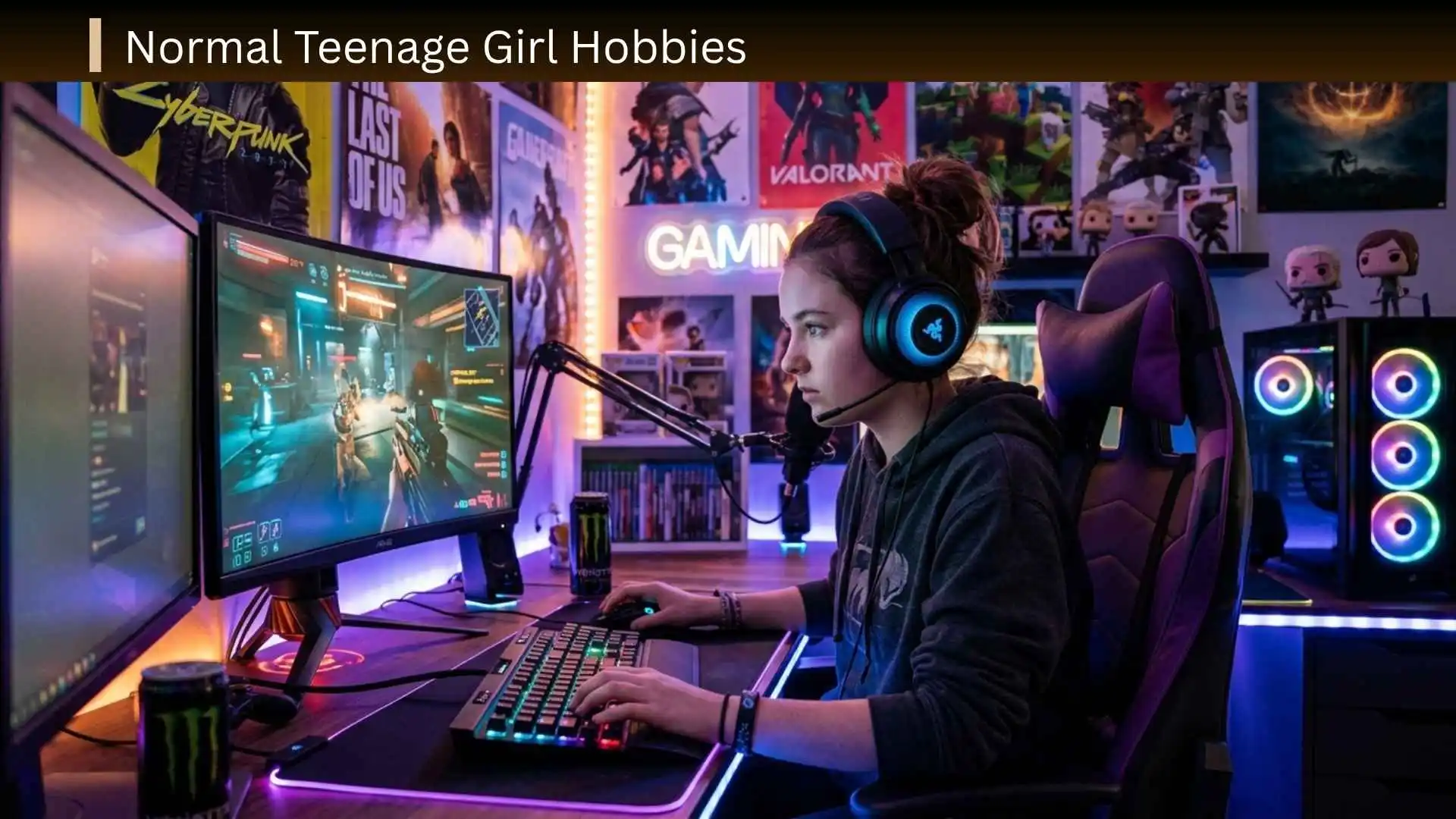
Being a teenager is a great time to explore different interests, develop new skills, and discover activities that genuinely feel enjoyable. When looking for normal teenage girl hobbies, there is no single list that every girl should follow. Hobbies can range from creative activities and sports to reading, music, technology, volunteering, collecting, or simply spending time outdoors.
The best hobby is one that fits a teenager’s personality, schedule, budget, and interests. Some hobbies can be relaxing after school, while others can help build confidence, creativity, fitness, friendships, or useful skills.
What Are Normal Teenage Girl Hobbies?
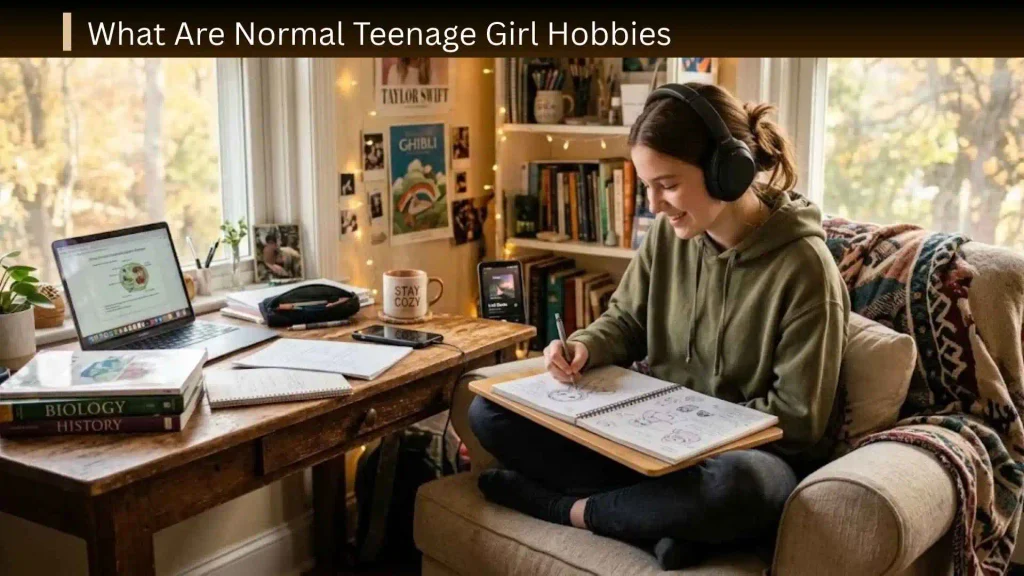
Normal teenage girl hobbies are simply everyday recreational activities that teenage girls may enjoy during their free time. They do not need to be traditionally feminine or fit a particular personality type.
A teenager might enjoy painting and journaling, while another may prefer basketball, coding, photography, baking, gaming, hiking, or learning an instrument. Many teenagers also have several hobbies that change as their interests develop.
The goal is not to find a hobby that looks “normal” to everyone else. It is to find activities that are enjoyable, accessible, and personally meaningful.
Best Normal Teenage Girl Hobbies to Try

1. Reading
Reading is an easy hobby to start because it requires little equipment beyond access to books. Teenagers can explore novels, fantasy, mystery, romance, biographies, graphic novels, nonfiction, or books about subjects they already enjoy.
Reading can also become a social hobby through book clubs, reading challenges, or discussions with friends.
Good for: Relaxation, imagination, vocabulary, and independent learning.
2. Journaling
Journaling can be as simple or creative as a teenager wants. A journal might contain daily thoughts, goals, memories, drawings, lists, favorite quotes, or plans for upcoming activities.
There is no required format. Some people prefer writing several pages, while others enjoy keeping short daily notes.
Good for: Creativity, reflection, organization, and documenting memories.
3. Drawing and Sketching
Drawing is a flexible hobby that can be practiced almost anywhere. Beginners can start with pencils and paper before experimenting with colored pencils, markers, watercolor, charcoal, or digital drawing.
Possible subjects include people, animals, landscapes, fashion ideas, cartoons, buildings, or imaginary characters.
Good for: Creative expression and developing artistic skills.
4. Painting
Painting offers another way to explore creativity. Acrylic, watercolor, and gouache can provide different experiences, and beginners do not need a large collection of supplies.
A teenager could start with small paintings rather than attempting complicated projects immediately.
Good for: Relaxation, creativity, and experimenting with color.
5. Photography
Photography can turn ordinary surroundings into opportunities for creative projects. A smartphone is often enough to begin learning about composition, lighting, perspective, and storytelling.
Teenagers can photograph nature, architecture, pets, food, objects, or everyday moments.
Good for: Creativity, observation, and learning a practical visual skill.
6. Baking
Baking can be both creative and practical. Beginners can start with cookies, brownies, muffins, cupcakes, or simple breads before trying more complicated recipes.
It can also be a social hobby because baked goods can be shared with family and friends.
Good for: Creativity, following instructions, and developing kitchen skills.
7. Cooking
Cooking is a useful lifelong skill as well as a hobby. Teenagers can learn to prepare simple breakfasts, lunches, dinners, snacks, or international dishes.
Starting with a few reliable recipes is often more useful than trying to master complicated meals immediately.
Good for: Independence, creativity, and practical life skills.
8. Dancing
Dance can be enjoyed casually at home or pursued through structured classes. Options include hip-hop, ballet, jazz, contemporary, tap, ballroom, and many other styles.
A teenager does not need to become a competitive dancer for it to be a worthwhile hobby.
Good for: Movement, coordination, musicality, and self-expression.
9. Playing a Musical Instrument
Learning an instrument can become a long-term hobby. Popular choices include guitar, piano, ukulele, violin, drums, flute, and other instruments.
Beginners can focus on short, consistent practice sessions rather than expecting rapid progress.
Good for: Music skills, patience, concentration, and creativity.
10. Singing
Singing can be practiced privately or socially. A teenager might sing along with favorite songs, join a school choir, take lessons, or simply practice for fun.
It does not have to involve performing in front of other people.
Good for: Musical expression and confidence.
11. Crafts
Crafting includes a huge variety of activities, so it is easy to find something that matches personal interests.
Ideas include:
- Friendship bracelets
- Paper crafts
- Scrapbooking
- Clay projects
- Beading
- Origami
- Embroidery
- Cross-stitch
- DIY decorations
- Handmade cards
Good for: Creativity, concentration, and making personalized items.
12. Sewing
Sewing can begin with basic hand-stitching before progressing to more advanced projects. Teenagers can repair clothes, customize garments, make accessories, or create small fabric projects.
Learning basic sewing can also be useful beyond the hobby itself.
Good for: Creativity, patience, and practical skills.
13. Knitting or Crochet
Knitting and crochet are portable hobbies that can be practiced while listening to music or watching a show. Beginners can start with simple scarves, small accessories, or basic decorative projects.
Once fundamental stitches are comfortable, there are many patterns to explore.
Good for: Focus, creativity, and relaxing repetitive activity.
14. Nail Art
Nail art can be a creative hobby for teenagers who enjoy experimenting with patterns, shapes, and colors. Simple designs can be practiced before moving toward more detailed techniques.
For younger teens, it is sensible to use products appropriately and follow product instructions.
Good for: Creativity and attention to detail.
15. Makeup as an Art Hobby
Makeup can be approached as a form of artistic experimentation rather than something a teenager needs to wear every day.
Learning about color combinations, blending, shapes, and different looks can provide a creative outlet. Teenagers should use age-appropriate products and maintain good hygiene when sharing or using cosmetics.
Good for: Creativity, experimentation, and visual design.
16. Hairstyling
Trying different hairstyles can become a practical creative hobby. Teenagers can practice braids, buns, ponytail variations, curls, or other techniques.
Learning hairstyling can also be useful when getting ready for school events, celebrations, or special occasions.
Good for: Creativity and practical personal-care skills.
17. Playing Sports
Sports are hobbies rather than just competitive activities. A teenager can play for fun without joining a serious team.
Possibilities include:
- Soccer
- Basketball
- Volleyball
- Tennis
- Swimming
- Track and field
- Badminton
- Softball
- Golf
- Table tennis
The best choice is often the activity that the teenager actually enjoys enough to continue.
Good for: Physical activity, coordination, teamwork, and social connection.
18. Hiking and Nature Walks
Hiking can combine exercise, outdoor exploration, and photography. A simple local trail or nature walk can be enough to start.
Teenagers should choose routes appropriate for their experience and conditions and follow local outdoor-safety guidance.
Good for: Outdoor time, movement, exploration, and photography.
19. Gardening
Gardening can be surprisingly engaging for teenagers who like plants or spending time outdoors. A large yard is not necessary; herbs or small plants can be grown in containers when conditions allow.
Watching a plant develop over time also makes gardening a hobby with a visible sense of progress.
Good for: Patience, nature appreciation, and practical knowledge.
20. Learning About Animals
Animal lovers can turn their interest into a hobby by learning about different species, habitats, behavior, and conservation.
Activities might include reading wildlife books, visiting reputable zoos or nature centers, photographing birds, or keeping a nature journal.
Good for: Learning, observation, and appreciation of nature.
21. Creative Writing
Creative writing can include short stories, poetry, fictional characters, scripts, or personal essays.
A teenager can write privately without worrying about publishing or sharing the work. Writing prompts can help when ideas are difficult to find.
Good for: Imagination, communication, and storytelling.
22. Poetry
Poetry is a compact creative hobby that can be practiced almost anywhere. Poems can explore emotions, experiences, nature, relationships, fictional worlds, or completely abstract ideas.
There is no requirement to follow one particular style.
Good for: Self-expression and experimenting with language.
23. Learning a New Language
Learning another language can become a long-term hobby. Teenagers can begin with vocabulary, pronunciation, basic phrases, songs, books, or beginner conversations.
Consistency matters more than trying to learn everything at once.
Good for: Communication, cultural learning, and memory practice.
24. Coding and Technology
Technology-related hobbies are not limited to adults or professional programmers. Teenagers can explore beginner-friendly coding, website creation, game development, digital art, animation, or robotics.
Projects are often more motivating than simply studying programming concepts.
Good for: Problem-solving, creativity, and technical skills.
25. Video Editing
Video editing can turn everyday clips into short creative projects. Teenagers can experiment with storytelling, transitions, music, captions, pacing, and visual effects.
It can be practiced using accessible editing software and personal footage.
Good for: Creativity, storytelling, and digital skills.
26. Graphic Design
Graphic design is another hobby that combines technology and creativity. Beginners can experiment with posters, invitations, wallpapers, mood boards, or simple social graphics.
Learning basic principles such as spacing, typography, contrast, and composition can make projects more polished.
Good for: Visual creativity and digital skills.
27. Digital Art
Digital art provides an alternative to traditional drawing and painting. Depending on the tools available, teenagers can create illustrations, character designs, patterns, backgrounds, or digital paintings.
A basic device can be enough to begin exploring the medium.
Good for: Artistic expression and technology.
28. Gaming
Gaming can be a legitimate hobby when it is balanced with school, sleep, physical activity, responsibilities, and other interests.
Teenagers may enjoy story-driven games, strategy games, simulation games, puzzle games, sports games, or cooperative multiplayer games.
Good for: Entertainment, problem-solving, storytelling, and social interaction.
29. Puzzles
Jigsaw puzzles, crosswords, Sudoku, logic puzzles, and other brain games can make good screen-free hobbies.
They are particularly suitable for teenagers who enjoy challenges and solving problems at their own pace.
Good for: Concentration, patience, and problem-solving.
30. Chess
Chess is a strategy hobby that can be played casually or studied seriously. Beginners can learn the basic rules first and gradually explore tactics, openings, and endgames.
Playing against friends or online opponents can make practice more engaging.
Good for: Strategic thinking and concentration.
31. Collecting
Collecting can turn an ordinary interest into an ongoing hobby. Depending on personal interests, a teenager might collect postcards, rocks, stickers, books, pins, sports cards, pressed leaves, or other appropriate items.
A collection does not need to be expensive to be meaningful.
Good for: Organization, research, and discovering new interests.
32. Scrapbooking
Scrapbooking combines photographs, writing, paper, decorations, and memories into personal projects.
It can be especially enjoyable for teenagers who like preserving memories from vacations, school events, friendships, or everyday experiences.
Good for: Creativity and memory keeping.
33. Volunteering
Volunteering can turn free time into an opportunity to contribute to a community. Depending on age and local requirements, teenagers may find opportunities involving animals, community organizations, environmental projects, libraries, schools, or charitable events.
A parent or guardian may need to help younger teenagers identify suitable opportunities.
Good for: Community involvement, responsibility, and discovering meaningful interests.
34. Learning About History
History can become much more interesting when approached through a specific subject rather than as a school assignment.
A teenager might explore ancient civilizations, American history, historical fashion, famous inventions, family history, architecture, or a particular period.
Good for: Research, curiosity, and understanding the past.
35. Astronomy and Stargazing
Stargazing can be started without expensive equipment. Learning major constellations, planets, lunar phases, and basic astronomy can make nighttime observations more interesting.
For outdoor activities, choose safe locations and follow local rules.
Good for: Science, curiosity, and outdoor exploration.
How to Choose the Right Hobby
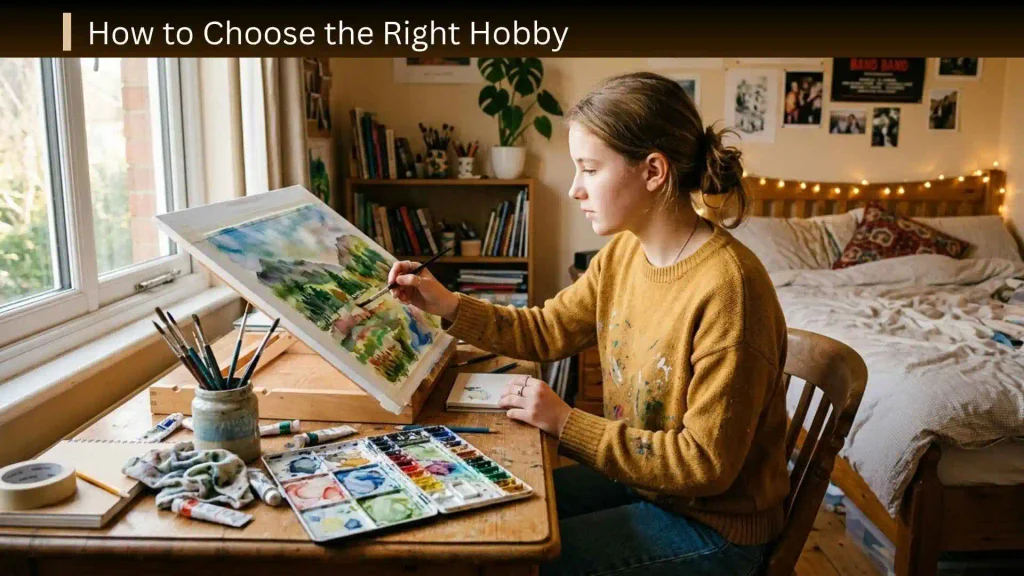
With so many possibilities, choosing one can actually be harder than finding ideas. A simple way to narrow the list is to think about what the teenager naturally enjoys.
If She Likes Creative Activities
Consider:
- Drawing
- Painting
- Photography
- Writing
- Jewelry making
- Sewing
- Crochet
- Scrapbooking
- Digital art
- Graphic design
If She Likes Being Active
Consider:
- Dancing
- Swimming
- Soccer
- Basketball
- Tennis
- Hiking
- Cycling
- Volleyball
- Running
If She Likes Quiet Activities
Consider:
- Reading
- Journaling
- Puzzles
- Chess
- Drawing
- Crochet
- Gardening
- Astronomy
If She Likes Technology
Consider:
- Coding
- Video editing
- Digital art
- Photography
- Graphic design
- Game development
- Animation
If She Likes Social Activities
Consider:
- Team sports
- Dance classes
- Book clubs
- Choir
- Theater
- Volunteering
- Group crafts
- Board games
Best Hobbies for Teenagers on a Budget
A hobby does not have to cost much money. Many activities can begin with things already available at home.
| Hobby | Starting Cost | Space Needed | Can It Be Done at Home? |
| Reading | Low | Very little | Yes |
| Journaling | Low | Very little | Yes |
| Drawing | Low | Small | Yes |
| Creative writing | Very low | Very little | Yes |
| Walking | Very low | None | Partly |
| Photography | Low if using a phone | Very little | Yes |
| Puzzles | Low to moderate | Small | Yes |
| Baking | Low to moderate | Kitchen | Yes |
| Gardening | Low to moderate | Small outdoor/container space | Yes |
| Crochet | Low | Small | Yes |
| Coding | Low | Very little | Yes |
| Hiking | Low | None at home | No |
Prices vary depending on the equipment, supplies, and resources already available, so these categories are intended only as general starting points.
Hobbies That Can Become Useful Skills
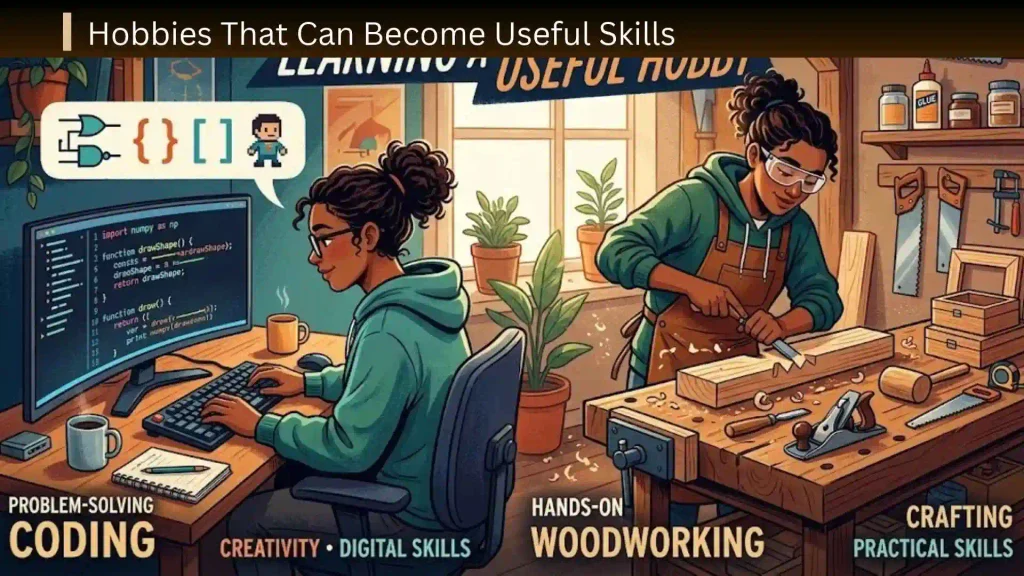
Some hobbies are enjoyable while also teaching skills that can remain useful later in life.
Cooking and Baking
These can develop kitchen confidence and basic food-preparation skills.
Sewing
Sewing can teach clothing repair and construction techniques.
Photography
Photography introduces concepts such as composition, lighting, and visual storytelling.
Coding
Coding can develop logical thinking and familiarity with technology.
Writing
Writing can strengthen communication and storytelling abilities.
Gardening
Gardening can teach patience and practical knowledge about plants and growing conditions.
Volunteering
Volunteering can provide opportunities to practice responsibility, communication, teamwork, and community participation.
Hobbies for Teenage Girls Who Are Bored at Home
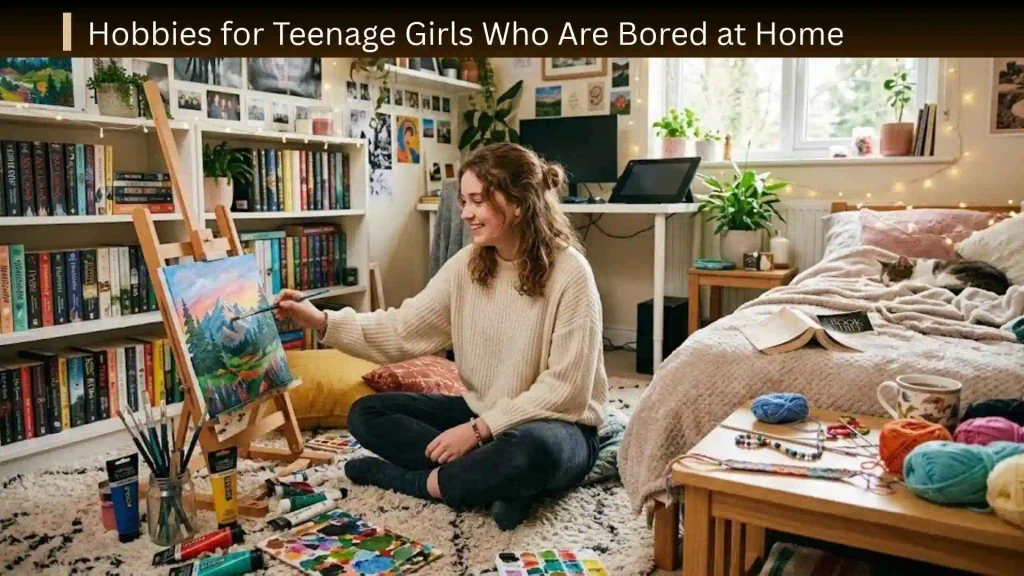
When boredom is the main problem, choose hobbies that can begin quickly rather than requiring extensive preparation.
Good options include:
- Start a journal.
- Try a new drawing challenge.
- Bake something simple.
- Learn a few phrases in another language.
- Make a friendship bracelet.
- Try a new hairstyle.
- Read a book.
- Organize a collection.
- Learn a beginner song on an instrument.
- Try a puzzle.
- Make a scrapbook page.
- Take creative photographs around the house.
- Learn a basic coding project.
- Write a short story.
- Grow an herb or another suitable plant.
The key is to choose something that can produce a small result quickly. Completing a simple first project can make it easier to decide whether the activity is worth pursuing further.
Hobbies That Can Be Done Alone

Some teenagers prefer independent hobbies, especially when they need quiet time.
Good solo hobbies include:
- Reading
- Journaling
- Drawing
- Painting
- Photography
- Writing
- Baking
- Cooking
- Gardening
- Coding
- Digital art
- Crochet
- Puzzles
- Chess
- Learning an instrument
- Astronomy
Solo hobbies can also be combined with social activities later. For example, someone who enjoys photography might join a photography group, while a reader might participate in a book club.
Hobbies to Do With Friends
Hobbies can also be a way to spend quality time with friends.
Some possibilities include:
- Baking together
- Cooking
- Board games
- Photography walks
- Hiking
- Painting
- Craft projects
- Karaoke
- Playing sports
- Book discussions
- Volunteering
- Learning dance routines
- Creating short videos
The best group hobby is one where everyone can participate without feeling pressured to be highly skilled.
How to Start a New Hobby Without Giving Up
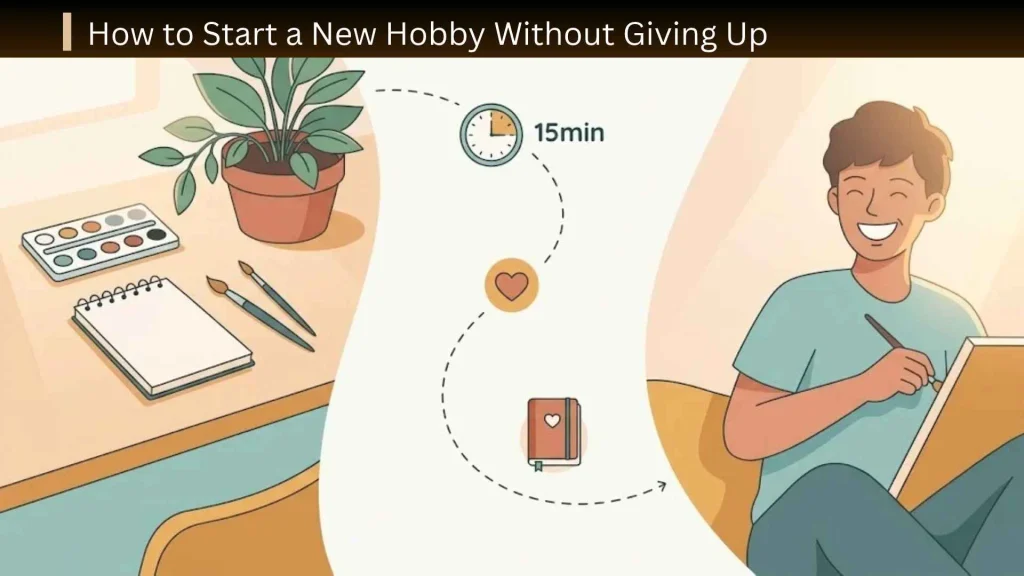
Starting too many hobbies at once can become overwhelming. A simpler approach is to choose one activity and give it a reasonable trial period.
Start Small
Instead of buying everything associated with a hobby, purchase or borrow only the basic supplies needed for a beginner project.
Choose a First Project
A specific project provides a clear goal. For example, someone interested in crochet might make a simple square rather than attempting a complicated garment.
Practice Consistently
Short sessions can be easier to maintain than occasional long sessions. Even a small amount of regular practice can help a beginner become more comfortable with an activity.
Expect Beginner Mistakes
Being bad at something initially is normal. A hobby is supposed to provide room for learning, experimenting, and improving.
Change Hobbies When Your Interests Change
Not every hobby needs to become a lifelong commitment. Teenagers are still discovering what they like, so it is perfectly reasonable to try something and later move on to another activity.
Do Hobbies Have to Be Traditionally “Girly”?
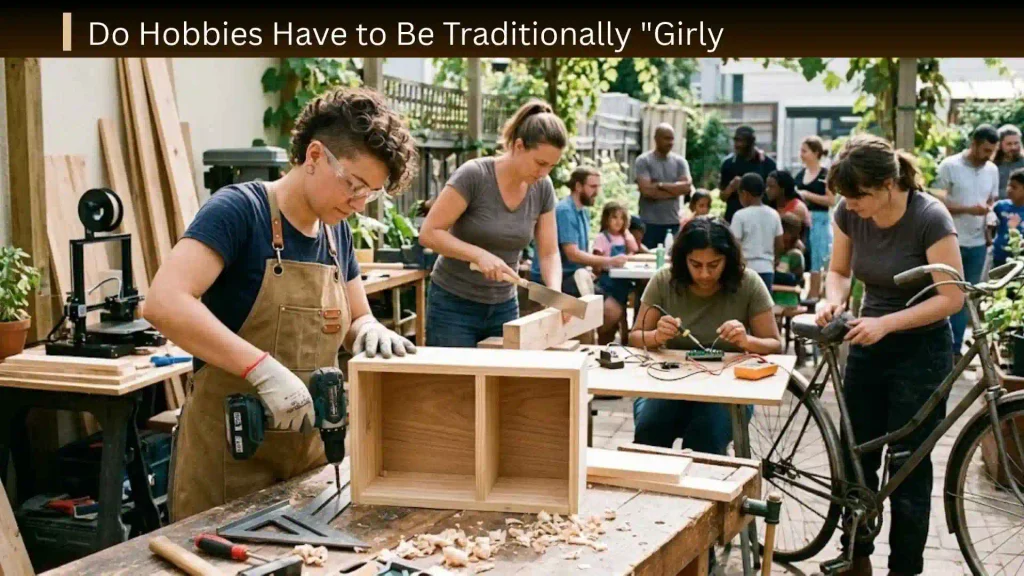
No. A hobby does not have to match a gender stereotype.
A teenage girl can enjoy fashion design, basketball, robotics, painting, fishing, gaming, coding, gardening, skateboarding, reading, woodworking, music, or any combination of activities.
The word “normal” should not limit the choices available. A healthy hobby is one that is appropriate, enjoyable, and meaningful to the individual.
How Many Hobbies Should a Teenage Girl Have?
There is no ideal number of hobbies. One meaningful hobby can be enough, while another teenager may enjoy several different activities.
A useful combination can include different types of interests, such as:
- One creative hobby
- One physical activity
- One relaxing hobby
- One social activity
But this is only a suggestion, not a requirement. School, family responsibilities, sleep, friendships, and personal downtime should remain part of a balanced schedule.
Frequently Asked Questions
What are the most normal hobbies for teenage girls?
Common options include reading, journaling, drawing, painting, photography, baking, cooking, dancing, sports, music, crafts, gaming, writing, gardening, and spending time outdoors. There is no single set of hobbies that every teenage girl should have.
What are good hobbies for a teenage girl who is bored?
Creative activities such as drawing, journaling, baking, photography, crafts, writing, puzzles, reading, and learning a new skill can provide something constructive to do at home.
What are cheap hobbies for teenage girls?
Reading, walking, creative writing, journaling, drawing, photography with a smartphone, stargazing, and some forms of crafting can be started inexpensively. Using supplies already available at home can reduce the initial cost further.
What hobbies can teenage girls do alone?
Reading, writing, drawing, painting, photography, coding, gardening, puzzles, chess, crochet, music practice, and digital art are examples of hobbies that can be enjoyed independently.
What hobbies can teenage girls do with friends?
Friends can enjoy baking, cooking, sports, hiking, photography, crafts, board games, dance, karaoke, volunteering, book discussions, and creative projects together.
Are sports good hobbies for teenage girls?
Yes. Sports can be enjoyable recreational activities and can provide opportunities for physical activity, skill development, teamwork, and social interaction. The best sport is one the teenager enjoys and can participate in appropriately.
Can a hobby help a teenager discover a future career?
It can. Hobbies sometimes expose teenagers to interests and skills that they may later explore through school, training, college, or careers. However, a hobby does not need to become a career to be valuable.
Is it normal to lose interest in a hobby?
Yes. Interests naturally change, particularly during the teenage years. Trying a hobby and eventually deciding that it is not enjoyable can still be useful because it helps identify personal preferences.
Conclusion
The best normal teenage girl hobbies are not defined by a particular style, trend, or stereotype. They are activities that a teenager genuinely enjoys and can fit into her everyday life.
Reading, art, music, sports, cooking, crafts, technology, writing, gardening, volunteering, photography, and countless other activities can all make worthwhile hobbies. Some cost almost nothing, while others require equipment or classes.
The easiest way to find the right hobby is to experiment. Start with something interesting, keep the first project simple, give yourself time to learn, and do not be afraid to move on if it does not feel right. A good hobby should make free time more enjoyable while giving you opportunities to create, learn, explore, relax, or connect with other people.

I’m Sophia Carter, a writer who enjoys discovering interesting ideas and transforming them into helpful content. At Cognivoora, I write with a simple goal: to make information clearer, more accessible, and genuinely useful for readers. I value thoughtful research, easy explanations, and content that people can trust and return to whenever they need it.
Books:
- The Knowledge Journey
- Understanding the World Around Us