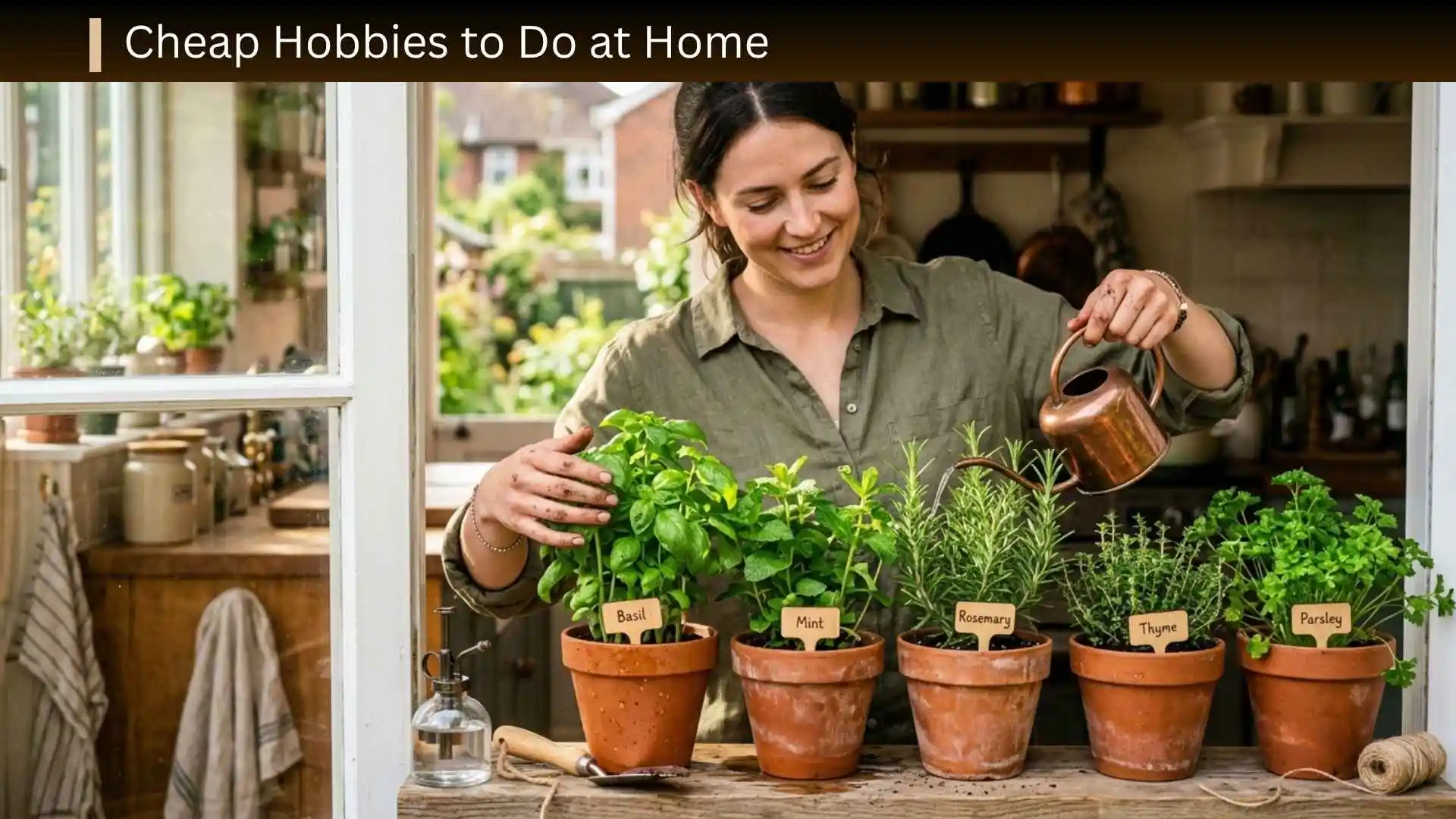
Have you ever wanted to pick up a new hobby but stopped because you thought it would cost too much? I’ve found that some of the most enjoyable hobbies don’t require expensive equipment, a big budget, or even leaving your home. You can turn simple things you already have into fun, creative, and rewarding activities.
Whether you want to relax after a busy day, learn a new skill, stay entertained, or simply spend less time scrolling on your phone, cheap hobbies to do at home can give you plenty of options. From reading and drawing to DIY crafts, journaling, cooking, and learning something new, you can find a hobby that fits your interests without putting pressure on your wallet.
In this guide, I’ll share affordable hobbies you can easily try at home, so you can discover something you genuinely enjoy without spending a fortune. You might even find your next favorite hobby hiding in something you already have around the house.
Cheap Hobbies to Do at Home(Quick Answer)
Some of the best inexpensive hobbies you can enjoy at home include:
- Reading
- Journaling
- Drawing
- Creative writing
- Origami
- Cooking
- Baking
- Indoor gardening
- Photography with a phone
- Sketching
- Puzzles
- Board games
- Learning a language
- Learning an instrument
- Knitting or crochet
- Embroidery
- Calligraphy
- Coloring
- DIY crafts
- Digital art
- Genealogy
- Chess
- Meditation
- Home workouts
- Bird or nature identification from a window or balcony
The cheapest option depends on what you already have. A hobby such as writing may cost nothing if you have a phone or computer, while knitting may require an initial purchase of yarn and needles but remain inexpensive once you have basic supplies.
How to Choose a Cheap Hobby
Before buying anything, think about what you want from the hobby.
If you want to relax after work, journaling, coloring, puzzles, reading, or simple crafts may fit better than a hobby requiring intensive concentration. If you want to learn a skill, try cooking, drawing, a language, music, coding, or creative writing.
Your available space, time, patience, and existing supplies also matter. Someone living in a small apartment may prefer digital art or origami over a craft that requires a dedicated workbench.
A useful rule is to start with what you already own. Give a hobby a few sessions before buying specialized equipment.
1. Reading
Reading is one of the easiest hobbies to start at home because you may already have books available.
You can read novels, biographies, history, science, essays, magazines, comics, or nonfiction related to an existing interest. If buying new books is too expensive, consider your local public library, used bookstores, book swaps, or library lending services.
Startup cost: Free to low
Space: Very little
Best for: Relaxation, learning, and quiet downtime
A simple way to make reading feel more like a hobby is to keep a reading list and record a few thoughts about each book.
2. Journaling
Journaling requires surprisingly little equipment. A notebook and pen are enough.
You don’t need to write several pages every day. You could keep a daily log, gratitude journal, reading journal, idea notebook, dream journal, travel-planning journal, or creative writing journal.
If paper isn’t convenient, use a notes app or free writing software.
Startup cost: Free to low
Time commitment: 5–20 minutes at a time
Best for: People who enjoy writing, reflection, organization, or recording ideas
To avoid turning journaling into another obligation, choose a format that matches your personality rather than following a complicated journaling system.
3. Drawing
Drawing is an excellent low-cost creative hobby because you can begin with an ordinary pencil and paper.
Start by sketching objects around your home: a mug, houseplant, shoe, chair, or your own hand. As you improve, experiment with perspective, shading, portraits, animals, landscapes, and character design.
You don’t need professional art supplies to learn fundamental drawing skills.
Startup cost: Free to low
Difficulty: Beginner-friendly but highly expandable
Best for: Creative practice and visual observation
One of the most useful beginner exercises is drawing the same object repeatedly from different angles. It helps you focus on shapes and proportions instead of trying to make every drawing perfect.
4. Creative Writing
Creative writing can cost nothing if you already have access to a notebook, phone, or computer.
Try short stories, poetry, personal essays, fictional characters, dialogue exercises, or even writing prompts. You can also create a fictional world and gradually develop its characters, locations, history, and conflicts.
Startup cost: Free
Space: Minimal
Best for: People who enjoy imagination, storytelling, and language
A practical starting point is to write one complete short scene rather than attempting an entire novel.
5. Cooking
Cooking can become a hobby rather than simply a daily responsibility when you deliberately experiment with recipes, ingredients, techniques, and cuisines.
You don’t need expensive specialty ingredients. Choose inexpensive staples such as rice, beans, potatoes, eggs, pasta, vegetables, or grains and learn several ways to prepare them.
Startup cost: Low if you already have basic kitchen equipment
Time commitment: Flexible
Best for: Practical learners and food enthusiasts
Keep a record of recipes you enjoyed and changes you made. Over time, this creates your own personal collection of reliable meals.
6. Baking
Baking offers a more structured form of cooking because measurements and techniques matter more closely.
You can begin with simple recipes for cookies, muffins, quick breads, pancakes, or basic cakes. Once you become comfortable, you can experiment with decorating, bread-making, pastry, and ingredient substitutions.
Startup cost: Low to moderate depending on your existing kitchen equipment
Best for: Creative people who enjoy hands-on projects
If you’re trying to keep costs down, choose recipes that use ingredients you already purchase rather than buying specialty decorations or equipment.
7. Origami
Origami turns ordinary paper into decorative or functional objects through folding.
You can use inexpensive printer paper to learn basic folds before purchasing specialty origami paper. Projects range from simple animals and flowers to much more intricate geometric designs.
Startup cost: Free to very low
Space: Minimal
Best for: Quiet, hands-on creative activity
Save successful models as references. Repeating a difficult design several times is often more rewarding than constantly jumping between unrelated projects.
8. Coloring
Adult coloring can be an inexpensive way to spend a quiet evening.
You can use colored pencils, crayons, or markers with coloring books or printable designs. You can also create your own patterns and geometric designs.
Startup cost: Low
Difficulty: Very easy to start
Best for: Relaxed creative sessions
You don’t need an elaborate color collection. A small set of colors can be enough to explore shading, contrast, and different combinations.
9. Puzzles
Jigsaw puzzles, crossword puzzles, word searches, logic puzzles, and number puzzles offer different types of mental engagement.
Physical jigsaw puzzles can be reused, traded with friends, or purchased secondhand. Digital puzzle apps and websites can also provide inexpensive or free alternatives.
Startup cost: Free to low
Space: Varies
Best for: People who enjoy problem-solving and focused activities
If you don’t have room to leave a large puzzle unfinished, choose smaller puzzles or use a portable puzzle board or designated tray.
10. Chess
Chess is inexpensive to start and can provide years of learning.
A basic physical chess set is enough, while free online platforms and apps allow you to practice against other players or computer opponents.
Instead of only playing games, learn a few basic principles such as controlling the center, developing pieces, protecting your king, and recognizing simple tactical patterns.
Startup cost: Free to low
Best for: Strategy and analytical thinking
If you’re completely new, focus on understanding why moves work rather than memorizing long opening sequences.
11. Learning a Language
You can begin learning another language at home without purchasing a full course.
Free resources, library materials, language-learning videos, podcasts, flashcards, and conversation communities can provide plenty of practice. The challenge is maintaining regular exposure.
Startup cost: Free to low
Time commitment: 10–30 minutes can be enough for a study session
Best for: Lifelong learners and people interested in other cultures
Choose a practical first goal, such as learning common phrases or understanding basic conversations, instead of trying to memorize an entire dictionary.
12. Learning an Instrument
Music can be a relatively inexpensive hobby if you already own an instrument or can obtain a used beginner instrument.
A keyboard, ukulele, recorder, harmonica, or guitar can provide different entry points. Free lessons and practice materials can supplement structured instruction.
Startup cost: Free if you already have an instrument; otherwise low to moderate
Difficulty: Easy to start, challenging to master
Best for: People interested in music and skill development
Choose an instrument that fits your living situation. Volume and available space matter, particularly if you live in an apartment or share your home with others.
13. Knitting
Knitting can be started with basic needles and inexpensive yarn.
Once you learn a few fundamental stitches, you can make scarves, simple accessories, decorative pieces, or increasingly complex projects. Yarn costs can vary significantly, so beginners can keep expenses under control by starting with affordable yarn.
Startup cost: Low
Space: Small
Best for: Hands-on crafting and repetitive creative work
Don’t buy a large collection of yarn before deciding whether you enjoy the process. One small beginner project is enough to test the hobby.
14. Crochet
Crochet has a relatively small equipment requirement: usually a crochet hook and yarn.
It can be used for blankets, scarves, hats, decorations, stuffed figures, and many other projects. Video tutorials can make basic stitches easier to understand.
Startup cost: Low
Learning curve: Beginner-friendly, with room for advanced techniques
Best for: Creative people who enjoy making tangible objects
Start with a simple square or small project. Finishing something quickly can make the learning process more satisfying.
15. Embroidery
Embroidery involves decorating fabric with thread using different stitches and patterns.
A basic setup can include a needle, embroidery thread, fabric, and a small hoop. Old clothing or scrap fabric can sometimes serve as practice material.
Startup cost: Low
Space: Minimal
Best for: Detail-oriented crafters
Instead of immediately attempting an elaborate design, practice a handful of stitches on scrap fabric. Once your stitches become consistent, move to a small finished piece.
16. Calligraphy and Hand Lettering
Calligraphy and hand lettering turn writing into a visual art form.
You can begin with an ordinary pen and paper while learning spacing, letter shapes, consistency, and composition. Specialized pens can be added later if you decide you enjoy the hobby.
Startup cost: Free to low
Space: Minimal
Best for: People interested in lettering, design, and stationery
Practice individual letters and short words before attempting long quotations. Consistency matters more than speed.
17. Phone Photography
You don’t necessarily need a dedicated camera to explore photography.
A smartphone can be used to practice composition, lighting, perspective, close-up photography, architecture, food photography, portraits, or everyday objects.
The most useful exercise is to give yourself a specific theme. For example, photograph five interesting textures around your home or find different ways to photograph the same object.
Startup cost: Free if you already own a smartphone
Space: Minimal
Best for: Visual learners and creative experimenters
You can also learn basic photo editing using tools already available on many phones.
18. Digital Art
Digital art can be inexpensive if you already have a computer, tablet, or smartphone.
Free or low-cost drawing applications can provide brushes, layers, colors, and other tools without requiring a physical art studio.
You can experiment with illustrations, digital painting, typography, icons, character design, or simple graphic compositions.
Startup cost: Free to low depending on equipment
Space: Minimal
Best for: People who enjoy technology and visual creativity
Don’t worry about mastering every feature in an art application. Learn a small set of tools and create complete projects with them.
19. DIY Crafts
DIY crafting encompasses many inexpensive projects, including paper crafts, recycled-material projects, decorations, greeting cards, simple organizers, and handmade gifts.
The biggest advantage is that you can often repurpose materials already in your home.
Startup cost: Free to low
Best for: Makers who like experimenting
Before buying craft supplies, look through your recycling bin, stationery drawer, unused packaging, fabric scraps, and other household materials. The limitation of available materials can actually encourage more creative solutions.
20. Indoor Gardening
Indoor gardening allows you to grow and care for plants without having a yard.
If you’re new to it, start with one or two plants rather than creating a large collection. You can learn about light requirements, watering, soil, propagation, and container selection as you go.
Herbs can also be an interesting option when you have suitable light and want something practical.
Startup cost: Low to moderate depending on the plants and containers
Space: Small to moderate
Best for: People who enjoy caring for living things
A sunny windowsill can be enough for some plants, but plant requirements differ, so choose varieties suited to the light conditions available in your home.
21. Home Workouts
Exercise can also be a hobby when you enjoy learning and practicing a particular form of movement.
Walking in place, bodyweight exercises, stretching, mobility routines, dance practice, and other equipment-free activities can be done at home. Free instructional resources can help you learn basic movements.
Startup cost: Free to low
Space: Small to moderate
Best for: People who want an active hobby without a gym membership
Choose activities appropriate for your current fitness level and available space. If an exercise causes pain or you have a medical concern affecting physical activity, seek appropriate professional guidance.
22. Meditation and Mindfulness Practice
Meditation can be practiced at home without specialized equipment.
A beginner might start with a short period of quiet attention to breathing, sounds, or bodily sensations. Guided sessions can also help people who find it difficult to practice independently.
Startup cost: Free
Time commitment: Flexible
Space: Very little
Best for: People seeking a quiet, structured activity
Treat it as a skill to practice rather than a test of whether you can completely clear your mind.
23. Genealogy
Genealogy turns family history into a research hobby.
You can start by talking with relatives, organizing names and dates you already know, examining old photographs and documents, and creating a basic family tree. Libraries, archives, historical records, and genealogy databases can provide additional sources.
Startup cost: Free to low, depending on research resources
Best for: Researchers and history enthusiasts
Keep track of where information came from. Family stories can be valuable clues, but they aren’t always the same as documented evidence.
24. Bird and Nature Identification From Home
You don’t need to visit a national park to begin learning about nature.
From a window, porch, or balcony, you may be able to observe birds, insects, plants, clouds, or seasonal changes. A notebook and free identification resources can help you learn what you’re seeing.
Startup cost: Free to low
Space: Minimal
Best for: Curious observers and nature enthusiasts
Record the date, location within your surroundings, and characteristics you noticed. Over time, you may begin recognizing seasonal patterns.
25. Learning to Code
Coding can be a surprisingly accessible home hobby because many programming tools and educational resources are available at no cost.
Beginners can start with simple web pages, small scripts, interactive projects, or beginner programming exercises. You don’t need to become a professional developer for coding to be worthwhile as a hobby.
Startup cost: Free if you have a suitable computer
Difficulty: Beginner-friendly at the entry level, progressively challenging
Best for: Problem-solvers and technology enthusiasts
Choose a project rather than studying programming concepts indefinitely. Building something small gives you a practical reason to learn each new concept.
Cheap Hobbies at Home by Budget
Your actual cost depends heavily on what you already own. Here’s a useful way to narrow down your options.
| Budget | Hobbies to Consider | Typical Starting Situation |
| $0 | Reading, journaling, creative writing, phone photography, meditation, coding, language learning, chess online | Use free resources and equipment you already have |
| Under $10 | Origami, drawing, coloring, calligraphy, simple crafts | Buy a few basic supplies |
| $10–$25 | Embroidery, crochet, knitting, puzzles, beginner craft projects | Purchase a basic starter setup |
| $25–$50 | More involved crafts, baking projects, used instruments, indoor plants | Build a modest hobby kit |
| $50+ | Instruments, specialized art equipment, larger craft projects | Worth considering after you’ve tested the hobby |
These aren’t fixed prices. Costs vary by the supplies you already have, where you shop, whether you buy new or used items, and how specialized your hobby becomes.
Cheapest Hobbies That Require Almost Nothing
If your goal is to spend as little as possible, start with hobbies based on skills rather than equipment.
Good choices include:
- Creative writing — a phone or computer is enough.
- Journaling — use any notebook you already have.
- Reading — borrow books instead of purchasing them.
- Meditation — requires virtually no equipment.
- Language learning — combine free lessons with regular practice.
- Phone photography — use the camera you already own.
- Coding — free software can provide a starting point.
- Drawing — begin with ordinary paper and a pencil.
- Chess — play digitally if you don’t own a board.
- Nature observation — observe what’s already around you.
The cheapest hobby isn’t necessarily the one with the lowest sticker price. It’s the one you can continue enjoying without constantly needing new purchases.
Cheap Creative Hobbies to Do at Home
If you want your hobby to produce something tangible, consider:
- Drawing
- Origami
- Coloring
- Creative writing
- Calligraphy
- Hand lettering
- Crochet
- Knitting
- Embroidery
- DIY crafts
- Digital art
- Baking
For maximum savings, choose projects that use inexpensive consumable materials and avoid buying large specialty collections before you’ve developed an interest.
Cheap Relaxing Hobbies to Do at Home
For quieter evenings, these hobbies may be especially appealing:
- Reading
- Journaling
- Coloring
- Puzzles
- Origami
- Knitting
- Crochet
- Embroidery
- Meditation
- Nature observation
The best relaxing hobby is subjective. A repetitive craft may feel calming to one person while another may find it frustrating. Try several activities and notice which ones leave you feeling interested rather than pressured.
Cheap Hobbies for People Who Live in Small Spaces
Limited space doesn’t prevent you from having a hobby. Look for activities that can be packed away quickly.
Good options include:
- Reading
- Writing
- Drawing
- Digital art
- Calligraphy
- Origami
- Crochet
- Embroidery
- Language learning
- Chess
- Photography
- Coding
- Puzzles
A small storage box can keep supplies organized and prevent a hobby from taking over your living area.
How to Make a Hobby Even Cheaper
You don’t necessarily need to spend more money as you become more interested. A few habits can keep costs manageable.
Use What You Already Own
Before purchasing supplies, check your home. You may already have paper, pens, containers, fabric, kitchen equipment, books, or electronic devices that can support a new activity.
Borrow Before Buying
Libraries, friends, family members, community groups, and hobby clubs can sometimes provide access to books, games, tools, or other resources.
Buy Used When Practical
Secondhand markets can be useful for items such as books, puzzles, instruments, craft equipment, and some hobby supplies. Check condition carefully before purchasing.
Start With One Project
Buying supplies for ten future projects is an easy way to spend money on a hobby you may abandon after a week. Buy enough for one small project first.
Reuse Materials
Paper scraps, cardboard packaging, fabric remnants, jars, and other household materials can become useful craft materials.
Don’t Confuse Equipment With Progress
A more expensive pen, camera, instrument, or art tablet doesn’t automatically make someone better at the hobby. Skill generally comes from learning and practice, so upgrade when your existing equipment genuinely limits what you want to do.
How to Find a Hobby You’ll Actually Stick With
The best hobby isn’t necessarily the cheapest one. It’s the one that is affordable and interesting enough that you want to return to it.
Ask yourself:
- Do I want to make something?
- Do I want to learn something?
- Do I want a quiet activity?
- Do I want to move my body?
- Do I prefer digital or physical activities?
- How much space can I dedicate to it?
- How much money am I comfortable spending each month?
- Do I want a hobby I can do for 10 minutes or one that occupies an entire afternoon?
- Do I want to work alone or eventually join a community?
If you’re unsure, choose three hobbies with different characteristics. For example, try drawing, chess, and cooking. After a week or two, you’ll have a better idea of whether you prefer creativity, strategy, or hands-on activities.
Common Mistakes When Starting a Cheap Hobby
Buying Too Much Equipment
A large supply collection can become expensive before you’ve determined whether you actually enjoy the hobby.
Choosing a Hobby Because It Looks Easy
Almost every hobby has a learning curve. A better question is whether you’re willing to practice the difficult parts.
Comparing Beginner Work With Expert Work
Seeing highly polished artwork, crafts, photographs, or music online can create unrealistic expectations. Use other people’s work for inspiration rather than as a measure of your first attempts.
Trying to Master Everything at Once
Pick one small skill or project. Progress is easier to recognize when you’re working toward a specific goal.
Treating the Hobby Like Another Job
A hobby doesn’t need productivity targets, monetization goals, or a rigid schedule. If your main reason for starting is enjoyment, protect that part of the experience.
Frequently Asked Questions
What is the cheapest hobby to do at home?
Reading borrowed books, journaling, creative writing, meditation, language learning, coding, phone photography, drawing with existing supplies, and online chess can cost little or nothing to start.
What are some cheap hobbies for adults at home?
Adults can try cooking, baking, reading, drawing, writing, puzzles, chess, gardening, photography, digital art, crochet, knitting, genealogy, language learning, and home exercise. The best choice depends on whether you want creativity, learning, relaxation, or activity.
What hobby can I start with $10?
With around $10, you could potentially start drawing, origami, coloring, calligraphy, simple embroidery, crochet, or another small craft, depending on local prices and what supplies you already own.
What hobbies can I do at home without spending money?
Try reading books you already own, writing, journaling, meditation, drawing with existing paper and pencils, phone photography, language practice, coding with free software, online chess, and observing nature from your home.
What is a good hobby if I get bored easily?
Choose a hobby with many directions rather than a single repetitive outcome. Photography, cooking, drawing, creative writing, coding, language learning, and DIY crafts can all be adapted to different projects and interests.
What is a good hobby for someone with very little space?
Reading, writing, drawing, digital art, calligraphy, origami, embroidery, crochet, language learning, meditation, coding, and phone photography require little dedicated space.
How can I enjoy hobbies without spending a lot of money?
Start with what you own, borrow equipment or books when possible, use free learning resources, buy secondhand items, reuse materials, and purchase supplies only after you’ve decided that the hobby is worth continuing.
Can a cheap hobby eventually become expensive?
Yes. Many inexpensive hobbies have optional upgrades. Photography can lead to camera and lens purchases, crafting can lead to large material collections, and music can involve better instruments and accessories. Set a budget before upgrading so the hobby remains financially comfortable.
Conclusion
There are plenty of cheap hobbies to do at home, from completely free activities such as writing, meditation, language learning, and coding to inexpensive creative hobbies such as drawing, origami, embroidery, and crochet.
If you’re unsure where to begin, don’t try to find the perfect hobby immediately. Pick one activity that fits your budget, space, and available time, start with the supplies you already have, and give it a few sessions. A hobby becomes valuable when it gives you a reason to keep learning, making, exploring, or simply enjoying your free time.

I’m Olivia Bennett, a passionate writer who loves exploring ideas, learning new concepts, and sharing knowledge in a straightforward way. I write for Cognivoora with the goal of making useful topics easier to understand without unnecessary complexity. My approach combines research, clarity, and a reader-first perspective.
Books:
- Think Clearly, Live Better
- The Curious Reader’s Guide