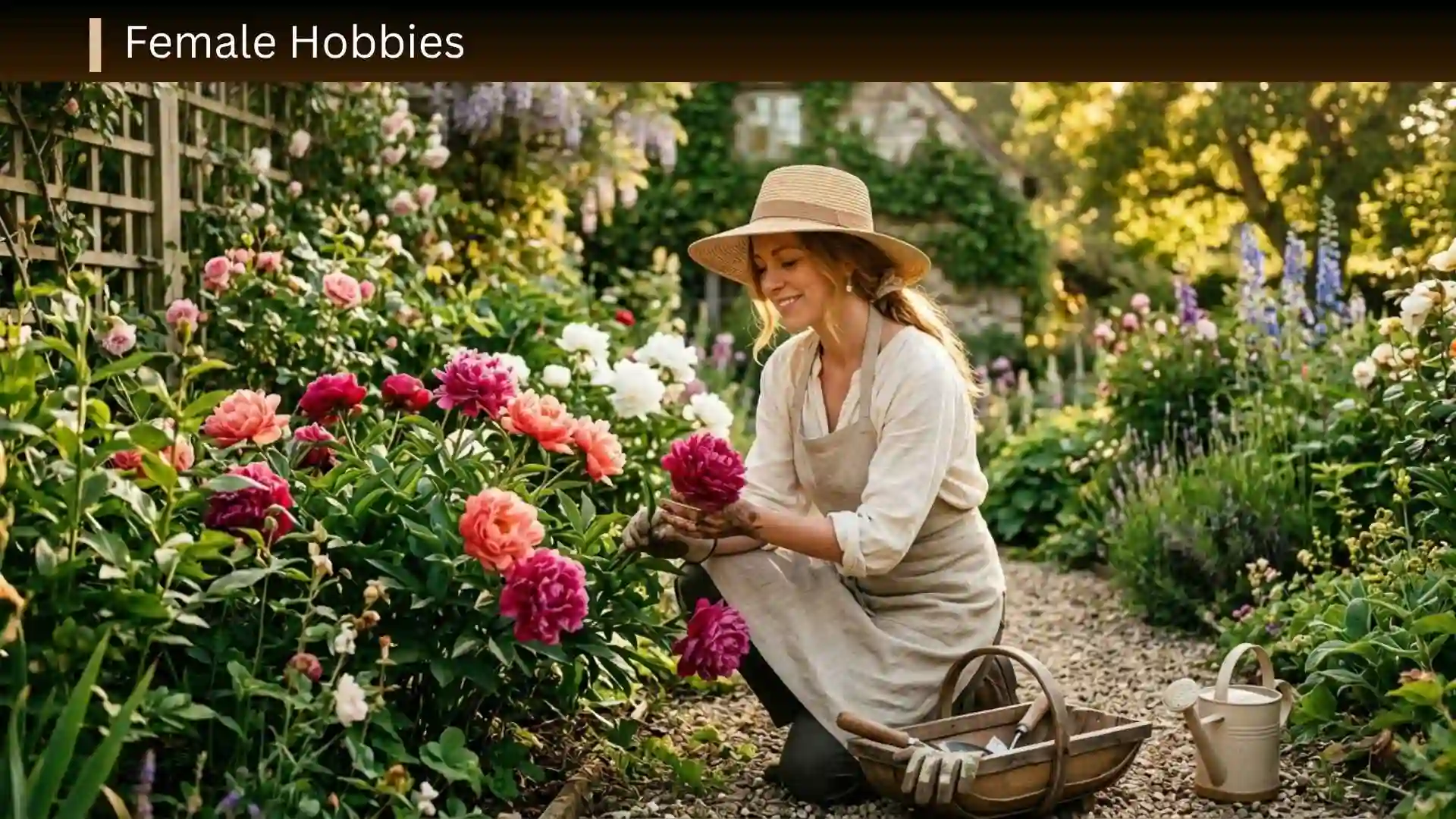
I believe hobbies can add something special to everyday life, whether you want to relax, express your creativity, learn a new skill, or simply make time for yourself. If you’re looking for female hobbies that match your personality and interests, you don’t have to limit yourself to the usual choices. You can explore creative projects, fitness activities, relaxing pastimes, outdoor adventures, or even hobbies that help you connect with others.
You may be searching for a hobby because your routine feels repetitive, or perhaps you simply want to try something new. Whatever your reason, I’m here to help you discover ideas that you can actually enjoy and stick with. From simple hobbies you can start at home to exciting activities that get you out and about, there’s something for every woman, interest, budget, and experience level.
35 Female Hobbies to Try
The right hobby depends on what you want from your free time. Some activities are inexpensive and easy to begin, while others require equipment, classes, or more practice. Instead of looking for a hobby based only on gender, consider what you want the hobby to do for your life.
1. Reading
Reading is a flexible hobby that can fit almost any schedule. You can read novels, biographies, memoirs, history, science, business books, poetry, or books related to a personal interest.
It is particularly convenient because you can read almost anywhere. A physical book, e-reader, or library membership can provide a simple starting point without requiring much equipment.
Best for: Quiet downtime, learning, imagination, and independent entertainment.
2. Journaling
Journaling gives you a private space to record thoughts, ideas, goals, observations, or everyday experiences. It does not have to follow a complicated system.
You might keep a traditional diary, gratitude journal, reading journal, travel journal, or simple daily notebook. Creative journaling can also include drawings, photographs, ticket stubs, and other visual elements.
Best for: Reflection, creativity, organization, and quiet personal time.
3. Photography
Photography can turn ordinary surroundings into opportunities for observation and creativity. You do not necessarily need an expensive camera; a smartphone can be enough to begin learning about composition, lighting, perspective, and storytelling.
As your interest develops, you can specialize in portraits, landscapes, architecture, food, nature, street photography, or still life.
Best for: Creative people who enjoy visual storytelling and exploring their surroundings.
4. Painting
Painting offers many directions, including watercolor, acrylic, oil, and other approaches. Beginners can start with basic materials and gradually experiment with techniques.
The appeal is that there is no single correct subject. You might paint landscapes, flowers, portraits, abstract designs, or objects around your home.
Best for: Artistic expression and people who enjoy hands-on creative work.
5. Drawing
Drawing is one of the easiest creative hobbies to start because the basic requirements can be as simple as paper and a pencil.
You can practice sketching, illustration, portraits, fashion drawings, nature studies, or digital art. Improvement comes through regular practice rather than expensive equipment.
Best for: Beginners who want an accessible artistic hobby.
6. Gardening
Gardening combines practical work with an interest in plants and outdoor spaces. If you do not have a large yard, containers, balconies, patios, and indoor plants can provide alternatives.
You can grow flowers, herbs, vegetables, or ornamental plants depending on your available space and local conditions.
Best for: People who enjoy nature, hands-on projects, and caring for living things.
7. Cooking
Cooking can be both a practical skill and a genuine hobby. Instead of simply preparing everyday meals, you can turn it into a learning project by exploring different cuisines, baking techniques, sauces, breads, or presentation styles.
A useful approach is to choose one area that interests you and gradually build your skills.
Best for: Food lovers and people who enjoy practical creativity.
8. Baking
Baking is a more focused alternative to general cooking. You can explore cakes, cookies, bread, pastries, pies, or decorated desserts.
It can also become a structured skill-building hobby because recipes allow you to experiment with ingredients, techniques, timing, and presentation.
Best for: People who enjoy precise, creative, and rewarding projects.
9. Knitting
Knitting is a portable craft that can be practiced at home while listening to music or watching a program. Beginners can start with simple scarves or small projects before moving toward more complicated garments and patterns.
The hobby also provides a tangible result: something you have made yourself.
Best for: Patient crafters who enjoy repetitive, hands-on activities.
10. Crochet
Crochet is another fiber craft with a wide range of beginner-friendly projects. You can make blankets, accessories, decorative items, clothing, or small gifts.
One advantage is that you can begin with a relatively small collection of supplies and expand your materials as your skills grow.
Best for: Creative people who enjoy making practical or decorative objects.
11. Sewing
Sewing can range from simple repairs to garment construction and textile design. You might begin by learning basic stitches, hemming, alterations, or simple projects before progressing to more advanced patterns.
It can be particularly satisfying for someone who enjoys working with fabrics and creating something that has a practical purpose.
Best for: Makers who enjoy fashion, textiles, and practical craftsmanship.
12. Embroidery
Embroidery allows you to decorate fabric with patterns, lettering, flowers, geometric designs, and other motifs. It requires relatively little space and can be practiced in small sessions.
There are many styles, so you can keep the hobby simple or develop more advanced decorative techniques.
Best for: Detail-oriented creatives who prefer smaller projects.
13. Jewelry Making
Jewelry making can involve beads, wire, metal components, gemstones, clay, or other materials. Beginners can start with simple bracelets, earrings, necklaces, or decorative pieces.
It is also an interesting hobby if you enjoy experimenting with colors, shapes, and accessories.
Best for: Creative people interested in design and wearable art.
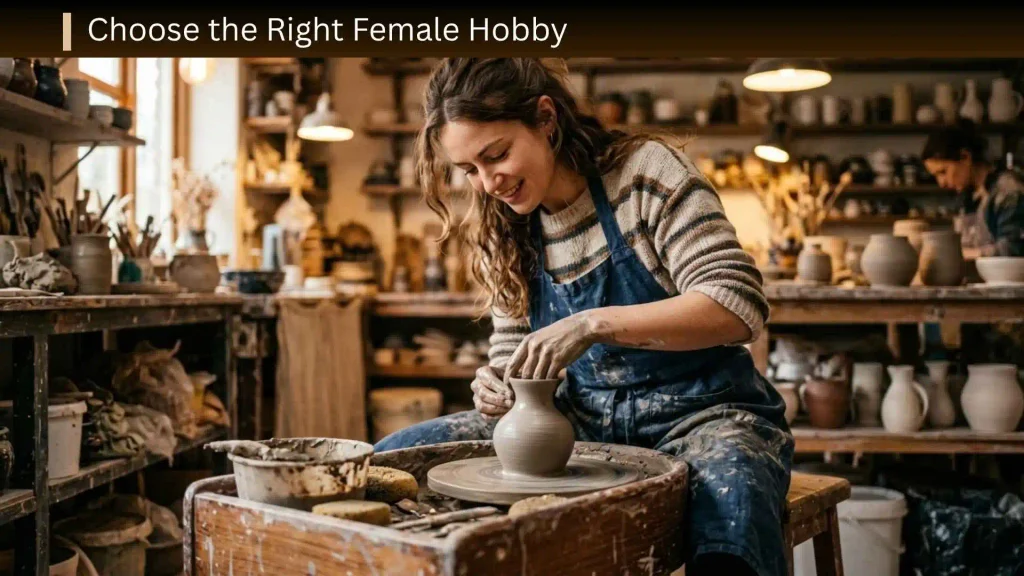
14. Pottery and Ceramics
Pottery offers a tactile creative experience. Depending on the setup available to you, you can take classes at a local studio or work with air-dry materials at home.
Ceramics can involve hand-building, sculpting, glazing, and eventually wheel throwing for those who want to develop the skill further.
Best for: People who enjoy physical, hands-on creative projects.
15. Calligraphy and Hand Lettering
Calligraphy and hand lettering turn writing into a visual art form. You can practice traditional styles, modern lettering, decorative alphabets, or lettering for cards and artwork.
It is a relatively focused hobby that can be practiced in short sessions.
Best for: People who enjoy typography, stationery, and detailed creative work.
16. Scrapbooking
Scrapbooking combines photographs, written memories, paper, decorations, and layouts. It can be used to preserve family moments, travel memories, celebrations, or personal milestones.
Digital scrapbooking is another option for people who prefer working on a computer or tablet.
Best for: Memory keepers and people who enjoy paper crafts.
17. Creative Writing
Creative writing can include short stories, poetry, fiction, personal essays, scripts, or other forms of storytelling.
You do not need to plan to publish anything. Writing simply for yourself can be a worthwhile hobby, while those who become more serious can explore workshops, writing groups, or publication opportunities.
Best for: Storytellers and people who enjoy expressing ideas through words.
18. Learning a New Language
Learning a language can turn spare time into an ongoing learning project. You can use books, classes, apps, conversation groups, or media in the target language.
The hobby becomes more engaging when connected to something you already enjoy, such as films, music, travel, cooking, or literature from that culture.
Best for: Lifelong learners and people interested in communication or travel.
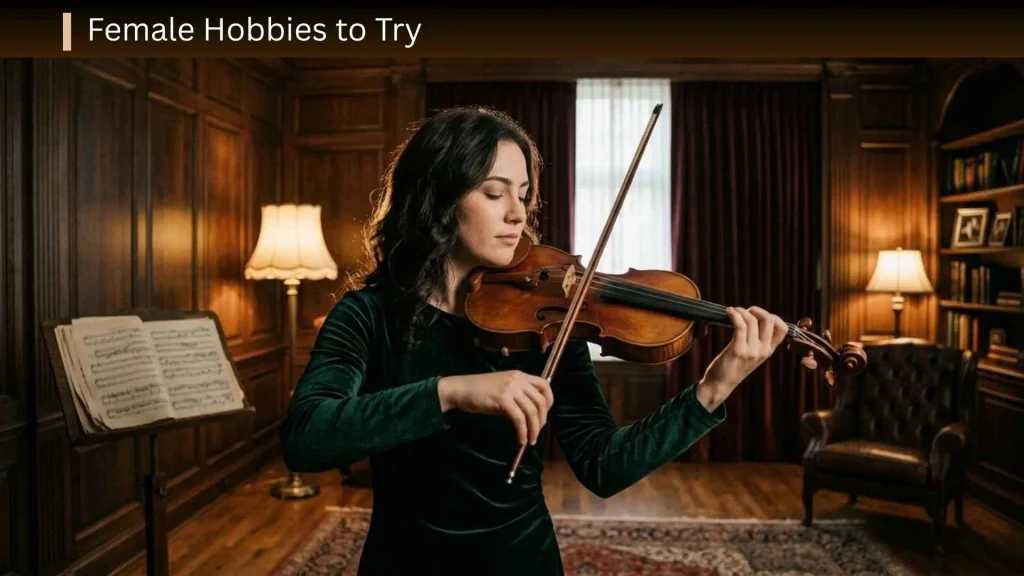
19. Playing a Musical Instrument
Learning guitar, piano, ukulele, violin, drums, or another instrument can become a long-term creative pursuit.
Beginners should choose an instrument they genuinely want to play rather than selecting one simply because it appears easy. Regular short practice sessions are often more manageable than occasional marathon sessions.
Best for: Music lovers who enjoy gradual skill development.
20. Singing
Singing can be practiced casually at home or developed through lessons, choirs, or other structured opportunities.
You can explore different genres and techniques depending on your interests. If you prefer a social environment, a community choir can combine music with interaction.
Best for: Music lovers who want an expressive and potentially social hobby.
21. Dancing
Dancing offers many styles, including ballroom, salsa, ballet, contemporary dance, hip-hop, jazz, and others.
You can learn through classes, online instruction, or social dance environments. The best style is usually the one that matches your musical taste and comfort level.
Best for: People who enjoy music, movement, and learning physical skills.
22. Yoga
Yoga can be practiced as a structured movement hobby, with different styles offering different experiences. Beginners should choose instruction appropriate to their experience and physical abilities.
It can also be convenient because many forms require little equipment or space beyond a suitable surface.
Best for: People looking for a movement-based hobby that can be adapted to different settings.
23. Hiking
Hiking combines time outdoors with exploration. Trails vary considerably in distance, terrain, elevation, and difficulty, so beginners can start with shorter, well-established routes.
Practical considerations include weather, footwear, water, navigation, and local trail conditions.
Best for: Nature lovers and people who enjoy outdoor exploration.
24. Cycling
Cycling can be a recreational hobby, a way to explore local areas, or a structured activity for people who enjoy gradually improving their skills.
The type of bicycle and equipment you need depends on whether you plan to ride on roads, paved trails, gravel, or mountain terrain.
Best for: People who enjoy outdoor movement and exploration.
25. Swimming
Swimming can be a recreational hobby or a skill-development activity. You can swim casually, take lessons, practice specific techniques, or join a swimming group.
If you are new to swimming, instruction and an appropriate supervised environment can make learning easier and safer.
Best for: People who enjoy water-based activities.
26. Birdwatching
Birdwatching is a hobby centered on observing and identifying birds in parks, gardens, wetlands, forests, and other environments.
A smartphone or basic field guide can help beginners identify species. Binoculars can be added later if you decide to pursue the hobby more seriously.
Best for: Nature enthusiasts who enjoy observation and quiet exploration.
27. Stargazing
Stargazing encourages you to learn about the night sky, constellations, planets, and other astronomical objects.
You can begin by observing the sky with your unaided eyes and gradually learn to use astronomy apps, binoculars, or a telescope if your interest grows.
Best for: Curious people who enjoy science, nature, and quiet outdoor experiences.
28. Volunteering
Volunteering can function as a meaningful hobby when you regularly contribute time to a cause or community activity you care about.
Opportunities vary widely, from animal shelters and environmental projects to libraries, community organizations, and event support. Choose an opportunity that fits your schedule and interests.
Best for: People who want their free time to include community involvement.
29. Book Clubs
A book club combines reading with conversation and social connection. If you enjoy books but want more interaction around them, this can be a good alternative to reading entirely alone.
You can join an existing group or create a small one with friends.
Best for: Readers who enjoy discussion and meeting people with similar interests.
30. Board Games and Puzzles
Board games, jigsaw puzzles, logic puzzles, and strategy games provide many different levels of complexity.
Some are ideal for solo play, while others are designed for groups. This makes the category flexible for people who want either independent entertainment or regular social activities.
Best for: People who enjoy strategy, problem-solving, or relaxed social gatherings.
31. DIY Home Projects
DIY projects can include furniture restoration, simple décor, organization projects, painting, crafts, or other improvements around the home.
Start with projects appropriate for your tools, experience, and workspace. More complex electrical, structural, or other specialized work may require qualified professionals.
Best for: Practical people who like creating, repairing, or improving things.
32. Interior Decorating
Interior decorating can be approached as a creative hobby without requiring major renovations. You can experiment with room layouts, color combinations, lighting, artwork, textiles, and organization.
Creating mood boards or experimenting with small areas of a room can help you develop your design preferences.
Best for: People interested in aesthetics, organization, and home design.
33. Traveling and Local Exploring
Travel does not have to mean expensive international trips. Exploring nearby towns, museums, parks, historical sites, markets, or cultural attractions can become a regular hobby.
You can also make travel itself a learning project by researching local history, food, architecture, or photography opportunities.
Best for: Curious people who enjoy discovering new places.
34. Collecting
Collecting can focus on almost anything that genuinely interests you, such as books, postcards, coins, art prints, vintage objects, records, or memorabilia.
A thoughtful collection is more satisfying when you establish a theme, budget, storage plan, and reason for collecting rather than simply accumulating objects.
Best for: People who enjoy research, discovery, and preserving interesting objects.
35. Puzzles and Model Building
Model building can include miniature houses, scale models, model kits, dioramas, or other detailed projects. Puzzles offer a simpler alternative when you want a focused activity without extensive equipment.
Both hobbies reward patience and attention to detail.
Best for: People who enjoy concentration, craftsmanship, and completing structured projects.
How to Choose the Right Female Hobby
The best hobby is not necessarily the most popular one. It is the activity you are realistically likely to continue.
Start by asking yourself four questions:
Do you want to create, learn, move, explore, or connect?
This immediately narrows the choices.
- Create: painting, sewing, photography, jewelry making, writing
- Learn: languages, musical instruments, astronomy, cooking
- Move: dancing, swimming, cycling, hiking, yoga
- Explore: travel, birdwatching, photography, gardening
- Connect: volunteering, book clubs, group classes, community activities
You can also combine categories. Photography, for example, can involve creativity, learning, and exploration at the same time.
How much time can you realistically give it?
A hobby that requires several hours every weekend may not be practical if your schedule is unpredictable.
For limited free time, consider activities that can be paused easily, such as reading, drawing, journaling, knitting, puzzles, or photography.
If you have more consistent time, you might explore classes, gardening, musical instruments, cycling, ceramics, or more involved crafts.
What is your starting budget?
Some hobbies can begin with things you already own. Reading through a library, writing, walking, birdwatching, and smartphone photography can require little initial spending.
Other hobbies can become more expensive because of specialized equipment, classes, materials, studio access, or travel. It is usually sensible to test an activity at a basic level before making a major investment.
Do you prefer solitude or social interaction?
Your social preference can make a major difference in whether a hobby feels enjoyable.
Good solo options include:
- Reading
- Journaling
- Drawing
- Writing
- Gardening
- Puzzles
- Photography
- Knitting
- Stargazing
More social options include:
- Book clubs
- Dancing
- Choirs
- Group classes
- Volunteering
- Community sports
- Craft groups
Many hobbies can work either way, depending on how you practice them.
Female Hobbies by Goal
If you are choosing a hobby for a particular purpose, the following breakdown can make the decision easier.
| Goal | Hobbies to Consider |
| Creative expression | Painting, drawing, writing, photography, sewing |
| Learning something new | Languages, music, cooking, astronomy |
| Outdoor time | Hiking, gardening, cycling, birdwatching |
| Quiet solo time | Reading, journaling, puzzles, knitting |
| Social connection | Book clubs, dancing, volunteering, group classes |
| Practical skills | Cooking, sewing, gardening, DIY |
| Collecting memories | Scrapbooking, photography, travel journaling |
| Hands-on making | Pottery, crochet, jewelry making, model building |
This approach is often more useful than choosing a hobby simply because it is marketed toward women. Your interests and circumstances matter more than the label.
Low Cost Female Hobbies for Beginners
If you want to start without spending much, consider:
- Reading from a library
- Journaling
- Walking and local exploration
- Drawing
- Creative writing
- Smartphone photography
- Birdwatching
- Stargazing
- Puzzles
- Learning a language with free resources
- Gardening with a few beginner-friendly containers
- Home cooking
A low starting cost does not mean a hobby has to remain inexpensive forever. Photography, gardening, crafts, and music can all expand into more equipment and materials as your interest develops.
Creative Hobbies for Women
For someone primarily looking for creative expression, strong choices include:
- Painting
- Drawing
- Photography
- Creative writing
- Sewing
- Embroidery
- Crochet
- Knitting
- Jewelry making
- Pottery
- Calligraphy
- Scrapbooking
The main difference between these hobbies is the type of creativity involved. Writing focuses on ideas and language, photography on visual composition, sewing on design and construction, and pottery on three-dimensional form.
Hobbies for Women Who Want to Learn New Skills
If your main goal is personal development through learning, choose a hobby with a clear progression.
Musical instruments are a good example because you can move from basic techniques to increasingly complex pieces. Languages offer a similar progression from vocabulary and simple conversations toward greater fluency.
Cooking, photography, sewing, drawing, gardening, and pottery can also become long-term skill-building hobbies.
The key is to choose something where you enjoy the learning process itself rather than focusing only on the final result.
How to Start a New Hobby Without Becoming Overwhelmed
You do not need to become an expert immediately.
Use a simple three-step approach:
1. Choose one activity.
Pick the hobby that seems most interesting rather than trying five new activities simultaneously.
2. Start at the beginner level.
Use basic equipment, beginner instructions, or introductory classes. Avoid buying an advanced setup before you know whether you enjoy the activity.
3. Give it enough time to become familiar.
A hobby can feel awkward at first because you are learning unfamiliar techniques. Judge it after several attempts rather than after one imperfect session.
If you consistently dislike the activity, you can move on. A hobby is supposed to fit your life, not become another obligation.
What Makes a Hobby Worth Keeping?
A hobby is usually worth keeping when it fits at least several of these criteria:
- You look forward to doing it.
- It fits your available time.
- The cost is comfortable for your budget.
- You enjoy the learning process.
- It gives you a different experience from work or daily responsibilities.
- You can practice it consistently.
- It aligns with an interest you already have.
- You enjoy the activity even when the result is imperfect.
You also do not have to choose one hobby forever. Interests naturally change. Someone might spend a few months learning photography, later discover gardening, and eventually return to photography with a new perspective.
Frequently Asked Questions
What are the best female hobbies?
The best hobby depends on personal interests and lifestyle rather than gender. Popular choices include reading, photography, gardening, painting, cooking, writing, dancing, sewing, hiking, music, crafts, and volunteering.
What are some easy female hobbies for beginners?
Reading, journaling, drawing, smartphone photography, walking, puzzles, creative writing, basic cooking, and learning a language are relatively accessible starting points. The best choice depends on whether you want a creative, educational, active, or social activity.
What are good female hobbies to do at home?
Good at-home options include reading, journaling, painting, drawing, knitting, crochet, sewing, baking, cooking, puzzles, creative writing, calligraphy, scrapbooking, and learning an instrument.
What are some inexpensive hobbies for women?
Reading through a library, journaling, drawing, walking, creative writing, smartphone photography, local exploring, and many forms of puzzles can be started with little expense. Costs can increase later for hobbies requiring specialized equipment or materials.
What are good hobbies for women who prefer to be alone?
Reading, writing, gardening, photography, drawing, painting, knitting, crochet, puzzles, stargazing, and collecting can all be practiced independently. Some of these can also become social hobbies if you later join a club or group.
Can a hobby become a source of income?
Some hobbies can potentially be monetized, but earning money is not guaranteed. Creative skills such as photography, writing, sewing, baking, crafting, or jewelry making may lead to paid opportunities depending on skill, demand, pricing, competition, and consistency. It is useful to enjoy the activity itself before treating it as a business.
How many hobbies should I have?
There is no ideal number. One hobby may be enough if it gives you the experience you want. Others prefer several hobbies that serve different purposes, such as one creative activity, one physical activity, and one quiet activity.
Conclusion
The best female hobbies are the ones that genuinely fit your interests, personality, schedule, budget, and goals. You might choose a creative activity such as painting or photography, a practical hobby such as cooking or sewing, an outdoor pursuit such as hiking or gardening, or a quiet pastime such as reading and journaling.
Start small, give yourself permission to be a beginner, and focus on whether you enjoy the process. You do not need to choose a hobby because it is considered traditionally feminine. Your free time is yours, and the most worthwhile hobby is the one that makes you want to come back to it.

I’m James Anderson, a dedicated writer and lifelong learner who enjoys researching topics and explaining them in a practical way. Through my work at Cognivoora, I aim to give readers reliable, easy-to-follow information that helps them learn something new. I always try to keep my writing natural, useful, and focused on the questions readers actually have.
Books:
- A Practical Guide to Better Thinking
- Questions Worth Asking