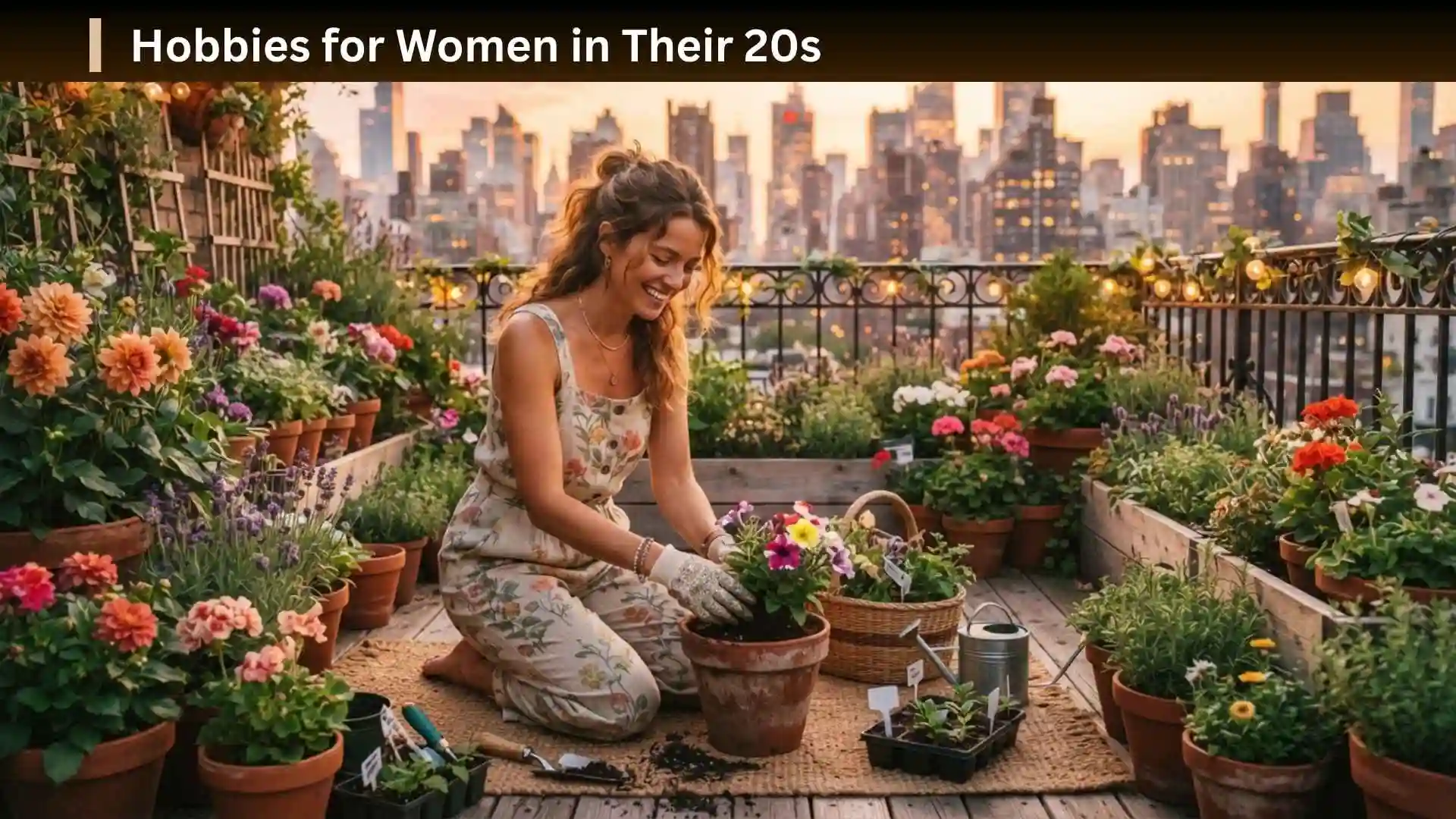
Your 20s can be an exciting time to explore new interests, meet people, develop useful skills, and figure out what you genuinely enjoy. The best hobbies for women in their 20s do not have to be expensive, impressive, or productive. A good hobby can simply give you something enjoyable to look forward to outside of work, school, relationships, and everyday responsibilities.
Whether you want a relaxing hobby at home, a creative outlet, a way to stay active, or an opportunity to make new friends, there are plenty of options to try.
How to Choose a Hobby in Your 20s
The right hobby depends less on your age and more on what you want from your free time.
Before choosing one, consider:
- Your personality: Do you prefer quiet solo activities or social experiences?
- Your budget: Some hobbies require little more than basic supplies, while others involve classes or equipment.
- Your schedule: Choose something you can realistically enjoy without turning it into another obligation.
- Your environment: Consider whether you want an indoor, outdoor, home-based, or community-based hobby.
- Your goal: You might want relaxation, creativity, exercise, social connection, learning, or simply fun.
- Your willingness to learn: Some hobbies are immediately accessible, while others require practice before they become enjoyable.
You also do not need to choose just one. Your hobbies can change as your interests, schedule, and circumstances change.
Best Hobbies for Women in Their 20s
1. Reading
Reading is a simple hobby that can fit almost any lifestyle. You can read novels, memoirs, biographies, essays, poetry, history, or nonfiction related to subjects you want to understand better.
A reading hobby can be especially flexible because you can read at home, during a commute, at a park, or at a library.
Good for: Relaxation, imagination, learning, and quiet downtime
Cost: Free to moderate, depending on whether you use libraries or buy books
Equipment: Books or an e-reader
2. Journaling
Journaling gives you a private space to record thoughts, ideas, plans, observations, or creative writing.
You do not need to follow a particular journaling method. You could write about your day, keep a gratitude journal, document goals, create lists, or simply write whatever comes to mind.
Good for: Reflection, creativity, organization, and self-expression
Cost: Low
Equipment: Notebook and pen
3. Photography
Photography can turn ordinary surroundings into something worth noticing. You can start with a smartphone instead of buying an expensive camera.
Try photographing architecture, nature, food, pets, interesting details, or everyday moments. If you become more interested, you can gradually learn about composition, lighting, editing, and camera settings.
Good for: Creativity, observation, travel, and documenting memories
Cost: Free to moderate
Equipment: Smartphone or camera
4. Drawing
Drawing is accessible to beginners and can develop into a long-term creative pursuit. Start with simple sketches rather than worrying about creating professional-looking artwork.
You might experiment with pencil drawing, colored pencils, charcoal, markers, or digital drawing.
Good for: Creativity, concentration, and self-expression
Cost: Low to moderate
Equipment: Basic drawing supplies or a digital device
5. Painting
Painting offers more room for experimentation than many people expect. Watercolor, acrylic, and gouache can all provide different experiences.
If you are new to painting, consider following beginner tutorials or recreating simple subjects such as flowers, landscapes, objects, or abstract designs.
Good for: Creative expression and relaxation
Cost: Low to moderate
Equipment: Paint, brushes, paper or canvas
6. Crochet
Crochet is a practical craft that can become both relaxing and creative. Beginners can start with basic stitches before progressing to items such as scarves, hats, blankets, bags, or small decorative pieces.
One advantage is that projects can be portable, making crochet suitable for quiet evenings or travel.
Good for: Relaxation, creativity, and making handmade items
Cost: Low to moderate
Equipment: Crochet hook and yarn
7. Knitting
Knitting is another fiber craft worth exploring if you enjoy repetitive, hands-on activities. You can begin with basic techniques and gradually learn more complicated patterns.
Knitting can also give you a tangible result at the end of a project, which makes it appealing if you enjoy making useful things.
Good for: Creativity, patience, and handmade projects
Cost: Low to moderate
Equipment: Knitting needles and yarn
8. Embroidery
Embroidery is a compact hobby that does not require much space. You can learn basic stitches and use them to decorate clothing, fabric, bags, hoops, or handmade gifts.
It is particularly useful if you like detailed work and decorative crafts.
Good for: Creativity, detail-oriented activities, and handmade gifts
Cost: Low
Equipment: Embroidery hoop, needle, thread, and fabric
9. Sewing
Sewing can be both creative and practical. You can learn to repair clothing, alter garments, make accessories, or eventually create clothes from patterns.
You do not have to start with a complicated sewing machine. Learning basic hand-sewing skills is a useful introduction.
Good for: Creativity, practical skills, clothing, and DIY projects
Cost: Low to moderate
Equipment: Basic sewing supplies; a machine is optional at first
10. Baking
Baking combines creativity with a practical result you can share with friends or family. Beginners can start with cookies, muffins, brownies, simple cakes, or bread.
As your skills improve, you can experiment with decorating, pastry, sourdough, or adapting recipes.
Good for: Creativity, cooking skills, and social activities
Cost: Low to moderate
Equipment: Basic kitchen equipment and ingredients
11. Cooking
Cooking is more than a household skill—it can become a creative hobby. Try learning dishes from different cuisines, improving knife skills, experimenting with sauces, or creating your own variations of familiar recipes.
You can also make cooking more interesting by choosing a theme, such as learning one new recipe each week.
Good for: Creativity, independence, and practical life skills
Cost: Varies
Equipment: Basic kitchen equipment
12. Gardening
Gardening can work even if you do not have a large yard. Container gardening allows you to grow herbs, flowers, vegetables, or houseplants in limited spaces.
If you live in an apartment, starting with a few low-maintenance plants can be more practical than attempting a large garden.
Good for: Nature, patience, outdoor time, and hands-on activities
Cost: Low to moderate
Equipment: Plants, containers, soil, and basic gardening supplies
13. Houseplant Care
If traditional gardening feels like too much work, caring for houseplants can be a smaller commitment.
You can learn about light requirements, watering, repotting, propagation, and different types of indoor plants.
Good for: Indoor hobbies, nature, and learning
Cost: Low to moderate
Equipment: Plants and basic care supplies
14. Hiking
Hiking is an excellent option if you want a hobby that gets you outdoors. You can begin with easy local trails and gradually explore longer or more challenging routes.
It can also be a social hobby if you invite friends or join organized hiking groups.
Good for: Outdoor recreation, exploration, and physical activity
Cost: Low to moderate
Equipment: Comfortable shoes, water, weather-appropriate clothing, and basic trail supplies
15. Running
Running can be approached as a casual recreational hobby rather than a competitive pursuit. You can begin with walking and short running intervals and build gradually according to your comfort level.
Some people enjoy having a simple goal, such as completing a particular distance or participating in a local fun run.
Good for: Physical activity, routine, and outdoor time
Cost: Low to moderate
Equipment: Comfortable running shoes and suitable clothing
16. Yoga
Yoga can be practiced at home, in a studio, or in group classes. Beginners can focus on learning basic poses and movement patterns rather than attempting advanced positions.
If you choose online instruction, use reputable resources and modify movements when needed for your ability level.
Good for: Movement, flexibility, relaxation, and body awareness
Cost: Free to moderate
Equipment: A mat is useful but not always essential
17. Dancing
Dancing can be a fun way to move without making exercise the central focus. You could try hip-hop, salsa, ballroom, contemporary dance, ballet, jazz, or another style that interests you.
Classes also provide an opportunity to meet people with similar interests.
Good for: Movement, music, creativity, and socializing
Cost: Free to moderate
Equipment: Comfortable clothing and suitable footwear
18. Pilates
Pilates appeals to people who enjoy structured movement and controlled exercises. You can explore beginner classes or introductory routines before deciding whether you want to pursue it more seriously.
Good for: Movement, coordination, and structured workouts
Cost: Free to moderate
Equipment: Comfortable clothing and potentially a mat
19. Cycling
Cycling can combine recreation, exercise, and exploration. Depending on where you live, you might ride around your neighborhood, use dedicated bike paths, or plan longer recreational routes.
Good for: Outdoor activity and exploration
Cost: Moderate
Equipment: Bicycle, helmet, and basic maintenance supplies
20. Swimming
Swimming can be both recreational and skill-based. You might swim casually, work on technique, or participate in a local aquatic program.
It can also be useful for people who prefer water-based activities over traditional gym workouts.
Good for: Recreation, movement, and skill development
Cost: Low to moderate depending on facility access
Equipment: Swimsuit and access to a suitable pool
21. Pottery and Ceramics
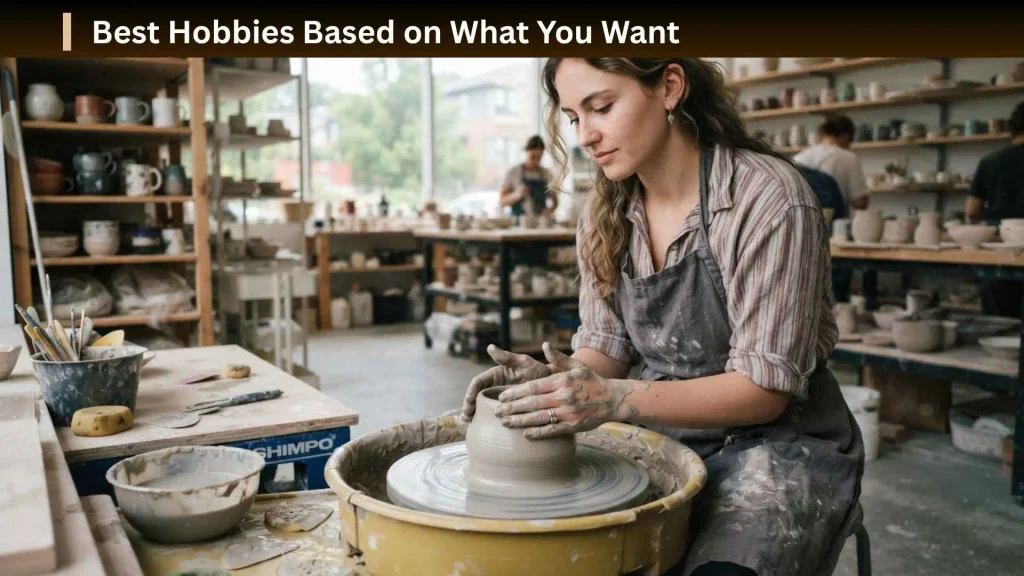
Pottery offers a hands-on creative experience and can be particularly enjoyable if you like working with physical materials.
Local studios often provide equipment and instruction, making classes a practical way to try the hobby without purchasing a pottery wheel or kiln.
Good for: Creativity, tactile activities, and social experiences
Cost: Moderate to high for classes
Equipment: Usually provided by a studio
22. Candle Making
Candle making can be an enjoyable DIY hobby if you like experimenting with scents, containers, colors, and designs.
It can also become a gift-making hobby once you become comfortable with the process and safety requirements.
Good for: DIY projects, creativity, and handmade gifts
Cost: Moderate
Equipment: Candle-making materials and appropriate heat-safe equipment
23. Making Jewelry
Jewelry making can range from simple beaded bracelets to more advanced metalworking techniques.
Starting with beads, wire, clasps, and basic tools keeps the learning curve manageable. You can later explore more specialized techniques if you enjoy it.
Good for: Fashion, creativity, and handmade gifts
Cost: Low to moderate
Equipment: Depends on the technique
24. Thrifting
Thrifting can become a hobby focused on discovering interesting clothing, books, home décor, vintage objects, or other secondhand items.
Instead of simply shopping, you can make it more engaging by learning how to identify different styles, materials, eras, or construction details.
Good for: Fashion, collecting, exploration, and creativity
Cost: Variable
Equipment: None
25. Upcycling Clothes
If you enjoy fashion but want a creative project, try transforming clothing you already own or find secondhand.
Simple projects can include changing buttons, adding embroidery, altering lengths, patching fabric, or creating new pieces from old garments.
Good for: Fashion, sewing, sustainability, and creativity
Cost: Low
Equipment: Basic sewing or craft supplies
26. Learning an Instrument
Learning guitar, piano, ukulele, drums, violin, or another instrument can become a rewarding long-term hobby.
You do not need to aim for professional performance. Learning a few songs and gradually improving your technique can be enough to make the hobby enjoyable.
Good for: Creativity, music, concentration, and skill development
Cost: Low to high depending on the instrument and lessons
Equipment: Instrument and optional learning resources
27. Singing
Singing can be practiced privately at home or developed through lessons, choirs, or community groups.
If you enjoy music but do not want to learn an instrument, singing can provide a creative alternative.
Good for: Music, confidence, creativity, and social activities
Cost: Free to moderate
Equipment: None required
28. Learning a New Language
A new language can be a hobby you practice in small amounts throughout the week. You can combine lessons with music, movies, books, podcasts, or conversations.
Choose a language that connects to something you already care about, such as travel, family history, literature, food, or culture.
Good for: Learning, travel preparation, and mental stimulation
Cost: Free to moderate
Equipment: Learning materials or an app
29. Creative Writing
Creative writing does not require a publishing goal. You can write short stories, poetry, personal essays, fictional scenes, or character sketches.
Writing prompts can help when you are unsure where to begin.
Good for: Imagination, self-expression, and storytelling
Cost: Free to low
Equipment: Notebook or computer
30. Scrapbooking
Scrapbooking provides a creative way to preserve photographs, travel memories, tickets, notes, and other keepsakes.
You can make traditional physical scrapbooks or create digital versions.
Good for: Creativity, memories, and crafting
Cost: Low to moderate
Equipment: Album, photographs, paper, adhesive, and decorative materials
31. Volunteering
Volunteering can function as a meaningful hobby when you regularly dedicate free time to a cause or organization.
Opportunities may include animal shelters, community organizations, environmental projects, libraries, food programs, or local events.
Good for: Community involvement, social connection, and meaningful use of free time
Cost: Usually free
Equipment: Depends on the activity
32. Board Games
Board games are an easy way to turn social time into a regular hobby. There are strategy games, cooperative games, party games, card games, and games designed specifically for smaller groups.
Local game stores and community groups may also host game nights.
Good for: Socializing, strategy, and entertainment
Cost: Low to moderate
Equipment: Games
33. Puzzles
Jigsaw puzzles, logic puzzles, crosswords, and similar activities can provide screen-free entertainment.
Puzzles are especially convenient if you prefer hobbies that can be done at your own pace.
Good for: Quiet entertainment, concentration, and problem-solving
Cost: Low
Equipment: Depends on the type of puzzle
34. Birdwatching
Birdwatching encourages you to pay attention to your surroundings and learn about local wildlife.
You can begin simply by observing birds in a backyard, park, or neighborhood. A field guide or identification app can help you learn what you see.
Good for: Nature, observation, and outdoor exploration
Cost: Free to moderate
Equipment: Optional binoculars and identification resources
35. Stargazing
Stargazing can turn an ordinary evening outdoors into a learning experience. You can start by learning a few recognizable constellations and gradually explore planets, lunar features, and other astronomical subjects.
A telescope is optional; you can learn a great deal through unaided observation and basic astronomy resources.
Good for: Science, nature, and quiet outdoor time
Cost: Free to moderate
Equipment: Optional binoculars or telescope
36. Calligraphy and Hand Lettering
If you enjoy beautiful writing and design, calligraphy or hand lettering can be a satisfying creative hobby.
You can use your skills for cards, journals, artwork, invitations, labels, and other personal projects.
Good for: Creativity, lettering, and crafts
Cost: Low
Equipment: Pens, markers, or specialized calligraphy tools
37. Digital Art
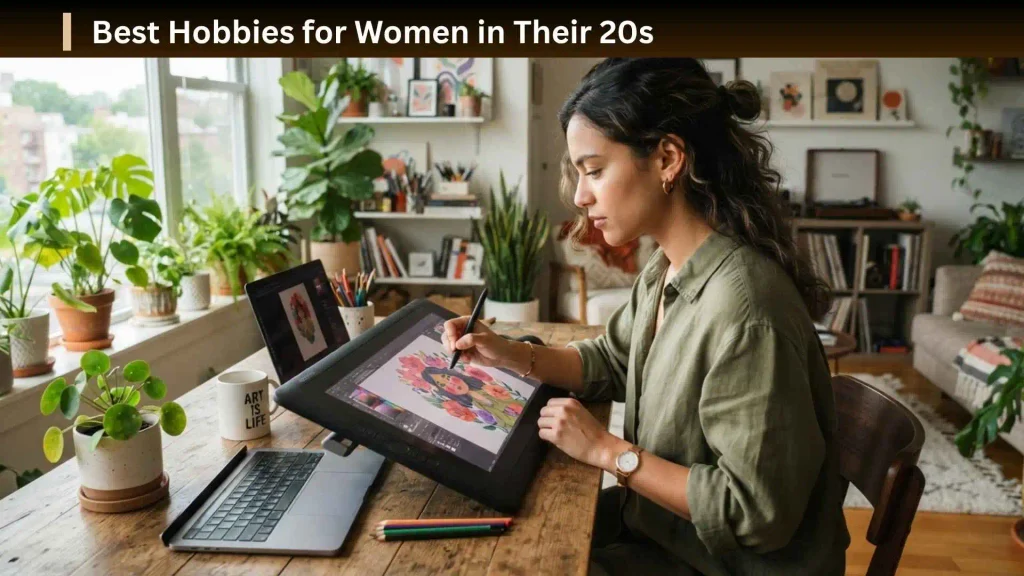
Digital art can be an alternative to traditional drawing and painting. Depending on your equipment, you can explore illustration, graphic design, photo manipulation, or digital painting.
You can start with software and hardware you already own before investing in specialized equipment.
Good for: Creativity, technology, and visual design
Cost: Free to moderate
Equipment: Computer, tablet, or smartphone depending on the method
38. Interior Decorating
Interior decorating can become a hobby even if you are not planning a major home renovation.
Try rearranging furniture, experimenting with layouts, creating mood boards, learning about design principles, or finding creative ways to organize a room.
Good for: Creativity, organization, and home projects
Cost: Free to moderate
Equipment: None required to start
39. Coffee or Tea Exploration
If you enjoy coffee or tea, learning about different varieties, brewing methods, origins, and preparation techniques can turn an everyday routine into a hobby.
You can explore gradually rather than buying every piece of equipment at once.
Good for: Sensory exploration, learning, and relaxing routines
Cost: Low to moderate
Equipment: Depends on the type of coffee or tea
40. Traveling and Local Exploring
You do not need international trips to make exploration a hobby. Visit museums, parks, historic sites, bookstores, markets, gardens, and interesting neighborhoods in your area.
Keeping a small travel journal or photography collection can make local exploration feel more purposeful.
Good for: Adventure, culture, photography, and learning
Cost: Free to moderate depending on activities
Best Hobbies Based on What You Want
Different hobbies fit different needs. If you are unsure where to start, use your desired outcome as your starting point.
| If you want… | Consider… |
| A relaxing hobby | Reading, journaling, knitting, crochet, puzzles |
| A creative outlet | Painting, drawing, photography, pottery, writing |
| More physical activity | Hiking, dancing, swimming, cycling, running |
| To meet people | Dancing, volunteering, sports, book clubs, board games |
| A hobby at home | Baking, reading, plants, crafts, digital art |
| A low-cost hobby | Reading, walking, journaling, drawing, writing |
| A useful practical skill | Cooking, sewing, gardening, language learning |
| A nature-based hobby | Hiking, gardening, birdwatching, stargazing |
| A fashion-related hobby | Thrifting, sewing, jewelry making, clothing upcycling |
| A hobby you can monetize later | Photography, baking, sewing, art, jewelry making |
Best Low-Cost Hobbies for Women in Their 20s
You do not need a large hobby budget. Some of the most accessible options require things you may already have.
Consider:
- Reading through your local library
- Walking and exploring nearby areas
- Journaling
- Drawing
- Creative writing
- Photography with your phone
- Learning a language with free resources
- Yoga at home
- Birdwatching
- Gardening with inexpensive starter plants
- Puzzles
- Learning basic cooking techniques
- Digital art using available software
- Stargazing
- Volunteering
The important distinction is between starting a hobby and buying everything associated with a hobby. You can usually learn whether you enjoy an activity before investing heavily in equipment.
Best Hobbies for Meeting New People
If your main goal is expanding your social circle, choose hobbies that naturally involve repeated interaction.
Good options include:
- Dance classes
- Book clubs
- Recreational sports
- Hiking groups
- Pottery classes
- Cooking classes
- Volunteer organizations
- Community choirs
- Board-game groups
- Language-learning groups
- Art classes
A recurring class or group can be particularly useful because seeing the same people regularly gives relationships more opportunity to develop naturally.
Best Hobbies to Do at Home
Home-based hobbies can be ideal when you want something flexible around work, school, or other commitments.
Creative hobbies
- Painting
- Drawing
- Crochet
- Knitting
- Embroidery
- Calligraphy
- Digital art
- Creative writing
- Scrapbooking
Relaxing hobbies
- Reading
- Journaling
- Puzzles
- Houseplant care
- Tea or coffee exploration
Practical hobbies
- Cooking
- Baking
- Sewing
- Clothing repair
- Indoor gardening
- Learning a language
How to Start a New Hobby Without Getting Overwhelmed
One of the easiest ways to abandon a hobby is to make the starting process unnecessarily complicated.
Start with the simplest version
Do not buy professional equipment before you know whether you enjoy the activity.
For example, use your phone before purchasing a camera for photography. Try basic hand sewing before buying a sewing machine. Read library books before building an expensive home library.
Set a small first goal
Your first goal could be:
- Read one book.
- Complete one painting.
- Learn five basic crochet stitches.
- Cook three new recipes.
- Walk one new trail.
- Learn one song.
- Grow one plant.
- Attend one beginner class.
A small success gives you information about whether you actually enjoy the hobby.
Give yourself permission to be a beginner
You will probably be bad at something when you first try it. That is normal.
The purpose of a hobby is not necessarily to produce impressive results. Learning, experimenting, and enjoying the process are valid outcomes.
Avoid turning every hobby into a side hustle
Some hobbies can eventually generate income, but they do not have to.
If every activity becomes an attempt to build a business, gain followers, or sell something, you may lose the relaxation and enjoyment that made the hobby appealing in the first place.
Try hobbies in short experiments
Instead of deciding that you need a hobby for the next five years, try one for a few weeks.
Ask yourself:
- Did I look forward to doing it?
- Did I enjoy the process?
- Did I want to learn more?
- Was the cost reasonable?
- Did it fit my schedule?
- Did I feel better after doing it?
- Would I willingly do it again?
Your answers can help you decide whether to continue, modify, or move on.
How to Build a Balanced Hobby Routine

You do not need a long list of hobbies. A balanced combination of two or three activities may be enough.
For example, you could choose:
One relaxing hobby: Reading
One active hobby: Hiking
One creative hobby: Photography
Or:
One social hobby: Dance classes
One practical hobby: Cooking
One quiet hobby: Journaling
This approach gives you different ways to spend your free time without making your hobby schedule feel like another job.
Frequently Asked Questions
What are good hobbies for women in their 20s?
Good hobbies include reading, photography, hiking, dancing, cooking, baking, painting, journaling, crochet, gardening, learning languages, volunteering, and playing an instrument. The best choice depends on whether you want creativity, relaxation, exercise, social connection, learning, or simply entertainment.
What are some inexpensive hobbies for women in their 20s?
Reading through a library, walking, journaling, drawing, creative writing, photography with a smartphone, birdwatching, stargazing, puzzles, and volunteering can all be inexpensive ways to explore new interests.
What hobbies can I do alone?
Reading, journaling, drawing, painting, photography, writing, gardening, puzzles, crochet, knitting, baking, cooking, digital art, and learning an instrument can all be enjoyed independently.
What hobbies are good for making friends?
Hobbies involving regular group interaction are generally better for meeting people. Dance classes, book clubs, recreational sports, hiking groups, volunteering, pottery classes, cooking classes, choirs, and board-game groups are good places to start.
What is a good hobby to start at home?
Reading, journaling, drawing, painting, baking, cooking, crochet, embroidery, houseplant care, digital art, creative writing, and learning a language are all practical home-based options.
Should I choose a hobby that is productive?
Not necessarily. A hobby can teach you a skill, but it can also simply be enjoyable. Relaxation, creativity, curiosity, social connection, and having something you enjoy outside your responsibilities are all legitimate reasons to have a hobby.
How many hobbies should I have in my 20s?
There is no ideal number. One hobby that you genuinely enjoy is better than having many activities that feel like obligations. You can start with one and add another if you have the time and interest.
Conclusion
The best hobbies for women in their 20s are the ones that fit the life you actually want to live. You might choose photography because you want to become more observant, hiking because you want more outdoor time, cooking because you want a practical skill, or painting simply because you enjoy creating something.
Do not worry about choosing the perfect hobby immediately. Try inexpensive versions of activities that catch your attention, give yourself time to be a beginner, and keep the hobbies that make you want to come back to them. Your interests can change throughout your 20s, and discovering what you enjoy is part of the value of having hobbies in the first place.

I’m James Anderson, a dedicated writer and lifelong learner who enjoys researching topics and explaining them in a practical way. Through my work at Cognivoora, I aim to give readers reliable, easy-to-follow information that helps them learn something new. I always try to keep my writing natural, useful, and focused on the questions readers actually have.
Books:
- A Practical Guide to Better Thinking
- Questions Worth Asking