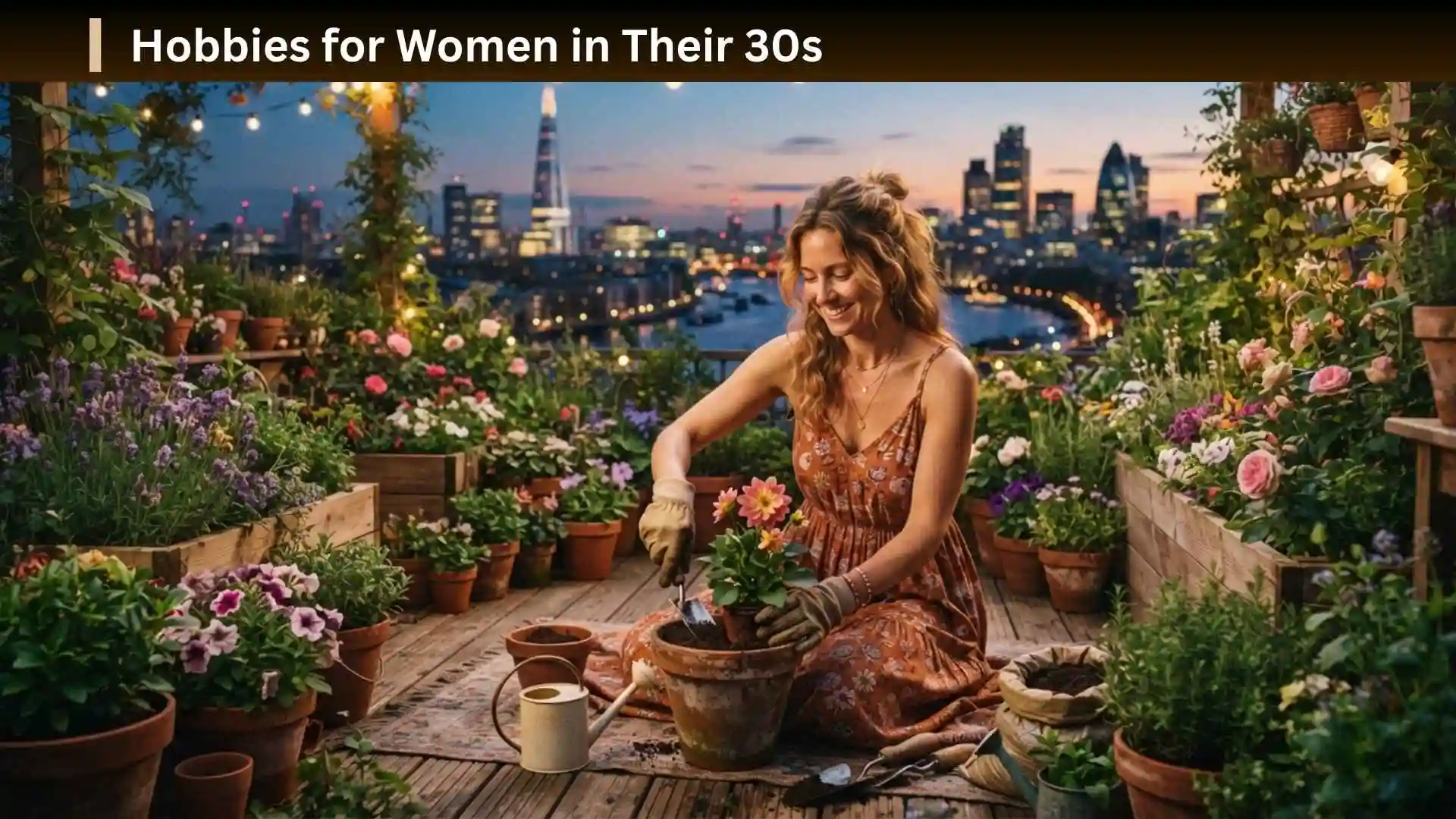
Your 30s can be a busy stage of life, with work, relationships, family responsibilities, and personal goals competing for attention. The right hobby can give you something that belongs entirely to you—whether you want to relax, get creative, stay active, meet people, or learn a new skill.
The best hobbies for women in their 30s do not have to be expensive or time-consuming. From gardening and pottery to hiking, reading, photography, and creative writing, there are options for nearly every personality, budget, and schedule.
How to Choose a Hobby in Your 30s
A good hobby should fit your actual life rather than become another obligation on your to-do list.
Before choosing one, consider:
- How much time you have: A hobby that takes 15–30 minutes can be easier to maintain than one requiring an entire weekend.
- Your energy level: Choose something calming if you need an outlet after work, or something active if you spend most of your day sitting.
- Your interests: Think about activities you naturally find yourself watching, reading about, or talking about.
- Your budget: Many rewarding hobbies require little more than basic supplies.
- Your social preference: Some hobbies are ideal for meeting people, while others are better for enjoying quiet time alone.
- Your goal: You might want creativity, fitness, relaxation, intellectual stimulation, personal growth, or simply fun.
You also do not have to choose only one. A relaxing solo hobby and a social hobby can complement each other well.
25 Hobbies for Women in Their 30s
1. Reading
Reading is one of the easiest hobbies to fit into a busy schedule. You can read fiction for escapism, nonfiction to explore a subject, biographies for different perspectives, or personal development books when you want practical ideas.
You do not need to finish a book every week. Reading a few pages before bed, during a lunch break, or while traveling can turn it into a sustainable habit.
Best for: Relaxation, learning, and quiet personal time
Cost: Free to moderate, depending on whether you use a library or buy books
Equipment: Books, e-reader, or library app
2. Hiking
Hiking combines outdoor exploration with physical activity. It can be as simple as walking a local nature trail or as ambitious as planning longer weekend hikes.
You can hike alone if you enjoy solitude or join a hiking group if you want a more social experience.
Best for: Outdoor time, movement, and exploration
Cost: Low to moderate
Equipment: Comfortable shoes, water, weather-appropriate clothing, and basic trail supplies
3. Gardening
Gardening offers a hands-on way to spend time outdoors and watch something develop over time. You can grow flowers, herbs, vegetables, or houseplants depending on your space.
Apartment living does not automatically rule it out. Container gardening can work on balconies, patios, windowsills, or other suitable spaces.
Best for: Nature lovers and hands-on creativity
Cost: Low to moderate
Equipment: Containers or garden space, soil, plants or seeds, and basic tools
4. Photography
Photography gives you a reason to notice everyday details differently. You can photograph landscapes, architecture, food, pets, plants, travel destinations, or ordinary moments around your neighborhood.
A dedicated camera is not necessary when you are starting. A smartphone can provide enough equipment to learn composition, lighting, framing, and editing.
Best for: Creative people who enjoy visual storytelling
Cost: Free to moderate
Equipment: Smartphone or camera
5. Painting
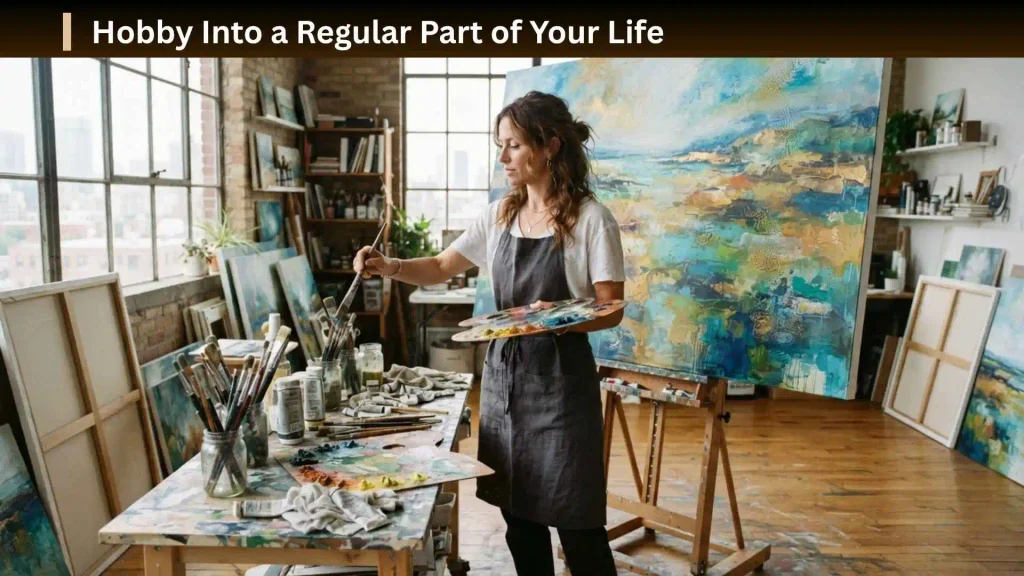
Painting provides a creative outlet without requiring you to be an accomplished artist. Watercolors, acrylics, and other mediums offer different experiences and learning curves.
Online tutorials, beginner classes, and guided painting projects can make it easier to get started without knowing where to begin.
Best for: Creativity and relaxation
Cost: Low to moderate
Equipment: Paint, brushes, paper or canvas
6. Pottery and Ceramics
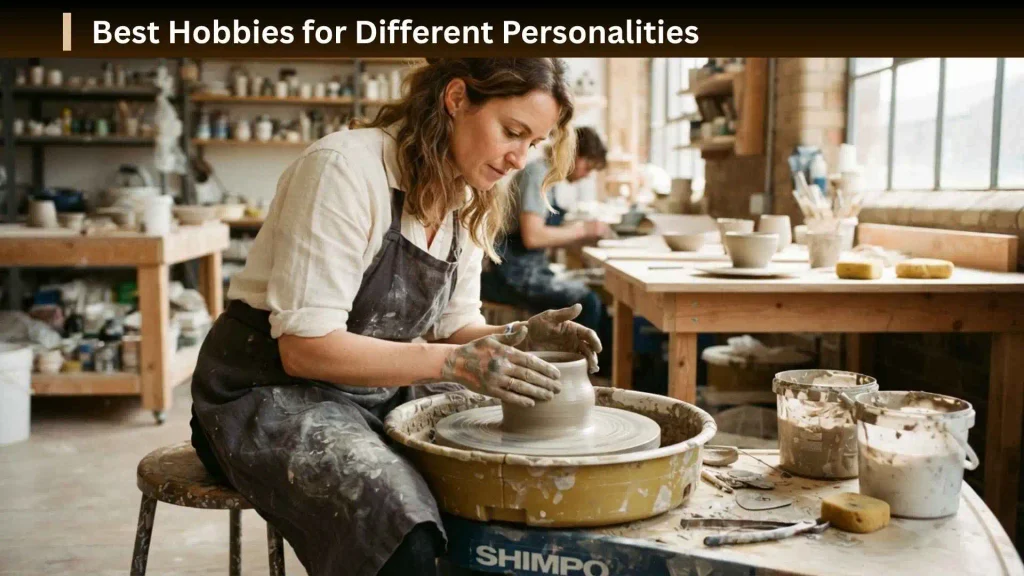
Working with clay is a tactile hobby that can be both creative and absorbing. Local pottery studios often offer beginner classes where you can learn basic techniques before deciding whether you want to pursue ceramics more seriously.
It is particularly appealing if you prefer making physical objects rather than working digitally.
Best for: Hands-on creativity and learning a craft
Cost: Moderate to high
Equipment: Usually provided by a studio when taking classes
7. Baking
Baking combines creativity with a practical result you can share with others. You can start with cookies, muffins, breads, cakes, or simple pastries and gradually work toward more challenging recipes.
It can also become a useful skill for birthdays, holidays, gatherings, and homemade gifts.
Best for: Food lovers and creative homebodies
Cost: Low to moderate
Equipment: Basic kitchen equipment and ingredients
8. Cooking New Cuisines
Cooking can become a hobby rather than simply another household task when you approach it as exploration.
Choose a cuisine you have never cooked before and learn about its ingredients, techniques, and traditional dishes. You can dedicate one evening a week to trying something new.
Best for: Food enthusiasts and lifelong learners
Cost: Low to moderate
Equipment: Basic kitchen equipment
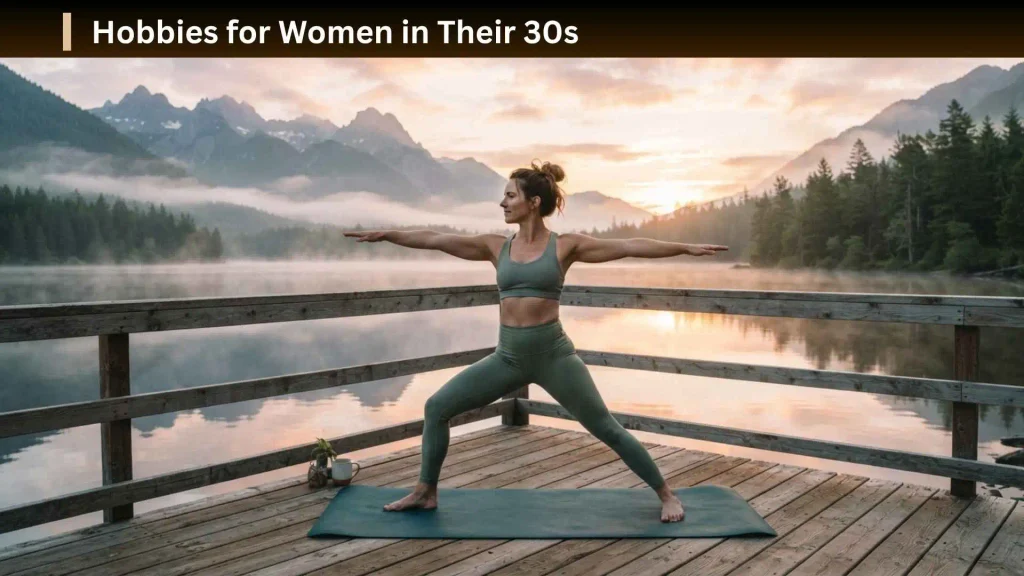
9. Yoga
Yoga can provide a structured form of movement while also creating time to slow down and focus. Classes range from gentle practices to more physically demanding styles.
If you prefer practicing at home, you can use online classes and a basic mat.
Best for: People who enjoy mindful movement
Cost: Free to moderate
Equipment: Yoga mat and comfortable clothing
10. Dancing
Dancing can be both exercise and entertainment. Salsa, ballroom, swing, hip-hop, contemporary dance, and other styles offer different experiences.
A beginner class can also be a natural way to meet people because you are learning alongside others.
Best for: Active people who want a social hobby
Cost: Moderate
Equipment: Comfortable clothing and suitable footwear
11. Knitting or Crochet
Knitting and crochet are portable hobbies that can be practiced while relaxing at home or traveling. Once you understand the basics, you can make scarves, blankets, hats, decorative items, or gifts.
They also provide plenty of room for progression because projects can become increasingly complex.
Best for: Creative, patient, and detail-oriented people
Cost: Low
Equipment: Yarn and appropriate hooks or needles
12. Creative Writing
Creative writing allows you to experiment with stories, poetry, personal essays, characters, or fictional worlds.
You do not need to plan to publish a book. Writing purely for yourself can be a worthwhile hobby.
A simple notebook or digital document is enough to begin.
Best for: Storytellers and people who enjoy expressing ideas through words
Cost: Free to low
Equipment: Notebook and pen or computer
13. Journaling
Journaling is a flexible hobby because there is no single correct format. You might write about your day, record goals, keep a gratitude journal, document travel, or create lists and reflections.
If traditional diary writing does not appeal to you, try prompts, sketch journaling, or a combination of writing and photographs.
Best for: Reflection and personal organization
Cost: Free to low
Equipment: Notebook and pen, if desired
14. Scrapbooking
Scrapbooking turns photographs, cards, notes, and other keepsakes into organized creative projects. It can be especially enjoyable if you like preserving memories and working with paper, layouts, and decorative elements.
Digital scrapbooking is another option if you prefer working on a computer.
Best for: Memory keeping and crafts
Cost: Low to moderate
Equipment: Photos, paper, adhesive, scissors, and decorative supplies
15. Calligraphy and Hand Lettering
Calligraphy and hand lettering are good choices if you enjoy typography, drawing, and detail-oriented crafts.
You can practice with inexpensive pens and paper before investing in specialized tools.
Best for: Artistic people who enjoy precision
Cost: Low
Equipment: Pens, paper, and practice guides
16. Sewing
Sewing can be both creative and practical. Beginners can start with simple projects such as tote bags, pillow covers, or basic clothing alterations.
Over time, you can learn pattern reading, garment construction, embroidery, or other textile techniques.
Best for: Practical creativity and making things by hand
Cost: Moderate
Equipment: Sewing machine or hand-sewing supplies
17. Learning a New Language
Learning another language can turn spare time into an ongoing intellectual challenge. You can combine apps, books, videos, conversation practice, music, and films to make the process more engaging.
Instead of trying to become fluent immediately, set a smaller goal such as learning everyday phrases or holding a basic conversation.
Best for: Lifelong learners and travelers
Cost: Free to moderate
Equipment: Learning resources and regular practice time
18. Playing a Musical Instrument
Learning an instrument is a long-term hobby that gives you a measurable skill to develop. Guitar, piano, ukulele, keyboard, violin, and other instruments can all provide different learning experiences.
Starting with short, consistent practice sessions is often more manageable than trying to practice for hours.
Best for: Music lovers and people who enjoy structured learning
Cost: Moderate to high
Equipment: Instrument and learning materials
19. Puzzles and Brain Games
Jigsaw puzzles, crosswords, Sudoku, logic puzzles, and similar activities offer low-pressure ways to spend quiet time.
They are particularly convenient for people who want a hobby that can be picked up and put down without preparation.
Best for: Quiet evenings and problem-solving enthusiasts
Cost: Free to low
Equipment: Depends on the activity
20. Volunteering
Volunteering can turn a hobby into a way of contributing to your community. Opportunities may include animal shelters, libraries, environmental projects, community organizations, food programs, or event support.
Choose a cause you genuinely care about so the commitment feels meaningful rather than like another obligation.
Best for: Social connection and community involvement
Cost: Usually low or free
Equipment: Depends on the organization
21. Birdwatching
Birdwatching is an accessible outdoor hobby that encourages observation and exploration. You can begin by identifying birds around your neighborhood or local parks.
A phone or basic field guide can be enough for beginners, while binoculars can be added later if the hobby becomes a serious interest.
Best for: Nature lovers and patient observers
Cost: Free to moderate
Equipment: Optional binoculars and identification resources
22. Candle Making
Candle making can appeal to people who enjoy crafts and home projects. You can experiment with containers, shapes, fragrances, and decorative approaches.
Because candle making involves heated materials, beginners should follow the safety instructions provided with their supplies and equipment.
Best for: DIY enthusiasts and creative crafters
Cost: Moderate
Equipment: Candle-making supplies and appropriate workspace
23. Volunteering at an Animal Shelter or Fostering
For people who enjoy spending time with animals, animal-related volunteering can be a meaningful way to make a hobby more social and purposeful.
Available activities vary by organization. Some may need help with events, cleaning, administration, walking animals, or other tasks.
Best for: Animal lovers who want a purpose-driven activity
Cost: Usually free
Equipment: Depends on the organization
24. Traveling or Exploring Your Own City
Travel does not always mean booking an expensive vacation. Exploring museums, historic neighborhoods, parks, markets, independent bookstores, galleries, and nearby towns can turn curiosity into a regular hobby.
Try creating a monthly “local adventure” where you visit somewhere you have never explored.
Best for: Curious people who enjoy discovery
Cost: Free to moderate
Equipment: Phone, comfortable shoes, and optional transportation
25. DIY Home Projects
DIY projects can transform everyday home maintenance into a creative pursuit. You might learn basic woodworking, furniture refinishing, decorating, organizing, or simple crafts.
Start with projects appropriate for your skill level and use proper tools and safety practices.
Best for: Hands-on problem solvers
Cost: Low to moderate
Equipment: Varies by project
Best Hobbies for Different Personalities
There is no universal “best” hobby. The right choice depends on what you want to get from your free time.
| If you want… | Consider… |
| Relaxation | Reading, journaling, knitting, puzzles |
| Creativity | Painting, pottery, photography, writing |
| Exercise | Hiking, dancing, yoga |
| Social connection | Dance classes, volunteering, book clubs |
| Outdoor time | Gardening, hiking, birdwatching |
| Learning | Languages, music, photography |
| Practical skills | Cooking, baking, sewing, DIY |
| Quiet alone time | Reading, journaling, crochet |
| A new challenge | Musical instruments, pottery, language learning |
| Low-cost entertainment | Reading, walking, writing, puzzles |
Best Low Cost Hobbies for Women in Their 30s
If budget is a major consideration, you do not need to purchase a large collection of supplies.
Some inexpensive options include:
- Reading through your local library
- Walking or hiking
- Journaling
- Creative writing
- Photography with a smartphone
- Drawing
- Birdwatching
- Cooking with ingredients you already have
- Yoga at home
- Puzzles
- Learning a language through free resources
- Visiting free museums, parks, or community events
A useful rule is to start with what you already own. If you enjoy the activity consistently, then consider investing in better equipment.
Best Creative Hobbies
Creative hobbies can be particularly satisfying when your work life or daily responsibilities leave little room for self-expression.
Consider:
- Painting
- Drawing
- Pottery
- Photography
- Creative writing
- Crochet
- Knitting
- Sewing
- Calligraphy
- Scrapbooking
- Candle making
- DIY decorating
The goal does not have to be producing something “good.” Learning, experimenting, and enjoying the process are valid reasons to create.
Best Social Hobbies
If your main goal is meeting new people, choose hobbies that naturally involve groups or classes.
Good possibilities include:
- Dance classes
- Book clubs
- Hiking groups
- Community gardening
- Volunteer organizations
- Pottery classes
- Cooking classes
- Recreational sports
- Photography groups
- Craft workshops
A recurring class or group can be particularly useful because seeing the same people regularly gives relationships more opportunity to develop naturally.
Best Hobbies for Busy Women
When your schedule is full, avoid choosing a hobby solely because it sounds impressive. Choose something you can realistically repeat.
For 10–20 minutes
Try:
- Reading
- Journaling
- Sketching
- Hand lettering
- Language practice
- Crochet
- Meditation or gentle yoga
For an hour or two
Try:
- Baking
- Painting
- Photography walks
- Gardening
- Cooking
- Dance classes
- Sewing
- Pottery
For weekends
Try:
- Hiking
- Day trips
- Longer photography outings
- Gardening projects
- Volunteer work
- Workshops
- DIY projects
A hobby becomes much easier to maintain when it fits naturally into the time you already have.
How to Start a New Hobby Without Getting Overwhelmed
Starting too ambitiously can turn an enjoyable hobby into another source of pressure.
Start with a small experiment
Instead of buying everything you might eventually need, try the beginner version first.
For example, borrow a book before building a home library, attend one pottery class before buying equipment, or practice photography with your phone before purchasing a camera.
Schedule hobby time
Treating your hobby as intentional personal time can make it easier to protect from other commitments.
Even one hour a week can be enough to establish a routine.
Choose progress over perfection
Being a beginner is part of learning. Your first painting, loaf of bread, sewing project, or photograph does not need to be impressive.
The point is to develop an interest over time.
Let your hobby change
You do not have to commit to the same hobby forever. Interests naturally change as your circumstances and priorities change.
If something stops being enjoyable, you can try something different without considering it a failure.
How to Turn a Hobby Into a Regular Part of Your Life
The biggest challenge is often not finding an interesting hobby—it is making enough space for it.
Try these approaches:
- Choose one hobby first. Avoid starting five projects at once.
- Set a tiny starting goal. Fifteen minutes can be enough.
- Keep supplies accessible. A hobby that requires extensive setup is harder to start.
- Connect it to an existing routine. Read after dinner or practice an instrument after your morning coffee.
- Track projects rather than hours. Finishing a small project can feel more rewarding than counting time.
- Join a community if accountability helps. Classes and groups can provide structure.
- Protect the activity from unnecessary guilt. Leisure has value even when it is not productive.
What Makes a Hobby Worth Keeping?
A hobby is worth keeping if it gives you something you genuinely value.
That might be:
- A break from screens
- Creative expression
- A sense of accomplishment
- Physical movement
- Social connection
- Intellectual stimulation
- Time outdoors
- A chance to learn
- A way to make something
- Simple enjoyment
You do not need to monetize your hobby, turn it into a business, or become exceptionally skilled for it to be worthwhile.
FAQs About Hobbies for Women in Their 30s
What are the best hobbies for women in their 30s?
Some popular options include reading, hiking, gardening, photography, painting, cooking, yoga, dancing, creative writing, pottery, knitting, learning a language, and volunteering. The best choice depends on whether you want relaxation, creativity, exercise, social connection, or learning.
What are some hobbies for women in their 30s that are inexpensive?
Reading through a library, walking, hiking, journaling, creative writing, smartphone photography, drawing, puzzles, birdwatching, and learning a language can all be started with little or no specialized equipment.
What is a good hobby for a busy woman in her 30s?
Choose something that can be enjoyed in short sessions. Reading, journaling, crochet, sketching, photography, language practice, and short yoga sessions can work well when your schedule is unpredictable.
What hobbies are good for meeting people in your 30s?
Dance classes, book clubs, hiking groups, volunteering, recreational sports, pottery classes, cooking classes, and community workshops can provide regular opportunities to interact with other people.
What are some relaxing hobbies for women in their 30s?
Reading, gardening, knitting, crochet, journaling, painting, puzzles, photography, and gentle yoga can provide quieter alternatives to highly social or competitive activities.
Can a hobby become a side business?
Yes, some hobbies can eventually develop into income-generating activities. Examples include photography, baking, crafts, writing, sewing, art, and teaching skills. However, monetizing a hobby also introduces business responsibilities, so it is perfectly reasonable to keep a hobby purely for enjoyment.
How do I find a hobby when I don’t know what I like?
Start by identifying what you want more of in your life. If you need relaxation, try reading or crafts. If you want movement, try hiking or dancing. If you want social interaction, try a class or volunteer group. Experiment with several low-cost activities before making a bigger commitment.
Conclusion
The best hobbies for women in their 30s are not necessarily the most fashionable, productive, or impressive ones. They are the activities that fit your interests, schedule, energy, and budget while giving you something to look forward to.
Whether you choose a creative hobby such as painting or pottery, an active option such as hiking or dancing, a quiet activity such as reading or journaling, or a social pursuit such as volunteering or joining a club, the important thing is to make room for something that is genuinely yours.
You can start small, experiment freely, and allow your interests to evolve. A hobby does not need to become a career or produce a measurable result—it can simply be something you enjoy doing.

I’m Olivia Bennett, a passionate writer who loves exploring ideas, learning new concepts, and sharing knowledge in a straightforward way. I write for Cognivoora with the goal of making useful topics easier to understand without unnecessary complexity. My approach combines research, clarity, and a reader-first perspective.
Books:
- Think Clearly, Live Better
- The Curious Reader’s Guide