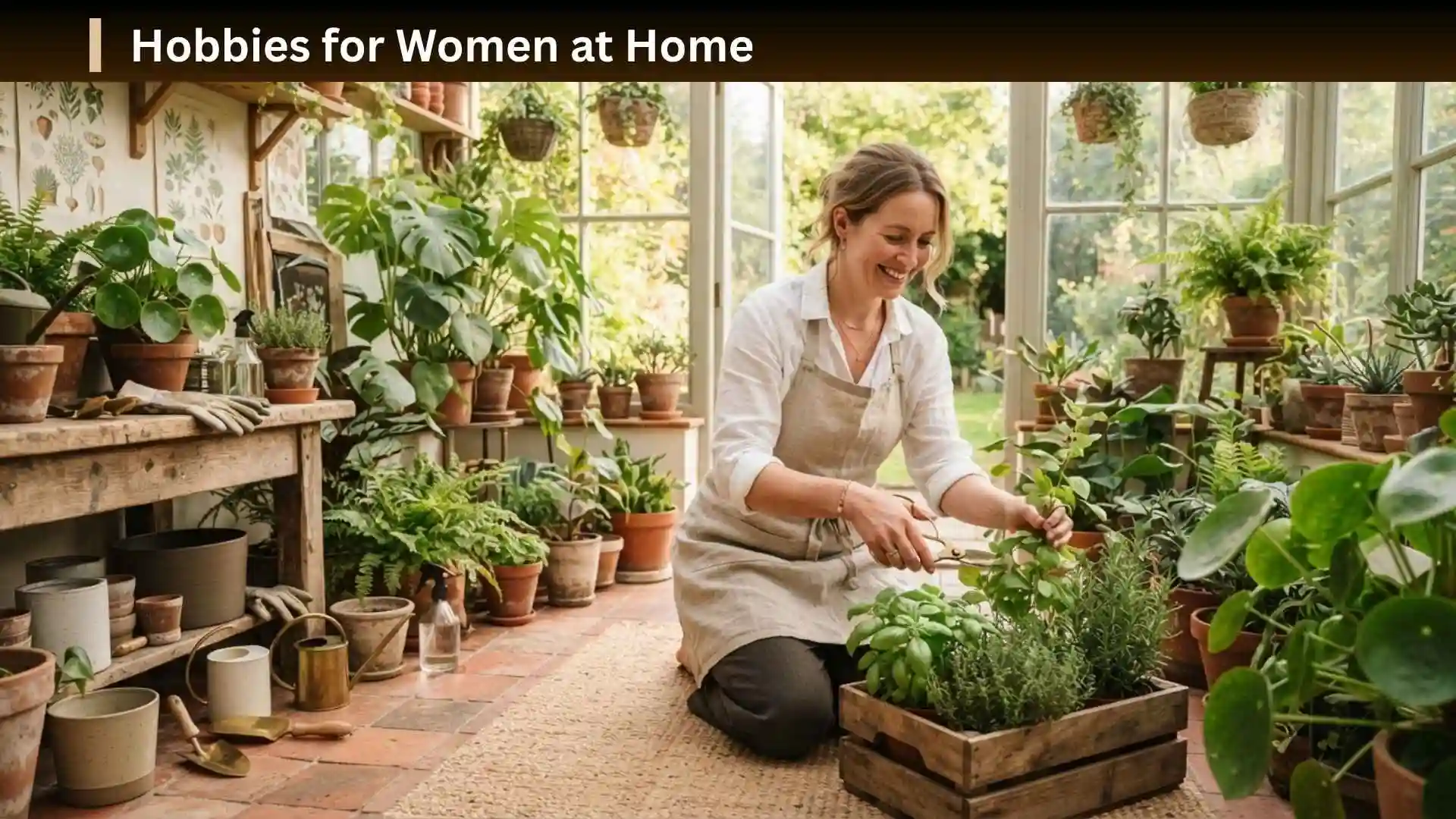
Finding enjoyable hobbies for women at home can make ordinary free time feel more rewarding. Whether you want something creative, relaxing, productive, inexpensive, or simply fun, there are plenty of hobbies that fit comfortably into a home environment.
The best choice depends on what you want from your hobby. Some activities help you make things with your hands, while others encourage learning, movement, self-expression, or quiet relaxation. You also do not need a large budget or a dedicated hobby room to get started.
What Are the Best Hobbies for Women at Home (Quick Answer)
Some of the best hobbies for women at home include:
- Reading
- Journaling
- Painting
- Drawing
- Crochet
- Knitting
- Embroidery
- Sewing
- Gardening
- Baking
- Cooking
- Photography
- Scrapbooking
- Puzzles
- Candle making
- Jewelry making
- Calligraphy
- Home DIY projects
- Yoga
- Indoor plants
- Learning a musical instrument
- Creative writing
- Coloring
- Learning a new language
- Digital art
The right hobby is the one that matches your interests, available space, budget, and the kind of experience you want during your free time.
Creative Hobbies for Women at Home
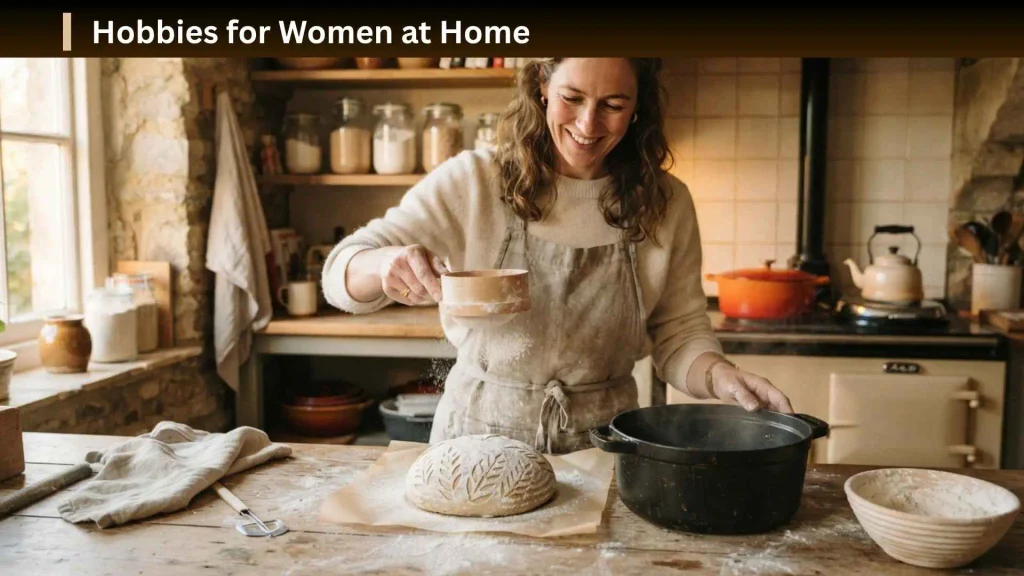
Creative hobbies are a good choice if you enjoy making something rather than simply consuming entertainment. Many can be started with basic supplies and developed into more advanced skills over time.
1. Painting
Painting gives you plenty of room for experimentation. You can try acrylics, watercolors, gouache, or other beginner-friendly mediums.
You do not need to begin with complicated landscapes or portraits. Start with simple subjects such as flowers, household objects, abstract shapes, or small seasonal paintings.
Good for: Creative expression, relaxation, learning an artistic skill
Basic supplies: Paint, brushes, paper or canvas, water container
Difficulty: Beginner to advanced
2. Drawing
Drawing is one of the easiest creative hobbies to start because the basic equipment is inexpensive and requires very little space.
You can practice sketching people, animals, plants, buildings, objects, or imaginative scenes. If traditional drawing appeals to you, gradually explore shading, perspective, anatomy, and composition.
Good for: Creativity and skill development
Basic supplies: Pencil, eraser, sketchbook
Difficulty: Beginner to advanced
3. Adult Coloring
Coloring is a simple hobby for anyone who enjoys patterns, illustrations, and quiet activities.
Adult coloring books come in many styles, including flowers, animals, mandalas, landscapes, and intricate geometric designs. Colored pencils, markers, or gel pens can be used depending on the desired effect.
Good for: Quiet downtime and creativity
Basic supplies: Coloring book and coloring tools
Difficulty: Very easy
4. Calligraphy and Hand Lettering
If you enjoy beautiful handwriting, calligraphy or hand lettering can turn writing into a creative activity.
You can practice individual letters before moving on to words, quotes, greeting cards, envelopes, signs, and decorative projects.
Good for: Creative writing, stationery projects, handmade gifts
Basic supplies: Pens or markers and practice paper
Difficulty: Beginner to advanced
5. Digital Art
Digital art is useful if you prefer creating on a tablet or computer rather than working with physical materials.
You can explore illustration, digital painting, character design, typography, or simple graphic design. A basic setup can be enough to learn the fundamentals.
Good for: Technology-focused creativity and illustration
Basic supplies: Computer or tablet and suitable software
Difficulty: Beginner to advanced
Fiber and Textile Hobbies
Textile hobbies are especially appealing if you like working with materials and producing something tangible.
6. Crochet
Crochet involves creating fabric using yarn and a single crochet hook. Beginners can start with simple projects such as scarves, dishcloths, small bags, or blankets.
Once you learn basic stitches, you can explore clothing, amigurumi, home décor, and accessories.
Good for: Hands-on creativity and practical projects
Basic supplies: Yarn and crochet hook
Difficulty: Beginner-friendly
7. Knitting
Knitting uses needles and yarn to create fabric. It can become a long-term hobby because there are countless patterns and techniques to learn.
Simple scarves and dishcloths can provide an accessible introduction before you move into sweaters, socks, hats, or more complicated designs.
Good for: Creative projects and skill building
Basic supplies: Yarn and knitting needles
Difficulty: Beginner to advanced
8. Embroidery
Embroidery lets you decorate fabric with different stitches and designs. It is a compact hobby that can be practiced at a small table.
You can create floral designs, names, patterns, decorative hoops, clothing embellishments, or handmade gifts.
Good for: Detailed crafts and personalized projects
Basic supplies: Embroidery hoop, fabric, thread, needle
Difficulty: Beginner to advanced
9. Sewing
Sewing can be both creative and practical. Beginners can start by learning basic stitches and gradually work toward simple projects.
Depending on your interests, you could make fabric accessories, home décor, clothing alterations, tote bags, or garments.
Good for: Practical creativity and making useful items
Basic supplies: Fabric, thread, needles; a sewing machine is optional
Difficulty: Beginner to advanced
Relaxing Hobbies to Do at Home
If your main goal is to slow down and enjoy quiet time, you may prefer hobbies that do not require intense concentration or a large setup.
10. Reading
Reading is a flexible hobby because you can choose the experience you want. Fiction can provide entertainment, while biographies, history, science, travel, or other nonfiction can help you explore new subjects.
You can read physical books, e-books, or use an audiobook if listening fits your routine better.
Good for: Entertainment, learning, and quiet time
Equipment: Book, e-reader, or audiobook device
Difficulty: Very easy
11. Journaling
Journaling can take many forms. You might write about your day, record goals, keep a gratitude journal, document ideas, or simply write whatever comes to mind.
There is no requirement to make every page artistic or structured. A basic notebook is enough.
Good for: Self-expression, organization, and reflection
Basic supplies: Notebook and pen
Difficulty: Very easy
12. Puzzles
Jigsaw puzzles, crossword puzzles, logic puzzles, and other brain games can provide a structured activity when you want a break from screens.
If you have limited space, smaller puzzles or puzzle books may be more practical than large jigsaw puzzles.
Good for: Quiet entertainment and problem-solving
Equipment: Puzzle or puzzle book
Difficulty: Easy to challenging
13. Listening to Music
You can turn music listening into a more intentional hobby by exploring different artists, genres, albums, or musical periods.
Another approach is to create themed playlists, learn about the history of music, or listen to complete albums rather than individual songs.
Good for: Relaxation and discovering new music
Equipment: Audio device or headphones
Difficulty: Very easy
Productive Hobbies for Women at Home
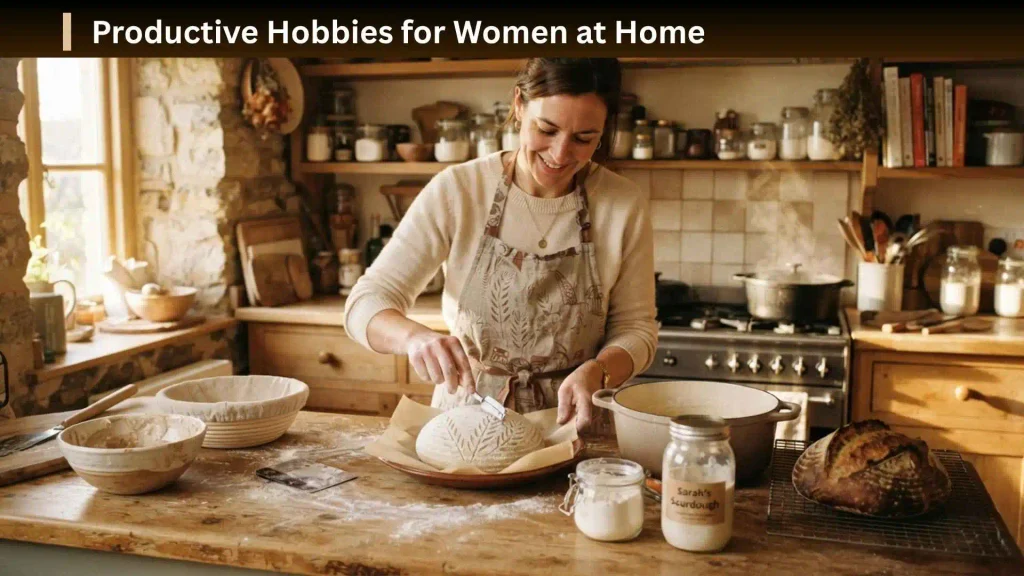
Some hobbies are enjoyable because they also produce something useful.
14. Cooking
Cooking can become a creative hobby when you move beyond making the same familiar meals.
Try learning recipes from different cuisines, experimenting with ingredients, improving knife skills, or developing a collection of reliable meals for different occasions.
Good for: Creativity and practical skills
Basic supplies: Kitchen equipment and ingredients
Difficulty: Beginner to advanced
15. Baking
Baking offers a particularly satisfying combination of creativity, technique, and a finished result.
You can begin with cookies, muffins, quick breads, or simple cakes before exploring decorated cakes, pastries, bread, and other more technical recipes.
Good for: Creative food projects and practical skills
Basic supplies: Basic baking equipment and ingredients
Difficulty: Beginner to advanced
16. Indoor Gardening
You do not need a backyard to enjoy gardening. Herbs, houseplants, succulents, and some vegetables can be grown indoors when their light, temperature, watering, and space requirements are suitable.
Start with a small number of plants rather than filling your home immediately. Learning how each plant responds to its environment is part of the hobby.
Good for: Plant care and nature-related activities
Basic supplies: Plants, containers, growing medium, and suitable light
Difficulty: Beginner to advanced
17. Home DIY Projects
DIY can turn ordinary household materials or inexpensive supplies into useful or decorative items.
Projects might include repainting furniture, organizing a small space, creating wall décor, making storage solutions, or refreshing existing household items.
Good for: Practical creativity and home projects
Equipment: Depends on the project
Difficulty: Beginner to advanced
Hobbies That Can Become Valuable Skills
A hobby does not have to remain purely recreational. Some can develop skills that are useful in everyday life or future creative projects.
18. Photography
Photography can be practiced at home using a smartphone or camera.
You can learn about composition, lighting, perspective, close-up photography, still-life photography, and editing. Household objects can become surprisingly useful subjects for practice.
Good for: Visual creativity and technical learning
Equipment: Smartphone or camera
Difficulty: Beginner to advanced
19. Creative Writing
Creative writing allows you to explore stories, characters, poetry, personal essays, or short fiction.
A useful approach is to establish a small writing routine rather than waiting for inspiration. Even a short writing session can give you something to develop later.
Good for: Storytelling and self-expression
Basic supplies: Notebook or computer
Difficulty: Beginner to advanced
20. Learning a Musical Instrument
Learning an instrument can become a rewarding long-term hobby. Depending on your interests and living situation, possibilities include keyboard, guitar, ukulele, recorder, or other instruments.
Start with basic technique and simple pieces. Consistent short practice sessions are generally more manageable than occasional marathon sessions.
Good for: Music, concentration, and skill development
Equipment: Depends on the instrument
Difficulty: Beginner to advanced
21. Learning a New Language
Learning a language can be approached as a hobby rather than a formal academic project.
You can combine vocabulary practice with books, music, videos, writing exercises, and conversation practice. Choosing a language connected to your interests can make it easier to stay engaged.
Good for: Learning and cultural exploration
Equipment: Learning resources or apps
Difficulty: Beginner to advanced
Craft Hobbies for Women at Home
If you enjoy making gifts, decorations, or accessories, craft-based hobbies offer many possibilities.
22. Jewelry Making
Jewelry making lets you experiment with beads, charms, wire, colors, and different design combinations.
Beginners can start with simple bracelets or necklaces before learning more advanced techniques such as wire wrapping.
Good for: Handmade accessories and gifts
Basic supplies: Beads, findings, stringing materials, and basic tools
Difficulty: Beginner to advanced
23. Scrapbooking
Scrapbooking combines photographs, paper, lettering, decorative elements, and personal memories.
It can be particularly appealing if you enjoy organizing photographs or creating physical keepsakes from vacations, celebrations, family events, or everyday moments.
Good for: Memory keeping and paper crafts
Basic supplies: Album, photographs, paper, adhesive, decorations
Difficulty: Easy to advanced
24. Candle Making
Candle making can be an interesting craft if you enjoy home décor and experimenting with scents and designs.
Because working with hot wax involves heat and fire-related hazards, beginners should learn proper handling, workspace setup, and product-specific safety instructions before starting.
Good for: Crafting and home décor
Equipment: Candle-making supplies and appropriate equipment
Difficulty: Beginner to intermediate
25. Paper Crafts
Paper crafts include origami, handmade cards, paper flowers, bookmarks, paper cutting, and decorative projects.
The biggest advantage is flexibility: you can choose very simple projects or develop more intricate techniques as your skills improve.
Good for: Low-space creative activities
Basic supplies: Paper, scissors, adhesive, and optional decorative tools
Difficulty: Beginner to advanced
How to Choose the Right Hobby
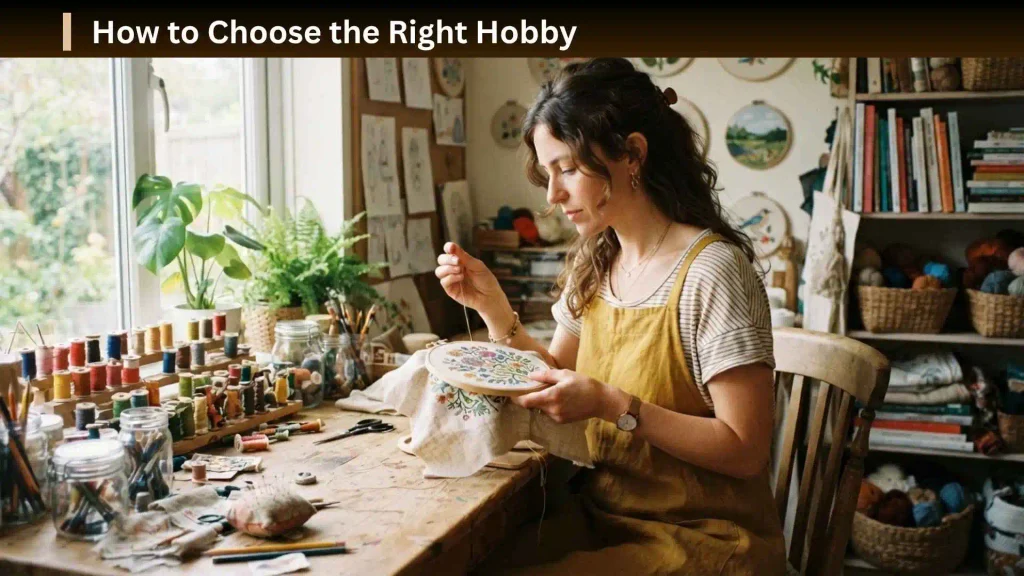
With so many possibilities, choosing a hobby can actually become the hardest part. Instead of asking which hobby is objectively “best,” consider what you want your free time to provide.
| If you want… | Consider… |
| A relaxing activity | Reading, coloring, puzzles, embroidery |
| A creative outlet | Painting, drawing, writing, digital art |
| Something practical | Cooking, baking, sewing, DIY |
| A hands-on craft | Crochet, knitting, jewelry making |
| A nature connection | Indoor gardening |
| A learning challenge | Language learning, music, photography |
| A low-cost hobby | Journaling, drawing, reading |
| A hobby requiring little space | Embroidery, journaling, coloring |
| A hobby involving movement | Yoga or home fitness activities |
| A hobby that creates gifts | Baking, crochet, sewing, crafts |
Consider Your Budget
You do not need to spend a lot of money to start a hobby.
Begin with the minimum equipment needed to determine whether you actually enjoy the activity. Once you know it suits you, you can gradually invest in better tools or materials.
Consider Your Available Space
A hobby that requires a permanent workbench may not be practical in a small apartment.
If space is limited, consider portable hobbies such as:
- Reading
- Journaling
- Drawing
- Embroidery
- Crochet
- Knitting
- Coloring
- Photography
- Language learning
These can generally be packed away when you are finished.
Consider How Much Time You Have
Some hobbies work well in short sessions, while others benefit from longer periods of uninterrupted time.
If you have only 15–20 minutes available, journaling, reading, sketching, coloring, or language practice may be easier to maintain than a large craft project.
If you have several uninterrupted hours on weekends, sewing, baking, painting, gardening, and DIY projects may be more appealing.
Best Low Cost Hobbies for Women at Home
If keeping expenses low is important, start with activities that require little specialized equipment.
Some affordable choices include:
- Reading books you already own
- Journaling
- Drawing
- Creative writing
- Coloring
- Learning a language with free resources
- Photography with a smartphone
- Paper crafts using materials you already have
- Indoor plant propagation when appropriate
- Puzzles you already own
A useful strategy is to avoid buying a complete hobby setup before trying the activity. Start small and upgrade only when you know you want to continue.
Hobbies for Women at Home When You’re Bored
Boredom often comes from having unstructured free time without an activity that feels engaging. A hobby can provide a simple alternative to repeatedly scrolling through social media or watching television.
For something you can start immediately, try:
- Writing a short story
- Drawing an everyday object
- Organizing photographs for a scrapbook
- Trying a new recipe
- Learning a few phrases in another language
- Starting a journal
- Making a simple craft
- Practicing photography around your home
- Working on a puzzle
- Learning a basic musical exercise
The goal is not necessarily to produce something impressive. The activity should give your attention somewhere meaningful to go.
How to Turn a Hobby Into a Long Term Habit
Starting is usually easier than continuing. If you want a hobby to become part of your routine, make it convenient.
Keep the supplies accessible
If everything is stored in several boxes at the back of a closet, you may be less likely to begin. A small basket, drawer, or dedicated container can make setup easier.
Start with manageable projects
Finishing a small project can give you a clear sense of progress. Instead of beginning with a complicated sweater, large painting, or ambitious DIY project, choose something appropriate for your current skill level.
Give yourself permission to experiment
You do not have to be good at a hobby immediately. Part of learning is producing imperfect work, making mistakes, and figuring out what you enjoy.
Follow your interests
Your hobby does not have to fit a particular stereotype. A woman can enjoy woodworking, gaming, coding, model building, birdwatching from a window, or any other activity just as much as painting, baking, or crafts.
The best hobby is based on personal interest—not gender expectations.
How to Make Your Home Hobby More Enjoyable
A few simple changes can improve the experience without turning your hobby into a major project.
- Create a comfortable place to work.
- Keep frequently used supplies organized.
- Choose projects that match your current skill level.
- Set realistic expectations for your available time.
- Keep track of projects you want to try.
- Learn one new technique at a time.
- Take breaks when an activity becomes frustrating.
- Share finished projects with friends or family if you enjoy social encouragement.
- Change hobbies occasionally if your interests change.
You also do not have to choose only one hobby. Having one relaxing hobby and one creative or skill-building hobby can give you different options depending on your mood.
FAQs About Hobbies for Women at Home
What is a good hobby for a woman to do at home?
Good options include reading, journaling, painting, drawing, crochet, knitting, embroidery, cooking, baking, gardening, photography, puzzles, creative writing, and learning an instrument. The best option depends on your interests, budget, space, and available time.
What are some easy hobbies for women at home?
Reading, coloring, journaling, drawing, puzzles, photography with a smartphone, and beginner-level crafts are easy places to start. Most require little space and can be learned gradually.
What hobbies can I do at home without spending much money?
Journaling, drawing, creative writing, reading books you already own, photography with a smartphone, and some paper crafts can be inexpensive. For material-based hobbies, start with a small project rather than purchasing a large collection of supplies.
What is a relaxing hobby to do at home?
Reading, coloring, embroidery, knitting, crochet, journaling, puzzles, and quiet creative activities can be relaxing for many people. Your ideal choice depends on whether you find repetitive, creative, intellectual, or passive activities most enjoyable.
What hobbies can I learn at home?
Many skills can be learned at home, including drawing, painting, photography, sewing, crochet, knitting, cooking, baking, creative writing, languages, music, digital art, and DIY crafts.
What hobby can I do at home if I have very little space?
Choose compact activities such as reading, journaling, drawing, coloring, embroidery, crochet, knitting, language learning, photography, or digital art. These can generally be performed at a desk or small table and stored away afterward.
Can a hobby become a way to make money?
Some hobbies can eventually develop into income-generating skills, such as photography, writing, sewing, jewelry making, baking, digital art, or certain crafts. However, turning a hobby into a business also introduces costs, marketing, customer service, pricing, and other responsibilities, so it is worth keeping the activity enjoyable while you explore whether there is genuine demand.
Conclusion
The best hobbies for women at home are not necessarily the most popular or expensive ones. A good hobby should fit your interests and the reality of your everyday life.
If you want something calming, try reading, journaling, coloring, embroidery, or puzzles. If you want to create things, explore painting, crochet, sewing, jewelry making, or paper crafts. If you want to develop a useful skill, cooking, photography, language learning, music, or DIY projects may be better choices.
Start with one activity that genuinely interests you, use the simplest setup possible, and give yourself time to discover whether it fits. A hobby does not need to be productive, profitable, or impressive to be worthwhile—it simply needs to make your time at home more enjoyable.

I’m Sophia Carter, a writer who enjoys discovering interesting ideas and transforming them into helpful content. At Cognivoora, I write with a simple goal: to make information clearer, more accessible, and genuinely useful for readers. I value thoughtful research, easy explanations, and content that people can trust and return to whenever they need it.
Books:
- The Knowledge Journey
- Understanding the World Around Us