
Finding enjoyable hobbies for couples at home can turn ordinary evenings and weekends into opportunities to connect, learn something new, and have fun together. The best shared hobbies do not have to be expensive or complicated. Some require little more than conversation and creativity, while others can become long-term projects that you both look forward to.
Whether you want a relaxing activity after work, a creative project for the weekend, or a hobby that helps you spend less time scrolling on your phones, there are plenty of options to choose from.
What Are the Best Hobbies for Couples at Home(Quick Answer)
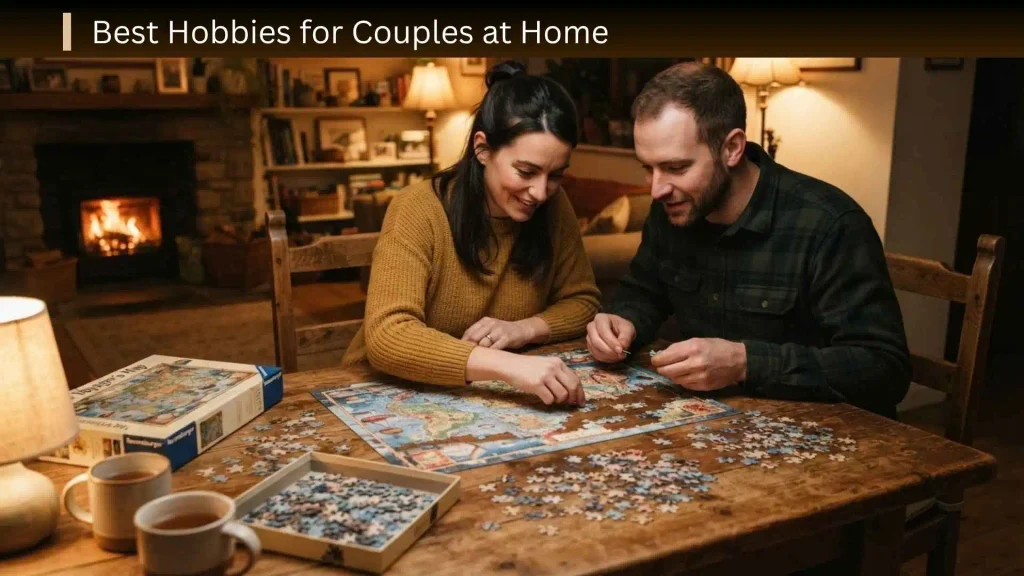
Some of the best hobbies for couples at home include cooking, baking, gardening, painting, puzzles, board games, reading together, photography, learning a language, playing music, crafting, home improvement projects, dancing, fitness, and building collections.
The right hobby depends on what you both enjoy. If you want something relaxing, try reading, puzzles, drawing, or gardening. For creativity, consider painting, pottery, crafting, or photography. If you want more interaction, board games, cooking challenges, dancing, and learning an instrument can be excellent choices.
1. Cooking Together
Cooking is one of the easiest hobbies to turn into a shared routine. Instead of simply preparing dinner, make the process itself the activity.
Choose recipes from different cuisines, recreate restaurant dishes, or take turns deciding what to cook. You can also make themed meals, such as homemade pizza night, taco night, or breakfast-for-dinner night.
Cooking together can be especially enjoyable because you end up with something useful at the end: a meal you can share.
What you need: Basic kitchen equipment and ingredients
Difficulty: Easy to moderate
Best for: Creative couples who enjoy food
2. Baking
If you have a sweet tooth, baking can become a fun couple’s hobby. Try cookies, cakes, pies, bread, pastries, or homemade desserts.
Make it more interesting by choosing recipes neither of you has tried before. You can also decorate baked goods together or experiment with different flavors.
Baking is particularly suitable for relaxed weekends when you have enough time to let dough rise, decorate a cake, or try a more involved recipe.
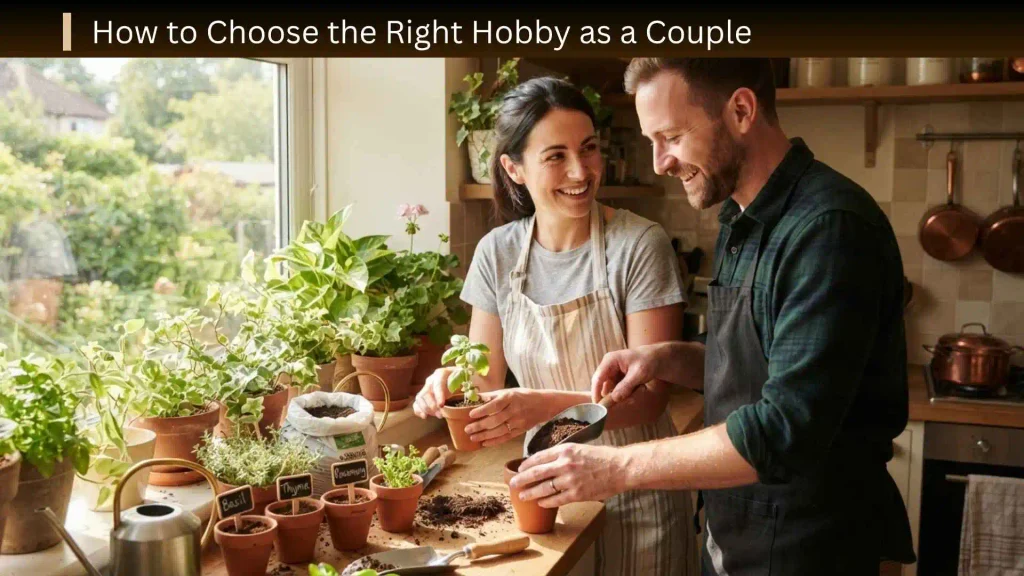
3. Gardening
You do not need a large backyard to enjoy gardening together. Indoor plants, herbs, flowers, and container gardens can all provide opportunities to learn and work as a team.
Start with a few easy plants and gradually expand your collection. You can grow herbs for cooking, create a small windowsill garden, or experiment with houseplants.
Gardening is also a hobby that changes over time, giving couples something ongoing to care for together.
4. Board Games
Board games are a classic choice for couples because they encourage interaction without requiring screens.
You can choose cooperative games where you work toward the same goal or competitive games where you play against each other. Strategy games, word games, card games, and classic tabletop games offer very different experiences.
If you are competitive, keep the atmosphere playful rather than treating every game like a championship.
5. Jigsaw Puzzles
Working on a jigsaw puzzle together can provide a quiet alternative to television.
Choose a puzzle based on an image you both like and set up a dedicated table or surface where you can work on it over several evenings. Larger puzzles can become a multi-day project.
Puzzles are particularly good for couples who enjoy quiet activities and conversation.
6. Reading Together
Reading does not have to be a completely individual hobby. Couples can choose the same book and create their own informal two-person book club.
Pick a novel, biography, mystery, history book, or another subject that interests both of you. Read at your own pace and talk about the chapters as you go.
You can also alternate between choosing books, giving each person a chance to introduce the other to something new.
7. Start a Two Person Book Club
For couples who enjoy deeper conversations, turn shared reading into a regular book-club night.
After finishing a chapter or book, discuss questions such as:
- Which character did you understand most?
- What surprised you?
- Would you have made the same decision as a character?
- What did you think of the ending?
- Would you recommend the book to someone else?
This makes reading more social and gives you a recurring activity to look forward to.
8. Painting
Painting together allows each person to be creative without needing to produce professional artwork.
Try acrylic painting, watercolor, canvas painting, or simple guided painting projects. You can paint separate pictures or create one larger piece together.
Another fun idea is to choose the same reference image and see how differently each person interprets it.
9. Drawing and Sketching
Drawing is an inexpensive hobby that can be started with basic paper and pencils.
You can practice portraits, landscapes, objects around your home, cartoons, or simple sketches. Online tutorials can help beginners learn fundamental techniques such as shading, perspective, and proportions.
For a playful activity, draw each other in five minutes and compare the results.
10. Photography
Photography can become a hobby even when you rarely leave home.
Use a smartphone or camera to practice composition, lighting, close-up photography, food photography, still-life photography, or portraits. Challenge each other to photograph ordinary household objects in interesting ways.
You can later organize your favorite pictures into digital albums or printed photo books.
11. Learn a New Language
Learning a language together can turn individual study into a shared challenge.
Choose a language you are both interested in and spend a few minutes practicing vocabulary, pronunciation, and basic conversation each day.
You can make the hobby more engaging by learning phrases you might actually use, cooking food from the culture associated with the language, or watching beginner-friendly programs together.
12. Learn to Play an Instrument
If one or both of you have always wanted to play music, learning an instrument can become a rewarding long-term hobby.
Consider guitar, keyboard, ukulele, piano, or another accessible instrument. Beginners can start with basic chords, scales, rhythms, and simple songs.
You do not have to learn the same instrument. One person might play guitar while the other learns keyboard, eventually allowing you to play together.
13. Singing Together
You do not need professional singing ability to enjoy music at home.
Create playlists of favorite songs, try karaoke, learn harmonies, or simply sing along while doing chores.
For couples who enjoy humor and spontaneity, a living-room karaoke night can become an easy weekend tradition.
14. Dancing at Home
Dancing can turn an ordinary room into a small personal dance floor.
Try ballroom basics, salsa, swing, line dancing, or simple freestyle sessions. Beginner tutorials can help you learn basic steps without needing formal lessons.
You can also choose a favorite song and practice a short routine together.
15. Home Workouts
Exercise can be a shared hobby when both partners enjoy being active.
Try activities such as yoga, stretching, bodyweight workouts, Pilates, or dance-based exercise. You can follow the same routine or choose different workouts and exercise at the same time.
The goal does not have to be competition. Treat it as an opportunity to build a consistent activity you can enjoy together.
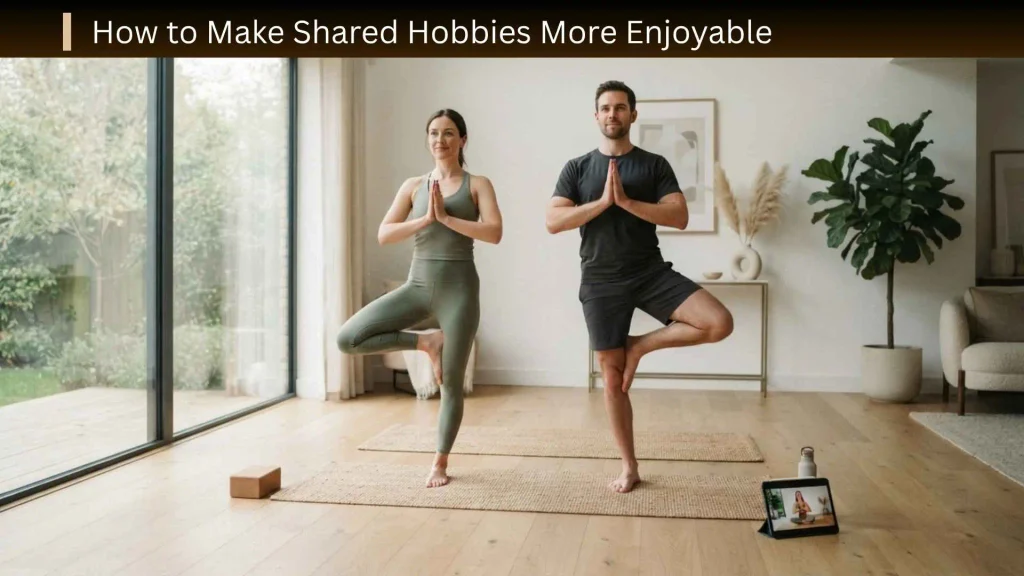
16. Yoga
Yoga can be particularly suitable for couples who prefer a slower, calmer form of movement.
You can practice individual routines side by side or explore beginner partner poses designed for two people.
Keep the focus on comfortable movement rather than forcing difficult poses. Beginners should choose routines appropriate for their experience and physical abilities.
17. Crafting
Crafting covers a huge range of hobbies, making it easy to find something that fits your interests.
You could try:
- Paper crafts
- Greeting cards
- Scrapbooking
- Simple sewing
- Embroidery
- Crochet
- Knitting
- Beadwork
- Decorative crafts
- DIY home decorations
Choose projects that are manageable for your available time and space.
18. Scrapbooking
Scrapbooking gives couples a creative way to preserve memories.
Collect photographs, ticket stubs, notes, postcards, and other small keepsakes from meaningful experiences. Organize them into themed pages or albums.
You can create a scrapbook covering your relationship, vacations, holidays, special occasions, or everyday memories.
19. Knitting or Crochet
Learning knitting or crochet together can be a relaxing way to spend quiet evenings.
You do not necessarily have to make the same things. One person could learn scarves while the other experiments with blankets, hats, or small decorative projects.
Because these skills take practice, learning together can make the beginner stage less intimidating.
20. Build LEGO or Other Model Sets
Building models together combines creativity, concentration, and teamwork.
You can choose architecture sets, vehicles, landscapes, characters, or other models that match your interests.
If you enjoy detailed projects, make the build a weekend activity rather than rushing to finish it in one sitting.
21. Home Improvement Projects
Couples who enjoy practical hobbies can turn home improvement into a shared project.
Start with manageable tasks such as:
- Repainting a small room
- Building simple shelves
- Organizing a workspace
- Refreshing furniture
- Creating wall decorations
- Improving storage
- Designing a reading corner
Discuss the plan before beginning so that the hobby remains enjoyable rather than becoming a source of unnecessary disagreement.
22. Learn Woodworking
For couples who enjoy making physical objects, beginner woodworking can be rewarding.
Start with simple projects such as small shelves, planters, boxes, or decorative pieces. Learn how to use tools safely and choose projects appropriate for your skill level.
A dedicated workspace and appropriate safety equipment are important when using power tools.
23. Do It Yourself Home Decor
DIY decor allows you to improve your living space while working on a creative project together.
Make wall art, decorative storage, photo displays, seasonal decorations, or customized items for your home.
A useful approach is to choose projects that solve a real problem in your home rather than making decorations that simply add clutter.
24. Make Candles or Soap as a Craft
Candle-making and soap-making can be interesting craft hobbies for couples who enjoy experimenting with scents, shapes, and designs.
Because these projects can involve heated materials and specific ingredients, follow the safety instructions for the materials and equipment you use.
You can start with beginner-friendly kits before buying larger quantities of supplies.
25. Try Origami
Origami requires relatively little equipment and can be learned at home.
Start with simple models and gradually move toward more complicated designs. Make the same figure together or challenge each other to complete different models.
It is a useful option when you want a creative hobby that takes up very little storage space.
26. Build a Home Cocktail Free Beverage Hobby
Couples can explore coffee, tea, smoothies, mocktails, or other nonalcoholic drinks as a shared hobby.
Try different brewing methods, tea varieties, homemade syrups, fruit combinations, or presentation styles.
You can create a weekly tasting night and compare flavors, preparation methods, and favorite recipes.
27. Learn Coffee Brewing
Coffee enthusiasts can turn their daily cup into a genuine hobby.
Explore different beans, grind sizes, brewing methods, and preparation techniques. Depending on your interests, you might experiment with methods such as pour-over, French press, or other home brewing approaches.
Keep notes about what you try so you can remember which combinations you prefer.
28. Try Home Mixology Without Alcohol
Mocktail-making can be a creative hobby for couples who enjoy experimenting with drinks.
Combine fruit, herbs, sparkling water, citrus, spices, and homemade syrups to create different flavors. Give your creations names and rate them after each tasting.
This works especially well as a weekend activity because preparation and presentation can be part of the fun.
29. Start a Collection
Collecting can become an engaging shared hobby when both people have a genuine interest in the subject.
Possible collections include:
- Postcards
- Books
- Vinyl records
- Coins
- Art prints
- Vintage objects
- Board games
- Maps
- Movie memorabilia
Before starting, decide what you want the collection to represent and how much space you are willing to dedicate to it.
30. Create a Family Recipe Book
A recipe book can combine cooking, writing, photography, and family history.
Gather recipes from relatives, favorite meals, holiday traditions, and dishes you have developed together. Add photographs and short notes about why particular recipes matter.
Over time, the project can become a meaningful keepsake rather than simply another cookbook.
31. Make a Shared Journal
A shared journal gives couples a place to record memories, ideas, goals, funny moments, and things they appreciate.
You could write together once a week or alternate entries. Some couples may prefer a simple notebook, while others might decorate each page.
The important part is making the journal enjoyable rather than turning it into an obligation.
32. Try Creative Writing
Couples who enjoy stories can write together.
You might create short stories, poetry, fictional characters, travel ideas, or even a collaborative story where each person writes alternate sections.
Another fun exercise is to choose three random objects in your home and create a story connecting all three.
33. Make a Family Tree
Researching family history can become a long-term project for couples interested in genealogy.
Start by collecting information from relatives and organizing names, dates, locations, photographs, and documents. Keep records carefully and distinguish confirmed information from family stories that still need verification.
The project can develop gradually as you discover more about your families.
34. Have Regular Trivia Nights
Create your own trivia competition at home.
Choose categories such as movies, music, history, geography, science, food, sports, or general knowledge. One person can prepare questions one week and switch roles the next.
You can also use trivia games or create a scoreboard for a friendly competition over several weeks.
35. Have a Puzzle or Game Night
Instead of choosing just one activity, create a recurring hobby night that includes different games and puzzles.
For example, one Saturday might involve a board game, another could feature a jigsaw puzzle, and another could be a trivia competition.
This is especially useful for couples who get bored doing the same activity repeatedly.
How to Choose the Right Hobby as a Couple
The best hobby is not necessarily the most impressive one. It is the one both people are genuinely willing to enjoy.
Consider these questions before choosing:
Do You Want Something Relaxing or Active?
If you want to unwind after a busy day, consider reading, puzzles, drawing, gardening, crafting, or coffee and tea exploration.
If you want more movement, try dancing, yoga, home workouts, or active games.
Do You Prefer Creative or Practical Activities?
Creative couples might enjoy painting, writing, photography, crafting, music, or DIY decoration.
If you prefer practical projects, cooking, gardening, woodworking, organization, or home improvement may be a better fit.
How Much Time Do You Have?
A hobby does not need to consume an entire weekend.
For short sessions, try:
- Drawing
- Reading
- Card games
- Language practice
- Origami
- Coffee brewing
- Journaling
For longer sessions, consider cooking projects, woodworking, gardening, model building, or home improvement.
What Is Your Budget?
Some couple’s hobbies cost almost nothing. Reading books you already own, drawing with basic supplies, walking around your home while taking photographs, writing, and many card games require little additional spending.
Other hobbies can become more expensive as you purchase specialized equipment or materials. Set a budget before getting deeply involved in a new hobby.
Low Cost Hobbies for Couples at Home
If you want to spend very little, consider:
- Reading together
- Drawing
- Writing
- Jigsaw puzzles you already own
- Card games
- Trivia nights
- Dancing
- Home workouts
- Language learning
- Journaling
- Origami
- Cooking with ingredients you already have
The most valuable part of a shared hobby is the time and interaction, not how much money you spend.
Hobbies for Couples Who Want to Learn Something New
If your main goal is personal growth, try hobbies that involve developing a skill.
Good choices include:
- Learning a language
- Playing an instrument
- Photography
- Cooking
- Baking
- Drawing
- Painting
- Gardening
- Woodworking
- Coding or digital creation
- Creative writing
- Genealogy
Learning together can also make mistakes feel more enjoyable because neither person has to be perfect at the beginning.
Hobbies for Couples Who Want to Relax
After a demanding week, you may want an activity that does not feel like another task.
Consider:
- Reading
- Puzzles
- Gardening
- Painting
- Knitting
- Crochet
- Journaling
- Listening to music
- Drawing
- Coffee or tea tasting
The best relaxing hobby is one that leaves you feeling refreshed rather than pressured to accomplish something.
How to Make Shared Hobbies More Enjoyable
Keep the First Session Simple
Do not buy everything you could possibly need before deciding whether you enjoy a hobby. Start with basic supplies and see how you both feel.
Give Each Person Some Choice
If one person chooses every activity, the other may eventually lose interest. Take turns selecting projects, recipes, games, or books.
Avoid Turning It Into a Competition
Competition can be fun, but not every hobby needs a winner. When learning something new, focus on enjoying the process.
Schedule Hobby Time
Busy couples often intend to spend more time together but never get around to it. Setting aside a regular evening or weekend afternoon can make a shared hobby easier to maintain.
Accept Different Skill Levels
One person may naturally be better at drawing, cooking, music, or games. That does not mean the activity has to become a competition.
Teach each other, laugh at mistakes, and allow both people to progress at their own pace.
Let the Hobby Change
You do not have to commit to one hobby forever. Try different activities and notice which ones you naturally want to return to.
A couple might enjoy cooking during one season, gardening during another, and board games during colder months.
How to Turn a Hobby Into a Couple’s Routine
A hobby becomes more meaningful when it becomes a shared ritual.
For example, you could create a simple weekly routine:
Monday: 20 minutes of language practice
Wednesday: Cook a new recipe
Friday: Board game or trivia night
Sunday: Creative project or gardening
The schedule does not need to be complicated. Even one dedicated hobby evening each week can give couples something enjoyable to anticipate.
Frequently Asked Questions
What are good hobbies for couples at home?
Good hobbies include cooking, baking, gardening, board games, puzzles, painting, reading, photography, dancing, crafting, learning languages, playing music, DIY projects, and home workouts. The best option depends on whether you prefer relaxing, creative, active, social, or skill-building activities.
What can couples do together at home when they are bored?
Try cooking a new meal, playing a board game, starting a puzzle, painting, learning a language, having a trivia night, practicing photography, dancing, or beginning a small DIY project. Choosing something that produces a finished result can make the activity feel more engaging.
What are inexpensive hobbies for couples?
Reading, drawing, writing, dancing, trivia, card games, journaling, language practice, home workouts, and origami can all be inexpensive ways to spend time together. You can also use supplies and materials you already have before investing in a new hobby.
What are relaxing hobbies for couples?
Reading, puzzles, gardening, painting, drawing, knitting, crochet, journaling, and listening to music are relaxing choices for many couples. Pick an activity that allows you to slow down without creating pressure to perform.
What hobbies can couples learn together?
Couples can learn languages, musical instruments, photography, cooking, baking, painting, gardening, woodworking, crafts, creative writing, and many other skills together. Learning the same skill can create a shared sense of progress.
How do couples find a hobby they both enjoy?
Start by listing activities each person already likes and look for overlap. Then try a few low-cost activities before committing to expensive equipment or long-term projects. A hobby is more likely to last when both partners have some choice and genuinely enjoy the process.
Can couples have different interests and still share a hobby?
Yes. You do not need identical interests. Choose an activity that connects your interests. For example, someone who enjoys food and someone who enjoys photography could cook together and photograph the finished dishes. The goal is to create a shared activity rather than identical tastes.
Conclusion
The best hobbies for couples at home are activities that make time together more enjoyable, whether you are learning a skill, creating something, solving a puzzle, preparing a meal, or simply relaxing side by side.
You do not need an expensive setup or a complicated project to get started. Pick one activity that sounds genuinely interesting to both of you, try it for an evening, and see where it leads. Over time, a simple shared hobby can become a favorite part of your routine and create experiences you can enjoy together long after the activity itself is finished.

I’m Olivia Bennett, a passionate writer who loves exploring ideas, learning new concepts, and sharing knowledge in a straightforward way. I write for Cognivoora with the goal of making useful topics easier to understand without unnecessary complexity. My approach combines research, clarity, and a reader-first perspective.
Books:
- Think Clearly, Live Better
- The Curious Reader’s Guide