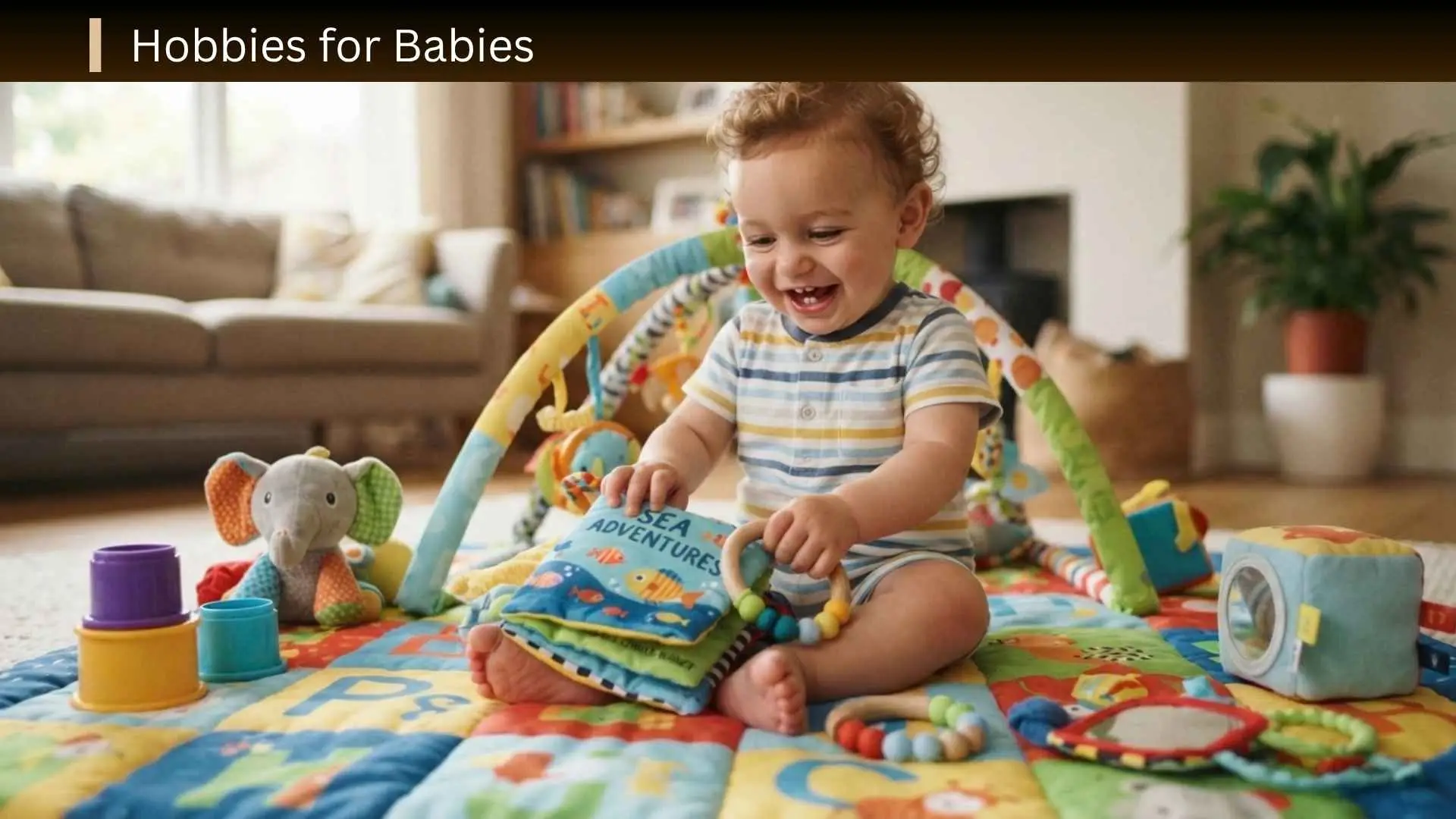
Finding hobbies for babies might sound unusual at first, but I believe some of the best early activities are simply playful ways to explore, learn, and enjoy the world. You don’t need expensive toys or complicated activities to give your baby something fun to do. Everyday experiences like listening to music, looking at colorful pictures, splashing in water, exploring textures, or playing with safe objects can become enjoyable little hobbies.
As a parent or caregiver, you may wonder which activities are actually suitable for your baby’s age and development. I’m here to help you discover simple, age-appropriate ideas that encourage curiosity without turning playtime into a lesson. Whether you have a newborn, a crawling baby, or a little one who is starting to explore independently, you can find plenty of safe and engaging activities to try together.
The goal isn’t to find a hobby your baby will stick with forever. It’s about giving you and your baby opportunities to play, connect, discover new interests, and enjoy those small moments of childhood.
What Are Good Hobbies for Babies?
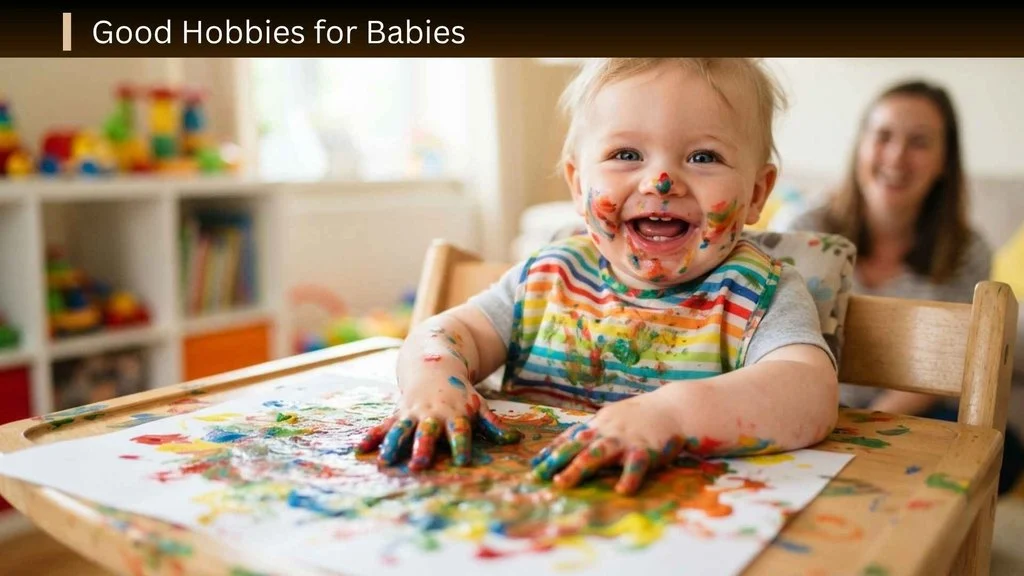
Good hobbies for babies are simple activities that allow them to safely explore and interact with people and objects. Some of the best choices include:
- Looking at picture books
- Listening to music
- Singing
- Tummy-time play
- Exploring safe textures
- Looking at high-contrast or colorful objects
- Peekaboo
- Copying sounds and facial expressions
- Exploring toys that are easy to grasp
- Playing with soft sensory toys
- Going for stroller walks
- Watching and listening to nature
- Simple movement games
- Exploring cause-and-effect toys
- Looking at family photographs
- Playing on a safe floor mat
These activities can support opportunities for movement, communication, social interaction, attention, and exploration. The CDC specifically recommends activities such as talking, singing, reading, floor play, peekaboo, and putting safe toys just out of reach to encourage babies to interact and explore.
Why Should Babies Have Hobbies?
A baby’s hobby does not need to produce a skill or accomplishment. At this age, the main purpose is exploration and interaction.
When caregivers sing to a baby, respond to sounds, read a picture book, or place a toy nearby, the baby gets opportunities to observe, listen, move, reach, communicate, and respond.
Play can also help parents and caregivers understand what a baby enjoys. Some babies may become fascinated by music, while others prefer looking at books, reaching for toys, watching people, or exploring different textures.
The CDC notes that babies learn through talking, playing, and interacting with other people rather than through passive screen use.
Best Hobbies for Babies by Age
Every baby develops at a different pace, so age ranges should be treated as general guidance rather than strict rules.
Hobbies for Babies 0.3 Months
Newborns do not need complicated toys or structured activities. At this stage, simple interaction is often the most engaging form of play.
Good choices include:
- Talking face-to-face
- Singing softly
- Looking at high-contrast pictures
- Listening to gentle music
- Looking at colorful objects
- Short periods of supervised tummy time
- Looking at family members’ faces
- Gentle movement games
- Listening to different safe household sounds
During tummy time, an awake and supervised baby can gradually build strength while interacting with a caregiver or an object placed nearby. The American Academy of Pediatrics’ HealthyChildren recommends starting tummy time from the baby’s early days at home, using short sessions and gradually increasing the amount as the baby becomes stronger.
Hobbies for Babies 3–6 Months
As babies become more alert and begin reaching and grasping, activities can become more interactive.
Try:
- Soft rattles
- Cloth books
- Singing games
- Peekaboo
- Repeating baby’s sounds
- Looking at mirrors designed for infant use
- Reaching for toys
- Tummy-time toy exploration
- Listening to different sounds
- Simple hand and foot movement games
- Looking at colorful pictures
The CDC recommends giving babies safe, age-appropriate objects that are easy to hold, including rattles and cloth books, while also giving them opportunities to move and interact with people and objects.
Hobbies for Babies 6–9 Months
Babies around this stage often become increasingly interested in movement and cause-and-effect activities.
Potential hobbies include:
- Exploring board books
- Playing peekaboo
- Rolling toward toys
- Reaching for objects
- Playing with stacking or nesting toys designed for infants
- Exploring different safe textures
- Singing with hand movements
- Copying sounds
- Dropping and retrieving appropriate toys
- Exploring a baby-safe play mat
- Looking at and naming objects during walks
The CDC suggests placing toys slightly out of reach to encourage babies to roll, scoot, or crawl toward them and recommends games such as peekaboo.
Hobbies for Babies 9 12 Months
Older babies may enjoy activities that involve more movement, communication, and simple problem-solving.
Good options include:
- Turning pages of sturdy board books
- Building and knocking down simple towers with appropriate large baby blocks
- Putting objects into and taking them out of containers
- Playing pat-a-cake
- Waving games
- Simple baby sign language
- Dancing with a caregiver
- Singing action songs
- Crawling games
- Exploring safe household objects
- Looking at family photos
- Practicing simple cause-and-effect games
The CDC recommends activities such as playing with blocks, reading picture books, playing games, and encouraging babies to communicate through gestures and sounds.
1. Reading Picture Books
Reading is one of the easiest hobbies to introduce from infancy.
A baby does not need to understand the story. Instead, reading creates opportunities to hear language, look at pictures, listen to your voice, and participate in back-and-forth interaction.
For young babies, choose books with:
- Large, clear pictures
- Strong visual contrast
- Sturdy pages
- Simple images
- Different textures when age-appropriate
- Flaps or interactive elements for older babies
You can also make reading interactive by pointing at pictures and naming what you see.
For example:
“Look, a dog.”
“That is a red ball.”
“Where is the cat?”
The CDC recommends looking at colorful pictures with babies and talking about what appears on the page.
2. Singing
Singing can easily become a baby’s favorite daily activity.
You do not need a perfect voice or special equipment. Nursery rhymes, lullabies, repetitive songs, and made-up songs can all work.
Try songs that include:
- Clapping
- Gentle hand movements
- Repetition
- Facial expressions
- Baby’s name
- Simple actions
Singing also creates a natural opportunity for face-to-face interaction.
3. Music Exploration
Listening to music can be a simple hobby for babies.
Play gentle music at an appropriate volume and watch how your baby responds. You can sway, clap, bounce gently while securely holding the baby, or move your hands along with the rhythm.
As babies grow, they may enjoy exploring safe baby instruments such as appropriately designed shakers.
The activity should focus on listening and interaction rather than loud or overwhelming sounds.
4. Tummy Time Play
Tummy time is an important form of awake, supervised play for young babies.
Instead of treating it as exercise, make it an engaging activity. Lie or sit in front of your baby, talk to them, smile, or place an appropriate toy within reach.
You can also vary the position of interesting objects around the baby so they have reasons to look and reach in different directions.
The American Academy of Pediatrics recommends tummy time only when babies are awake and supervised, while babies should continue to be placed on their backs for sleep.
5. Peekaboo
Peekaboo requires almost nothing and can be played nearly anywhere appropriate.
Cover your face with your hands, uncover it, and say “peekaboo.” Older babies may enjoy pulling a lightweight cloth away from your face or discovering where a toy has gone.
This simple game also provides an opportunity for social interaction and anticipation.
6. Exploring Textures
Babies naturally learn about their surroundings through their senses.
You can introduce safe, age-appropriate textures through objects such as:
- Soft fabric
- Smooth baby-safe toys
- Textured cloth books
- Soft sensory balls designed for infants
- Different types of baby-safe surfaces
Let the baby look at and touch the objects while you describe them.
“This is soft.”
“This feels smooth.”
“This one is bumpy.”
Avoid giving babies loose materials, objects that can break apart, or anything small enough to become a choking hazard.
7. Looking at Family Photos
Family photographs can become an enjoyable visual activity.
Show your baby pictures of familiar people and name them:
“That’s Grandma.”
“That’s Dad.”
“That’s your brother.”
Older babies may begin pointing, touching, or reacting to familiar faces.
This activity can be especially easy to incorporate into everyday routines.
8. Nature Watching
Babies can enjoy observing the world outside without needing a complicated outdoor activity.
During a walk, point out:
- Trees
- Birds
- Clouds
- Cars
- Flowers
- Leaves
- People
- Sounds
You can talk about what you see even if your baby cannot respond with words yet.
The CDC recommends pointing out new things and naming them during walks and everyday activities.
9. Cause and Effect Play
Babies often become fascinated when their actions produce a result.
For example, an older baby may enjoy dropping an appropriate toy and watching a caregiver pick it up. They may repeat the action because they are exploring what happens next.
Other age-appropriate examples include:
- Pressing a large button on a suitable baby toy
- Shaking a rattle
- Moving an object
- Putting a large object into a container
- Taking an object back out
The CDC specifically notes that returning a dropped toy to a baby can become a simple cause-and-effect game.
10. Talking and Copying Sounds
Babies can turn communication into a kind of early hobby.
When your baby makes a sound, copy it.
If they say:
“Ba-ba.”
You might respond:
“Ba-ba! You said ba-ba.”
Then pause and allow them to respond.
This creates a simple back-and-forth exchange. You can also introduce simple words and describe what you are doing throughout the day.
The CDC recommends repeating babies’ sounds and responding to their attempts at communication.
11. Baby-Friendly Dance and Movement
Hold your baby securely and gently move or sway to music when appropriate.
For older babies who can sit or move independently, you can also encourage simple movement on a safe floor surface.
Movement activities can be as simple as:
- Clapping
- Swaying
- Waving
- Bouncing gently while securely supported
- Moving hands to songs
- Crawling toward a caregiver
The goal is enjoyment and interaction, not formal exercise.
12. Exploring a Baby Play Mat
A safe floor or play mat can become a baby’s regular exploration space.
Place a small selection of suitable toys nearby and allow the baby to look, reach, roll, sit, or crawl according to their developmental abilities.
Floor play gives babies opportunities to interact with people and objects rather than spending all their awake time in restrictive equipment. The CDC recommends regular floor or play-mat time as an opportunity for babies to move, learn, and explore.
13. Simple Baby Sign Language
For older babies, caregivers may introduce a few simple signs alongside spoken words.
For example, you might consistently use a sign for:
- More
- Milk
- All done
- Eat
- Bye-bye
Signs should be accompanied by spoken language rather than replacing normal communication.
The CDC includes simple baby sign language among activities caregivers can use to help babies communicate before they can use spoken words.
14. Looking in a Baby Safe Mirror
Many babies enjoy looking at faces, including their own reflection.
A securely designed infant mirror can provide an opportunity to look, smile, reach, and interact.
Sit with your baby and talk about what you see:
“There’s your face.”
“Can you see your eyes?”
“There’s Mommy.”
Choose products designed for babies and follow their age and safety instructions.
15. Exploring Household Sounds
Everyday sounds can become an interesting listening activity.
You might point out:
- A door closing
- Water running
- Birds outside
- A clock
- Someone cooking
- A vacuum cleaner from a safe distance
- A car passing outside
Name the sound and watch your baby’s reaction.
Keep potentially loud sounds at a safe distance and stop if your baby appears uncomfortable or overwhelmed.
How to Choose the Right Hobby for Your Baby
There is no single “best” hobby for every baby. A better approach is to observe what captures your baby’s attention.
Consider Your Baby’s Age
A newborn may enjoy faces and voices, while an older baby may prefer reaching, crawling, books, or cause-and-effect toys.
Choose activities that match what your baby can safely do now.
Follow Your Baby’s Interest
If your baby looks away, becomes fussy, or appears tired, the activity may need to stop.
If they smile, look toward the object, reach, make sounds, or repeatedly return their attention to something, you may have discovered an activity they enjoy.
Keep Activities Simple
You do not need a large collection of toys.
A book, your voice, a safe toy, a play mat, or a short walk can provide plenty of opportunities for exploration.
The American Academy of Pediatrics emphasizes that children do not need a particular toy or app to reach developmental milestones and that caregivers themselves are an important part of a child’s learning environment.
A Simple Daily Hobby Routine for Babies
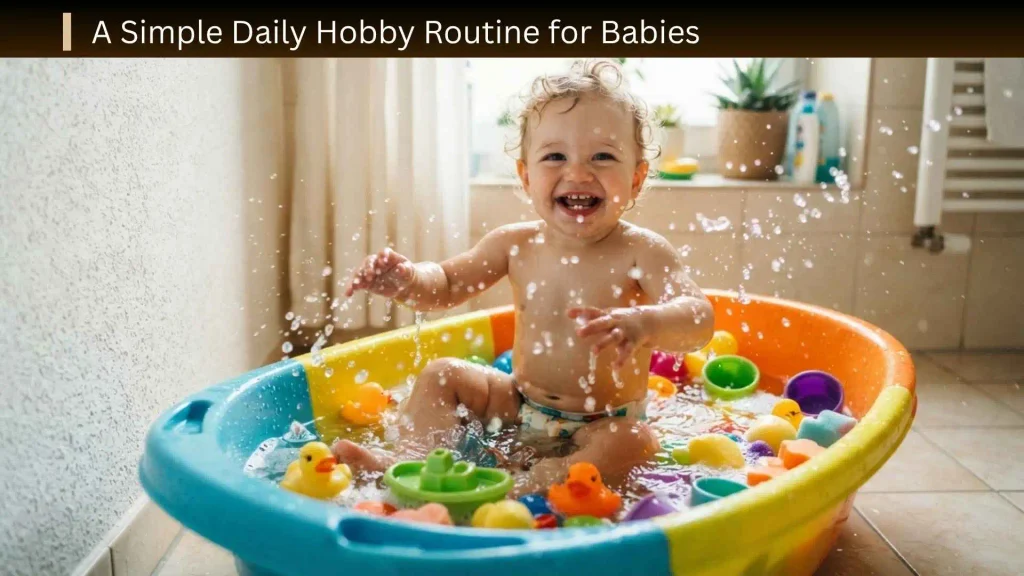
You do not need to schedule every minute of your baby’s day. Instead, you can naturally include different activities throughout normal routines.
| Part of the Day | Simple Activity |
| Morning | Talking, singing, or looking at a book |
| After waking | Supervised tummy-time play when age-appropriate |
| Midday | Floor play with suitable toys |
| Afternoon | Outdoor walk and nature watching |
| Quiet time | Picture books or gentle music |
| Evening | Singing, talking, or peekaboo |
| Before sleep | Calm interaction as part of the normal bedtime routine |
The exact routine should depend on your baby’s age, feeding, sleep, and individual needs.
Do Babies Need Expensive Hobbies or Toys?
No. Babies can enjoy meaningful play without expensive toys.
A caregiver’s voice, facial expressions, attention, and interaction can be more valuable than having a large collection of specialized products.
Simple activities such as reading, singing, talking, tummy time, and floor play can provide rich opportunities for babies to explore.
If you do buy toys, choose products appropriate for your baby’s age and abilities rather than choosing them simply because they are marketed as educational.
Baby Hobby Safety Tips
Safety should come before entertainment.
Check Age Recommendations
Always follow the manufacturer’s age guidance and safety information. The U.S. Consumer Product Safety Commission recommends choosing toys that match a child’s age, abilities, and interests.
Avoid Choking Hazards
Babies frequently put objects in their mouths. Keep small objects and small toy parts away from them.
The CPSC’s small-parts rules address products intended for children under 3 because small parts can present choking, aspiration, or ingestion hazards.
Be Careful With Button Batteries and Magnets
The American Academy of Pediatrics advises caregivers to avoid toys with button batteries and high-powered magnets because loose batteries or magnets can cause serious injuries if swallowed or otherwise accessed by young children.
Watch for Strings and Cords
Avoid toys with potentially dangerous long strings, cords, or attachments that could create a strangulation risk.
Supervise Sensory Play
Never assume that a material is safe simply because it is labeled as a sensory activity. Babies may chew, pull, tear, or swallow materials.
Stay close and supervise activities according to the baby’s developmental stage.
Keep Sleep and Play Separate
Toys and activities are for awake, supervised play. Do not place loose toys, soft objects, or other potentially hazardous items in a baby’s sleep space.
HealthyChildren advises keeping soft objects and other items that could increase the risk of suffocation, strangulation, or entrapment out of the crib.
Hobbies to Avoid or Modify for Young Babies
Some activities commonly associated with older children are not appropriate for infants without significant modification.
Avoid giving babies:
- Small craft supplies
- Beads
- Marbles
- Small balls
- Loose buttons
- Small building pieces
- Toys with accessible button batteries
- High-powered magnets
- Objects with sharp edges
- Damaged toys with loose pieces
- Long cords or strings
- Unsupervised sensory materials
The CPSC specifically warns about small parts and choking hazards for children under 3, while the AAP highlights the risks associated with small batteries and powerful magnets.
Should Babies Have Screen-Based Hobbies?
For babies, hands-on interaction is generally the better choice.
Instead of using a phone or tablet as a primary hobby, offer opportunities to:
- Talk
- Sing
- Look at books
- Play on the floor
- Explore safe objects
- Interact with caregivers
- Observe the environment
The CDC states that screen time is not recommended for children younger than 2 years except for video calling with loved ones, and emphasizes that babies learn through talking, playing, and interacting with others.
How to Make Baby Hobbies More Engaging
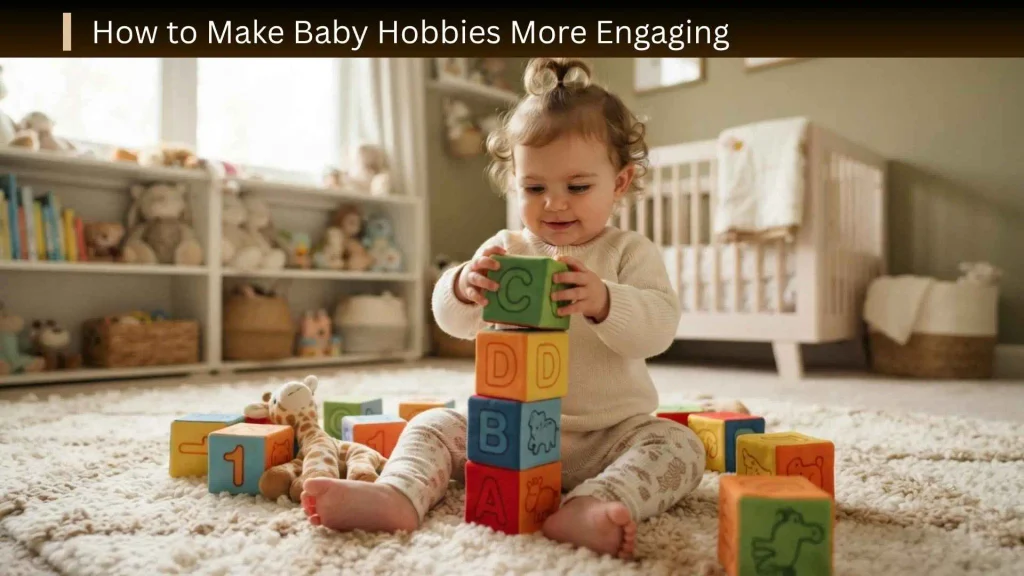
You can make almost any simple activity more interesting by participating with your baby.
Try these approaches:
- Talk about what you are doing.
Describe objects, sounds, colors, and movements. - Follow your baby’s attention.
If your baby is interested in something safe, explore it together. - Repeat favorite activities.
Babies often enjoy repetition because familiar activities become easier to recognize and anticipate. - Change one thing at a time.
Introduce a new sound, texture, object, or movement without overwhelming your baby. - Give your baby time to respond.
After talking or making a sound, pause and see what your baby does. - Keep activities short when needed.
Babies have limited attention spans and may become tired quickly. - Let play remain playful.
You do not need to turn every activity into a lesson.
Signs Your Baby May Be Enjoying an Activity
Every baby expresses interest differently, but you may notice:
- Looking toward the activity
- Smiling
- Reaching
- Kicking excitedly
- Making sounds
- Repeating an action
- Trying to move closer
- Watching an object closely
- Turning toward a familiar voice or sound
If your baby looks away, cries, becomes unusually fussy, or appears tired, give them a break.
Frequently Asked Questions
What are the best hobbies for babies?
The best hobbies for babies are simple, interactive activities such as reading, singing, tummy-time play, peekaboo, talking, music, floor play, nature watching, and exploring safe age-appropriate toys.
Can a baby really have a hobby?
Yes, although “hobby” is being used loosely for infants. Babies do not usually have structured hobbies like older children. Instead, they develop preferences for activities they enjoy repeatedly, such as books, music, movement, sounds, or sensory exploration.
What are good hobbies for a 3 month old baby?
A 3-month-old may enjoy talking face-to-face, singing, looking at colorful objects, supervised tummy time, soft rattles, cloth books, gentle movement, and simple social games.
What hobbies are good for a 6 month old baby?
A 6-month-old may enjoy picture books, peekaboo, reaching for toys, tummy-time exploration, safe sensory toys, music, copying sounds, and cause-and-effect games.
What hobbies are good for a 9 month old baby?
Older babies may enjoy crawling games, board books, peekaboo, simple blocks designed for their age, putting large objects into containers, songs with movements, and exploring safe objects.
Do babies need educational toys?
No. Babies do not need expensive educational toys to learn. Everyday interaction with caregivers, books, songs, safe objects, and opportunities for movement can provide valuable learning experiences. The AAP notes that a particular toy or app is not necessary for a child to reach developmental milestones.
Are sensory activities good for babies?
Age-appropriate sensory exploration can be enjoyable, but it needs careful supervision. Babies often mouth objects, so avoid small, loose, breakable, or otherwise hazardous materials.
Is reading a hobby for babies?
Reading is an excellent early activity for babies. They can listen to your voice, look at pictures, observe expressions, and participate in simple interactions even before they understand the story.
Is music a good hobby for babies?
Yes. Singing and listening to appropriate music can be enjoyable ways to interact with a baby. You can also add simple movements such as clapping or gentle swaying.
How much time should a baby spend on hobbies?
There is no universal number of minutes that every baby should spend on hobbies. Instead of focusing on a strict hobby schedule, provide regular opportunities throughout the day for age-appropriate movement, interaction, exploration, reading, talking, and play.
What is the most important thing when choosing a hobby for a baby?
Safety and developmental appropriateness come first. After that, choose activities your baby appears interested in and that give you opportunities to interact together.
Conclusion
The best hobbies for babies are usually the simplest ones. Reading a book, singing a song, playing peekaboo, talking face-to-face, watching nature, exploring safe textures, and spending time on the floor can all turn ordinary moments into enjoyable learning experiences.
As babies grow, their interests naturally change. A newborn may prefer your voice and face, while a six-month-old may become fascinated by reaching and grabbing, and a nine-month-old may want to crawl toward objects and explore cause and effect.
Rather than searching for the most expensive or advanced baby activity, focus on safe, age-appropriate, interactive play. Follow your baby’s interests, give them opportunities to explore, and remember that your attention and interaction are often the most valuable part of the activity.

I’m Ethan Mitchell, a curious writer who enjoys turning complex ideas into simple, useful information. At Cognivoora, I focus on creating clear and engaging content that readers can understand and apply in everyday life. I believe good writing should educate, answer real questions, and leave readers with something valuable to remember.
Books:
- The Everyday Mind
- Simple Ideas, Better Thinking