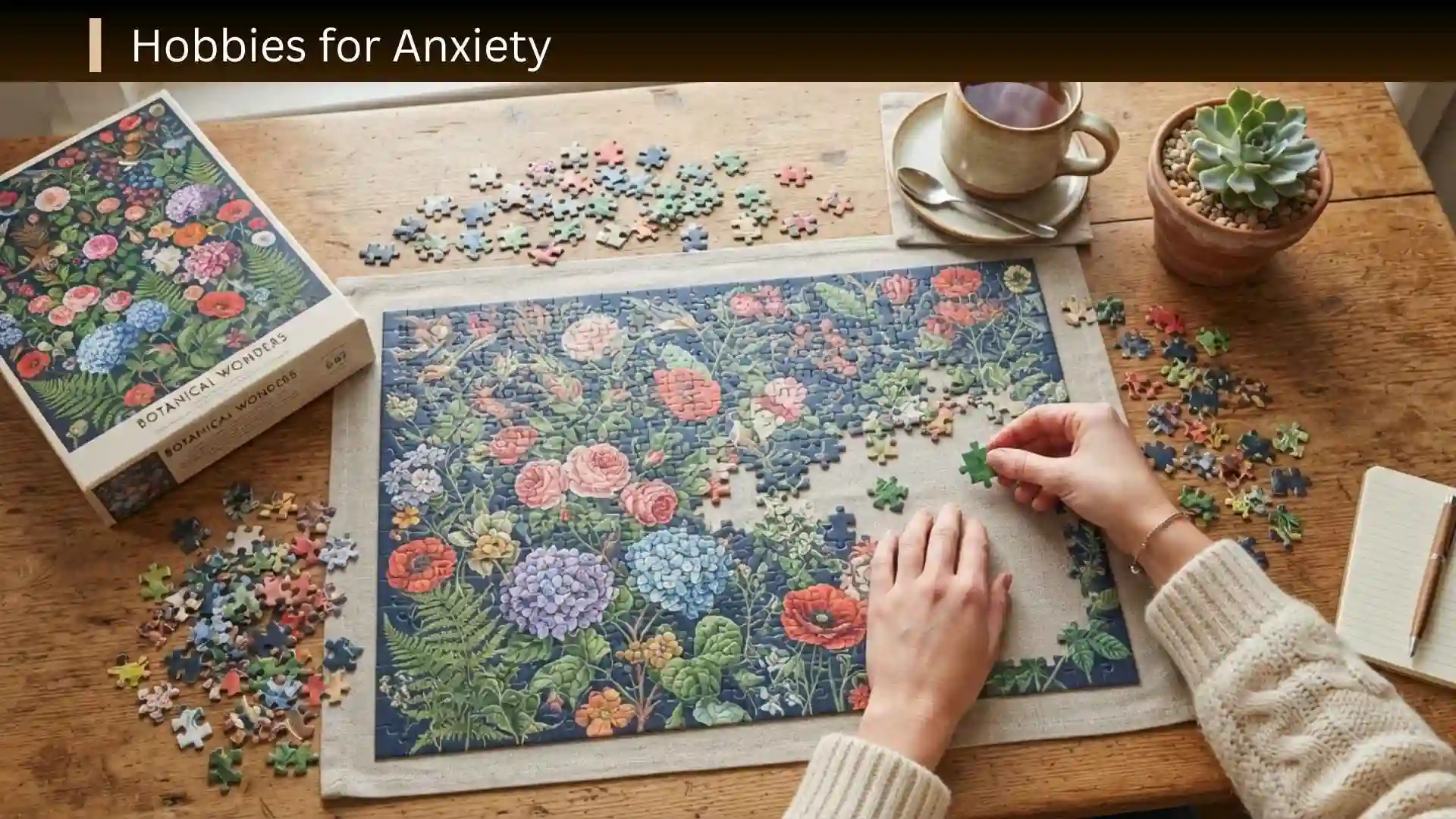
When your mind feels like it won’t slow down, even simple things can become overwhelming. I know how frustrating it can feel when anxious thoughts keep running through your head and you just want a moment of calm. The good news is that you don’t always need a complicated solution to give your mind a break. Sometimes, the right hobby can give you something positive to focus on, help you slow down, and make your free time feel more enjoyable.
If you are looking for hobbies for anxiety, you have plenty of options to explore. From drawing and journaling to gardening, knitting, puzzles, reading, and gentle creative activities, you can choose something that fits your personality, energy level, budget, and interests. In this guide, I’ll help you discover relaxing hobbies you can try at your own pace so you can find an activity that feels enjoyable rather than stressful.
What Are the Best Hobbies for Anxiety(Quick Answer)
Some of the most accessible hobbies for anxiety include:
- Walking
- Gardening
- Reading
- Drawing or sketching
- Painting
- Journaling
- Knitting or crocheting
- Photography
- Puzzles
- Adult coloring
- Yoga
- Meditation
- Playing a musical instrument
- Listening to or making music
- Cooking or baking
- Birdwatching
- Hiking
- Crafts
- Fishing
- Volunteering
- Board games
- Learning a language
- Woodworking
- Sewing
- Collecting or organizing items you enjoy
The right choice depends on what kind of experience you find calming. Someone who becomes restless may prefer walking or gardening, while someone who overthinks may prefer a focused activity such as puzzles, knitting, drawing, or playing music.
Why Can Hobbies Help With Anxiety?
Anxiety often involves persistent worry, physical tension, and attention focused on possible future problems. The American Psychological Association describes anxiety as a future-oriented response associated with apprehension and physical symptoms such as tension, faster breathing, and increased heart rate.
A hobby can provide a different target for your attention.
For example, when you are knitting, you have stitches to follow. When you are gardening, you can concentrate on soil, plants, and movement. When you are walking, you can focus on your surroundings and physical movement.
Hobbies may also provide:
- A structured break from everyday worries
- A sense of accomplishment
- Opportunities for creativity
- Physical movement
- Mindful attention
- Social connection
- A reason to spend less time passively worrying
- Something enjoyable to anticipate
Mayo Clinic specifically recommends setting aside time for hobbies such as reading, listening to music, or walking as part of stress management.
25 Best Hobbies for Anxiety
1. Walking
Walking is one of the easiest hobbies to start because it requires very little equipment.
You can walk around your neighborhood, visit a local park, explore a walking trail, or simply take a short evening walk. You can also make it more engaging by photographing interesting sights or listening to music or a podcast.
Physical activity can help with stress management, and Mayo Clinic notes that many forms of exercise can support mood, relaxation, and stress relief.
Best for: People who feel restless, tense, or mentally overloaded.
Cost: Free or very low
Difficulty: Easy
Equipment: Comfortable shoes
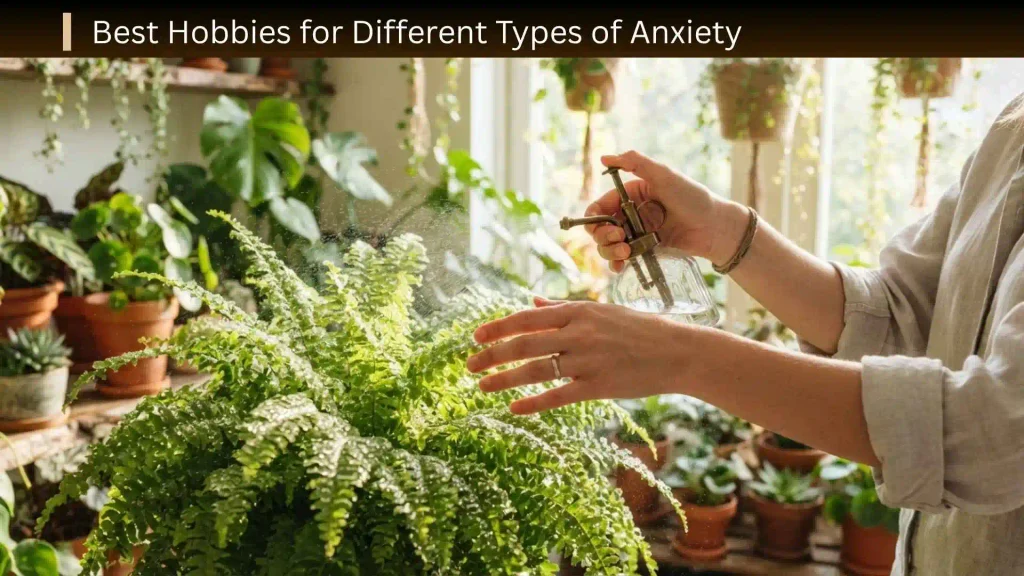
2. Gardening
Gardening combines gentle physical activity with a hands-on task.
Planting flowers, growing vegetables, caring for houseplants, or maintaining a small herb garden can turn your attention toward something concrete. You also get to see gradual progress, which can make the hobby rewarding.
You do not need a large yard. A few pots on a balcony or windowsill can be enough to get started.
Best for: People who enjoy nature and hands-on activities.
Cost: Low to moderate
Difficulty: Easy to moderate
3. Reading
Reading can give your mind a break from everyday concerns by directing your attention toward a story, idea, or subject that interests you.
Fiction may provide an enjoyable escape, while nonfiction can help you explore a topic you genuinely care about. If concentration is difficult when you are anxious, start with short stories, magazines, essays, or audiobooks.
Best for: Quiet, indoor relaxation.
Cost: Free to moderate, depending on how you access books
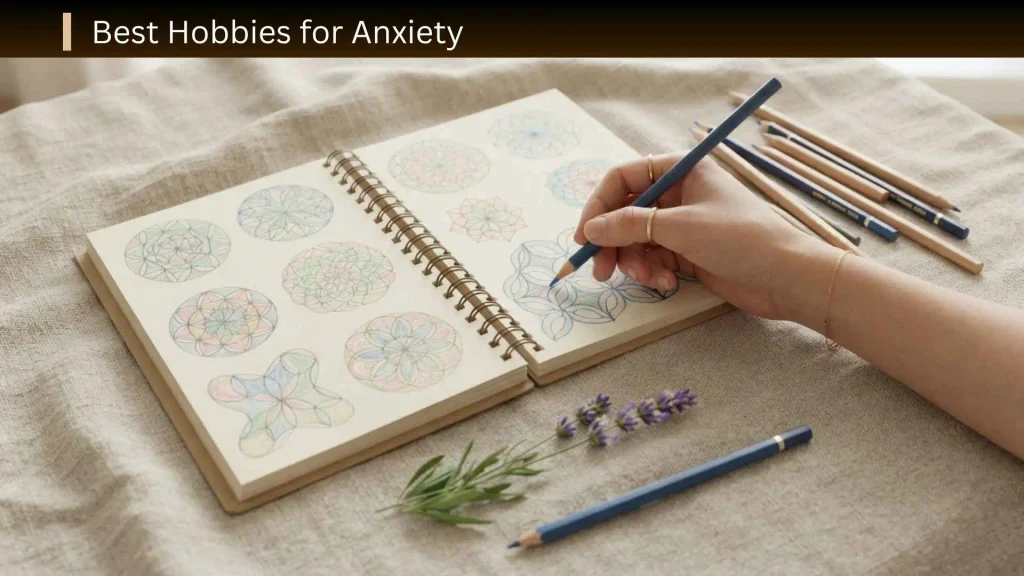
4. Drawing and Sketching
You do not need to be a talented artist to enjoy drawing.
Sketching objects around you, doodling, practicing patterns, or following beginner drawing exercises can give your attention a specific task.
The goal does not have to be producing impressive artwork. The process itself can be the hobby.
Best for: People who enjoy creativity and quiet concentration.
Cost: Low
Difficulty: Beginner-friendly
5. Painting
Painting provides more room for experimentation than simple sketching.
You can try watercolor, acrylic painting, gouache, or even digital painting. Beginners can start with inexpensive materials rather than investing in a complete studio.
Painting can also become a way to explore colors, landscapes, abstract designs, or subjects that interest you.
Best for: Creative people who want a longer, more immersive activity.
6. Journaling
Journaling can help you put thoughts into words rather than carrying them around mentally.
You could write about your day, record worries, describe things you are grateful for, plan tomorrow, or simply write whatever comes to mind.
Mayo Clinic includes journaling among practical stress-management strategies, while NHS resources also recommend keeping track of thoughts, feelings, and experiences as one way to understand anxiety and patterns in your wellbeing.
Try this simple format:
- What am I feeling?
- What is worrying me?
- What can I actually control?
- What is one small thing I can do next?
7. Knitting or Crocheting
Knitting and crocheting involve repetitive movements and require enough attention to keep you engaged with the process.
You can begin with simple projects such as scarves, small decorations, dishcloths, or basic squares.
Another benefit is that the hobby gives you a tangible result. You can see your progress from one session to the next.
Best for: People who like repetitive, hands-on activities.
Cost: Low to moderate
8. Photography
Photography turns an ordinary walk into an opportunity to look closely at your surroundings.
You can photograph nature, architecture, pets, food, people, shadows, or interesting details.
A smartphone is enough to begin. You do not need an expensive camera.
Best for: People who like exploration and visual creativity.
9. Puzzles
Jigsaw puzzles, crosswords, Sudoku, logic puzzles, and similar activities give your attention a defined problem to solve.
For some people, this can be preferable to activities that leave too much unstructured time for worrying.
Start with a difficulty level that feels interesting rather than frustrating.
Best for: People who enjoy problem-solving and focused activities.
10. Adult Coloring
Coloring is simple, inexpensive, and easy to fit into short periods.
You can use coloring books designed for adults or create your own patterns and designs.
It can be particularly useful as a low-pressure creative activity because there is no requirement to produce an original drawing.
Best for: Beginners who want a simple creative hobby.
11. Yoga
Yoga combines movement, balance, breathing, and attention.
Different styles vary considerably. If your goal is relaxation, a slower beginner-oriented practice may feel more appropriate than an intense class.
The NHS lists yoga among activities that may help people relax and manage anxiety and stress.
Best for: People who want both physical movement and relaxation.
12. Meditation
Meditation can become a hobby if you enjoy practicing regularly.
A beginner might start with just a few minutes of quiet attention to breathing, sounds, or bodily sensations.
Mindfulness is not about forcing every anxious thought to disappear. NHS guidance explains that mindfulness involves noticing thoughts and feelings without necessarily getting caught up in them.
Best for: People interested in quiet, reflective practices.
13. Playing a Musical Instrument
Learning guitar, piano, ukulele, keyboard, drums, or another instrument can provide structured concentration.
You can practice scales, learn songs, improvise, or simply spend a few minutes playing.
Because learning an instrument involves gradual improvement, it can also provide a sense of progress over time.
Best for: People who enjoy sound, creativity, and learning skills.
14. Listening to or Making Music
You do not have to play an instrument to make music part of your hobbies.
Creating playlists, exploring new genres, learning music production, singing, or experimenting with simple instruments can all become enjoyable activities.
Choose music based on how it affects you. If something makes you more energized when you need to relax, try something different.
15. Cooking or Baking
Cooking can be a surprisingly engaging hobby because it combines planning, sensory experiences, creativity, and a finished result.
Try learning a new recipe each week, making bread, experimenting with international cuisines, or improving a favorite family recipe.
If complicated recipes increase your stress, keep the hobby simple.
Best for: People who like practical and creative activities.
16. Birdwatching
Birdwatching encourages you to slow down and pay attention to what is happening around you.
You can do it in your backyard, at a neighborhood park, or on a nature trail.
A basic bird guide and a pair of binoculars can make the activity more interesting, but neither is essential at the beginning.
Best for: Nature lovers who enjoy quiet observation.
17. Hiking
Hiking combines outdoor exploration with physical activity.
A short local trail can be enough. You do not need to turn it into a major fitness challenge.
For someone who enjoys nature, hiking may be more engaging than exercising indoors because there is an environment to explore.
Best for: People who enjoy movement and the outdoors.
18. Crafts
Crafting includes many different hobbies, including:
- Paper crafts
- Scrapbooking
- Candle-making
- Clay work
- Model building
- Beadwork
- Origami
- Decorative crafts
- Collage
- DIY projects
Choose a craft that matches your personality. If precision makes you anxious, select something more experimental.
19. Fishing
Fishing can provide quiet time outdoors while giving you a simple activity to focus on.
The slower pace can appeal to people who enjoy being near water and spending time outside.
However, fishing involves equipment, location considerations, and local regulations, so beginners should learn the relevant rules before starting.
20. Volunteering
Not every helpful hobby needs to be solitary.
Volunteering can provide structure, social connection, and a sense of contribution. Options include helping at community organizations, animal shelters, food programs, libraries, environmental projects, or local events.
Social connection is also part of healthy approaches to managing stress and anxiety. Mayo Clinic recommends maintaining supportive relationships and avoiding isolation.
21. Board Games and Card Games
Board games and card games can combine concentration with social interaction.
If social situations make you anxious, start with one trusted friend or family member rather than joining a large group immediately.
Cooperative games may be particularly appealing if you prefer working with other people rather than competing against them.
22. Learning a Language
Learning a language gives you an ongoing project with small, measurable goals.
You could learn vocabulary, practice pronunciation, watch beginner videos, read simple stories, or use conversation exercises.
The important part is keeping the learning process enjoyable rather than turning the hobby into another source of performance pressure.
23. Woodworking
Woodworking can be an immersive hobby for people who enjoy building physical objects.
Beginners can start with simple projects before moving toward more complicated work.
Because tools can cause injuries when used incorrectly, safety should always come before speed or experimentation.
24. Sewing
Sewing can be both creative and practical.
You might repair clothes, make simple accessories, create decorations, or eventually work on larger projects.
Like knitting and crocheting, sewing can provide a focused activity with a visible result.
25. Collecting
Collecting can become a hobby when you enjoy researching, finding, organizing, and learning about particular objects.
Possible collections include:
- Postcards
- Books
- Stamps
- Coins
- Rocks and minerals
- Vintage items
- Vinyl records
- Sports memorabilia
- Plants
Keep the hobby within a comfortable budget. A relaxing hobby should not create financial pressure.
Best Hobbies for Different Types of Anxiety
There is no single hobby that works for everyone. Your best option may depend on what you experience when you feel anxious.
| If you tend to… | Consider trying… |
| Feel physically restless | Walking, hiking, cycling, swimming, yoga |
| Overthink | Puzzles, knitting, drawing, cooking |
| Feel mentally exhausted | Coloring, gardening, gentle music, simple crafts |
| Feel isolated | Board games, volunteering, group classes |
| Need quiet | Reading, journaling, gardening, photography |
| Want creative expression | Painting, drawing, music, crafts |
| Spend too much time indoors | Walking, birdwatching, hiking, gardening |
| Need a structured activity | Cooking, language learning, puzzles, sewing |
| Enjoy repetitive movements | Knitting, crocheting, coloring, gardening |
| Want a sense of achievement | Learning an instrument, woodworking, cooking, crafts |
Best Low Cost Hobbies for Anxiety
You do not need to spend a lot of money to start a calming hobby.
Some inexpensive options include:
- Walking
- Journaling
- Drawing
- Reading through a library
- Meditation
- Photography with a smartphone
- Birdwatching
- Free online exercise classes
- Gardening with inexpensive plants or seeds
- Puzzles
- Listening to music
- Origami
- Creative writing
The easiest hobby to maintain is often one that fits naturally into your existing routine.
Best Hobbies for Anxiety at Home
If you prefer staying home, consider:
Quiet hobbies
- Reading
- Journaling
- Coloring
- Puzzles
- Meditation
- Listening to music
Creative hobbies
- Painting
- Drawing
- Knitting
- Crocheting
- Sewing
- Crafts
- Playing an instrument
Practical hobbies
- Cooking
- Baking
- Gardening
- Organizing a collection
- DIY projects
Home-based hobbies can be especially convenient because there is little travel or preparation involved.
Best Outdoor Hobbies for Anxiety
Outdoor activities can be a good choice when staying indoors makes you feel restless or trapped in your thoughts.
Consider:
- Walking
- Hiking
- Gardening
- Birdwatching
- Photography
- Fishing
- Cycling
- Nature journaling
- Outdoor sketching
- Geocaching
Exercise and outdoor hobbies do not have to be intense to be worthwhile. Mayo Clinic notes that many forms of physical activity can help with stress, and the NHS recommends activities such as walking, running, swimming, and yoga as approaches that may help people relax.
Best Creative Hobbies for Anxiety
Creative hobbies can give you a way to focus attention on making something rather than continuously analyzing thoughts.
Good choices include:
- Drawing
- Painting
- Photography
- Writing
- Journaling
- Pottery
- Knitting
- Crocheting
- Sewing
- Music
- Crafts
- Origami
Try not to judge the quality of what you create too harshly. If the hobby becomes another source of perfectionism, simplify the activity and focus on the process.
Best Hobbies for Social Anxiety
If you experience social anxiety, it may be tempting to avoid people entirely. However, completely withdrawing can sometimes reinforce anxiety.
Instead, consider gradual, manageable social hobbies such as:
- A small book club
- A beginner art class
- A walking group
- Board games with trusted people
- Volunteering
- Gardening clubs
- Photography groups
- Music lessons
- Craft groups
- Community classes
Start with an environment that feels manageable rather than forcing yourself into the most socially demanding situation.
For people with anxiety disorders, hobbies can complement treatment, but they should not be used as a substitute for professional help. Cognitive behavioral therapy, for example, is an established treatment for anxiety disorders.
How to Choose the Right Hobby for Anxiety
Choosing a hobby does not have to be complicated.
1. Identify what you need
Ask yourself:
- Do I need movement?
- Do I need quiet?
- Do I need creativity?
- Do I need social connection?
- Do I need something that keeps my hands busy?
- Do I need something I can do for 10 minutes?
Your answer can immediately narrow down your options.
2. Start small
Do not buy everything for a hobby before you know whether you enjoy it.
Try a beginner version first.
For example, instead of buying expensive painting equipment, start with a basic watercolor set. Instead of purchasing a full gardening setup, grow one or two plants.
3. Choose enjoyment over productivity
Your hobby does not need to make money, improve your résumé, or produce something useful.
Reading a novel simply because you enjoy it is enough.
4. Avoid unnecessary pressure
If you turn every hobby into a performance goal, it can stop feeling relaxing.
You do not have to:
- Finish a book every week
- Paint something beautiful
- Walk a certain number of miles
- Become an expert
- Post your creations online
- Compete with other people
The activity itself can be the reward.
5. Notice how you feel afterward
For a couple of weeks, pay attention to how you feel before and after your hobby.
You might discover that:
- Walking helps when you feel restless.
- Reading helps at night.
- Drawing helps when you are overthinking.
- Gardening helps when you feel mentally tired.
- Social hobbies help when you feel isolated.
This can help you create a personal collection of activities for different situations.
How to Make a Hobby Part of Your Routine
Consistency matters more than doing an activity for hours once in a while.
Try creating a small routine:
Morning: Take a 10-minute walk.
Afternoon: Spend 15 minutes on a creative hobby.
Evening: Read, journal, listen to music, or practice gentle mindfulness.
You do not need to follow this exact schedule. The idea is to create predictable opportunities for activities you enjoy.
Mayo Clinic’s behavioral activation guidance also emphasizes gradually returning to enjoyable or meaningful activities when stress or low mood makes them feel difficult to start.
What If a Hobby Makes Anxiety Worse?
Not every supposedly relaxing activity will feel relaxing to every person.
A hobby may increase anxiety if it:
- Creates excessive competition
- Costs more money than you can comfortably afford
- Requires perfection
- Takes over your schedule
- Involves uncomfortable social pressure
- Feels like another obligation
- Keeps you awake late at night
- Causes physical pain or exhaustion
If a hobby consistently leaves you more stressed, there is nothing wrong with changing it.
The goal is not to force yourself to enjoy a particular activity. The goal is to find healthy activities that fit you.
Hobbies vs. Treatment for Anxiety
Hobbies can support wellbeing, but they are not a treatment for every anxiety problem.
If anxiety is persistent, difficult to control, causing significant distress, disrupting sleep, interfering with work or relationships, or leading you to avoid important parts of life, consider talking with a qualified healthcare or mental health professional.
Professional treatment can include approaches such as psychotherapy, and some people may also benefit from medication depending on their circumstances. The APA notes that cognitive behavioral therapy is highly effective for anxiety disorders.
A hobby can exist alongside professional care as one part of a broader approach to wellbeing.
How to Start When You Feel Too Anxious to Do Anything
Anxiety can make even enjoyable activities feel like work.
Instead of telling yourself, “I need to start a new hobby,” make the goal extremely small.
Try:
- Read two pages.
- Walk around the block.
- Draw for five minutes.
- Water one plant.
- Write three sentences.
- Complete one puzzle section.
- Play one song.
- Take a few photographs.
- Knit for ten minutes.
- Sit outside for five minutes.
Small steps are easier to begin than ambitious plans. NHS guidance similarly recommends setting small, achievable targets rather than trying to do everything at once.
Frequently Asked Questions
What is the best hobby for anxiety?
There is no universally best hobby for anxiety. Walking, gardening, reading, drawing, journaling, knitting, puzzles, yoga, photography, and music are all reasonable options. The best choice is one that you enjoy, can realistically maintain, and find calming or engaging.
What hobby is good for overthinking?
Activities that require gentle concentration may be particularly useful when your mind is constantly occupied by repetitive thoughts. Try puzzles, drawing, knitting, cooking, photography, gardening, playing an instrument, or journaling.
What is a good hobby for someone with social anxiety?
Start with low-pressure social activities such as a small book club, volunteering, a beginner class, a walking group, or board games with trusted people. If social anxiety significantly limits your life, professional support can also be helpful.
What are the best hobbies for anxiety at night?
Reading, gentle journaling, drawing, knitting, quiet crafts, listening to relaxing music, and mindfulness practices may work well for some people. Avoid turning the hobby into an intense or stimulating activity right before bedtime if it interferes with sleep.
Can hobbies actually reduce anxiety?
Hobbies can be part of healthy stress-management and self-care, but they should not be considered a guaranteed treatment for an anxiety disorder. Health guidance recommends enjoyable activities alongside other approaches such as physical activity, relaxation techniques, social connection, and professional care when needed.
Are creative hobbies good for anxiety?
Creative hobbies can be useful because they give you something concrete to focus on. Drawing, painting, crafts, photography, music, knitting, and writing are examples. However, the benefit depends on the individual, and creative activities should remain enjoyable rather than becoming another source of pressure.
Is exercise a hobby for anxiety?
Yes. Walking, hiking, cycling, swimming, dancing, yoga, and other forms of movement can become hobbies. Regular physical activity is commonly recommended as part of stress and anxiety management.
What is the easiest hobby to start?
Walking, journaling, drawing, reading, photography with a smartphone, and simple stretching are among the easiest because they require little equipment or preparation.
Can hobbies replace anxiety medication or therapy?
No. A hobby should not be treated as a replacement for prescribed treatment or professional mental health care. If anxiety is severe, persistent, or interfering with daily life, talk with a qualified healthcare professional.
How long should I spend on a hobby for anxiety?
There is no required amount of time. Even a short session can give you a useful break. Start with an amount that feels realistic, such as 5–15 minutes, and increase it if you enjoy the activity.
Conclusion
The best hobbies for anxiety are the ones that give you a healthy reason to focus your attention, move your body, express yourself, connect with others, or simply enjoy the present moment.
For a low-cost starting point, try walking, reading, journaling, drawing, photography, or gardening. If you prefer repetitive hands-on activities, consider knitting, crocheting, puzzles, or crafts. If you need movement, try hiking, cycling, swimming, yoga, or dancing. And if loneliness is part of the problem, consider volunteering, a small class, or a hobby group.
You do not need to find the perfect hobby immediately. Choose one activity that sounds genuinely enjoyable, start with a small commitment, and pay attention to how you feel before and after it. A hobby is most useful when it becomes something you look forward to rather than another task you feel obligated to complete.
If anxiety is significantly affecting your daily life, relationships, sleep, work, or ability to function, consider seeking professional support rather than relying on hobbies alone. Hobbies can complement good mental-health care, but they do not have to carry the entire burden.
I’m Ethan Mitchell, a curious writer who enjoys turning complex ideas into simple, useful information. At Cognivoora, I focus on creating clear and engaging content that readers can understand and apply in everyday life. I believe good writing should educate, answer real questions, and leave readers with something valuable to remember.
Books:
- The Everyday Mind
- Simple Ideas, Better Thinking